智能制造

Search documents
2025年“数据要素×”大赛 | “中国动力心脏”——可信数据赋能高端制造全链条协同与跃迁
Da Zhong Ri Bao· 2025-11-10 07:57
Group 1 - Weichai Power is a leading enterprise in China's internal combustion engine sector, achieving the highest global sales of heavy-duty engines with a total engine sales volume of 734,000 units in 2024 [2] - The company is building a new intelligent manufacturing ecosystem driven by data, utilizing high-quality datasets to enhance efficient data circulation and collaborative applications within the industrial ecosystem [2] - By integrating over 4TB of daily vehicle network data, 30TB of R&D data, and 8,000 technical standards, the company has reduced R&D cycles by 20% and improved fault diagnosis efficiency by 98% [2] Group 2 - Weichai Power is enhancing collaborative ecosystems to upgrade power equipment clusters, achieving a 10% increase in process execution efficiency through AI data governance [3] - The innovative integration of computing and networking has led to a 40% improvement in inventory turnover rates and a 6% reduction in procurement costs, facilitating the digital collaborative leap of manufacturing enterprises [3] - The company has established a replicable new paradigm of industrial data elementization, providing robust data and technical support for the construction of a manufacturing powerhouse and enhancing its core competitiveness in the global supply chain [3]



捷报频传!智能制造与全球布局双引擎驱动悍高集团成长价值稳步释放
Huan Qiu Wang· 2025-11-10 07:53
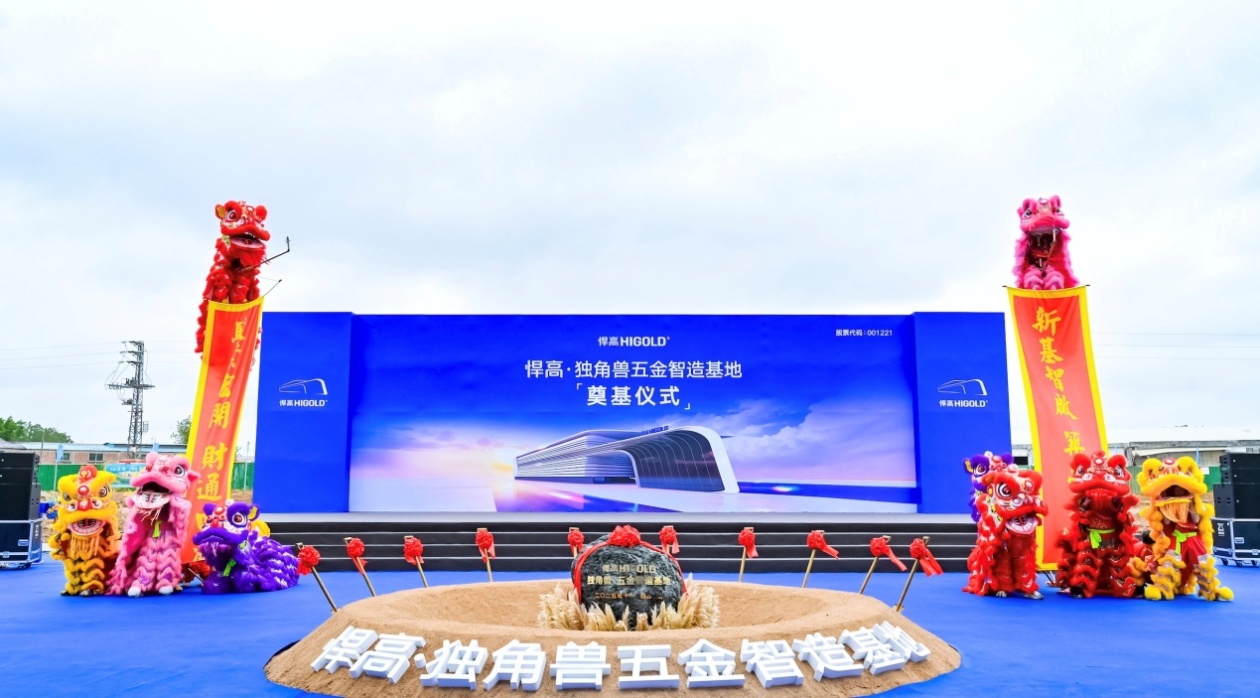
Core Insights - Han Gao Group has laid the foundation for its Unicorn Hardware Intelligent Manufacturing Base in Shunde, Foshan, which will be the company's third smart manufacturing facility in the region, covering over 250,000 square meters with a total investment exceeding 1 billion yuan [2] - The project is expected to be completed by the end of 2027 and will serve as a major production base for basic hardware and precision core components, with an anticipated annual output of over 800 million hardware hinges and guide products upon reaching full capacity [2] - The establishment of this base will contribute to the creation of a digital production base cluster exceeding 600,000 square meters, enhancing Han Gao Group's position as a leading global home hardware manufacturer [2] Intelligent Manufacturing and Efficiency - Han Gao Group is focusing on intelligent production and has achieved significant results in its transformation, with a core digital production base of 600,000 square meters and the introduction of advanced automation equipment [3] - The company has implemented full-process automation in hinge production, significantly improving product quality stability and production efficiency [3] - Financial data reflects the benefits of intelligent manufacturing, with a stable gross profit margin and a notable increase in net profit growth, indicating improved operational management efficiency [3] Global Network and Sales Channels - Han Gao Group has developed a diversified global sales network, combining distribution and direct sales, as well as online and offline channels, reaching over 110 countries and regions [5] - The company has established a strong national distribution network and is continuously expanding its overseas market presence, enhancing its market penetration and brand influence [5] - As of September 2025, the company's net cash flow from operating activities reached 791 million yuan, reflecting the effectiveness of its channel development [5] Strategic Planning for Future Development - Han Gao Group has a clear strategic plan for future development, focusing on core business growth, governance improvement, and compliance transparency [6] - The company aims to enhance investor communication and promote high-quality development through various initiatives, striving to create good returns for investors [6]
一座城的千亿产值与零碳之路
Zhong Guo Dian Li Bao· 2025-11-10 06:37
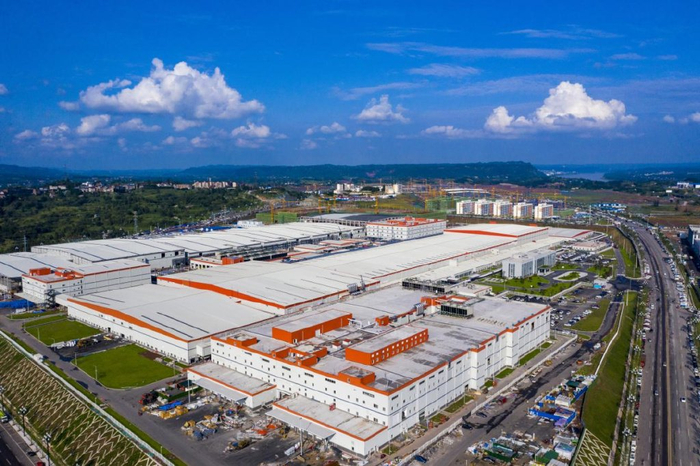
Core Viewpoint - Yibin City in Sichuan Province has successfully positioned itself as a leading hub for green energy industries, particularly in the fields of power batteries and photovoltaics, through strategic planning and innovative practices [1][5]. Power Battery Industry - Yibin's power battery industry has rapidly developed, achieving a production value exceeding 100 billion yuan for the first time in 2023, with projections indicating that by 2024, the production will account for over 16% of China's total and 10% globally [3][5]. - The Sichuan Times New Energy Technology Co., Ltd., a subsidiary of CATL, has been recognized as a "global lighthouse factory," utilizing advanced technologies such as AI and 5G to enhance manufacturing processes and achieve carbon neutrality [3][4]. - The establishment of a "1+8" zero-carbon industrial cluster has significantly reduced carbon footprints and enhanced the competitive edge of Yibin's power battery industry [4]. Photovoltaic Industry - Yibin is constructing a billion-level national photovoltaic industry cluster, with companies like He Guang Tong Cheng achieving rapid project completion, producing high-efficiency solar cells with a conversion efficiency of 27.05% [6][8]. - The Yibin High-tech Zone has seen a remarkable economic growth, with a projected GDP exceeding 113.9 billion yuan in 2024 and an annual growth rate of over 11% for three consecutive years [8][9]. - The establishment of a green electricity supply system in the Yibin High-tech Zone aims to meet international standards and ensure traceability of carbon footprints for exported products [9].
全国首例多源遥感卫星数据资产在晋完成登记;长征十一号遥六运载火箭发射成功丨智能制造日报
创业邦· 2025-11-10 03:38
Group 1 - Hanwang Technology has developed a new generation of magnetic capacitive dual-mode chips that are now ready for mass production, enabling compatibility with both finger and electromagnetic pen touch functions [2] - The first registration of multi-source remote sensing satellite data assets in China has been completed in Shanxi, marking a significant breakthrough in the resourceization of remote sensing satellite data [2] - The Long March 11 Y6 rocket successfully launched three experimental satellites into orbit, which are intended for space technology testing, marking the 606th flight of the Long March series [2]


报告:全球区域化趋势已基本形成,长三角这项能力需加强
Di Yi Cai Jing· 2025-11-10 02:12
Group 1 - The report highlights a significant trend towards supply chain decentralization and nearshoring, indicating a shift towards regionalization and sectoralization in the global market [1] - Six major changes in the industrial environment are identified, including the return of supply chains in core areas like semiconductors, advancements in industrial robotics, and the deep integration of artificial intelligence across various applications [1] - The report indicates that Shanghai's industrial international competitiveness is at a critical stage of structural upgrade, with gradual optimization effects but a need for further momentum to achieve systemic upgrades [1] Group 2 - Shanghai and the Yangtze River Delta are experiencing the fastest improvement in industrial efficiency, with both international and domestic market performance being crucial pillars supporting international competitiveness [2] - Key industries tracked in 2024 include new energy vehicles, traditional industries, biomedicine, and integrated circuits, with significant growth in shipbuilding and offshore engineering [2] - The export structure is undergoing profound changes, with future industrial development expected to focus on intelligence, sustainability, and integration [2]
中国一汽“智能网联、智能驾驶汽车产线整车智能检测装备”成功入选“智能制造装备创新成果”
Zhong Guo Jin Rong Xin Xi Wang· 2025-11-10 01:59
Core Insights - The 2025 Automotive Technology and Equipment Development Forum highlighted the innovative achievements in automotive technology, with China First Automobile Works (FAW) recognized for its "Intelligent Connected and Autonomous Vehicle Production Line Intelligent Testing Equipment" [1] - The project addresses three major bottlenecks in traditional automotive manufacturing and testing: difficulty in intelligent function verification, insufficient flexible production capacity, and lack of core equipment and standards [1] Innovation Highlights - The project is not a single device but an AI-driven "intelligent testing body" that integrates digital twin mapping and cloud-edge collaboration, achieving four major technological breakthroughs [2] - It features the first AI model-enabled "intelligent testing body" and "brain-like diagnosis," covering the entire automotive manufacturing process with AI decision-making capabilities [2] - The project developed the world's first high-level intelligent driving function testing platform for production lines, applying VIL testing technology to large-scale production [2][3] Equipment and Technology Advancements - The equipment integrates industrial-grade components and advanced simulation technologies to safely and efficiently simulate complex traffic scenarios for automated testing of key intelligent driving functions [3] - The project has developed the first domestic vehicle-level GNSS offline testing system, overcoming limitations of module-level testing and enabling precise evaluation of vehicle positioning performance [3][4] - A "software-defined manufacturing" flexible platform was created to support personalized and agile production, utilizing high-precision timing and a flexible production algorithm [4] Performance Metrics - The project has significantly improved R&D efficiency, reducing vehicle debugging cycles from 45 days to 15 days (67% reduction) and cutting intelligent driving function development time from 10 months to 4 months (60% improvement) [4] - Production flexibility and efficiency have also seen dramatic improvements, with new model introduction cycles reduced from 14 days to 2 days and single vehicle electrical inspection time decreased from 2 hours to under 5 seconds [4] - Quality control has been enhanced, with software writing accuracy increasing from 74% to 99% and AI defect interception rates achieving an 80% early interception of potential defects [4] Economic and Industry Impact - The project has demonstrated strong industrial driving capabilities and economic value, with core achievements generating sales of 212 million yuan over three years [5] - The modular and standardized architecture of the equipment system allows for high replicability and adaptability across various high-end manufacturing sectors, including aerospace and rail transportation [5]

【钛晨报】国办发文,在数字经济、AI等领域加快培育和开放应用场景;京东合作首款车型正式发布,最低4.99万元;英伟达CEO已向台积电要求增加芯片供应
Tai Mei Ti A P P· 2025-11-09 23:34
【钛媒体综合】近日,国务院办公厅印发《关于加快场景培育和开放 推动新场景大规模应用的实施意 见》,围绕打造一批新领域新赛道应用场景、建设一批产业转型升级的新业态应用场景、推出一批行业 领域应用场景、创新社会治理服务综合性应用场景、丰富民生领域应用场景等5方面,提出22类场景培 育和开放重点领域。 其中,在数字经济领域,《实施意见》提出,深入挖掘数据要素潜能,支持数据分析挖掘、流通使用、 安全防护等领域技术创新,丰富数据产品和服务供给,在办公、社交、消费、娱乐等领域探索应用元宇 宙、虚拟现实、智能算力、机器人等技术创新应用场景,推动实体经济和数字经济深度融合。 11月9日消息,京东与广汽集团、宁德时代正式公布"国民好车"埃安UT super,电池租用购车价4.99万 元,整车购买价为8.99万元,远低于此前市场预测价格。 在人工智能领域,《实施意见》明确,加强关键核心技术攻关和推广应用,加快高价值应用场景培育和 开放,更好满足科技、产业、消费、民生、治理、全球合作等各领域发展需要。 在制造业领域,《实施意见》提出,聚焦智能制造、绿色制造、服务型制造、工业生物、工业智能等核 心技术应用,创新柔性生产线、智能工厂、 ...

南特科技(920124):北交所新股申购策略报告之一百五十:优质空调零部件厂商,拓展汽车部件业务-20251109
Shenwan Hongyuan Securities· 2025-11-09 06:11
Investment Rating - The investment rating for the company is to actively participate in the subscription [19] Core Views - The company is a precision mechanical component supplier, focusing on air conditioning compressor components, with a strong customer base including Midea Group and Gree Electric [2][5] - The automotive precision components sector is expected to be a significant growth driver for the company, having already achieved IATF16949 certification and developed various automotive parts [6][19] - The company has shown steady revenue growth, with projected revenue of 1.031 billion yuan in 2024, reflecting a 3-year CAGR of +11.20%, and a net profit of 98.22 million yuan, with a 3-year CAGR of +45.12% [6][10] Summary by Sections 1. Company Overview - The company specializes in air conditioning compressor components, established in 2009, headquartered in Zhuhai, Guangdong [5] - Products include core components such as cylinders, bearings, pistons, and crankshafts, with major clients being well-known domestic and international manufacturers [5][6] 2. Issuance Plan - The new share issuance will adopt a direct pricing method, with an issuance price of 8.66 yuan per share, and an expected fundraising of 322 million yuan [9][10] - The initial issuance scale is approximately 37.18 million shares, accounting for 25% of the total shares post-issuance, with a high liquidity ratio of 51.46% [9][10] 3. Industry Situation - The precision mechanical components industry is expanding due to the growth in downstream applications, including home appliances and transportation [13][14] - The automotive sector, particularly the electric vehicle market, is experiencing explosive growth, with projected sales of 12.87 million units in 2024, a year-on-year increase of 35.50% [13][14] 4. Competitive Advantages - The company has established long-term stable relationships with major manufacturers, enhancing its market position [15] - It possesses a comprehensive production system covering all processes from mold design to precision machining, which is rare in the industry [15] 5. Subscription Analysis - The company has a low initial offering price and valuation, with no historical trading records, making it an attractive investment opportunity [19]
京东狼族机器人全球智能工厂项目签约落地;世界首台650摄氏度高效超超临界燃煤发电机组在华能玉环电厂开工建设丨智能制造日报
创业邦· 2025-11-09 03:11
Group 1 - JD Group's global intelligent factory project for logistics robots has officially landed in Wuxi, aiming to create the world's first intelligent logistics robot super factory, which will be one of JD's largest and most automated production bases [2] - China Huaneng announced the construction of the world's first 650°C ultra-supercritical coal-fired power generation unit at the Yuhuan Power Plant, which is expected to improve power generation efficiency by approximately 4% and reduce carbon dioxide emissions by about 450,000 tons annually [2] - Meta Platforms plans to invest $600 billion in the U.S. over the next three years, including the construction of artificial intelligence data centers [2] - TSMC's CEO stated that NVIDIA has requested an increase in the supply of chip wafers to meet the surging global demand for AI computing power, and TSMC is evaluating the feasibility of expanding production [2]




武汉2家企业入选全国最高等级智能工厂
Chang Jiang Ri Bao· 2025-11-09 00:49
Core Insights - The Ministry of Industry and Information Technology has announced the first batch of 15 leading smart factories in China, with Changfei Optical Fiber and Cable Co., Ltd. and Wuhan BOE Optoelectronics Technology Co., Ltd. from Wuhan being included, indicating Wuhan's leadership in the intelligent transformation of manufacturing [1][2] Group 1: Smart Factory Development - The smart factories are categorized into four levels: basic, advanced, excellent, and leading, with the leading level representing the highest standard of intelligent manufacturing in China [1] - Changfei's factory focuses on an integrated smart factory for the entire supply chain of "preform-fiber-cable," while Wuhan BOE's factory is recognized for its efficiency-driven 10.5-generation LCD panel production [1][2] Group 2: Technological Integration - Changfei has integrated artificial intelligence (AI) into its entire production process, with AI applications accounting for 80% of its operations, showcasing its commitment to extreme craftsmanship [1] - Wuhan BOE has implemented several smart projects, including AI industrial defect detection, predictive maintenance, and virtual measurement, leveraging advanced technologies like AI, big data, and the Internet of Things [2] Group 3: Industry Positioning - Wuhan has cultivated a total of 10 excellent smart factories, with the optoelectronic information industry holding 6 positions, highlighting its leading advantage in the "light-core-screen-end-network" industrial cluster [2]