
量子计算

Search documents
《2025人工智能发展白皮书》发布 深圳AI相关企业数量居全国第三
Shen Zhen Shang Bao· 2025-07-01 22:35
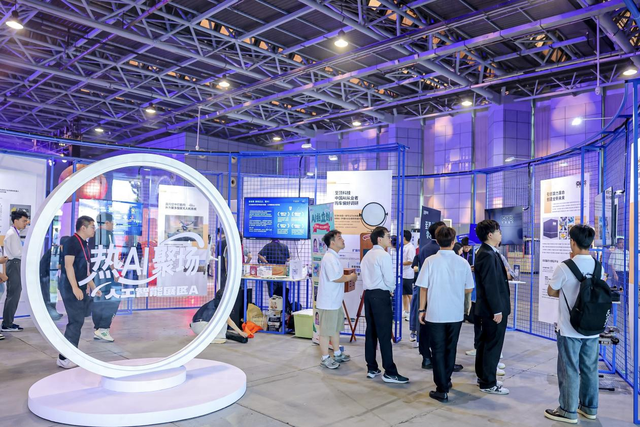
Group 1 - The "2025 Artificial Intelligence Development White Paper" indicates that by the end of 2024, the number of AI-related companies in China will reach 13,069, ranking second globally, with the US leading at 18,616 [1] - Shenzhen is projected to have over 2,000 AI-related companies by the end of 2024, ranking third in the country, including 143 recognized as "specialized and innovative" small giant enterprises and 744 as specialized and innovative small and medium enterprises [1] - Over 60% of AI companies in Shenzhen are focused on the application layer, highlighting an "application-driven" characteristic, with concentrations in smart security, intelligent robotics, and smart manufacturing [1] Group 2 - The demand for talent in Shenzhen's AI sector is expected to grow explosively in 2024, with core job recruitment increasing by over 40% year-on-year, particularly in cutting-edge fields such as large models (474.4% growth), smart chips (192.2% growth), and virtual/augmented reality (136.1% growth) [2] - Shenzhen's government has opened 4,065 data sets, providing over 2.82 billion data points, and the data trading scale is approximately 16.7 billion yuan, leading the nation [2] - The city has established and is building intelligent computing power exceeding 62 EFLOPS, with supply scheduling scales surpassing 30,000 PFLOPS [2] Group 3 - The white paper emphasizes that AI is at a critical transition from quantitative to qualitative change, with the integration of quantum computing, supercomputing, and intelligent computing representing the ultimate form of computing power [3] - Humanoid robots are driving the industrialization of embodied intelligence, while brain-machine interfaces are expanding into education, entertainment, and military sectors [3] - Intelligent agents are becoming a key pathway for the realization of Artificial General Intelligence (AGI) through autonomous perception, decision-making, and execution [3]
欧盟酝酿量子计算新战略:弥补资金缺口,减少对美资依赖
Hua Er Jie Jian Wen· 2025-07-01 09:01
Core Viewpoint - The European Commission is set to unveil an ambitious plan to establish a competitive quantum computing ecosystem in Europe, addressing funding and expertise challenges in the sector [1][2]. Group 1: Funding and Investment Challenges - The lack of funding opportunities, particularly in venture capital, is forcing many European quantum startups to relocate to the United States for business expansion [1][2]. - Despite having strong scientific capabilities and promising startups, Europe faces a dual challenge of funding and talent loss in the quantum technology sector [2]. Group 2: Strategic Measures for Quantum Ecosystem - The upcoming strategy aims to consolidate expertise, resources, and knowledge to build a quantum ecosystem within the EU, addressing the productivity gap with the US [3]. - The EU's flagship research funding program, Horizon Europe, will continue to support quantum research, and a Scale-Up Europe Fund is being prepared to assist tech companies in scaling [3]. Group 3: Digital Sovereignty Agenda - The quantum strategy is part of a broader digital sovereignty agenda aimed at reducing reliance on large US tech companies, with investments in AI, quantum computing, and semiconductors deemed crucial for technological sovereignty [4]. - The EU's recent initiative to establish five AI gigafactories has attracted 76 responses, with potential investments reaching €230 billion, significantly enhancing capabilities in AI development [4].
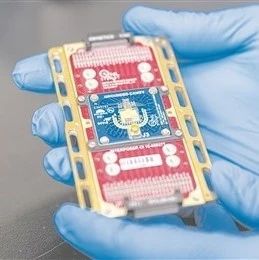
低温下精准控制量子比特的芯片问世|首席资讯日报
首席商业评论· 2025-07-01 04:00
Group 1 - A new chip for precise control of quantum bits at low temperatures has been developed, potentially increasing the number of quantum bits from dozens to millions [1] - Baidu has officially open-sourced the Wenxin large model 4.5 series, which includes models with 47 billion and 3 billion activation parameters, along with a dense model of 0.3 billion parameters [2] - DJI clarified that its drone batteries are not classified as power banks, and thus are not affected by new aviation security regulations [3] Group 2 - Huawei announced the open-sourcing of the Pangu 7B dense model and the 72B mixed expert model, furthering its commitment to AI technology and innovation [5] - Ant Group plans to invest 23.45 billion yuan in R&D for 2024, marking a historical high and maintaining over 10% of revenue in R&D for three consecutive years [6] - JD.com stated that it has not started issuing stablecoins and warned the public about misleading information regarding its blockchain technology [7] Group 3 - Honda has postponed the launch of its next-generation fuel cell module factory in Japan due to changes in the global hydrogen market [8] - Taobao Flash Sale has announced its sponsorship of the "Su Super" Changzhou team, highlighting various reasons for this partnership [9] - Beijing will implement AI education in primary and secondary schools, integrating it into the student evaluation system starting this fall [10] Group 4 - Huawei released a significant paper on its next-generation AI data center architecture, CloudMatrix, which aims to improve inference efficiency beyond NV H100 [11] - Lei Jun responded to He Xiaopeng's order for the Xiaomi YU7, expressing gratitude and commitment to accelerate production [12]


量子计算概念股IonQ Inc拉升涨超9%。得州立法机构通过IonQ支持的量子倡议,为该州在量子创新领域的领导地位铺平道路。
news flash· 2025-06-30 15:06
量子计算概念股 IonQ Inc 拉升涨超9%。得州立法机构通过IonQ支持的量子倡议,为该州在量子创新领 域的领导地位铺平道路。 ...
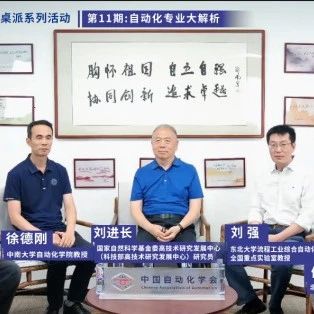
【视频回放】CAA卫星圆桌派第11期 “自动化专业大解析”圆满举办
机器人圈· 2025-06-30 13:53
Core Viewpoint - The automation profession is experiencing unprecedented development opportunities, closely linked to national strategies such as "new engineering" and "intelligent manufacturing" as outlined in the national "14th Five-Year Plan" [2] Group 1: Event Overview - The 2025 Intelligent Robot Key Technology Conference is set to provide high exposure for business cooperation and opportunities for participants [1] - The CAA Satellite Roundtable aims to facilitate deep exchanges among students, young scientists, and the public regarding technological advancements [1] Group 2: Professional Insights - Experts discussed the integration of automation technology in daily life and its critical role in national strategies, emphasizing its connection with artificial intelligence, quantum computing, and high-end equipment [2][4] - The event featured discussions on the evolution of automation from mechanical automation to the intelligent era, highlighting core competencies such as dynamic system modeling and feedback control [4][5] Group 3: Future Trends - The automation field is characterized by its ability to adapt and thrive amidst chaos, teaching how to establish order and seize opportunities during transformations [5] - The CAA Satellite Roundtable will continue to promote high-quality activities focused on the intersection of technology and education, supporting the development of young scientists and the public [5]
PCIe,进入光时代
半导体芯闻· 2025-06-30 10:07
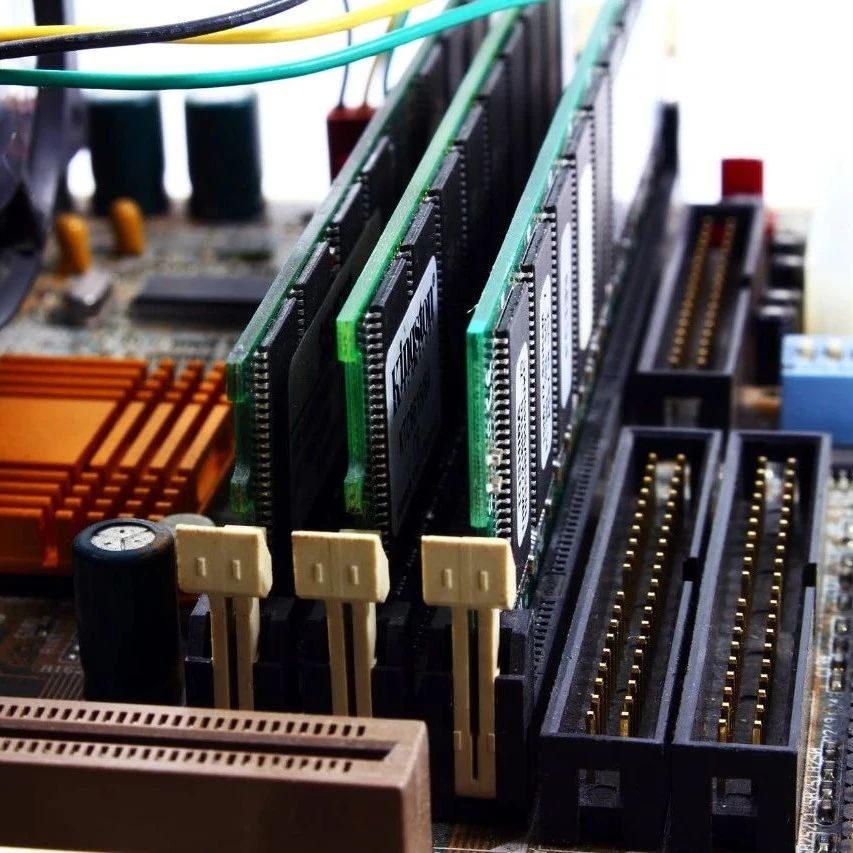
Core Viewpoint - The development of Artificial Intelligence (AI) has increased the demand for faster data transmission, which is reflected in the upcoming release of PCI Express 7.0, set for June 11, 2025, targeting data-driven applications such as AI/machine learning, 800G Ethernet, cloud computing, and quantum computing [1][4]. Group 1: PCIe 7.0 Features - PCIe 7.0 will feature a data rate of 128.0G transfers per second (GT/s) and a bidirectional rate of up to 512GB/s in a 16-lane configuration, utilizing PAM4 signaling and Flit-based encoding for improved power efficiency [1][4]. - The new version maintains backward compatibility with previous PCIe generations and continues the tradition of doubling I/O bandwidth every three years [1][4]. Group 2: Market Drivers and Applications - The primary driver for PCIe 7.0 improvements is to meet the bandwidth demands of large-scale data centers, high-performance computing (HPC), and other data-intensive markets adopting AI [4][5]. - The automotive sector is also a focus for PCI-SIG, with expectations that the industry will shift towards PCIe due to performance needs [5]. Group 3: Optical Solutions and Compliance - PCI-SIG has introduced the industry's first standard-based "optical-aware retimer" solution, which standardizes optical PCIe architecture for easier migration to existing PCIe 6.0 designs and devices [5]. - Compliance testing for PCIe 6.0 is ongoing, with a goal to have an integrator list by the end of 2025, while PCIe 8.0 is also in development [6].
北京:发布政策“组合拳” 多维度支持青年人才“安居乐业”
Huan Qiu Wang· 2025-06-30 04:17
Group 1 - The 2025 Zhongguancun Graduation Season event was held on June 24, showcasing a series of policy supports for college graduates in areas such as employment, entrepreneurship, housing, and living conditions [1] - Beijing Municipal Education Commission launched an innovation and entrepreneurship action plan for university students, introducing 15 measures across five areas: competition, incubation, investment, transformation, and financing, aimed at supporting students from local and other provinces' universities within five years of graduation [3] - Beijing Haidian District is promoting a collaborative ecosystem involving academic disciplines, talent, industry, and capital to create a youth-friendly city [5] Group 2 - The Haidian District has established the "Haizhi Hui" employment service system, which annually publishes no less than 80,000 job positions and provides one-time expansion subsidies for private and small-medium enterprises hiring young people [5] - The event featured a "Moment of Enlightenment" special roadshow, showcasing over 20 outstanding alumni hard-tech projects, primarily in artificial intelligence, covering future industries such as robotics and quantum computing [7] - A professional empowerment service team consisting of over 60 venture capital institutions, banks, and incubation park representatives provided investment invitations and financial services to support youth innovation and entrepreneurship [7]
当前科技金融发展的挑战与策略
Jin Rong Shi Bao· 2025-06-30 03:18
Core Insights - The importance of technological innovation and financial support for high-quality economic development is emphasized, highlighting the need for a synergistic relationship between technology, industry, and finance [1][2][3] Group 1: Importance of Technological Innovation - Technological innovation and its industrialization are seen as the core drivers of societal progress, capable of generating new industries and economic models [2] - Major technological breakthroughs have historically led to significant productivity leaps and societal transformations, with AI projected to contribute approximately $7 trillion to the global economy [2] Group 2: National Competition and Technological Innovation - Technological innovation has become a focal point in global competition, with countries increasing investments to secure technological supremacy [3] - The ability to convert technological advantages into economic strength is crucial for nations to maintain competitiveness in the global market [3] Group 3: Economic Transformation in China - For China, technological innovation is essential for transitioning from an investment-driven to an innovation-driven growth model, especially as traditional growth methods face challenges [4] - The need for independent innovation is highlighted as China seeks to cultivate new economic growth points [4] Group 4: Role of Technology Finance - Technology finance serves as a critical support system for innovation, addressing the funding needs of startups and managing the high risks associated with technological development [5] - Various financial instruments, including venture capital, are tailored to meet the unique demands of technology innovation and its industrialization [5] Group 5: Current State of Technology Finance in China - The technology finance ecosystem includes venture capital, capital markets, technology loans, and technology insurance, providing comprehensive financial services throughout the innovation lifecycle [7][8][9][10] - Venture capital has seen a structural shift, with early-stage investments rising to 67.43% of the market, indicating a focus on supporting nascent technology firms [7] Group 6: Challenges Facing Technology Finance - Weak identification capabilities for early-stage technology projects hinder effective funding allocation, exacerbating information asymmetry in the market [11] - The lack of patient capital poses a challenge, as the high-risk nature of technology innovation conflicts with the profit-driven tendencies of private investors [12] Group 7: Policy Recommendations - Enhancing talent and technology collaboration is essential for precise capital allocation, including the establishment of cross-disciplinary evaluation networks [15] - Cultivating patient capital through government-led initiatives and diversified funding sources is crucial for supporting long-term technology investments [16] - Creating a "closed-loop" mechanism for investment and exit strategies can stimulate private capital engagement in technology innovation [17][18] - Optimizing the investment environment by improving policy guidance and competitive dynamics will boost private sector confidence in technology investments [19] - Institutional innovation is necessary to ensure high-quality development of technology finance, including tailored regulatory frameworks and comprehensive monitoring systems [20]
低温下精准控制量子比特的芯片问世
news flash· 2025-06-29 22:11
低温下精准控制量子比特的芯片问世 智通财经6月30日电,量子计算机要真正实现大规模实用化,关键在于如何稳定、精准地控制海量量子 比特。澳大利亚悉尼大学与新南威尔士大学的研究团队在这一方向取得重要突破。他们开发出一种低温 下实现精准控制的芯片,有望将芯片上的量子比特数量从目前的几十个扩展到百万量级。相关成果近日 发表在《自然》期刊上。 ...
石墨烯中首次演示量子自旋霍尔效应 向实现量子计算和先进存储迈出重要一步
news flash· 2025-06-29 22:08
Core Insights - The scientists at Delft University of Technology have observed quantum spin flow in graphene without the need for an external magnetic field, marking a significant breakthrough in spintronics [1] - This discovery is a crucial step towards the realization of quantum computing and advanced storage devices, as published in the latest issue of Nature Communications [1] Industry Implications - The observation of quantum spin Hall effect in graphene could accelerate advancements in spintronics, which is essential for developing next-generation electronic devices [1] - The findings may lead to enhanced performance in quantum computing technologies, potentially transforming the landscape of data processing and storage solutions [1]