区块链

Search documents
金证股份跌2.01%,成交额4.59亿元,主力资金净流出5215.91万元
Xin Lang Cai Jing· 2025-09-15 06:32
Core Viewpoint - Jinzheng Technology Co., Ltd. has experienced fluctuations in stock price and trading volume, with a notable decline in net profit for the first half of 2025, indicating potential challenges in its financial performance [1][2]. Company Overview - Jinzheng Technology, established on August 21, 1998, and listed on December 24, 2003, is based in Shenzhen, Guangdong Province. The company provides comprehensive technical solutions for clients in the securities, fund, banking, futures, trust, exchange, and regulatory sectors, as well as engaging in digital economy projects with government and internet companies [2]. - The company's revenue composition includes customized services (45.26%), software income (36.55%), hardware income (15.00%), technology park leasing (3.19%), and other sources (0.01%) [2]. - Jinzheng Technology is classified under the computer-IT services sector and is associated with concepts such as domestic software, cybersecurity, digital currency, and blockchain [2]. Financial Performance - For the first half of 2025, Jinzheng Technology reported operating revenue of 1.208 billion yuan, a year-on-year decrease of 48.55%. The net profit attributable to shareholders was -38.83 million yuan, reflecting a year-on-year increase of 51.95% [2]. - The company has distributed a total of 518 million yuan in dividends since its A-share listing, with 83.17 million yuan distributed over the past three years [3]. Shareholder Information - As of June 30, 2025, the number of shareholders increased by 31.64% to 90,600, while the average circulating shares per person decreased by 24.04% to 10,446 shares [2]. - Among the top ten circulating shareholders, Hong Kong Central Clearing Limited holds 19.174 million shares, a decrease of 1.1281 million shares from the previous period. Southern CSI 1000 ETF and Huabao CSI Financial Technology Theme ETF have increased their holdings [3].

汤姆猫涨2.07%,成交额6.01亿元,主力资金净流出188.85万元
Xin Lang Cai Jing· 2025-09-15 06:15
Core Viewpoint - Tom Cat's stock price has shown fluctuations, with a recent increase of 2.07% to 5.43 CNY per share, while the company faces a decline in revenue and net profit year-on-year [1][2]. Financial Performance - For the first half of 2025, Tom Cat reported a revenue of 463 million CNY, a year-on-year decrease of 19.62%, and a net profit of -30.33 million CNY, representing a decline of 141.34% [2]. - The company's stock price has decreased by 5.40% year-to-date, with a 0.00% change over the last five trading days, a 6.38% decline over the last 20 days, and a 2.07% increase over the last 60 days [1]. Shareholder Information - As of June 30, 2025, the number of shareholders increased to 268,400, with an average of 12,245 shares held per shareholder, a decrease of 1.19% [2]. - The top ten circulating shareholders include significant holdings from various ETFs, with notable increases in shares held by Southern CSI 1000 ETF and others [3]. Business Overview - Tom Cat, established in June 2007 and listed in May 2015, operates in the mobile internet cultural industry, with its main revenue sources being advertising (72.41%) and new commercial services (11.19%) [1]. - The company is categorized under the media and gaming industry, with involvement in intellectual property, online education, and e-commerce [1]. Dividend Information - Since its A-share listing, Tom Cat has distributed a total of 248 million CNY in dividends, with no dividends paid in the last three years [3].

支付产业报告:卡组织驱动支付产业变革
2 1 Shi Ji Jing Ji Bao Dao· 2025-09-15 04:37
Core Insights - The report by China UnionPay and Visa outlines the current state and trends of the global and Chinese payment industry, highlighting that China's payment ecosystem is now characterized by global scale, deep technological integration, and diverse coexistence [1][2] Group 1: Global Payment Industry Trends - The global payment industry is undergoing profound changes, with trends of fragmentation and infrastructure development coexisting [2] - New technologies such as AI, big data, cloud computing, blockchain, and biometrics are reshaping payment processes and user experiences [2] - New payment models like account-to-account payments, buy now pay later, and encrypted wallet payments are rapidly emerging [2] Group 2: Characteristics of China's Payment Industry - The parallel issuance of physical and digital cards has become the mainstream model, with digital wallets emerging as core payment tools [3] - A variety of payment methods, including card swiping, QR codes, NFC, palm scanning, and facial recognition, are widely adopted across multiple high-frequency transaction scenarios [3] - Collaboration among diverse market participants, including commercial banks, card organizations, and non-bank payment institutions, is enhancing operational efficiency [4] Group 3: Challenges in the Payment Industry - The industry is transitioning from a phase of rapid expansion to one focused on structural transformation, necessitating an emphasis on quality and optimization [5] - There is an imbalance in development between the account side and acceptance side, with small acquiring institutions facing significant operational pressures [6] - The lack of unified rules and standards for barcode payments and the need for improved interoperability are limiting further industry growth [6] Group 4: Innovation by Card Organizations - Card organizations like China UnionPay and Visa are actively transforming by leveraging technological innovation and ecosystem development [7] - These organizations are expanding their roles beyond traditional payment processing to include information handling, traffic guidance, and value-added services [7] - China UnionPay is designing differentiated payment solutions tailored to specific scenarios, aligning with government consumption promotion policies [7] Group 5: Future Outlook - The payment industry is entering a new development stage characterized by high-level openness, a multi-faceted market structure, and the transformative impact of new technologies [8] - Continuous collaboration, technological advancement, and international cooperation are essential for achieving high-quality development in the payment industry [8]

保险科技如何终结农业保险欺诈?从技术破局到实战案例全解析
Sou Hu Cai Jing· 2025-09-15 04:26
Group 1 - The core issue of agricultural insurance fraud is alarming, with a complete chain of fraud existing from product design to claims settlement, leading to significant financial losses in the industry [4][5] - In the product design phase, the lack of accurate agricultural data results in a "one-size-fits-all" rate, creating opportunities for fraud, as seen in a case where compensation varied by 40% within the same area [4] - The underwriting phase is particularly problematic, with instances of officials using farmers' identities for fraudulent insurance applications, leading to significant financial misconduct [4] Group 2 - Insurance technology is being leveraged to reconstruct the trust system in agricultural insurance, with digital transformation helping to curb fraud risks from the source [6] - Index insurance utilizes satellite remote sensing and meteorological big data to create clear compensation standards, significantly reducing the need for manual assessments and cutting costs by 80% [7] - Blockchain technology ensures the integrity of information, as demonstrated by a case where the false insurance rate dropped from 15% to below 3% after implementing a blockchain system [8] Group 3 - Real-time monitoring through IoT devices has been implemented to expose fraudulent activities, such as in a pig insurance case where abnormal deaths trigger automatic alerts [9] - Successful case studies highlight the effectiveness of technology in preventing fraud, with one insurance company recovering 80,000 yuan by identifying discrepancies in reported losses through blockchain [10] - Satellite remote sensing has expedited claims processing by 80%, with a case showing that damage assessments were completed in 4 hours instead of the traditional 7 days, significantly reducing dispute rates [11] Group 4 - The future direction of agricultural insurance involves building an ecosystem that discourages fraud through comprehensive data integration and the cultivation of multi-skilled professionals [12] - The battle against fraud in agricultural insurance is fundamentally a contest between technology and human nature, with advancements in satellite monitoring, blockchain, and AI playing crucial roles in restoring trust [13]


省广集团跌2.11%,成交额9.39亿元,主力资金净流出1.46亿元
Xin Lang Zheng Quan· 2025-09-15 03:09
Core Viewpoint - The company, Shenguang Group, has experienced fluctuations in its stock price and trading volume, with a recent decline of 2.11% on September 15, 2023, and a total market capitalization of 14.539 billion yuan [1] Financial Performance - For the first half of 2025, Shenguang Group reported a revenue of 9.275 billion yuan, representing a year-on-year growth of 22.78%, while the net profit attributable to shareholders was 60.8446 million yuan, an increase of 3.06% compared to the previous year [2] - Since its A-share listing, the company has distributed a total of 559 million yuan in dividends, with 148 million yuan distributed over the last three years [3] Stock Market Activity - As of September 15, 2023, the stock price was 8.34 yuan per share, with a trading volume of 939 million yuan and a turnover rate of 6.43% [1] - The stock has seen a year-to-date increase of 4.62%, with a 2.33% rise over the last five trading days, a 3.35% increase over the last 20 days, and a 13.93% increase over the last 60 days [1] Shareholder Structure - As of June 30, 2025, the number of shareholders decreased by 6.69% to 216,000, while the average circulating shares per person increased by 7.17% to 7,990 shares [2] - The top ten circulating shareholders include various ETFs, with notable increases in holdings from Southern CSI 1000 ETF and Huaxia CSI 1000 ETF [3]

未来,债权转让面对AI能做些什么?
Sou Hu Cai Jing· 2025-09-15 02:59
Group 1 - Traditional debt transfer processes are being transformed by AI technology, addressing issues such as lengthy procedures and uncertainty [2][3] - AI can compress the traditional debt transfer process from weeks to under 48 hours, improving efficiency by over 80% through automated assessment and matching capabilities [3] - The company has built a large debt information database to quickly match creditors and assignees, enhancing transaction speed [3] Group 2 - AI systems can accurately identify risk points by analyzing vast amounts of debt cases, providing compliance suggestions and improving transaction safety [4] - The company adheres to legal regulations, ensuring that AI-generated agreements are reviewed by professional legal teams to protect user rights [4] - The integration of blockchain technology ensures that transaction data is immutable, significantly reducing legal dispute risks and allowing for real-time tracking of transfer status [5] Group 3 - Experts indicate that the combination of AI and debt transfer is a natural trend in financial technology development, with AI expected to play a more significant role in the future [6] - Future advancements may lead to a fully integrated one-stop debt transfer platform, enhancing the precision of assessments and matches as algorithms improve [6] Group 4 - The company's practices provide low-cost, high-trust solutions for individual creditors and set a benchmark for industry digital upgrades [7] - In the past year, the banking sector disposed of 3.8 trillion yuan in non-performing assets, with personal non-performing loan transfers increasing by 64%, accounting for nearly 70% of total non-performing asset transfers [7] - Increased participation in the market will help develop more mature solutions in areas such as credit connection and consumer rights protection [7]

据悉双方的会谈持续了近六个小时,
Xin Yong An Guo Ji Zheng Quan· 2025-09-15 02:50
Economic Indicators - US consumer confidence fell to a four-month low, with the Michigan Consumer Sentiment Index dropping to 55.4 from 58.2[11] - The US Congressional Budget Office revised down its economic growth forecast for 2025 to 1.4%, while raising the inflation rate prediction to 3.1%[11] - In August, China's total social financing increased by 2.6 trillion RMB (approximately $365 billion), below the expected 2.5 trillion RMB[11] Market Performance - The Shanghai Composite Index decreased by 0.12% to 3870.6 points, while the Shenzhen Component fell by 0.43%[1] - The Hang Seng Index closed up 1.16% at 26388.16 points, with the Hang Seng Tech Index rising by 1.71%[1] - The Dow Jones Industrial Average dropped by 0.59%, while the Nasdaq Composite gained 0.44%, reaching a new all-time high[1] Trade Relations - New round of US-China trade talks commenced in Madrid, focusing on trade, economy, and TikTok[11] - China initiated anti-dumping and anti-discrimination investigations against the US semiconductor industry prior to the talks[1] Consumer Behavior - Long-term inflation expectations among US consumers rose for the second consecutive month, with a one-year inflation expectation of 4.8%[11] - Concerns over unemployment have increased, impacting consumer confidence and economic outlook[11] Credit and Financing - China's credit expansion slowed in August, with new RMB loans of 589 billion, significantly below the forecast of 700 billion[11] - The demand for financing remains weak, particularly in the real estate sector, affecting overall loan demand[11]
恒银科技跌2.02%,成交额5786.42万元,主力资金净流出502.56万元
Xin Lang Cai Jing· 2025-09-15 02:49
Core Viewpoint - Hengyin Technology's stock price has shown volatility, with a year-to-date increase of 36.35% but a recent decline in the last five and twenty trading days [1] Financial Performance - For the first half of 2025, Hengyin Technology achieved operating revenue of 191 million yuan, representing a year-on-year growth of 6.29% [2] - The net profit attributable to shareholders for the same period was 14.31 million yuan, a significant increase of 139.05% year-on-year [2] Stock Market Activity - As of September 15, Hengyin Technology's stock price was 10.69 yuan per share, with a market capitalization of 5.564 billion yuan [1] - The stock has experienced a net outflow of 502.56 thousand yuan in principal funds recently, with significant selling pressure [1] - The company has appeared on the "Dragon and Tiger List" twice this year, with the most recent net purchase of 11.1883 million yuan on June 25 [1] Shareholder Information - As of June 30, 2025, the number of shareholders increased to 58,200, up by 4.80% from the previous period [2] - The top ten circulating shareholders include notable funds, with Hua Bao Zhong Zheng Financial Technology Theme ETF being the fifth largest shareholder [3] Business Overview - Hengyin Technology, established on May 12, 2004, and listed on September 20, 2017, focuses on providing smart banking solutions centered around financial self-service equipment [1] - The revenue composition includes cash-related equipment and services (64.30%), non-cash equipment and services (18.01%), equipment parts (14.24%), and technical services (3.46%) [1]

金桥信息跌2.02%,成交额1.00亿元,主力资金净流出2092.97万元
Xin Lang Cai Jing· 2025-09-15 02:23
Company Overview - Jinqiao Information is located in Xuhui District, Shanghai, established on August 17, 1994, and listed on May 28, 2015. The company specializes in smart scene solutions, smart building solutions, and big data and cloud platform services [1][2] - The revenue composition of Jinqiao Information is as follows: smart scene solutions 51.82%, smart building solutions 26.73%, and big data and cloud platform services 21.45% [1] Financial Performance - For the first half of 2025, Jinqiao Information achieved operating revenue of 273 million yuan, representing a year-on-year growth of 50.65%. However, the net profit attributable to shareholders was -40.71 million yuan, an increase of 24.18% year-on-year [2] - Since its A-share listing, Jinqiao Information has distributed a total of 178 million yuan in dividends, with 21.92 million yuan distributed in the last three years [3] Stock Market Activity - On September 15, Jinqiao Information's stock price fell by 2.02%, trading at 17.97 yuan per share, with a total market capitalization of 6.566 billion yuan [1] - The stock has seen a year-to-date increase of 41.27%, but has declined by 3.23% over the last five trading days, 10.33% over the last 20 days, and 6.26% over the last 60 days [1] - The company has appeared on the "Dragon and Tiger List" seven times this year, with the most recent appearance on May 15, where it recorded a net buy of -82.28 million yuan [1] Shareholder Structure - As of June 30, 2025, Jinqiao Information had 68,600 shareholders, a decrease of 10.58% from the previous period. The average number of circulating shares per person increased by 11.49% to 5,324 shares [2] - Notable new institutional shareholders include: - Fortune New Industry Stock A/B (001048) as the third-largest shareholder with 7.8524 million shares - Hua'an Media Internet Mixed A (001071) as the fifth-largest shareholder with 5.7334 million shares - Caitong Asset Management Digital Economy Mixed Initiation A (017483) as the sixth-largest shareholder with 5.4919 million shares [3]

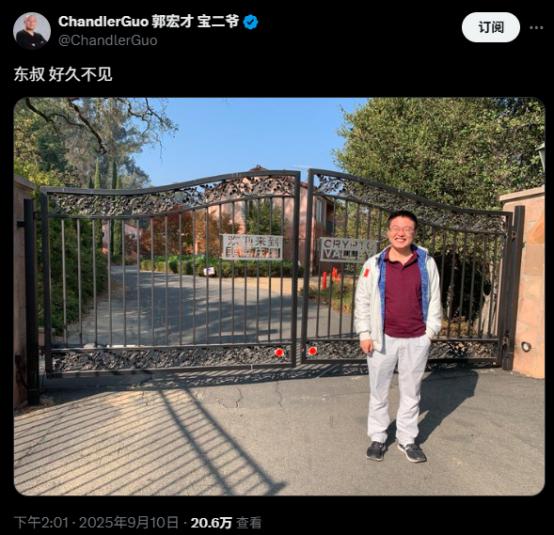
赵东的故事:从“OTC第一人”到铁狱7年,被迫锁仓仍成富豪
3 6 Ke· 2025-09-15 02:05
Core Viewpoint - The article discusses the life and career of Zhao Dong, a notable figure in the cryptocurrency industry, highlighting his rise, fall, and the impact of his actions on the market and community [3][9][12]. Group 1: Zhao Dong's Early Career - Zhao Dong, born in 1982 in rural Shanxi, graduated from Dalian Jiaotong University and initially struggled academically, which led him to learn software technology [3]. - He co-founded the weather app Moji Weather, which gained over 10 million users by 2011, marking his first significant entrepreneurial success [3][4]. - After leaving Moji Weather in 2012, Zhao Dong earned approximately 7 million RMB, which set the stage for his future ventures [4]. Group 2: Entry into Cryptocurrency - Zhao Dong entered the cryptocurrency space in 2013, purchasing his first Bitcoin for 400 RMB and quickly expanding his investments as Bitcoin prices surged [4][5]. - By the end of 2013, he held over 15,000 Bitcoins, valued at over 1 billion RMB at the time, showcasing his rapid wealth accumulation [5]. Group 3: Challenges and OTC Business - In 2014, Zhao Dong faced significant losses due to market crashes, losing over 1.5 billion RMB that year and accumulating substantial debt [5][9]. - He identified an opportunity in the OTC market, leveraging his network to facilitate trades and build a large OTC trading platform, which helped him recover financially [6][9]. Group 4: Legal Troubles and Imprisonment - Zhao Dong was arrested in July 2020, initially charged with illegal business operations, later facing charges of money laundering and illegal foreign exchange trading [9][10]. - He was sentenced to seven years in prison, marking a dramatic fall from his previous status as a leading figure in the OTC market [9][11]. Group 5: Current Status and Industry Context - Despite his imprisonment, Zhao Dong retains significant wealth through early investments in Tether and Bitcoin, indicating potential for future influence upon release [11]. - The cryptocurrency landscape has evolved, with regulatory changes in regions like the US and Hong Kong, leading to a more structured environment for cryptocurrency operations [12][14]. - The article reflects on the fortunes of other early cryptocurrency figures, noting that while some have thrived, others have faced significant challenges, emphasizing the unpredictable nature of the industry [11][12].