能源转型

Search documents
国际原油:供需忧虑施压,美布两油均跌超1%
Sou Hu Cai Jing· 2025-10-20 14:18
Core Viewpoint - International crude oil prices continue to decline for the third consecutive week, driven by weak growth expectations and ongoing energy transitions in countries like the EU, which are suppressing the overall outlook for crude oil [1] Group 1: Market Conditions - Analysts indicate that concerns over supply surplus, weak demand, and tariff tensions are collectively impacting crude oil prices, pushing them towards annual lows [1] - Both WTI and Brent crude oil prices fell by over 1% in a single day, currently reported at $56.22 per barrel and $60.24 per barrel, respectively [1]
天津“车网互动”实现百兆瓦级突破 验证规模化应用可行性
Zhong Guo Xin Wen Wang· 2025-10-20 13:37
Core Insights - The "Vehicle-Grid Interaction" initiative in Tianjin has successfully demonstrated the feasibility of large-scale applications, achieving a peak load response capability of 137.4 MW and 139.7 MW for peak shaving and valley filling scenarios respectively, equivalent to integrating a 100 MW "charging treasure" into the grid [1][2] Group 1: Event Overview - The initiative was guided by the Tianjin Municipal Development and Reform Commission and led by the State Grid Tianjin Electric Power Company, aggregating over 50,000 charging piles and involving approximately 15,000 vehicles [1] - The event resulted in a peak load reduction of about 320,000 kWh, saving vehicle owners approximately 160,000 yuan in charging costs [1] Group 2: Technological and Operational Insights - The "Vehicle-Grid Interaction" system was developed in collaboration with 19 charging and battery swap operators, covering various scenarios including public charging stations and community charging piles [1] - The virtual power plant technology played a crucial role by aggregating dispersed power resources via the cloud, ensuring stable grid operation, with a total capacity of 316 MW from six types of resources including charging stations, photovoltaics, and energy storage [1] Group 3: Industry Implications - The initiative is seen as a significant milestone in implementing national pilot tasks and constructing a new power system, providing practical support for replicable and scalable "Tianjin experience" [2] - The potential of electric vehicles as "mobile energy storage units" is gradually being realized, with the total number of electric vehicles in China reaching 36.89 million by the end of June, accounting for 10.27% of the total vehicle ownership [2]
倒计时3天!2025年国际能源变革论坛即将开幕!
国家能源局· 2025-10-20 11:23
Core Viewpoint - The 2025 International Forum on Energy Transition aims to showcase China's achievements in energy transformation and promote international cooperation in clean energy, aligning with global development and governance initiatives proposed by President Xi Jinping [5][6]. Group 1: Forum Overview - The forum will take place from October 23rd to 25th, 2025, in Suzhou, China, focusing on the theme "A Decade of Collaboration Drives Energy Transitions for a Green Future" [2][5]. - It will be co-hosted by the National Energy Administration, the International Renewable Energy Agency, and the Jiangsu Provincial Government [5]. Group 2: Agenda and Topics - The agenda includes 11 sub-forums and 2 thematic events on October 23rd, covering key areas such as renewable energy development, hydrogen energy, nuclear power, urban energy transition, and AI in energy [6]. - The opening ceremony, keynote speeches, and results release will occur on the morning of October 24th, followed by high-level dialogues on global clean energy cooperation and energy transition risks [6]. Group 3: Participation and Goals - The forum will invite energy ministers from relevant countries, ambassadors, and leaders from international organizations to foster discussions on energy transformation and cooperation [5][6]. - The event aims to explore new paths for global energy transformation and establish a new chapter in international clean energy cooperation [6].


玻利维亚新总统能否化解经济困境
Xin Hua She· 2025-10-20 10:37
Core Points - The Bolivian presidential election was won by moderate candidate Rodolfo Pás Pereira of the Christian Democratic Party, marking a shift from nearly 20 years of leftist governance [1][2] - Pás secured 54.5% of the votes in the second round, defeating former president Jorge Quiroga, who received 45.5% [2] - Pás's campaign focused on pragmatic policies aimed at economic recovery, including tax incentives for SMEs, improving the business environment, and energy transition [2][4] Economic Challenges - Bolivia faces multiple economic issues, including a shortage of dollars, fuel, and high inflation, which have impacted citizens' lives [4][5] - Pás plans to eliminate fuel subsidies for the general public and instead provide targeted assistance to the most needy [4] - The new government aims to increase domestic oil production through restructuring state-owned enterprises and allowing private sector participation in the energy industry [4] Governance and Reforms - Pás emphasizes the need for judicial reform, anti-corruption measures, and the development of vocational education [2][4] - The government intends to rationalize public spending and seek bilateral cooperation to secure more dollars [4] - Pás opposes shock therapy reforms, advocating for gradual changes to protect vulnerable populations [4][6] Foreign Policy and Resource Management - Pás aims to prioritize national interests and economic cooperation in foreign policy, seeking to enhance Bolivia's international standing [4] - He views lithium resources as a key industry and supports foreign investment while promoting local employment and industry development [4]
风能北京宣言2.0:风电年新增装机不低于1.2亿千瓦
Zhong Guo Dian Li Bao· 2025-10-20 09:39
Core Points - The "Wind Energy Beijing Declaration 2.0" was officially released during the 2025 Beijing International Wind Energy Conference, setting ambitious targets for wind power installation in China [1] - The declaration aims for an annual new installation of no less than 120 million kilowatts during the 14th Five-Year Plan period, with a cumulative installed capacity of 1.3 billion kilowatts by 2030, 2 billion kilowatts by 2035, and 5 billion kilowatts by 2060 [1] - The previous "Wind Energy Beijing Declaration 1.0" had set lower targets, which have been exceeded, indicating significant growth in China's wind power industry [1] Industry Insights - The declaration is based on consensus from over 1,000 wind energy companies globally and aligns with China's new round of national contributions to climate goals [2] - It emphasizes that China's onshore and offshore wind energy resource development potential exceeds 12.7 billion kilowatts, positioning wind power as a highly competitive low-carbon energy source [2] - The declaration outlines five key initiatives: aligning industrial planning with climate goals, improving market policies for high wind power ratios, collaborative research on key technologies, promoting integration with hydrogen and ammonia industries, and deepening international cooperation to build resilient supply chains [2] - The declaration is seen as a guiding framework for the long-term development of the wind power industry and highlights China's commitment to global energy transition [2]

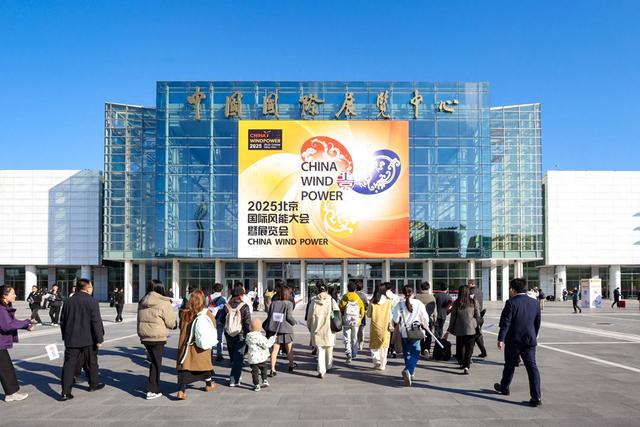
北京国际风能大会暨展览会启幕,发布《风能北京宣言2.0》
Bei Jing Ri Bao Ke Hu Duan· 2025-10-20 09:26
Core Insights - The wind power industry is positioned as a key driver of green energy and is at a critical juncture for future energy dynamics [1] - The 2025 Beijing International Wind Energy Conference and Exhibition (CWP 2025) is taking place from October 20 to 22, 2023, in Beijing, focusing on global energy transition and sustainable development [3] Industry Overview - The conference theme is "Promoting Global Energy Transition, Working Together for Sustainable Development," attracting experts and nearly a thousand companies from the wind power sector, along with over 100,000 professional attendees [3] - The event will feature discussions on the future of wind power, energy transformation, and sustainable development, with participation from international representatives and experts from organizations like the World Economic Forum (WEF) and the Global Wind Energy Council (GWEC) [3] Exhibition Highlights - CWP 2025 showcases exhibitors from over 20 countries, including China, Germany, Denmark, and the Netherlands, highlighting the latest technologies and achievements across the entire wind power industry chain [5] - The exhibition aims to cover the full industry chain, from complete machines and core components to emerging fields like energy storage and hydrogen energy [5] Policy and Initiatives - The conference will launch the "Beijing Wind Energy Declaration 2.0," aimed at uniting global consensus in the wind power industry and providing a clear action path for addressing climate change and achieving national climate goals [5] - The declaration outlines five initiatives to accelerate wind power development, including aligning industry planning with climate goals, enhancing policy frameworks, increasing technological innovation, promoting integrated development, and deepening international cooperation [5] Development Goals - Under the guidance of national contribution targets, the declaration sets a reasonable development goal for China's wind power, aiming for an annual new installed capacity of no less than 120 million kilowatts during the 14th Five-Year Plan, with offshore wind power contributing at least 15 million kilowatts annually [7] - By 2030, the cumulative installed capacity of wind power in China is expected to reach 1.3 billion kilowatts, with targets of 2 billion kilowatts by 2035 and 5 billion kilowatts by 2060, supporting the energy sector's goal of achieving carbon neutrality [7]
专访王志轩: 以太阳能、风能替代传统能源的绿色转型趋势不会变
2 1 Shi Ji Jing Ji Bao Dao· 2025-10-20 09:20
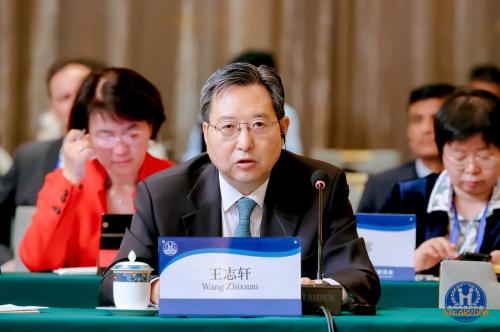
Core Viewpoint - The green transition is a significant trend in China, with a focus on achieving dual carbon goals and addressing energy, environmental, and resource challenges during the "14th Five-Year Plan" period [1][4]. Group 1: Trends and Key Points - China's environmental quality is expected to continue improving, and the shift from fossil fuels to renewable energy sources like solar and wind will remain unchanged [5][6]. - Three critical points to consider are: 1. The endpoint signifies the end of traditional pollution control models [5]. 2. The starting point involves new environmental requirements, issues, and policy layouts [5]. 3. The risk point emphasizes the need for the government to enhance future risk management, particularly regarding red lines and bottom lines [5][6]. Group 2: Energy Transition Challenges - The energy transition is characterized as a fundamental, long-term, and comprehensive economic and social transformation centered around electricity, facing new challenges in energy security, resource constraints, and environmental impacts [1][6]. - The transition from coal power as the main energy source to a regulatory role for system stability is noted, with coal's economic viability declining due to reduced operating hours [9]. Group 3: Policy and Market Coordination - The relationship between energy, environment, and climate is crucial, with energy transition being essential to controlling greenhouse gas emissions and achieving climate goals [8]. - Effective policy and market coordination are necessary to balance energy security, environmental sustainability, and economic transition [8][12]. Group 4: Green Electricity Consumption - Factors limiting green electricity consumption include system costs and stability issues, as well as the need for a robust consumption mechanism [12]. - The government is encouraged to enhance policy guidance and regulation, improve procurement mechanisms, and create a fair market environment for enterprises [13].

镜观中国|绿电奔涌!注入中国发展新动能
Xin Hua Wang· 2025-10-20 08:05
Group 1 - The core viewpoint emphasizes China's significant advancements in renewable energy, achieving a breakthrough in the renewable energy system, which is now the largest globally, surpassing coal power in installed capacity [3][10][32] - The "14th Five-Year Plan" period has seen a continuous improvement in the green content of industries, with over 6,400 national green factories and nearly 500 green industrial parks established by September 2025 [6][8] - The new energy sector is experiencing rapid technological innovation, leading to China holding over 40% of global patents in renewable energy technologies [10][30] Group 2 - Major energy projects are being completed, including the world's largest clean energy corridor, which can meet the annual electricity needs of 300 million people [13][15] - The optimization of energy supply structures is driving a shift towards greener energy consumption, with non-fossil energy's share in total energy consumption increasing by 1 percentage point annually [19][20] - By 2025, the installed capacity of new energy storage in China is expected to reach approximately 95 million kilowatts [12] Group 3 - China's total installed capacity for wind and solar power has already met the 2030 targets ahead of schedule, contributing to a reduction of approximately 4.1 billion tons of carbon emissions for other countries through exports of wind and solar products during the "14th Five-Year Plan" [32][35] - The integration of green electricity into various sectors is accelerating, with initiatives like green airports and low-carbon accommodations being developed [28][30] - The number of new energy vehicles in China is projected to reach 31.4 million by 2024, marking a fivefold increase from the end of the "13th Five-Year Plan" [24]
全球光伏或迎来理性发展期
中国能源报· 2025-10-20 07:29
Core Viewpoint - The global photovoltaic (PV) industry is transitioning from a phase of rapid growth to a stage of rational development, with a projected global PV installation capacity of approximately 3.68 terawatts from 2025 to 2030, which is a downward adjustment of 5% from previous forecasts [1][3]. Market Dynamics - The International Energy Agency (IEA) has revised its forecast for global renewable energy generation capacity, indicating a reduction of about 248 gigawatts, with PV installations accounting for nearly 70% of this decrease [5]. - In the U.S., the forecast for PV capacity is expected to decline by over 140 gigawatts due to changes in tax incentives for residential solar systems, which have dampened installation enthusiasm [5]. - Issues such as insufficient grid capacity and complex approval processes continue to hinder PV project deployment in various regions [5]. Regional Insights - In contrast to the U.S., the European PV market is showing more resilience, with countries like Germany, Spain, Italy, and Poland expected to drive continued growth through renewable energy project auctions [6]. - The European PV industry is anticipated to maintain high demand levels due to declining costs, advancements in storage technology, and rising residential electricity prices [6]. Demand Resilience - Despite the IEA's downward revision, the fundamental demand for PV remains strong, with projections indicating that by 2030, renewable energy will account for 43% of global electricity generation, with solar PV surpassing hydropower as the leading renewable source [8]. - The global electricity demand is expected to grow at an average rate of 3.9% annually from 2025 to 2027, with renewable energy meeting 95% of this growth, half of which will come from solar PV [8]. Emerging Markets - Emerging markets in the Middle East, North Africa, and Southeast Asia are becoming new growth hubs for global PV, driven by the need to address fossil fuel price volatility and electricity shortages [9]. - Countries like Saudi Arabia and Pakistan are accelerating national PV projects, contributing to rapid increases in renewable energy capacity [9]. Industry Evolution - The PV industry is shifting from a focus on installation volume to enhancing system efficiency, grid integration, and storage capabilities [10]. - The IEA emphasizes the need for simultaneous upgrades in grid infrastructure, storage expansion, and flexible dispatch mechanisms to fully realize PV potential [12]. Policy and Future Outlook - The IEA highlights the importance of stable and transparent policy frameworks to boost confidence in the PV sector, as fluctuations in U.S. policies and inconsistent execution within the EU impact development [13]. - The future of the PV industry will involve deeper integration with storage, grid, and hydrogen technologies, aiming to create a more secure, stable, and efficient energy system [13].
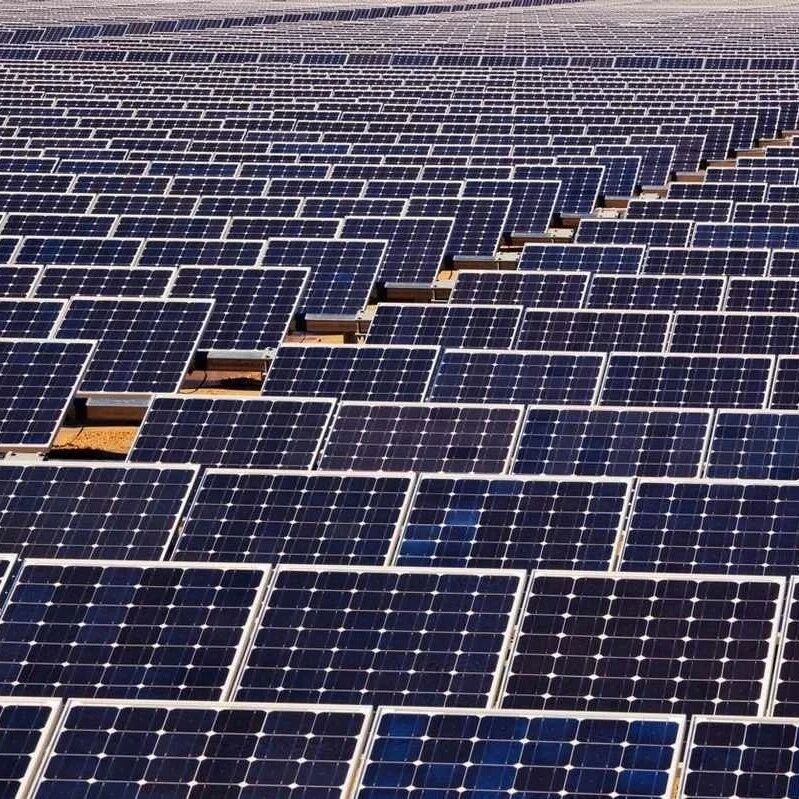
打造西北能源转型“新标杆” 新疆首个350兆瓦人工硐室型压缩空气储能工程通过评审
Zhong Guo Xin Wen Wang· 2025-10-20 06:53
Core Insights - The successful completion of the feasibility study for the Urumqi Daban City 350 MW compressed air energy storage project marks a significant step towards the implementation of China's first commercial large-scale long-duration independent energy storage project in Xinjiang, facilitating the transition to a new power system in the region [1][8] - The project is expected to provide a replicable model for the "source-storage synergy" development in areas rich in wind and solar resources across the country [1] Technical Innovations - The project utilizes advanced technology with a single unit power of 350 MW and a storage and release duration of 6 hours, operating over 330 days a year, effectively stabilizing the fluctuations of wind and solar power generation [3] - A "ground and underground collaboration" model enhances system efficiency, utilizing domestic multi-stage axial flow and centrifugal compressor units along with advanced heat exchange systems [3] - The project incorporates digital control technology to create a fully intelligent power station, improving operational efficiency and accumulating valuable data for future applications [3] Economic and Ecological Impact - Upon completion, the project is projected to facilitate the consumption of 693,000 MWh of new energy green power annually, reducing carbon dioxide emissions by approximately 540,500 tons each year, supporting Xinjiang's dual carbon goals [5] - The construction phase will create over 1,200 jobs, while the operational phase will provide nearly 100 high-end technical positions, driving local employment and talent development [5] - The project will stimulate the local steel, building materials, and cement industries, promoting efficient and circular utilization of wind and solar resources [5] Regional Energy Strategy - Xinjiang, being one of China's richest regions in wind and solar resources, is strategically linked to the Hexi Corridor, which is crucial for energy transmission in the northwest [6] - The project aims to create a complementary and collaborative energy storage and supply system, addressing the challenges of renewable energy waste and enabling efficient local consumption of clean energy [6] Integration of Energy Sources - The Daban City project is a key component of the "Xinjiang source-storage integrated green power station," promoting the coupling of technological and industrial innovation [7] - The innovative model combines wind and solar power with multi-source energy storage and digital control, effectively smoothing out the output of renewable energy and reducing grid impact [7] - This model is expected to enhance energy security, drive industrial collaboration, and serve as a demonstration for the "source-storage integration" approach in the northwest region [7]