
云计算

Search documents
FTC升级对微软反垄断调查,向竞争对手质询云与AI业务
Ge Long Hui A P P· 2026-02-13 16:22
Core Viewpoint - The Federal Trade Commission (FTC) is accelerating its investigation into Microsoft regarding potential illegal monopolization in the enterprise computing market through its cloud software and AI products, including Copilot [1] Group 1: Investigation Details - The FTC has recently issued civil investigative demands to Microsoft's competitors in the commercial software and cloud computing markets [1] - These demands include inquiries about Microsoft's licensing and other business practices [1] - At least six companies have received such requests, which are akin to civil subpoenas [1] Group 2: Evidence Gathering - The FTC is seeking evidence to demonstrate that Microsoft makes it more difficult for customers to use competitors' cloud services alongside products like Windows and Office [1] - The agency has also requested information regarding Microsoft's bundling of AI, security, and identity software with products such as Windows and Office [1]
日本,陷入缺芯困境
Sou Hu Cai Jing· 2026-02-13 12:54
Core Viewpoint - The traditional advantages of Japan's consumer electronics industry are being gradually weakened due to structural changes in global storage chip supply, driven by the rapid growth in AI server demand [2][3]. Group 1: Industry Changes - The demand for high-bandwidth and high-capacity storage chips is surging due to AI model training and cloud computing, marking a fundamental shift in the demand landscape [2]. - Major storage manufacturers are reallocating production capacity away from low-end consumer storage chips to prioritize high-margin AI-related chip production [3]. - Japan's consumer electronics companies, traditionally relying on stable supply chains, are facing challenges as the supply of general storage chips becomes tight, impacting their product planning and market pricing strategies [2][3]. Group 2: Cost and Profitability Pressures - Rising costs of storage chips are squeezing the profit margins of Japanese consumer electronics firms, creating a dilemma between passing costs to consumers or absorbing them internally [3][4]. - The pressure is particularly acute in high-volume product categories like TVs and home appliances, where even mid-to-high-end products are affected by rising storage chip costs [4]. Group 3: Competitive Positioning - Japanese companies are shifting towards high-value, premium products to avoid price wars, but the overall increase in storage chip costs limits their ability to maintain competitive pricing [4]. - The traditional bargaining power of Japanese consumer electronics firms is diminishing as AI and cloud service clients become the primary profit sources for storage manufacturers [5]. - If Japanese companies do not adapt to the new supply chain dynamics and continue to rely on traditional cyclical thinking, they risk further contraction in the consumer electronics sector [5].


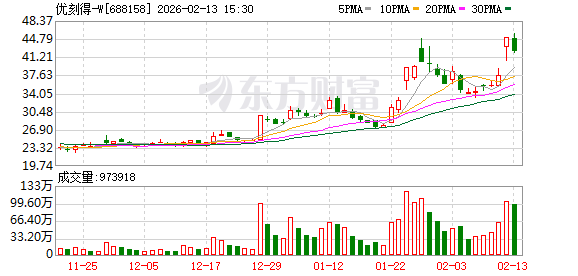
优刻得:2025年上半年境外收入占比接近20%,同比增长20.4%
Zheng Quan Ri Bao· 2026-02-13 12:44
Core Viewpoint - The company, as a leading cloud service provider in China, is focusing on global expansion, with overseas revenue expected to reach nearly 20% by the first half of 2025, reflecting a year-on-year growth of 20.4% [2] Group 1: Global Expansion - The company has achieved significant progress in its global business initiatives, including the recent launch and expansion of a GPU cluster in Ho Chi Minh City, Vietnam, enhancing local computing power supply capabilities [2] - The company aims to continuously improve its overseas intelligent computing resources and service capabilities, leveraging its advantages in intelligent computing infrastructure and technology services [2] Group 2: Pricing Strategy - The company will dynamically adjust its pricing strategy based on downstream demand and upstream costs to ensure the provision of high-performance and high-quality products and services [2]

热点追踪周报:由创新高个股看市场投资热点(第231期)-20260213
Guoxin Securities· 2026-02-13 12:16
- The report introduces a quantitative model called "250-day new high distance" to track market trends and identify market hotspots. The model is based on momentum and trend-following strategies, emphasizing the effectiveness of stocks reaching new highs as market indicators. The formula for calculating the 250-day new high distance is: $ 250\text{-day new high distance} = 1 - \frac{Close_t}{ts\_max(Close, 250)} $ where $ Close_t $ represents the latest closing price, and $ ts\_max(Close, 250) $ is the maximum closing price over the past 250 trading days. If the latest closing price reaches a new high, the distance is 0; otherwise, it is a positive value indicating the degree of fallback from the new high[11][12][13] - The report evaluates the model positively, citing its ability to capture market trends and identify leading stocks that perform well during market uptrends. It references studies by [George@2004], William O'Neil, and Mark Minervini, which support the idea that stocks near their 52-week highs tend to outperform those far from their highs[11][18][21] - The report provides backtesting results for the 250-day new high distance model. As of February 13, 2026, major indices such as the Shanghai Composite Index, Shenzhen Component Index, CSI 300, CSI 500, CSI 1000, CSI 2000, ChiNext Index, and STAR 50 Index have respective 250-day new high distances of 2.00%, 2.35%, 2.72%, 3.51%, 3.14%, 2.54%, 3.32%, and 5.50%[12][31] - The report introduces a quantitative factor called "Stable New High Stocks" to identify stocks with smooth price paths and consistent momentum. The factor construction involves screening stocks that have reached a 250-day new high in the past 20 trading days and applying criteria such as analyst attention (at least five buy or overweight ratings in the past three months), relative price strength (top 20% in 250-day returns), price path smoothness (measured by price displacement ratio), and sustained new high performance (average 250-day new high distance over the past 120 days and past 5 days)[24][26][27] - The report evaluates the factor positively, citing research by [Turan G Bali, Nusret et al@2011] and [Da, Gurun et al@2012], which highlight the superior performance of stocks with smooth price paths and strong momentum. The factor is designed to capture these characteristics effectively[24][26][27] - Backtesting results for the "Stable New High Stocks" factor show that 50 stocks were selected based on the criteria, with the highest representation in the technology and manufacturing sectors. Specifically, 21 stocks from the technology sector (dominated by the electronics industry) and 16 stocks from the manufacturing sector (dominated by the machinery industry) were included[27][32][30]


一不小心,中国Ai造出了1670年的纽约
债券笔记· 2026-02-13 09:52
Group 1 - The article discusses the rapid development and impact of ByteDance's AI video generation model, Seedance 2.0, which has gained significant attention for its ability to accurately depict historical settings, such as 1670 Amsterdam [3][6] - The model has sparked excitement among users, allowing them to experience historical and fictional scenarios, which reflects the advancements in technology during the third industrial revolution [5][9] - The competitive landscape is shifting, with other major companies feeling threatened by ByteDance's innovations, as evidenced by Tencent's stock decline following the announcement of Seedance 2.0 [9][11] Group 2 - The article highlights the positive performance of the A-share market, particularly in cloud computing and computing power sectors, which are benefiting from increased AI usage [11] - A significant event mentioned is the successful implementation of a brain-computer interface clinical surgery in Guangxi, which could have far-reaching implications for patients with conditions like Parkinson's disease [11] - The article also touches on geopolitical developments, including joint military exercises by the US and Japan, which are perceived as a response to tensions in the Taiwan Strait [12]

优刻得:预计2025年年度归属于母公司所有者的净利润亏损幅度较上年同期收窄63.91%-70.13%
Zheng Quan Ri Bao Wang· 2026-02-13 09:45
Core Viewpoint - The company, UCloud, anticipates a reduction in net profit loss for the year 2025 compared to the previous year, with an expected decrease of 63.91% to 70.13% [1] Financial Performance - The company's gross margin has been steadily increasing over the past few years, with figures of 8.35% in 2022, 11.11% in 2023, and 18.86% in 2024, and reaching 24.75% in the first three quarters of 2025 [1] Business Overview - UCloud is recognized as a leading neutral cloud service provider in China, with its main business segments including public cloud, hybrid cloud, private cloud, cloud communication, and edge cloud [1] - The company is committed to providing secure and professional intelligent computing resources tailored to meet the needs of various industries [1] Information Disclosure - The company ensures that all relevant information is disclosed through official channels, maintaining accuracy and completeness without exaggeration or sensationalism [1]
云计算进入涨价周期,重视AI基础设施
China Post Securities· 2026-02-13 09:32
Industry Investment Rating - The industry investment rating is "Outperform the Market" and is maintained [2] Core Insights - The report highlights a significant increase in demand for AI infrastructure driven by competition among major internet companies during the Spring Festival, leading to explosive growth in AI orders and a strain on backend infrastructure [5] - The token consumption in AI applications has seen exponential growth, with ByteDance's Doubao model reaching an average daily token usage of over 50 trillion, a tenfold increase year-on-year [6] - The cloud computing sector is entering a price increase cycle, with major players like Amazon and Google announcing significant price hikes for their services [7][8] Summary by Relevant Sections Industry Overview - The closing index is at 5656.62, with a 52-week high of 6151.34 and a low of 4080.58 [2] Market Performance - The relative performance of the computer industry compared to the CSI 300 index shows fluctuations, with a notable decline of 21% in early 2025, followed by a recovery trend [4] Market Trends - The IDC market in China is projected to reach approximately 430 billion yuan in 2026, with a compound annual growth rate of about 18% over five years, and the intelligent computing center market is expected to grow at an annual rate exceeding 30% [6] Price Adjustments - Major cloud service providers have announced price increases, with Amazon's EC2 machine learning capacity block prices rising by about 15% and Google's cloud services seeing price adjustments of up to 100% in North America [7][8]
全球与中国数据中心冷却设备行业市场调研及趋势分析报告
QYResearch· 2026-02-13 09:30
Core Viewpoint - The data center cooling equipment market is experiencing significant growth driven by advancements in AI, cloud computing, and the increasing demand for energy efficiency, with a projected compound annual growth rate (CAGR) of 13.50% from 2021 to 2025 and 12.97% from 2026 to 2032 [3][6]. Industry Overview - In 2021, the global data center cooling equipment market size was $6.257 billion, expected to reach $10.385 billion by 2025, and $24.408 billion by 2032 [3][6]. - The Chinese market for data center cooling equipment is rapidly developing, projected to reach $1.761 billion by 2025, with intense competition among local brands such as Infinera, Yimikang, and Shenliang [6]. Market Dynamics - The market is influenced by the rapid development of AI, the internet, cloud computing, and big data, leading to increased demand for cooling solutions [6]. - Major global brands in the data center cooling equipment market include Vertiv, Schneider, and Mitsubishi Electric, with the top ten manufacturers holding a 43.08% market share by 2025 [7][8]. Product Types and Trends - The cooling equipment includes precision air conditioning, liquid cooling systems, and chillers, with a trend towards modular and compact designs to save space and enhance efficiency [2][8]. - The industry is shifting from traditional air cooling to more efficient liquid cooling solutions, particularly in high-density computing environments [11]. Competitive Landscape - The competitive landscape is characterized by a mix of foreign and domestic brands, with domestic brands rapidly innovating to reclaim market share through energy-efficient technologies [10][12]. - The leading domestic brand, Shenliang, holds approximately 14.21% market share, indicating a strong presence in the local market [10]. Growth Drivers - The continuous growth of the digital economy and computing power demand is providing a stable and sustainable market for cooling equipment [12]. - The trend towards higher power density in servers necessitates advanced cooling solutions, increasing the importance of cooling systems in overall data center investments [12]. Challenges - High initial investment costs and long payback periods for advanced cooling solutions can deter adoption, particularly among smaller data centers [13]. - The complexity of liquid cooling technologies and the need for mature operational frameworks pose challenges for widespread implementation [13].
通信行业月报:北美云厂商资本开支强劲,CPO商业化应用拐点临近
Zhongyuan Securities· 2026-02-13 08:24
Investment Rating - The report maintains an "Outperform" investment rating for the communication industry [4][7]. Core Insights - In January 2026, the communication industry index increased by 5.47%, outperforming the Shanghai Composite Index (+3.76%), CSI 300 Index (+1.65%), Shenzhen Component Index (+5.03%), and ChiNext Index (+4.47%) [3][13]. - The capital expenditure of the four major North American cloud providers is expected to grow over 60% year-on-year, indicating a turning point for CPO commercialization applications [4][6]. - The retail sales of communication equipment in China increased by 20.9% year-on-year in December 2025, driven by the demand for smartphones [6][44]. - The three major telecom operators in China achieved a total telecom business revenue of 1.75 trillion yuan in 2025, a year-on-year increase of 0.7% [6][45]. Summary by Sections Market Review - The communication industry index rose by 5.47% in January 2026, outperforming major indices [3][13]. - Sub-sectors such as cables, other communication equipment, and system equipment saw increases of 19.70%, 10.72%, and 7.85% respectively [16]. Industry Tracking - The capital expenditure of North American cloud providers reached $126 billion in Q4 2025, a 62% year-on-year increase, with a forecast of over $660 billion for 2026 [24][25]. - AI applications are increasingly driving cloud business growth, with significant investments in AI infrastructure by major cloud providers [30][34]. Telecom Industry Insights - The telecom industry in China is experiencing stable growth, with a focus on new information infrastructure such as 5G and gigabit networks [45]. - The revenue from emerging businesses like cloud computing and big data reached 450.8 billion yuan in 2025, growing by 4.7% year-on-year [45]. Smartphone Market - Global smartphone shipments are projected to grow by 2% in 2025, reaching 1.25 billion units, with AI smartphones expected to penetrate 34% of the market [6][44]. - The latest AI smartphones feature advanced NPU chips with processing power between 60 to 200 TOPS, enhancing user experience through real-time interactions [6]. Investment Recommendations - The report suggests focusing on companies involved in optical devices, optical chips, optical modules, and AI smartphones, including Tianfu Communication, ZTE, and China Mobile [7].
通信行业月报:北美云厂商资本开支强劲,CPO商业化应用拐点临近-20260213
Zhongyuan Securities· 2026-02-13 07:38
Investment Rating - The report maintains an "Outperform" investment rating for the communication industry [4][7]. Core Insights - In January 2026, the communication industry index increased by 5.47%, outperforming the Shanghai Composite Index (+3.76%), CSI 300 Index (+1.65%), Shenzhen Component Index (+5.03%), and ChiNext Index (+4.47%) [3][13]. - The capital expenditure of the four major North American cloud providers is expected to grow significantly, with a projected increase of over 60% in 2026 [6][24]. - The procurement results for special optical cables by China Mobile indicate that eight manufacturers, including Tongding Interconnection and Yangtze Optical Fibre and Cable, have been selected, highlighting the focus on key sectors such as industrial manufacturing and digital government [6][7]. Summary by Sections Industry Performance - The communication industry index showed a strong performance in January 2026, with a 5.47% increase, outperforming major indices [3][13]. - Sub-sectors within the communication industry saw varied performance, with cable, other communication equipment, and system equipment rising by 19.70%, 10.72%, and 7.85% respectively [16]. Telecommunications Sector - In 2025, the telecommunications business revenue reached CNY 1.75 trillion, a year-on-year increase of 0.7% [6][45]. - By December 2025, 5G mobile phone users accounted for 65.9% of total mobile phone users, with a monthly data usage (DOU) of 23.04GB per user, reflecting a 17.0% year-on-year increase [6][45]. Cloud Infrastructure Investment - The combined capital expenditure of the four major North American cloud providers in Q4 2025 was USD 126 billion, marking a 62.0% year-on-year increase [24][25]. - For 2026, the total capital expenditure guidance for these providers exceeds USD 660 billion, with an expected growth of 61.0% [24][25]. AI and Smartphone Market - The retail sales of communication equipment in China increased by 20.9% year-on-year in December 2025, driven by the demand for smartphones [44]. - The global smartphone shipment is projected to grow by 2% in 2025, reaching 1.25 billion units, with AI smartphones expected to penetrate 34% of the market by 2025 [6][44]. Investment Recommendations - The report suggests focusing on companies involved in optical devices, optical chips, optical modules, and AI smartphones, including Tianfu Communication, ZTE, and China Mobile [7][6].





