债务危机

Search documents
5亿美元债务压顶 美国百年影像巨头柯达担心“撑不住”
Yang Shi Xin Wen· 2025-08-14 10:31
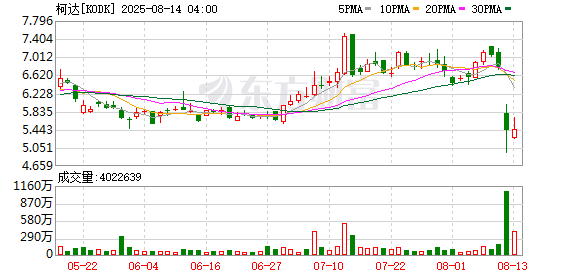
Core Points - Kodak faces significant financial challenges due to a lack of promised financing or available liquidity to repay $500 million in debt, raising serious doubts about its ability to continue operations [2] - The company's stock price plummeted over 25% on the 12th and fell 21% to $5.43 per share on the morning of the 13th [2] - CEO Jim Continenza stated that despite the uncertain business environment, Kodak continues to progress towards its long-term plans [3] Financial Strategy - Kodak plans to stop pension payments to free up cash for debt repayment [3] - A company spokesperson expressed confidence in repaying a significant portion of the debt before it matures and aims to amend, defer, or refinance the remaining debt and preferred stock obligations [3] Historical Context - Kodak, founded in 1892, once dominated the film camera market, holding 90% of the U.S. film market and 85% of the camera market in the 1970s, but has struggled since the rise of digital cameras [3] - The company filed for bankruptcy reorganization in 2012 and returned to the New York Stock Exchange in September 2013, expanding its business into commercial printing, packaging, and film [3] - In 2020, Kodak received a $765 million loan from the U.S. government to enter the non-patented drug raw materials manufacturing sector [3] Investor Sentiment - Investors are questioning whether Kodak can navigate this debt crisis successfully or if it is nearing the end of its operational history [3]


【环球财经】5亿美元债务压顶 百年柯达担心撑不住
Xin Hua She· 2025-08-14 09:17
Core Points - Kodak faces significant financial challenges due to a lack of promised financing or available liquidity to repay $500 million in debt, raising serious doubts about its ability to continue operations [2] - The company's stock price plummeted over 25% on July 12, with a further decline of 21% to $5.43 per share on July 13 [4] - Kodak plans to stop pension payments to free up cash for debt repayment and expresses confidence in addressing a substantial portion of its debt before maturity [4] - Founded in 1892, Kodak once dominated the film market but has struggled since the rise of digital cameras, filing for bankruptcy in 2012 and returning to the NYSE in 2013 [6] - The company has diversified into commercial printing, packaging, and film production, and received a $765 million loan from the U.S. government in 2020 to enter the non-patent drug raw materials sector [6] - Investors are questioning whether Kodak can navigate this debt crisis successfully or if it is nearing the end of its operational history [6]
5亿美元债务压顶 百年柯达担心撑不住
Xin Hua She· 2025-08-14 08:53
Core Viewpoint - Kodak faces severe financial difficulties due to a lack of promised financing or available liquidity to repay $500 million in debt, raising doubts about its ability to continue operations [1][3]. Financial Performance - Kodak's stock price plummeted over 25% on August 12, and further declined by 21% to $5.43 per share on August 13 [3]. - The company plans to stop pension payments to generate cash for debt repayment and expresses confidence in repaying a significant portion of the debt before maturity [3]. Company History and Context - Founded in 1892, Kodak once dominated the film camera market, holding 90% of the U.S. film market and 85% of the camera market in the 1970s, but has struggled since the rise of digital cameras [4]. - Kodak filed for bankruptcy reorganization in 2012 and returned to the New York Stock Exchange in September 2013, diversifying into commercial printing, packaging, and film production [4]. - The company received a $765 million loan from the U.S. government in 2020 to enter the non-patent drug raw materials manufacturing sector [4]. - There is speculation among investors about whether Kodak can navigate this debt crisis or if it is nearing the end of its operational history [4].

【微特稿】5亿美元债务压顶 百年柯达担心撑不住
Xin Hua She· 2025-08-14 07:52
Core Viewpoint - Kodak faces significant financial challenges due to a lack of committed financing or available liquidity to repay a $500 million debt, raising serious doubts about its ability to continue operations [1][2] Financial Performance - Kodak's stock price plummeted over 25% on December 12, and further declined by 21% to $5.43 per share on the morning of December 13 [2] - The company plans to stop pension payments to generate cash for debt repayment and expresses confidence in repaying a substantial portion of the debt before maturity [2] Historical Context - Founded in 1892, Kodak once dominated the film camera market, holding 90% of the U.S. film market and 85% of the camera market in the 1970s, but has struggled since the rise of digital cameras [2] - Kodak filed for bankruptcy restructuring in 2012 and returned to the New York Stock Exchange in September 2013, expanding its business into commercial printing, packaging, and film production [2] Future Outlook - The company received a $765 million loan from the U.S. government in 2020 to enter the non-patent drug raw materials manufacturing sector [2] - Investors are questioning whether Kodak can navigate this debt crisis successfully or if it is nearing the end of its operational history [2]
中国武夷子公司强执法拍:49%股权将被拍卖 起拍价折价3成、一审涉案金额超5500万
Xin Lang Zheng Quan· 2025-08-12 08:28
Core Viewpoint - The auction of a 49% stake in Fuzhou Fuyin, a subsidiary of China Wuyi Holdings, is set for August 19-20, 2025, with a starting price significantly below its assessed value, indicating underlying financial distress and potential risks for the company [1][2]. Group 1: Auction Details - The stake is valued at 24.124 million yuan, with a starting bid of only 16.9 million yuan, approximately 70% of the assessed value [1]. - A deposit of 1.69 million yuan is required, with a minimum bidding increment of 50,000 yuan [1]. Group 2: Financial Performance and Risks - China Wuyi reported a loss of 45.36 million yuan in Q1 2025, with projected losses for the first half of the year reaching up to 104 million yuan, raising concerns about its ability to acquire the stake under tight cash flow conditions [2][3]. - The company faces risks related to the priority purchase rights, potential dilution of control, and the implications of related party transactions with Fujian Fuyin [2]. Group 3: Broader Implications - The auction reflects a broader debt crisis, with the real estate sector experiencing significant downturns, leading to expected losses of 80 million to 104 million yuan for the first half of 2025 [3]. - The company is attempting to stabilize its finances through strategic contracts, such as a 539 million yuan project, but these efforts are insufficient to address the fundamental issues of high debt and low turnover [3]. - The situation signals an impending "control battle," with potential outcomes hinging on whether state-owned entities exercise their priority purchase rights [3].

中国不妥协,36万亿美债窟窿填不上,美国决定“弄死”大债主!
Sou Hu Cai Jing· 2025-08-08 22:00
Core Viewpoint - The U.S. faces a significant debt crisis, with total national debt exceeding $36 trillion, highlighting deep structural issues in fiscal policy and economic management [2][4][14]. Group 1: Debt and Fiscal Policy - Publicly held debt is approximately $28 trillion, while internal government holdings are around $7 trillion, with interest payments consuming 17% of the federal budget [2]. - The rapid increase in debt from $33 trillion at the end of 2024 to $36.2 trillion indicates a persistent fiscal deficit, driven by insufficient tax revenue, substantial military spending, and expanding welfare programs [2][4]. - The Trump administration's tax cuts and policies aimed at reviving manufacturing failed to alleviate the fiscal deficit, instead exacerbating the debt situation, with projected debt increases of $22 trillion over the next decade [4][14]. Group 2: Political Dynamics and Federal Reserve - Efforts to reform fiscal spending through an efficiency committee were hindered by strong opposition from capital groups, revealing limited governmental reform capacity [6]. - The Federal Reserve has become a focal point of political contention, with Trump criticizing its actions as exacerbating fiscal risks, attempting to undermine its independence [6][8]. - Trump's aggressive tariff policies, particularly against China, aimed to generate revenue but resulted in increased domestic costs without significantly reducing the trade deficit [8][10]. Group 3: Economic Impact and Market Reactions - The ongoing trade war and rising tariffs have led to increased market volatility, with the Dow Jones index experiencing significant drops and gold prices rising as investors seek safe havens [12]. - The systemic nature of fiscal risks is increasingly evident, threatening both domestic stability and global financial security [12][19]. - The failure to implement structural reforms and reliance on short-term measures have intensified economic uncertainties, affecting various sectors from wealthy individuals to farmers [12][14]. Group 4: Global Implications - The U.S. debt crisis serves as a warning for global economic stability, necessitating international cooperation to address fiscal risks and promote sustainable economic development [19]. - The challenges faced by the U.S. reflect broader issues in governance and policy design, emphasizing the need for long-term solutions rather than short-term fixes [15][19].
30亿起拍!深圳地标商场皇庭广场上架法拍
Nan Fang Du Shi Bao· 2025-08-08 14:28
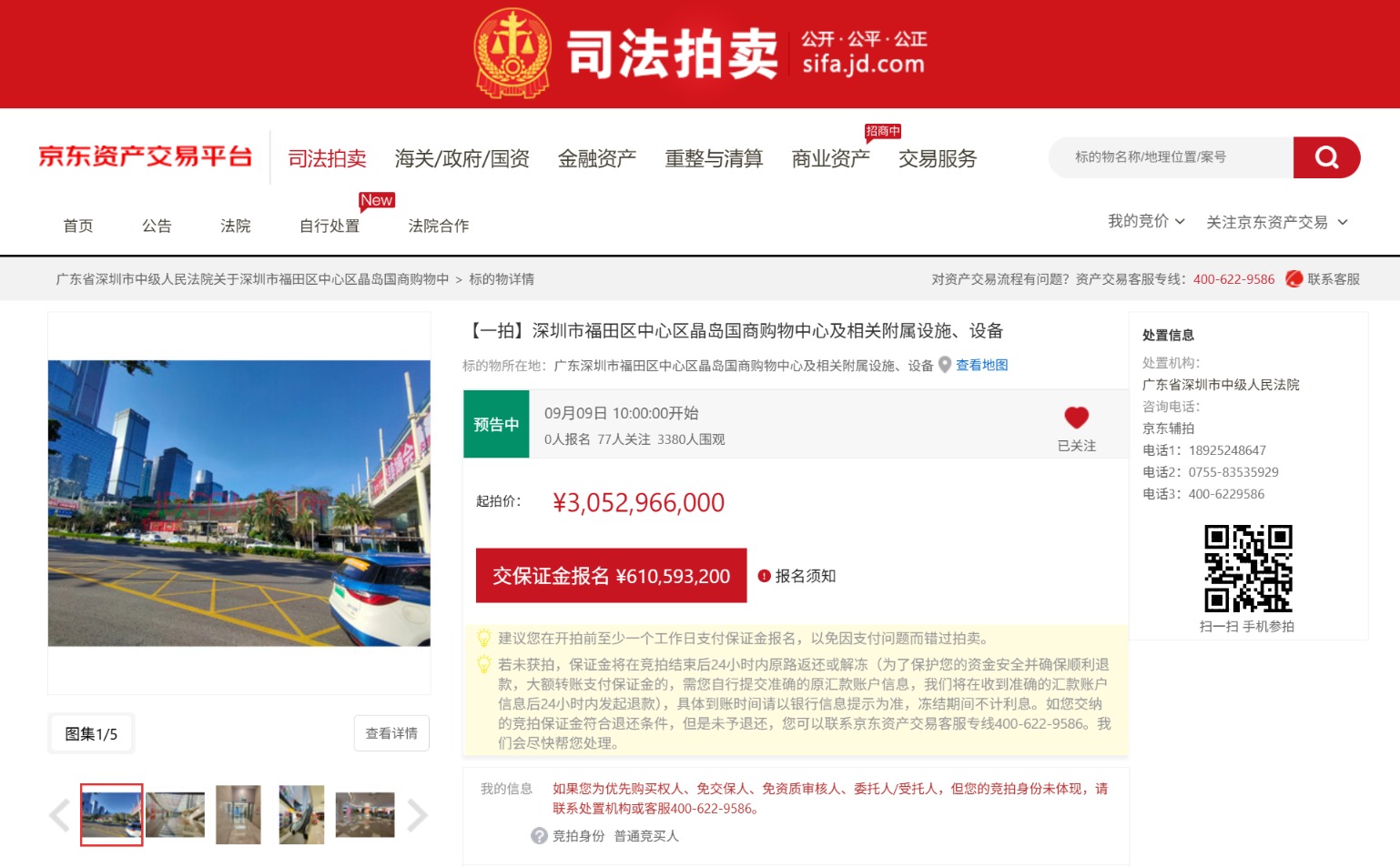
Core Viewpoint - The well-known landmark shopping mall, Huangting Plaza in Shenzhen, is set for auction on JD's judicial auction platform due to the financial troubles of its parent company, Huangting International, which has accumulated significant debt [1][3][9]. Group 1: Auction Details - The auction for Huangting Plaza will take place on September 9, with a starting price of approximately 30.53 billion yuan, which is about 70% of its assessed value of 43.61 billion yuan [4][5]. - The property covers an area of 42,348.37 m² with a total building area of approximately 136,895.89 m², including various commercial spaces [4][5]. - The property has outstanding management fees of approximately 16.32 million yuan and utility fees of about 7.40 million yuan, which the buyer will need to cover [5]. Group 2: Company Background - Huangting Plaza, developed by Shenzhen Huangting Real Estate Group and Shenzhen Rongfa Investment Co., is a high-end shopping center featuring luxury brands and various dining and entertainment options [5][6]. - Huangting International has faced financial difficulties, with total liabilities exceeding 77 billion yuan as of March 31, 2025, and has reported continuous losses over the past five years, totaling over 44 billion yuan [10][12]. - The company has attempted to alleviate its debt burden by selling core assets, including a failed attempt to transfer its stake in Rongfa Investment for 74.93 billion yuan in 2022 [6][8]. Group 3: Legal and Financial Issues - The auction is linked to a loan dispute involving a 30 billion yuan loan taken out in 2016, which was used for the construction of Huangting Plaza [9][10]. - The loan has not been fully repaid, with a remaining balance of 27.5 billion yuan, leading to the involvement of multiple parties in the legal proceedings [9][10]. - Huangting International's chairman has been listed as a dishonest executor, facing restrictions on high consumption due to the company's financial issues [12].

全球财政赤字挑战与应对|封面专题
清华金融评论· 2025-08-06 08:26
Core Viewpoint - A significant trade rebalancing is occurring globally, with domestic fiscal policy becoming a key driver of economic growth. This shift necessitates effective legal measures and a transparent debt disclosure system to prevent historical debt crises from recurring [2][3]. Group 1: Global Trade Rebalancing - The U.S. has imposed high import tariffs on other countries, marking a clear trend that began nearly a decade ago with the abandonment of the Trans-Pacific Partnership. This trend has been exacerbated by the Trump administration's tariff measures and the Biden administration's industrial subsidies aimed at promoting domestic green industries [3]. - In response to U.S. tariff policies, regions like Europe and China are implementing stronger fiscal stimulus measures to boost domestic demand and reduce reliance on U.S. consumers and financial markets [3]. Group 2: Fiscal Measures in Crisis Response - Germany has amended its constitution to relax strict fiscal rules, launching a €1 trillion investment plan to increase spending in defense, infrastructure, research, digitalization, and climate protection [5]. - China is exploring various options to stimulate long-delayed domestic consumption, requiring structural reforms in social security, financial systems, and gender balance [5]. Group 3: Debt Constraints and Risks - Many governments are facing debt constraints, lacking sufficient resources to meet basic payment obligations and return to inflation targets. Low-income and emerging market countries are particularly at risk of debt crises [7]. - The global supply of dollar-denominated assets is contingent on U.S. fiscal capacity, which is currently under pressure from the debt ceiling crisis and uncertainties surrounding proposed U.S. budget plans [7]. Group 4: Fiscal Transparency and Supervision Mechanisms - Following the last debt crisis, developed countries undertook debt clean-up, while emerging economies engaged in debt restructuring. However, the world is once again facing the risk of a global debt crisis, raising questions about the effectiveness of oversight by institutions like the IMF and World Bank [9].

美国欠下36万亿天价债务!特朗普为还钱用尽招数,结果全部碰壁
Sou Hu Cai Jing· 2025-08-06 03:11
Core Viewpoint - The article discusses the significant debt crisis facing the U.S. government, amounting to $36 trillion, and how the Trump administration's attempts to address it have led to a series of failures and challenges for the global economy [1][8]. Group 1: Government Response - The Trump administration initially aimed to alleviate the debt crisis through austerity measures and increased tariffs to boost revenue and protect domestic manufacturing [1]. - The establishment of the "Government Efficiency Committee" faced substantial opposition, making it difficult to cut military spending or social welfare programs, leading to minimal efficiency gains [3]. - The tariff strategy against China resulted in retaliatory measures, exacerbating trade deficits and increasing consumer prices in the U.S. [3][4]. Group 2: Federal Reserve Interaction - The Trump administration sought to lower interest rates to reduce debt repayment burdens, estimating that a 1% rate cut could save $360 billion annually in interest payments [4]. - Despite pressure from Trump, the Federal Reserve maintained its stance on interest rates, citing ongoing inflation concerns, which led to further frustration from the administration [4][6]. Group 3: Fiscal Policy and Debt Management - The government resorted to borrowing to manage its debt, passing the "Too Big to Fail Act," which acknowledged the inability to resolve the debt crisis without incurring new debt [5]. - Tax cuts implemented by the administration, reducing corporate tax rates from 21% to 15%, are projected to decrease annual tax revenue by $500 billion, worsening the debt situation [5][6]. Group 4: Economic Consequences - The U.S. is trapped in a vicious cycle where borrowing to pay off debt leads to rising interest payments, which in turn limits funding for essential services like education and healthcare [6]. - The ongoing debt crisis poses a risk to the international standing of the U.S. dollar, with potential long-term implications for the U.S. economy [6][8]. Group 5: Global Economic Impact - In response to the U.S. actions, China has adopted flexible strategies, such as relocating production to Southeast Asia and enhancing cooperation with other countries to mitigate risks [6]. - The article suggests that the U.S. is facing unprecedented economic challenges, with the current debt management strategies only providing temporary relief without addressing the underlying issues [8].
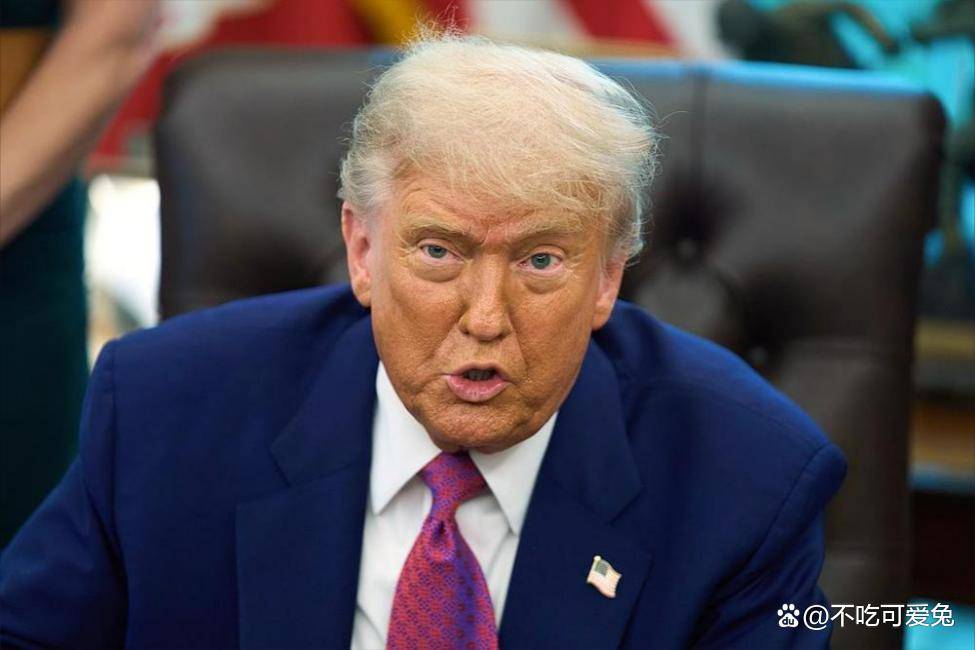
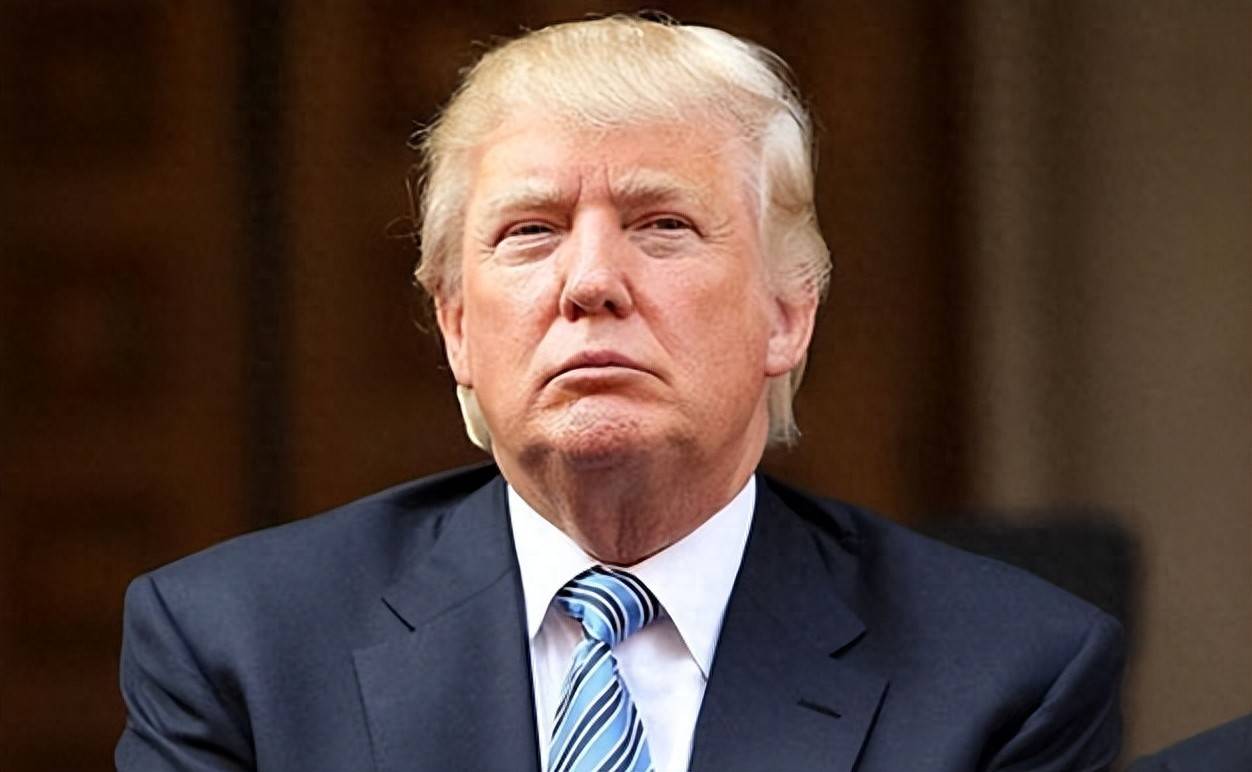
36万亿美债还不起,特朗普决定“弄死”大债主,为此不惜自曝家丑
Sou Hu Cai Jing· 2025-08-04 11:23
今年7月,美国国债飙升至36.2万亿美元,仅去年就为付利息花掉9210亿美元。 面对这座债务大山,特朗普政府祭出两记狠招:签署《大而美法案》永久性减税加剧财政窟窿,同时向中国等债主国发动关税战。 更戏剧性的是,特朗普突然调转枪口猛攻美联储主席鲍威尔,指责这位"最大债主"该为债务危机负责。 特朗普荒唐的解决策略,美联储成为头号靶子 特朗普的"救国药方"充满矛盾:一边给企业永久减税到20%,预计十年增加3.4万亿美元赤字;另一边挥舞关税大刀,向中国乃至全世界发起关税战,咱中 国更是遭到了特朗普的特别对待。 这套路表面是"重振美国制造",实则是向债主国收保护费。今年4月美国关税收入暴增至160亿美元,创历史纪录,相当于每天进账5亿美元。 但数据揭露残酷真相:对华贸易逆差纹丝不动,中国出口转向东南亚,美国农场主的仓库却堆满滞销大豆。 更致命的是反噬效应。当中国3月减持189亿美元美债,美国30年期国债收益率应声飙破5%,创1981年后最大抛售潮。 特朗普团队紧急叫停多国关税,唯独对中国继续加码,这种专打债主的策略,像极了赌徒输急眼后砸赌场。 穆迪下调美国评级的报告点破死穴:"历届政府未能扭转赤字飙升趋势"。目前美国债 ...