全球治理

Search documents
从模拟谈判实践看如何“走出去”
Sou Hu Cai Jing· 2025-10-21 04:21
Core Insights - Deep-sea mining has emerged as a contentious global issue, balancing economic interests, environmental risks, and international regulatory frameworks [1][2] - The International Seabed Authority (ISA) faces pressure from resource-demanding nations and multinational corporations while addressing ecological concerns from island nations and environmental organizations [1] - The negotiation process highlights the need for diverse interests to be balanced, emphasizing the importance of dynamic equilibrium for sustainable cooperation [2] Industry and Company Implications - The deep-sea mining debate underscores the intersection of resource extraction and environmental protection, necessitating that major powers balance development with responsibility in global governance [2] - Informal interactions during negotiations, such as "coffee time," can be crucial for building alliances and reaching consensus, indicating that effective negotiation requires flexibility between formal and informal settings [2] - There is a need for a training mechanism for composite negotiation talents, particularly in China, to enhance capabilities in international negotiations, which is essential for entities "going global" [3]
李睿:从模拟谈判实践看如何“走出去”
Sou Hu Cai Jing· 2025-10-20 23:16
Core Insights - Deep-sea mining has emerged as a contentious global issue, balancing economic interests, environmental risks, and international regulatory frameworks [1][2] - The International Seabed Authority (ISA) faces pressure from resource-demanding nations and multinational corporations while addressing ecological concerns from island nations and environmental organizations [1][2] - The negotiation process highlights the need for vulnerable countries to leverage moral discourse and alliance strategies to gain relative advantages in international negotiations [1] Group 1: International Negotiation Dynamics - International negotiations seek to balance diverse interests, with countries prioritizing their benefits based on technological investment, resource endowment, and environmental vulnerability [2] - Global governance issues, such as deep-sea mining, require major powers to balance development and responsibility, proposing fair and sustainable institutional arrangements [2] - Informal interactions during negotiations can be crucial for breaking deadlocks, emphasizing the importance of flexibility between formal and informal communication [2] Group 2: Capacity Building for Negotiation - There is a need to enhance the framework and skill set for international negotiations, applicable to various Chinese entities facing complex issues [3] - Understanding cultural differences through field engagement is essential for identifying common ground and avoiding misunderstandings in negotiations [3] - A mechanism for cultivating composite negotiation talents is necessary, with a focus on interdisciplinary training and practical simulation platforms in Chinese higher education [3] Group 3: China's Role in Global Governance - China must uphold core interests while addressing global concerns, demonstrating responsible great power behavior [4] - Enhancing negotiation capabilities across government, enterprises, think tanks, and social organizations is vital for establishing a multi-layered foreign exchange network [4] - This approach will enable China to maintain its bottom line and gain more initiative in complex international negotiations [4]
国际调解院开业仪式在香港举行
Xin Hua She· 2025-10-20 13:41
Core Points - The International Mediation Institute (IMI) was inaugurated in Hong Kong, with nearly 200 attendees including representatives from contracting and signing countries of the convention [1][2] - The rapid establishment of the IMI, including the signing and effectiveness of the convention within five months, is noted as unprecedented in the history of international organization construction [1] - The IMI aims to provide mediation services for disputes between nations, international investment disputes, and international commercial disputes, aligning with global governance initiatives [1][2] Group 1 - The IMI's establishment is seen as a significant step in filling the gap in international mediation mechanisms and is expected to contribute to a more just and reasonable international order [2] - As of now, there are 37 signing countries, with 8 countries having ratified the convention, including China, Nicaragua, Venezuela, and others [2] - The IMI headquarters is located in a historical building in Hong Kong, equipped with advanced meeting and discussion rooms for mediation work and capacity building [2]
潘功胜会见国际货币基金组织总裁格奥尔基耶娃
Zhong Guo Ji Jin Bao· 2025-10-18 12:56
(原标题:潘功胜会见国际货币基金组织总裁格奥尔基耶娃) 2025年10月16日,中国人民银行行长潘功胜在出席国际货币基金组织/世界银行年会期间会见了国际货 币基金组织(以下简称基金组织)总裁格奥尔基耶娃。中国人民银行副行长宣昌能参加会见,并在会前 会见了基金组织第一副总裁卡茨。 潘功胜指出,受地缘政治与技术变革等因素影响,全球经济格局正 发生深刻变革。基金组织作为全球最主要的多边金融机构,应旗帜鲜明地反对保护主义,倡导对话与合 作,捍卫多边主义。习近平总书记在今年9月提出全球治理倡议。中方将积极参与全球治理,为建设更 加公平、公正、包容、有韧性的全球治理体系贡献力量。双方并就人民银行与基金组织合作的一些具体 问题交换了意见。 来源:中国人民银行 ...
潘功胜:坚定维护多边主义,倡导开放、规则为基础的多边贸易体系,为世界经济注入更多稳定性与确定性
Jin Rong Shi Bao· 2025-10-18 07:37
Core Viewpoint - The global economic landscape is undergoing profound changes due to geopolitical factors and technological transformations, leading to weakened growth momentum worldwide [1] Economic Challenges - Trade frictions and geopolitical uncertainties are dragging down global economic growth [1] - Concerns are rising regarding the fiscal sustainability of developed economies and its spillover effects [1] - Financial market volatility may increase, posing severe challenges for emerging markets and developing economies [1] Call for Cooperation - Countries should enhance macroeconomic coordination and cooperation to maintain multilateralism [1] - There is a need to advocate for an open, rules-based multilateral trading system to inject more stability and certainty into the global economy [1] China's Role in Global Governance - China has recently proposed a global governance initiative and is willing to actively participate in building a fair, just, inclusive, and resilient global governance system [1] - China aims to deepen cooperation with the International Monetary Fund (IMF) to support its role in maintaining global economic and financial stability [1]
智库报告为人类2050蓝图提供中国智慧
Bei Jing Ri Bao Ke Hu Duan· 2025-10-18 01:16
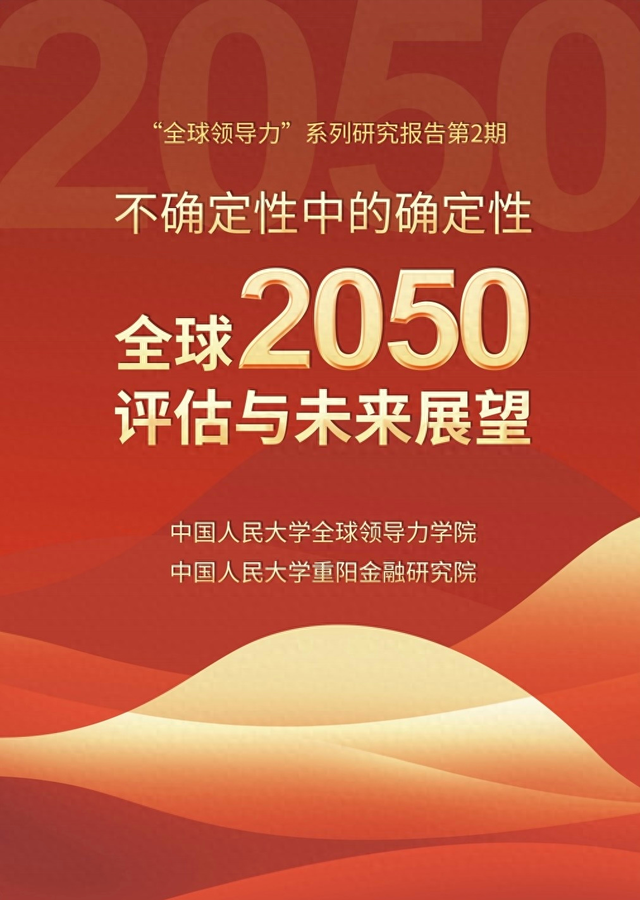
Core Insights - The event "Mingde Strategic Dialogue (2025)" focused on "Chinese-style modernization and new global dynamics," gathering leaders and scholars from multiple countries to discuss global governance and future development [1][3]. Research Reports and Publications - The "Uncertainty in Certainty: Global 2050 Assessment and Future Outlook" report outlines the consensus on 2050's significance for sustainable development and technological advancement [3]. - The report highlights a profound restructuring of the international order over the next 25 years, with emerging economies becoming the main growth engines and energy transition leading a new growth cycle [3]. - It emphasizes China's "2050 modernization strategy," showcasing systematic layouts in key areas like manufacturing, technology independence, and infrastructure [3][4]. - Four new books were released, focusing on dialogues between Chinese and Western scholars regarding China's development model and its global impact [4][6]. - The publication "National Compound Development and China's Development Advantages" analyzes China's long-term stable development through a "compound interest" logic [6]. Contributions to Global Governance - The research outputs from Renmin University of China aim to provide intellectual frameworks for global governance and policy-making amid uncertainty [8]. - The collective findings underscore the role of Chinese think tanks in reshaping global discourse and contributing to the construction of a community with a shared future for humanity [8].

《人与社会全面发展》报告发布:应利用大数据精准识别易返贫群体
Xin Jing Bao· 2025-10-17 12:55
Core Insights - The "People and Society Comprehensive Development" concept aims to integrate fairness, effective governance, ecological sustainability, and cultural prosperity into development goals, promoting systematic and coordinated development across economic, political, social, cultural, and ecological dimensions [1][2]. Group 1: Key Areas of Focus - The report outlines specific action paths and policy recommendations in eight areas: poverty alleviation and rural revitalization, food security and agricultural modernization, industrial development and economic diversification, digital economy and artificial intelligence construction, green transformation and climate change response, global public health and health cooperation, education cooperation and human resource development, and financial support and development financing [1][2]. Group 2: Specific Recommendations - In poverty alleviation and rural revitalization, countries should establish dynamic poverty identification and monitoring mechanisms using big data and grassroots governance networks to accurately identify vulnerable groups and provide differentiated support [2]. - For digital economy and AI development, the report encourages the growth of local digital platforms and applications, supporting small and medium enterprises and startups in entering the AI sector, and fostering a self-controlled digital and intelligent industry ecosystem to avoid "digital colonialism" [2]. - In global public health cooperation, there is a call to strengthen vaccine and drug research and production capabilities, promote equitable distribution, and avoid "health gaps" [2]. - The report emphasizes the need for developing vocational education and lifelong learning systems to adapt to industrial transformation and technological changes, thereby enhancing employability [2]. Group 3: Forum Structure - The Tongzhou Global Development Forum, founded by Renmin University in 2023, serves as a high-level dialogue platform for global leaders from politics, academia, and business to discuss global development strategies [2]. - This year's forum features a structure of "1 main forum + 15 sub-forums + 1 roundtable dialogue," focusing on topics such as the Belt and Road Initiative, digital finance, energy security, global governance, human health, cross-cultural communication, and youth responsibility [2].
全球大学齐聚北京,对话推动《未来契约》落实
Xin Jing Bao· 2025-10-17 07:48
Core Points - The event "Implementation of the Future Pact University Dialogue" was successfully held in Beijing, marking the 80th anniversary of the United Nations, focusing on the role of universities in promoting the Future Pact and accelerating the 2030 Sustainable Development Agenda [1][2] - The dialogue attracted representatives from universities worldwide, discussing how educational cooperation, research innovation, and policy advocacy can drive sustainable development goals [1][2] - A significant outcome of the dialogue was the release of the "University Implementation of the Future Pact Action Plan," which aims to establish mechanisms for systematic implementation of the Future Pact in talent cultivation, research collaboration, and policy advocacy [3] Group 1 - The dialogue emphasized the importance of multilateralism in a chaotic and uncertain era, with universities playing a crucial role in translating words into action [2] - The Chinese Ministry of Education expressed support for deepening cooperation between universities and international partners, highlighting the proactive role of Beijing Foreign Studies University in the Future Pact [1][2] - The dialogue included discussions on artificial intelligence governance, interdisciplinary collaboration, and changes in research paradigms, addressing challenges faced by future universities [2] Group 2 - The "Future University Alliance" and "Future Learning Excellence Center" are proposed as part of the action plan to enhance collaboration among universities [3] - The event also initiated the preparation process for the "Sustainable Development Goals Series Dialogue," showcasing the youth's creativity and concern for sustainable development through performances [3] - The dialogue marked a significant step for global higher education in multilateral cooperation and sustainable development, aiming to create a more inclusive, equitable, and resilient future [3]
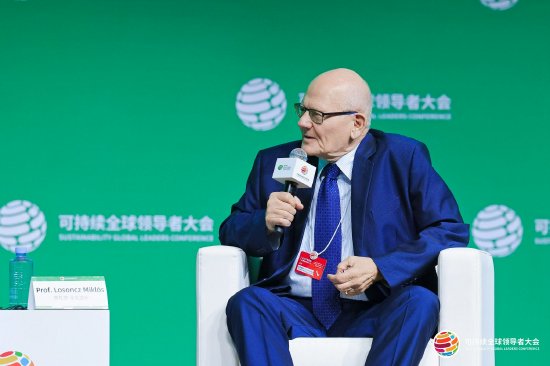
前布达佩斯经济与商业大学企业家洛松茨·米克洛什:AI发展需锚定能源与教育双支撑
Xin Lang Zheng Quan· 2025-10-17 05:44
Core Insights - The 2025 Sustainable Global Leaders Conference will be held from October 16 to 18 in Shanghai, focusing on sustainable development and global governance [1][4] - Professor Losoncz Miklós emphasized the importance of integrating regional energy advantages and clean energy technologies in AI energy solutions during his keynote speech [3] Group 1: Conference Overview - The conference is co-hosted by the World Green Design Organization (WGDO) and Sina Group, with support from the Shanghai Huangpu District Government [4] - Key topics discussed include creating a sustainable development model in Shanghai and exploring new growth paradigms for the city's five major centers [4] Group 2: AI and Sustainability - Professor Miklós highlighted the need for a comprehensive approach to address energy issues in high-energy consumption scenarios like AI data centers, citing examples from China and Hungary [3] - He called for the scientific community to establish measurement standards for AI performance and for higher education to adapt to new AI scenarios by cultivating skilled talent [3]
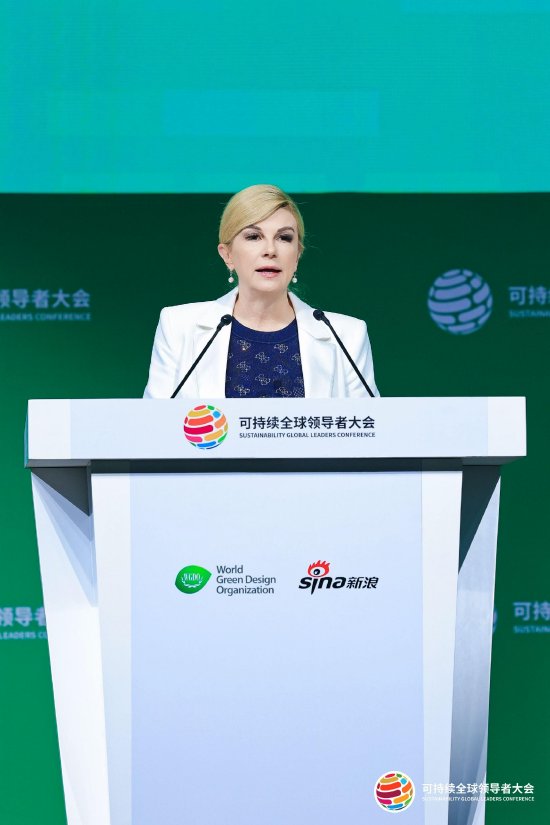
全文丨克罗地亚前总统科琳达·格拉巴尔—基塔罗维奇:以“携手共进”精神推动全球可持续治理
Xin Lang Zheng Quan· 2025-10-17 04:03
专题:2025可持续全球领导者大会&首届绿色产业与可持续消费博览会 炒股就看金麒麟分析师研报,权威,专业,及时,全面,助您挖掘潜力主题机会! 2025可持续全球领导者大会于10月16日-18日在上海市黄浦区世博园区召开。克罗地亚共和国第四任总 统、国际奥委会委员科琳达·格拉巴尔—基塔罗维奇(Kolinda Grabar-Kitarović)出席大会并做主题演 讲。 科琳达·格拉巴尔表示,欧洲的可持续发展经验深度融合了安全、清洁能源、体面工作、教育与社会和 平,正因如此,欧盟将可持续发展目标全面纳入各项工作,并积极推动气候、健康与体育等多元外交, 以此作为构建信任的"软实力"。 她特别强调了体育在加速可持续创新方面的独特价值。作为全球供应链的一环,体育能凝聚政治分歧、 激发合作与变革。现代奥运会已超越国家荣誉,成为一项承载社会经济与环境价值的"全球使命"。通过 奥运投资,可提升区域凝聚力、能源效率并促进循环经济。她分享了三大深刻洞察:临时场馆成功转变 为永久性模块化设施;供应链通过采用循环纺织品与低碳材料变得更清洁,促使赛事与品牌走向合作; 以及借助广受信任的运动员作为信使,能极大提升公众参与度。 以下为发言全 ...