数字货币

Search documents
博思软件:数字人民币业务主要在福建、陕西、重庆等国内城市开展
Sou Hu Cai Jing· 2025-12-30 13:00
Core Viewpoint - The company is actively developing its digital currency business, primarily targeting domestic customers and leveraging partnerships with major banks in China [1] Group 1: Digital Currency Business - The company's digital RMB business is built on the payment systems of major banks such as Postal Savings Bank, Industrial and Commercial Bank, Bank of China, and China Construction Bank [1] - The digital currency applications are designed to enhance user experience in various scenarios, including non-tax payments, transportation, public payments, and commercial services [1] - Current operations are focused on domestic cities, specifically in Fujian, Shaanxi, and Chongqing [1] Group 2: Future Outlook - The company will continue to monitor trends in the digital currency industry and will disclose relevant developments in accordance with legal and regulatory requirements [1]


幺贰凌玖科技取得面向数字货币的交易隐私保护与反洗钱监控专利
Sou Hu Cai Jing· 2025-12-30 12:37
国家知识产权局信息显示,江苏幺贰凌玖科技服务有限公司取得一项名为"面向数字货币的交易隐私保 护与反洗钱监控方法及系统"的专利,授权公告号CN120952961B,申请日期为2025年10月。 声明:市场有风险,投资需谨慎。本文为AI基于第三方数据生成,仅供参考,不构成个人投资建议。 来源:市场资讯 天眼查资料显示,江苏幺贰凌玖科技服务有限公司,成立于2023年,位于南通市,是一家以从事软件和 信息技术服务业为主的企业。企业注册资本1000万人民币。通过天眼查大数据分析,江苏幺贰凌玖科技 服务有限公司共对外投资了6家企业,参与招投标项目1次,专利信息16条,此外企业还拥有行政许可6 个。 ...
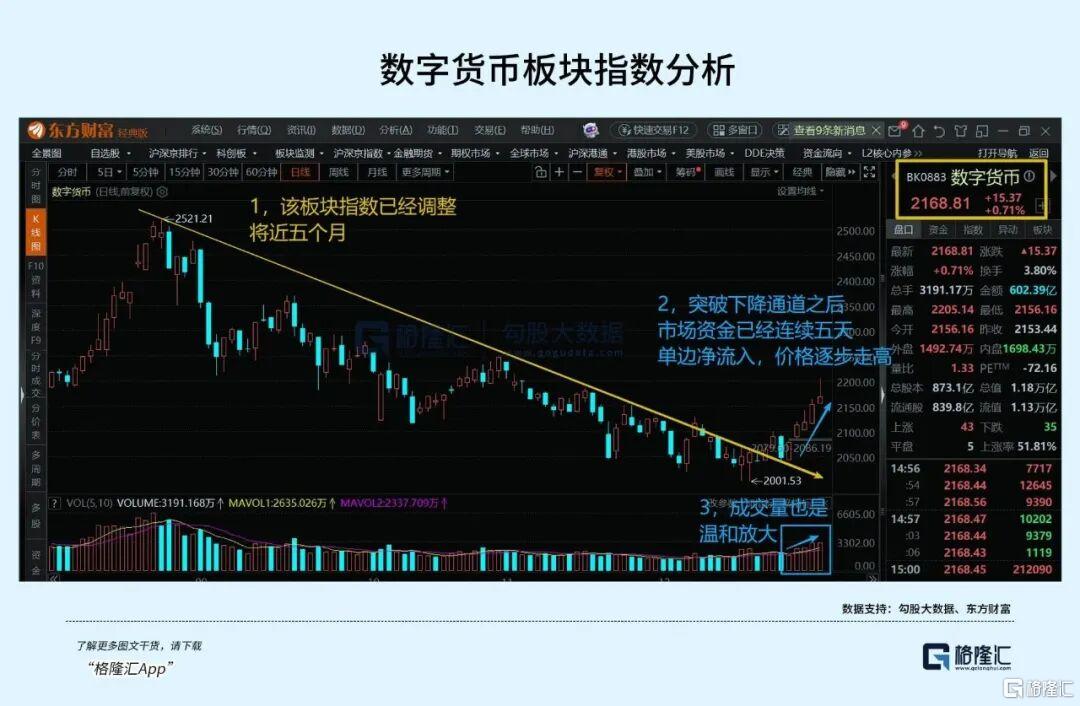
政策+技术双轮驱动,这个板块连续五天资金净流入!
格隆汇APP· 2025-12-30 11:06
Core Viewpoint - The article emphasizes that cross-border payment has evolved from a supporting service in foreign trade to a key engine driving global economic circulation, fueled by the acceleration of global trade integration and the booming digital economy [5][10]. Group 1: Industry Growth and Trends - Over the past decade, the global cross-border payment transaction volume has cumulatively increased by over 41%, maintaining a steady upward trend despite trade frictions and regulatory adjustments [6][12]. - The demand for cross-border payments is diversifying, with B2B transactions as the core pillar, covering international supply chains and cross-border investments, while B2C and C2C transactions are also growing rapidly [14][15]. - The implementation of the ISO 20022 standard in 2023 has led to a 21.77% growth in B2B cross-border payment volume, contributing to an overall market growth of over 21% [15]. Group 2: Technological and Policy Empowerment - Traditional cross-border payments face challenges such as high costs, slow speeds, and security issues, with transaction times often taking several days [17][18]. - Third-party payment platforms have made significant technological advancements, reducing transaction times to within T+2 days, with some scenarios achieving same-day settlement [20][21]. - The new digital RMB policy has introduced three major breakthroughs: upgrading its status to a "digital deposit currency," enhancing cross-border efficiency with a multi-central bank digital currency bridge, and strengthening security through bank-level encryption and risk control measures [22]. Group 3: Future Trends and Investment Opportunities - The cross-border payment industry is evolving towards instant, inclusive, and intelligent solutions, with the digital RMB policy providing substantial support for these trends [23]. - Instant payment solutions are becoming a target, with expectations that by 2028, instant payments will account for over a quarter of global online payments [24]. - The digital RMB's features are positioned to lower costs and expand access to billions of unbanked individuals and millions of SMEs, aligning with G20 goals to reduce cross-border retail payment costs [24]. - The integration of AI and big data into cross-border payments through the digital RMB will enhance risk management and open new financial service scenarios [26]. Group 4: Investment Recommendations - Companies deeply involved in the infrastructure for digital RMB cross-border settlements are expected to benefit from the expansion of the digital currency bridge project and the new policy [28]. - Leading platform companies in the cross-border payment sector, such as LianLian Digital, are well-positioned to capture market share due to their technological strengths and global licensing [29]. - Companies with a strong foundation in payment services and actively expanding cross-border scenarios, like Lakala and Newland, are likely to achieve breakthroughs in niche markets [30].


南方财经号2025年度创作者优秀案例揭晓!谁凭实力C位出圈
21世纪经济报道· 2025-12-30 09:24
2025年,南方财经号平台生态持续进阶,超3500名创作者携手21财经客户端,以专业视角解 码经济大势,用深度洞察回应市场关切。从宏观政策解读、产业赛道研究,到微观商业洞察、 热点事件剖析,更有联名栏目共创等多元内容形态,为用户奉上了一场场财经内容盛宴。 为致敬每一份坚守与创新,南方财经号平台正式发布2025年度创作者优秀案例。今年的评选在 延续内容专业性、传播力、活跃度、影响力、用户喜爱度五大核心维度的基础上,新增了"生 态共建贡献"评价指标,更全面地考量创作者的综合价值。最终,48名创作者脱颖而出,获 选"年度卓越南方财经号""年度最具影响力南方财经号""年度新锐南方财经号""年度优质创作 者南方财经号"等多项荣誉。 关于南方财经号平台 南方财经号平台由南方财经全媒体集团倾力打造,依托21财经客户端建设运营,是粤港澳大湾 区内首个由主流媒体建设运营的财经内容聚合平台和财经创作者社区。得益于主流媒体的专业 性和权威性,截至目前,南方财经号平台已经吸引了超过3500名创作者入驻,成员涵盖我国多 个经济管理部门、智库机构、金融机构、知名企业、专家学者、专业财经媒体以及头部财经自 媒体。 点击入驻南方财经号>> ...

数字货币跟踪:数字人民币迎来重大调整,2026年1月1日起钱包余额可计息
Changjiang Securities· 2025-12-30 08:52
Investment Rating - The industry investment rating is "Positive" and maintained [6] Core Insights - The People's Bank of China has introduced an action plan to enhance the management and service system of digital RMB, marking a transition from the era of digital cash to digital deposit currency starting January 1, 2026 [2][4] - The digital RMB aims to replace physical cash in retail transactions and is designed to maintain the automatic settlement and anonymity features of cash while achieving low-cost and high-efficiency electronic payments [11] - As of November 2025, the digital RMB has processed 3.48 billion transactions with a total transaction amount of 16.7 trillion yuan, indicating significant adoption and usage [11] Summary by Sections Event Description - The People's Bank of China announced a new framework for digital RMB management, which will officially launch on January 1, 2026 [4] Policy Changes - Key policy changes include: 1. Starting January 1, 2026, digital RMB wallet balances will earn interest 2. Digital RMB will transition from 100% reserve to partial reserve for bank-operated institutions 3. Non-bank payment institutions will implement 100% digital RMB collateral [11] Market Performance - The digital RMB has shown strong market performance with significant transaction volumes and wallet openings, indicating a robust growth trajectory in the digital currency space [11]
政策+技术双轮驱动,这个板块连续五天资金净流入!
Ge Long Hui· 2025-12-30 08:49
Core Insights - The article emphasizes that cross-border payments have evolved from a supporting service in foreign trade to a key engine driving global economic circulation, with a cumulative growth of over 41% in transaction volume over the past decade, despite trade frictions and regulatory adjustments [1][5]. Industry Overview - The cross-border payment landscape is expanding beyond traditional foreign trade settlements, now encompassing a diverse demand matrix across the global economy, with a projected cumulative growth of 41.05% from 2015 to 2024 [5]. - B2B transactions are identified as the core pillar, facilitating large and frequent transactions in international supply chains and cross-border investments, while B2C and C2B scenarios cater to smaller, high-frequency payments [8]. Technological and Policy Innovations - Traditional cross-border payments face challenges such as high costs, slow speeds, and security issues, with transaction times often taking several days [9][10]. - Third-party payment platforms have made significant technological advancements, reducing transaction times to within T+2 days, with some scenarios achieving same-day settlements [11]. - The introduction of the digital yuan has led to three major breakthroughs: upgrading its status to a "digital deposit currency," enhancing cross-border efficiency with a 95.3% transaction share, and strengthening security through advanced encryption and risk management [14]. Market Trends and Future Projections - The cross-border payment industry is evolving towards instant, inclusive, and intelligent solutions, with the digital yuan's policies providing substantial support for these trends [15]. - Instant payment solutions are becoming a target, with expectations that by 2028, instant payments will account for over 25% of global online payments [15]. - The G20's goal to reduce average costs of cross-border retail payments to 1% by 2027 highlights the importance of the digital yuan in making global payment networks accessible to billions of underserved individuals and millions of SMEs [15]. Investment Opportunities - The cross-border payment sector is currently experiencing a confluence of policy support, technological innovation, and surging demand, indicating a favorable investment climate [19]. - Companies deeply involved in the infrastructure for digital yuan cross-border settlements are expected to benefit significantly from the expansion of the digital currency bridge project [20]. - Leading platform companies with strong technological capabilities in cross-border payments, such as LianLian Digital, are positioned to capture market share effectively [21]. - Companies with a solid foundation in payment services and a proactive approach to expanding cross-border scenarios, like Lakala and Newland, are also seen as having breakthrough potential [22].
超3400只个股下跌,A股沪指收盘微跌
Sou Hu Cai Jing· 2025-12-30 08:13
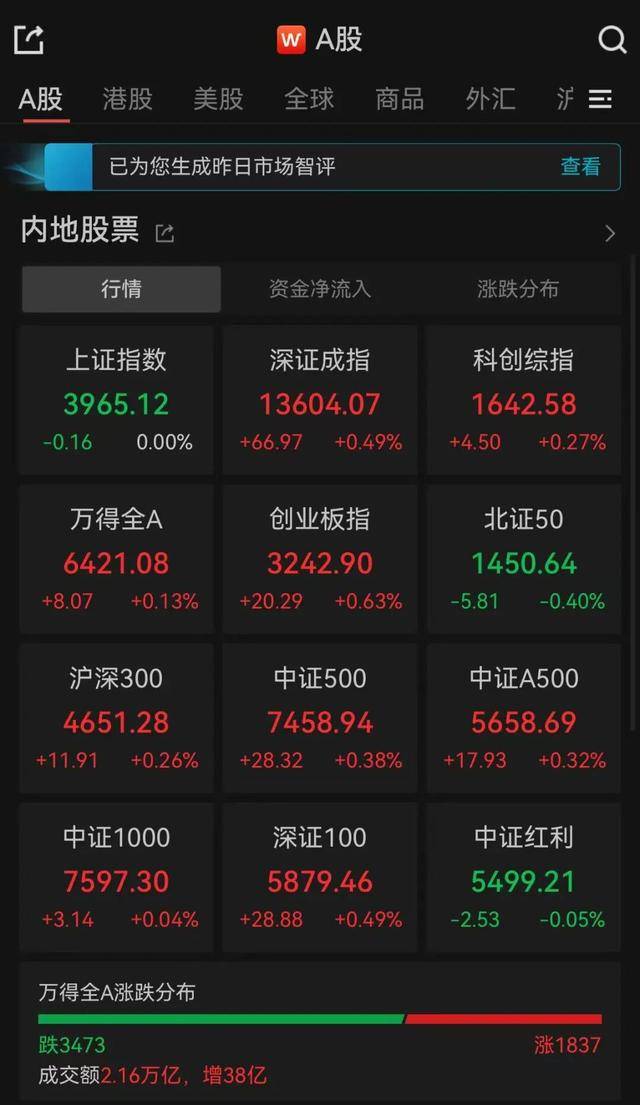
Market Overview - The A-share market opened lower on the 30th but experienced fluctuations, with indices turning positive multiple times during the session [1] - By the end of the trading day, the Shanghai Composite Index slightly declined to 3965.12 points, while the Shenzhen Component Index rose by 0.49% and the ChiNext Index increased by 0.63% [1][2] Trading Data - The total trading volume in the market reached 2.16 trillion yuan, with over 3400 stocks experiencing declines [3] - The Shanghai Composite Index recorded a minor decrease of 0.16%, while the Shenzhen Component Index gained 66.97 points, reflecting a 0.49% increase [2] - The ChiNext Index saw an increase of 20.29 points, or 0.63%, indicating positive momentum in certain sectors [2] Sector Performance - Human robot concept stocks surged in the afternoon, while sectors related to digital currency, AI smartphones, and short drama games showed active performance [3] - Conversely, the photovoltaic industry chain experienced a pullback, and stocks related to the Hainan Free Trade Zone, outbound tax refunds, and commercial aerospace concepts underwent adjustments [3]
ETF收评 | A股10连阳,人形机器人板块午后爆发,汽车零件ETF、机器人ETF鹏华涨4%
Ge Long Hui· 2025-12-30 08:05
Market Performance - The Shanghai Composite Index closed flat, marking a 10-day consecutive rise, while the Shenzhen Component Index increased by 0.49% and the ChiNext Index rose by 0.63% [1] - The Northbound Stock Connect Index fell by 0.4% [1] - Total trading volume across the three markets reached 21,612 billion yuan, an increase of 36 billion yuan compared to the previous day [1] - Over 3,400 stocks declined across the three markets [1] Sector Performance - The humanoid robot, cinema line, AI agents, liquid cooling servers, oil and gas petrochemicals, digital currency, and semiconductor sectors saw the largest gains [1] - The mini-sized Jin Ying Gain Currency ETF experienced a notable increase of 5.01% [1] - The robotics sector surged in the afternoon, with several ETFs including Ping An Fund's Auto Parts ETF, Penghua's Robotics ETF, E Fund's Robotics ETF, and Invesco Great Wall's Robotics 50 ETF all rising over 4% [1] - The chemical sector also performed well, with E Fund's Chemical Industry ETF and Huaxia Fund's Petrochemical ETF rising by 2.57% and 2.45% respectively [1] - The non-ferrous sector saw an increase, with Wan Jia Fund's Industrial Non-Ferrous ETF rising by 2% [1] Declining Sectors - The Hang Seng Index's Hong Kong Stock Connect ETF continued to decline, dropping by 5.85% [1] - Gold prices fell, leading to declines in gold-related ETFs including the Gold Fund ETF, Shanghai Gold ETF, and Gold ETF, which all dropped by 2% [1] - The Hong Kong pharmaceutical sector continued to decline, with the Hong Kong Innovative Drug ETF falling by 1.55% [1]

收盘丨沪指日线走出10连阳 人形机器人概念股午后爆发
Di Yi Cai Jing· 2025-12-30 07:33
Market Overview - The Shanghai Composite Index experienced slight fluctuations, closing down marginally, while the Shenzhen Component Index and the ChiNext Index saw gains of 0.49% and 0.63% respectively [1] - The total trading volume in the Shanghai and Shenzhen markets reached 2.14 trillion yuan, an increase of 3.2 billion yuan compared to the previous trading day, with nearly 3,500 stocks declining [6] Sector Performance - Human-robot concept stocks surged in the afternoon, with over ten stocks hitting the daily limit, including Boke Co., Sanhua Intelligent Control, and Hualing Cable [2][4] - The liquid cooling server concept also saw significant gains, with stocks like Unified Co. and New Times hitting the daily limit, and several others rising over 10% [4][5] Stock Highlights - Notable gainers included: - Boke Co. (+20.00% to 145.99 yuan) - Haichang New Materials (+19.98% to 30.98 yuan) - Wu Zhi Electromechanical (+18.59% to 63.80 yuan) [3] - Other significant performers included: - Yidong Electronics (+11.17% to 79.50 yuan) - Shuo Beid (+10.71% to 27.29 yuan) - Tongxing Technology (+10.34% to 33.29 yuan) [5] Capital Flow - Main capital inflows were observed in the general equipment, automotive, and home appliance sectors, while there were outflows from the communication, battery, and photovoltaic equipment sectors [8] - Specific stocks with notable net inflows included Sanhua Intelligent Control (2.786 billion yuan), N Qiang Yi (1.824 billion yuan), and Shanzi Gaoke (1.538 billion yuan) [8] Institutional Insights - Guotai Junan and Haitong Securities expressed optimism about the upcoming cross-year market rally, suggesting that adjustments present good investment opportunities [8] - Pacific Securities indicated that the cross-year market is expected to start with a broad rally, with low volatility in major stock index options suggesting a steeper upward trend ahead [8]

数字人民币将迈入计息时代
21世纪经济报道· 2025-12-30 06:37
Core Viewpoint - The digital renminbi is transitioning from a "digital cash era" to a "digital deposit currency era," with the implementation of a new action plan by the People's Bank of China starting January 1, 2026, aimed at enhancing management and service capabilities [1][3]. Group 1: Digital Renminbi Development - The research and development of digital renminbi began in 2014, with a theoretical framework proposed in 2016, leading to the successful trial of a dual-layer operational system [3]. - As of November 2025, digital renminbi has processed 3.48 billion transactions, amounting to 16.7 trillion yuan, with 230 million personal wallets opened [3]. - The digital renminbi is currently leading among central bank digital currency projects globally [3]. Group 2: Challenges and Solutions - The digital currency faces four main challenges: modern digital payment tools affecting monetary control, risks of financial disintermediation, the relationship between central bank liabilities and commercial bank responsibilities, and the compatibility of centralized management with decentralized blockchain technology [4]. - The new action plan aims to optimize the dual-layer structure to address these challenges, marking the transition to a digital deposit currency [4][5]. Group 3: Key Changes in Digital Renminbi - Starting January 1, 2026, digital renminbi will be managed under a reserve system, with non-bank payment institutions required to maintain 100% reserves [5]. - Digital renminbi wallet balances will earn interest, aligning with the treatment of traditional bank deposits [5]. - This transition will enhance the monetary elasticity of digital renminbi, allowing it to support credit activities and deposit expansion [6]. Group 4: Technological Integration - The action plan emphasizes the integration of account-based management with blockchain efficiency, proposing a digital solution that includes "account systems + digital currency + smart contracts" [9]. - The establishment of a digital renminbi international operation center in Shanghai aims to enhance cross-border payment capabilities and support various financial services [10]. Group 5: Future Prospects - The People's Bank of China plans to expand the list of digital renminbi operating institutions, with current institutions including major banks like ICBC, ABC, and BOC [11]. - Some banks, such as SPD Bank, are actively preparing to become digital renminbi operating institutions, indicating a growing interest in this sector [12].