
消费者权益保护

Search documents
十家航司被约谈后,消费者仍受“锁座”困扰
Nan Fang Du Shi Bao· 2025-11-30 10:34
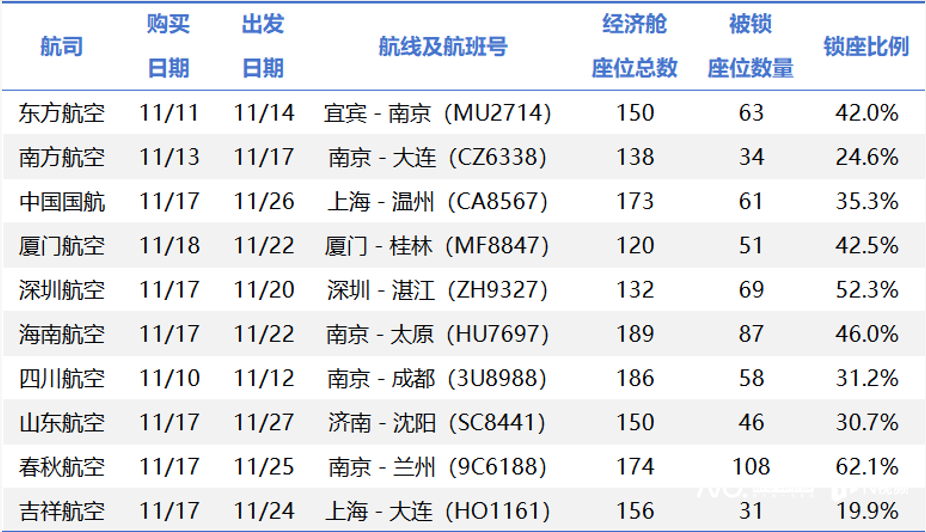
Core Viewpoint - The long-standing and controversial airline "seat locking" phenomenon is expected to undergo rectification following a special investigation by the Jiangsu Provincial Consumer Protection Committee, which has interviewed ten domestic airlines and requested written responses regarding corrective actions [1][5]. Group 1: Investigation Findings - The Jiangsu Provincial Consumer Protection Committee conducted an investigation into the "seat locking" practices of ten major airlines, revealing that the proportion of locked seats during the purchasing phase ranged from 19.9% to 62.1%, with an average of 38.7% [2][3]. - Notably, Spring Airlines' Nanjing-Lanzhou route had a seat locking rate exceeding 60%, while Shenzhen Airlines' Shenzhen-Zhanjiang route exceeded 50% [2][3]. - Other airlines like Hainan Airlines, Eastern Airlines, and Xiamen Airlines had locking rates between 40% and 46%, while Lucky Air had a relatively low rate of less than 20% [2][3]. Group 2: Reasons for Seat Locking - Airlines provided various justifications for seat locking, including reserving seats for special passengers, ensuring emergency seat availability, and maintaining flight load balance [4]. - The investigation identified common issues with the "seat locking" phenomenon, including a lack of clear communication regarding seat locking rules, vague explanations, differential resource allocation based on membership levels, and unilateral rights granted to airlines [4]. Group 3: Consumer Feedback and Reactions - Consumers expressed dissatisfaction with the differentiation of paid and free seating areas in economy class, indicating that such practices increase travel costs and lead to a frustrating experience [6][10]. - Feedback highlighted that many passengers were unaware of the specific rules regarding seat locking, leading to limited seat choices, especially for families traveling together [10][11]. Group 4: Regulatory Actions and Implications - The Jiangsu Provincial Consumer Protection Committee has mandated that the airlines submit written corrective actions within 15 working days, including self-inspections and revisions of unfair terms related to "seat locking" [5][15]. - Legal experts have commented that the "seat locking" practice infringes on consumer rights and may violate consumer protection laws, suggesting that the committee's actions could serve as a model for regulatory oversight in other regions [15][16].





景区寄存柜押金难退 消费者权益谁来守护?
Yang Guang Wang· 2025-11-27 07:51
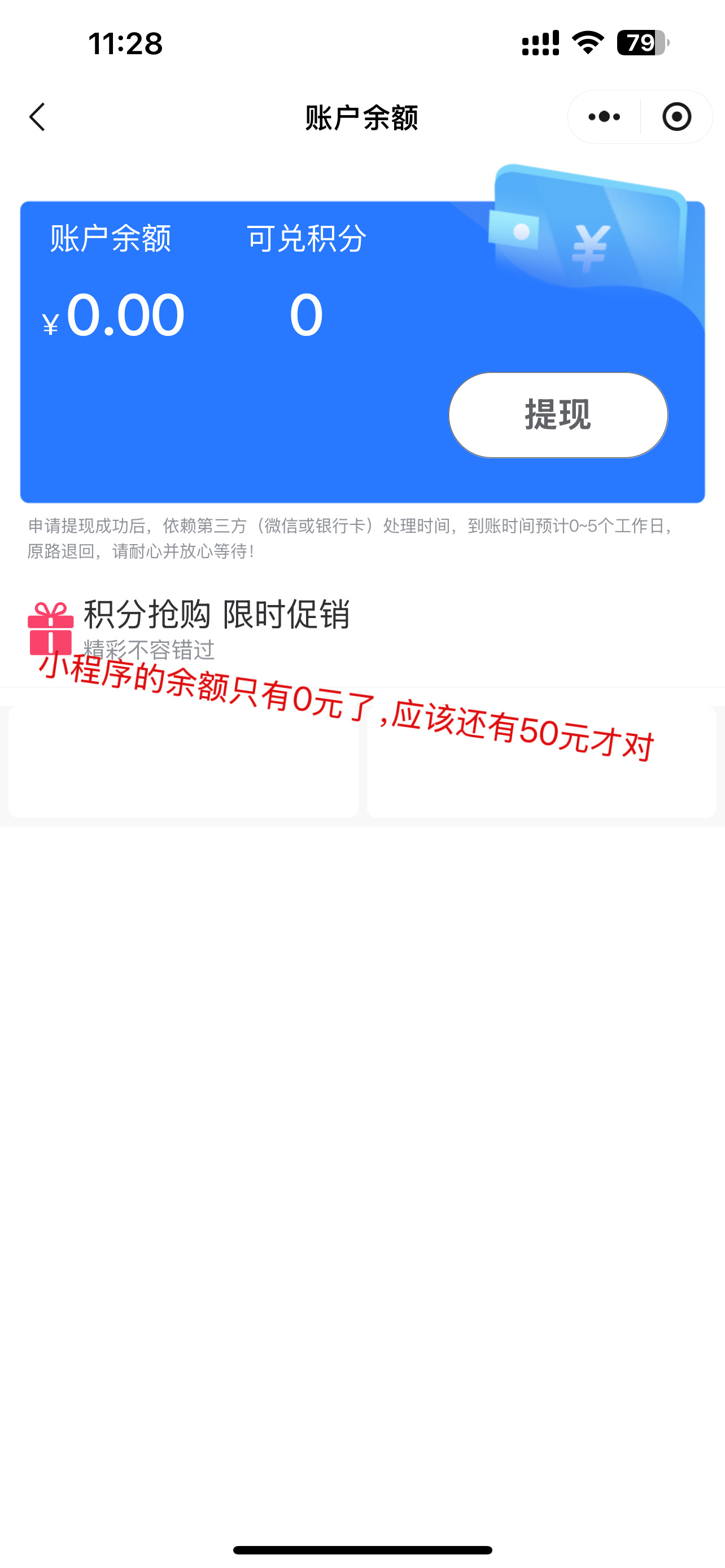
Core Viewpoint - The increasing prevalence of storage lockers in public places has led to a surge in consumer complaints, particularly regarding the difficulty in refunding deposits, which undermines the intended convenience of these services [1][11]. Group 1: Consumer Complaints - Consumers are facing significant challenges in retrieving deposits from storage lockers, with many reporting that the refund process is either overly complicated or non-existent [1][9]. - A specific case highlighted a consumer who found that her deposit was not automatically refunded to her payment account but instead transferred to a wallet within a mini-program, requiring additional steps to access [2][5]. - Complaints on platforms like Black Cat Complaints indicate that nearly a thousand issues have been reported, with the inability to retrieve deposits being the most prominent concern [1]. Group 2: Service Provider Responses - Some service providers have acknowledged the issues and have switched to new suppliers to improve the refund process, indicating a proactive approach to addressing consumer complaints [8][10]. - A manager from a scenic area mentioned that they have implemented a more efficient system with the new supplier, allowing for quicker resolution of refund issues through better communication between staff and suppliers [8]. Group 3: Regulatory Actions - Market supervision departments have initiated special inspections to address the widespread issues related to storage lockers, focusing on the clarity of refund policies and the ease of the refund process [9][11]. - Regulations are being proposed to ensure that refund instructions are prominently displayed and that refunds are processed within 24 hours [11]. Group 4: Expert Opinions - Experts emphasize that the difficulties in refunding deposits can significantly impact overall tourist satisfaction and the reputation of a city’s tourism [12]. - Suggestions include the introduction of credit-based services that eliminate the need for deposits, providing consumers with more options and enhancing service quality [12].
川航回应因“锁座”问题被约谈:将在约定日期向消保委反馈
Nan Fang Du Shi Bao· 2025-11-27 06:17
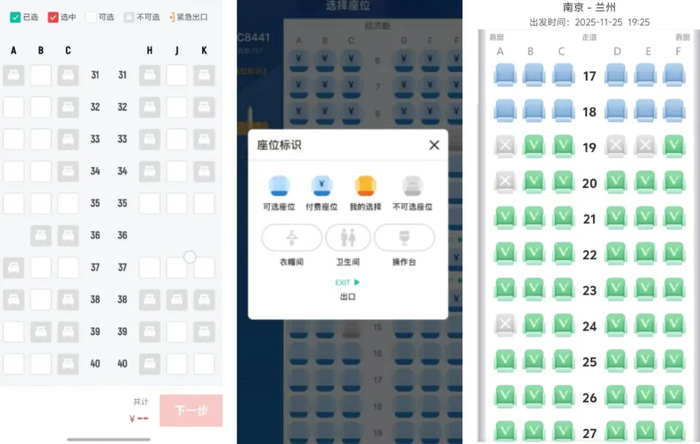
南都此前报道,不少消费者反映,在线选座时经济舱前排、靠窗、靠过道等较为便利舒适的座位常被单 独锁定,要么无法选择,要么需额外付费或用积分兑换。江苏省消保委随后组织开展了专项消费调查, 对十家航空公司进行了深入核查。 江苏省消保委表示,当前部分航空公司将本属常规服务范围的座位通过锁定方式进行收费的做法,涉嫌 侵害消费者的公平交易权与自主选择权。 近日,针对飞机"锁座"及有偿选座服务等问题,江苏省消保委约谈东方航空、南方航空、中国国航、海 南航空、厦门航空、深圳航空、山东航空、四川航空、春秋航空、吉祥航空等10家航空公司,持续引发 关注。11月27日,四川航空相关负责人向南都N视频记者表示,"航司牵头部门正结合此前与消保委沟 通的情况,有序推进相关工作,并将在约定日期向消保委做后续反馈。" 江苏省消保委就飞机票锁座问题的整改工作,向各航司提出两点明确要求,并于15个工作日内将整改情 况以书面形式进行提交。一是立即开展自查自纠,对现有选座规则进行全面梳理,重点解决"锁座范围 过度"问题,取消付费或者所谓"积分兑换"等形式的变相付费选座模式,确保免费可选座位数量合理、 分布均衡,仅保留出于"特殊旅客座位预留、保障应急 ...
十家航司被约谈 直指“锁座”乱象
Jing Ji Guan Cha Wang· 2025-11-27 05:00
飞机"锁座"及有偿选座服务问题近日引发社会广泛关注。江苏省消费者权益保护委员会(以下简称"江 苏省消保委")一纸调查,直指航司"锁座"乱象,将国内10家主流航空公司推到了风口浪尖。 11月21日,江苏省消保委线上约谈了东方航空、南方航空(600029)、中国国航(601111)等10家主流 航空公司。11月26日,通过公众号发布有关调查结果,详细列举了机票锁座服务市场中存在的诸多问 题,亮明对"锁座"现象长期存在的"零容忍"态度,并要求各公司在15个工作日内将整改情况以书面形式 提交。 专家认为,航司"锁座"行为锁的不仅是座位,还有旅客的知情权和公平交易权。"付费选座"等霸王条款 还可能涉嫌违反《消费者权益保护法》,侵害旅客的自主选择权,属于典型变相收费行为,让旅客暗吃 了不少"哑巴亏"。长此以往,"锁座"行为最终损害的是旅客对航司服务的信任,不利于航空服务业的高 质量发展。 近四成座位被锁 所谓飞机"锁座",是指航司将经济舱前排、靠窗、靠过道等较为便利舒适的座位单独锁定,要么无法选 择,要么需额外付费或用积分兑换。从范围来看,锁定范围高度集中于经济舱前排、靠窗及靠过道等消 费者偏好的优质座位,仅开放中间区域 ...



优质座位为何选不上?江苏省消保委约谈10家航空公司
Xin Hua Wang· 2025-11-27 00:17
调查还发现,10家航空公司解锁优选座位方式部分以里程或会员积分兑换,而里程或会员积分的获取渠 道,还需要消费者进行一定的额外消费,普通消费者缺乏有效累积渠道,只能被动接受剩余普通座位。 部分航空公司在权益兑换的基础上,同步增设了付费购买积分或里程、销售含积分或选座券的权益礼包 等规则,使优选座位的解锁路径向付费获取倾斜。 江苏省消保委表示,航空运输具有公共服务属性,消费者购买机票后,即与航空公司建立了航空运输合 同关系,依法享有包括选择合适座位在内的基本服务权利。当前部分航空公司将本属常规服务范围的座 位通过锁定方式进行收费的做法,涉嫌侵害消费者的公平交易权与自主选择权。 新华社南京11月26日电(记者郑生竹)11月26日,江苏省消费者权益保护委员会发布的《航空公司机票 锁座情况调查报告》显示,航班选座存在优质座位被过度锁定、优选座位需消费者额外付出成本等问 题。江苏省消保委相关负责人表示,已于近期对10家存在锁座问题的航空公司开展在线约谈。 江苏省消保委投诉部主任傅铮介绍,不少消费者反映在线选择航班座位时,经济舱前排、靠窗、靠过道 等较为便利舒适的座位常被锁定,要么无法选择,要么需额外付费或用积分兑换。为摸 ...
东航、南航、国航、海航、春秋等10家航司被约谈
Mei Ri Jing Ji Xin Wen· 2025-11-26 16:27
Core Viewpoint - The recent practice of airlines locking seats and charging for seat selection has raised consumer concerns, as it is perceived as a means for airlines to increase revenue at the expense of consumer rights [1][2]. Group 1: Investigation Findings - A special investigation by Jiangsu Consumer Council focused on 10 domestic airlines, revealing that seat locking is prevalent, with the proportion of locked seats in economy class ranging from 19.9% to 62.1%, averaging 38.7% [1][2]. - The locked seats are primarily desirable ones, such as those in the front row, window, and aisle, limiting consumer choice to less favorable options [1][2]. - The investigation identified four main issues: widespread seat locking, disguised payment mechanisms, lack of transparency, and unfair contractual terms [2]. Group 2: Consumer Rights and Responsibilities - Airlines are legally responsible for protecting consumer rights and must ensure transparency in seat distribution and pricing policies [3]. - Airlines should provide equal seat selection opportunities for all passengers at the same fare and respect consumer autonomy in choosing seats [3]. Group 3: Required Actions from Airlines - Jiangsu Consumer Council has mandated airlines to conduct self-assessments and rectify their seat selection rules, particularly addressing excessive locking and disguised payment models [4]. - Airlines must revise unfair contractual terms that limit consumer rights and ensure that their policies are clear and transparent [4]. Group 4: Industry Response - Representatives from Southern Airlines and Lucky Air acknowledged the situation and stated they are evaluating the requirements set by Jiangsu Consumer Council [5]. - Experts have pointed out that while some seat locking for safety or special needs is acceptable, excessive locking for profit could violate consumer rights [5][6].

机票“锁座”变相收费 10家航司被约谈
Bei Jing Shang Bao· 2025-11-26 15:54
Core Viewpoint - The Jiangsu Consumer Rights Protection Committee has released a report highlighting issues related to seat locking practices by airlines, including widespread locking behavior, excessive locking of premium seats, disguised fees for unlocking, and infringement on consumer rights [1][4]. Group 1: Investigation Findings - The average seat locking rate among the 10 surveyed airlines is 38.7%, with rates ranging from 19.9% to 62.1% [3][4]. - Spring Airlines and Shenzhen Airlines have particularly high locking rates, exceeding 60% and 50% respectively, while Juneyao Airlines has a relatively low rate of under 20% [3][4]. - The investigation focused on the locking ratio, locking range, redemption methods, and customer service explanations [3]. Group 2: Identified Issues - Widespread seat locking practices are prevalent, with premium seats being excessively locked, limiting consumer choices to less desirable seats [4][5]. - The unlocking mechanism often requires payment or points redemption, which disadvantages non-members or infrequent travelers, effectively increasing travel costs [4][5]. - There is a lack of transparency in information provided to consumers, with unclear seat selection rules and inadequate customer service responses [4][5]. Group 3: Recommendations and Actions - The Jiangsu Consumer Rights Protection Committee has urged airlines to conduct self-examinations and rectify unfair terms in their agreements regarding seat locking [1][6]. - Airlines are recommended to ensure a reasonable and balanced distribution of free seat options, limiting paid options to only those necessary for special circumstances [7]. - Continuous monitoring of airlines' compliance with these recommendations will be conducted, with potential follow-up measures if necessary [8].

买机票还要再花钱选座?10家航司被约谈!锁座比例平均超38%
Bei Jing Shang Bao· 2025-11-26 14:33
Core Viewpoint - The Jiangsu Provincial Consumer Protection Committee has raised concerns regarding the long-standing issues of seat locking and paid seat selection services among major Chinese airlines, highlighting the need for reform in these practices to protect consumer rights [1][2][3]. Group 1: Issues Identified - The practice of seat locking is widespread among the ten airlines, with the proportion of locked seats in the economy class ranging from 19.9% to 62.1%, averaging 38.7%, primarily affecting preferred seating areas [1][2]. - Airlines are increasingly using a mechanism that effectively charges consumers for seat selection, particularly disadvantaging non-members or infrequent travelers who lack the means to accumulate points for free seat selection [2]. - There is a lack of transparency in the information provided to consumers regarding seat locking rules and associated fees, with airlines often providing vague explanations that do not align with the high rates of seat locking [2]. Group 2: Required Reforms - The Jiangsu Provincial Consumer Protection Committee has mandated airlines to conduct self-assessments and rectify their seat selection rules within 15 working days, specifically addressing the excessive locking of seats and eliminating disguised paid seat selection models [3][4]. - Airlines are required to ensure a reasonable and balanced distribution of free seat options, retaining only necessary seat locks for special passengers or emergency purposes, while prohibiting the inclusion of standard economy seats in the paid category [3]. - The committee has called for a review and modification of unfair contractual terms related to seat locking, ensuring that consumer rights are not limited and that airlines' responsibilities are clearly defined within a transparent framework [4].

平均38.7%座位被锁定 江苏消保委约谈10家航司要求限期整改
Yang Shi Xin Wen· 2025-11-26 11:02
Core Viewpoint - The recent practice of airlines locking seats and charging for seat selection has raised consumer concerns, as it is seen as a way for airlines to increase revenue at the expense of consumer rights [1][2]. Group 1: Investigation Findings - A special investigation by Jiangsu Consumer Council targeted 10 domestic airlines, revealing that seat locking is prevalent, with the proportion of locked seats in economy class ranging from 19.9% to 62.1%, averaging 38.7% [1][2]. - The locked seats are primarily desirable ones, such as those in the front row, window, and aisle, limiting consumer choice to less favorable options [1][2]. Group 2: Consumer Rights Violations - The unlocking mechanism for preferred seats often requires payment through membership points or miles, disadvantaging non-members or occasional travelers who lack accumulation channels [2]. - Airlines have introduced additional paid options for unlocking seats, effectively splitting the basic seat selection rights into paid services, increasing travel costs for consumers [2]. - Information regarding seat locking rules and fees is often unclear, violating consumers' right to know, with customer service responses being inadequate and contradictory [2]. Group 3: Recommendations for Airlines - Airlines are urged to ensure transparency by clearly informing consumers about seat distribution and pricing policies [3]. - Fairness in rules must be maintained, ensuring equal seat selection opportunities for all passengers at the same fare [3]. - Airlines should respect consumer autonomy by safeguarding their right to choose and preventing disguised compulsory consumption [3]. Group 4: Required Actions - Airlines must conduct self-assessments to address excessive seat locking and eliminate disguised paid seat selection models, ensuring a reasonable and balanced distribution of free seat options [3][4]. - Unfair clauses in agreements related to seat locking should be reviewed and amended to avoid limiting consumer rights or increasing consumer responsibilities unfairly [4].
江苏省消保委约谈10家航司,就飞机票锁座问题要求限期整改
Xin Lang Cai Jing· 2025-11-26 05:37
Core Viewpoint - The Jiangsu Provincial Consumer Protection Committee has held an online meeting with ten major airlines to address consumer rights and clarify industry operational boundaries, particularly regarding seat selection fees [1] Group 1: Consumer Rights - The airlines involved include Eastern Airlines, Southern Airlines, Air China, Hainan Airlines, Xiamen Airlines, Shenzhen Airlines, Shandong Airlines, Sichuan Airlines, Spring Airlines, and Juneyao Airlines [1] - The committee emphasizes that air transport has public service attributes, and consumers have basic service rights, including the right to choose suitable seats after purchasing tickets [1] Group 2: Industry Practices - Some airlines are charging fees for seat selection, which the committee argues may infringe on consumers' rights to fair trade and autonomous choice [1] - The committee has issued two clear requirements for the airlines regarding the rectification of the seat locking issue and expects a written report on the corrective actions within 15 working days [1]