
育儿补贴

Search documents
每天10时开放领取,持续到本月底,这个区域可抢母婴消费券
Chang Sha Wan Bao· 2025-08-14 07:33
Group 1 - The core initiative is the launch of maternal and infant consumption vouchers by the government of Wangcheng District in collaboration with JD Supermarket, aimed at supporting families with childcare expenses [1] - The vouchers will be available for use on over 30,000 products from more than 700 brands, covering eight categories including milk powder, diapers, and maternity products, with a 10% discount on the actual payment amount [1] - Since the beginning of 2024, JD Supermarket has partnered with 80 brands, helping 4.93 million families save 300 million yuan on childcare expenses [1] Group 2 - JD Supermarket has introduced a 28-day fresh delivery service for milk powder, ensuring that products reach consumers within 28 days from the production date, addressing the demand for freshness and nutrition among parenting families [2] - The company plans to continue collaborating with local governments and maternal and infant brands to provide comprehensive support for parenting families, promoting a healthy development environment for the industry and contributing to long-term population balance [2]

终端价格波动 奶粉市场进入深度调整期
Bei Jing Shang Bao· 2025-08-13 16:24
Core Insights - Recent reports indicate a price increase in certain infant formula brands such as Aptamil, Friso, Wyeth, Beingmate, and a2, primarily influenced by promotional activities on platforms [1][3] - Domestic milk powder brands are recovering from a price war over the past four years, while foreign brands are experiencing price increases due to strict control over supply and pricing [1][5] Price Trends - Online channels show significant price fluctuations for premium brands due to promotional activities, with Friso's price ranging from 298 yuan to 356 yuan per can, a difference of 58 yuan [4] - Offline channels, however, reveal stable prices for domestic brands, with promotions making some products cheaper than online prices [4][5] Market Dynamics - The price fluctuations observed are not directly linked to the recent childcare subsidy policy, as domestic brands are gradually recovering from previous price wars [5] - Foreign brands are maintaining higher prices through strict control over supply and have introduced new products at elevated prices [5][6] Raw Material Costs - The increase in prices for foreign milk powder is also attributed to rising costs of international bulk powder raw materials, with New Zealand's whole and skim milk powder prices increasing by 2.1% and 0.4% respectively [6] Competitive Landscape - The ultra-premium market is dominated by foreign companies like Danone and FrieslandCampina, with FrieslandCampina's market share leading among international brands [7] - Danone's growth is driven by a rapid increase in online sales, particularly for its specialized nutrition products [7] E-commerce Impact - The development of cross-border e-commerce has provided favorable conditions for foreign dairy companies, with simplified import processes enhancing consumer access to high-end products [8] - The ultra-premium milk powder market is projected to grow by 4.2% in 2024, becoming a key growth driver for the industry [8] Strategic Directions - Industry experts suggest that dairy companies should focus on three main areas: enhancing high-end product development, strengthening niche market offerings, and optimizing channel strategies [8] - The future competition will shift from product sales to providing comprehensive nutritional solutions throughout the consumer lifecycle [8]

发钱了,接下来会发生什么?
大胡子说房· 2025-08-13 11:50
Core Viewpoint - The newly introduced childcare subsidy aims to stimulate birth rates and consumer spending, but its actual impact may be limited due to the relatively small amount of financial support compared to the overall costs of raising a child [5][10]. Summary by Sections Childcare Subsidy Details - Starting from January 1, 2025, a subsidy of 3,600 yuan per child per year will be provided for children under three years old, amounting to a total of 10,800 yuan over three years [1]. - Families with children born between 2022 and 2024 will also receive varying levels of subsidies, with an estimated total subsidy scale of approximately 854 billion yuan for this group [2]. Financial Implications - The total subsidy scale for 2025 is projected to be around 347 billion yuan, with an overall expected expenditure of about 1,200 billion yuan for the current year [2][3]. - If the birth rate remains stable over the next decade, the total subsidy could reach approximately 3,470 billion yuan [4]. Economic Context - The subsidy represents a small fraction of the overall fiscal capacity, as a third of the increased non-tax revenue from state-owned financial institutions could cover the annual subsidy costs [4]. - The introduction of universal childcare subsidies marks a shift towards a welfare system that includes all births, not just second or subsequent children [10]. Effectiveness of the Subsidy - The subsidy is unlikely to significantly influence birth rates, as the financial support is minimal compared to the high costs associated with raising children [5]. - The impact on consumer spending is also expected to be limited, as the subsidy may primarily cover essential expenses rather than stimulate broader consumption [9]. Global Comparisons - Compared to other countries, such as Japan and Singapore, China's subsidy is relatively low, indicating potential for future increases in support [12][11]. - Historical data suggests that subsidies alone may not effectively reverse declining birth rates, as seen in various developed nations [7][6]. Future Considerations - The implementation of a long-term subsidy program may lead to further financial support measures, potentially expanding beyond just childcare to include broader social welfare initiatives [13][14]. - The financial strategy of direct cash distribution could stimulate asset prices and create new investment opportunities in related sectors [15][16].

港股异动 | 乳业股延续近期强势表现 中国圣牧(01432)再涨超10% 优然牧业(09858)涨近6%
智通财经网· 2025-08-13 07:25
Group 1 - Dairy stocks continue to show strong performance, with China Shengmu (01432) up 9.09% to HKD 0.48, Yurun Dairy (09858) up 3.53% to HKD 4.4, Mengniu Dairy (02319) up 1.46% to HKD 16.67, and Ausnutria (01717) up 1.19% to HKD 2.55 [1] - The implementation plan for the childcare subsidy system was released on July 28, which will provide a subsidy of HKD 3,600 per child per year for children under three years old starting from January 1, 2025, benefiting over 20 million families [1] - The policy is expected to directly boost the consumption of dairy products, particularly infant formula [1] Group 2 - Guosen Securities is optimistic about the reversal of the beef cycle in 2025, predicting that meat prices will continue to rise until 2027 [1] - The domestic raw milk supply and demand situation is expected to improve in the second half of 2025, leading to a potential price recovery [1] - The improvement in raw milk prices is favorable for the profitability of dairy farming, and the upward trend in the beef cycle is expected to significantly enhance the income from culling dairy cows and selling calves, recommending Yurun Dairy, Modern Dairy, and China Shengmu for their high performance recovery potential [1]

开屏消费观|奶粉纸尿裤涨价了?记者走访调查:市场价格稳定
Sou Hu Cai Jing· 2025-08-11 14:29
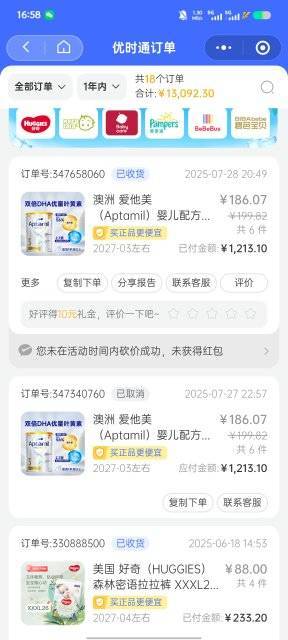
Core Viewpoint - The recent announcement of the national childcare subsidy policy has led to rumors of price increases for baby products, causing anxiety among families. However, investigations reveal that the overall prices in the maternal and infant market remain stable, with some leading brand prices actually decreasing due to promotional adjustments [1][2]. Group 1: Policy Announcement and Public Reaction - On July 28, the National Health Commission released the "Implementation Plan for the Childcare Subsidy System," which will provide an annual subsidy of 3,600 yuan to families with one to three children starting in 2025, benefiting over 20 million families [2]. - Following the announcement, social media platforms saw posts claiming price increases for milk powder brands like Beiyinmei and Feihe, with some products reportedly rising by 5% to 10%, leading to concerns that businesses were preemptively capitalizing on the subsidy [2]. Group 2: Price Verification and Market Analysis - An investigation into online sales showed that the price of Ausnutria's A2 Platinum Stage 3 infant formula decreased from 186.07 yuan to 179.07 yuan between late July and early August, indicating no significant price increase [3][6]. - Further checks on platforms like JD and Tmall revealed no widespread price hikes among brands such as Feihe, Beiyinmei, and Meizhuang, with many products experiencing price drops due to promotional activities [6][9]. Group 3: Offline Store Observations - Physical store visits confirmed that prices for milk powder and diapers remained stable, with no notifications of price increases received by sales staff. Stores were also running promotional offers [9][10]. - Sales personnel from various stores indicated that the prices were stable and that the rumors of price increases were unfounded, emphasizing that the subsidy should not directly correlate with price hikes [9][10]. Group 4: Market Dynamics and Consumer Perception - The maternal and infant industry has a complex pricing structure, leading to consumer misunderstandings regarding price changes. The ongoing price war has resulted in a "repair phase" where some brands are adjusting prices through formula upgrades or reduced discounts, but this does not indicate a market-wide price increase [10]. - Overall, the introduction of the childcare subsidy has not led to a general increase in prices for milk powder and diapers, contrary to the circulating rumors [10].
没结婚证,不能领育儿补贴?深圳卫健委回应
财联社· 2025-08-11 03:06
Core Viewpoint - The recent controversy surrounding the eligibility for child-rearing subsidies in Shenzhen highlights the complexities of the current regulations regarding non-marital births and the necessity of marriage certificates for subsidy claims [1][3][5]. Group 1: Policy and Regulations - A netizen reported receiving a message from the Shenzhen Health Commission stating that they could not receive child-rearing subsidies due to not having a marriage registration, which sparked widespread discussion online [1]. - According to the "Guangdong Province Population and Family Planning Regulations" and the "Management Measures for Birth Registration by the Guangdong Provincial Health Commission," non-marital births can be registered [3]. - Shenzhen Health Commission staff clarified that the current policy defines "legally compliant births" based on marital status, but the final requirements will depend on the unified provincial system set to launch at the end of August [5]. Group 2: Upcoming Changes - The national unified child-rearing subsidy information management system is nearing completion and is currently in the testing phase, with plans for local application channels to open by late August [5]. - The new application system will require basic documents such as the infant's birth certificate and household registration, but it remains uncertain whether a marriage certificate will be necessary [6].
母婴产品暗自提价?新华时评:别让政策红利被市场吞噬
Sou Hu Cai Jing· 2025-08-09 11:14
Group 1 - Recent policies aimed at reducing childcare burdens, such as childcare subsidies and free preschool education, have been implemented to alleviate family financial pressures [1] - Some retailers have taken advantage of these policies by raising prices on essential baby products like formula, diapers, and baby food, effectively negating the benefits of the subsidies [1] - The increase in prices for baby products has been reported by many parents on social media, with price hikes ranging from several to tens of yuan [1] Group 2 - There is an urgent need for comprehensive regulation of the maternal and infant market to ensure that policies genuinely benefit families [2] - A price monitoring mechanism should be established to track price dynamics and investigate any abnormal price increases, with legal consequences for those who disrupt market order [2] - Efforts should be made to standardize the pricing system in the maternal and infant industry and promote price transparency across online and offline sales channels [2]
免费学前教育今秋惠及1200万儿童,中央财政资金已到位
Di Yi Cai Jing· 2025-08-07 12:43
Core Viewpoint - The implementation of free preschool education in China is a significant milestone aimed at addressing public needs, improving living standards, and promoting balanced population development, starting from the fall semester of 2025 [1][4]. Policy Implementation - The State Council has issued an opinion to gradually implement free preschool education, which will exempt public kindergartens from charging care and education fees for children in their final year of preschool [1][4]. - The policy is expected to benefit approximately 12 million children, with an estimated increase in national fiscal expenditure of about 20 billion yuan for the upcoming fall semester [4][5]. Financial Support and Structure - The financial burden of the policy will be shared between central and local governments, with the central government covering 80%, 60%, and 50% of the costs in western, central, and eastern regions, respectively [4][5]. - The total national fiscal expenditure for preschool education has increased from 86.2 billion yuan in 2013 to 315 billion yuan in 2023, reflecting an annual growth rate of 13.8% [8]. Future Considerations - The policy aims to reduce the economic burden on families, with potential future expansions to include earlier preschool years and high school education [6][10]. - The government is also considering the integration of existing local policies that exceed the national standards, allowing for tailored implementations based on regional needs [7][9]. Broader Context of Support Policies - The free preschool education initiative is part of a broader strategy to enhance the fertility support system in China, which includes various measures such as childcare subsidies and improved public services [10][11]. - The establishment of a comprehensive support system for marriage, childbirth, upbringing, and education is recommended to alleviate the financial burdens on families [12].
育儿补贴刚出台,奶粉就要涨价?多家乳企回应
Chang Jiang Ri Bao· 2025-08-07 09:27
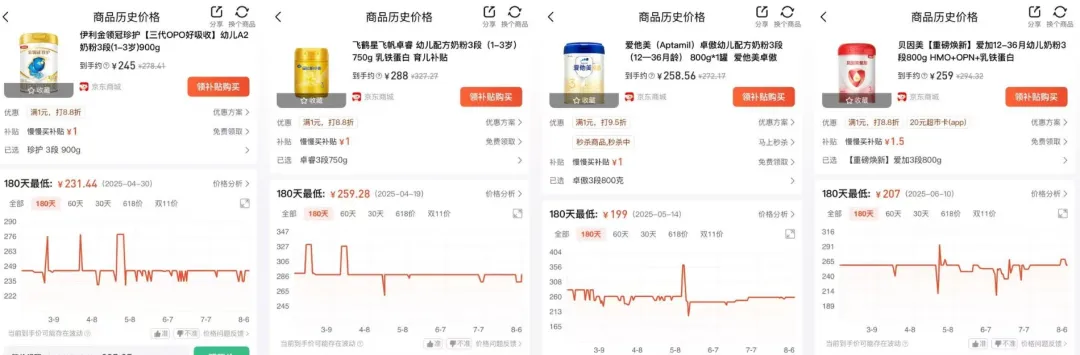
中婴商情总经理曹天伟表示,近期对全国部分母婴门店的调查显示,约有七成母婴店老板表示门店内奶粉价格并未上涨;另有约三成门店称价格有所调 整,但这也与育儿补贴无关,主要是产品促销策略的调整。 独立乳业分析师宋亮分析指出,2024年以来,国内奶粉行业销售有所回暖,除新生人口回升因素外,也与市场秩序恢复有关。此前为争夺市场,各奶粉品 牌进行了较长时间的价格战。2024年以来,主流奶粉企业通过控货控价,推行理性竞争策略,带动了市场价格体系的回升。他强调,这属于企业的长期市 场策略调整,并非短期行为。 此前报道,国务院新闻办公室7月30日14时举行新闻发布会,介绍育儿补贴制度及生育支持措施有关情况。根据《育儿补贴制度实施方案》,从2025年1月 1日起,对符合法律法规规定生育的3周岁以下婴幼儿发放补贴,至其年满3周岁。 近日,部分社交平台上有网友称国家公布育儿补贴后,多家国内外婴幼儿奶粉品牌产品价格出现30元到50元/罐的上涨,并呼吁抵制涨价品牌。这一消息 引发众多网友热议,并于8月6日冲上新浪热搜。 记者从伊利股份、中国飞鹤、贝因美等多家乳业上市公司了解到,相关涨价传言不实。 8月6日和7日,伊利股份、中国飞鹤、贝因美 ...


育儿补贴刚到位奶粉就涨价不实多家乳企辟谣称奶粉并未涨价
Di Yi Cai Jing· 2025-08-07 02:53
Core Viewpoint - The recent rumors regarding price increases for infant formula following the announcement of national childcare subsidies have been refuted by several major dairy companies, indicating that the market conditions do not support such price hikes [1] Company Responses - Major dairy companies including Yili (伊利股份), China Feihe (中国飞鹤), and Beingmate (贝因美) have publicly stated that they have not raised prices for their infant formula products [1] - Beingmate specifically urged consumers not to believe or spread rumors about price increases, confirming that all products remain at their previous prices [1] Market Analysis - Industry analysis suggests that the declining birth rate in China has led to an oversupply in the infant formula market, resulting in intensified competition that does not favor price increases [1] - Despite social media claims of price hikes ranging from 30 to 50 yuan per can, investigations into the pricing of major brands over the past 180 days show no overall upward trend in prices [1]