
并购重组

Search documents
新疆火炬拟1.25亿元收购玉山利泰100%股权;富创精密两股东拟合计减持不超过4%股份丨公告精选
Mei Ri Jing Ji Xin Wen· 2025-05-15 14:20
Mergers and Acquisitions - Harbin Pharmaceutical Group plans to acquire 42.82% equity of Sanjing Qianhe Pharmaceutical for 23.446 million yuan [1] - Xinjiang Torch intends to purchase 100% equity of Yushan Litai for 125 million yuan, which is classified as a related party transaction but not a major asset restructuring [2] Share Buybacks - Rongxin Culture announces a share buyback plan with a budget between 20 million and 22 million yuan, with a maximum buyback price of 37 yuan per share [3] - Weifu High Science plans to repurchase shares with a budget of 100 million to 150 million yuan, with a maximum buyback price of 35 yuan per share [4] Shareholding Changes - Hubei Yihua's controlling shareholder plans to increase its stake in the company by investing between 200 million and 400 million yuan within six months starting from May 19, 2025, without a price range [5] - Fuchuang Precision announces that two shareholders plan to collectively reduce their holdings by up to 4% of the total shares [6] - Hanchuan Intelligent's controlling shareholder received a warning from Jiangsu Securities Regulatory Commission for failing to disclose significant risks related to pledge contracts [7] - Delin Hai's shareholder plans to reduce holdings by up to 3% of the total shares due to personal financial needs [8]


海看股份分析师会议-20250515
Dong Jian Yan Bao· 2025-05-15 14:16
Group 1: Report Basic Information - Research object: Haikan Co., Ltd. [17] - Industry: Not specified - Reception time: May 15, 2025 [17] - Company reception staff: Board Secretary Deng Qiang, Financial Controller Du Juan, Independent Directors Zhu Ling, Yang Chenglei, Ma Dehua, Securities Affairs Representative Wang Chuang, and Securities Affairs Manager Fu Yiming [17] Group 2: Core Views - In 2024, Haikan Co., Ltd. had an overall stable operation with an optimized structure. Although the overall performance slightly declined, the main business remained stable, and new micro - drama business was innovatively launched. In Q1 2025, the company achieved year - on - year growth in revenue and net profit [28]. - The company's IPTV business developed steadily in 2024, and it will continue to deepen cooperation with operators, expand business models, and strengthen technology and content construction [24][25]. - The company adheres to a capital operation strategy of "centering on the main business and cultivating the ecosystem" and is looking for high - quality investment targets [26]. - The company has made an AI technology strategic layout and is exploring the integration of AI with network audio - visual services [27]. Group 3: Investor Questions and Company Responses 1. Profit decline in 2024 - The relatively low profit contribution in Q4 2024, combined with year - end centralized expense payments and provision for expected liabilities, put pressure on the annual profit. However, the company's operations were stable, and there were no abnormal adverse factors [24]. 2. IPTV business in 2024 and future plans - In 2024, the IPTV basic business revenue was 795 million yuan, a year - on - year increase of 0.02%, with 16.8505 million effective users, and the value - added business revenue was 139 million yuan. The company completed the phased task of "dual governance" on TV large screens and launched innovative services. In the future, it will deepen cooperation with operators, expand business models, and strengthen technology and content construction [24][25]. 3. Company's advantages - The company has a high - quality user base and large market penetration space in Shandong. It promotes the transformation from "watching TV" to "using TV", develops AI - related products, and benefits from relevant policies [26]. 4. Equity investment direction - The company adheres to the "centering on the main business and cultivating the ecosystem" strategy, focuses on high - quality investment targets, and in 2021, it invested 15 million yuan to establish Shandong Cultural and Tourism Cloud Intelligent Technology Co., Ltd., holding 27.78% of the shares [26]. 5. Application of multi - modal AI in IPTV - Currently, the company has not fully applied multi - modal AI in IPTV intelligent interaction. However, it has made an AI strategic layout and is exploring the integration of AI with network audio - visual services [27]. 6. Company performance from 2024 to now - In 2024, the company's consolidated revenue was 979 million yuan, a year - on - year decrease of 1.37%, and the net profit attributable to the parent was 400 million yuan, a year - on - year decrease of 2.38%. In Q1 2025, the consolidated revenue was 235 million yuan, and the net profit attributable to the parent was 117 million yuan, a year - on - year increase of 7.45% [28]. 7. Dividend policy in 2024 - The company's dividend policy considers profitability, cash flow, and shareholder returns. It has implemented 4 cash dividends since listing, with a total of 620 million yuan (tax - included). The 2024 dividend plan is to distribute 0.50 yuan (tax - included) per 10 shares [29]. 8. Corporate income tax exemption - The company is currently not eligible for the corporate income tax exemption policy but is actively applying for the recognition of a restructured cultural enterprise [30].
Goheal:当行业天花板来临,上市公司并购重组的方向在哪里?
Sou Hu Cai Jing· 2025-05-15 09:59
Core Viewpoint - The current capital market is experiencing a "growth silence" era, with many once-prominent sectors facing stagnation and companies struggling to find new growth paths [1][4]. Group 1: Industries Facing Stagnation - Several industries have hit a "ceiling," including a leading photovoltaic company announcing no capacity expansion for the next three years due to global oversupply and fierce price competition [4]. - New energy vehicle companies are shifting focus to "technology going abroad," while gaming and internet companies are struggling to find new growth narratives beyond AI [4]. Group 2: Mergers and Acquisitions as a Growth Strategy - A number of companies are successfully navigating this stagnation through mergers and acquisitions (M&A), such as a coal chemical company acquiring a smart logistics firm to become a "coal + smart logistics" platform [5][6]. - High-quality M&A involves deep strategic thinking and structural reorganization, rather than merely financial transactions [7][8]. Group 3: M&A Directions in a Stagnant Market - Goheal identifies four key M&A directions for companies facing industry ceilings: 1. Acquiring high-tech capabilities to enhance digital transformation and improve valuation [11]. 2. Expanding into overseas markets by acquiring established foreign agents with existing sales channels [12]. 3. Approaching consumer brands to increase pricing power and direct-to-consumer channels [13]. 4. Integrating the supply chain through vertical and horizontal acquisitions to mitigate cyclical fluctuations [14]. Group 4: Opportunities in Downturns - The downturn in the market presents a unique opportunity for acquisitions, as asset valuations become more reasonable and negotiation power increases [15]. - Goheal's experience shows that 64% of their M&A projects in 2024 occurred during "reverse cycle" windows, often at low premiums or with performance guarantees [15]. Group 5: Importance of Post-M&A Integration - The success of M&A largely depends on post-acquisition integration, with 70% of outcomes determined by how well companies manage integration processes [16]. - Key integration focuses include team integration mechanisms, financial performance metrics, and management authorization systems [16]. Group 6: The Need for Proactive Growth Strategies - Companies must actively seek growth opportunities rather than waiting for favorable market conditions, as true market leaders are those who dare to restructure and invest during slow growth periods [18].

Goheal:风险偏好上头,上市公司资本运作正在变得“不计代价”?
Sou Hu Cai Jing· 2025-05-15 09:41
Core Viewpoint - The article highlights a trend in the Chinese capital market where listed companies are increasingly engaging in aggressive capital operations, often disregarding the associated costs and risks, treating mergers and acquisitions as high-stakes gambles rather than strategic decisions [1][3][18] Group 1: Trends in Capital Operations - There has been a noticeable increase in high-premium acquisitions and cross-industry mergers without profit commitments, indicating a shift towards reckless capital operations [1][5] - Companies are losing their valuation anchors and are instead chasing short-term stock price incentives and market sentiment, leading to a phenomenon termed "risk preference high" [7][8] - The trend is fueled by multiple factors, including survival anxiety due to regulatory changes, relaxed regulatory signals encouraging mergers, and valuation discrepancies that create arbitrage opportunities [9][10][11] Group 2: Consequences of Aggressive Mergers - High-premium transactions often obscure the true quality of assets, leading to lower overall return on equity (ROE) when expected profits are not realized [13] - Integration costs can be significant, especially when teams leave post-acquisition, resulting in operational failures [13] - Increased financial burdens from excessive debt taken on for acquisitions can lead to higher asset-liability ratios and hinder future financing opportunities [13][14] Group 3: Evaluating Risk Preferences - Companies should assess whether the core profit sources of projects are based on existing cash flows or speculative narratives, as reliance on the latter indicates rising risks [15] - The presence of comparable transactions at significantly lower valuations can signal that a company is being driven by emotions rather than rational opportunity [15] - A lack of practical integration plans and monitoring mechanisms can lead to chaotic post-merger scenarios [15] Group 4: Call for Rational Capital Operations - The article advocates for a return to rationality in capital operations, emphasizing that mergers should be strategic rather than emotional responses [16][18] - Successful capital operations should be based on informed decision-making rather than impulsive actions driven by market sentiment [18] - Companies are encouraged to think critically about the long-term implications of their capital strategies, akin to strategic planning in a game of Go [18]

海看股份(301262) - 2025年5月15日投资者关系活动记录表
2025-05-15 09:04
Financial Performance - The company reported a total revenue of 9.79 billion yuan in 2024, a decrease of 1.37% year-on-year [6] - The net profit attributable to shareholders for 2024 was 4.00 billion yuan, down 2.38% compared to the previous year [6] - In Q1 2025, the company achieved a revenue of 2.35 billion yuan, with a net profit of 1.17 billion yuan, reflecting a year-on-year growth of 7.45% [6] IPTV Business Development - The IPTV basic business revenue for 2024 was 795 million yuan, showing a slight increase of 0.02% year-on-year [2] - The number of effective IPTV users reached 16.85 million [2] - The company plans to enhance its IPTV services through innovation and collaboration with major telecom operators [2] Strategic Advantages - The company is the exclusive IPTV operator in Shandong province, benefiting from a large user base and market penetration potential [3] - It is focusing on transforming traditional TV viewing into interactive services, integrating various public services [3] - The company is investing in AI technology to improve content creation and operational efficiency [5] Capital Investment Strategy - The company aims to invest in new products, technologies, and business models that extend its existing industry chain [4] - In 2021, the company invested 15 million yuan to establish a joint venture, holding a 27.78% stake [4] - The company is exploring diverse capital operation methods to enhance its competitive edge [4] Dividend Policy - The company has implemented four cash dividend distributions since its listing, totaling 620 million yuan [6] - For 2024, the proposed dividend is 0.50 yuan per 10 shares, based on a total share capital of 417 million shares [6] - The company emphasizes a sustainable dividend policy while ensuring financial health and shareholder returns [6] Taxation and Policy Context - The company currently does not benefit from the tax exemption policy for cultural enterprises but is actively pursuing recognition for this status [7] - The recent policy changes are expected to enhance the competitiveness of cultural enterprises [7]

万通智控:5月14日接受机构调研,价远投资、立元集团等多家机构参与
Sou Hu Cai Jing· 2025-05-15 08:42
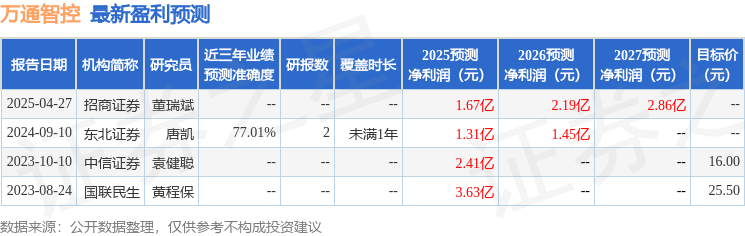
Core Viewpoint - WanTong Intelligent Control (300643) has shown a positive trend in its profitability despite a slight decline in revenue, driven by high-margin product sales and strategic market positioning in the commercial vehicle sector [2][5]. Group 1: Financial Performance - In Q1 2025, the company achieved revenue of 279 million yuan, with a notable performance in various product lines: sensors and digital information control devices generated 61.32 million yuan with a gross margin of 53.18%, metal hoses generated 167 million yuan with a gross margin of 28.36%, and tire valves and other products generated 49.18 million yuan with a gross margin of 22.81% [2]. - The company's main revenue for Q1 2025 was 268 million yuan, representing a year-on-year decline of 3.99%, while the net profit attributable to shareholders was 36.93 million yuan, an increase of 36.36% year-on-year [5]. - The company reported a net profit of 34.99 million yuan after deducting non-recurring items, reflecting a year-on-year increase of 42.96% [5]. Group 2: Market Position and Product Development - The growth of the company's NLP sensors in the commercial vehicle sector is significantly influenced by regulatory policies, such as the UN/ECE Regulation in Europe mandating TPMS for new heavy vehicles starting July 2024, and similar initiatives in the US and China [3]. - The company’s NLP sensors are characterized by low power consumption, miniaturization, and ease of installation, which have been patented and recognized by major fleets in Europe and the US, leading to bulk shipments [3]. Group 3: Corporate Governance and Strategic Initiatives - The company has implemented a market value management system aimed at enhancing investment value and maintaining shareholder rights, including a share buyback program that acquired 827,900 shares between February and May 2024 [4]. - Currently, there are no plans for mergers or acquisitions, but the company remains open to opportunities that align with its core business and strategic direction [5].
福晶科技(002222) - 002222福晶科技投资者关系管理信息20250515
2025-05-15 08:04
Group 1: Company Overview and Business Model - The company operates on a "sales-driven production" model, producing based on budget and order conditions [2] - In 2025, the expected domestic revenue share is 65%, with exports around 35% [2] Group 2: Financial Performance and Projections - The budgeted revenue for 2025 is approximately 150 million yuan, contingent on market conditions and team efforts [2] - The company's revenue and profit projections for 2025 are expected to remain stable compared to 2024, with significant growth anticipated in the first quarter [2] Group 3: Market Strategy and Product Focus - The company aims to expand its market share in the picosecond and femtosecond laser markets, focusing on products like LBO, Nd:YVO4 crystals, and acousto-optic products [2] - Current product applications include industrial measurement, life sciences, precision instruments, and smart equipment [2] Group 4: Investor Relations and Communication - The company emphasizes transparency in information disclosure and maintains strong communication with investors [2] - A high proportion of cash dividends has been consistently implemented in recent years to enhance investor returns [2] Group 5: Challenges and Risks - The company faces uncertainties regarding its U.S. business due to U.S.-China tariff issues, impacting export to other countries [2] - There are currently no plans for mergers or acquisitions to expand market scale or integrate the supply chain [2]

上市公司加速绘制新质生产力版图
Jin Rong Shi Bao· 2025-05-15 03:08
Group 1 - The global industry chain and supply chain are undergoing deep adjustments due to a new round of technological revolution and industrial transformation, prompting A-share listed companies to accelerate mergers and acquisitions (M&A) as a key strategy for enhancing productivity [1][3] - The Chinese government has introduced a series of supportive policies for the M&A market, including optimizing restructuring conditions and establishing industrial M&A funds, reflecting a strategic direction to promote innovation-driven development and enhance market efficiency [1][3] - The China Securities Regulatory Commission is revising the "Major Asset Restructuring Management Measures" to further support listed companies in M&A activities, aiming to improve innovation capabilities and risk resistance [1][3] Group 2 - A new wave of M&A is emerging in the A-share market, driven by the need for traditional industries to upgrade and new industries to accelerate development, with a strong demand for capital market optimization [2][3] - M&A is seen as a crucial path for companies in the new productivity sector to achieve rapid industrial breakthroughs, especially in the biopharmaceutical sector, where companies are seeking to acquire innovative drug development platforms and technologies [2][3] - Since the introduction of the "Six M&A Guidelines," nearly 1,400 restructuring projects have been disclosed in the Shanghai and Shenzhen markets, marking a 40% year-on-year increase, with significant growth in major asset restructurings [3][4] Group 3 - The "Six M&A Guidelines" have led to a mainstream trend of M&A among companies focused on new productivity, facilitating the integration of emerging industries with existing sectors [4][5] - As of September 24, 2024, over 760 M&A transactions have been disclosed in the Shenzhen market, totaling more than 290 billion yuan, indicating a vibrant M&A environment [4][5] - The Science and Technology Innovation Board has also seen significant M&A activity, with 100 new industry mergers disclosed since the release of the "Eight Guidelines," reflecting a focus on resource integration and synergy [4][5] Group 4 - Companies are increasingly targeting hot sectors such as semiconductors, AI computing, and robotics for external growth opportunities through M&A [6][7] - Notable transactions include the acquisition of minority stakes in semiconductor companies by Hu Silicon Industry and investments in humanoid robotics by Macro Technology, showcasing strategic expansions into high-demand markets [6][7] - Analysts believe that M&A activities are driving technological upgrades and industry transformations, contributing to the healthy development of the capital market [7]
近30份估值提升计划出炉 央企控股上市公司市值管理再出实招
Shang Hai Zheng Quan Bao· 2025-05-14 18:52
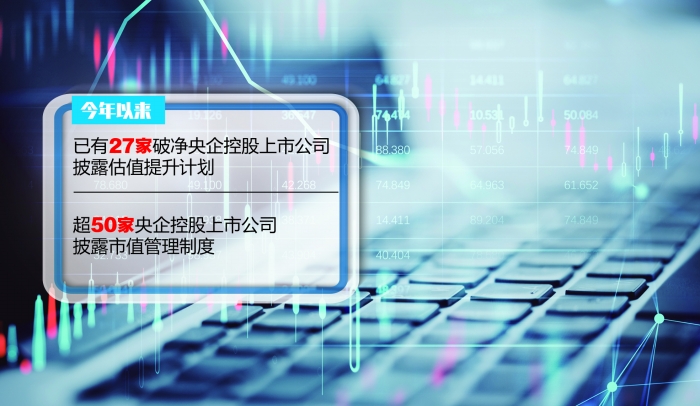
Core Viewpoint - Central state-owned enterprises (SOEs) are addressing the issue of stock prices falling below net asset value (known as "破净") by implementing valuation enhancement plans to boost company value and investor confidence [2][3] Group 1: Valuation Enhancement Plans - 27 central SOEs have disclosed targeted valuation enhancement plans this year, with over 50 SOEs revealing their market value management systems [2] - The State-owned Assets Supervision and Administration Commission (SASAC) emphasizes the importance of addressing the long-term "破净" issue as a key annual task [2] - Companies are focusing on improving core business operations as the primary task in their disclosed valuation enhancement plans [3] Group 2: Strategic Development Initiatives - China Electric Power Construction plans to develop strategic emerging industries such as offshore wind power, hydrogen energy, and artificial intelligence in engineering [3] - China State Construction Engineering is focusing on industrialization, digitalization, and green transformation to enhance its competitive edge [4] Group 3: Mergers and Acquisitions - High-quality mergers and acquisitions are seen as essential for optimizing business layout and expanding market share in the steel industry [5] - China Communications Construction Company is planning to integrate its subsidiaries to reduce costs and enhance efficiency [5][6] Group 4: Long-term Return Mechanisms - The "three-piece set" of dividends, share buybacks, and stock repurchases is crucial for enhancing investor returns and is a significant part of the market value management toolbox [7] - Daqin Railway plans to maintain a cash dividend ratio of at least 55% of net profit by 2025, while other companies like China Merchants Port and Shanghai Energy are also increasing their dividend payouts [7][8] Group 5: Market Stabilization Efforts - Since April, central SOEs have initiated share buybacks and repurchases exceeding 30 billion yuan to stabilize the capital market [8] - A rapid response mechanism has been established by many central SOEs to address market fluctuations effectively [8]





并购重组浪潮激荡 深市上市公司向“新”提质
Shang Hai Zheng Quan Bao· 2025-05-14 18:49
Core Viewpoint - The "M&A Six Guidelines" policy has led to increased activity in mergers and acquisitions (M&A) in the Shenzhen market, with a focus on industrial integration, acquisition of quality unprofitable assets, and cross-industry mergers to promote transformation and upgrading [1][4]. Group 1: M&A Activity Overview - Since the release of the "M&A Six Guidelines" on September 24, 2024, there have been 767 newly disclosed M&A transactions in the Shenzhen market, totaling 294 billion yuan, with 89 major asset restructurings amounting to 114.9 billion yuan [1]. - The majority of these M&A transactions are characterized by industrial integration, with notable cases of state-owned enterprises enhancing internal asset integration and private companies optimizing their industrial chain layouts [2][3]. Group 2: Industrial Integration - Industrial integration remains the dominant type of M&A, with state-owned enterprises and private companies actively engaging in asset restructuring to enhance their competitive positions [2]. - A significant example includes the major asset restructuring by Electric Power Investment Corporation, which plans to acquire 100% of Electric Power Nuclear for 57.1 billion yuan, facilitating the integration of nuclear power assets [2]. Group 3: Cross-Industry Mergers - Cross-industry mergers are becoming a trend, with companies seeking new growth points in high-tech and high-value sectors, such as semiconductors and advanced equipment [4]. - For instance, Youa Co., primarily in retail, plans to acquire 100% of Shangyang Tong, entering the power semiconductor sector [4]. Group 4: Acquisition of Unprofitable Assets - The policy encourages companies to acquire quality unprofitable assets to strengthen their industrial chains, with 10 transactions involving such acquisitions since the policy's implementation [4][5]. - An example includes Jingrui Electric Materials' acquisition of 76.1% of Hubei Jingrui, which focuses on high-purity chemicals essential for the semiconductor industry [5]. Group 5: IPO-Related M&A - M&A has become a significant channel for companies planning IPOs to achieve asset securitization, with over 20 such cases reported [6]. - Companies like Zhongke Technology and Chunhui Intelligent Control are leveraging M&A to enhance their competitiveness and facilitate their IPO processes [6]. Group 6: Regulatory Support and Future Outlook - The China Securities Regulatory Commission is revising regulations to further support M&A activities, indicating a potential historical opportunity for the M&A market [6]. - Analysts predict that M&A in the new productive forces sector will remain active, driven by policy support and capital empowerment [6].