
人民币国际化

Search documents
“互换通”运行机制迎优化!提高每日净限额至450亿元
证券时报· 2025-09-25 10:29
"互换通"运行机制迎优化。 为进一步提升内地与香港利率互换市场互联互通合作(下称"互换通")市场活力,中国外汇交易中心(下称交易中心)9月25日发布消息称,将在中国人民银 行指导下优化"互换通"运行机制。具体措施包括建立"互换通"报价商动态调整机制,并扩充报价商队伍。完善每日净限额动态评估机制,并自2025年10月13 日起提高每日净限额至450亿元。 自2023年5月15日上线以来,"互换通"为境外投资者开展人民币资产配置提供了便利、高效的利率风险管理工具,交易清算等机制安排运转顺畅,境内外投资 者积极踊跃参与,业务量持续上升。截至2025年8月底,已有来自15个国家和地区的82家境外投资者累计达成人民币利率互换交易1.5万余笔、名义本金8.15 万亿元。 2024年5月,"互换通"机制安排迎来优化,推出以国际货币市场结算日为支付周期的利率互换合约、历史起息的利率互换合约及合约压缩功能等。今年5 月,"互换通"机制得到进一步优化,包括延长合约期限,扩充产品谱系等。 随着国际投资者对人民币利率互换的兴趣不断提升,对"互换通"产品需求不断增加。此前已有部分市场机构建议,扩大"互换通"交易限额,丰富"互换通"产品 ...


涂永红等:跨境人民币新特征
Sou Hu Cai Jing· 2025-09-25 10:20
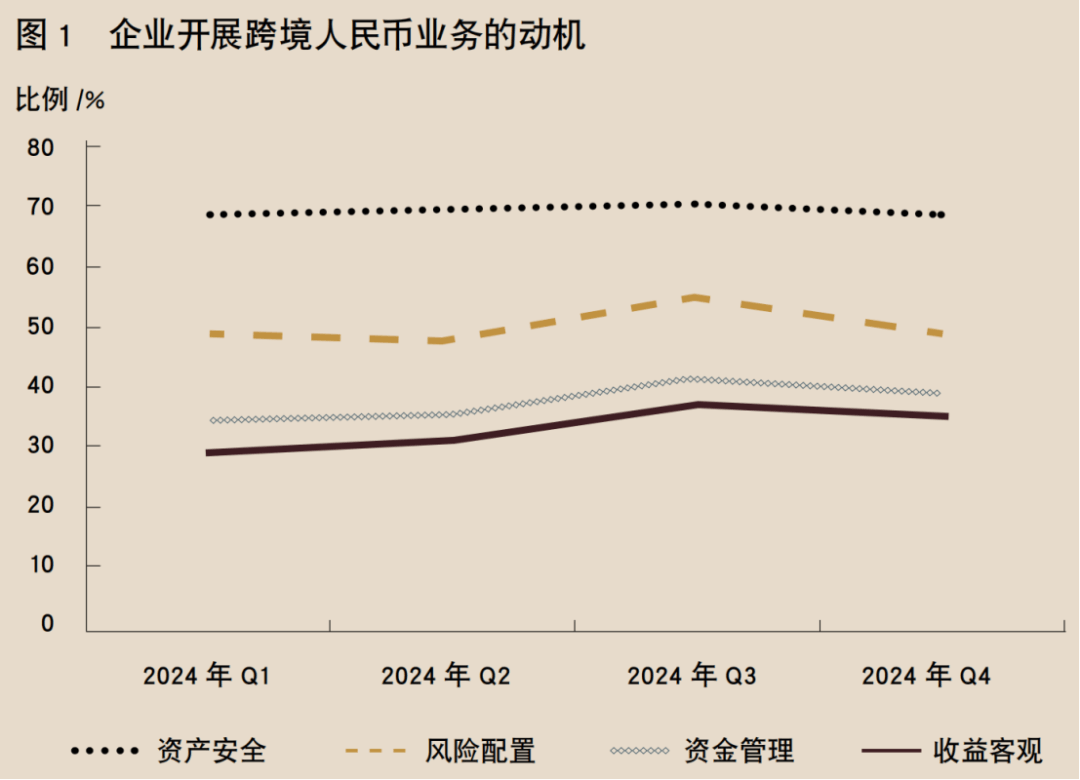
导读 人民币国际化的进一步推进需要政策、市场和企业的合力支持。通过完善制度环境、优化金融服务、提升企业能力,可以有效破解当前存在的短板,巩固 人民币在国际货币体系中的地位,实现更高质量的发展。 企业是跨境人民币的需求方和直接参与者,其行为与决策对推进人民币国际化具有深远影响。中国人民大学国际货币研究所在中国交通银行、商务部的支 持下,2024 年进行了四次企业跨境人民币观察的季度问卷调查,客观反映跨境人民币的最新动态。每个季度收回企业问卷数量在1090 ~1793之间,从调 查数据看,我国企业使用人民币的动机和主动性更强,跨境人民币业务种类有所增加,人民币成为仅次于美元的结算货币。 01 跨境人民币现状:基于企业调查问卷的分析 参与问卷调查的企业特征 从受访企业性质看,国有企业占比 11%,民营企业占比71%,外资企业占比 18%,与我国企业的所有制分布基本一致,具有科学性和代表性。从受访企业 跨境交易的地区分布看,东亚占比 75%,中亚占比 11%,东南亚占比 8%,其他地区占比 5%,表明跨境人民币主要集中在我国周边国家和地区。从企业 所属行业看,制造业占比 40%,批发零售业占比 30%,其他行业占比 ...
中国外汇交易中心:将优化“互换通”运行机制,提高每日净限额至450亿元
Bei Jing Shang Bao· 2025-09-25 10:03
Core Viewpoint - The China Foreign Exchange Trading Center is optimizing the "Swap Connect" mechanism to enhance market vitality and better meet the needs of foreign investors in managing RMB interest rate risks [1] Group 1: Mechanism Optimization - A dynamic adjustment mechanism for quote providers will be established, and the number of quote providers will be expanded [1] - The daily net limit evaluation mechanism will be improved, with an increase in the daily net limit to 45 billion RMB starting from October 13, 2025 [1] Group 2: Market Impact - Since its launch on May 15, 2023, "Swap Connect" has facilitated efficient interest rate risk management for foreign investors in RMB asset allocation [1] - As of August 31, 2025, 82 foreign investors from 15 countries and regions have conducted over 15,000 RMB interest rate swap transactions, with a nominal principal of 8.15 trillion RMB [1] Group 3: Future Collaboration - The China Foreign Exchange Trading Center will continue to work closely with domestic and foreign market participants and infrastructure to further optimize the "Swap Connect" mechanism [1] - This initiative aims to support the high-level opening of China's financial market and the internationalization of the RMB [1]
中国外汇交易中心将在中国人民银行指导下优化“互换通”运行机制
Shang Hai Zheng Quan Bao· 2025-09-25 09:51
Core Insights - The China Foreign Exchange Trading Center is optimizing the "Swap Connect" mechanism to enhance market vitality and better meet the needs of foreign investors in managing RMB interest rate risks [1] - Since its launch on May 15, 2023, "Swap Connect" has facilitated over 15,000 RMB interest rate swap transactions with a nominal principal of 8.15 trillion yuan from 82 foreign investors across 15 countries and regions [1] - Future improvements to the "Swap Connect" mechanism will be made in collaboration with domestic and foreign market participants to support the high-level opening of China's financial market and the internationalization of the RMB [1] Group 1 - The establishment of a dynamic adjustment mechanism for "Swap Connect" quote providers and the expansion of the quote provider team [1] - The enhancement of the daily net limit dynamic assessment mechanism, with an increase in the daily net limit to 45 billion yuan starting from October 13, 2025 [1] - The ongoing collaboration with the People's Bank of China and market participants to continuously optimize the "Swap Connect" arrangements [1]
上海清算所:将“玉兰债”建设成为中资离岸债券标志性品牌
Xin Hua Cai Jing· 2025-09-25 09:49
Group 1 - The core viewpoint of the articles emphasizes the significance of the "Yulan Bond" as a representative innovative product in China's bond market, contributing to the internationalization of the Renminbi and enhancing the overseas asset pool [1][2] - The meeting held in Hong Kong involved nearly 50 representatives from various financial institutions, discussing the innovative value and development potential of the "Yulan Bond" [1][2] - The Shanghai Clearing House aims to optimize the "Yulan Bond" mechanism and expand its business, positioning it as a landmark brand for offshore bonds issued by Chinese enterprises [2] Group 2 - The "Yulan Bond" is recognized for its ability to reach global investors and effectively reduce financing costs for issuers, highlighting its advantages in the market [2] - Discussions included enhancing international networking, optimizing policy benefits, and improving the efficiency of collateral management in the issuance and underwriting processes of the "Yulan Bond" [2]

香港固定收益及货币市场路线图公布
Xin Hua Cai Jing· 2025-09-25 09:43
Core Viewpoint - The Hong Kong Monetary Authority (HKMA) and the Securities and Futures Commission (SFC) have jointly released a "Roadmap for the Development of the Fixed Income and Money Markets," focusing on consolidating existing advantages and seizing new opportunities, particularly in digital finance and RMB internationalization [1][2]. Group 1: Key Measures - The roadmap is structured around four pillars and includes ten specific measures aimed at enhancing market arrangements, funding programs, market promotion, and financial infrastructure development [1]. - The HKMA's key measures focus on three main areas: the primary bond market, RMB business, and technological innovation [2]. Group 2: Primary Bond Market - Hong Kong aims to maintain its status as Asia's international bond issuance center by continuing to promote market development and providing benchmark products through government bond programs [2]. - The HKMA plans to improve the "Southbound Bond Connect" to allow more mainland investors to participate in the Hong Kong bond market [2]. Group 3: RMB Business - As the largest offshore RMB center globally, Hong Kong will expand the scope of offshore RMB business and enhance liquidity arrangements [2]. - New tools will be introduced, including cross-border repurchase arrangements announced by the People's Bank of China [2]. - The HKMA will collaborate with the SFC to encourage more issuers to launch RMB-denominated products, including RMB counter stocks [2]. Group 4: Technological Innovation - The HKMA will develop a new generation of financial infrastructure to support the issuance and payment of digital bonds [2]. - Research will be conducted in collaboration with the Financial Secretary's office to explore optimization measures for Hong Kong's legal and regulatory framework regarding digital bonds, with details expected to be released by mid-next year [2]. Group 5: Market Liquidity Enhancements - The People's Bank of China announced measures to enhance market liquidity, including the listing of RMB government bond futures in Hong Kong and increasing the daily quota of the "Swap Connect" from 20 billion RMB to 45 billion RMB [3].
香港证监会与香港金管局发布路线图 携手打造香港成全球固定收益及货币中心
智通财经网· 2025-09-25 08:56
Core Viewpoint - The Hong Kong Securities and Futures Commission (SFC) and the Hong Kong Monetary Authority (HKMA) have jointly released a "Roadmap for the Development of Fixed Income and Currency Markets" to strategically position Hong Kong as a global hub for fixed income and currency markets [1][2] Group 1: Key Measures and Initiatives - The roadmap outlines four key pillars: primary market issuance, secondary market liquidity, offshore RMB business, and next-generation infrastructure [1] - Ten initiatives are proposed to consolidate Hong Kong's existing advantages, including attracting issuers to use Hong Kong as a fundraising hub and providing risk management and liquidity management tools [1] - The roadmap emphasizes the need to enhance the scale and liquidity of offshore RMB usage and to develop new financial infrastructure to empower market innovation [1] Group 2: Stakeholder Engagement and Future Directions - A forum titled "Hong Kong Fixed Income and Currency Forum 2025" was successfully held to discuss opportunities, challenges, and new trends in the global fixed income and currency markets, gathering senior government officials and financial institution leaders [1] - The SFC Chairman highlighted the importance of the fixed income and currency market as a key driver for global capital flow, which significantly impacts Hong Kong's international standing and long-term development [2] - The HKMA President stated that the roadmap will guide efforts to strengthen Hong Kong's position as a leading offshore RMB business hub while promoting innovation in response to market changes [2]
人民币,大消息!
中国基金报· 2025-09-25 07:42
Core Viewpoint - The article discusses the upcoming release of the "Fixed Income and Currency Market Development Roadmap" by the Hong Kong government, which aims to enhance the internationalization of the Renminbi and strengthen Hong Kong's position as a global financial hub [2][4]. Group 1: Roadmap Overview - The "Roadmap" will focus on four pillars: strengthening bond issuance, enhancing secondary market liquidity, expanding offshore Renminbi business, and building new infrastructure [2]. - The roadmap is part of a broader strategy to promote the coordinated development of primary and secondary markets [2]. Group 2: Government Initiatives - The Hong Kong government plans to upgrade the fixed income and currency market ecosystem through three main directions: enhancing market infrastructure, improving market efficiency, and promoting financial innovation [6][7]. - Specific initiatives include optimizing asset custody and trading platforms, exploring electronic bond trading, and developing a more robust offshore Renminbi bond issuance mechanism [6][7]. Group 3: Support from the People's Bank of China - The People's Bank of China emphasizes its ongoing support for Hong Kong's development as an international financial center, highlighting the growth of the offshore Renminbi market and the increasing participation of foreign institutions in China's bond market [9][10]. - The central bank will continue to facilitate the issuance of high-quality Renminbi assets in Hong Kong and enhance the interconnectivity mechanisms between the mainland and Hong Kong [12]. Group 4: Market Growth and Opportunities - The fixed income market in Hong Kong has seen significant growth, with the Asian international bond market growing at an average rate of 16% annually from 2009 to 2024, compared to less than 4% globally [17]. - Hong Kong is positioned as a key hub for offshore Renminbi transactions, with over 70% of global Renminbi settlements occurring through the city [17]. Group 5: Future Directions - The Hong Kong Securities and Futures Commission aims to expand the issuance of Renminbi fixed income products and enhance the liquidity of the secondary market [19]. - There are plans to develop an electronic trading platform that encompasses bonds, repos, and foreign exchange to improve market efficiency and transparency [19]. Group 6: Collaboration and Regulatory Framework - The National Development and Reform Commission emphasizes the importance of collaboration between various stakeholders to create a more open and efficient financing environment in Hong Kong [21][22]. - Strengthening joint regulation and promoting sustainable development are key areas of focus to ensure the stability and growth of Hong Kong's financial markets [23].

全球媒体聚焦|德国媒体:人民币国际地位正在提升
Sou Hu Cai Jing· 2025-09-25 03:55
《法兰克福汇报》近日刊文称,人民币国际地位正在提升。文章称,目前没有任何一种货币的国际流通意 义能与美元相比,但人民币的国际化进程对美国的国际金融霸主地位构成了挑战。 文章认为,数字化将助力人民币国际地位的提升。不同于传统货币体系,正是借助了数字工具和支付应 用,人民币流通与管理的矛盾得到了完美调和。中国在数字货币研发与应用上的领先地位绝非偶然。此 外,再结合中国消费平台的不断壮大,以及中国互联网支付应用的全球影响力逐步扩大,中国正逐步构建 起一种更具整合优势的国际金融影响力。 《法兰克福汇报》报道截图 文章分析说,人民币的"胜利"与全球形势发展相符。美国政府的关税政策和对美联储的攻击动摇了市场对 美元的信心,而中国则在经济、军事与政治领域的影响力持续增强。回顾历史,我们可以发现,一个国家 的霸权不会永远持续下去。 ...
邢自强:全面社保改革有望激活10万亿美元内需市场,是人民币国际化基石
Feng Huang Wang Cai Jing· 2025-09-25 03:55
Core Insights - The "Phoenix Bay Area Finance Forum 2025" held in Guangzhou focused on the theme "New Pattern, New Path" and gathered global elites from politics, business, and academia to explore development opportunities amidst changing circumstances [1] Group 1: Economic Insights - Morgan Stanley's Chief Economist for China, Xing Zhiqiang, emphasized that social security reform can promote a unified national market and boost consumption, which is essential to break the current low-price cycle and enhance corporate profitability [3] - Xing proposed that a more robust social security network would alleviate concerns for vulnerable groups, thereby reducing the overall precautionary savings rate and unlocking consumption potential [3] - He projected that comprehensive social security reform could increase the consumption share of GDP from under 40% to approximately 45% by the end of the 14th Five-Year Plan, creating a domestic consumption market worth around $10 trillion [3] Group 2: Funding Strategies - Xing identified two key pathways to secure funding for social security improvements: increasing the dividend ratio of state-owned enterprises and adjusting the fiscal expenditure structure to focus more on people's livelihoods rather than infrastructure [3] - He asserted that the government has the capacity to finance these initiatives, describing it as the most cost-effective form of economic investment [3] Group 3: Currency Internationalization - The core of RMB internationalization lies in the combination of "principle" and "technique," requiring substantial structural reforms to enhance the return on RMB assets and establish a solid foundation for the application of financial infrastructures like stablecoins [4]
