
全球治理倡议

Search documents
专家:中国穿梭调停柬泰冲突 展现亚洲安全新思路|国际识局
Xin Lang Cai Jing· 2025-12-26 12:57
Core Viewpoint - The recent military conflict at the Cambodia-Thailand border poses a significant threat to regional security and stability, prompting China to engage in diplomatic mediation as a responsible major power, enriching the Asian security concept and providing insights for regional cooperation and security order reconstruction [1][5]. Group 1: Conflict Background and Implications - The Cambodia-Thailand border conflict stems from historical territorial disputes and highlights the deep vulnerabilities in Southeast Asia's security architecture, exacerbated by increasing global geopolitical tensions [1]. - The prolonged conflict has resulted in severe casualties and a localized humanitarian crisis, undermining ASEAN's principles of consensus and peaceful dispute resolution, potentially fragmenting political trust among member states [1][2]. - Continued conflict risks creating a geopolitical vacuum that could invite external powers' intervention, hindering regional cooperation and stability, which is crucial for Southeast Asia's role as a global growth engine [1]. Group 2: Mediation Efforts and Framework - Achieving lasting peace requires moving beyond traditional mediation methods, as previous ceasefire agreements have been repeatedly violated, indicating the need for a framework supported by political trust and institutional guarantees [2]. - China's mediation in the Cambodia-Thailand conflict exemplifies a constructive approach, focusing on conflict de-escalation and advocating for resolution within the ASEAN framework, thereby supporting ASEAN's central role in regional security [2][3]. Group 3: China's Strategic Role and Initiatives - China's mediation aims to complement existing ASEAN mechanisms rather than replace them, seeking sustainable solutions through dialogue and cooperation, which aligns with China's proposed Asian security concept emphasizing common, comprehensive, cooperative, and sustainable security [3]. - The unique advantage of China's mediation stems from its deep economic ties and political trust with both Cambodia and Thailand, leveraging its development-oriented influence to guide both parties towards rational consensus amidst complex situations [3][4]. - The mediation reflects China's strategic wisdom of "building security through development," emphasizing the importance of peace and stability in the region for major cooperation projects like the Belt and Road Initiative [4]. Group 4: Broader Implications for Regional Security - China's approach to the Cambodia-Thailand conflict illustrates a systematic interpretation and practice of the Asian security concept, advocating for security rooted in cooperative frameworks rather than confrontation [5]. - In the face of rising global uncertainties, China's pragmatic actions position it as an indispensable stabilizing force for regional and global peace and development, fostering a future built on dialogue, mutual trust, and cooperation [5].
年终特稿丨世界眼中的全球南方这一年
Xin Hua Wang· 2025-12-26 07:44
Core Viewpoint - The rise of Global South countries is becoming a key force in maintaining international peace, driving global development, and improving global governance amidst a backdrop of geopolitical conflicts, unilateralism, and protectionism [1] Group 1: Independent Pursuit - The keyword for the Global South in 2025 is "independence," with countries increasingly pursuing their own development paths rather than following Western models [2] - In Africa, there is a growing movement to expel Western military presence, highlighted by France's withdrawal from military bases in West and Central Africa [2] - Latin American countries are vocal against U.S. interventions, with protests against U.S. actions in Venezuela and a call for regional autonomy and unity [2] Group 2: Strengthening Voices in Global Governance - Global South countries are actively advocating for justice and fairness on platforms like the United Nations, opposing hegemonic and unilateral actions [3] - The collective voice of the Global South is pushing for a more just stance on issues like the Israel-Palestine conflict, contrasting sharply with some Western positions [3] - The concept of the Global South has evolved beyond geography to symbolize shared historical experiences and the pursuit of independence and international discourse [3] Group 3: Economic Cooperation and Growth - The economic contribution of the Global South has surpassed 40% of the global economy, accounting for 80% of world economic growth, reshaping the global economic landscape [4] - Cooperation among developing countries is deepening across various sectors, creating a more complementary network for diversified growth [4] Group 4: China's Role in Global South Cooperation - China is committed to South-South cooperation, launching initiatives to ensure equitable development benefits for all nations [5] - Amidst complex international economic conditions, China is seen as a stabilizing force, providing reliability and predictability for cooperation among Global South countries [5] - China's actions are viewed as foundational for establishing a fairer and more inclusive global growth model [5] Group 5: Global Governance Reform - The Global South is becoming an active participant in shaping global governance, advocating for a more balanced and representative system [6] - Major summits hosted by Global South countries have led to significant agreements on climate change and development financing, reflecting a shift from rule acceptance to rule reshaping [6] - The narrative of the Global South is transitioning from seeking aid to offering solutions, particularly in the realm of global governance [6] Group 6: China's Global Governance Initiative - China is focused on enhancing the representation and voice of Global South countries in international affairs, proposing a global governance initiative that has garnered widespread support [7] - This initiative is seen as a timely response to the demands of the Global South, aiming for a fairer future world [7]
年终特稿|世界眼中的全球南方这一年
Xin Hua She· 2025-12-26 06:46
新华社北京12月26日电 题:世界眼中的全球南方这一年 新华社记者 2025年,百年变局加速演进。地缘冲突多地爆发,单边主义、保护主义逆流涌动,政治极化、全球 治理失序等多重风险交织叠加。在动荡变革世界中,全球南方国家群体性崛起,成为维护国际和平、带 动世界发展、完善全球治理的关键力量。 多国受访人士认为,全球南方国家坚持团结自强、共谋发展,在全球治理体系中的角色正从被动参 与转向主动作为,推动世界政治经济格局深刻演变。中国作为全球南方的当然一员,正同其他全球南方 国家一道,谱写人类发展的历史新篇。 独立自主的坚定追求 2025年,追求独立自主的全球南方声音在世界各地激荡。 2025年伊始,印度尼西亚正式加入金砖合作机制,9个伙伴国加入金砖大家庭,"大金砖合作"不断 深化;上海合作组织、中国-中亚机制、中非合作论坛、中阿合作论坛、中拉论坛等平台机制稳步前 行……如今的全球南方,经济总量全球占比超过40%,对世界经济增长的贡献率达到80%,已深刻改写 世界经济的版图。 在非洲大陆,对西方驻军下"逐客令"的浪潮持续,追求公平正义的呼声不断高涨。今年7月,法国 正式向塞内加尔移交最后两处军事基地,宣告结束在西非和中 ...
年终特稿·管窥天下丨从边缘到中枢:“全球南方”开启全球治理新篇章
Xin Lang Cai Jing· 2025-12-26 00:35
Core Viewpoint - The article emphasizes the significant role of Global South countries in global governance amidst challenges posed by unilateralism from Western nations and ongoing global conflicts, highlighting their proactive engagement in trade, climate, and artificial intelligence as a new driving force for governance reform [1][2]. Global Governance Challenges - The year 2025 is marked by heightened uncertainty in the global economy, intensified geopolitical rivalries, and an increase in regional conflicts, leading to a growing "governance deficit" [2]. - The return of Trump to power has seen the U.S. adopt a protectionist "America First" policy, undermining multilateralism and sparking a global trade war, which disrupts the post-World War II free trade framework [2]. - Ongoing conflicts, such as the Russia-Ukraine war and the Israel-Palestine situation, have led to a record high in global armed conflicts, while the UN Security Council's effectiveness is being questioned [2]. Global South's Role in Governance - In contrast to the retreat of Western nations, Global South countries are stepping up to take on governance responsibilities, becoming staunch defenders of free trade and enhancing cooperation among themselves and with other developed economies [4]. - Significant progress is noted in trade agreements, such as the African Continental Free Trade Area and free trade agreements between Latin America and Europe, alongside China's initiatives to eliminate tariffs on products from 53 African nations [4]. - The Global South is also taking the lead in climate governance, reaffirming commitments to the Paris Agreement and establishing new frameworks for climate funding, such as the "Tropical Forest Permanent Fund" [4]. Artificial Intelligence Governance - The Global South is actively proposing governance frameworks for artificial intelligence, with the BRICS summit in 2025 marking a significant step in this direction [5]. - Initiatives include the establishment of a World AI Cooperation Organization, showcasing the commitment of Global South countries to responsible AI development and sustainable growth [5]. Collective Action and Reform Initiatives - The Global South is uniting to demand changes to the unfair international order and enhance their international voice, with China proposing a comprehensive governance narrative centered on a "community of shared future for mankind" [6]. - Various agreements and action plans have been reached in areas such as political security, economic cooperation, and sustainable development, demonstrating a collective commitment to reform [7]. - The Global South is advocating for reforms in the United Nations and other international institutions to ensure fair representation and adapt to current political and economic realities [7].
以提升公平性为着力点推动全球人权治理迈向新高度
Xin Lang Cai Jing· 2025-12-25 19:23
Group 1 - The article emphasizes the need for reform in the global human rights governance system due to the intertwining of old and new challenges in the international landscape, with China proposing a global governance initiative to address common human issues [1] - It highlights the importance of fair rules in governance, asserting that the legitimacy of governance is determined by the fairness of its rules, and calls for equal participation of all countries in rule-making [2] - The article discusses the emergence of new human rights areas such as digital rights and climate rights, stressing the need to incorporate these topics into international discussions while considering the specific conditions and development needs of Global South countries [3] Group 2 - The effectiveness of governance is linked to the fairness of mechanisms, with a call for reforms to enhance the representativeness, transparency, and efficiency of multilateral decision-making processes [4] - It advocates for the establishment of diverse international human rights dialogue platforms initiated by China, which aim to facilitate communication between different regions and promote a shared understanding of human rights [5] - The article addresses the critical issue of resource distribution, arguing that equitable resource allocation is essential for the realization of human rights, and calls for reforms in the international economic and financial systems to support developing countries [7] Group 3 - The article concludes by asserting China's role as a defender of international fairness and justice, and anticipates the emergence of a more equitable and inclusive global human rights governance era, which will support the construction of a community with a shared future for humanity [8]
全球治理倡议具有深远世界意义
Xin Lang Cai Jing· 2025-12-23 22:11
Core Viewpoint - The article discusses the need for a more just and equitable global governance system in the context of significant global changes and challenges, emphasizing the importance of cooperation among nations to address these issues effectively [1][5]. Group 1: Global Governance Initiatives - China, as the largest developing country, has taken on significant responsibilities to ensure its development and the welfare of its population, proposing various global initiatives aimed at reforming the global governance system [2][3]. - The global governance initiative proposed by China aims to address issues such as development deficits, security deficits, and governance deficits, reflecting a commitment to a more equitable international order [3][4]. Group 2: Challenges Faced by Developing Countries - Developing countries, particularly in the Global South, face structural challenges exacerbated by the adoption of Western modernization models, leading to increased economic and social inequalities [6][7]. - The article highlights the detrimental impact of hegemonic practices by some Western nations, which have further marginalized developing countries in the global economic landscape [6][8]. Group 3: Proposed Solutions and Frameworks - The global governance initiative emphasizes an action-oriented and problem-solving approach to governance, advocating for collaboration on pressing issues such as climate change and international financial system reform [8][9]. - By promoting a shared governance model, the initiative seeks to enhance the voice and agency of developing countries, allowing them to prioritize their development agendas and maintain strategic autonomy [9][10].
非媒:中国科技助力非洲转型发展
Huan Qiu Wang Zi Xun· 2025-12-22 22:39
Core Insights - Emerging technologies such as IoT, big data analytics, and artificial intelligence are rapidly developing and have the potential to transform global society and economy. Africa has a unique opportunity to leverage these technologies and reliable partnerships for socio-economic transformation, potentially contributing approximately $1.5 trillion to its GDP by 2030 through accelerated sustainable growth and development [1][2]. Group 1: Technological Development and Economic Impact - The advancements in renewable energy, broadband infrastructure, and digital public services are enhancing resilience and promoting inclusive technology applications to aid development [1]. - The African Union's Agenda 2063 and the African Continental Free Trade Area (AfCFTA) provide critical frameworks that can benefit from the increasing prevalence of emerging technologies and favorable tech partnerships [1][2]. - The African Digital Transformation Strategy (2020-2030) prioritizes broadband expansion, digital skills training, e-governance, data governance, and support for emerging technologies like AI and fintech, guiding Africa's related efforts [1][2]. Group 2: China-Africa Technological Partnership - China's growing partnership with Africa in the tech sector involves governments and major telecom and mobile companies, indicating that reliable partnerships can effectively bridge the digital divide and promote inclusive economic participation and growth [2]. - China is a significant force in promoting development in the Global South through various initiatives, including the Belt and Road Initiative and the China-Africa Cooperation Forum, focusing on common development, security, cultural exchange, and equitable global governance [2][3]. - Chinese government and enterprises are crucial partners in Africa's tech-driven modernization, providing ICT support that aids economic growth and public service delivery in sectors like e-governance, healthcare, and education [2][3]. Group 3: Infrastructure and Capacity Building - Chinese enterprises have piloted AI systems in urban management, fintech solutions, and hydropower operations in several African countries, with ongoing efforts to apply technology in green energy and food security [3]. - The China-Africa Technology Partnership Program 2.0 includes joint projects for building R&D centers, tech parks, and sustainable development initiatives, marking a deepening of long-term mutually beneficial development positioning [3][4]. - China has made significant investments in Africa's digital infrastructure, assisting in the construction of extensive backbone networks totaling approximately 150,000 kilometers, with over 200,000 kilometers of fiber optic laid [3][4]. Group 4: Education and Long-term Development - China supports African universities and vocational education, launching specialized technical talent training programs and establishing joint R&D innovation institutions to deepen tech cooperation [4]. - The China-Africa partnership has acted as a catalyst in bridging Africa's digital divide, with future prospects for solidifying tech cooperation as a primary frontier for sustainable socio-economic transformation and modernization [4].
石榴树花开满枝头(大使随笔)
Ren Min Wang· 2025-12-22 22:28
中国同中亚国家关系有着深厚的历史渊源、广泛的现实需求、坚实的民意基础。中国中亚合作取得丰硕 成果,离不开元首外交的战略引领和把舵定向。从2013年在哈萨克斯坦发表演讲时首次提出共同建 设"丝绸之路经济带",到2022年将哈萨克斯坦作为新冠疫情后首访首站,再到今年首次赴中亚国家出席 中国—中亚峰会,习近平主席9次到访中亚、6次到访哈萨克斯坦,为中国中亚关系及中哈关系发展作出 顶层设计、指明前进方向、注入强劲动力。 一种精神,凝聚团结力量。习近平主席同中亚五国元首一致决定弘扬"中国—中亚精神",是本届峰会最 突出的亮点。这一精神根植于中国与中亚国家2000多年的友好往来,巩固于建交30多年的团结互信,发 展于新时代以来的开放共赢。在"中国—中亚精神"指引下,中国和中亚国家坚守团结初心,实现了全面 战略伙伴关系、共建"一带一路"合作伙伴、双边和区域命运共同体"三个全覆盖"。今年9月,中亚五国 元首悉数赴华出席中国人民抗日战争暨世界反法西斯战争胜利80周年纪念活动,共同捍卫二战胜利成 果,维护战后国际秩序。习近平主席提出全球治理倡议后,哈萨克斯坦总统托卡耶夫第一时间公开支 持,充分彰显中哈互信互助的坚定意志。 一个主 ...
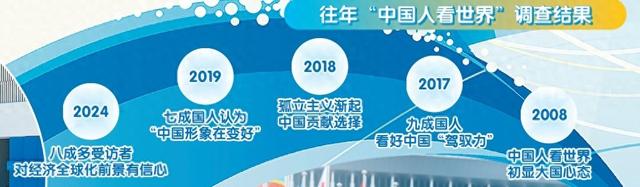
超九成受访者期待中国让国际秩序更公正
Xin Lang Cai Jing· 2025-12-22 06:00
本报记者 易 佳 张 琪 吴昱瑶 夏温新 李 萌 编者的话:在动荡与希望交织的2025年,《环球时报》开展了第20次"中国人看世界"年度调查。自2006 年以来,这项调查不仅见证了中国民意的发展变化,更成为观察中国与世界关系变迁的一个窗口。本次 调查显示,相较于本世纪初受访者的"审慎与低调",即将步入"十五五"时期的中国民意展现着大国自信 与客观理性。历时20年,认为"中国已是世界性强国"的民意比例翻了一番。此外,中俄关系连续17年成 为受访者最重视的周边关系,中美关系在各组双边关系中受重视程度今年回升至首位,更有94%的受访 者期待中国为推动国际秩序公正发展贡献更多力量。 20年来,认为"中国是世界性强国"的比例翻番 往年"中国人看世界"调查结果 2006年至2013年以及2025年,调查追问了"中国已具备世界性强国的哪些条件"。数据显示,2006年至 2013年,调查列举的"政治及外交影响力""经济实力""军事实力""文化影响力"选项在多数年份获选比例 未过半。而今年,4组数据均达到或超过一半,分别为63%、62%、70%和50%。当前国内民意对我国政 治、外交、军事、经济、文化实力的认可显著提升。超七成 ...

一起学习四大全球倡议核心要义
Xin Hua Wang· 2025-12-22 01:49
Group 1 - The core idea of the global development initiative emphasizes prioritizing development and focusing on people-centered approaches [3][6] - The initiative includes six key principles: prioritizing development, inclusivity, innovation-driven growth, harmony between humanity and nature, and action-oriented strategies [6][12] - The global security initiative advocates for a comprehensive and sustainable security perspective, respecting national sovereignty, and resolving disputes through dialogue [9][12] Group 2 - The global civilization initiative promotes respect for cultural diversity, the importance of shared human values, and enhancing international cultural exchanges [10][12] - The global governance initiative emphasizes five core concepts: equality of sovereignty, adherence to international law, multilateralism, a people-centered approach, and action-oriented practices [14]
