
多层次医疗保障体系

Search documents
恒生创新药ETF(159316)跟踪指数剔除CXO标的,高纯度布局优质创新药企
Sou Hu Cai Jing· 2025-07-03 06:42
Group 1 - The Hang Seng Innovative Drug ETF (159316) has increased by 3.33% as of July 3, 2025, with a turnover rate of 100.36% and a transaction volume of 440 million yuan, indicating active market trading [1] - The Hang Seng Innovative Drug ETF closely tracks the Hang Seng Hong Kong Stock Connect Innovative Drug Index, which serves as a "barometer" for pure innovative drug companies in the Hong Kong market, showing a significant performance increase with a 96.14% rise over the past year as of July 2, 2025 [1] - On June 30, the Hang Seng Index Company announced revisions to the index compilation scheme, explicitly excluding CXO companies (Contract X Organization), which includes Contract Research Organizations (CRO), Contract Manufacturing Organizations (CMO), and Contract Development and Manufacturing Organizations (CDMO), thereby focusing solely on innovative drug companies [1] Group 2 - The National Healthcare Security Administration (NHSA) and the National Health Commission issued measures on July 1 to support the high-quality development of innovative drugs, emphasizing full-chain support for innovative drug research and development, market access, hospital usage, and multi-payment systems [2] - The establishment of a commercial insurance innovative drug directory is expected to clarify the boundaries of basic medical insurance, allowing for more development space for commercial health insurance and providing stronger economic support for the development of innovative drugs [2] - Guoyuan Securities believes that the inclusion of the commercial insurance innovative drug directory marks an important step for commercial insurance in the multi-tiered medical security system, predicting that commercial insurance will play a greater role in supporting high-priced innovative drugs and medical devices [2]
全国首批!医保赋能支付宝商保直赔北京开启试点
Xin Lang Ke Ji· 2025-07-03 06:10
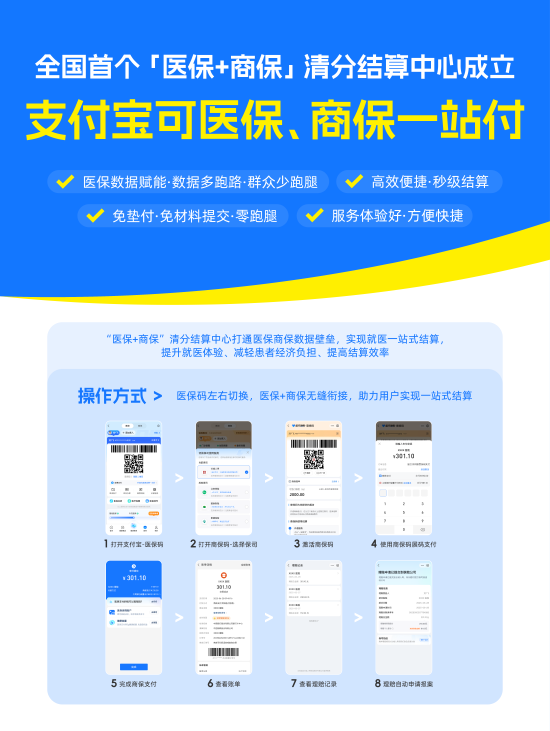
Core Insights - The "Medical Insurance + Commercial Insurance" clearing and settlement center has officially launched nationwide, with a pilot program at Peking Union Medical College Hospital enabling instant reimbursement services through Alipay [1][3] - The center aims to address common pain points in commercial health insurance, such as complex reimbursement processes and long wait times, by allowing patients to complete settlements without upfront payments [3][4] Group 1: Industry Impact - Commercial health insurance is a crucial component of a multi-tiered medical security system, addressing diverse healthcare needs of the public [3] - The launch of the clearing center represents a significant milestone in the development of China's multi-tiered medical security system [4] Group 2: Technological Innovation - The center utilizes Ant Group's secure data technology to enable efficient data flow while ensuring compliance and preventing data leakage [4] - The integration of national medical insurance data allows for precise allocation of responsibilities between medical insurance and commercial insurance, enhancing the reimbursement experience [3][4] Group 3: Future Developments - Ant Group plans to deepen collaborations with insurance companies to optimize service experiences, with the commercial insurance code expected to cover more insurers and products in the future [4] - Currently, the Alipay commercial insurance code has partnered with over 20 health insurance products from various companies, benefiting over ten million users [4]

商保创新药目录靴子落地:价格“谈判”改“协商”
Hu Xiu· 2025-07-02 02:15
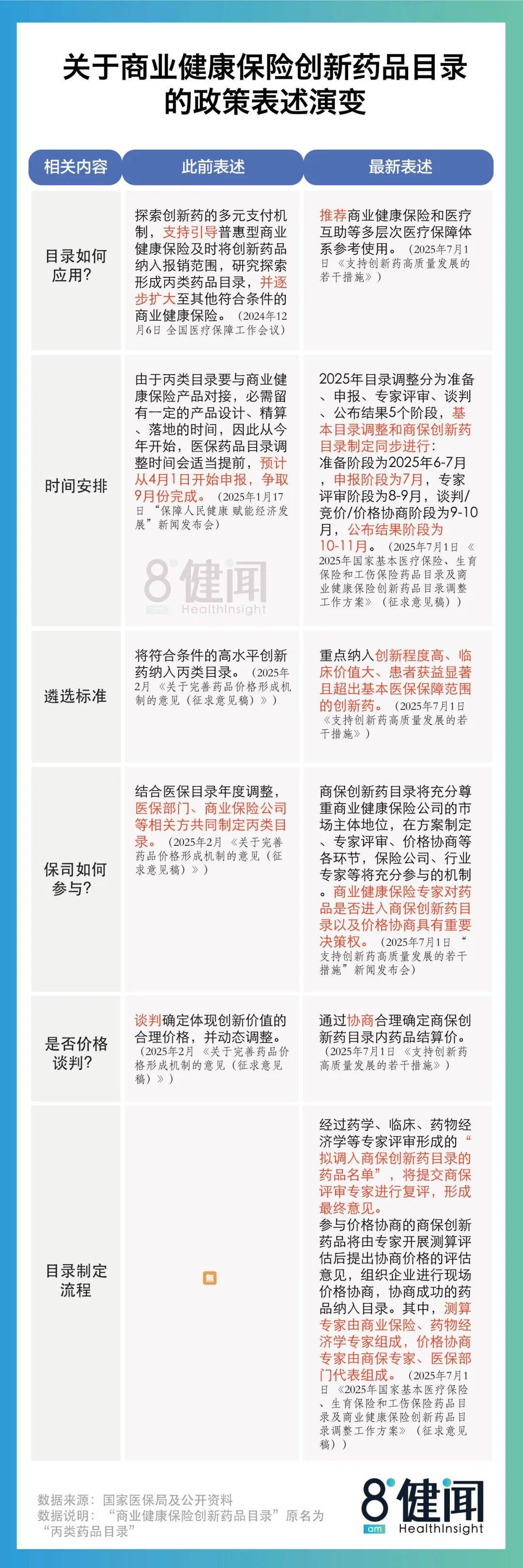
Core Points - The release of two significant documents by the National Medical Insurance Administration and the National Health Commission marks a pivotal moment for the commercial health insurance sector in China, particularly regarding innovative drug pricing and inclusion in insurance directories [2][4][12] Group 1: Policy Changes - The newly published "Measures to Support the High-Quality Development of Innovative Drugs" indicates that the settlement prices for drugs in the commercial health insurance innovative drug directory will be determined through "consultation" rather than "negotiation" [7][21] - The "Work Plan for Adjusting the National Basic Medical Insurance, Maternity Insurance, and Work Injury Insurance Drug Directory and the Commercial Health Insurance Innovative Drug Directory by 2025" outlines a basic process for price consultation, although specific details remain to be finalized [3][19] - The commercial health insurance innovative drug directory, previously referred to as the "Category B Drug Directory," has been officially announced, and its first version will be developed in conjunction with the 2025 national negotiations [4][5] Group 2: Role of Insurance Companies - Insurance companies will have a significant decision-making role in the development of the commercial health insurance innovative drug directory, with the National Medical Insurance Administration emphasizing the importance of their participation in various stages, including expert reviews and price consultations [13][27] - The transition from "negotiation" to "consultation" regarding pricing has led to mixed reactions, with some industry insiders perceiving it as a step back for the National Medical Insurance Administration [14][15] - The final decision on whether a drug will be included in the directory and its pricing will involve a collaborative process with input from insurance experts and the National Medical Insurance Administration [11][17] Group 3: Pricing Mechanism - The pricing mechanism for drugs included in the commercial health insurance innovative drug directory will involve expert assessments and on-site price consultations, with successful negotiations leading to inclusion in the directory [17][20] - The current framework indicates that the specifics of the price consultation rules and agreements will be determined after soliciting opinions from relevant parties [19][31] - The National Medical Insurance Administration aims to ensure that different insurance companies do not face varying prices for the same drugs, promoting a unified "consultation price" for the directory [20][26] Group 4: Market Implications - The commercial health insurance innovative drug directory is expected to provide a structured approach to pricing and inclusion of innovative drugs, potentially leading to a more standardized pricing model across the sector [25][28] - The directory's implementation is seen as a strategic move to enhance the market for commercial health insurance, despite the current limited uptake of such insurance products among the population [24][30] - The National Medical Insurance Administration plans to support insurance companies through data sharing, synchronized settlements, and regulatory collaboration to facilitate the smooth operation of commercial health insurance [28][29][30]
医保“双目录”!2025年医保目录调整:首度纳入商保创新药目录!推同步结算、数据协同...
13个精算师· 2025-07-01 15:58
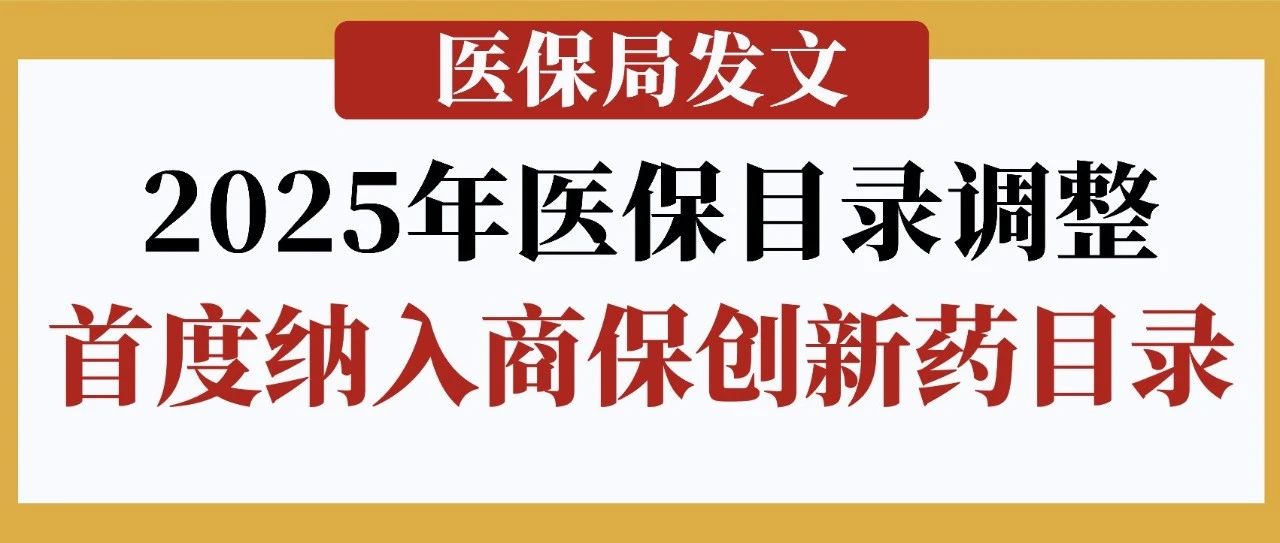
Core Viewpoint - The article discusses the introduction of a "Commercial Insurance Innovative Drug Directory" as part of the 2025 medical insurance directory adjustment, marking the beginning of a dual-directory era for medical insurance and commercial health insurance in China [1][10][11]. Group 1: Introduction of the Dual-Directory System - The 2025 medical insurance directory will for the first time include a "Commercial Insurance Innovative Drug Directory," allowing innovative drugs that are not covered by medical insurance to be reimbursed by commercial insurance [2][10]. - This adjustment aims to clarify the boundaries of basic medical insurance coverage and enhance the collaboration between commercial health insurance and basic medical insurance [21][24]. Group 2: Features of the Commercial Insurance Innovative Drug Directory - The "Commercial Insurance Innovative Drug Directory" will focus on innovative drugs that have high innovation levels, significant clinical value, and substantial patient benefits, which exceed the coverage of basic medical insurance [24]. - The directory will allow companies to apply for inclusion in either the medical insurance directory or the commercial insurance directory, or both simultaneously [27][28]. Group 3: Payment and Collaboration Mechanisms - The article highlights the importance of synchronizing settlements and data collaboration between medical insurance and commercial health insurance, facilitating a smoother reimbursement process for patients [4][39]. - The introduction of the "three exclusions" support for the commercial insurance innovative drug directory will ensure that these drugs are not subject to certain basic medical insurance metrics, allowing for more flexible pricing negotiations [31][32]. Group 4: Growth of Commercial Health Insurance - Since 2014, the commercial health insurance sector has experienced rapid growth, with premium income reaching 97.73 billion by the end of 2024, more than six times the amount from a decade ago, reflecting a compound annual growth rate of approximately 20% [41]. - The article notes that the claims for medical insurance have also seen significant increases, with medical claims accounting for 44% and critical illness claims for 36% of total payouts in 2024 [43].
创新药支付分水岭
Bei Jing Shang Bao· 2025-07-01 14:47
Group 1 - The establishment of a "Commercial Health Insurance Innovative Drug Directory" aims to address the payment challenges for high-priced innovative drugs outside of basic medical insurance [1][2][3] - The new policy signals a shift in the role of commercial insurance in supporting innovative drug payments, creating a multi-tiered medical security system [2][4] - The commercial health insurance sector is expected to develop specialized insurance products to support innovative drug payments, leveraging standardized drug lists and pricing mechanisms [3][4] Group 2 - The current basic medical insurance system has limitations in funding, particularly for high-cost treatments like CAR-T therapy, which can exceed one million yuan [4][5] - Commercial health insurance has a small market share in innovative drug payments, with only 7.7% of the innovative drug market being covered by commercial health insurance expenditures [5][6] - The "Hui Min Bao" program has made significant contributions to innovative drug payments, but its compensation for innovative drugs remains low compared to the overall market size [6][5] Group 3 - The implementation of the new policy presents challenges for insurance companies, including directory management, payment negotiations, cost impacts, risk control, and market education [7][8] - A robust evaluation system is necessary for assessing the clinical value and cost-effectiveness of innovative drugs, which poses a significant challenge for insurers [7][8] - The lack of historical data and the need for effective risk management strategies complicate the pricing and compensation models for innovative drugs [9][10] Group 4 - Data sharing between basic medical insurance and commercial health insurance is crucial for enhancing the effectiveness of innovative drug payment systems [11][13] - The development of specialized data interfaces and standardized coding for diseases and drugs is recommended to facilitate better collaboration between insurance sectors [14][13] - The focus on improving data collaboration can lead to more precise product development and risk management in the commercial health insurance market [13][14]
国家医保局答21:加强医保和商保保障范围、结算等协同
2 1 Shi Ji Jing Ji Bao Dao· 2025-07-01 10:29
Group 1 - The core viewpoint of the article is the introduction of measures to support the high-quality development of innovative drugs in China, focusing on issues such as accessibility and reimbursement [1] - The National Healthcare Security Administration and the National Health Commission released a document titled "Several Measures to Support the High-Quality Development of Innovative Drugs," which includes 16 measures across five areas to support the entire chain of innovative drug development, access, hospital use, and multi-payment systems [1] Group 2 - The National Healthcare Security Administration is accelerating the establishment of a multi-tiered medical security system, which includes a unified medical insurance information platform and a three-tiered basic medical security system [2] - The "1+3+N" multi-tiered medical security system aims to enhance the effectiveness of basic medical insurance, critical illness insurance, and medical assistance while promoting the role of commercial health insurance and other supplementary protections [2] - Collaboration between basic medical insurance and commercial health insurance will focus on areas such as coverage scope, data sharing, settlement processes, and regulatory oversight to support the development of innovative drugs [3]
两部门联合发布《支持创新药高质量发展的若干措施》!港股创新药ETF(513120)涨超2%,创新药ETF(515120)涨超1%
Xin Lang Cai Jing· 2025-07-01 06:24
Core Insights - The National Healthcare Security Administration and the National Health Commission issued measures to support the high-quality development of innovative drugs, focusing on the entire chain from research and development to payment systems [1] - The inclusion of innovative drug directories in commercial health insurance is expected to enhance the multi-tiered medical security system and provide economic support for the development of innovative drugs [1][2] - The stock market reacted positively, with significant gains in innovative drug concept stocks and ETFs, indicating strong investor interest and liquidity in this sector [1][2] Industry Developments - The establishment of a commercial insurance innovative drug directory marks a significant step in enhancing the role of commercial insurance in the multi-tiered medical security system, providing payment support for high-priced innovative drugs and medical devices [2] - The "18A" policy has catalyzed a wave of medical companies listing in Hong Kong, focusing on cutting-edge medical industry directions, which has attracted market attention and investment [2] Market Performance - The Hong Kong innovative drug ETF (513120) saw a rise of over 2%, with a trading volume of 4.1 billion yuan, leading the market in the pharmaceutical ETF category [1] - The latest scale of the Hong Kong innovative drug ETF reached 13.4 billion yuan, indicating its leading position in the market [1] - The innovative drug ETF (515120) also performed well, with a trading volume of 145 million yuan and a net inflow of nearly 200 million yuan over five consecutive days [1]


两部门:增设商业健康保险创新药品目录
news flash· 2025-07-01 01:42
Core Viewpoint - The National Healthcare Security Administration and the National Health Commission have introduced measures to support the high-quality development of innovative drugs, including the establishment of a commercial health insurance innovative drug directory to enhance multi-level medical security systems [1] Group 1: Policy Changes - The new policy includes the addition of a commercial health insurance innovative drug directory, which will focus on innovative drugs that have high innovation levels, significant clinical value, and substantial patient benefits that exceed the basic medical insurance coverage [1] - The directory will serve as a reference for commercial health insurance and medical mutual assistance within the multi-level medical security system [1] Group 2: Pricing and Monitoring - The policy aims to reasonably determine the settlement prices of drugs within the commercial health insurance innovative drug directory through negotiation, while exploring stricter price confidentiality mechanisms [1] - Drugs listed in the commercial health insurance innovative drug directory will not be included in the self-payment rate indicators of basic medical insurance or in the monitoring of alternative varieties selected through centralized procurement [1] Group 3: Integration with Existing Systems - There will be a coordinated effort to ensure the integration of the commercial health insurance innovative drug directory with the existing medical insurance directory [1]
商业健康保险创新药目录纳入医保调整方案
Zheng Quan Shi Bao· 2025-06-26 18:07
Group 1 - The National Healthcare Security Administration has developed guidelines for the adjustment of the basic medical insurance catalog and the commercial health insurance innovative drug catalog for 2025, indicating a more significant role for commercial health insurance in the multi-tiered medical security system [1] - The 2025 government work report emphasizes the need to deepen the reform of medical insurance payment methods and supports the development of innovative drugs by establishing an innovative drug catalog [1] - The guidelines outline the process for submitting applications for the adjustment of the drug catalogs, requiring detailed information about the drugs, including inclusion in supplementary commercial health insurance and pricing details [1] Group 2 - The aging population and the slowdown in medical insurance revenue growth have increased the necessity for reform in medical insurance payment methods, creating a broader space for the development of commercial health insurance [2] - As medical security demands rise, the diversification and personalization of medical supply will enhance the positive role of commercial health insurance in improving the multi-tiered medical security system and supporting the Healthy China initiative [2]
国家医保局调整医保目录 商保创新药首次纳入
news flash· 2025-06-26 08:00
Core Viewpoint - The National Healthcare Security Administration (NHSA) has released the "2025 Basic Medical Insurance Catalog and Commercial Insurance Innovative Drug Catalog Adjustment Application Guidelines," marking the inclusion of commercial health insurance innovative drug catalog in the adjustment plan, which enhances the role of commercial insurance in the multi-tiered medical security system [1] Group 1 - The inclusion of the commercial health insurance innovative drug catalog is a significant step for market access in the commercial insurance innovative drug sector [1] - Industry experts believe that with the increasing demand for medical security and diversified supply, commercial insurance will play a larger role in improving the multi-tiered medical security system [1] - The NHSA is promoting reforms in medical insurance payment methods, providing ample space for the development of commercial insurance [1] Group 2 - Commercial health insurance needs to explore product transformation to better meet residents' demand for high-quality medical services [1]