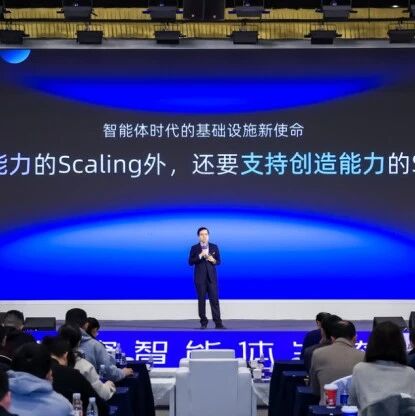
智能体

Search documents
无问芯穹智能体服务平台发布
Zhong Guo Jing Ji Wang· 2025-12-18 05:55
Core Viewpoint - The Wunwen Qinqu Intelligent Agent Service Platform has been officially launched, aiming to provide comprehensive support for enterprises in the era of intelligent agents, from customization and deployment to commercialization [1] Group 1: Platform Features - The platform offers ready-to-use agent capability templates and reliable hosting services, supporting a variety of scaffolding tools [1] - It is deeply linked with Wunwen Qinqu's underlying computing power and model infrastructure, enhancing production effectiveness, stability in large-scale operations, cost control, and smoother commercialization [1] - The platform includes over five types of agent capability templates, such as code, research, and multimodal, facilitating effective deployment from the initial stage [1] Group 2: Stability and Cost Control - The platform provides stable and reliable hosting services for each intelligent agent, leveraging Wunwen Qinqu's nationwide computing reserves and technical services [1] - It integrates deeply with the underlying infrastructure to allow enterprises to flexibly control the business costs associated with deploying intelligent agents [1] Group 3: Future Vision - Wunwen Qinqu's co-founder and chief scientist, Dai Guohao, emphasized the commitment to supporting breakthroughs and continuous evolution in intelligent agent applications through collaboration between industry, academia, and research [1]
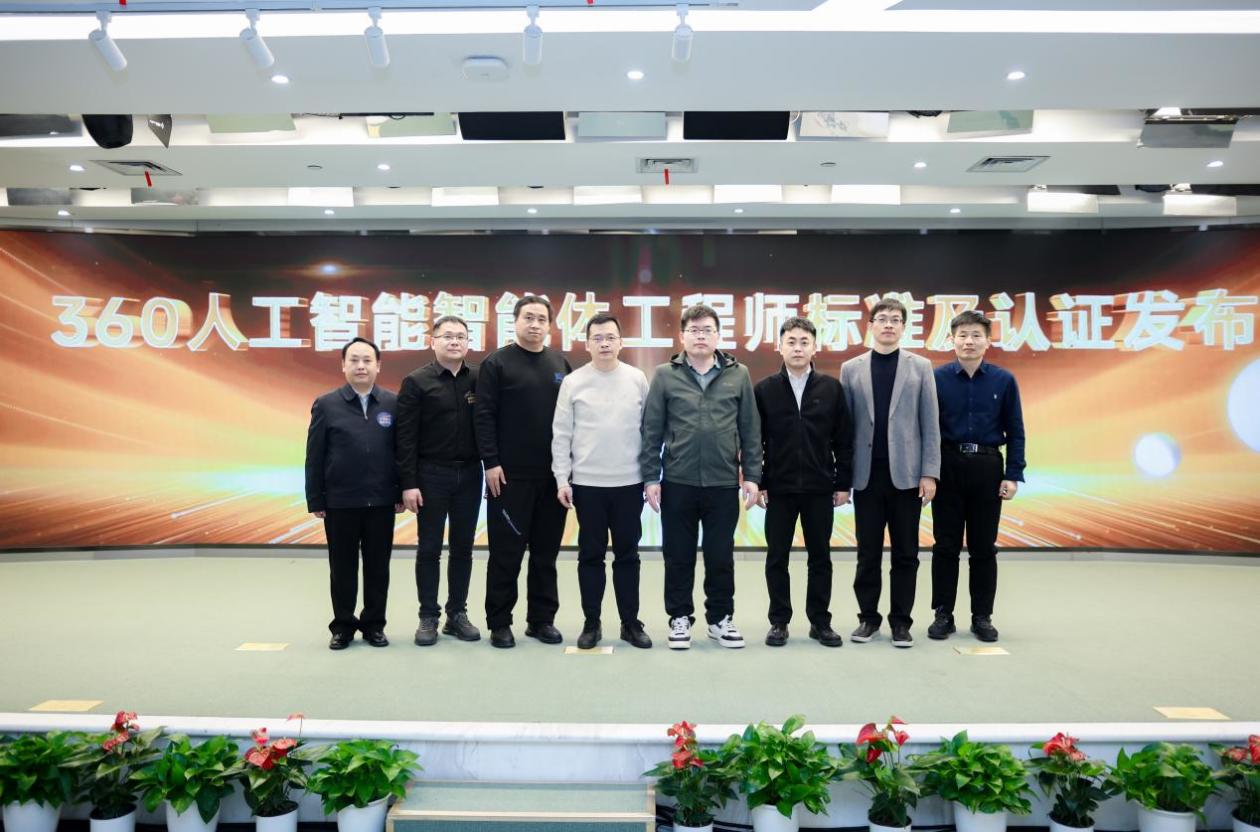
ISC.AI 2025第六届创新百强:从标准认证到全景图谱,智能体引领AI创新生态升级
Huan Qiu Wang· 2025-12-18 03:51
Core Insights - The transition to "AI+ new quality productivity" ecosystem is seen as a key opportunity for future development, with 2025 being referred to as the "Year of Intelligent Agents" [1] - The security industry must embrace intelligent agents as they are being exploited by hackers, leading to a new phase of "human-machine confrontation" [1] Group 1: Company Initiatives - 360 Digital Security Group is the first company to drive security business through intelligent agents, implementing a system that includes over 100 collaborative security intelligent agents [1] - The company proposes an AI governance path of "modeling by models" to address risks associated with large models and intelligent agents [1] - Future initiatives will focus on three areas: enhancing core technology for autonomous decision-making and security protection, opening an intelligent agent factory for customized solutions, and deepening industry-education integration to cultivate composite talent [1] Group 2: Talent Development - The need for composite talents with technical, business, and security capabilities in the AI era is emphasized, leading to the release of the "360 AI Intelligent Agent Engineer Standards and Certification" [2] - This initiative aims to create a new cooperation platform that integrates industry and education, marking a significant step in promoting research and practical integration [2] Group 3: Innovation and Evaluation - The ISC.AI 2025 Innovation Hundred competition has expanded to cover digital security, AI security, and AI applications, involving over 500 companies and more than 100 universities [4] - The competition has collected over 800 proposals, with more than 80% related to intelligent agent technology, and employs a dual-track evaluation mechanism [4] - The results will be compiled into the "ISC.AI 2025 Innovation Case" and "ISC.AI 2025 Innovation Capability Panorama," providing insights for industry users and investors [4]


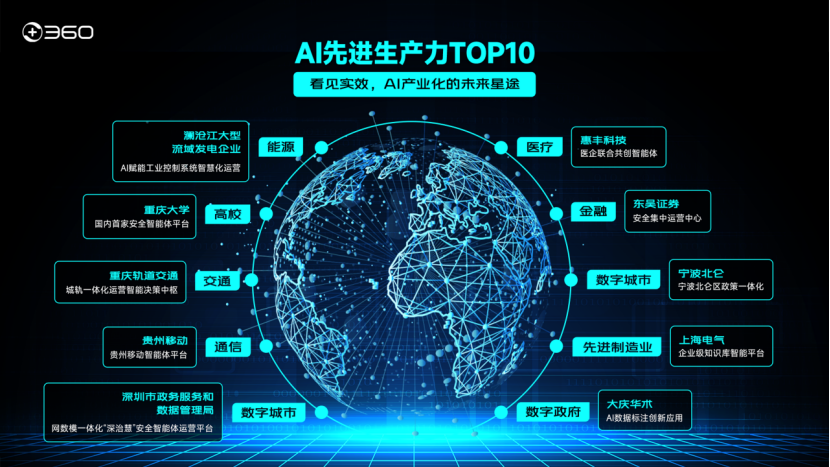
周鸿祎深夜官宣:AI生产力TOP10案例出炉,智能体成就产业新标杆!
Jin Rong Jie Zi Xun· 2025-12-18 03:41
Core Insights - The article discusses the integration of AI technology into industrial production lines, emphasizing the need for quantifiable and verifiable productivity improvements [1] - 360's "AI Advanced Productivity TOP10" cases showcase successful AI applications across various sectors, providing a practical guide for industries [1] Group 1: AI in Security and Critical Infrastructure - In the security field, a shift from "passive response" to "proactive defense" has been achieved, with 360's AI solutions significantly improving response times and operational efficiency [3] - The introduction of 360's security AI in Chongqing University led to a 90% accuracy rate in threat assessment and a 70% reduction in operational consultation volume [3] - The energy sector has seen enhanced operational efficiency and reduced communication costs through the implementation of an AI-enabled industrial control system [3] Group 2: AI in Finance - Dongwu Securities improved security incident response efficiency by 90% and reduced operational time by 40% after integrating 360's AI solutions [4] Group 3: AI in Public Services and Operations - In the public sector, 360's AI solutions have streamlined data governance, achieving over 95% accuracy in policy matching and reducing application processing time to 30 minutes [7] - The integration of AI in Ningbo Beilun District has lowered operational costs for enterprises by improving policy matching and reducing complexity in application processes [7] Group 4: AI in Healthcare and Other Industries - 360's collaboration with Huifeng Technology in the healthcare sector has enabled hospitals to build AI capabilities at a lower cost, addressing challenges like insufficient computing power and data silos [6] - Shanghai Electric's partnership with 360 has led to an 80% increase in work efficiency in high-value business scenarios through the establishment of an enterprise-level knowledge base [5] Group 5: Strategic Vision and Future Directions - The article highlights the importance of "human-machine collaboration" over "machine replacement," indicating a strategic shift in AI integration [7] - 360's "AllIn Agent" strategy aims to enhance AI technology's usability and effectiveness, contributing to the high-quality development of China's digital economy [7]
烧掉千亿,卷完参数卷落地:中国 AI 生存之战路在何方?
Sou Hu Cai Jing· 2025-12-17 17:26
Core Insights - The competition in the AI market has shifted from a focus on technical specifications to practical applications and business models, marking a transition from a "military competition" to a "survival battle" [4][10][18] - The Chinese AI market saw a surge of over 478 foundational models in 2023, leading to a "Hundred Model War," but is now undergoing a significant market consolidation by 2025 [4][5][7] - The leading players in the current market are ByteDance, Alibaba, Jiyue Xingchen, Zhipu AI, and DeepSeek, forming a new order known as the "Five Strong Models" [7] Market Dynamics - The AI industry is entering a critical "capital realization period" where investors are looking for clear economic models rather than just large parameter counts [8][9] - Companies are exploring unique business models, such as MiniMax's Talkie application, which targets the "AI companion" market instead of competing in the crowded productivity tools space [9] - The trend of open-source development is gaining momentum, with DeepSeek's strategy significantly impacting the industry and Alibaba's Qwen model achieving over 10 million derivative models [12] Competitive Landscape - Major players are engaging in differentiated competition, focusing on their unique strengths: established giants leverage their ecosystems, while newcomers target niche markets [14][15] - The competition is characterized by a focus on high-quality data, the ability to monetize effectively, and navigating regulatory landscapes [15] - The emergence of intelligent agents is seen as crucial for bridging the gap between AI technology and real-world applications, emphasizing the need for practical solutions [17] Future Outlook - The AI industry is expected to continue evolving, with a focus on specialized applications that address specific industry needs, rather than broad, generalized solutions [18][19] - The future leaders in the AI space may not be the most vocal today but those who effectively integrate their technologies into everyday life [20]

全场景+智能体双轮驱动,金融创新大展“鸿”图
第一财经· 2025-12-17 13:21
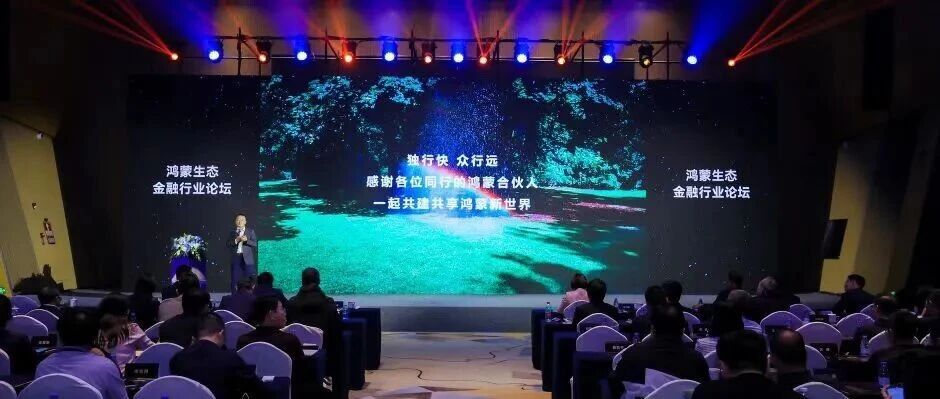
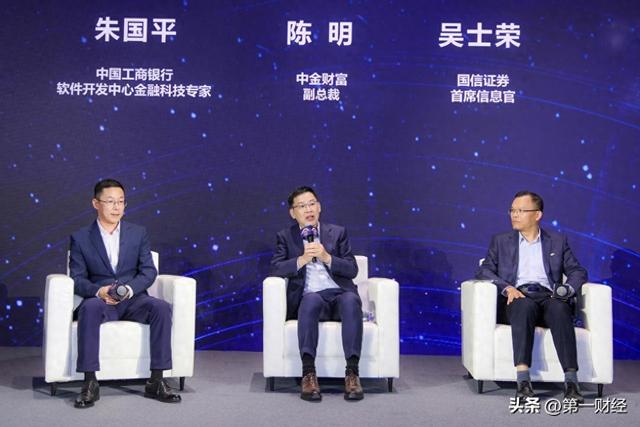
Core Viewpoint - The financial industry is facing unprecedented challenges and opportunities due to the digital wave, with increasing user demands for convenience, security, and intelligence, while traditional service models struggle to meet market expectations [1] Group 1: Collaboration with Harmony OS - Since the release of Harmony OS 5, it has collaborated with financial partners to address industry pain points, with experts sharing insights on its advantages and prospects during a recent forum [2] - Financial institutions express strong confidence in the technological and market benefits brought by Harmony OS, anticipating a second growth curve in financial services through collaboration and innovation [2] Group 2: Seamless Financial Service Experience - Users desire personalized financial services across multiple devices, and Harmony OS's "1+8+N" strategy enables seamless collaboration across devices, addressing the challenges of multi-terminal application development [4] - The introduction of Harmony OS applications on devices like smartwatches allows users to manage stock dynamics effortlessly, breaking the limitations of investment scenarios [5] Group 3: Intelligent Financial Services - Traditional service models often require multiple steps to access core services, leading to inefficiencies; thus, the shift towards intelligent services is crucial for enhancing user engagement and operational efficiency [9] - Harmony OS's intelligent assistant, "Xiao Yi," enables personalized services and improves user experience by allowing voice commands to access core financial functions [10] Group 4: Collaborative Innovation for Competitive Advantage - The open and inclusive nature of the Harmony ecosystem provides a platform for financial institutions to explore new service models and gain a competitive edge [13] - Early adopters of Harmony OS have reported significant improvements, with institutions like Zhongjin Wealth and Industrial and Commercial Bank of China achieving high customer satisfaction and enhanced capabilities through collaboration [16][18] Group 5: Opportunities for Small and Medium Financial Institutions - Harmony OS offers rich development tools and technical support, reducing costs for small and medium financial institutions, enabling them to enhance their digital capabilities and service levels [17] - The ecosystem's growth presents a unique opportunity for these institutions to achieve breakthroughs in multi-terminal coverage and intelligent services, positioning themselves advantageously in the market [17]
全场景+智能体双轮驱动,金融创新大展“鸿”图
Di Yi Cai Jing· 2025-12-17 13:09
Core Insights - The financial industry is facing unprecedented challenges and opportunities due to the digital wave, with increasing user demands for convenience, security, and intelligence [1] - The HarmonyOS 5 has been collaborating with financial partners to address these challenges, with experts expressing strong confidence in its potential to create a second growth curve for financial services [2] Group 1: Full-Scene Adaptation - Users desire seamless financial services across multiple devices, but traditional financial service models struggle to meet these demands due to information silos and fragmented experiences [3] - HarmonyOS employs a "1+8+N" full-scene strategy, enabling seamless collaboration across devices like smartphones, computers, and wearables, thus enhancing the efficiency of financial decision-making [3][4] - Financial applications are rapidly adapting to HarmonyOS, with several major financial software and online banking platforms already launching HarmonyOS versions [4][5] Group 2: Intelligent Services - The traditional service model is being transformed by intelligent assistants like "Xiao Yi," which streamline user interactions and provide personalized services [6][7] - Financial institutions are leveraging intelligent agents to enhance customer service experiences, allowing users to access core functionalities through simple voice commands [7][8] - The continuous learning capability of these intelligent systems helps financial institutions stay aligned with market changes and user preferences, enhancing service quality [8] Group 3: Collaborative Innovation - The open and inclusive nature of the Harmony ecosystem provides a platform for financial institutions to collaborate and innovate, allowing them to share technological benefits and explore new service models [9][10] - Early adopters of HarmonyOS have reported significant improvements in customer satisfaction and operational efficiency, indicating the potential for long-term partnerships [12][13] - Smaller financial institutions can also benefit from the ecosystem, as it offers tools and support to enhance their digital capabilities and service levels [13][14] Group 4: Future Outlook - Financial institutions are encouraged to view HarmonyOS adaptation as an opportunity to acquire scarce assets rather than merely a cost [14] - The ongoing development of the Harmony ecosystem is expected to attract more financial institutions, enabling them to become co-builders and beneficiaries of the ecosystem [15] - Embracing HarmonyOS is seen as a critical decision for financial institutions to seize future growth opportunities and enhance their competitive edge in an increasingly intelligent and personalized market [15]
“天才少女”罗福莉首秀:小米MiMo大模型,比DeepSeek更便宜、推理速度快三倍
Tai Mei Ti A P P· 2025-12-17 07:15
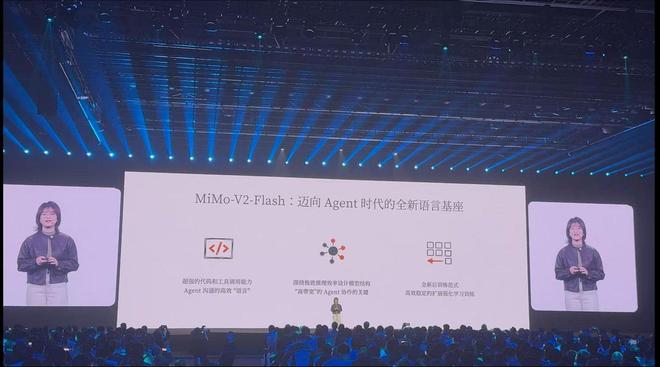
Core Insights - Xiaomi is making significant advancements in the AI large model sector, highlighted by the introduction of the MiMo-V2-Flash model, which boasts 309 billion total parameters and 15 billion active parameters, ranking among the top open-source models globally [2][3] - The company plans to invest 200 billion yuan (approximately 28.5 billion USD) in research and development over the next five years, with an expected R&D expenditure of 32-33 billion yuan (approximately 4.5-4.7 billion USD) for the current year [6] Model Development - MiMo-V2-Flash is designed to be cost-effective and faster, outperforming competitors like DeepSeek-V3.2 in inference speed by three times while being slightly cheaper [3] - The model has been open-sourced, providing developers with access to all model weights and API for integration into Web Coding IDE [5] Future AI Capabilities - The next generation of intelligent systems must evolve from merely answering questions to completing tasks, requiring enhanced memory, reasoning, and planning capabilities, as well as an Omni-modal perception ability [5] - A physical model is essential for AI evolution, enabling interaction with the real world and understanding physical laws, which current models lack [5] Financial and User Metrics - Xiaomi's global monthly active users have reached 742 million, with its AIoT platform connecting 1.04 billion devices and over 15,000 hardware partners [7] - The company has opened its CarIoT platform to the automotive industry, collaborating with major car manufacturers like BYD and GAC Toyota [7]


“天才少女”罗福莉小米首秀:国内外模型代差从三年缩至数月
Bei Ke Cai Jing· 2025-12-17 04:01
Core Insights - The next generation of intelligent systems is envisioned as true "agents" that understand and coexist with the world, rather than mere language simulators [1] - The capabilities of these agents include task execution, memory, reasoning, autonomous planning, decision-making, and execution, as well as unified multi-modal perception integrated into smart devices [1] Company Developments - Luo Fuli, a 95-born AI prodigy, has joined Xiaomi as the head of the MiMo large model team, with a reported annual salary in the tens of millions [2] - Xiaomi has been making significant investments in AI, with progress exceeding expectations, as stated by the company's president Lu Weibing [2] Industry Context - In 2020, Chinese open-source models were at least three years behind the world's top closed-source models, but the gap has now narrowed to mere months [2] - The emergence of AI large models like DeepSeek has contributed to the recognition of young talents in the AI field, such as Luo Fuli [2]
Google全链路赋能出海:3人团队调度千个智能体,可成独角兽|MEET2026
量子位· 2025-12-17 03:38
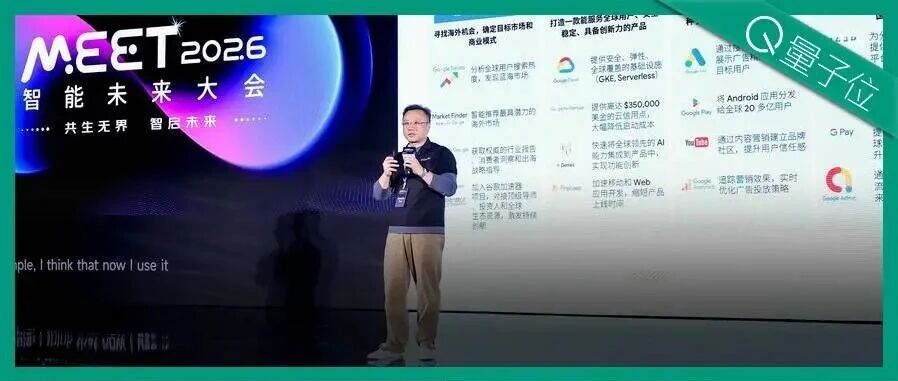
Core Insights - The future will be characterized by autonomous collaboration among intelligent agents, solving complex problems, automating workflows, and autonomously issuing tasks, creating a new business model [1] - AI agents are becoming new productivity units, injecting new meaning into the globalization logic of startups [2] - The intelligent agent sector is just beginning, with significant changes expected in the next one to two years, presenting a major opportunity for Chinese startups to go global [3] Google’s Integrated Solutions for Startups - Google has launched AI-driven integrated solutions to empower startups for efficient globalization [4] - The MEET2026 conference attracted nearly 1,500 offline attendees and over 3.5 million online viewers, highlighting the significant interest in the topic [6] - Startups face various challenges during globalization, and Google’s ecosystem can support them at every stage [7] Stages of Startup Globalization - The five stages of startup globalization include: 1. **Ideation and Strategic Planning**: Founders gather information and analyze competitors, often using Gemini for market research [8] 2. **Product Launch**: Google Cloud provides stable cloud infrastructure support [9] 3. **Market Validation**: Google Ads assists in reaching target customers [9] 4. **Market Expansion**: Google Play and other services support expansion into new markets [9] 5. **IPO Maturity**: Google’s data analysis tools aid in the final push before going public [10] Challenges and Innovations in AI - The AI field is evolving rapidly, with challenges such as hallucination (inaccurate or fabricated information) being addressed through better model training and engineering practices [11] - The introduction of the A2A (Agent-to-Agent) protocol aims to facilitate communication between intelligent agents across different enterprises [16] - The shift from SaaS subscription models to outcome-based payment models reflects a fundamental change in business logic, allowing small teams to scale significantly [18] Gemini's Evolution and Capabilities - Gemini has evolved from its initial version to Gemini 3, which has achieved significant advancements in reasoning, understanding, and problem-solving capabilities [15] - Key capabilities of Gemini 3 include: 1. **Extended Context Window**: Supports 1 million tokens, emphasizing the importance of context engineering [21] 2. **Native Multimodal Capability**: Understands text, video, images, and audio with improved clarity and accuracy [22] 3. **Function Calling Ability**: Enables intelligent agents to utilize external tools and services [23] - Gemini 3 is considered the safest model to date, having undergone comprehensive safety assessments [24]

无问芯穹正式发布智能体服务平台,助力每一个能改变世界的智能体
IPO早知道· 2025-12-16 13:44
Core Viewpoint - The article emphasizes the transformative potential of the Agentic AI era, where every enterprise can harness multiple intelligent agents to amplify creativity and productivity, ultimately leading to a new paradigm of organizational capability [3][6][25]. Group 1: Intelligent Agent Service Platform - The Wunwen Qinkong Intelligent Agent Service Platform aims to provide comprehensive support for enterprises, from customization and deployment to commercialization of intelligent agents, facilitating a seamless transition from creativity to productivity [3][9]. - The platform offers ready-to-use agent capability templates and reliable hosting services, integrating deeply with foundational computing and model infrastructure to enhance operational stability and cost control [9][15]. - The platform's design allows for dynamic adaptation of optimal model solutions based on business objectives, ensuring that intelligent agents can deliver effective application results [11][15]. Group 2: Overcoming Challenges - Key challenges in deploying intelligent agents include achieving production-level effectiveness, ensuring stable operation, controlling construction and operational costs, and closing the commercialization loop [8][17]. - The platform addresses these challenges by providing robust computational resources, system resilience, and security measures, achieving a service stability rate of 99.5% for cluster models and significantly improving scheduling speeds [13][15]. Group 3: Efficiency and Cost Control - The platform supports enterprises in reducing over 70% of redundant labor in agent tool integration by providing access to a rich set of community or self-developed tools [17]. - It integrates over 20 leading models and employs deep reasoning optimization techniques, enhancing inference efficiency by 3 to 5 times compared to traditional service models [15][17]. Group 4: Real-World Applications - The platform has demonstrated its value through collaborations, such as the development of the "SysCoding Agent" for a maintenance service company, enabling automated system development through natural language interactions [19][21]. - The intelligent agent achieved over 95% completeness and compliance in its initial generation, allowing for rapid deployment with minimal resource investment [21][23]. Group 5: Future Outlook - The intelligent agent era is seen as a new frontier, with Wunwen Qinkong positioning itself as a long-term partner for enterprises, facilitating the transformation of organizational knowledge into sustainable value [25][27]. - The company aims to support the continuous evolution of intelligent agent applications through collaboration across academia and industry, establishing a closed loop of innovation and industry development [27].