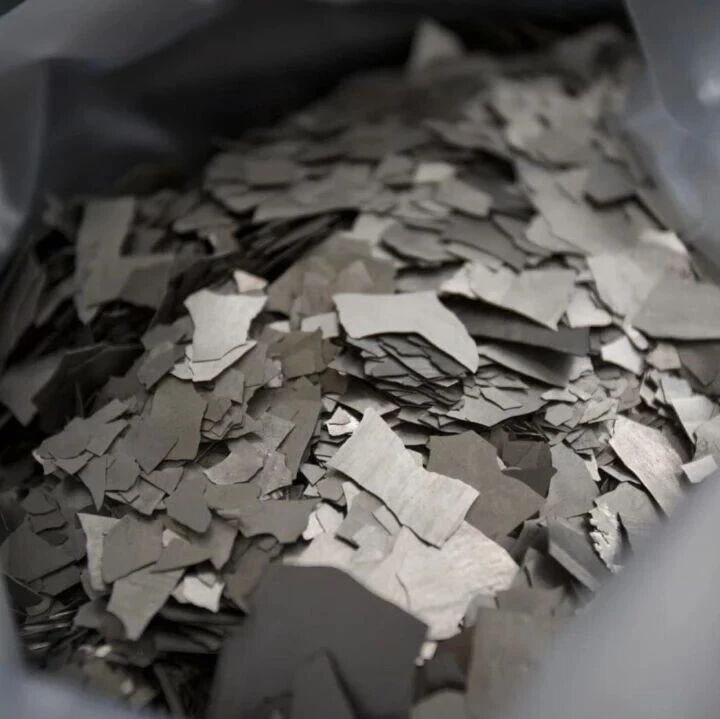
稀土出口管制

Search documents
安泰科:2025前三季度我国稀土产品进出口量总体呈同比下降趋势
智通财经网· 2025-10-23 13:01
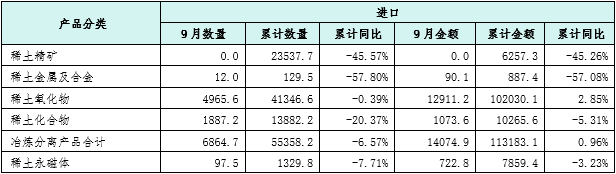
Core Viewpoint - In the first three quarters of 2025, China's rare earth import and export volumes showed a year-on-year decline, influenced by international trade dynamics and domestic export controls, yet China remains the primary supplier of rare earth products, contributing significantly to the stability of the global supply chain [1][21]. Import Situation Analysis - From January to September 2025, China imported a total of 23,537.7 tons of rare earth concentrates, a decrease of 45.6% year-on-year, with 99.3% of these imports coming from the United States [2][3]. - The import of rare earth metals and alloys was approximately 129.5 tons, down 57.8% year-on-year, while rare earth oxides totaled 41,346.6 tons, showing a slight decrease of 0.4% [3][4]. - The main sources of rare earth imports included Vietnam for metals and alloys (81%), Myanmar for oxides (61.8%), and Malaysia for compounds (64.3%) [7]. Export Situation Analysis - In the same period, China exported 48,000 tons of rare earth separation products, marking a 10.9% increase year-on-year, while exports of rare earth permanent magnets decreased by 7.5% [8][9]. - The export of rare earth metals and alloys reached 7,520.2 tons, up 4.0%, and rare earth oxides increased by 38.0% to 24,151.3 tons [9][11]. - Japan was the largest export destination for rare earth metals and alloys, accounting for 59.3% of the total, while the United States received 40% of the rare earth oxides [14]. Trade Influencing Factors - The trade of rare earth products has been affected by ongoing adjustments in Sino-U.S. economic policies, leading to fluctuations in export volumes [15][21]. - Despite a slight recovery in the third quarter, the overall export of rare earth permanent magnets to the U.S. saw a significant decline of 24.0% year-on-year [18][21]. - The export of rare earth separation products to the U.S. increased by 14.0%, primarily driven by light rare earth products such as lanthanum and cerium [18].

不到24小时,特朗普又改口了:中美如果谈不拢,对华关税升至155%
Sou Hu Cai Jing· 2025-10-23 09:36
Group 1 - Trump expressed confidence in reaching a fair trade agreement with China, mentioning a planned visit to China and a meeting with the Chinese leader in South Korea, but reiterated that tariffs would increase to 155% if no agreement is reached [1] - The stock market showed a slight rebound, with the Dow Jones increasing by 0.5%, as companies began to assess the impact of ongoing trade tensions, particularly in the electronics and automotive sectors that rely heavily on Chinese components [1] - The Federal Reserve Chairman indicated that policy remains tight, but data is unclear due to government shutdowns, with market expectations for a 25 basis point rate cut in October rising to 77% [1] Group 2 - The U.S.-China trade conflict began in 2018 when Trump imposed tariffs on Chinese imports, initially starting at 10% and escalating to an average of around 25% by 2019, affecting a wide range of goods [3] - In response to U.S. tariffs, China imposed retaliatory tariffs on U.S. agricultural and energy products, leading to a prolonged negotiation period that resulted in a first-phase trade agreement in 2020 [3] - The trade tensions have led to significant disruptions in global supply chains, with many companies relocating factories from China to countries like Vietnam and India [3] Group 3 - China announced a large-scale export control on rare earth materials starting November 1, citing national security and resource protection, which directly impacts the U.S. high-tech industry that relies on these materials [5] - Trump's immediate reaction to China's export control was to threaten a 100% tariff on all Chinese imports, raising the total tariff rate to 155%, which caused a significant drop in the stock market [5] - Following a brief period of optimism regarding trade negotiations, Trump reiterated his hardline stance, listing specific demands from China, including easing rare earth export controls and increasing purchases of U.S. soybeans [7] Group 4 - China's response emphasized that cooperation should be based on mutual respect and that high tariffs are not a constructive approach, highlighting the negative impact of pressure tactics on both countries' businesses and citizens [9] - The Chinese government stated that it would not back down from protecting its interests and criticized the U.S. for its continuous imposition of restrictions [9] - The Chinese yuan experienced slight fluctuations following the U.S. threats, but there was no significant market disruption [9]
反制效果显著!欧盟连夜打电话“求饶”,邀请中方赴布鲁塞尔谈判
Sou Hu Cai Jing· 2025-10-23 05:05
Core Points - The EU has shifted from a hardline stance to seeking cooperation with China regarding rare earth exports, indicating a need for dialogue to address the issue [2][5] - The EU's dependency on China for rare earth materials is critical, as China controls over 90% of global rare earth processing capacity and nearly all supply of rare earth magnets [2][5] - The automotive and machinery sectors in the EU are facing significant disruptions due to rare earth supply issues, with major car manufacturers experiencing production delays [5][6] Group 1: EU's Position and Actions - EU Trade Commissioner Valdis Dombrovskis has invited Chinese Commerce Minister Wang Wentao to Brussels to discuss urgent solutions for rare earth export controls [2] - The EU has submitted around 2,000 applications for rare earth export licenses, with only slightly over half processed, highlighting the urgency of the situation [2][5] - The EU's attempts to establish a self-sufficient rare earth supply chain have largely stalled, with projects remaining on paper and facing regulatory and technical challenges [5][6] Group 2: Challenges and Realities - The EU's rare earth mining and processing capabilities are minimal, with domestic production accounting for less than 1% of global supply [2][5] - A Swedish company's attempt to source and process rare earths from Australia resulted in a low yield and high costs, demonstrating the challenges of lacking Chinese technology [5][6] - The EU's goal to establish an independent supply chain within 3-5 years is deemed unrealistic due to the long-term technical and investment requirements [6] Group 3: China's Regulatory Framework - China's recent regulations on rare earths include a transitional period for existing contracts, humanitarian exemptions, and expedited approvals for compliant enterprises [8][10][12] - The Chinese government has tightened controls to prevent the use of rare earths in military applications, reflecting national security concerns [12][14] - The EU's own export control regulations on sensitive technologies are stricter than China's, indicating a double standard in their criticisms [14][16] Group 4: Future Outlook - The upcoming talks in Brussels are expected to lead to the EU accepting China's regulatory framework while seeking to resolve licensing issues [16] - Despite potential investments in alternative sources like Australia and Canada, the EU's reliance on China for rare earth processing and technology is projected to remain above 70% by 2035 [16] - The current situation underscores that the EU has effectively handed over its critical supply chain to China, necessitating adherence to established rules for stable supply [16]

中国一纸公文,掐住全球汽车供应链命脉
汽车商业评论· 2025-10-22 23:07
Core Viewpoint - The global automotive industry is facing a "rare earth panic" due to China's recent expansion of export controls on rare earth elements, which are critical for manufacturing components like rare earth magnets used in electric vehicles [4][10][11]. Group 1: Impact of China's Export Controls - China's new export controls include restrictions on five key rare earth elements and the introduction of "extraterritorial clauses," embedding China's regulatory power into every segment of the global supply chain [5][7]. - The automotive industry heavily relies on rare earth magnets for various functions, and the average electric vehicle consumes 0.5 kg of rare earths, double that of traditional fuel vehicles [8][9]. - China dominates the global rare earth supply chain, controlling approximately 70% of mining, 85% of refining capacity, and 90% of magnet production [10]. Group 2: Immediate Consequences for Automotive Manufacturers - The expanded controls have already led to significant disruptions, with companies like Ford and Suzuki experiencing production halts due to shortages of rare earth components [16][19]. - The automotive sector is facing a critical shortage of rare earth metals, with many manufacturers running low on inventory, as highlighted by industry leaders [17][18]. - The logistics challenges further exacerbate the situation, as companies must make procurement decisions without full clarity on the new regulations [20]. Group 3: Industry Response and Adaptation Strategies - In response to the supply chain pressures, automotive companies are stockpiling rare earths and seeking alternative sourcing strategies [25][26]. - Initiatives such as the U.S.-Australia critical minerals agreement and recycling efforts from old vehicles are being pursued to mitigate dependence on Chinese supplies [27][28]. - Companies are also investing in technology to develop rare earth-free magnet solutions, with partnerships like Niron Magnetics and Stellantis aiming to create viable alternatives [29][30][31]. Group 4: Challenges Ahead - Despite various efforts, the ability of other countries to match China's refining capabilities remains limited, with China controlling 99.8% of heavy rare earth refining capacity [43][44]. - The timeline for establishing new mines or processing facilities is lengthy, and the competitive pricing of Chinese rare earth products poses a significant challenge for foreign companies [46][47]. - The automotive industry must confront the reality that as long as China maintains its advantages in the rare earth supply chain, complete independence from Chinese sources will be a long-term challenge [49].
涉及出口管制,妥处经贸摩擦,欧盟邀中方赴欧谈稀土
Huan Qiu Shi Bao· 2025-10-22 22:52
Group 1 - The core viewpoint of the articles revolves around the recent discussions between Chinese and European officials regarding export controls, particularly focusing on rare earth elements and the EU's response to China's measures [1][2][3] - Chinese Minister Wang Wentao emphasized that the recent export control measures on rare earths are a normal practice to enhance China's export control system and reflect its responsibility as a major country in maintaining global peace and stability [1][3] - The EU's Trade and Economic Security Commissioner, Valdis Dombrovskis, expressed understanding of China's export controls, citing national security concerns, while urging China to expedite the approval process for European companies' applications [1][2] Group 2 - The articles highlight the ongoing tensions in EU-China trade relations, particularly in light of the new rare earth export controls implemented by China on October 9, which require permits for the export of certain products and technologies [2][3] - There is a growing debate within the EU regarding its trade policy towards China, with countries like Germany and France advocating for discussions on potential retaliatory measures against China's export controls [4] - The introduction of the "anti-coercion mechanism" by the EU, which allows for trade restrictions and other measures, is seen as a significant step in the EU's strategy to respond to perceived threats from China [4]
金力永磁20251022
2025-10-22 14:56
Summary of Jinli Permanent Magnet Conference Call Company Overview - **Company**: Jinli Permanent Magnet - **Industry**: Rare Earth Materials and Magnetic Products Key Points and Arguments Financial Performance - Jinli Permanent Magnet reported a revenue of approximately 5.4 billion RMB for the first three quarters of 2025, representing a year-on-year growth of about 7% [3] - The main business revenue reached nearly 5 billion RMB, with a year-on-year increase of over 12% [3] - The net profit attributable to shareholders exceeded 515 million RMB, showing a growth of over 160% year-on-year, while the net profit excluding non-recurring items grew over 380% to 130 million RMB [2][3] - Gross margin improved significantly, averaging close to 20% for the first three quarters, with the third quarter exceeding 25% [3][9] Revenue Sources - Over 80% of the company's revenue comes from the electric and energy-saving variable frequency air conditioning sectors, with additional contributions from the fields of embodied robotics motor rotors and low-altitude flying vehicles [2] - The company has maintained stable overseas revenue, particularly in the U.S., which reached approximately 350 million RMB, reflecting a year-on-year growth of 43.92% [19][20] Raw Material and Inventory Management - The company has adjusted its inventory cycle and procurement strategies to cope with fluctuations in rare earth prices, currently maintaining inventory levels at 2-3 months [4][13] - The management expects a production and sales growth of 20%-30% for the year, leveraging flexible pricing strategies to maintain high profitability [4][16] Impact of Export Control Policies - The recent export control measures on rare earth materials are believed to have a limited impact on the company, as it primarily uses elements like neodymium and dysprosium, which are already under export licenses [5][10] - The company is actively communicating with clients regarding the new regulations and expects these policies to enhance industry concentration and customer stickiness [10] Research and Development Initiatives - Jinli Permanent Magnet has established a research and development center in Hong Kong to accelerate breakthroughs in core technologies for embodied robotics motor rotors [7][8] - The center aims to attract global research talent and collaborate with international clients to develop leading products [7] Market Trends and Future Outlook - The rare earth market is experiencing significant changes, particularly with adjustments in export policies, which are expected to stabilize prices in the long term due to tight upstream supply and growing downstream demand [11][12] - The company anticipates that the demand for heavy rare earths will remain strong in the electric vehicle and air conditioning sectors, which require high-performance materials [18] Production Capacity and Expansion Plans - The company is expanding its production capacity, with plans to increase from 40,000 tons in 2025 to 60,000 tons by 2027, in response to growing order demands [22][31] - The Baotou Phase III project is under construction, with an expected capacity of 60,000 tons upon completion [22] New Business Ventures - Jinli Permanent Magnet is entering the soft magnetic materials sector, which is expected to yield high margins and significant revenue potential [25] - The company has initiated trial production of rubber soft magnetic products, with plans for gradual capacity expansion based on order demand [26] Conclusion - Jinli Permanent Magnet is well-positioned to navigate the challenges posed by raw material price fluctuations and regulatory changes, with a strong focus on R&D and market expansion to sustain growth and profitability in the coming years [10][12][31]
荷兰和欧盟轮番上阵,中欧通话两小时,要求中国恢复芯片和稀土供应,中方态度强硬
Sou Hu Cai Jing· 2025-10-22 08:45
Core Points - The negotiations between China and the EU regarding rare earth and chip supplies are under intense scrutiny, highlighting the importance of these resources in high-tech products and the economic relationship between the two regions [1][3] - China aims to tighten export controls on rare earths to protect its resource interests and assert its strategic position in the international market, especially amid rising tensions with the US [1][3] - The EU is dissatisfied with the current situation, as only half of the 2000 export licenses submitted to China have been approved, impacting the stability of their supply chains [3] Group 1 - The ongoing negotiations reflect a clash between the old and new world orders, with geopolitical changes forcing Europe to reassess its relationship with China [5] - The importance of rare earths and chips as strategic resources is increasingly recognized, making cooperation between China and the EU more complex [5][7] - Both parties need to respect and understand each other to develop their relationship, with a focus on finding mutually beneficial solutions [5][7] Group 2 - The upcoming EU-China summit will be crucial for rebuilding trust and seeking common interests in a turbulent international environment [7] - The ultimate goal for both China and the EU is to achieve mutual benefits and promote global economic recovery and prosperity [7]
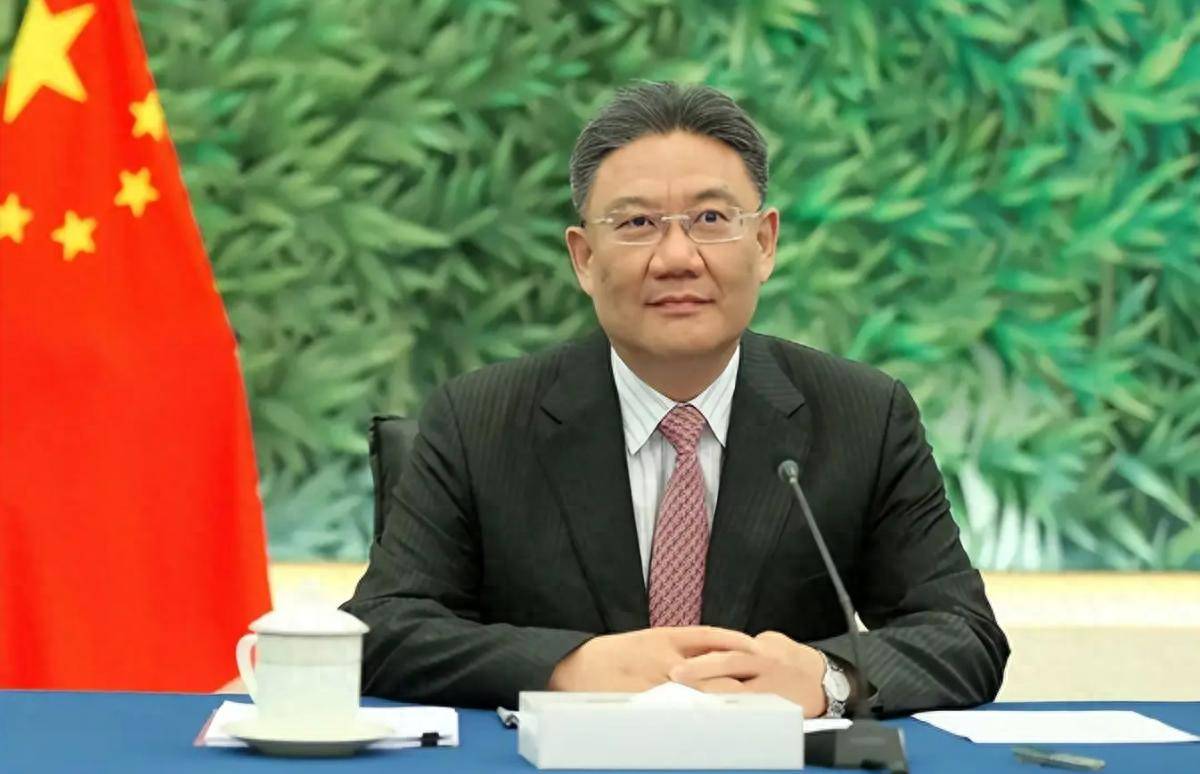
中欧将讨论中国稀土出口管制问题
Xin Lang Cai Jing· 2025-10-22 07:56
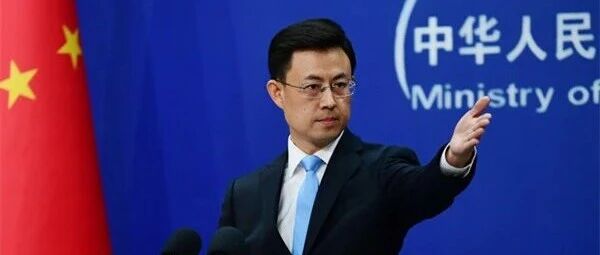
"中方有关部门已经发布了相关的消息稿,你可以查阅。"郭嘉昆强调,中欧经贸关系的本质是优势互 补、互利共赢。希望欧方恪守支持自由贸易、反对贸易保护主义的承诺,为各国企业提供公平透明、非 歧视的营商环境,以实际行动维护市场经济和世贸组织规则,坚持通过对话协商妥善解决贸易分歧。 10月22日,外交部发言人郭嘉昆主持例行记者会。法新社记者提问,在与中国商务部部长王文涛会谈之 后,欧盟委员会贸易和经济安全委员谢夫乔维奇表示,欧盟和中国官员已同意在布鲁塞尔举行紧急会 谈,讨论中国针对稀土的出口管制问题。外交部能否确认这一会谈并提供更多信息? 来源:智通财经 ...

中欧将举行紧急会谈讨论稀土问题?外交部回应
财联社· 2025-10-22 07:52
Group 1 - The core viewpoint emphasizes the importance of the EU-China economic relationship, highlighting it as mutually beneficial and complementary [1] - The Chinese Ministry of Foreign Affairs confirmed that relevant departments have released information regarding the emergency talks in Brussels about China's export controls on rare earths [1] - The spokesperson urged the EU to adhere to commitments supporting free trade and opposing trade protectionism, advocating for a fair and transparent business environment for all countries [1]

欧方称将与中方举行会谈讨论稀土出口管制问题,外交部回应
第一财经· 2025-10-22 07:34
Group 1 - The core viewpoint emphasizes the importance of mutual benefits and complementary advantages in China-EU economic and trade relations, urging the EU to adhere to commitments supporting free trade and opposing protectionism [1] - The Chinese side has confirmed that relevant departments have released information regarding the upcoming emergency talks in Brussels to discuss China's export controls on rare earths [1]