金融供给侧结构性改革

Search documents
最新!央行、证监会、金融监管总局一把手金融街论坛重磅发声!
Sou Hu Cai Jing· 2025-10-27 14:23
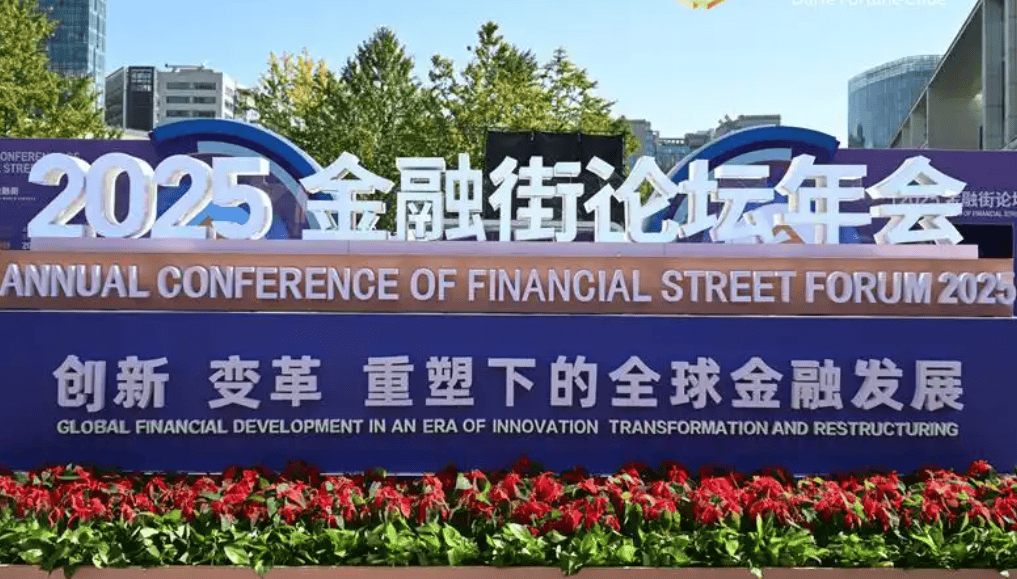
中国人民银行行长潘功胜在会上发表讲话。他表示,去年,人民银行落实中央金融工作会议部署,在二级市场开始国债买卖操作。这是丰富货币 政策工具箱、增强国债金融功能、发挥国债收益率曲线定价基准作用、增进货币政策与财政政策相互协同的重要举措,也有利于我国债券市场改 革发展和金融机构提升做市定价能力。实践中,人民银行根据基础货币投放需要,兼顾债券市场供求和收益率曲线形态变化等情况,灵活开展国 债买卖双向操作,保障货币政策顺畅传导和金融市场平稳运行。今年初,考虑到债券市场供求不平衡压力较大、市场风险有所累积,人民银行暂 停了国债买卖。目前,债市整体运行良好,人民银行将恢复公开市场国债买卖操作。 央行将恢复公开市场国债买卖操作 10月27日下午,以"创新、变革、重塑下的全球金融发展"为主题的2025金融街论坛年会在北京开幕。中国人民银行行长潘功胜、金融监管总局局 长李云泽、中国证监会主席吴清出席论坛,并发布一系列重要消息。 潘功胜指出,研究实施支持个人修复信用的政策措施。人民银行运营的征信系统是一项重要的金融基础设施,对企业和个人的金融违约行为进行 记录,并供金融机构在开展业务时进行查询和风险评估,20多年来,对我国社会信用 ...


金融监管总局局长李云泽:推动更多金融政策在京先行先试
Sou Hu Cai Jing· 2025-10-27 14:09
Core Viewpoint - The speech by Li Yunzhe at the 2025 Financial Street Forum emphasizes the importance of strengthening financial support to ensure the high-quality development of the economy and society during the "14th Five-Year Plan" and moving forward into the "15th Five-Year Plan" period [1] Group 1: Economic and Financial Adaptability - The focus is on enhancing economic and financial adaptability to promote sustainable and healthy economic development, with a new financial service model that balances direct and indirect financing, investment in goods and people, and aligns financing terms with industrial development [2] - There is a commitment to support major strategies and key areas, particularly in smart, green, and integrated development, to provide more financial resources for traditional and emerging industries [2] - The strategy includes optimizing trade financing and export credit insurance to facilitate domestic and international trade integration, thereby enhancing domestic and international dual circulation [2] Group 2: Reform and Opening Up - The plan includes deepening reforms and expanding openness in the financial sector to enhance development momentum and vitality, focusing on structural reforms in financial supply [3] - There is an emphasis on building a modern financial institution system and promoting differentiated development among various financial institutions to create a healthy financial ecosystem [3] - The initiative aims to improve the international operational capabilities of Chinese financial institutions and actively participate in international financial governance reform [3] Group 3: Financial Development and Security - The need to balance financial development with security is highlighted, with a focus on preventing systemic financial risks and enhancing risk management frameworks [4] - Measures will be taken to improve the efficiency of financial regulation and to establish a clear and effective regulatory framework [4] - The strategy includes strengthening international cooperation in financial regulation to address major risks and challenges globally [4] Group 4: Financial Development in Beijing - The speech notes that during the "14th Five-Year Plan" period, Beijing has made significant progress in implementing the "Four Centers" strategic positioning, with a focus on attracting quality financial resources to support high-quality economic and social development [5] - The establishment of financial asset investment companies by major banks in Beijing is mentioned as part of the ongoing efforts to enhance the financial ecosystem in the capital [5]
李云泽:稳妥有序推进中小金融机构兼并重组、减量提质
21世纪经济报道· 2025-10-27 13:49
Core Insights - The 2025 Financial Street Forum focuses on "Innovation, Transformation, and Reshaping of Global Financial Development" [1] - Li Yunzhe emphasizes the importance of financial support for high-quality economic and social development during the "14th Five-Year Plan" and outlines goals for the "15th Five-Year Plan" [1][4] Group 1: Financial Adaptability - The need to create a new financial service model that balances direct and indirect financing, investment in goods and people, and aligns financing terms with industry development [3] - Support for major strategies and key areas to enhance the quality and reasonable growth of the economy [3] Group 2: Modern Industrial System and New Productivity - Focus on intelligent, green, and integrated directions to provide more financial resources for traditional industries and emerging sectors [4] - As of September 2025, loans in key areas like technology, green initiatives, and digital economy are growing significantly faster than overall loan levels, with green loans leading at a 22.9% growth rate [4] Group 3: Reform and Opening Up - Emphasis on deepening financial supply-side structural reforms to enhance institutional layout and international influence [6] - Encouragement for financial institutions to focus on their core businesses and engage in differentiated competition to build a healthy financial ecosystem [6] Group 4: Financial Development and Security - Commitment to risk prevention and maintaining systemic financial stability amid global economic uncertainties [8] - As of October 15, 2025, 326 banks have exited the market through dissolution, merger, or cancellation, indicating a significant increase in the consolidation of local banks [9] Group 5: Regulatory Framework - Continuous improvement of financial regulatory effectiveness and the establishment of a tiered regulatory framework [9] - Call for enhanced global cooperation to strengthen the global financial safety net and improve crisis management efficiency [9]
李云泽:为新兴产业和未来产业培育壮大等提供更多金融资源
Zhong Guo Xin Wen Wang· 2025-10-27 12:17
Group 1 - The core viewpoint emphasizes the need to provide more financial resources for traditional industries' optimization and the cultivation of emerging and future industries, focusing on intelligent, green, and integrated directions [1] - During the 2025 Financial Street Forum Annual Meeting, the focus will be on enhancing economic and financial adaptability during the "14th Five-Year Plan" period [1] - The new financial service model will promote the synergy of direct and indirect financing, balance investment in goods and people, align financing terms with industry development, and link domestic and international markets [1] Group 2 - The financial regulatory department aims to strengthen risk prevention measures and consolidate risk disposal achievements [2] - There will be a focus on the orderly merger and restructuring of small and medium financial institutions, as well as enhancing the quality of financial services [2] - A new financing system will be developed to align with the new model of real estate development, helping to mitigate local government debt risks [2]
金融监管总局:提升经济金融适配性,坚定不移深化改革扩大开放
Sou Hu Cai Jing· 2025-10-27 11:32
Core Viewpoint - The Financial Regulatory Administration aims to enhance economic and financial adaptability to promote sustainable economic and social development while deepening reforms and expanding openness [1][2][4]. Group 1: Financial Service Model - The Financial Regulatory Administration will promote a new financial service model that coordinates direct and indirect financing, balances investment in goods and people, aligns financing terms with industrial development, and links domestic and international markets [1]. - The focus will be on supporting major strategies, key areas, and weak links to achieve qualitative and quantitative economic growth, enhancing the modern industrial system and new productive forces [1]. Group 2: Support for New Development Pattern - The administration will strengthen funding supply for major projects to boost consumption and optimize trade financing and export credit insurance to facilitate integrated domestic and international trade [2]. - Efforts will be made to ensure that financial services are more equitable and accessible to the public, addressing financial needs in education, health, and other social sectors [2]. Group 3: Structural Reform and International Engagement - The Financial Regulatory Administration will deepen financial supply-side structural reforms to improve institutional layout, enhance development quality and resilience, and increase international influence [4]. - The administration will actively participate in international financial governance reform and contribute to the improvement of international financial regulatory rules and industry standards [4]. Group 4: Risk Management and Policy Implementation - The administration will prioritize financial development and security, ensuring that systemic financial risks are effectively managed [4]. - Future financial policies will be piloted in Beijing to attract high-quality financial resources to support the capital's economic and social development [4].
李云泽,最新发声!
中国基金报· 2025-10-27 11:30
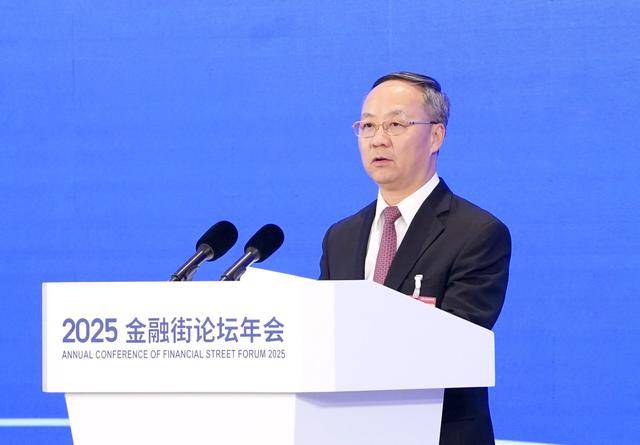
【导读】 国家金融监督管理总局局长 李云泽:提升经济金融适配性,更好促进经济社会持续健 康发展 中国基金报记者 晨曦 10 月 27 日,国家金融监督管理总局局长李云泽出席 2025 金融街论坛年会开幕式,并发表 演讲。李云泽的演讲主题为 " 强化金融支撑 守牢风险底线 全力服务 ' 十五五 ' 经济社会高 质量发展 " 。 来看此次演讲的重点内容: 着力提升经济金融适配性 更好促进经济社会持续健康发展 李云泽表示,金融监管总局将推动构建直接融资与间接融资协同、投资于物与投资于人并 重、融资期限与产业发展匹配、国内市场与国际市场联动的金融服务新模式,强化对重大战 略、重点领域和薄弱环节的支持,助力经济实现质的有效提升和量的合理增长。 高效服务现代化产业体系建设和新质生产力发展。聚焦智能化、绿色化、融合化方向,为传 统产业优化提升、新兴产业和未来产业培育壮大提供更多金融资源。锚定高水平科技自立自 强,完善长期资本投早、投小、投长期、投硬科技的支持政策,强化全周期综合金融保障, 推动科技创新和产业创新深度融合。 有力支持构建新发展格局。围绕扩大内需这个战略基点,强化重大项目资金供给,助推消费 扩容升级。优化贸易融 ...

潘功胜、李云泽、吴清、朱鹤新重磅发声
财联社· 2025-10-27 11:27
为速度和交易而生 上海报业集团主管主办 C 刚联社 2025金融街论坛年会 潘功胜、李云泽、吴清、朱鹤新 重磅步声 | 中国人民银行行长 潘功胜 l 央行探索在特定情景下向非银机构提供流动性的 机制安排。 | 金融监管总局局长 李云降 l 围绕扩大内需战略,强化重大项目资金供给,助推 消费扩容升级。 【稳妥有序推进中小会融机构兼并重组,减量提质。 l 目前债市整体运行良好,人民银行将恢复公开市 场国债买卖操作。 】继续完善货币政策框架,强化货币政策执行和传导。 l 人民银行将会同执法部门继续打击境内虚拟货币 的经营和炒作。 【研究实施支持个人修复信用的政策措施,计划在明 年初执行。 】要构建覆盖全面的宏观审慎管理体系,人民银行主 要有四个重点工作方向。第一,更好覆盖宏观经济 运行和金融风险的关联性。第二,更好覆盖金融市 场的运行。第三,更好覆盖系统重要性金融机构。第 四. 更好覆盖国际经济和金融市场风险的跨境传播。 】强化系统性金融风险的监测和评估体系,目前已形 成初步方案。 【进一步深化金融供给侧结构性改革,促进机构布 局更加合理。 【 加大不良资产处置和资本补充力度,丰富处置资 源和手段。 | 中国证监会 ...

李云泽:坚决纠正无序竞争行为 切实维护健康公平的金融秩序
Jin Rong Shi Bao· 2025-10-27 11:23
Core Viewpoint - The National Financial Regulatory Administration emphasizes the need for problem-oriented approaches to deepen financial supply-side structural reforms, aiming for high-quality industry development and a healthy financial ecosystem [1] Group 1: Financial Reform and Development - The administration will guide various types and scales of institutions to identify their positioning, focus on their main businesses, and engage in differentiated competition [1] - The goal is to achieve specialized operations and differentiated development, contributing to a diverse, orderly, and sustainable financial ecosystem [1] Group 2: Institutional Improvement - There is a push to accelerate the establishment of a modern financial enterprise system with Chinese characteristics [1] - Financial institutions are encouraged to adopt correct views on operations, performance, and risk management, focusing on internal improvements and cost reduction [1] Group 3: Competition and Order - The administration aims to rectify disorderly competition behaviors to maintain a healthy and fair financial order [1]
李云泽,最新发声!
Zhong Guo Ji Jin Bao· 2025-10-27 11:19
Group 1 - The core message emphasizes enhancing the adaptability of the financial system to better support sustainable economic and social development [2] - The financial regulatory authority aims to create a new financial service model that balances direct and indirect financing, investment in goods and people, and aligns financing terms with industrial development [2] - There is a focus on supporting the construction of a modern industrial system and the development of new productive forces, particularly in smart, green, and integrated industries [2] Group 2 - The regulatory body will deepen structural reforms in financial supply, improve the quality and resilience of financial development, and enhance international influence [3] - It aims to promote high-quality development in the financial sector by correcting disorderly competition and maintaining a healthy financial order [3] - The authority plans to expand financial openness and improve the management capabilities of Chinese institutions in international operations [3] Group 3 - The financial regulatory authority is committed to risk prevention and maintaining systemic financial stability amid global economic challenges [4] - It will strengthen risk control measures, including the orderly consolidation of small financial institutions and the management of non-performing assets [4] - A new financing system will be developed to align with the evolving real estate market, addressing local government debt risks [4] Group 4 - The authority will enhance regulatory efficiency by reforming financial laws and regulations, establishing a precise and effective tiered supervision framework [5] - There will be a focus on international cooperation to strengthen the global financial safety net and improve crisis management efficiency [5] - The financial regulatory body aims to lead more financial policies in Beijing, attracting quality financial resources to support high-quality economic development in the capital [5]
重磅!2025金融街论坛年会召开,央行、金融监管总局、证监会、外汇局发声
新浪财经· 2025-10-27 10:52
Core Viewpoint - The 2025 Financial Street Forum Annual Meeting is being held in Beijing, focusing on "Global Financial Development under Innovation, Transformation, and Restructuring" [2] Group 1: Central Bank Policies - The People's Bank of China (PBOC) will resume open market operations for government bonds, which is crucial for enhancing monetary policy tools and supporting bond market reforms [3] - The PBOC plans to further optimize the digital RMB management system, supporting more commercial banks to operate digital RMB services [4] - The PBOC will explore mechanisms to provide liquidity to non-bank institutions under specific circumstances, balancing market stability and risk prevention [5] Group 2: Credit Repair and Risk Management - The PBOC is researching policies to support personal credit repair, particularly for individuals who have defaulted due to uncontrollable circumstances like the pandemic [7] - The PBOC will continue to combat the operation and speculation of virtual currencies to maintain economic and financial order [8] Group 3: Financial Regulatory Reforms - The Financial Regulatory Administration will deepen supply-side structural reforms in finance, promoting a more reasonable institutional layout and enhancing the quality and resilience of development [9] - The administration will increase efforts in disposing of non-performing assets and capital replenishment, ensuring the stability of the financial system [10][13] - The administration aims to correct disorderly competition and maintain a healthy and fair financial order [11][12] Group 4: Investor Protection and Market Stability - The China Securities Regulatory Commission (CSRC) will release opinions to strengthen the protection of small and medium investors in the capital market, introducing 23 practical measures [15] - The CSRC will optimize the interconnection mechanism to enhance the quality of overseas listing filings and deepen cooperation between mainland and Hong Kong markets [16] Group 5: International Financial Cooperation - The National Foreign Exchange Administration will introduce policies to facilitate trade and enhance the management of cross-border capital flows, focusing on high-level openness [22][24] - The administration reported that the scale of foreign-related receipts and payments reached $11.6 trillion in the first three quarters, a historical high for the same period [22]