碳中和

Search documents
投资者追问ESG不走过场 推动企业挤出“绿色泡沫”
Zhong Guo Zheng Quan Bao· 2025-10-12 22:12
Core Insights - The ESG (Environmental, Social, and Governance) evaluation system is reshaping corporate value, with the environmental dimension being central to "green value" [1] - Companies are increasingly focusing on environmental protection and carbon neutrality as key points for brand communication and product value enhancement [2][3] - There is a growing concern among investors regarding the authenticity of companies' ESG practices and the risk of "greenwashing" [1][6] Investor Concerns - Investors are showing heightened interest in companies' environmental protection efforts and ESG commitments, with numerous inquiries on platforms like Shanghai Stock Exchange's e-Interaction and Shenzhen Stock Exchange's Interactive Easy [2] - Specific questions raised by investors include inquiries about environmental investments, compliance with environmental assessments, and management of new pollutants [2] Corporate Initiatives - Companies like Anta Sports and Honor have set ambitious carbon neutrality goals, with Anta aiming for over 30% of sustainable products by 2024 and Honor targeting carbon neutrality in operations by 2040 [2][3] - Other companies, such as Master Kong, are launching environmentally friendly products and reducing packaging waste to lower carbon emissions [3] Greenwashing Risks - Experts warn about the dangers of "greenwashing," where companies may exaggerate or misrepresent their environmental efforts, potentially leading to reputational damage and legal risks [4][6] - The need for clear definitions and standards regarding carbon neutrality and environmental claims is emphasized, as current regulations are often vague [7] Regulatory Environment - There is a lack of specific policies against "greenwashing" in China, with existing regulations scattered across various laws [7] - Recent developments include the introduction of group standards for carbon neutrality labels, which aim to provide a unified benchmark for industries [7] Internal Governance - Companies are encouraged to strengthen internal governance structures to prevent "greenwashing," with some firms linking executive compensation to environmental performance [8] - Establishing a robust ESG management system and ensuring compliance with international disclosure standards are critical for companies [9]
投资者追问ESG不走过场推动企业挤出“绿色泡沫”
Zhong Guo Zheng Quan Bao· 2025-10-12 20:53
Core Insights - The ESG (Environmental, Social, and Governance) evaluation system is reshaping corporate value, with the environmental dimension (E) being central to "green value" [1] - Companies are increasingly focusing on environmental protection and carbon neutrality as key points for brand communication and product value enhancement [1][2] - Investors are showing heightened interest in companies' ESG practices and the tangible outcomes of their "green value" initiatives [1][2] Investor Concerns - There has been a noticeable increase in investor inquiries regarding environmental protection and ESG on platforms like Shanghai Stock Exchange's e-Interaction and Shenzhen Stock Exchange's Interactive Easy [1][2] - Specific questions from investors include inquiries about companies' environmental investments, compliance with environmental assessments, and management of new pollutants [1][2] Corporate Initiatives - Companies like Anta Sports and Honor have set ambitious carbon neutrality goals, with Anta aiming for carbon neutrality by 2050 and Honor targeting the same for its value chain [1][2] - Anta has reported that over 30% of its products will be sustainable by 2024, with several products achieving carbon neutrality certification [1] - Other companies, such as Master Kong, are launching environmentally friendly products and reducing plastic use in packaging [2] Greenwashing Risks - Experts warn about the risks of "greenwashing," where companies may exaggerate or misrepresent their environmental efforts [2][3] - Specific examples include Apple removing carbon neutrality claims from its product marketing following legal scrutiny [2] Regulatory Environment - There is a lack of specific regulations against "greenwashing" in China, with existing laws focusing on truthful disclosure and advertising [5] - New standards for carbon neutrality and related concepts are being introduced to provide clearer guidelines for companies [5] Internal Governance - Companies are encouraged to strengthen their internal governance systems to prevent "greenwashing," with some linking executive compensation to environmental performance [6] - Establishing a robust ESG management framework and ensuring compliance with international disclosure standards are critical for companies [6][7] Information Disclosure - Clear, truthful, and verifiable environmental claims are essential for companies to avoid "greenwashing" accusations [7] - Companies should implement multi-dimensional control mechanisms, including management accountability and rigorous data management systems [7]


ESG热点周聚焦(10月第2期):工信部启动2025年度绿色工厂推荐工作
Guoxin Securities· 2025-10-12 12:15
Core Insights - The report highlights the integration of technology and policy adjustments in the ESG landscape, with companies like Nestlé and Mars opposing the EU's delay on forest deforestation regulations, and Microsoft signing a 20-year solar energy agreement in Japan to accelerate clean energy transition in Asia-Pacific [2][6] - Record green capital deployment is noted, with Brookfield raising $20 billion to establish the largest global energy transition fund, and Goldman Sachs' Verdalia raising $780 million to expand biogas infrastructure in Southern Europe [2][8] - The report discusses the launch of the ISO 17298 standard for biodiversity, which aims to help organizations assess their biodiversity impacts and risks, aligning with global sustainability goals [16] International ESG Events - Companies are actively enhancing environmental responsibilities, as seen with the collaboration of over 20 firms, including Nestlé and Mars, against the EU's forest deforestation law delay [6][7] - Diginex's acquisition of Matter for $13 million aims to enhance ESG data integration and AI analysis capabilities, reflecting a trend towards technological innovation in ESG practices [7] - The EU's delay in implementing the CSRD for non-EU companies is intended to reduce administrative burdens and enhance competitiveness, with the new timeline pushing the reporting requirements to 2027 [15][14] Domestic ESG Developments - The report notes significant advancements in carbon neutrality practices in China, including the operation of the first large-capacity sodium-ion energy storage station and the integration of a 648 MW wind power project in Brazil, which is expected to reduce carbon emissions by 2.12 million tons annually [20] - The Ministry of Industry and Information Technology has initiated a green factory recommendation program to strengthen energy conservation and carbon reduction in manufacturing [20] - The establishment of 490 national-level green factories in Guangdong showcases the province's leadership in promoting sustainable manufacturing practices [20]






明阳智能拟142.1亿元投建英国首个全产业链一体化风电机组制造基地
Zhong Guo Ji Jin Bao· 2025-10-12 10:46
Core Viewpoint - Mingyang Smart Energy plans to invest £1.5 billion (approximately ¥142.1 billion) to establish the UK's first integrated wind turbine manufacturing base in Scotland, marking its first overseas investment exceeding ¥10 billion since its listing in 2019 [2][5]. Investment Details - The investment will be executed in three phases: 1. The first phase involves constructing advanced manufacturing facilities for wind turbine nacelles and blades, with the first batch expected to be operational by the end of 2028 [5]. 2. The second phase will expand production lines to accelerate the scale production of floating wind technology in the UK [5]. 3. The third phase will further extend to the production of control systems, electronic devices, and other key components [5]. Strategic Importance - This investment aims to introduce the company's offshore wind technology to the North Sea region, facilitating the commercialization of floating wind technology, which supports the UK's clean energy transition goals and aligns with global carbon neutrality trends [7][8]. - The project is expected to establish a complete production and service system in the UK, enhancing the company's position in global offshore wind technology standards and industry upgrades [8]. Market Context - The global energy transition and renewable energy development context is driving Chinese wind power companies to pursue international strategies, including establishing overseas production bases and collaborating with international partners [9]. - Major energy-consuming regions, particularly in developed countries, are implementing new plans to increase renewable energy projects, simplifying approval processes, and providing various subsidies, creating new growth opportunities for the wind energy sector [9]. Financial Performance - In the first half of 2025, the company reported a 45.33% year-on-year increase in revenue to ¥171.43 billion, while net profit attributable to shareholders decreased by 7.68% to ¥6.10 billion [10][11].


赛事招募|绿能智创 驱动未来2025第三届零碳技术专精特新创业大赛长三角预选赛上海站项目报名通道开启
势银能链· 2025-10-12 02:04
Core Viewpoint - The article emphasizes the acceleration of global energy transition driven by carbon neutrality goals, highlighting the emergence of zero-carbon technologies such as green hydrogen, fuel cells, and energy storage as key areas for innovation and investment [2][3]. Group 1: Event Background - The 2025 Zero Carbon Technology Entrepreneurship Competition aims to discover promising zero-carbon technology companies and promote the deep collaboration of technology, capital, and industry [2][3]. - The competition is initiated by Yield Capital, TrendBank, and other partners, focusing on the incubation and industrialization of innovative technologies [2][3]. Group 2: Innovation and Growth - The event seeks to provide a platform for technology innovators to showcase their work and accelerate the transition from laboratory to industrial application [3]. - It aims to connect industry partners with cutting-edge technologies to promote the large-scale application of zero-carbon solutions [3]. - Investment institutions are encouraged to identify high-growth projects and nurture future leaders in the green energy sector [3]. Group 3: Competition Structure - The competition includes various tracks focusing on different aspects of zero-carbon technology, such as green hydrogen, carbon capture, fuel cells, new energy storage, new hydrogen production methods, and smart energy [9][10][11][12][13][14]. - Each track addresses specific technological advancements and their potential impact on achieving carbon neutrality [9][10][11][12][13][14]. Group 4: Support for Participants - High-quality projects will receive support in financing, market branding, and incubation acceleration [15][16]. - Participants will have opportunities for one-on-one financing consultations, exposure to industry leaders, and potential media coverage [18][19]. Group 5: Upcoming Events - The competition will feature multiple preliminary rounds across different regions, including Shanghai and Beijing, leading to a final competition [21][22][25][27]. - The events are designed to enhance interaction among industry experts, market resources, and technology specialists [19].
碳捕集、气候变化……诺奖成果给出的全球能源转型启示
Xin Jing Bao· 2025-10-11 11:00
Group 1 - The 2025 Nobel Prize in Chemistry was awarded to three scientists for their contributions to the development of metal-organic frameworks (MOFs), which can significantly reduce the cost of carbon capture [1][2] - Metal-organic frameworks are described as "molecular buildings" that can be used for various applications, including extracting moisture from desert air, capturing carbon dioxide, and storing toxic gases [2][3] - The cost of the separation step in carbon capture currently accounts for about 70% of the total cost, and using MOF materials for adsorption and separation of CO2 is expected to lower this cost substantially [2][3] Group 2 - Several domestic companies in China are already working on the commercialization of MOF technology, with a focus on applications in solid-state batteries, air dehumidification, and hydrogen storage [6][7] - Wuxi New Storage Materials Technology Co., Ltd. plans to launch a production line for MOF materials by the end of the year, with an expected annual output value of 500 million yuan [6] - Guangdong Carbon Language New Materials Co., Ltd. aims to achieve large-scale production of MOF materials, with plans for a new project that includes an investment of 100 million yuan [6][7] Group 3 - The "1+N" dual carbon policy framework in China emphasizes the importance of carbon capture, utilization, and storage (CCUS) in promoting green and low-carbon transformation [7] - Experts suggest that the largest commercial market for the practical application of the 2025 Nobel Prize-winning technology will be in China [7]
数据申报!2025中国企业碳中和贡献力研究报告
中国能源报· 2025-10-11 10:57
Core Viewpoint - The article emphasizes the importance of Chinese enterprises in achieving carbon neutrality and peak carbon emissions, highlighting their role as both the main contributors to carbon emissions and the key players in realizing carbon neutrality goals [3][4]. Group 1: Background and Report Overview - The "China Enterprise Carbon Neutral Contribution Research Report" is the first authoritative, impartial, and public interest report on the carbon neutrality contributions of enterprises in China, marking its fifth consecutive year of publication [3]. - The report evaluates the carbon neutrality contributions of Chinese enterprises in a systematic, objective, and multi-dimensional manner, providing guidance for more enterprises in their carbon peak and neutrality efforts [4]. Group 2: Call for Participation - The collection of materials for the "2025 China Enterprise Carbon Neutral Contribution Research Report" has officially begun, inviting Chinese enterprises to submit relevant materials [4][16]. - The submission criteria include indicators such as carbon peak/carbon neutrality timelines, carbon emissions across the economy, carbon intensity, carbon footprint of main products, and green investment amounts [4]. Group 3: Timeline and Previous Reports - The collection period for submissions is from now until November 21, 2025, with the report scheduled for release on December 4, 2025, during the "8th China Energy Industry Development Annual Conference" [4]. - Previous reports, such as the 2024 and 2023 editions, aimed to provide benchmarks and encourage enterprises to enhance their carbon neutrality efforts [7][8].

【IEA报告】全球可再生能源2030: 中国将贡献近60%新增容量!
Sou Hu Cai Jing· 2025-10-11 10:49
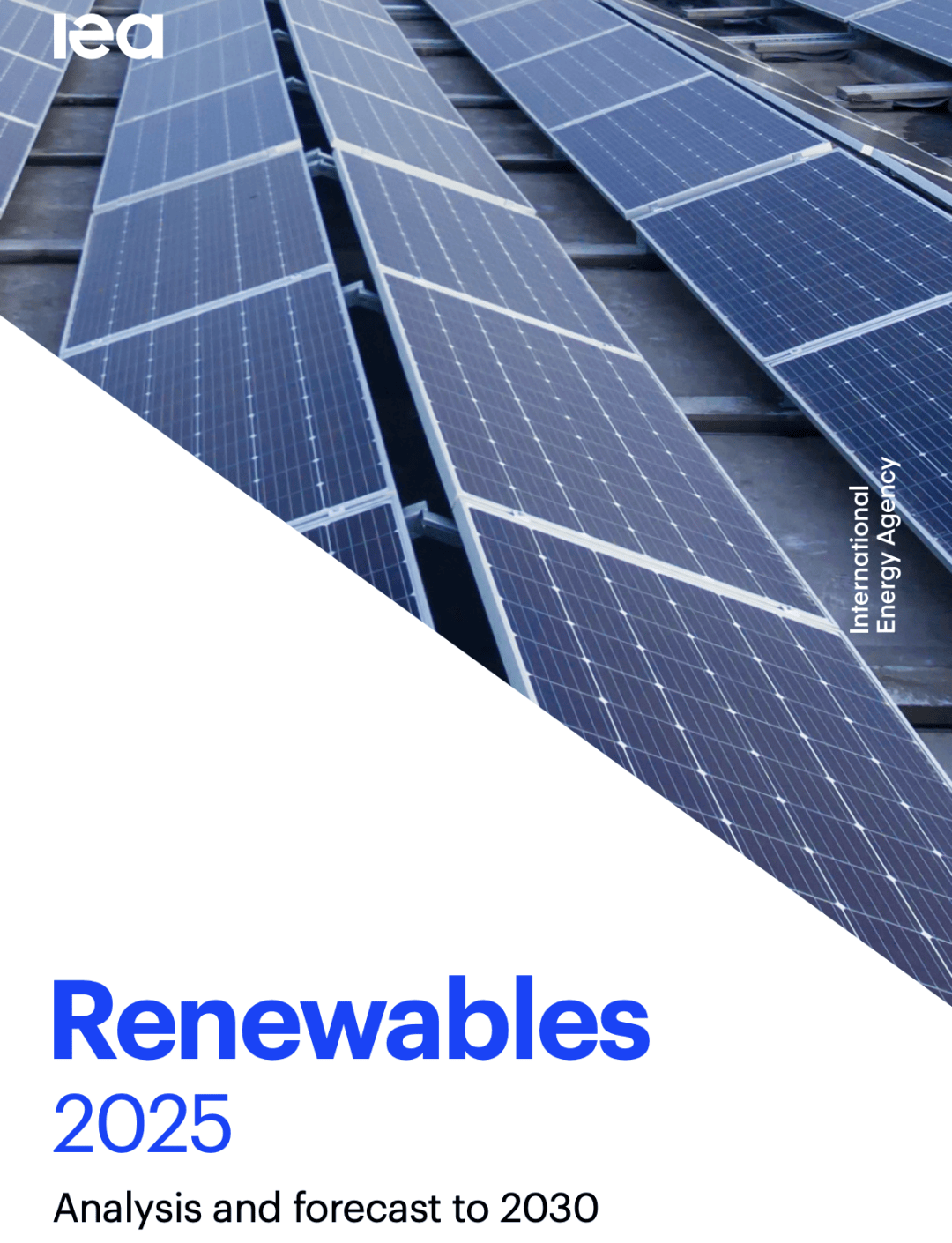
Core Insights - The International Energy Agency (IEA) report titled "Renewables 2025 Analysis and forecasts to 2030" provides a comprehensive analysis of the current state and future trends of global renewable energy deployment, highlighting key dynamics in technology, market, and policy [1] Group 1: Renewable Energy Growth - The report predicts an addition of 4600 GW of global renewable energy capacity from 2025 to 2030, equivalent to the total installed capacity of China, the EU, and Japan combined [3] - Solar photovoltaic (PV) technology is expected to be the main driver of this growth, contributing nearly 80% of the new capacity due to declining module costs, simplified approval processes, and widespread social acceptance [3] - Over 80% of countries are projected to experience renewable energy growth rates exceeding historical levels within the next five years, indicating a global urgency for clean energy [4] Group 2: Regional Insights - China is anticipated to contribute nearly 60% of the global new capacity, although recent policy shifts from fixed pricing to auction systems may slightly slow growth [7] - The U.S. market faces challenges due to the early expiration of tax credits, leading to downward revisions of wind and solar forecasts by nearly 60% and 40%, respectively [7] - The EU aims to increase the share of renewables from 32% to 43% post-energy crisis, while emerging economies like India and Brazil are achieving rapid growth through auction mechanisms and policy incentives [7] Group 3: Supply Chain and Technological Challenges - The report highlights the complexity and risks of the renewable energy supply chain, with China holding 75% of global solar component production and 90% of rare earth magnets for wind turbines [10] - Financial difficulties are prevalent among wind turbine manufacturers, with cumulative losses reaching $1.2 billion, while solar manufacturers are facing negative profit margins due to price wars [10] - The integration of renewable energy into the grid poses challenges, as the share of wind and solar power is expected to double from 15% to 30% by 2030, leading to increased instances of negative pricing and curtailment [10] Group 4: Economic and Environmental Benefits - From 2010 to 2023, newly added non-hydro renewable energy sources have avoided the import of 700 billion tons of coal and 400 billion cubic meters of natural gas, saving fuel-importing countries $1.3 trillion [11] - The penetration rate of renewables in the electricity sector is projected to rise from 32% in 2024 to 43% by 2030, with solar PV expected to surpass hydropower as the largest renewable energy source [11] - The average auction price for solar PV is expected to drop to $41 per MWh by 2024, although significant regional price disparities exist, with U.S. prices being more than double those in Europe [11] Group 5: Policy and Regulatory Framework - Policy design is identified as a decisive factor influencing renewable energy development, with competitive auctions becoming the mainstream mechanism covering 60% of utility-scale project development [14] - The EU's "Renewable Energy Directive III" sets a target of 42.5% renewable energy share by 2030, while the U.S. Inflation Reduction Act continues to support domestic manufacturing despite revisions [14] - Performance standards, such as carbon intensity requirements, are increasingly important, covering 30% of global biofuel demand and becoming key policy tools in regions like Canada and California [14] Group 6: Future Directions and Innovations - The report emphasizes the need for renewable energy expansion to align with system transformation, including the establishment of cross-regional electricity markets and the development of long-duration energy storage [18] - Innovations in technology, such as perovskite solar cells and floating wind farms, are expected to alter the competitive landscape, with significant investments in new technologies from the EU and China [17] - The integration of renewable energy into transportation and heating sectors is lagging but holds significant potential, with biofuels being mandated in aviation and heat pumps becoming a primary decarbonization tool in buildings [18]
国内首套变电站构网型风光储一体化系统投运!
中关村储能产业技术联盟· 2025-10-11 10:44
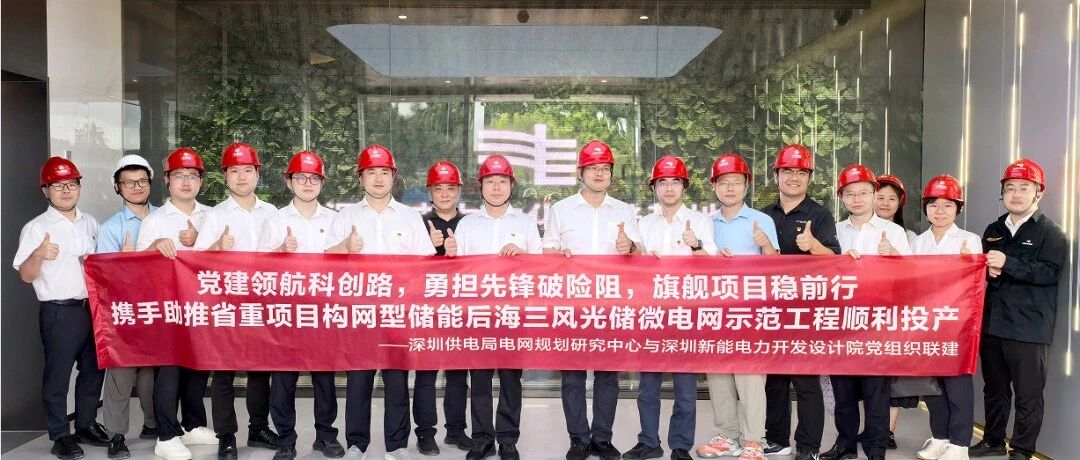
Core Insights - The article highlights the successful operation of China's first integrated wind-solar-storage system for real-time power supply assurance at substations, marking a significant breakthrough in the integration of storage technology with urban distribution networks [2][4]. Group 1: Project Overview - The project, located in Shenzhen's Nanshan district, integrates wind, solar, and storage technologies to create a localized smart energy microgrid, providing reliable and green power for the substation [4]. - The system utilizes a core "network-type" converter developed by Hezhang Electric, which supports intelligent control and optimization of power supply [2][4]. Group 2: Technological Innovation - The "network-type" storage technology transforms the traditional passive response of microgrids into an active mode that can maintain voltage and frequency, enhancing the stability and flexibility of the power system [7]. - Hezhang Electric's network-type storage converter features rapid autonomous voltage and frequency regulation, robust transient overload capacity, and seamless grid connection/disconnection capabilities [7][9]. Group 3: Key Functionalities and Benefits - The system enables seamless switching between grid power and clean distributed energy, facilitating a smooth transition towards carbon neutrality for the substation [9]. - It possesses autonomous and self-healing capabilities, allowing it to operate independently from the main grid and automatically manage distributed energy sources [9]. - The project is designed to be scalable, accommodating future demands without disrupting existing grid operations [10]. Group 4: Future Directions - Hezhang Electric aims to deepen collaboration in research and development, focusing on the integration of "source-network-load-storage" to support the evolving needs of distribution networks [10].

2026-2032年中国光伏智慧运维市场研究与前景趋势报告
Sou Hu Cai Jing· 2025-10-11 07:47
中国产业研究报告网发布的《2026-2032年中国光伏智慧运维市场研究与前景趋势报告》报告中的资料和数据来源于对行业公开信息的分析、对业内资深人 士和相关企业高管的深度访谈,以及共研分析师综合以上内容作出的专业性判断和评价。分析内容中运用共研自主建立的产业分析模型,并结合市场分析、 行业分析和厂商分析,能够反映当前市场现状,趋势和规律,是企业布局煤炭综采设备后市场服务行业的重要决策参考依据。 报告目录: 第1章:光伏智慧运维行业综述及数据来源说明 1.4本报告研究范围界定说明 1.5本报告数据来源及统计标准说明 3.7全球光伏智慧运维行业发展经验借鉴 第4章:中国光伏智慧运维行业产品进出口贸易状况及对外贸易依存度 4.1全球及中国光伏智慧运维行业产品发展差异分析 4.2中国光伏智慧运维行业产品进出口贸易整体状况 4.3中国光伏智慧运维行业产品进口贸易状况 4.3.1中国光伏智慧运维行业产品进口规模 4.3.2中国光伏智慧运维行业产品进口价格水平 4.3.3中国光伏智慧运维行业产品进口产品结构 4.3.4中国光伏智慧运维行业产品进口来源地 4.4中国光伏智慧运维行业产品出口贸易状况 4.4.1中国光伏智慧运维行 ...