扩大内需战略

Search documents
用新的伟大奋斗创造出新的历史伟业——从“十四五”看中国力量
Xin Hua Wang· 2025-10-21 15:20
Core Viewpoint - The article emphasizes the importance of China's "14th Five-Year Plan" in navigating complex internal and external environments, focusing on self-reliance and innovation to achieve modernization and economic growth [1][2][3]. Economic Growth and Contributions - During the "14th Five-Year" period, China's GDP surpassed 130 trillion yuan, with an average growth rate of 5.5% over the first four years, contributing approximately 30% to global economic growth [2]. - The total economic output is projected to approach 140 trillion yuan, with an expected increase of over 35 trillion yuan during this period [3]. Technological Innovation - The plan highlights the core role of innovation in modernization, with R&D expenditure expected to grow nearly 50% by 2024 compared to the end of the "13th Five-Year" period [5]. - High-tech manufacturing value added is projected to increase by 42% by 2024 compared to the end of the previous plan [3]. Domestic Market Development - The average contribution rate of domestic demand to economic growth is expected to reach 86.8% from 2021 to 2024, with final consumption contributing nearly 60% [6]. - The establishment of a unified national market is being accelerated, with strategic plans to enhance consumption and stabilize investment [6]. Reform and Opening Up - The "14th Five-Year" plan prioritizes deepening reform and opening up as key principles for economic and social development [7]. - Significant reforms have been initiated, including the implementation of the new market access negative list and the promotion of the private economy [9]. Future Outlook - The upcoming "15th Five-Year" plan is set to continue the trajectory of self-reliance and innovation, positioning China to make greater contributions to global development [10].
看图学习・非凡“十四五”丨“努力把各方面积极因素转化为发展实绩”
Sou Hu Cai Jing· 2025-10-19 01:14
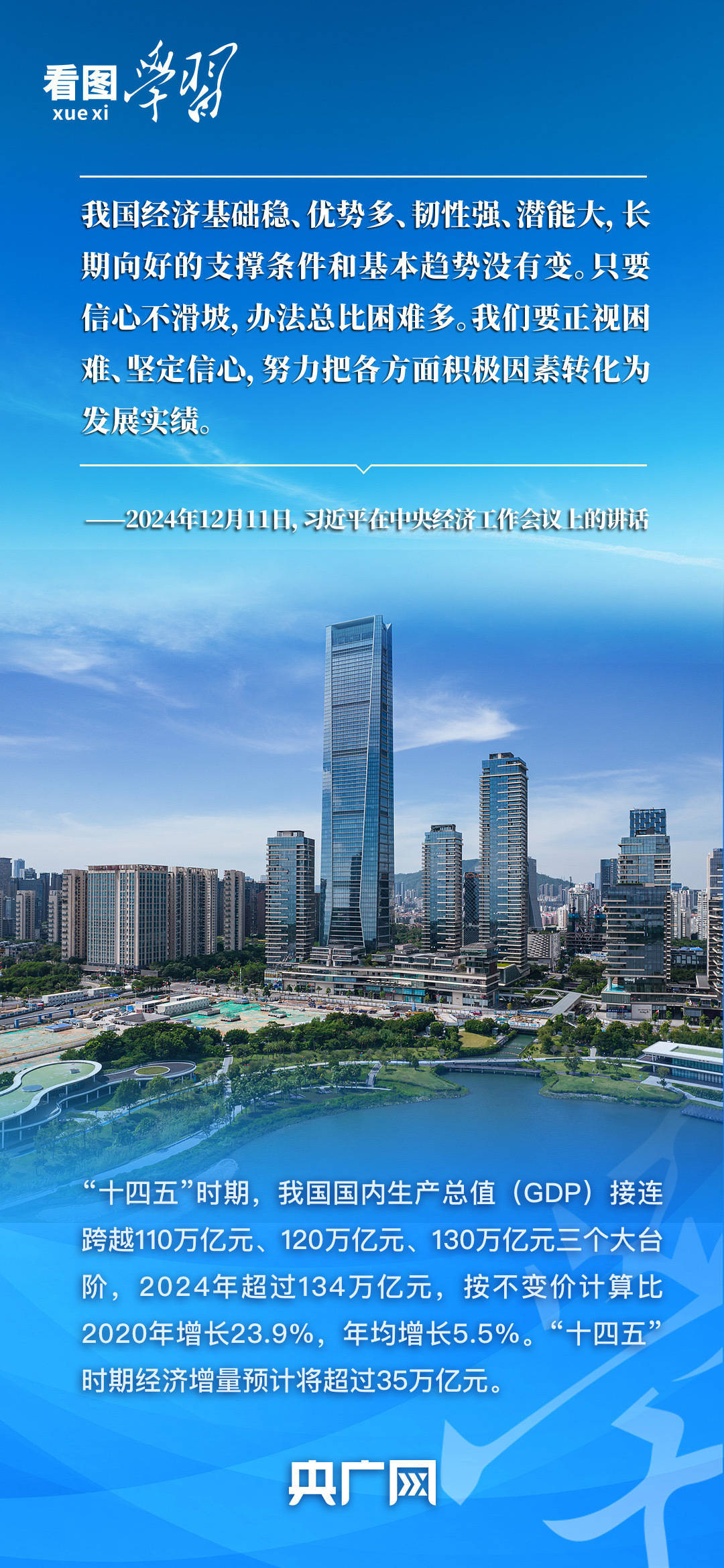
110万亿元、120万亿元、130万亿元……"十四五"期间,我国坚持稳中求进工作总基调,经济总量连续跨越新关口。2025年,中国经济总量预计约140万亿 元。习近平总书记曾多次指出,中国经济具有"基础稳、优势多、韧性强、潜能大"的特点,强调要坚持以推动高质量发展为主题,推动经济实现质的有效 提升和量的合理增长,为我们持续做好经济工作指明方向。 今年是"十四五"规划收官之年,也是"十五五"规划谋篇布局之年。我们要继续锚定奋斗目标,坚定信心、砥砺前行,努力把各方面积极因素转化为发展实 绩,书写经济高质量发展新篇章。 2022年10月16日,习近平在中国共产党第二十次全国 代表大会上的报告 2021-2024年,内需对我国经济增长平均贡献率 达86.8%;其中,最终消费支出平均贡献率为 59.9%,比"十三五"时期提高11.1个百分点。投 资对优化供给结构的关键性作用持续发挥, 2021 -2024年高技术产业投资年均增长13.5%,明显 快于整体投资增速。 要完善国家创新体系,激发各类创新主体 活力,瞄准世界科技前沿,在加强基础研 究、提高原始创新能力上持续用力,在突破 关键核心技术、前沿技术上抓紧攻关。 -20 ...

看图学习·非凡“十四五”丨“努力把各方面积极因素转化为发展实绩”
Yang Guang Wang· 2025-10-19 00:22
Core Insights - During the "14th Five-Year Plan" period, China's GDP has successively crossed the thresholds of 110 trillion yuan, 120 trillion yuan, and 130 trillion yuan, with an expected GDP of approximately 140 trillion yuan by 2025 [1][3] - The focus is on promoting high-quality development, emphasizing effective qualitative improvements and reasonable quantitative growth in the economy [1][6] Economic Growth - By 2024, China's GDP is projected to exceed 134 trillion yuan, representing a 23.9% increase from 2020, with an average annual growth rate of 5.5% [3] - The economic increment during the "14th Five-Year Plan" is expected to exceed 35 trillion yuan [3] Domestic Demand and Investment - From 2021 to 2024, domestic demand is projected to contribute an average of 86.8% to economic growth, with final consumption expenditure contributing 59.9%, an increase of 11.1 percentage points compared to the "13th Five-Year Plan" period [7] - High-tech industry investment is expected to grow at an average annual rate of 13.5% from 2021 to 2024, significantly outpacing overall investment growth [7] Innovation and R&D - By 2024, total R&D expenditure is expected to exceed 3.6 trillion yuan, maintaining China's position as the second-largest in the world [11] - By 2025, China aims to rank 10th in the global innovation index, improving by four positions since 2020, and leading in the number of top 100 innovation clusters globally [11] Market Development - The construction of a unified national market is essential for building a new development pattern and enhancing international competitiveness [14] - By 2024, the ratio of total social logistics costs to GDP is expected to decrease to 14.1%, with market-based electricity transactions accounting for 63% of total electricity consumption [16] International Trade - China has become a major trading partner for over 150 countries and regions, with the proportion of trade with Belt and Road Initiative countries rising from 29.1% in 2020 to 50.3% in 2024 [20] - The China-Europe Railway Express has reached 26 countries and over 200 cities in Europe, with a cumulative operation exceeding 110,000 trains [20] Manufacturing Sector - From 2021 to 2024, the actual growth rate of manufacturing value-added is expected to average 5.4%, maintaining a global share close to 30% and ranking first in the world for 15 consecutive years [26] - The proportion of equipment manufacturing in total industrial value-added is projected to increase from 33.7% in 2020 to 34.6% in 2024 [26]
“十五五”规划前瞻:扩大内需
Western Securities· 2025-10-17 07:25
Economic Growth Outlook - The "14th Five-Year Plan" is concluding this year, with the "15th Five-Year Plan" expected to maintain an annual growth target around 5%[1] - The average GDP growth during the "14th Five-Year Plan" was 5.5%, and if 5% is achieved in 2025, the average growth for this period will be 5.4%[1] - The contribution of domestic demand to economic growth during the "14th Five-Year Plan" was 87%, down from 95.7% in the "13th Five-Year Plan" period[2] Domestic Demand and Consumption - Final consumption contributed 59.6% to economic growth, up from 49% in the "13th Five-Year Plan" period[2] - Capital formation's contribution was 27.4%, down from 46.7% in the previous plan[2] - To expand consumption, stable employment and income growth are essential, alongside improvements in social security systems[2] Investment and Innovation - There is significant room for investment as China's per capita capital stock remains low compared to developed economies[3] - The focus during the "15th Five-Year Plan" will be on infrastructure, public safety, and technology innovation[3] - Enhancing total factor productivity is crucial for achieving the targeted 5% economic growth, with technology innovation being a core driver[3] Environmental and Trade Policies - China aims to peak carbon emissions before 2030, with non-fossil energy consumption expected to reach 19.8% by 2024, exceeding the "14th Five-Year Plan" target of 20%[7] - The trade surplus as a percentage of GDP has increased during the "14th Five-Year Plan," and efforts will continue to balance imports and exports in the "15th Five-Year Plan"[7]
消费稳盘,外贸提质,聊城“十四五”商务发展动能澎湃
Qi Lu Wan Bao Wang· 2025-10-17 02:00
Core Insights - The article highlights the achievements of Liaocheng in promoting economic and social development during the "14th Five-Year Plan" period, focusing on consumption, foreign trade, and investment growth [1][4]. Consumption Growth - The city has prioritized the recovery and expansion of consumption, with retail sales of consumer goods expected to reach 108.53 billion yuan in 2024, a 35.5% increase from the end of the "13th Five-Year Plan," with an average annual growth rate of 7.89% [1]. - In the first half of this year, retail sales reached 66.79 billion yuan, reflecting a year-on-year growth of 7% [1]. Policy Initiatives - Over 20 consumption promotion policies have been implemented, including measures to boost appliance consumption and special action plans to stimulate spending [2]. - The city has launched a digital platform for recycling old appliances, which has driven consumption by 9.2 billion yuan [2]. Supply Chain and Infrastructure Development - Upgrades to commercial areas and the establishment of a "one-minute convenience living circle" have been successful, with several local businesses recognized for their sustainability efforts [2]. - The city has initiated the creation of "old brand" businesses, with 25 local brands recognized as "old brands" [2]. Digital Economy and E-commerce - The development of smart business districts and stores has progressed, with 22 new brand stores introduced [3]. - Liaocheng has established nine provincial-level e-commerce live streaming bases, contributing to the growth of local e-commerce enterprises [3]. Foreign Trade and Investment - The total import and export value is projected to reach 62.92 billion yuan in 2024, a 55.6% increase from the end of the "13th Five-Year Plan," with an average annual growth rate of 11.7% [4]. - The city has established trade relations with 205 countries and regions, with exports to "Belt and Road" partners reaching 21.94 billion yuan, a 146% increase [5]. Foreign Investment - The city has improved its foreign investment environment, with 249 new foreign enterprises established and actual foreign investment in manufacturing reaching 584 million USD [6]. - Liaocheng has also seen growth in outbound investment, with 47 overseas investment enterprises and a total investment of 388 million USD [6]. Development Zones - Development zones contribute significantly to the local economy, accounting for over 50% of tax revenue and 70% of industrial investment [7]. - The city has cultivated nine industrial clusters with over 10 billion yuan in output, including significant clusters in non-ferrous metals and green food [7]. Collaborative Development - Liaocheng's development zones have engaged in cooperative projects with other advanced zones in the province, enhancing resource sharing and industrial alignment [8].
统筹供需的实践成效与理论创新
Jing Ji Ri Bao· 2025-10-14 01:02
Core Viewpoint - The article emphasizes the importance of balancing total supply and total demand in China's macroeconomic governance to achieve high-quality development and a stable economic cycle [1][3][6]. Summary by Sections Understanding Total Supply and Demand - Total supply refers to the total amount of final products and services that a country or region can provide within a certain period, reflecting optimal production capacity under specific conditions [2]. - Total demand encompasses the overall demand for products and services in society, including domestic and foreign demand, influenced by factors such as consumer spending, investment, net exports, government spending, and monetary and fiscal policies [2]. Historical Context and Policy Evolution - Historically, China has prioritized the balance between total supply and total demand, as seen in various economic plans since the "Eighth Five-Year Plan" [3]. - The focus has shifted towards achieving both short-term stability and long-term growth, with an increasing emphasis on the coordination of supply and demand in response to changing economic conditions [3]. Supply-Side Structural Reform - Supply-side structural reform is identified as a key strategy to optimize total supply and better adapt to changes in total demand, initiated by President Xi Jinping in 2015 [4]. - The goal is to enhance the quality of the supply system, reduce ineffective supply, and increase effective and high-end supply to improve adaptability and flexibility [4]. Demand-Side Management - Demand-side management has been emphasized as a complementary approach to supply-side reforms, particularly in light of insufficient domestic demand and weak consumption [5]. - The strategy includes expanding domestic demand as a critical focus for constructing a new development pattern [5]. Coordinated Efforts for Dynamic Balance - The article highlights the need for coordinated efforts between supply-side and demand-side management to achieve a dynamic balance, with a focus on enhancing the adaptability and balance of supply and demand [6][14]. - It stresses the importance of using various macroeconomic policies, including stability, growth, and structural policies, to achieve this balance [16]. Breakthroughs in Macroeconomic Theory - The article discusses the limitations of Western macroeconomic theories, which primarily focus on demand management, and contrasts this with China's approach of integrating supply and demand considerations [7][10]. - It argues that the new understanding of balancing total supply and total demand provides a theoretical foundation for improving macroeconomic governance and addressing challenges in the digital economy [11][12]. Future Directions - The article calls for a systematic approach to ensure that supply and demand are dynamically balanced at a higher level, emphasizing the need for continuous supply-side structural reforms and the expansion of domestic demand [14][15]. - It also highlights the importance of improving the quality of investments and enhancing the overall investment structure to support sustainable economic growth [15].
陈彦斌:统筹供需的实践成效与理论创新
Jing Ji Ri Bao· 2025-10-14 00:34
Core Viewpoint - The article emphasizes the importance of balancing total supply and total demand in China's macroeconomic governance to achieve high-quality development and a stable economic cycle [1][3][10]. Summary by Sections Understanding Total Supply and Demand - Total supply refers to the total amount of final products and services that a country or region can provide within a certain period, reflecting optimal production capacity under specific conditions [2]. - Total demand encompasses the overall demand for products and services in society, including domestic and foreign demand, influenced by factors such as consumer spending, investment, net exports, government spending, and monetary and fiscal policies [2]. Historical Context and Policy Evolution - Historically, China has prioritized the balance between total supply and total demand, as seen in various economic plans since the "Eighth Five-Year Plan" [3]. - The focus has shifted towards a more integrated approach to macroeconomic governance, recognizing the need for both short-term stability and long-term growth [3]. Supply-Side Structural Reform - Supply-side structural reform is identified as a key strategy to optimize total supply and better adapt to changes in total demand, initiated by President Xi Jinping in 2015 [4]. - The goal is to enhance the quality of the supply system, reduce ineffective supply, and increase effective and high-end supply to improve adaptability and flexibility [4]. Demand-Side Management - Demand-side management has been emphasized as a complementary strategy to supply-side reforms, particularly in light of insufficient domestic demand and weak consumption [5]. - The strategy aims to expand effective demand and create a complete internal demand system, which is crucial for constructing a new development pattern [5]. Coordinated Efforts for Dynamic Balance - The article discusses the need for coordinated efforts from various departments to achieve a dynamic balance between total supply and total demand, enhancing adaptability and stability [6]. - This includes expanding effective investment and improving supply quality to stimulate new demand [6]. Breakthroughs in Western Macroeconomic Theory - The article critiques Western macroeconomic theories for focusing primarily on demand management and neglecting supply-side factors, particularly in the context of the digital economy [7][9]. - It argues that China's approach to balancing total supply and total demand offers a more comprehensive framework for macroeconomic governance [10][11]. Characteristics of the New Understanding - The new understanding emphasizes the importance of both internal and external demand, advocating for a balanced approach to expanding domestic demand while also stabilizing and expanding external demand [12]. - It highlights the need to maintain total supply at a reasonable level while optimizing supply structure to prevent macroeconomic fluctuations [13]. Achieving Higher-Level Dynamic Balance - The article stresses the importance of achieving a higher-level dynamic balance where demand drives supply and supply creates demand [14]. - It calls for continuous supply-side structural reforms and a focus on high-quality supply to lead demand and stimulate economic growth [14]. Policy Coordination - Effective macroeconomic governance requires the coordination of stabilization, growth, and structural policies to enhance consistency in macroeconomic policy direction [17]. - The article advocates for a comprehensive approach that integrates various policy tools to achieve a balanced economic environment [17].
赵义良:深刻理解运用“五个必须统筹”
Jing Ji Ri Bao· 2025-09-25 23:56
Group 1: Economic Stability and Challenges - The overall operation of the economy is stable and shows strong vitality and resilience, but it faces several risks and challenges [1] - Emphasis on the need to balance effective markets and proactive government roles, total supply and total demand, and the cultivation of new and the updating of old driving forces [1][2] Group 2: Market and Government Relationship - The relationship between government and market is a core issue in economic reform, requiring a balance that allows for both market efficiency and government oversight [2] - The market's role in resource allocation is crucial, and the government must address market failures while maintaining order [2][3] Group 3: Supply and Demand Dynamics - Total supply and total demand must be in dynamic balance for a healthy socialist market economy, with a focus on both sides working together to enhance economic growth [4][5] - Demand-side management focuses on short-term adjustments, while supply-side management aims to improve structural issues [4] Group 4: New and Old Driving Forces - The cultivation of new driving forces and the updating of old ones are interconnected, with technology innovation leading the way for new industries while upgrading traditional sectors [7][8] - The process of transitioning from old to new driving forces requires a careful balance and integration of both [7][8] Group 5: Resource Optimization - The relationship between optimizing new resources and revitalizing existing ones is essential for improving resource allocation efficiency [9][10] - Revitalizing existing resources can create opportunities for new investments, enhancing overall economic development [10] Group 6: Quality and Quantity in Economic Development - The relationship between enhancing quality and expanding total economic volume is a dialectical unity, where both aspects are necessary for sustainable growth [11][12] - Economic development must focus on both quantity and quality to meet the higher demands of modernized socialist construction [12][13]
深刻理解运用“五个必须统筹”
Jing Ji Ri Bao· 2025-09-25 22:14
Group 1: Economic Stability and Challenges - The overall operation of the economy is stable and shows strong vitality and resilience, but it faces several risks and challenges [1] - Emphasis on the importance of balancing various economic relationships, including effective market and proactive government, total supply and total demand, and new and old driving forces [1] Group 2: Market and Government Relationship - The relationship between government and market is a core issue in economic reform, with a focus on achieving a balance that allows for both market efficiency and government oversight [2] - The market's role in resource allocation is crucial, and the government must address market failures while ensuring a well-functioning market system [2][3] Group 3: Supply and Demand Dynamics - Total supply and total demand are interrelated aspects of market economy, and their dynamic balance is essential for healthy economic operation [4] - Effective economic management requires coordinated efforts from both supply and demand sides to ensure strong interaction and balance [4][5] Group 4: New and Old Driving Forces - The cultivation of new driving forces and the updating of old driving forces are interconnected, with new forces emerging from technological innovation and old forces needing transformation [7][8] - Emphasis on the importance of integrating technological advancements into traditional industries to facilitate a smooth transition between new and old driving forces [8] Group 5: Resource Optimization - The relationship between optimizing new resources and revitalizing existing resources is crucial for improving resource allocation efficiency [9][10] - Revitalizing existing resources can create opportunities for new resource optimization, leading to enhanced economic development [10] Group 6: Quality and Quantity in Economic Development - The relationship between enhancing quality and expanding total quantity is a dynamic process essential for modernizing the economy [11][12] - Quality improvements provide the necessary drive for quantity growth, while quantity accumulation lays the foundation for quality enhancement [12][13]
三部门印发方案,部署15项任务:更好发挥轻工业稳增长作用
Ren Min Ri Bao Hai Wai Ban· 2025-09-23 04:00
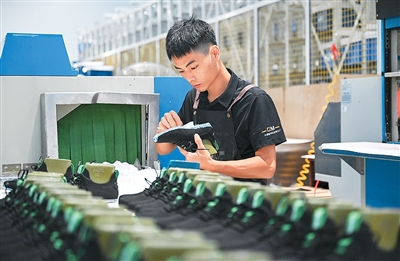
Core Viewpoint - The Ministry of Industry and Information Technology, along with other departments, has issued the "Light Industry Stabilization Growth Work Plan (2025-2026)", emphasizing the role of light industry in stabilizing growth, promoting consumption, and benefiting people's livelihoods in the coming years [1][2]. Group 1: Industry Overview - Light industry is a key sector in China's economy, contributing significantly to consumption, exports, and employment, with 140,000 enterprises generating revenues of 23.2 trillion yuan and profits of 1.5 trillion yuan in 2024 [2]. - The light industry accounted for 27.4% of the scale of manufacturing enterprises, 16.7% of total profits, and employed 1,792 million people, highlighting its importance in the national economy [2]. Group 2: Development Goals and Strategies - The "Work Plan" aims for stable growth in key industries and the basic stability of enterprise operating efficiency from 2025 to 2026, with a focus on emerging sectors such as smart home products and sports fashion [2]. - The plan includes the promotion of 300 upgraded and innovative products and the cultivation of 10 specialized industrial zones, each exceeding 100 billion yuan in scale [2]. Group 3: Supply-Side Structural Reforms - The plan integrates supply-side structural reforms with strategies to expand domestic demand, outlining 15 tasks to enhance supply, promote consumption, stabilize exports, and improve ecological sustainability [2][3]. - Specific measures include accelerating product innovation, enhancing quality assurance, and strengthening brand cultivation to address issues like supply structure imbalance and quality concerns [3]. Group 4: Export Strategies - The light industry has a significant export volume, nearing 1 trillion USD, representing over 30% of the global market share, but faces challenges due to global economic slowdowns and trade environment deterioration [3]. - The "Work Plan" proposes measures to optimize trade structure, support brand globalization, and develop new foreign trade models, including cross-border e-commerce [5]. - It emphasizes the importance of public services, such as establishing comprehensive service ports and enhancing international trade compliance to support enterprises in navigating global markets [5].