
经济全球化

Search documents
今年APEC会议有哪些成果?专家梳理出三大亮点
Xin Hua Wang· 2025-11-04 05:37
Core Viewpoint - The APEC meeting in South Korea emphasized the need for enhanced cooperation amid global economic challenges and protectionism, signaling a positive outlook for both APEC and the world economy [1] Group 1: Economic Cooperation - The meeting resulted in the adoption of the "Gyeongju Declaration," which sends a strong message for increased collaboration among member economies [1] - Experts believe that the meeting's outcomes will contribute to a more stable global economic environment, particularly in the context of rising uncertainties [1] Group 2: China's Role - China proposed an inclusive approach to economic globalization and aims to build an Asia-Pacific community, outlining a clear path through the "Five Common" initiatives [1] - The upcoming year marks the beginning of China's "14th Five-Year Plan," which is expected to inject greater vitality into the development of the Asia-Pacific region through high-quality growth and openness [1]
【国际经济观察】别指望中美相争会有“渔翁”得利
Sou Hu Cai Jing· 2025-11-04 00:35
Group 1 - The meeting between the leaders of China and the United States in Busan, South Korea, has injected much-needed certainty into the often turbulent bilateral relationship, emphasizing mutual prosperity and cooperation [2] - The essence of China-U.S. economic relations is mutual benefit rather than a zero-sum game, with historical trade figures showing a significant increase from under $2.5 billion in 1979 to nearly $68.83 billion in 2024 [2] - The imposition of high tariffs by the U.S. earlier this year led to a near halt in bilateral trade, resulting in rising prices for American consumers and increased supply chain costs for U.S. businesses [2] Group 2 - Historical evidence suggests that trade wars yield no winners, as seen during the Great Depression, with ongoing trade conflicts lowering global economic growth expectations [3] - The interconnectedness of global supply chains means that disruptions in U.S.-China relations can have far-reaching effects, impacting third-party countries that may hope to benefit from the situation [3] - The complexity of global supply chains makes the idea of third parties profiting from U.S.-China tensions unrealistic, as any short-term gains are often offset by larger economic losses [3] Group 3 - Healthy and stable China-U.S. relations depend on rational recognition of shared interests and pragmatic management of differences, with recent discussions leading to a preliminary consensus on tariff issues [4] - Economic cooperation should serve as a stabilizing force in China-U.S. relations, focusing on long-term benefits rather than falling into a cycle of retaliation [4] - The absence of cooperation between China and the U.S. could hinder the resolution of global challenges such as economic recovery, climate change, and public health crises [4]


中经评论:别指望中美相争会有“渔翁”得利
Jing Ji Ri Bao· 2025-11-04 00:04
Group 1 - The meeting between the leaders of China and the United States in Busan has injected much-needed certainty into the often turbulent bilateral relationship, emphasizing mutual achievement and shared prosperity [1] - The essence of Sino-U.S. economic relations is mutual benefit rather than a zero-sum game, as evidenced by the significant increase in trade from under $2.5 billion in 1979 to nearly $688.3 billion in 2024, with bilateral investment exceeding $260 billion [1] - The imposition of high tariffs by the U.S. at the beginning of the year led to a near halt in bilateral trade, resulting in rising prices for American consumers and increased supply chain costs for businesses [1] Group 2 - Historical evidence shows that trade wars yield no winners, as seen with the Smoot-Hawley Tariff Act exacerbating the Great Depression, and ongoing trade conflicts are lowering global economic growth expectations [2] - The interconnectedness of global supply chains means that disruptions in U.S.-China relations can have far-reaching impacts, affecting third-party countries that may mistakenly believe they can benefit from the situation [2] - The complexity of international supply chains implies that any attempts to decouple will lead to significant costs for all involved, with third countries facing additional expenses and limited benefits from shifting orders [2] Group 3 - A healthy and stable Sino-U.S. relationship relies on rational recognition of shared interests and pragmatic management of differences, with recent discussions leading to a preliminary consensus on tariff issues [3] - Economic cooperation should be the cornerstone of Sino-U.S. relations, focusing on long-term benefits rather than falling into a cycle of retaliation [3] - The future of Sino-U.S. relations hinges on moving beyond short-sighted competitive thinking to genuinely practice mutual achievement and shared prosperity, with the recent meeting serving as a positive signal for ongoing dialogue [3]
别指望中美相争会有“渔翁”得利
Jing Ji Ri Bao· 2025-11-03 23:07
Group 1 - The meeting between the leaders of China and the United States in Busan has injected much-needed certainty into the often turbulent Sino-U.S. relationship, emphasizing mutual achievement and shared prosperity [1] - The essence of Sino-U.S. economic relations is mutual benefit rather than a zero-sum game, with trade volume increasing from less than $2.5 billion in 1979 to nearly $688.3 billion in 2024, and bilateral investment stock exceeding $260 billion [1] - The unilateral imposition of high tariffs by the U.S. at the beginning of the year led to a near halt in bilateral trade, resulting in rising prices for U.S. consumers and increased supply chain costs for businesses [1] Group 2 - Historical evidence shows that trade wars yield no winners, as seen with the Smoot-Hawley Tariff Act exacerbating the Great Depression, and ongoing trade conflicts are lowering global economic growth expectations [2] - The interconnectedness of global supply chains means that disruptions in major economies will have ripple effects, making it unrealistic for third parties to benefit from Sino-U.S. tensions [2] - The complexity of international supply chains implies that any attempts to decouple will incur significant costs, and the short-term benefits of order shifts are fragile [2] Group 3 - Healthy and stable Sino-U.S. relations depend on rational recognition of shared interests and pragmatic management of differences, with recent discussions leading to a preliminary consensus on tariffs [3] - Economic cooperation should be the cornerstone of Sino-U.S. relations, focusing on long-term benefits rather than falling into a cycle of retaliation [3] - The future of Sino-U.S. relations hinges on moving beyond short-sighted competitive thinking to genuinely practice mutual achievement and shared prosperity, with the Busan meeting serving as a positive signal [3]
开放的大门越开越大 发展的机遇世界共享——写在第八届中国国际进口博览会开幕之际
Ren Min Ri Bao· 2025-11-03 23:07
Core Viewpoint - The 8th China International Import Expo (CIIE) is set to showcase China's commitment to high-level openness and global trade cooperation, emphasizing the importance of shared development opportunities with the world [1][2][3]. Group 1: Event Overview - The CIIE will feature participation from 155 countries, regions, and international organizations, with 4,108 foreign enterprises exhibiting across an area exceeding 430,000 square meters, marking a new record in scale [2]. - Six countries, including Thailand and the UAE, will serve as guest countries, and the event will host over 80 supporting activities, including trade negotiations and investment promotion [2]. Group 2: China's Commitment to Openness - The CIIE serves as a platform for China to demonstrate its ongoing commitment to high-level openness, aiming to make the Chinese market a significant opportunity for the world [3][4]. - China has been actively expanding its open policies, including the establishment of new platforms like the CIIE, and reducing the negative list for foreign investment [3][4]. Group 3: Economic Impact - The CIIE has transformed previously lesser-known products from developing countries into popular items in China, contributing to local employment and development [4]. - China has become a major trading partner for over 150 countries and regions, with imports and services expected to exceed $15 trillion during the 14th Five-Year Plan period [4][9]. Group 4: Global Cooperation and Innovation - The CIIE is positioned as a vital bridge for global small and medium-sized enterprises to access the Chinese market, reinforcing the idea that open cooperation is essential for enhancing international economic vitality [5][9]. - The event will showcase numerous innovative products and technologies, highlighting China's role as a global innovation hub [7][8]. Group 5: Support for Developing Countries - The CIIE has consistently provided opportunities for least developed countries, with a 23.5% increase in participation from these nations this year [11]. - China is committed to supporting South-South cooperation and ensuring that development benefits are shared more equitably among nations [12][13].
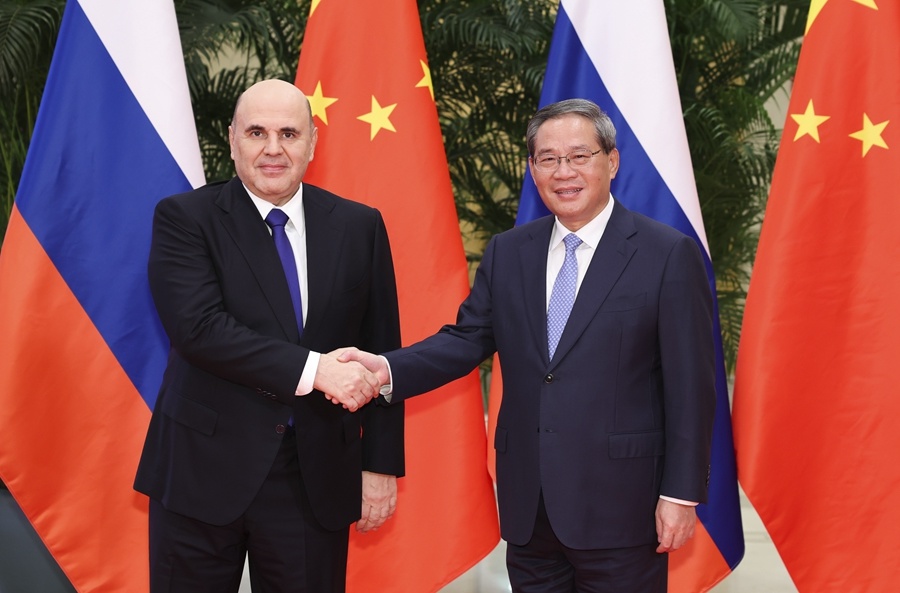
中俄总理杭州主持定期会晤
Huan Qiu Shi Bao· 2025-11-03 22:55
Group 1 - The core viewpoint of the meeting emphasizes the importance of strategic cooperation between China and Russia, with a focus on enhancing economic, cultural, and tourism exchanges [3][4][5] - Both countries aim to optimize and expand cooperation mechanisms to invigorate economic integration, particularly in border cities and tourism [3][4] - The meeting highlighted the historical peak of the comprehensive strategic partnership between China and Russia, with a commitment to deepen collaboration across various fields [3][4] Group 2 - The meeting resulted in agreements to enhance mutual investments and explore new areas of cooperation, particularly in Arctic navigation and transportation logistics [4] - In the agricultural sector, Russia has opened new export channels for malt and wheat bran to China, with expectations of increased grain exports to China [4] - Following the implementation of a visa-free policy for Russian citizens traveling to China, there are expectations for a significant increase in tourism exchanges between the two countries [5]
“推动经济全球化进程的关键合作平台”
Ren Min Ri Bao· 2025-11-03 22:20
Core Insights - The APEC (Asia-Pacific Economic Cooperation) is enhancing trade and investment scales in the region, becoming a key platform for promoting economic globalization [2] - Current global uncertainties, including rising protectionism, supply chain restructuring, and climate change challenges, pose systemic risks to businesses [2] - The theme of the upcoming APEC Business Leaders Summit is "Bridges, Business, Beyond," emphasizing the role of businesses as innovation leaders and the importance of government-business collaboration [2] Trade and Investment - APEC aims to promote trade and investment liberalization and facilitation, continuously advancing regional economic integration [2] - There is a call for expanding new cooperation areas to adapt to the changing trade landscape, particularly in artificial intelligence and digital transformation [2] - Strengthening digital infrastructure and technical standard cooperation is essential to reduce trade barriers and improve institutional alignment [2] Sustainable Development - Collaboration on sustainable growth and addressing climate change will be crucial for driving regional economic integration [2] - The APEC meeting will focus on key global issues such as artificial intelligence cooperation and demographic changes, highlighting the importance of unity among member economies [3] - The upcoming APEC meeting in China in 2026 is seen as a significant opportunity for regional cooperation and development [3]

“推动经济全球化进程的关键合作平台”——访韩国大韩商工会议所常务副会长朴一俊
Ren Min Ri Bao· 2025-11-03 22:12
Group 1 - The core viewpoint emphasizes that the Asia-Pacific Economic Cooperation (APEC) is a key platform for promoting economic globalization through the creation of a free and open trade and investment environment, significantly enhancing regional trade and investment scale [1][2] - The theme of the upcoming APEC Business Leaders Summit is "Bridges, Business, Beyond," advocating for businesses to act as innovation leaders and enhance connections between governments and enterprises to create a better future [1] - APEC aims to promote trade and investment liberalization and facilitation, continuously advancing regional economic integration, and emphasizes the need to explore new cooperation areas to adapt to new trade patterns [1][2] Group 2 - The Asia-Pacific region is characterized by a closely interconnected and interdependent economic circle formed through trade, investment, and supply chains, with a focus on common prosperity and unity for mutual development [2] - The upcoming APEC meeting in China in 2026 is viewed as a significant opportunity for regional cooperation and development, with expectations for discussions on artificial intelligence collaboration and responses to demographic changes [2] - Strengthening cooperation and unity among APEC members is deemed more important than ever, with the aim of building an open, vibrant, resilient, and peaceful Asia-Pacific community for the benefit of its people [2]
李强同俄罗斯总理米舒斯京共同主持中俄总理第三十次定期会晤icon_voice_onicon_voice
Xin Hua She· 2025-11-03 13:51
Group 1 - The core viewpoint of the meeting is the strengthening of the China-Russia comprehensive strategic partnership, emphasizing mutual support and cooperation in various fields, including trade, investment, and cultural exchanges [1][2]. - Both countries' leaders highlighted the importance of high-level exchanges and strategic communication to enhance cooperation and safeguard mutual development and security interests [1][2]. - The meeting resulted in the signing of the Joint Communiqué of the 30th Regular Meeting of the China-Russia Prime Ministers, along with agreements in customs and satellite navigation cooperation [3]. Group 2 - The Chinese side expressed its commitment to deepen cooperation in energy, agriculture, digital economy, and cultural exchanges, while also promoting the "Year of Russian Culture in China" [2]. - Both leaders acknowledged the significant progress made by various cooperation committees over the past year and emphasized the need to implement the important consensus reached by the two heads of state [2]. - The meeting underscored the importance of collaboration within multilateral frameworks such as the Shanghai Cooperation Organization and BRICS to promote a multipolar world and inclusive economic globalization [2].
为亚太和世界提供新机遇
Jing Ji Ri Bao· 2025-11-03 00:07
Group 1 - The APEC meeting in Gyeongju, South Korea, highlighted the need for deeper economic cooperation and integration in the Asia-Pacific region, with a focus on inclusive economic globalization [1][2] - The Regional Comprehensive Economic Partnership (RCEP) has strengthened trade ties among member countries, with China and ASEAN being each other's largest trading partners for five consecutive years [1][2] - The IMF projects a 4.5% economic growth rate for the Asia-Pacific region this year, indicating its leading role in global development [1] Group 2 - China proposed five key suggestions to promote inclusive economic globalization and address regional challenges, emphasizing the importance of multilateral trade systems and regional openness [2] - Over the past five years, China's foreign investment has grown by over 5% annually, reflecting its commitment to open cooperation and regional economic integration [3] - As the host of APEC in 2026, China aims to expand its high-standard free trade network and continue to provide significant market opportunities and advanced technologies for the Asia-Pacific region [4]