AGI

Search documents
Google DeepMind chief warns AI investment looks ‘bubble-like’ | FT Interview
Financial Times· 2026-01-24 09:09
Dennis, Google launched its most powerful model, Gemini 3, just just a few months ago. It was received with a lot of excitement. Where do you think um Google is right now on the on the AI race.>> Well, we're we're we're very happy, as you say, with the last model we released, Gemini 3. Uh it's topping, you know, pretty much all the leaderboards. So, it's a great model.Uh feedback's been great from our users and and and enterprise customers. Um but I think overall we have had a really good year last year whe ...


哈佛老徐:马斯克最新3小时访谈,白领正在被AI快速替代,普通人真正的出路在哪里?
老徐抓AI趋势· 2026-01-24 01:16
Core Viewpoint - The article discusses Elon Musk's recent interview, emphasizing the imminent arrival of AGI (Artificial General Intelligence) and its potential to replace a significant portion of white-collar jobs by 2030, while also highlighting the opportunities for those who adapt to these changes [2][4][8]. AGI and Its Implications - Musk predicts that AGI will likely emerge before 2030, capable of performing most white-collar jobs, enabling true autonomous driving, and allowing robots to handle complex tasks in various industries [4][8]. - The concept of the "singularity" is introduced, suggesting that as society approaches AGI, traditional predictive models will fail, leading to unpredictable and rapid societal changes [6][8]. Impact on White-Collar Jobs - Musk defines white-collar jobs as those primarily involving information processing rather than physical production, including roles like teachers, accountants, and financial professionals [9]. - He asserts that up to 95% of white-collar jobs could be replaced, not necessarily leading to unemployment but rather a transformation of job roles [11]. - The current capabilities of AI are sufficient to replace many white-collar jobs, with the main barriers being organizational inertia and a lack of skilled personnel [13]. Future Work Dynamics - The future workforce will be divided into two categories: those who work independently and those who leverage AI and organizational resources, with the latter being more secure [14]. - The current education system does not adequately prepare individuals for the skills needed in an AI-driven environment, leading to increased anxiety among highly educated individuals [14]. Entrepreneurship in the AI Era - Musk emphasizes that AI will lower the barriers to entrepreneurship, allowing small teams to create successful companies, potentially leading to the rise of "one-person unicorns" [14]. - A recent example includes a company with only four employees being acquired for $100 million, which would have been nearly impossible in the past [14]. Real Estate Market Considerations - The article suggests that if white-collar jobs are significantly replaced, the demand structure supporting housing prices will change, as white-collar workers have historically been the primary homebuyers [16]. Investment Strategies in AI - The article advises against betting all assets on investments heavily reliant on white-collar income until the broader trends are clearer [19]. - It highlights the importance of understanding AI's role in transforming production, decision-making, and execution, with a focus on the underlying infrastructure such as chips, energy, and computational power [20]. AI Investment Insights - The article stresses the need for a comprehensive understanding of AI investment opportunities, distinguishing between genuine opportunities and noise in the market [21]. - It emphasizes the importance of recognizing sustainable business models in the AI sector, focusing on companies that can create self-reinforcing growth cycles [23]. Current Market Dynamics - The article notes that the current earnings season is a critical time for AI investments, with companies like TSMC and Nvidia showing strong demand for AI-related products [26].
X @BSCN
BSCN· 2026-01-23 23:25
🤖 OpenAI, Anthropic, Google. Closed labs control AGI.@SentientAGI says no. Open models. Open agents. Open data. All coordinated through $SENT. Stake on builders. Earn from usage. No gatekeepers.44% of tokens to community. The full deep dive ⬇️BSCN (@BSCNews):https://t.co/SepB3V9dY5 ...
X @Elon Musk
Elon Musk· 2026-01-23 16:15
RT Peter H. Diamandis, MD (@PeterDiamandis)Everyone is talking about AGI, but nobody can agree on what it actually means. How would you define it? ...
在OpenAI“创新已经变得困难”,离职高管深喉爆料
3 6 Ke· 2026-01-23 13:12
Group 1 - OpenAI is facing an innovation dilemma due to rising costs and growth pressures, which have affected its appetite for risk and hindered cross-team collaboration [3][8] - The rise of Google is attributed to OpenAI's failure to maintain its competitive edge, suggesting that OpenAI should have continued to lead the market [3][4] - The AI industry is experiencing a convergence among top companies, making it difficult for researchers to pursue innovative paths outside mainstream machine learning paradigms [3][4] Group 2 - The talent war in the AI sector has become dramatic, with frequent job changes among researchers, leading to less time spent on actual work [4][42] - Innovation is not solely driven by star researchers; the company's ability to foster a sense of personal responsibility and an environment that allows exploration is crucial [4][5] - The lack of focus, rather than a shortage of computing power, is identified as a key barrier to innovation within AI labs [5][19] Group 3 - The timeline for achieving Artificial General Intelligence (AGI) is projected around 2029, with critical areas of focus being architectural innovation and continuous learning [5][30] - Reinforcement learning is making a comeback, as historical patterns show that good ideas often resurface, but the challenge lies in determining the right timing for their importance [5][24] Group 4 - OpenAI's organizational structure is limiting its ability to support certain research directions, leading to a realization that some desired research cannot be pursued within the current framework [9][10] - The industry is witnessing a lack of diversity in approaches, with many companies following similar technological paths, which is seen as a regrettable trend [15][17] Group 5 - The current competitive landscape is characterized by a few major AI companies using similar technological foundations, resulting in minimal differentiation among their products [15][17] - The pressure to deliver results and maintain competitiveness is causing organizations to shy away from risk-taking, which is essential for genuine innovation [18][19] Group 6 - The significant resource barriers in AI research are hindering innovative attempts, as many promising ideas lack the necessary funding for large-scale experimentation [20][21] - The balance between exploration and exploitation is a critical issue in optimizing AI agents and should also be reflected in organizational decision-making [21][22] Group 7 - The importance of world models in AI training is emphasized, suggesting that integrating world understanding with reinforcement learning could lead to significant advancements [27][30] - Continuous learning and the integration of training and operational phases are identified as essential capabilities that are currently lacking in AI models [30][31] Group 8 - The rapid evolution of AI technology necessitates a cautious approach to its deployment, as the implications of new advancements can have far-reaching effects on society [37][38] - The ongoing discourse around AI technologies is marked by a mix of excitement and concern, highlighting the need for responsible discussions about their impact [40][41]

从 DeepMind 到投身具身智能,王佳楠:算法最终还是要服务真实世界|万有引力
AI科技大本营· 2026-01-23 10:09
以下文章来源于CSDN ,作者万有引力 CSDN . 成就一亿技术人 对话 | 唐小引 嘉宾 | 王佳 楠 责编 | 梦依丹 出品 | CSDN(ID:CSDNnews) 通往 AGI 的终点,是代码,还是身体? 在王佳楠看来,答案明确指向了——具身智能。 左:王佳楠,右:唐小引 在 2025 全球机器学习技术大会现场 , CSDN &《新程序员》执行总编唐小引 与星尘智能副总 裁、前 DeepMind 研究员王佳楠展开了一次深入对 话。从 AGI 的终极想象,到具身智能的现实瓶颈,从快慢系统的工程逻辑,到通用机器人的时间表与开发者应有的信念,她给 出了一个既冷静、也充 满长期主义色彩的答案。王佳楠在采访中提到的核心观点有: 欢迎 收听音频播客,如有兴趣观看完整视频,可在文末获取 她曾在牛津大学完成学业,加入 DeepMind,从事强化学习与持续学习研究,亲历了 AlphaStar 等标志性项目的诞生,也在国内生成式 AI 尚处早期 阶段时,参与过统一生成框架的探索,走在 AIGC 爆发之前的科研前沿。无论是在"纯算法"的巅峰,还是在生成式模型的起点,她都站在浪潮内部。 2024 年,她加入星尘智能,选择直面 ...

吉利控股发布2030战略目标:销量突破650万 营收破万亿并冲击全球前五
Yang Shi Wang· 2026-01-23 09:53
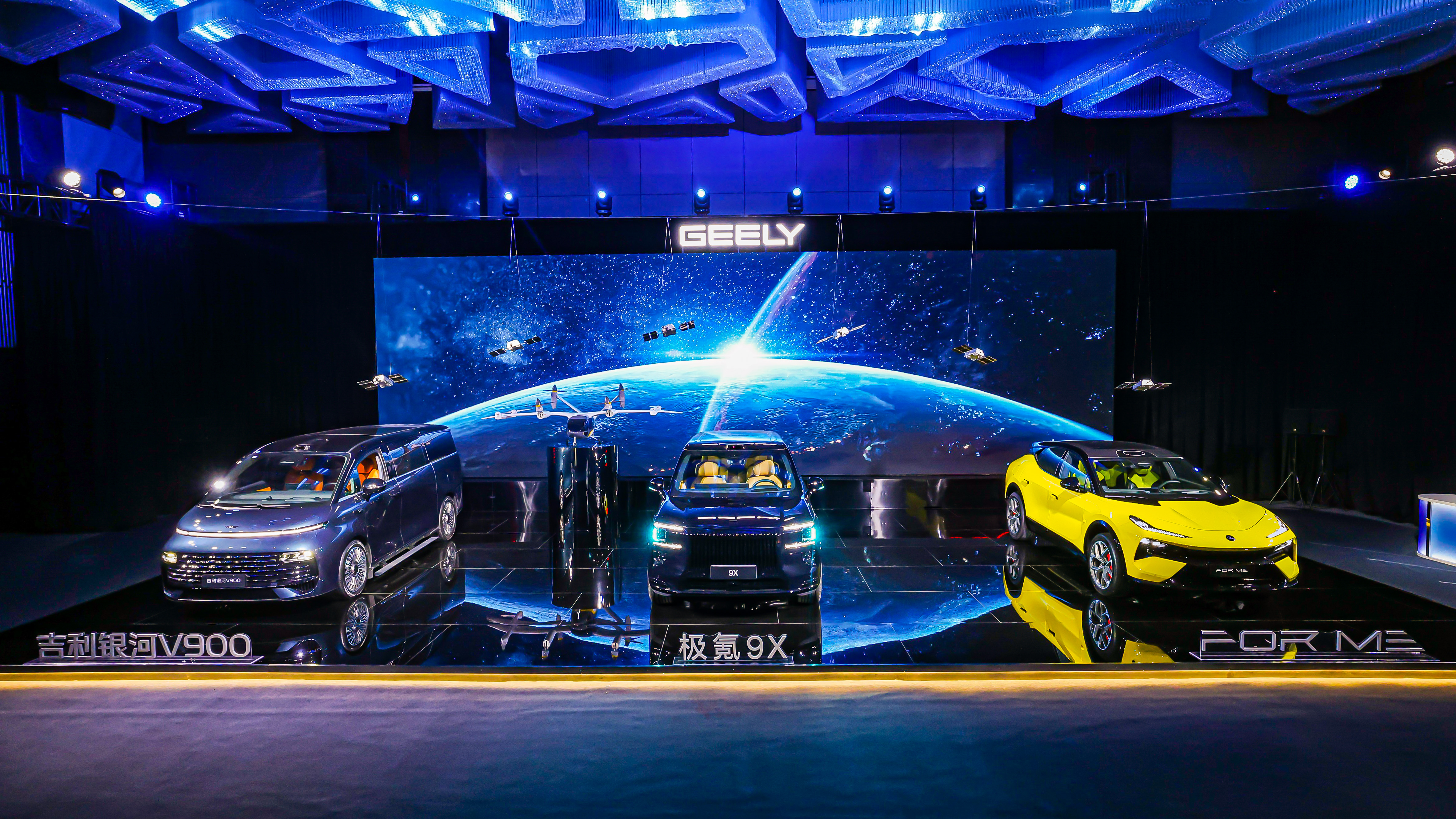
Core Viewpoint - Geely Holding Group has officially launched its "One Geely, Leading All" 2030 strategic goal, aiming to enhance global coordination and establish a comprehensive core capability system to achieve leading indicators in the global automotive industry [1][4]. Group 1: Strategic Goals - Geely aims to achieve global total sales exceeding 6.5 million units (including passenger and commercial vehicles) and revenue surpassing 1 trillion yuan by 2030, positioning itself among the top five global automakers, with approximately 75% of sales from new energy vehicles and over one-third from overseas markets [4]. - The company plans to develop a leading global new energy architecture covering vehicle classes A to E, with a target to reduce average model development cycles and comprehensive costs by over 30% based on the new architecture [4]. Group 2: Six-in-One Capability System - Geely will focus on six areas: brand, technology, complete vehicles, ecology, talent, and sustainable development, with an emphasis on strengthening the Geely parent brand and creating a clear, distinctive global brand matrix [7]. - The company will leverage its brands, including Geely, Lynk & Co, and Polestar, while also enhancing the localized operational capabilities of international brands like Volvo and Lotus in the European and American markets [7]. Group 3: Technological Advancements - Geely will enhance its "Seven Vertical" technology system, focusing on smart driving, smart cockpits, electronic architecture, complete vehicle architecture, batteries, electric drives, and super hybrid technologies [8]. - The company aims to establish "Qianli Haohan" as a globally advanced technology platform, achieving full coverage of L2-level assisted driving and accelerating the commercialization of L3 technology and Robotaxi [8]. Group 4: Safety and Ecological Layout - Safety remains the top priority for Geely, with plans to strengthen safety technology collaboration within the group and establish a "world safety dual-pole" structure between Volvo and Geely [10]. - Geely will focus on three ecological areas: user services, future mobility, and methanol-hydrogen electric vehicles, aiming to launch 100,000 customized Robotaxis by 2030 [10]. Group 5: Talent and Sustainability - Geely will deepen its "Talent Forest" strategy, investing 500 million yuan initially and up to 300 million yuan in total to foster innovation and entrepreneurship among youth [12]. - The company commits to integrating green and low-carbon principles throughout the product lifecycle, promoting eco-friendly materials, and achieving carbon neutrality in benchmark factories [12]. Group 6: Future Directions - By 2026, Geely will focus on AI technology, energy diversification, product premiumization, and internationalization, with upcoming technologies including the full-domain AI 2.0 system and the next-generation Qianli Haohan assisted driving system [13]. - New products, such as the Zeekr 8X, are set to be launched, reflecting the company's commitment to high-quality development [13].

源乐晟三位合伙人酣畅交流,深谈AI、大宗商品、新消费投资逻辑与机会
Xin Lang Cai Jing· 2026-01-23 04:51
Group 1: Commodity Sector Outlook - The commodity sector remains a key focus for 2026, but caution is advised regarding specific small metals [2][9] - The long-term potential for significant price declines in resource products is low due to inelastic supply and steady demand growth [2][26] - Even with material substitution and downstream control measures, the overall upward price trend is expected to continue [2][26] Group 2: New Consumption Trends - The core strategy for new consumption involves identifying the strongest marginal changes among numerous SKUs each year and closely tracking their growth rates [2][10] - The global consumption beta is currently poor, indicating that structural opportunities still exist despite a lower ceiling compared to traditional sectors like liquor [10][13] - The market is becoming increasingly fragmented, necessitating a focus on data and marginal changes rather than personal preferences [10][12] Group 3: AI Industry Insights - The AI industry is rapidly evolving, with many subfields beginning to form commercial closed loops, provided that underlying technologies continue to improve [2][15] - AI investments have become a core industry influencing macroeconomic trends in both the US and China, with significant scale [15][17] - The year 2025 is seen as a pivotal year for AI, with numerous large model companies expected to go public, marking a critical phase for the industry [2][15] Group 4: Resource Price Dynamics - Resource prices have been on a gradual rise since 2023, driven by increasing extraction costs and decreasing reserves [5][63] - The trend of resource price increases is supported by geopolitical factors and strategic stockpiling of rare metals by various countries [6][66] - Chinese mining companies have shown strong manufacturing advantages, leading to higher profit margins compared to their Western counterparts [7][67] Group 5: Investment Strategy and Market Behavior - A prudent investment strategy involves controlling positions when direction is unclear and increasing investments as trends become more defined [4][21] - The market's reaction to AI-related investments has been volatile, with significant fluctuations in stock prices reflecting broader economic uncertainties [16][79] - The importance of understanding the long-term potential of technologies while managing short-term volatility is emphasized [19][49]