价值投资

Search documents
中国锂电亿万富豪排行榜(2025)|独家
24潮· 2025-07-13 20:49
Core Viewpoint - The article highlights the significant transformation of China's lithium battery industry over the past two decades, emphasizing its dominance in the global market and the wealth generated within the sector, despite facing challenges from price wars and trade conflicts [2][3]. Industry Overview - Over the past 20 years, China's lithium battery industry has evolved from being largely dependent on foreign technology to dominating the global market, with a 73.7% share in lithium battery shipments and 87% in energy storage batteries [2]. - The market share for key components includes approximately 90% for anode and cathode materials, over 85% for electrolytes, and more than 80% for lithium battery separators [2]. - The total market capitalization of Chinese lithium battery companies peaked at 5.8 trillion RMB, with 12 companies valued over 100 billion RMB [2]. Current Market Challenges - The total market capitalization of Chinese lithium battery companies has decreased by approximately 2.91 trillion RMB, a decline of 53.31% from its peak in December 2021, significantly outpacing the 5.99% drop in the Shanghai Composite Index during the same period [2]. Wealth Distribution - As of now, there are 131 billionaires in China's lithium battery industry, with a combined wealth exceeding 700 billion RMB, averaging 53.56 billion RMB per person [3]. - Among these, 75 individuals have wealth exceeding 10 billion RMB, and 12 have over 100 billion RMB, with the top ten collectively holding 4.53 trillion RMB, accounting for 64.59% of the total [3]. Future Outlook - The article suggests that despite the current challenges, there is a significant underestimation of the potential of certain high-quality companies within the lithium battery sector, particularly in the power and energy storage battery supply chains [3]. - The focus will remain on how quality enterprises can influence industry trends and structural advantages for sustainable development [5].


前海开源基金王霞——投资如长跑 需摒弃赚快钱理念
Zheng Quan Shi Bao· 2025-07-13 17:41
Group 1 - The core viewpoint emphasizes that maintaining inner calm is crucial for fund managers to succeed in the long term, advocating for a patient investment approach that prioritizes risk control and rational value orientation [1][2] - The article highlights the importance of a low valuation strategy combined with fundamental analysis to manage investment risks and achieve sustainable returns over time [2][3] Group 2 - The article discusses the trend of fund managers chasing short-term high returns, which often leads to significant losses, underscoring the need for a focus on risk management [2][3] - It notes that the investment strategy should involve timely profit-taking during high valuation periods to avoid potential downturns when industry trends shift [2][4] Group 3 - The article outlines that the investment focus has expanded beyond cyclical industries to include various sectors, with an emphasis on capturing macroeconomic signals that drive industry growth [3][4] - It stresses that technology stocks should not be confused with speculative stocks, highlighting the need for strong competitive advantages and sustainable business models in the tech sector [3][4] Group 4 - The article indicates that the strategy for the second half of the year will be cautious, focusing on identifying structurally sound investment opportunities while monitoring market dynamics and risk signals [4][5] - It mentions that the Hong Kong stock market has experienced a significant recovery, surpassing the A-share market in cumulative gains, yet still remains at historically low valuation levels, suggesting long-term investment potential [5]
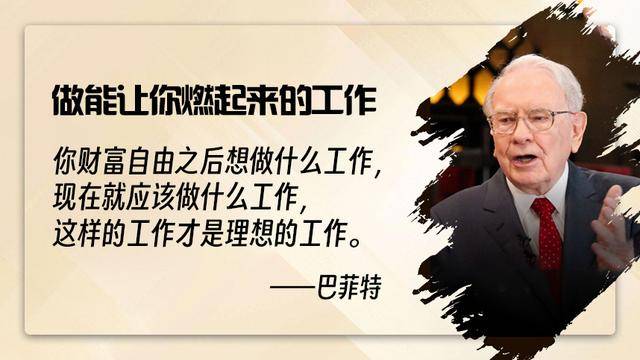
普通人变富最靠谱的方式:模仿巴菲特
Sou Hu Cai Jing· 2025-07-13 14:22
Group 1 - The core message emphasizes that wealth accumulation is more about daily choices and relationships than complex investment strategies [1][20] - Buffett suggests that having a few close friends and a lifelong passion for work are essential for success [1][4] - The article highlights the importance of finding joy in work rather than focusing solely on monetary compensation [4][6] Group 2 - The concept of "self-igniting" individuals who are intrinsically motivated is discussed, with Buffett being a prime example [4][11] - The article mentions the "snowball" analogy, where small, consistent efforts lead to significant wealth over time [16][20] - It stresses the importance of surrounding oneself with successful individuals to enhance personal growth and opportunities [9][14] Group 3 - The significance of personal reputation and integrity is highlighted as a crucial asset in business and life [29][30] - The article argues that character and personal branding are more valuable than financial wealth [29][36] - It concludes that slow and steady wealth accumulation through disciplined saving and ethical behavior is the most reliable path to financial success [39][40]
每经热评︱险资长期考核指标落地 “长钱长投”培育更多耐心资本
Mei Ri Jing Ji Xin Wen· 2025-07-13 12:57
每经评论员 杜恒峰 7月11日,财政部发布《关于引导保险资金长期稳健投资 进一步加强国有商业保险公司长周期考核的通 知》(以下简称《通知》),对国有商业保险公司经营效益类绩效评价指标作出重大调整,核心内容有 二:其一,将净资产收益率考核由"当年度指标+3年周期指标"调整为"当年度指标+3年周期指标+5年周 期指标",三者权重分别为30%、50%和20%;其二,把资本保值增值率指标从"当年度指标"调整为"当 年度指标+3年周期指标+5年周期指标",权重同样为30%、50%和20%。 首先,被考核对象对投资的考量将以3年作为最小周期。这是因为3年周期指标的权重最高,达到50%, 而且较高的3年期收益率能为5年期考核奠定良好基础。在此情况下,被考核对象追求短期业绩的热情会 大幅降低,年末抱团高位股、扎堆热门赛道博取超额收益等短期行为将有望减少。其次,被考核对象会 有动力降低收益波动率,将长期目标分解到每一年的目标中,通过逐年积累收益率,最终达成较高的考 核收益率。那些初期收益率较低、到最后才"冲刺"的模式将不再"划算"。例如:投资经理在第一年到第 五年的收益率均为10%,5年累计收益率为61.051%,5年考核期结 ...
普通人变富最靠谱的方式:模仿巴菲特
洞见· 2025-07-13 11:00
Core Viewpoint - The article emphasizes that wealth accumulation is more about daily choices and personal relationships than complex investment strategies, advocating for a simple yet consistent approach to work and life [4][6][91]. Group 1: Work Philosophy - Work should be viewed as a bridge to an ideal life rather than merely a means to earn money, with a focus on passion and enjoyment in one's job [9][21]. - Individuals who exhibit strong intrinsic motivation and find joy in their work tend to achieve faster career advancement and personal growth [13][14]. - Buffett's perspective highlights the importance of doing what one loves, suggesting that initial salary should not be the primary concern [20][22]. Group 2: Social Connections - The "Five People Theory" suggests that an individual's wealth and wisdom are influenced by the average of the five people they spend the most time with [29][30]. - Building relationships with successful individuals can significantly impact personal growth and opportunities [31][44]. - Buffett's own relationships with mentors and partners, such as Graham and Munger, illustrate the value of surrounding oneself with capable and wise individuals [35][37]. Group 3: Wealth Accumulation Strategy - Buffett's "snowball" philosophy indicates that small, consistent actions can lead to significant wealth over time, emphasizing the importance of saving and reinvesting [48][62]. - The article stresses the need for patience and discipline in financial growth, advocating for a long-term perspective rather than seeking quick riches [60][91]. - Maintaining a good reputation and personal integrity is crucial, as it can open doors to opportunities that wealth alone cannot [79][83].

入市重点投向,长钱长投制度优化……多家险资巨头发声
证券时报· 2025-07-13 09:14
Core Viewpoint - The necessity and feasibility of increasing equity asset allocation by insurance funds are emphasized, alongside the importance of optimizing equity asset allocation capabilities and fostering a healthy capital market development environment [1]. Group 1: Value Investment Essence - The essence of equity investment for insurance funds is highlighted as a return to value investment principles, focusing on acquiring assets at reasonable prices for long-term growth [3][4]. - Insurance funds should prioritize investing in "good companies" to achieve "good returns," thereby promoting a shift towards long-term and value investment philosophies in the market [3]. Group 2: Selection Criteria for Investment Targets - Key indicators for selecting investment targets include long-term competitive advantage, sustainable profitability (with metrics like ROE, ROIC, EBITDA, and FCFF), operational stability, and shareholder return capabilities [4]. - These criteria form a framework for ensuring that investment targets meet the long-term and stable appreciation needs of insurance funds [4]. Group 3: Focus Areas for Investment Opportunities - Investment opportunities are identified in new productive forces, new economy sectors, high-dividend low-volatility assets, and overseas expansion of manufacturing and consumer brands [5][6]. - Specific sectors of interest include technology growth areas like AI and robotics, stable traditional industries, and industries with potential for domestic substitution and growth, such as pharmaceuticals and high-value consumables [7]. Group 4: Global Value Chain Core Assets - The importance of increasing allocation to global value chain core assets is stressed, with a focus on leading manufacturing companies that have shown strong performance and stability [8]. - The ongoing global economic restructuring and geopolitical factors are seen as catalysts for investment opportunities in strategic industries and resources [8]. Group 5: Enhancing the Investment Environment - Suggestions for improving the environment for long-term capital investment include cultivating a value investment ecosystem, enhancing the institutional framework for long-term investments, and improving the investment capabilities of insurance funds [10][11]. - Recommendations include optimizing market structures, enhancing investor protection, and providing a wider range of investment products suitable for long-term investors [10][11].

入市重点投向,长钱长投制度优化……多家险资巨头发声
券商中国· 2025-07-13 06:58
Core Viewpoint - The article emphasizes the necessity and feasibility of increasing equity asset allocation by insurance funds, highlighting the importance of value investing and long-term investment strategies in the current macroeconomic environment [2][3][4]. Group 1: Value Investment Essence - Insurance funds should return to the essence of value investing, focusing on acquiring assets at reasonable prices to achieve long-term profit growth and investment returns [3][4]. - The investment strategy should prioritize "good companies" and "good returns," aligning with the long-term nature and stability of insurance capital [4][5]. Group 2: Selection Criteria for Investment Targets - Key indicators for selecting investment targets include: - Long-term competitiveness of the enterprise, requiring sustainable competitive advantages and long-term development potential [5]. - Continuous profitability, with financial metrics like ROE, ROIC, EBITDA, and FCFF consistently outperforming industry averages [5]. - Operational stability, characterized by low earnings volatility and strong cash flow predictability [5]. - Shareholder return capability, necessitating a stable dividend policy and a strong dividend record [5]. Group 3: Investment Opportunities - Focus areas for equity investment include: - New productive forces and new economic sectors, particularly in technology and innovation [6][7]. - High dividend, low volatility assets, and traditional industries with stable profitability and reasonable valuations [6][7]. - Opportunities arising from the overseas expansion of manufacturing and consumer brands, which can provide significant investment prospects [7]. - Niche industries with growth potential, such as innovative pharmaceuticals and high-value consumables, benefiting from domestic policy optimization [7]. Group 4: Long-term Investment Environment - The article suggests that the environment for long-term investment needs further optimization, including: - Cultivating a better "soil" for value investing and improving the institutional framework for long-term capital [11][12]. - Enhancing the investment capabilities of insurance funds to ensure they can effectively participate in the capital market [11][12]. - Recommendations include improving market infrastructure, refining IPO and refinancing policies, and enhancing investor protection mechanisms [11][12].

为什么股市投资难入门?
雪球· 2025-07-13 06:41
Core Viewpoint - The article discusses the challenges and misconceptions in stock market investing, emphasizing the need for education, discipline, and long-term thinking to achieve success in investments [2][4]. Group 1: Reasons for Investment Challenges - The stock market has no entry barriers, allowing anyone over 18 to trade, which can lead to a lack of preparedness among investors [2]. - Many investors rely on self-study without proper guidance, resulting in a lack of discipline and perseverance, which are crucial for success [3]. - The importance of having mentors or coaches for continuous feedback and correction is highlighted, as many individuals resist facing their mistakes [3]. Group 2: Nature of Investment - Investment is a long-term process, akin to a marathon rather than a sprint, and many investors focus too much on short-term gains while neglecting long-term planning [4]. - Continuous learning is essential in investing, as many individuals stop updating their knowledge after entering the workforce, which can hinder their investment success [4][6]. - Successful investing requires not only intelligence and emotional awareness but also the ability to discern the essence of situations and avoid herd mentality [5]. Group 3: Wealth and Experience - Accumulating wealth is necessary for value investing, as highlighted by the quote from Charlie Munger that suggests one cannot be a value investor before the age of 40 [5]. - The article concludes that identifying the root causes of investment failures can lead to targeted solutions, thereby increasing the probability of investment success [5].

投资、投机,结局大不同!股市疯狂之时,我们应如何对待?
券商中国· 2025-07-12 23:24
Core Viewpoint - The article discusses the contrasting investment styles of two prominent figures, Buffett and C. T. Wang, highlighting the long-term benefits of value investing versus the short-term gains of aggressive trading strategies [1][4]. Group 1: Investment Strategies - C. T. Wang focused on popular companies and price momentum, with an annual turnover rate of 100%, leading to significant short-term gains but ultimately resulting in substantial losses for investors [3][4]. - Buffett's investment approach emphasized understanding business valuations and maintaining a long-term perspective, achieving a cumulative return of 1403.5% from 1956 to 1968, compared to the Dow Jones' 9.1% [4][5]. Group 2: Performance Comparison - In 1962, during a market downturn, Wang invested an additional $28 million, resulting in a 68% increase in his fund by year-end, showcasing his ability to capitalize on market volatility [3]. - Conversely, Buffett closed his partnership in 1969 to preserve gains, avoiding a subsequent five-year market decline, demonstrating a commitment to risk management and investor protection [4][6]. Group 3: Investment Philosophy - Wang's strategy was likened to a "trial marriage" approach, indicating a lack of commitment to long-term investments, which ultimately harmed his investors [3]. - Buffett maintained a philosophy of "no investment without understanding," emphasizing the importance of knowledge and safety margins in investment decisions, which led to sustainable growth for his investors [6][7].

《关于引导保险资金长期稳健投资进一步加强国有商业保险公司长周期考核的通知》点评:拉长考核期限,风物长宜放眼量
ZHONGTAI SECURITIES· 2025-07-12 13:22
Investment Rating - The report maintains an "Overweight" rating for the industry, indicating an expected increase in performance relative to the benchmark index over the next 6 to 12 months [2][14]. Core Insights - The recent policy change aims to extend the assessment period for state-owned commercial insurance companies, promoting long-term stable investments and preventing short-term performance pressures [5]. - The adjustment in performance evaluation metrics emphasizes a balanced approach between annual and multi-year indicators, enhancing the focus on sustainable growth and risk management [5]. - The report highlights that the insurance sector is increasingly favoring high-dividend stocks, with a notable increase in equity allocations, reflecting a strategic shift towards long-term value investments [5]. Summary by Sections Industry Overview - The total market capitalization of the industry is approximately 31,377.86 billion, with a circulating market value of 31,369.21 billion [2]. Policy Implications - The new directive from the Ministry of Finance encourages insurance funds to act as stabilizers in the market, promoting long-term investment strategies [5]. - The report notes that the new accounting standards for insurance contracts will be fully implemented by January 1, 2026, which is expected to positively influence the assessment of insurance companies [5]. Investment Strategy - The report suggests that the extended assessment period will likely reduce the negative impact of equity asset fluctuations on profit assessments, thereby increasing the tolerance for equity allocation among insurance companies [5]. - The performance of the non-bank insurance stock index has significantly outperformed the market, with an absolute return of 13.17% and a relative return of 11.14% since the beginning of 2025 [7].