
银发经济

Search documents
老人走出厨房 服务嵌入社区 幸福挂在脸上
Hang Zhou Ri Bao· 2025-08-27 02:25
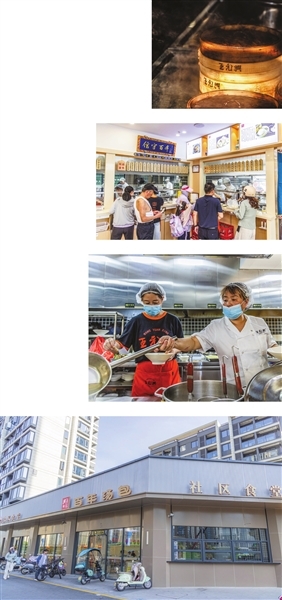
Core Insights - The article highlights the transformation of a community canteen in Hangzhou into a modern dining hub, catering to over 800 visitors daily and serving as a "community living room" for different generations [3][4][6] Group 1: Community Canteen Development - The community canteen has expanded from 50 square meters to nearly 400 square meters within six months, indicating significant growth and demand [3] - Daily operations include a diverse menu that appeals to both elderly residents and younger families, showcasing the canteen's role in enhancing community life [5][6] - The canteen provides various amenities, such as wheelchair access and child-friendly facilities, making it a versatile space for all age groups [6] Group 2: Silver Economy and Policy Innovation - The canteen's success reflects a broader trend in Hangzhou's silver economy, driven by policy innovations and a shift towards market-oriented elder care services [7][8] - The city has launched a three-year action plan aimed at improving elder care services, emphasizing the importance of community-based support systems [7] - The collaboration between government, enterprises, and traditional brands in the community canteen model exemplifies the integration of social forces in elder care [8] Group 3: Social Impact and Future Directions - The initiative represents a shift from basic elder care to enhancing quality of life, aligning with national strategies to address population aging [8] - The development of the canteen contributes to intergenerational harmony and community cohesion, positioning it as a vital platform for social engagement [8] - Continuous innovation in service delivery and facility enhancement is essential for building a resilient elder care system in Hangzhou [8]

智能机器人受热捧“银发经济”添了点“科技范”
Nan Fang Du Shi Bao· 2025-08-26 23:09
Core Insights - The aging population is driving the growth of the "silver economy," with a focus on smart elderly care solutions [3][4][5] - The 9th China (Guangzhou) International Elderly Health Industry Expo showcased innovative technologies and products aimed at enhancing elderly care [3][4][8] Industry Overview - The silver economy in Guangzhou has surpassed a scale of 300 billion yuan, with over 18,000 enterprises operating in this sector [5][6] - The elderly population aged 60 and above in Guangzhou reached approximately 2.13 million, accounting for 19.81% of the total population [5][8] Technological Advancements - AI-enabled health management platforms and smart wearable devices are being developed to monitor vital signs and health data of the elderly [4][6] - Various types of smart robots, including companionship and mobility assistance robots, were showcased at the expo, highlighting advancements in technology for elderly care [4][8] Government Initiatives - The Guangzhou government has launched a special credit plan for the silver economy, providing over 55 billion yuan in dedicated credit to support elderly care projects [6][7] - The expo featured a "national subsidy" program, offering discounts of up to 30% on products aimed at improving elderly living conditions [6][7] Market Trends - The expo emphasized the importance of consumer-driven approaches in the silver economy, with initiatives to promote local businesses and community engagement [7][8] - The event also marked the launch of the first "Silver Age Art Season" in Guangzhou, involving over 1,000 teams to foster community interaction among the elderly [7]


金发科技2025年中报简析:营收净利润同比双双增长,公司应收账款体量较大
Zheng Quan Zhi Xing· 2025-08-26 23:08
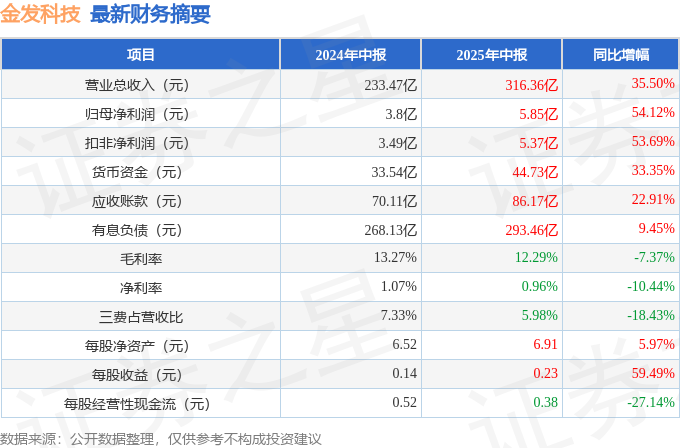
Core Viewpoint - The recent financial report of Jinfat Technology (金发科技) shows significant growth in revenue and net profit for the first half of 2025, indicating a positive business performance despite some declines in profit margins and cash flow metrics [1][2]. Financial Performance - Total revenue for the first half of 2025 reached 31.636 billion yuan, a year-on-year increase of 35.5% [1]. - Net profit attributable to shareholders was 585 million yuan, up 54.12% year-on-year [1]. - In Q2 2025, total revenue was 15.97 billion yuan, reflecting a 24.41% increase compared to the same quarter last year [1]. - The gross margin was 12.29%, down 7.37% year-on-year, while the net margin decreased to 0.96%, down 10.44% [1]. - The company’s accounts receivable accounted for 1045.01% of the latest annual net profit, indicating a high level of receivables relative to profit [1][6]. Cost and Expense Analysis - Total sales, management, and financial expenses amounted to 1.89 billion yuan, which is 5.98% of revenue, down 18.43% year-on-year [1]. - Sales expenses increased by 56.11% due to new product launches and market expansion efforts [3]. - Management expenses rose by 32.87% due to higher salaries and repair costs [3]. - Financial expenses decreased by 34.87% as a result of the conversion of certain liabilities into equity [3]. Cash Flow and Debt - The net cash flow from financing activities increased by 653.77% due to an increase in long-term bank loans [4]. - The company’s cash flow situation is a point of concern, with cash and cash equivalents representing only 7.14% of total assets [6]. Market and Business Strategy - The company is focusing on high-performance modified materials, particularly in the automotive sector, where demand is expected to grow due to the rise of electric vehicles [10]. - Jinfat Technology has established a global marketing network and is optimizing its product sales structure to enhance growth [9]. - The company is actively expanding its overseas operations, with a 29.51% increase in overseas sales volume in 2024 [11]. Sustainability and Recycling Initiatives - The company leads in the production of environmentally friendly high-performance recycled plastics, with a global sales volume of 285,900 tons in 2024, up 7.44% year-on-year [12]. - Jinfat Technology is developing a comprehensive recycling system for waste plastics, aiming to enhance its sustainability efforts [12].

发展养老产业金融 率先落地养老产业贷款
Jing Ji Ri Bao· 2025-08-26 22:29
Core Viewpoint - The aging population has accelerated the development of the silver economy, with pension finance becoming a crucial link between financial services and high-quality development in the elderly care sector [1] Group 1: Policy Support and Financial Initiatives - Since 2025, national policies have continuously supported the development of the elderly care industry, providing substantial financial backing and clarifying the role of financial institutions in this sector [1] - Postal Savings Bank of China’s Shenzhen branch has actively responded to policy initiatives by collaborating with local departments to identify and fund projects, marking the issuance of its first pension industry loan on August 19 [1] Group 2: Case Study of E-commerce Company - A specific e-commerce company in Longhua District, Shenzhen, specializes in the cross-border sales of elderly assistive devices, leveraging supply chain resources in the Greater Bay Area and international platforms like Amazon and eBay [1] - The company faced procurement funding pressures due to increased market demand driven by global aging [1] Group 3: Financial Support and Impact - After assessing the company's needs, the Shenzhen branch of Postal Savings Bank formed a specialized service team to create a comprehensive risk assessment system, issuing a loan of 2 million yuan within five working days [2] - The funds are designated for purchasing new folding wheelchairs and assistive devices, which will help ensure a steady supply of elderly care products and reduce procurement costs, fostering a positive cycle in the industry [2] - The company plans to use the cost savings to develop lightweight assistive devices for the Japanese market, aiming to expand the reach of "Made in China" elderly care products [2]

邮储银行深圳分行 发展养老产业金融 率先落地养老产业贷款
Jing Ji Ri Bao· 2025-08-26 21:44
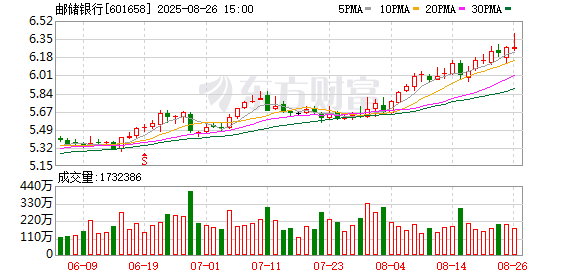
Core Viewpoint - The aging population has accelerated the development of the silver economy, with pension finance becoming a crucial link between finance and high-quality development in the pension sector [2] Group 1: Policy Support and Financial Initiatives - Since 2025, national policies have continuously supported the development of the pension industry, providing financial backing and clarifying the role of financial institutions in serving the sector [2] - Postal Savings Bank's Shenzhen branch has actively responded to policy calls, collaborating with local departments to identify and fund projects, marking the first pension industry loan on August 19 [2] Group 2: Company Case Study - A specific e-commerce company in Longhua District, Shenzhen, focuses on cross-border sales of elderly assistive devices, leveraging supply chain resources in the Greater Bay Area and international platforms like Amazon and eBay [2] - The company faces procurement funding pressure due to increased market demand driven by global aging [2] Group 3: Financial Support and Impact - After understanding the company's needs, Postal Savings Bank's Shenzhen branch formed a specialized service team to establish a comprehensive risk assessment system, issuing a loan of 2 million yuan within five working days [3] - The funds are designated for purchasing new folding wheelchairs and assistive devices, ensuring continuous supply and reducing procurement costs, which will enhance the production capacity of upstream manufacturers [3] Group 4: Future Plans and Commitment - The e-commerce company plans to use cost savings to develop lightweight assistive devices suitable for the Japanese market, aiming to deliver more "Made in China" products to the elderly [3] - Postal Savings Bank's Shenzhen branch intends to continue innovating financial products and services, increasing credit resources in the pension sector to fulfill its commitment to serving the public [4]
康冠科技20250826
2025-08-26 15:02
Summary of KTC Technology Conference Call Company Overview - **Company**: KTC Technology - **Industry**: Display Technology and Consumer Electronics Key Points Financial Performance - **Revenue**: Approximately 6.935 billion (69.35 million) in H1 2025, a year-on-year increase of 5.06% [4] - **Net Profit**: 384 million (3.84 billion), with a non-GAAP net profit of 346 million (3.46 billion), up 10.62% year-on-year [4] - **Basic Earnings Per Share**: 0.55 [4] - **Operating Cash Flow**: Net cash flow from operating activities was 800 million (8 billion), a significant increase of 180.43% [4][24] - **Gross Margin**: Overall gross margin increased by 0.32% year-on-year [4] Product Segments - **Innovative Display Products**: Revenue reached 898 million (8.98 billion), a 39.16% increase, with a shipment volume growth of 48.05% [4] - **Smart TVs**: Revenue of 3.634 billion (36.34 billion) with a gross margin of 11.88%, reflecting a 2.61% increase despite a slight decline in revenue and shipment volume [4] - **Smart Interactive Displays**: Revenue of 1.995 billion (19.95 billion), up 9.81% year-on-year [4] Strategic Initiatives - **Focus on High-Margin Clients**: The company is adjusting its smart TV strategy to focus on high-margin clients along the "Belt and Road" initiative, leading to improved gross margins [2] - **AI Technology Integration**: The introduction of AI technology in products like gaming monitors and mobile smart screens has enhanced product value [2][4] - **Cross-Border E-commerce**: The TBC brand saw a 381% increase in sales on Amazon, with GMV up 348%, while SPD brand sales grew 220% [2] Market Expansion - **International Sales**: The export ratio has increased to 87.95%, with significant growth in overseas markets, particularly in North America and Japan [2][14] - **AI Glasses Launch**: The KDC AI interactive glasses were launched, featuring voice and physical button interaction, targeting overseas markets against competitors like Meta [2][13] Dividend Policy - **Dividend Distribution**: The company plans to distribute a cash dividend of 3.6 per 10 shares, totaling approximately 253 million (2.53 billion), which represents 65.76% of the half-year net profit [3][5] Challenges and Risks - **Non-Recurring Factors**: The performance was impacted by the absence of government subsidies and provisions for bad debts and inventory [6] - **Material Costs**: The gross margin for smart interactive displays decreased due to seasonal fluctuations in raw material prices [20] Future Outlook - **Continued Investment in Innovation**: The company aims to maintain a strong focus on innovative display products and expand its self-owned brand influence [9][15] - **Market Demand**: Future demand for smart interactive displays is expected to grow due to ongoing educational policies and new market opportunities [20] Production Capacity - **New Facilities**: The company is expanding its production capacity with new facilities in Shenzhen and Huizhou, expected to be operational by the end of the year [26][27] Competitive Landscape - **Market Position**: KTC's innovative display products are well-positioned in the market, with a strong emphasis on product differentiation and targeted marketing strategies [19] This summary encapsulates the key insights from the KTC Technology conference call, highlighting the company's financial performance, strategic initiatives, market expansion efforts, and future outlook.
东软睿新集团:打造“教医养”一体化智慧服务体系
Zhong Zheng Wang· 2025-08-26 14:52
Core Insights - The company aims to establish an integrated smart service system focusing on education, healthcare, and elderly care, addressing lifelong learning and health needs [1][2][3] Financial Performance - In the first half of the year, the company achieved revenue of 925 million yuan, gross profit of 398 million yuan, and adjusted net profit of 204 million yuan [1] Education Sector Developments - The company operates three applied undergraduate universities, with a total enrollment of nearly 58,000 students, reflecting a 1.8% increase compared to the same period in 2024 [1] - The education resource output business has upgraded its service system using large models and intelligent agents [1] Healthcare and Elderly Care Integration - The company has strategically expanded into the silver economy market, with significant growth in its healthcare services, including a 34% increase in inpatient and surgical volumes at its cardiovascular hospital [2] - The occupancy rate of the elderly care facility exceeded 88%, and the company has acquired a stake in Xikang Yunsh, enhancing its wellness tourism services [2] Smart Elderly Care Platform - The company has made notable progress in building a city-level smart elderly care platform, integrating various functions such as government regulation and research innovation [2] - The "Shengqing Kangyang" platform was launched in Shenyang, with a similar platform in Dalian entering internal testing [2] Future Business Strategy - The company plans to extend its business scenarios from physical to digital spaces, creating a network that integrates university campuses, training bases, and urban spaces [3] - The focus will be on talent development, service platforms, and the construction of integrated healthcare and elderly care campuses [3]
新华锦: 新华锦2025年半年度报告
Zheng Quan Zhi Xing· 2025-08-26 12:17
Core Viewpoint - The report highlights a significant decline in the company's financial performance for the first half of 2025, with a notable decrease in revenue and net profit compared to the same period in the previous year, attributed to increased competition and external economic factors [1][2][10]. Company Overview and Financial Indicators - Company Name: Shandong Xinhua Jin International Co., Ltd. - Stock Code: 600735 - Total Revenue for H1 2025: 668.87 million RMB, down 24.92% from 890.87 million RMB in H1 2024 [2][3]. - Total Profit: 48.60 million RMB, a decrease of 34.49% from 74.19 million RMB [2][3]. - Net Profit attributable to shareholders: 12.87 million RMB, down 39.45% from 21.25 million RMB [2][3]. - Net Cash Flow from Operating Activities: 77.26 million RMB, down 19.06% from 95.45 million RMB [2][3]. - Total Assets: 1.85 billion RMB, down 2.73% from 1.90 billion RMB [2][3]. Business Segments New Trade - Import and Export Business - The company focuses on the production and sales of hair products, with major export markets in North America, Europe, and Japan [3][10]. - The global wig market is projected to grow from 7.62 billion USD in 2022 to 13.28 billion USD by 2026, indicating a robust demand for hair products [3][10]. - The company faced challenges due to increased tariffs and inflation in key markets, leading to a decline in revenue from hair products by 11.29% [10][11]. Textile and Apparel Business - The textile and apparel segment primarily operates on an OEM basis, exporting to markets such as Japan, Europe, and the United States [3][10]. - In H1 2025, China's textile and apparel exports reached 143.98 billion USD, showing a slight increase of 0.76% year-on-year [3][10]. - The company is adapting to market changes by diversifying its export markets and enhancing customer relationships [10][11]. Cross-Border E-commerce - The cross-border e-commerce segment reported a revenue of 142.94 million RMB, down 28.56% due to currency fluctuations and geopolitical uncertainties [10][12]. - The company is investing in AI technology to enhance its e-commerce capabilities and improve marketing strategies [12][13]. New Materials - Graphite Business - The company operates two graphite mines, focusing on the extraction and processing of natural flake graphite [6][7]. - China holds 27.86% of the world's graphite reserves, and the company aims to leverage its resource advantages for future growth in the graphite sector [6][7]. Elderly Care and Health Business - The company has established a light-asset operation model in the elderly care sector, providing comprehensive consulting and operational services [8][9]. - The aging population in China is expected to drive growth in the silver economy, with significant government support for the industry [8][9].

中国中免公布中期业绩 权益股东应占利润约26.22亿元 同比减少20.68%
Zhi Tong Cai Jing· 2025-08-26 10:55
Core Insights - China Duty Free Group (中国中免) reported a mid-year revenue of RMB 28.151 billion for 2025, a year-on-year decrease of 9.96% [1] - Gross profit was RMB 8.99 billion, down 12.23% year-on-year, with net profit attributable to shareholders at approximately RMB 2.622 billion, a decline of 20.68% [1] - The company aims to deepen its presence in Hainan and create a new consumption pattern that integrates culture and tourism [1] Group 1: Business Development - The company is expanding its "Duty-Free+" boundaries, moving towards a multi-dimensional integration of "culture, commerce, sports, tourism, and health" [1] - It is actively creating diverse cultural and entertainment events and themed marketing IP activities, including star concerts and Disney-themed IPs [1] - The Sanya International Duty-Free City has been officially designated as a national AAAA-level tourist attraction, marking it as the first national-level tourist attraction centered on duty-free commerce [1] Group 2: Market Expansion - The company has successfully secured the operating rights for several duty-free stores at major international airports and border ports, enhancing its channel advantages [2] - New city stores have opened in Qingdao, Xiamen, and Harbin, with plans for six additional city duty-free stores [2] - The company is exploring unique shopping experiences, such as a "whiskey tavern," to create a diversified retail environment [2] Group 3: Product Innovation - The company is actively exploring new airport commercial models, collaborating with Gansu Airport Group to introduce 31 new brands at Lanzhou Zhongchuan International Airport [3] - It has introduced nearly 200 new brands in response to consumer trends, focusing on categories like national trend cosmetics, 3C digital products, and health [3] - The company is developing products and services tailored for the elderly, launching its own brand "China Duty Free Health" with nearly 40 popular health products [3]

中国中免(01880)公布中期业绩 权益股东应占利润约26.22亿元 同比减少20.68%
智通财经网· 2025-08-26 10:49
Core Viewpoint - China Duty Free Group (中国中免) reported a decline in revenue and profit for the first half of 2025, while continuing to expand its business model and market presence in both domestic and international markets [1][2][3] Group 1: Financial Performance - The company achieved revenue of RMB 28.151 billion, a year-on-year decrease of 9.96% [1] - Gross profit was RMB 8.99 billion, down 12.23% year-on-year [1] - Profit attributable to equity shareholders was approximately RMB 2.622 billion, a decrease of 20.68% year-on-year, with earnings per share at RMB 1.2673 [1] Group 2: Business Expansion and Strategy - The company is deepening its presence in Hainan, integrating cultural and tourism consumption, and expanding the "duty-free+" model into various sectors [1] - Over 60 new brands were introduced in Hainan, enhancing the consumer experience and solidifying the company's market share, which increased by nearly 1 percentage point year-on-year [1] - The company successfully won the operating rights for several duty-free stores at major airports and border ports, strengthening its channel advantages [2] Group 3: Innovative Retail Models - The company is exploring new retail models at airports, collaborating with local airport groups to introduce new brands and enhance the shopping experience [3] - A focus on product innovation has led to the introduction of nearly 200 new brands, aligning with consumer trends and enhancing product offerings [3] - The company is also targeting the aging population by developing health-focused products under its own brand, "中免健康," with nearly 40 products performing well in the market [3]