人民币国际化

Search documents
冲击4连涨!金融科技ETF(516860)强势翻红涨近1%,政策、资金双重赋能,互联网券商有望迎来历史性发展机遇
Sou Hu Cai Jing· 2025-08-26 03:41
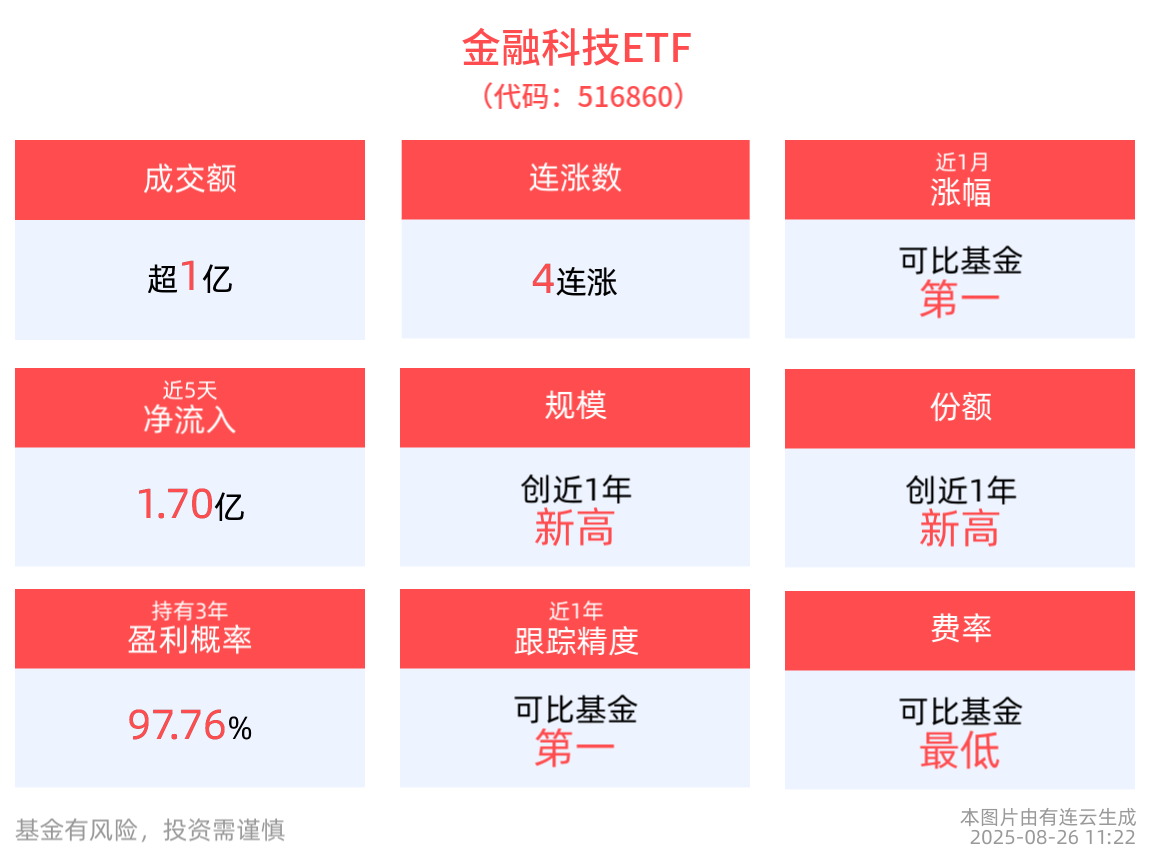
Core Viewpoint - The financial technology sector is experiencing significant growth, with notable increases in stock prices and trading volumes, driven by favorable policies and increased market participation [3][4][5]. Group 1: Financial Technology ETF Performance - The financial technology ETF (516860) has seen a strong increase of 1.02% as of August 26, 2025, with notable gains in constituent stocks such as Runhe Software (up 8.34%) and Anshuo Information (up 7.77%) [3]. - Over the past week, the financial technology ETF has accumulated a rise of 5.02%, ranking in the top third among comparable funds [3]. - The ETF's trading volume reached 1.78 billion yuan, with a turnover rate of 8.5% [3]. Group 2: Market Trends and Developments - As of August 25, 2025, the A-share market's trading volume surpassed 3 trillion yuan, marking the second-highest record in history [4]. - The number of new accounts opened in July increased by 71% year-on-year, indicating a surge in market participation [4]. - International capital is increasingly flowing into A-shares and Hong Kong stocks, reflecting growing investor interest [4]. Group 3: Institutional Insights - Internet brokerages are poised for historic growth opportunities due to supportive policies aimed at enhancing the attractiveness of domestic capital markets [5]. - In the first half of 2025, new A-share accounts reached 12.6 million, a 33% year-on-year increase, with internet financial platforms becoming key channels for new capital [5]. - Public funds are expected to increase their A-share holdings by 10% annually over the next three years, with insurance capital also being encouraged to invest more in equities [5]. Group 4: ETF Characteristics and Metrics - The financial technology ETF has a current scale of 2.101 billion yuan and a total of 1.215 billion shares, both reaching new highs in the past year [6]. - The ETF has recorded a net inflow of 220 million yuan recently, with a total of 170 million yuan in the last five trading days [6]. - The ETF's one-year net value has increased by 179.98%, ranking it in the top 0.10% among 2,975 index equity funds [7]. Group 5: Risk and Return Metrics - The financial technology ETF has a maximum monthly return of 55.92% since inception, with an average monthly return of 10.10% [7]. - The ETF's Sharpe ratio stands at 2.01, indicating strong risk-adjusted returns [7]. - The ETF has the fastest recovery time after drawdowns among comparable funds, with a recovery period of 79 days [8]. Group 6: Fee Structure and Tracking Accuracy - The management fee for the financial technology ETF is 0.50%, and the custody fee is 0.10%, both of which are among the lowest in comparable funds [9]. - The ETF has a tracking error of 0.044% over the past year, demonstrating the highest tracking accuracy among similar funds [10].





新财观 | 熊猫债二十年:人民币国际化进程中的金融桥梁与创新引擎
Xin Hua Cai Jing· 2025-08-26 00:26
Core Insights - The Panda Bond market has significantly expanded over the past two decades, becoming a crucial tool for financing and an integral part of the RMB internationalization process [1][2] - As of July 2025, the cumulative issuance of Panda Bonds has surpassed 1 trillion yuan, with a record issuance of 194.8 billion yuan in 2024, and an expected annual issuance of around 200 billion yuan in 2025 [1] - The market has diversified its participants, now including foreign governments, offshore financial institutions, and non-financial enterprises, with innovative products like green and carbon-neutral bonds emerging [1][2] Market Development - The growth of the Panda Bond market is driven by both market demand and regulatory improvements, such as the relaxation of cross-border fundraising restrictions and the establishment of a systematic management framework [2] - Despite its growth, the Panda Bond market is still in its early stages compared to mature international markets, facing challenges in product structure, credit rating coverage, and the development of derivative tools [2] Recommendations for Market Enhancement - Expand the scope of the green Panda Bond issuance optimization mechanism to include non-financial enterprises, thereby increasing the efficiency of green bond issuance [3] - Promote the development of green Panda Bonds and encourage foreign institutions to participate in domestic carbon trading using RMB, establishing a global carbon RMB fund [4] - Encourage issuers to explore longer-term Panda Bonds (over 10 years) to enhance the market's maturity and meet investor demand for longer-duration assets [5][6] - Increase the coverage of credit ratings for Panda Bonds to improve investors' understanding of credit risks associated with issuers [7] - Create a "Panda Bond Index" and "Panda Bond ETF" to track market performance and enhance trading activity [8] - Design related financial derivatives such as options and futures to meet the risk hedging and trading needs of Panda Bonds [9] Future Outlook - The Panda Bond market is expected to achieve comprehensive improvements in scale, structure, function, and internationalization as China's economy continues to develop and financial reforms progress [9]
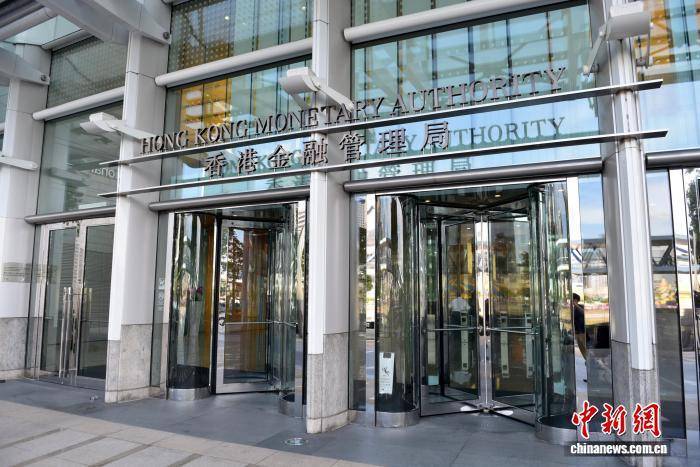
香港金管局:离岸人民币债券回购业务优化安排启动首日录逾60笔交易
Sou Hu Cai Jing· 2025-08-25 14:19
Core Viewpoint - The optimization of offshore RMB bond repurchase operations officially commenced on August 25, enhancing liquidity management and financing efficiency for market participants [1][3]. Group 1: Market Response and Transactions - The first trading day recorded over 60 transactions from at least 25 financial institutions, involving an amount exceeding 3 billion RMB [1]. - The offshore RMB repurchase business has seen positive market response since its launch on February 10, 2025 [1]. Group 2: Benefits of Optimization - The optimization allows for the reuse of collateral during the repurchase period, improving collateral efficiency and reducing financing costs for market institutions [1]. - It supports multi-currency foreign exchange settlements, enabling institutions to utilize their onshore RMB bond holdings for multi-currency financing, thereby enriching liquidity management tools [1]. Group 3: Strategic Implications - The optimization measures facilitate access to RMB liquidity for overseas investors, potentially attracting a broader range of foreign participants in the offshore RMB repurchase market [3]. - The ongoing expansion and optimization of the connectivity mechanism position these transactions as key nodes in cross-border financing, showcasing the continued opening of the mainland bond market and reinforcing Hong Kong's strategic status as a global offshore RMB hub and international financial center [3].
中国连续9月增持黄金,还是买的太少了?特朗普对瑞士加征39%关税
Sou Hu Cai Jing· 2025-08-24 15:42
Core Viewpoint - China's central bank has been steadily increasing its gold reserves for nine consecutive months, reaching a total of 73.96 million ounces (approximately 2300 tons), amidst speculation that this trend may soon halt due to external pressures, particularly from the U.S. [2][4][9] Group 1: China's Gold Accumulation Strategy - The Chinese central bank's approach to gold accumulation is characterized by a steady and methodical increase, purchasing 50,000 to 100,000 ounces monthly since November, which has resulted in a significant accumulation of hard currency [4][7] - Unlike other countries, China's gold purchases are all repatriated, enhancing its domestic reserves rather than relying on foreign storage [7][9] - China's gold reserves currently account for only 7% of its total reserves, significantly below the global average of 15%, indicating potential for further accumulation [9][11] Group 2: Impact of U.S. Tariffs on Gold Prices - The U.S. has imposed a punitive 39% tariff on Switzerland, which is expected to affect gold prices due to Switzerland's role in the global gold supply chain [4][11] - This tariff could lead to a situation where U.S. gold becomes more expensive compared to other countries, as Switzerland refines 70% of the world's gold [11][13] - The imposition of tariffs reflects a broader strategy by the U.S. to maintain dollar dominance, but it may inadvertently strengthen the position of gold as a reliable asset [11][15] Group 3: Global Monetary Dynamics - Central banks worldwide are accumulating gold at an unprecedented rate, with 95% indicating plans to continue buying in the coming year, signaling a shift in global monetary dynamics [11][15] - The rise in gold accumulation is seen as a preparation for potential instability in the dollar system, with countries like China reducing U.S. Treasury holdings while increasing gold reserves [15][16] - The evolving landscape suggests that gold is becoming more than just a safe-haven asset; it is emerging as a key player in the reconfiguration of the global financial order [16]

国金地缘政治周观察:展望上合组织天津峰会
SINOLINK SECURITIES· 2025-08-24 13:55
Group 1: Geopolitical Context - The Shanghai Cooperation Organization (SCO) Tianjin Summit is the largest since the organization's inception, with over 20 foreign leaders attending, including Russia's President Putin and India's Prime Minister Modi[2] - The SCO has become a fundamental aspect of China's foreign diplomacy, especially as member countries face increasing pressure from the U.S., with tariffs exceeding 25% imposed on several SCO nations[2][3] Group 2: Economic Cooperation - In 2024, trade between China and SCO member countries reached $512.4 billion, accounting for approximately 8.3% of China's total foreign trade, indicating strong economic ties[19] - China is the largest trading partner for several SCO countries, including Russia and Kazakhstan, which are also key suppliers of energy resources, enhancing China's energy security[19] Group 3: Summit Agenda - The Tianjin Summit will focus on four main topics: internationalization of the Renminbi, cooperation in machinery manufacturing, resource product collaboration, and emerging industry partnerships[3][20] - The summit aims to strengthen the complementary relationship between resource supply and industrial demand, while also exploring new opportunities in digital economy and green development[20][21]
陈茂波:香港与中东深化交流合作 正处有利的历史时机
智通财经网· 2025-08-24 06:37
Group 1 - Hong Kong is positioned to enhance its role as a "super connector" and "super value creator" under the "One Country, Two Systems" framework, facilitating cooperation with Middle Eastern countries for mutual development [1] - The Hong Kong stock market has seen increased interest from Middle Eastern investors, with investments exceeding $1 billion in several newly listed companies, reflecting a trend of diversification in asset allocation [2] - The compound annual growth rate of investments from Saudi Arabia, Kuwait, and Bahrain in Hong Kong securities has reached approximately 17% over the past five years, with total investments increasing to $6.3 billion in 2023 [2] Group 2 - Middle Eastern countries are accelerating infrastructure development and seeking innovative technologies, creating significant opportunities for Hong Kong's startups and professional services, particularly in green technology and smart city initiatives [3] - The number of visitors from Gulf countries to Hong Kong increased by 70% last year, with a further increase of over 50% in the first seven months of this year, indicating growing bilateral trade and cultural exchanges [4] - Hong Kong's bilateral trade with the Gulf region reached HKD 150 billion last year, with an average annual growth rate of about 11% over the past five years [4] Group 3 - The Hong Kong government is actively deepening cooperation with the Middle East, having signed 59 cooperation memorandums and statements during recent trade missions [5] - The establishment of exchange-traded funds (ETFs) tracking both Saudi and Hong Kong markets signifies enhanced financial connectivity between the two regions, with combined market values exceeding HKD 16 billion [5] - A Kazakhstani natural resources company is set to list in Hong Kong, marking the first simultaneous listing on both the Hong Kong Stock Exchange and the Astana International Exchange, highlighting financial collaboration with Central Asia [5] Group 4 - The Hong Kong government plans to continue promoting its advantages and opportunities globally, focusing on multi-layered and multi-field exchanges with emerging markets to create more development opportunities for local enterprises [6]
陈茂波:下周将迎来首个港交所和AIX同步上市项目
Ge Long Hui A P P· 2025-08-24 04:26
Group 1 - The core viewpoint of the article highlights Hong Kong's efforts to strengthen financial connections with Central Asia, particularly through a significant listing event [1] - A Kazakhstan natural resources company is set to be listed in Hong Kong next week, marking the first simultaneous listing on both the Hong Kong Stock Exchange and the Astana International Exchange (AIX) [1] - This listing represents the first stock in Central Asia priced in Renminbi, indicating a new chapter in the internationalization of the Renminbi and financial market cooperation between Hong Kong and Central Asia [1]
美论坛:为什么中国在明知道我们不会偿还的情况下还要购买美债?
Sou Hu Cai Jing· 2025-08-23 05:00
Group 1 - The core question raised by a user on a U.S. social platform is why China continues to purchase U.S. Treasury bonds despite the U.S. being unable to repay its debts, highlighting a complex international financial game and strategic considerations [2] - U.S. Treasury bonds are key assets in the global financial system, characterized by high security, liquidity, and a significant scale, making them a preferred choice for foreign exchange reserves [6][8] - China's investment in U.S. Treasury bonds is driven by rational financial logic rather than emotional factors, as it seeks safe and liquid investment channels for its substantial dollar reserves accumulated from trade surpluses [11] Group 2 - As the U.S. debt continues to grow, China is adjusting its strategy by increasing investments in gold and raising the proportion of non-dollar assets, aiming for a more diversified foreign exchange reserve structure [13][29] - Purchasing U.S. Treasury bonds allows China to manage foreign exchange reserve risks while providing stable returns and liquidity, making them a preferred asset for reserve management [14][16] - The purchase of U.S. Treasury bonds also maintains the interdependence of the U.S. and Chinese economies, as the flow of dollars back to the U.S. supports American consumption [22] Group 3 - Despite benefits from purchasing U.S. Treasury bonds, there are concerns in the U.S. about the return on investment due to the large debt scale, with some U.S. politicians suggesting that the U.S. may not repay its debts [23] - The likelihood of U.S. default is extremely low, as it would lead to a collapse of the dollar's credit system and a severe economic crisis for the U.S. [25] - China's strategy adjustment and the trend of "de-dollarization" reflect a decreasing reliance on U.S. Treasury bonds, with an increasing focus on the internationalization of the yuan [27][30] Group 4 - The gradual reduction of U.S. Treasury holdings by China increases financing pressure on the U.S., and if more countries follow suit, the global dominance of the dollar could be significantly challenged [30][33] - China's decision to purchase U.S. Treasury bonds is a well-considered rational choice, allowing for effective management of foreign exchange reserves, while the ongoing adjustments do not indicate an immediate rupture in U.S.-China economic relations [33]
欠中国巨额债务,肯尼亚希望延期还款,放言考虑帮人民币替代美元
Sou Hu Cai Jing· 2025-08-22 09:35
Group 1 - Kenya is negotiating with China to convert a dollar-denominated railway loan into RMB debt and extend the repayment period to alleviate fiscal pressure [1][3] - The conversion aims to reduce borrowing costs significantly, potentially halving interest expenses, and provide more time for fiscal adjustments [1][4] - The Kenyan shilling has depreciated, reaching 143 shillings per dollar, increasing the cost of dollar-denominated debt [1][4] Group 2 - The negotiation is strategically significant for China, promoting the internationalization of the RMB beyond trade settlements into cross-border debt and foreign reserves [3][4] - Kenya's move to convert debt to RMB could enhance the currency's influence in Africa, potentially replacing the dollar in trade settlements [3][4] - The trend of using RMB is growing in Africa, with countries like Nigeria and South Africa recognizing it as a reserve currency [3][4] Group 3 - The debt conversion reflects a spirit of mutual benefit in China-Africa cooperation, reducing Kenya's reliance on the dollar and addressing the "dollar shortage" issue faced by many African nations [4][6] - China benefits from this arrangement by recovering more RMB assets and demonstrating a responsible approach as a creditor, contrasting with Western practices [4][6] - The negotiation needs to find a balance to ensure Kenya can meet repayment obligations while safeguarding China's creditor interests [6] Group 4 - Kenya's debt conversion is part of a broader trend of "de-dollarization" and RMB internationalization, driven by the pressures of dollar dominance and currency volatility [8] - The cooperation model between China and African nations offers a new framework for financial collaboration, moving away from traditional international monetary systems [8] - The outcome of these negotiations could signal a shift in global financial dynamics, with the RMB evolving from a trade currency to a more strategic global currency [8]
新开发银行金中夏:完善债券衍生品市场 助推人民币债市国际化
2 1 Shi Ji Jing Ji Bao Dao· 2025-08-22 09:17
新开发银行融资与资金管理局局长金中夏 (图源:官方供图) 金中夏介绍,近年来,二十国集团(G20)成立了重要工作组,专门推出了本币融资倡议。在此倡议下,多边开发机构如世界银 行、国际金融公司、非洲开发银行等,均逐步增加了本币融资比例。然而,这些机构的本币融资主要集中在资产端,即它们自 身仍在美元市场融资,发债获取美元后,再兑换成借款国当地货币提供给借款国。如此一来,借款国虽避免了"原罪",但汇率 风险仍由多边开发机构承担。此外,这种做法并未促进借款国本国金融市场的发展,尤其是债券市场的发展。 作为首个总部设立在中国的多边开发机构,新开发银行近年来也在积极推动本币融资,其独特之处在于,同时在资产方与负债 方进行本币融资。新开放银行更多在本币市场,如中国银行间市场发行债券,然后直接将发行债券所得的人民币用于放贷,无 论是贷给中国的借款人,还是其他国家有需求的借款人。如此,新开发银行本身便避免了汇率错配风险,且在这一过程中,也 促进了本币债券市场的深化、发展与国际化。 金中夏认为,提升中国债券市场的国际化程度还有很多工作要做,其中很重要的一项就是完善债券衍生品市场。目前我国债券 市场规模位居世界第二,但债券衍生品市 ...