
金融市场双向开放

Search documents
上实集团、国泰海通联合设立基石基金:规模30亿,聚焦上海三大先导产业赴港IPO
Sou Hu Cai Jing· 2026-02-25 01:01
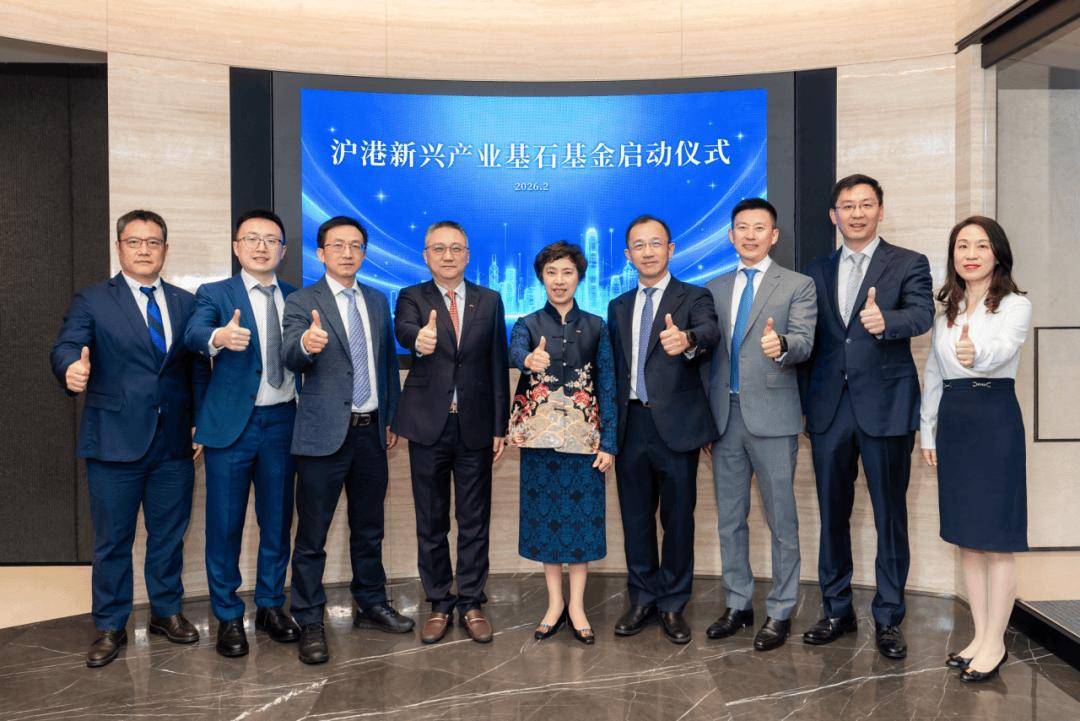
Group 1 - The cornerstone fund, initiated by Shanghai Industrial (Group) Co., Ltd. and Guotai Junan Securities Co., Ltd., officially launched on February 23, entering the substantive investment phase with a target total scale of 3 billion yuan and an initial scale of 1 billion yuan [2] - The fund focuses on three leading industries in Shanghai: integrated circuits, biomedicine, and artificial intelligence, aiming to support quality enterprises in their listings in Hong Kong and enhance financial and industrial collaboration between Shanghai and Hong Kong [2] - The fund will improve the matrix of state-owned capital funds in Shanghai, filling the gap in strategies for Hong Kong IPOs and secondary market investments, and addressing the financing needs of Shanghai enterprises for their final steps towards listing [2] Group 2 - The fund adopts an innovative "dual management" structure, managed by Shanghai Industrial's Hong Kong financial investment platform and Guotai Junan's asset management platform, with collaborative operations between Shanghai and Hong Kong [3] - In addition to cornerstone investments in quality enterprises' IPOs, the fund can participate in IPO anchoring and allocation of already listed Hong Kong stocks, maintaining liquidity through a no-lock-up strategy [3] - The fund will adhere to selection criteria of "good track, good company, good price," focusing on leading enterprises with core technologies, high growth potential, and stable cash flows, while also seizing opportunities from the internationalization of the RMB and the opening of financial markets [3]


国家外汇局肖胜:研究优化QFII,提升外资投资境内资本市场便利化程度
Xin Lang Cai Jing· 2026-02-11 04:18
Core Viewpoint - The State Administration of Foreign Exchange (SAFE) aims to enhance the quality of capital account openness in 2026, focusing on orderly promotion of direct investment, cross-border financing, and securities investment, while improving policies for cross-border investment and financing to better serve the real economy [1][2]. Group 1: Financial Market Opening - The financial market will see a gradual opening with optimized policies for Qualified Foreign Institutional Investors (QFII) to enhance the convenience of foreign investment in domestic capital markets [1]. - There will be a continued issuance of Qualified Domestic Institutional Investor (QDII) investment quotas to meet the reasonable demand of domestic investors for foreign securities [1]. - Efforts will be made to enhance the interconnectivity mechanisms such as Shanghai-Hong Kong Stock Connect and Bond Connect to improve the level of bilateral financial market openness [1]. Group 2: Cross-Border Fund Management - The policy for multinational companies' currency pools will be upgraded, promoting a unified currency pool framework that integrates both domestic and foreign currencies [2]. - In 2026, the cross-border fund management policy will be implemented nationwide for medium-sized enterprise groups, facilitating efficient cross-border fund operations for multinational companies [2]. Group 3: Foreign Investment and Financing Reforms - Significant reforms will be made to simplify foreign exchange registration procedures for foreign direct investment, enhancing the convenience of foreign investment fund usage [2]. - New policies will be introduced to support domestic enterprises in overseas lending and to facilitate cross-border trade activities [2]. Group 4: Financial Innovation and Regional Development - The focus will be on promoting technological and green finance, enhancing cross-border financing convenience, and expanding green debt policies to support innovation and low-carbon development [3]. - Regional financial opening and innovation pilot projects will be supported, particularly in free trade zones and key areas like the Guangdong-Hong Kong-Macao Greater Bay Area and Hainan Free Trade Port [3].
国家外汇管理局肖胜:研究优化合格境外机构投资者(QFII)跨境资金政策,提升外资投资境内资本市场便利化程度
Sou Hu Cai Jing· 2026-02-11 04:00
Core Viewpoint - The article emphasizes the focus on enhancing the quality of capital account openness in China by 2026, aligning with the "14th Five-Year Plan" for higher-level openness in various investment sectors [1] Group 1: Capital Account Management - The State Administration of Foreign Exchange (SAFE) aims to improve the quality of capital account management by promoting orderly advancements in direct investment, cross-border financing, and securities investment [1] - There will be a focus on enhancing the facilitation of cross-border investment and financing policies to effectively support the development of the real economy [1] Group 2: Financial Market Openness - The article outlines plans for orderly promotion of bilateral financial market openness, including optimizing the Qualified Foreign Institutional Investor (QFII) cross-border capital policies to enhance foreign investment convenience in domestic capital markets [1] - The SAFE will continue to issue Qualified Domestic Institutional Investor (QDII) investment quotas to meet the reasonable demand of domestic investors for overseas securities investments [1] Group 3: Connectivity Mechanisms - The article mentions collaboration with relevant departments to advance the construction of interconnectivity mechanisms such as the Shanghai-Hong Kong Stock Connect and Bond Connect, aiming to continuously improve the level of bilateral financial market openness [1]
国际市场环境向好为“玉兰债”扩容打开想象空间
Jin Rong Shi Bao· 2026-01-21 11:41
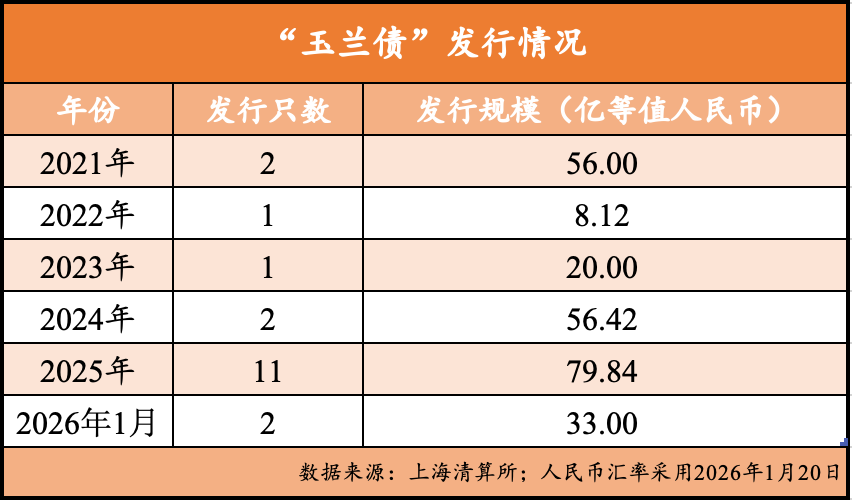
Core Viewpoint - The "Yulan Bond" market is experiencing significant growth, driven by China's financial market opening policies, strong offshore RMB liquidity, and increasing international investor demand for quality RMB assets [1][2]. Group 1: Issuance Growth - In 2025, a record 11 "Yulan Bonds" were issued, totaling approximately 8 billion RMB, marking a year-on-year growth rate exceeding 40% [1]. - As of early 2026, two "Yulan Bonds" have already been issued, with a total scale of 3.3 billion RMB [1]. - Cumulative issuance of "Yulan Bonds" has surpassed 25 billion RMB, covering both financial and non-financial institutions [2][3]. Group 2: Strategic Importance - "Yulan Bonds," named after Shanghai's city flower, are a unique issuance model for Chinese issuers to access international markets, supporting multiple currencies [2]. - The bonds enhance cooperation between domestic and international financial infrastructures, providing a new financing option for domestic entities [2]. Group 3: Market Dynamics - The issuance of "Yulan Bonds" is supported by the strengthening of China-Europe economic relations, with lower financing costs in RMB compared to EUR and USD [3]. - The first "Yulan Bond" from a free trade zone issuer was launched in January 2026, raising 3 billion RMB with a 1.95% interest rate, reflecting strong market demand [4][5]. Group 4: Future Outlook - The Shanghai Clearing House aims to further enhance the "Yulan Bond" market by introducing market-making systems and developing innovative products like green bonds [6]. - Expectations for 2026 include continued growth in issuance scale and diversification of participants, contributing to the internationalization of the RMB and the opening of financial markets [6].
21社论丨提高货币政策精准化程度,进一步放大政策效能
Xin Lang Cai Jing· 2026-01-15 22:30
Group 1 - The State Council announced eight structural policies to support the high-quality development of the real economy and enhance the level of capital account openness [1] - These policies aim to improve the precision of monetary policy and work in coordination with fiscal policies such as interest subsidies and risk cost sharing [1] - Structural monetary policy tools will see an increase in support, including a 0.25 percentage point reduction in interest rates for various tools and a dedicated 1 trillion yuan relending quota for private enterprises [1] Group 2 - The Central Economic Work Conference emphasized the flexible use of various policy tools, including potential interest rate cuts, to maintain ample liquidity and relatively loose social financing conditions [2] - The average reserve requirement ratio for financial institutions is currently 6.3%, indicating room for further reductions [2] - Consumer Price Index (CPI) showed a year-on-year increase of 0.8% in December 2025, marking the highest level since March 2023, which may influence decisions on interest rate adjustments [2] Group 3 - The "14th Five-Year" plan suggests enhancing the openness of capital accounts, focusing on direct investment, securities investment, and cross-border financing [3] - The stability of the renminbi exchange rate is supported by China's large market and complete industrial chain, with the CFETS renminbi index rising 7.2% since 2020 [3] - A robust regulatory framework is in place to manage exchange rate risks and maintain the renminbi's stability [3] Group 4 - To enhance capital account openness, reforms in cross-border financing and foreign exchange management will be implemented, including a unified management policy for domestic enterprises' overseas loans [4] - Policies will promote the centralized management of cross-border funds for multinational companies and upgrade the cross-border funding pool [4] - Financial market openness will be advanced through policies for overseas listings and further optimization of cross-border capital policies for qualified foreign institutional investors [4]
央行明确汇率导向:政策清晰一贯,无意靠贬值谋贸易优势
第一财经· 2026-01-15 15:53
Core Viewpoint - The article discusses the resilience of the Renminbi (RMB) exchange rate amidst increasing global financial market volatility in 2025, driven by factors such as monetary policy adjustments in developed economies and geopolitical disturbances [3]. Exchange Rate Trends - The RMB exchange rate faced depreciation pressure early in 2025 due to rising global tariff policy risks and the introduction of "reciprocal tariffs" by the U.S., with the offshore RMB rate dropping below 7.40 [5]. - Following improvements in both internal and external environments, the RMB began a gradual appreciation, with both onshore and offshore RMB rates breaking the 7 mark against the USD by year-end, reaching new highs since May 2023 [6]. Influencing Factors - Various factors influence the exchange rate, including economic growth, monetary policy, financial markets, geopolitical events, and unexpected risks. The People's Bank of China (PBOC) has emphasized the importance of managing expectations to prevent excessive fluctuations in the exchange rate [7]. - The RMB has shown resilience, with the CFETS RMB Index rising by 7.2% since 2020, despite a 1.9% increase in the USD index during the same period [7]. Future Outlook - The PBOC anticipates continued two-way fluctuations and elasticity in the RMB exchange rate, supported by China's large market size, complete industrial chain, and ongoing domestic demand potential [7]. - External uncertainties remain, particularly regarding interest rate adjustments in major economies and ongoing geopolitical shocks, which may impact exchange rate trends [7]. Cross-Border Capital Management - As international financial market volatility increases, there is a rising demand for enterprises to actively identify and manage exchange rate risks. The State Administration of Foreign Exchange (SAFE) is enhancing services for enterprises in this regard [9]. - In 2025, the scale of enterprises using foreign exchange derivatives to manage exchange rate risks exceeded $1.9 trillion, nearly doubling since 2020, with a hedging ratio of 30%, up 8 percentage points from 2020 [9]. Financial Market Opening - SAFE is set to introduce policies to better support enterprises in their international operations and foreign trade development, including improvements in cross-border capital management for multinational companies [10]. - The next steps include optimizing Qualified Foreign Institutional Investor (QFII) cross-border capital policies and continuing to issue Qualified Domestic Institutional Investor (QDII) investment quotas to enhance the level of financial market openness [10].

央行明确汇率导向:政策清晰一贯,无意靠贬值谋贸易优势
Di Yi Cai Jing· 2026-01-15 13:07
Core Viewpoint - The Chinese government emphasizes that there is no intention to devalue the currency for trade advantages, highlighting the resilience of the RMB amid global financial market fluctuations in 2025 [1][3]. Group 1: RMB Exchange Rate Trends - The RMB exchange rate experienced pressure early in 2025 due to rising global tariff risks and the introduction of "reciprocal tariffs" by the US, with the offshore RMB briefly falling below 7.40 [2]. - Following improvements in the internal and external environment, the RMB began a gradual appreciation, with both onshore and offshore RMB breaking the 7 mark against the USD by year-end, reaching the highest levels since May 2023 [2]. Group 2: Factors Influencing Exchange Rate - Multiple factors influence the exchange rate, including economic growth, monetary policy, financial markets, geopolitical events, and unexpected risks [3]. - The People's Bank of China and the State Administration of Foreign Exchange have strengthened expectation management to prevent excessive fluctuations in the exchange rate, with the CFETS RMB Index rising by 7.2% since 2020 despite a 1.9% increase in the USD index [3]. Group 3: Corporate Currency Risk Management - There is an increasing demand for companies to identify and manage exchange rate risks in cross-border trade and investment, with the scale of using foreign exchange derivatives for risk management exceeding $1.9 trillion in 2025, nearly doubling since 2020 [4]. - The foreign exchange management reform and financial opening are steadily deepening, providing long-term support for exchange rate stability, with plans to introduce policies to better support enterprises in international trade [4][5]. Group 4: Financial Market Opening - The State Administration of Foreign Exchange plans to optimize the Qualified Foreign Institutional Investor (QFII) cross-border capital policies and continue to issue Qualified Domestic Institutional Investor (QDII) quotas to enhance the level of financial market openness [5].
国家外汇局将进一步研究优化QFII相关政策 继续有序发放QDII投资额度
Sou Hu Cai Jing· 2026-01-15 09:52
Group 1 - The core viewpoint of the news is the Chinese government's commitment to enhancing the openness of capital projects as part of the "14th Five-Year Plan," focusing on direct investment, securities investment, and cross-border financing [2] Group 2 - The government plans to promote orderly financial market opening, including unified management of domestic enterprises' overseas listing funds and support for efficient financing in overseas markets [2] - There will be a continued effort to deepen cross-border investment and financing foreign exchange management reforms, simplifying foreign exchange registration procedures and supporting foreign investment in China [3] - New policies will be introduced to facilitate cross-border financing for high-tech and specialized small and medium-sized enterprises, with a focus on green development and low-carbon transition projects [3] Group 3 - The cross-border capital pool policy for multinational companies will be upgraded, benefiting over 1,100 multinational companies and 19,000 member enterprises, with cross-border receipts and payments amounting to $2.1 trillion [4] - The government aims to expand the integrated capital pool policy to more medium-sized multinational companies by 2026, supporting flexible and efficient cross-border capital operations [4]

落实中新金融合作最新成果,银河海外落地首单境外柜台债券业务
Zhong Guo Ji Jin Bao· 2025-12-31 07:39
Group 1 - The core viewpoint of the news is the successful completion of the first counter bond transaction between China and Singapore, marking a significant step in cross-border financial connectivity and the opening of the capital market [1][2] - China Galaxy Securities' overseas subsidiary, Galaxy Overseas, has become the first institution to participate in the newly established counter bond market between China and Singapore, showcasing its execution and innovation capabilities [1] - The transaction is part of a broader initiative to enhance financial cooperation between China and Singapore, as outlined in the 2025 financial cooperation document, which emphasizes the interconnectivity of the bond markets [1][2] Group 2 - Bank of China, as the only authorized Chinese bank for the counter bond project, has created an efficient channel for qualified foreign investors to access the Chinese interbank bond market, providing comprehensive services including account opening, trading, registration, and settlement [2] - The initiative aligns with China's Belt and Road strategy, promoting cross-border financial innovation and market connectivity, while supporting the internationalization of the Renminbi [2] - China Galaxy Securities aims to leverage its international presence to actively participate in Belt and Road projects, contributing to the dual opening of financial markets and the establishment of a higher-level open economy [2]


又见中小银行密集下调存款利率;寒武纪前三季度营收大增23倍
2 1 Shi Ji Jing Ji Bao Dao· 2025-10-19 11:27
Group 1: China-US Economic Relations - Chinese Vice Premier He Lifeng held a video call with US Treasury Secretary Janet Yellen and Trade Representative Katherine Tai to discuss important issues in bilateral economic relations and agreed to hold a new round of economic consultations soon [1] Group 2: Local Government Debt Management - The Ministry of Finance will continue to advance the new local government debt limit for 2026 ahead of schedule, focusing on major strategic projects and supporting local governments in resolving hidden debts and overdue payments to enterprises [2] Group 3: Financial Market Opening - The People's Bank of China aims to enhance the transparency and efficiency of financial markets, attract more foreign institutional investments, and support the construction of Shanghai as an international financial center [3] Group 4: Deposit Rate Adjustments - Several small and medium-sized banks have recently lowered deposit rates, with Shanghai Huari Bank reducing its three-year fixed deposit rate from 2.3% to 2.15%. Analysts expect further interest rate cuts in the fourth quarter [4] Group 5: Corporate Governance Regulations - The China Securities Regulatory Commission announced new corporate governance guidelines effective January 1, 2026, aimed at regulating the behavior of controlling shareholders and enhancing transparency in related party transactions [5] Group 6: Financial Performance of Companies - Cambrian's Q3 revenue reached 1.727 billion yuan, a year-on-year increase of 1332.52%, with a net profit of 567 million yuan. The company’s total revenue for the first three quarters was 4.607 billion yuan, up 2386.38% [6] - Zijin Mining reported a 10.33% increase in revenue to 254.199 billion yuan for the first three quarters, with a net profit of 37.864 billion yuan, reflecting a 55.45% year-on-year growth [8] Group 7: Trade Tariffs - President Trump signed an executive order imposing a 25% tariff on imports of medium and heavy trucks and parts, effective November 1, along with a 10% tariff on imported buses [9] Group 8: Market Events - Upcoming significant events include the release of China's Q3 macroeconomic data and the latest LPR values, as well as meetings involving the Federal Reserve and APEC finance ministers [11] Group 9: Investment Strategies - CITIC Securities suggests that after the end of the dividend rotation, investors should closely monitor new strategic themes related to resource security and supply chain safety, which may persist into the next year [12]


