
数字化转型

Search documents
e签宝构建数字签署基石,赛力斯港股IPO创全球车企募资纪录
Jin Tou Wang· 2025-11-07 07:00
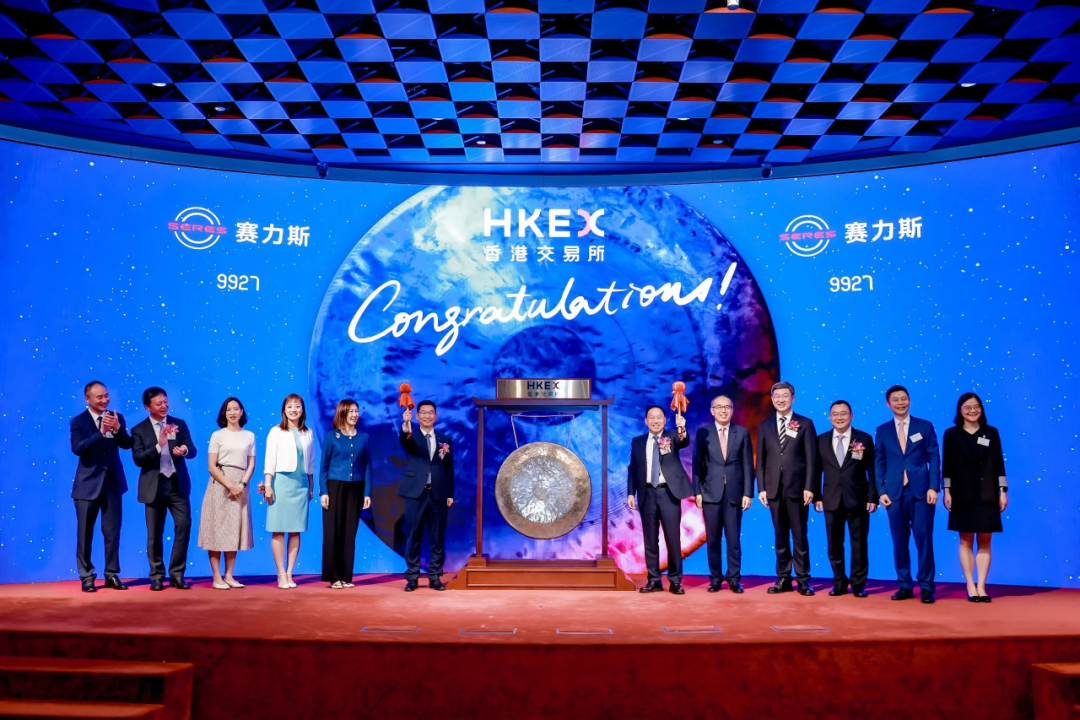
Core Viewpoint - The listing of Seres Group on the Hong Kong Stock Exchange marks a historic moment for China's electric vehicle industry, showcasing its brand strength and capital influence on the global automotive stage [3]. Group 1: Listing Details - Seres Group (stock code: 09927.HK) officially listed on the main board of the Hong Kong Stock Exchange, becoming the first luxury electric vehicle company from China to achieve a dual listing in both A-share and H-share markets [3]. - The net fundraising amount reached HKD 14.016 billion, making it the largest IPO by a Chinese car company to date and the largest car company IPO in Hong Kong since 2025 [3]. - The public offering was oversubscribed by 133 times, with total financing subscriptions exceeding HKD 170 billion, indicating strong market confidence in Seres' growth potential [3]. Group 2: Company History and Transformation - Seres Group has undergone a significant transformation since its inception in 1986, evolving from a spring factory to a key player in the electric vehicle sector [5]. - The company established its electric vehicle brand in 2016 and launched its first electric vehicle, the SF5, in 2019, marking its entry into the new energy vehicle market [5]. - In 2022, Seres deepened its digital transformation by partnering with e-signature provider e签宝, enhancing operational efficiency and compliance [6]. Group 3: Global Strategy and Digital Transformation - One of the core objectives of Seres' Hong Kong listing is to establish an international financing platform to support its global expansion strategy [7]. - The company has successfully expanded its global footprint to various regions, including Europe, the Middle East, the Americas, and Africa, with key markets in Norway, Germany, the UK, and Switzerland [7]. - The partnership with e签宝 has enabled Seres to streamline contract signing processes across different jurisdictions, significantly reducing contract signing times to minutes [7]. Group 4: Competitive Advantage - The integration of technological strength and digital infrastructure has become a core competitive advantage for Seres in the international capital market [8]. - The collaboration with e签宝 reflects the deeper logic of digital transformation in Chinese manufacturing, emphasizing the need for robust support for hard technology [8].


礼来中国与多家国内机构达成合作 内容围绕临床研究、数字化转型等领域
Jing Ji Guan Cha Wang· 2025-11-07 06:58
Core Insights - Eli Lilly China announced collaborations with several domestic institutions during the 8th China International Import Expo, focusing on enhancing clinical research efficiency, digital transformation in chronic disease management, and weight management and health education [1] Group 1: Clinical Research Collaboration - Eli Lilly China has formed a strategic partnership with the Shanghai Clinical Innovation and Translation Research Institute to integrate global R&D experience with local resources [1] - The collaboration aims to optimize clinical trial processes, deepen cohort studies, and accelerate the simultaneous development of innovative drugs [1] - A talent exchange mechanism will be established to continuously enhance clinical trial expertise and support the development of the Shanghai clinical research system [1] Group 2: Digital Transformation in Chronic Disease Management - At the expo, Eli Lilly China announced a strategic partnership with Alibaba Health and upgraded its existing collaboration with JD Health [1] - The partnerships aim to jointly promote the digital transformation of chronic disease management with ecosystem partners [1]

金融创新积厚成势 书写服务高水平开放时代答卷
Sou Hu Cai Jing· 2025-11-07 05:42
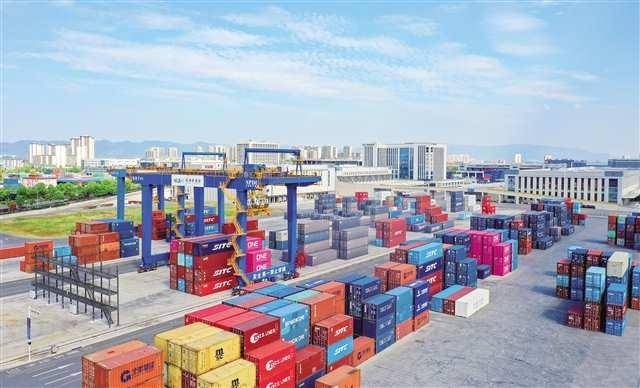
Core Viewpoint - The Bank of China Chongqing Branch is actively contributing to the construction of the Western Land-Sea New Corridor, aligning with national strategies for high-level opening-up and financial services [3][4]. Group 1: Financial Services and Cross-Border Trade - The Bank of China Chongqing Branch leverages its foreign trade and foreign exchange expertise to support local economic development, facilitating cross-border financial services for over 1,900 import and export enterprises, with a total cross-border settlement service amounting to approximately 13.7 billion USD and over 37 billion CNY in cross-border RMB settlements [5]. - The bank has provided over 1.3 billion USD in foreign currency trade financing to alleviate financial pressures on enterprises in various stages of the supply chain [5]. - The Chongqing Branch has established a digital transformation strategy to enhance the efficiency of cross-border financial services, successfully implementing multiple international trade scenarios and launching digital RMB bridge services [6]. Group 2: Policy and Regulatory Support - The Bank of China Chongqing Branch has been proactive in optimizing cross-border financial services in response to national policies, serving as a pilot bank for cross-border trade facilitation and processing approximately 27,000 high-level open trial transactions worth nearly 8 billion USD [7]. - The bank has implemented a cross-border financial service platform that has processed 1.6 billion USD in financing settlements since its inception, improving efficiency and reducing costs for enterprises [8]. - The Chongqing Branch has established a self-regulatory mechanism to ensure timely and accurate transmission of foreign exchange policies, reaching nearly 30,000 enterprise clients with policy updates [11]. Group 3: Infrastructure and Economic Development - The Bank of China Chongqing Branch supports major transportation infrastructure projects, including high-speed rail and airport expansions, contributing to the development of the Western Land-Sea New Corridor [12][13]. - The bank has created comprehensive financial solutions for logistics parks and other infrastructure projects, facilitating the integration of transportation, logistics, and industry [13]. - The Chongqing Branch is committed to enhancing the local manufacturing and technology sectors by providing tailored financial services to support technological upgrades and market expansion [13].
“兵支书”姚标民:让岭南盆景“长”出亿元大产业丨粤匠担当 兴农之道③
Nan Fang Nong Cun Bao· 2025-11-07 04:01
Core Viewpoint - The article highlights the transformation of Rui Ling Village into a thriving hub for bonsai cultivation, driven by the innovative leadership of Yao Biao Min, who has implemented a cooperative model to enhance productivity and income for local farmers [8][12][60]. Group 1: Background and Historical Context - Rui Ling Village is recognized as the birthplace of Lingnan bonsai, with a rich cultural heritage and a history of bonsai cultivation dating back 150 years [3][4][5]. - Over 80% of the village's registered population is involved in the bonsai industry, which has faced challenges due to fragmented operations and low pricing power [4][15][16]. Group 2: Organizational Transformation - In 2019, Yao Biao Min established the Guangzhou Rui Ling Bonsai Farmers Professional Cooperative, introducing a model that integrates party leadership, community involvement, and cooperative efforts [18][19]. - The cooperative provides "five unified" services, including standardized production processes and centralized purchasing, which have reduced costs by 15% [21][23]. Group 3: Technological Innovation - The cooperative collaborated with Hong Kong University of Science and Technology to develop the "Micro Landscape Intelligent Creation - AI Creative Bonsai System," which simplifies the design process for bonsai [32][35]. - The introduction of AI technology has revitalized the traditional bonsai art, making it more accessible to newcomers and enhancing creativity [37][38]. Group 4: Economic Impact - In 2024, the bonsai industry in Rui Ling Village achieved a production value exceeding 4 billion yuan, with collective income surpassing 2.1 million yuan [59][60]. - The cooperative's model has positively impacted over 250 households in surrounding villages, with an average income increase of 55,000 yuan per household [60]. Group 5: Sustainable Development - Yao Biao Min's approach has created a win-win mechanism that benefits farmers, the cooperative, and the village economy, fostering a shared value ecosystem [62][63]. - The success of the bonsai industry has attracted young people back to the village, contributing to local economic growth and community well-being [66][68].

“四环发力”赋能绿色转型
Zhong Guo Hua Gong Bao· 2025-11-07 02:21
Core Viewpoint - The energy and chemical industry plays a crucial role in promoting green and low-carbon development, with the refining engineering sector acting as a "builder" and "deliverer" that must integrate energy-saving and carbon-reduction concepts throughout all project phases [1][2]. Group 1: Technological Innovations - Implementing technological upgrades to achieve energy savings and carbon reduction is essential. Companies like Huagong are accelerating the development of high-efficiency energy-saving technologies for ethylene cracking furnaces, significantly reducing energy consumption per unit of product [1]. - Innovative engineering design is vital for lowering construction emissions. Huagong employs a prefabricated construction model, transferring many on-site construction tasks to specialized factories, which enhances project quality and significantly reduces energy consumption and emissions during construction [1]. Group 2: Digital Transformation - Advancing digital transformation can enhance carbon reduction efficiency. By utilizing big data, artificial intelligence, and digital twin technologies, companies can simulate and optimize production processes, ensuring stable and efficient operations while continuously lowering product energy consumption. Huagong's application of digital twin platforms at LNG receiving stations has led to a carbon reduction of approximately 13,600 tons annually, demonstrating significant economic benefits [2]. Group 3: Focus on Emerging Technologies - Companies should prioritize the development of emerging technologies such as green hydrogen production, green hydrogen synthesis of ammonia and methanol, and green aviation fuel to provide low-carbon raw materials and fuels for chemical processes. Additionally, there is a need to enhance efforts in carbon capture, utilization, and storage (CCUS) technologies to explore large-scale capture and resource utilization of carbon dioxide emissions from chemical plants [2].
2025石化化工行业数字化转型大会:以数字化转型重塑行业核心竞争力
Zhong Guo Hua Gong Bao· 2025-11-07 02:10
Core Viewpoint - The petrochemical industry is undergoing a digital transformation driven by new generation information technologies such as artificial intelligence, which is essential for enhancing productivity and reshaping core competitiveness [1][2]. Group 1: Digital Transformation Progress - As of September 2025, the digitalization rates of key processes, supply chain management, and production equipment connectivity in the petrochemical industry are significantly higher than the industrial average [2]. - Leading companies like Zhenhai Refining & Chemical and CNOOC Hainan Branch are playing a pivotal role in this transformation [2]. - Despite initial achievements, the industry faces challenges such as insufficient transformation motivation and a lack of low-cost, replicable solutions tailored to the petrochemical sector [2]. Group 2: Future Opportunities and Challenges - The digital business in the petrochemical sector is projected to create an additional market space of approximately 10 trillion yuan over the next five years [2]. - Key challenges include poor data flow, insufficient industrial software development, and the need for deeper integration of AI with petrochemical technologies [2]. - The focus for future AI applications in the industry should be on enhancing efficiency, complex decision-making, personalized demands, and new user experiences [2]. Group 3: Policy and Support Initiatives - The Ministry of Industry and Information Technology plans to strengthen planning and policy frameworks for digital transformation in the "14th Five-Year Plan" [3]. - Goals include improving overall productivity, enhancing safety, and promoting clean production through the establishment of application benchmarks and accelerated demonstration of AI technologies [3]. - Collaboration between academia and industry is emphasized to cultivate interdisciplinary talent necessary for supporting the digital transformation [3].

私行业务成银行“香饽饽”?七家客户数破10万大关
Xin Lang Cai Jing· 2025-11-07 00:20
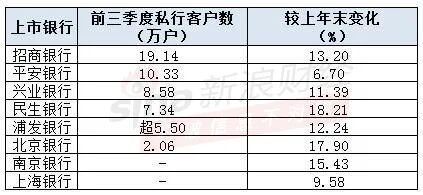
Core Insights - The private banking sector in China is experiencing significant growth, with several listed banks reporting an increase in private banking clients exceeding 10% [1][2][3] - Notably, Minsheng Bank, Beijing Bank, and Nanjing Bank have all reported client growth rates above 15% [1][2][3] - As of the end of September, the total number of private banking clients at Minsheng Bank reached 73,409, marking an 18.21% increase from the previous year [3][5] Private Banking Client Growth - Multiple banks have shown robust growth in private banking clients, with Minsheng Bank, Beijing Bank, and Nanjing Bank leading with growth rates over 15% [1][2][3] - As of September 30, 2023, the number of private banking clients at major banks is as follows: - China Merchants Bank: 191,418 clients, up 13.2% - Ping An Bank: 103,300 clients, up 6.7% - Minsheng Bank: 73,409 clients, up 18.21% - Beijing Bank: 20,586 clients, up 17.9% - Nanjing Bank: growth of 15.43% [3][5][6] Wealth Management Market Expansion - The wealth management market in China continues to expand, with listed banks reporting steady growth in wealth clients [8][9] - As of September 30, 2023, Ping An Bank reported 1.4911 million wealth clients, a 2.4% increase from the previous year [9] - Nanjing Bank's wealth clients grew by 16.31%, while Guiyang Bank's wealth clients increased by 7.77% [9] Asset Under Management (AUM) Growth - The total assets under management (AUM) for private banking clients at Minsheng Bank reached 1,014.72 billion yuan, an increase of 148.75 billion yuan, or 17.18% [3][5] - Beijing Bank's private banking AUM was 224 billion yuan, up 14.39% from the beginning of the year [4] Revenue from Wealth Management Services - Several banks reported positive growth in wealth management fee income, with many exceeding 15% growth [10][12] - For instance, China Merchants Bank's wealth management fee income reached 20.67 billion yuan, an 18.76% year-on-year increase [10] - Ping An Bank's wealth management fee income was 3.979 billion yuan, up 16.1% [10] Distribution and Sales Growth - The distribution of financial products has become a significant revenue source for banks, with many reporting substantial increases in sales [11][12] - For example, Ping An Bank's income from personal insurance sales grew by 48.7%, while its income from personal fund sales increased by 6.7% [12] - China Merchants Bank's income from fund sales rose by 38.76%, driven by increased sales and improved product structure [12]




“淘宝味”山姆惹怒会员,刘鹏上任首月就“踩雷”
阿尔法工场研究院· 2025-11-07 00:08
Core Viewpoint - The article discusses the decline of Sam's Club in China, highlighting consumer dissatisfaction due to perceived quality control issues and management changes, particularly the appointment of a new president from Alibaba, which has led to a loss of trust among members [4][6][20]. Group 1: Consumer Trust and Experience - Sam's Club has faced backlash from consumers after controversial product listings and changes to its app, which led to accusations of misleading marketing practices [5][11]. - The shift from real product images to AI-generated images has raised concerns about transparency, with consumers feeling deceived regarding product quality and information [5][13]. - Members who paid annual fees of 260 to 680 yuan have expressed feelings of betrayal as they perceive a decline in product quality and service [11][13]. Group 2: Management Changes and Internal Culture - The appointment of Liu Peng, a former Alibaba executive, as the new president has sparked criticism and led to a perception that Sam's Club is shifting towards a more data-driven, less customer-focused approach [6][20]. - Internal reports suggest a cultural shift towards a "KPI-first" mentality, resulting in overworked employees and a decline in service quality [14][16]. - The management style change after Andrew Miles' retirement has been linked to a deterioration in product quality and customer service, as the focus has shifted away from member value [16][22]. Group 3: Financial Performance and Market Position - Despite the decline in consumer trust, Sam's Club has reported a 5.9% increase in sales for the second quarter of fiscal year 2025, with membership fee revenue growing over 40% [19]. - The company plans to open eight new stores in 2025, aiming to capitalize on its position as a core growth engine for Walmart in China [24]. - Sam's Club's revenue in China surpassed 100 billion yuan in 2024, accounting for nearly two-thirds of Walmart China's performance [24]. Group 4: Competitive Landscape - Sam's Club faces significant competition from Alibaba's Hema and Costco, with Hema's innovative strategies posing a particular threat [25]. - A price war initiated by Hema has impacted Sam's Club's product offerings and market share, highlighting the competitive pressures in the retail sector [25][27]. - The article suggests that Sam's Club's previous dominance in the market is being challenged by competitors who are more agile and responsive to consumer needs [25][28].

2025年H1中国手机银行APP流量监测报告
艾瑞咨询· 2025-11-07 00:06
Core Insights - The mobile banking app has become a core platform for commercial banks to serve users, optimize experiences, and enhance competitiveness in the context of national digital transformation and financial technology innovation [1] - The integration of AI technology, refined operational strategies, and diversified user demands are reshaping the market landscape and value of mobile banking apps [1] User Flow and Behavior - The user flow of mobile banking apps in China is stabilizing between 650 million to 700 million from 2023 to 2025, indicating a saturated market [2] - The decline in user engagement is evident, with average daily usage time dropping from 4.93 minutes to 2.70 minutes and daily usage frequency decreasing from 4.54 times to 2.86 times [4] Operational Strategies - Refined operations are crucial for banks to break through in a saturated market, focusing on precise user insights and intelligent technology applications [6][7] - AI technology is enhancing refined operations by upgrading interaction experiences, strengthening risk control, expanding diverse scenarios, and improving data operations [9] Rankings and Performance - The top three banks by average monthly active users (MAU) are Agricultural Bank of China (24 million), Industrial and Commercial Bank of China (18.9 million), and China Construction Bank (10.6 million) [11][15] - Among joint-stock commercial banks, China Merchants Bank leads with over 7 million MAU, while other banks like Ping An Bank and CITIC Bank follow closely [16][17] - City commercial banks show strong performance, with Jiangsu Bank leading at 349.6 thousand MAU, and several banks achieving significant growth rates [19][20] Case Studies of Successful Apps - Agricultural Bank of China is integrating financial services with daily life scenarios, achieving a 4.8% growth in MAU [28][29] - China Merchants Bank continues to innovate its app to meet customer needs and leverage AI technology [31] - Beijing Bank is focusing on a digital transformation strategy that combines technology, scenarios, and services [35]




能源数字化领先企业、光刻材料龙头今申购
2 1 Shi Ji Jing Ji Bao Dao· 2025-11-06 23:47
New IPOs - Two new stocks are available for subscription: Hengkun New Materials (688727.SH) on the Sci-Tech Innovation Board and Nanguang Digital (301638.SZ) on the ChiNext Board [1] - Hengkun New Materials focuses on the research and industrial application of key materials for integrated circuits, being one of the few domestic companies capable of developing and mass-producing 12-inch integrated circuit wafer manufacturing materials [2][3] - Nanguang Digital provides comprehensive digital construction solutions for the power and energy sectors, aiming to drive digital transformation in the electricity industry [4] Hengkun New Materials - The company’s main products include SOC, BARC, KrF photoresist, i-Line photoresist, and TEOS precursor materials, with sales revenue projected to grow from 123.58 million yuan in 2022 to 344.19 million yuan in 2024 [2] - The company has a high customer concentration, primarily serving major domestic wafer manufacturers, with significant clients being among the top ten wafer fabs in China [2][3] - Hengkun New Materials has achieved a domestic market share of over 10% in 2024 for its photoresist materials, indicating its strong position in the market [3] Nanguang Digital - The company’s revenue from digital grid construction in the first half of 2025 is projected to be 75.51 million yuan, accounting for 48.64% of total revenue, with enterprise digitalization and digital infrastructure contributing 40.98 million yuan and 38.65 million yuan, respectively [5] - Nanguang Digital has developed key technologies such as the "Dihong" IoT operating system and the "Fuxi" dedicated control chip for the power industry, enhancing its technological capabilities [4] - The company is involved in several national key research and development projects, showcasing its commitment to advancing technology in the energy sector [4] DeLijia - DeLijia specializes in the research, production, and sales of high-speed heavy-load precision gear transmission products, primarily for wind power generation [7] - The company’s revenue from onshore wind power is projected to be 3.625 billion yuan in 2024, representing 98.57% of its total revenue [7] - DeLijia has established strong partnerships with leading wind turbine manufacturers, earning recognition as a top supplier in the industry [7][8] Zhongcheng Consulting - Zhongcheng Consulting ranks among the top engineering cost consulting firms in Jiangsu Province, with its revenue from engineering cost consulting being 566.96 million yuan in the first half of the year, accounting for 53.39% of total revenue [9][10] - The company has a strong team of qualified professionals, including 130 first-class cost engineers and 190 registered supervising engineers [9] - Zhongcheng Consulting faces risks related to accounts receivable, with the value of accounts receivable increasing significantly from 141.08 million yuan in 2022 to 209.01 million yuan in 2024 [11]