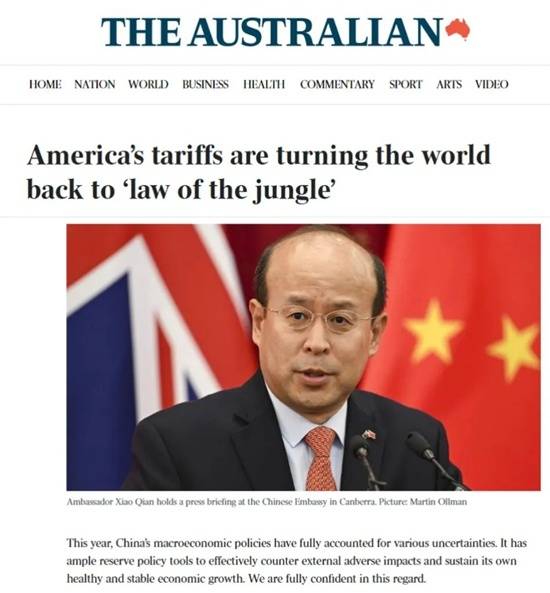
丛林法则

Search documents
美国又干了件石破天惊的事
Xin Lang Cai Jing· 2026-01-08 00:09
Group 1 - The article discusses a recent incident where the US military seized a large oil tanker flying the Russian flag in the North Atlantic, highlighting the assertive actions of the US even far from its shores [1][31] - The seizure of the tanker, which was allegedly attempting to transport oil from Venezuela, underscores the US's stance that its sanctions on Venezuelan oil are effective globally [5][35] - The incident raises questions about international maritime law and the implications of one nation's domestic laws being enforced on the high seas [4][36] Group 2 - The tanker, originally named "Bella 1," was under Russian protection, with Russian naval vessels escorting it at the time of the seizure, indicating a significant geopolitical tension [7][38] - The US's actions are seen as a dangerous precedent, potentially altering the rules of engagement on the high seas and showcasing a display of military power [8][39] - The response from Russia has been one of strong condemnation, asserting that the US's actions violate international law and calling for the humane treatment of the crew [14][45] Group 3 - The US's focus on Venezuela is evident, as it aims to cut off all oil exports from the country, thereby exerting economic pressure [20][52] - The US Secretary of State explicitly stated that Venezuela must cooperate with the US to transport oil and generate revenue, indicating a strategy of economic coercion [21][53] - The implications for Russia are severe, as the seizure undermines its efforts to maintain a network for transporting oil amidst Western sanctions, potentially leading to a significant economic impact [24][55]

专访拉美问题专家江时学:“唐罗主义”对国际秩序造成巨大冲击和破坏
Di Yi Cai Jing· 2026-01-05 09:01
Core Viewpoint - The recent military intervention by the United States in Venezuela marks a significant shift in international order, reflecting a move towards "jungle law" and undermining established international norms [2][6]. Group 1: U.S. Military Action - The U.S. military action against Venezuela is seen as the first step in implementing the new National Security Strategy, emphasizing U.S. dominance in the Western Hemisphere [2][3]. - Venezuela's selection as the target is attributed to its strong anti-American sentiment and its vast oil reserves, making it a strategic priority for the U.S. [3][4]. Group 2: Implications for Latin America - The intervention is expected to create a "chilling effect" on leftist governments in Latin America, as it serves as a warning to other nations [4]. - The U.S. openly acknowledges that its actions in Venezuela are intended as a show of force against leftist regimes across the region [4][6]. Group 3: International Law and Order - The military intervention raises concerns about the erosion of international law and the potential normalization of such actions, which could lead to a complete breakdown of the current international order [6]. - The situation highlights the need for a renewed commitment to building a community with a shared future for humanity, as existing frameworks fail to ensure basic sovereignty and security [6].
锐评|想替美国“补刀”,必然先捅到自己身上
Bei Jing Ri Bao Ke Hu Duan· 2025-10-17 10:50
Core Viewpoint - The Netherlands has imposed restrictions on ASML, citing "national security," effectively stripping Chinese shareholders of their normal control rights, which has been met with strong opposition from China [1][3]. Group 1: Company Actions - The Netherlands has taken aggressive actions against ASML, which are perceived as a blatant intervention and a form of plunder, indicating that there are external influences behind these moves [3]. - Dutch courts have revealed that the U.S. has communicated demands to the Netherlands regarding changes in ASML's management and governance structure to avoid sanctions under the "penetration rules" [3]. Group 2: Industry Implications - The actions against ASML coincide with the Netherlands' efforts to establish a "European Semiconductor Alliance" aimed at achieving strategic autonomy in critical semiconductor technologies [3]. - The U.S. "penetration rules" are seen as damaging to international trade order and global supply chain stability, which could harm the legitimate rights of Chinese investors and undermine trust among all international investors [4]. - The European automotive industry has expressed concerns that disruptions in ASML's chip supply could severely impact their operations, highlighting the interconnectedness of global supply chains [4]. Group 3: Broader Context - The Netherlands' actions are viewed as aligning with U.S. interests, which may ultimately backfire and harm its own economic development [4]. - The narrative suggests that reliance on coercive tactics and unilateral actions is outdated in the current globalized environment, urging a shift away from such "pirate" mentalities [4].


美国不平等协议产生三大风险
36氪· 2025-08-08 13:34
Core Viewpoint - The article discusses the implications of recent tariff agreements between the United States and various countries, highlighting a shift from a rules-based international trade system to one dominated by power dynamics, particularly emphasizing the unequal nature of these agreements [4][5][9]. Summary by Sections Tariff Agreements - The United States has reached tariff agreements with several countries, including the EU, which will eliminate tariffs on U.S. industrial products, such as a 10% tariff on automobiles [7][8]. - Other countries like Indonesia, the Philippines, and Vietnam have also agreed to reduce or eliminate tariffs on U.S. products, with Indonesia canceling tariffs on 99% of U.S. goods [7][8]. Impact on Global Trade - The agreements signify a departure from the World Trade Organization's (WTO) principle of Most-Favored-Nation (MFN) treatment, which could harm emerging and developing countries' access to markets [9]. - The fragmentation of global trade is highlighted, as countries like India and Brazil resist entering into unequal agreements with the U.S., while China responds with export controls [9][10]. Risks to International Order - The article warns of the risks associated with the collapse of a transparent WTO system, which could lead to increased inequality in international trade and hinder the growth of emerging economies [9]. - The potential for a divided global economy is discussed, with the emergence of distinct blocs centered around the U.S. and China, reminiscent of historical economic divisions that led to conflict [11][12].
装都不装了
Hu Xiu· 2025-07-10 06:36
Group 1 - The overall trend of the current era is characterized by a lack of pretense, with individuals no longer pretending to be something they are not [2][4][14] - There exists a duality of personal and collective truths, where individual realities are often overshadowed by the larger societal narrative [3][8] - The concept of a "Primordial Soup" suggests that the emotional and spiritual experiences of people across the globe are increasingly homogenized, transcending national boundaries [3][4] Group 2 - The absence of pretense can lead to a breakdown of social norms, making it easier for individuals to abandon their responsibilities [5][16] - The historical context of blind admiration between cultures highlights the tendency to idealize others while neglecting the complexities of one's own society [6][8] - The notion of "Fake it till you make it" reflects the importance of maintaining a facade in social interactions, as it can foster expectations and aspirations [10][12]
一场没有赢家的冲突:美国介入后的以伊局势变化及各方困境
Nan Fang Du Shi Bao· 2025-06-26 06:16
Group 1 - The core viewpoint of the articles revolves around the fragile ceasefire agreement between Israel and Iran, which is seen as a temporary halt to ongoing conflicts rather than a long-term resolution [1][3][4] - The ceasefire was announced by Trump, involving two 12-hour periods of cessation of hostilities, but the details of the agreement remain unclear, leading to confusion regarding the sequence of attacks and responses [2][3] - Experts express skepticism about the durability of the ceasefire, citing the lack of formal documentation, clear procedures, and enforcement mechanisms, which lowers the cost of violating the agreement [3][6] Group 2 - The U.S. has been criticized for its role in escalating tensions in the region, with Trump's administration being described as increasingly aggressive and interventionist, undermining its image in the international community [7][8] - There are conflicting reports regarding the effectiveness of U.S. airstrikes on Iranian nuclear facilities, with some intelligence suggesting that the strikes only delayed Iran's nuclear program rather than destroying it [5][6] - The current geopolitical landscape in the Middle East may shift towards a "law of the jungle" approach, where power dynamics dictate interactions, potentially leading to more confrontational strategies rather than diplomatic negotiations [7][8]
“极为恶劣的先例”——美国横逆中东再显“强食弱肉”本性
Xin Hua She· 2025-06-24 07:37
Core Viewpoint - The article discusses the aggressive actions of the United States regarding Iran's nuclear program, highlighting the use of military force and unilateral actions that undermine international law and order [1][2][3]. Group 1: U.S. Actions and International Response - The U.S. has escalated its military involvement in Iran, moving from tacit support of Israeli attacks to direct airstrikes on Iranian nuclear facilities, reflecting a pattern of coercive diplomacy [1][2]. - Experts criticize the U.S. for bypassing the United Nations and engaging in unilateral military actions, which they view as a significant threat to international order and a violation of the UN Charter [2][4]. - The actions of the U.S. are seen as a manifestation of "jungle law," where military power is used to impose its will on other nations, leading to a loss of credibility and trust in the U.S. on the global stage [2][7]. Group 2: Risks of Nuclear Proliferation - The military actions against Iran are perceived as a double standard, as the U.S. supports Israel, which is believed to possess nuclear weapons, while targeting Iran under the pretext of preventing nuclear proliferation [4][5]. - Analysts warn that the U.S. strikes could trigger a nuclear arms race, as other nations may feel compelled to develop their own nuclear capabilities for self-defense [4][5]. - The International Atomic Energy Agency (IAEA) has condemned the use of military force against nuclear facilities, emphasizing that such actions threaten global security and undermine diplomatic efforts [4][6]. Group 3: Impact on International Relations - The U.S. military intervention is damaging its global image and could lead to increased hostility towards American policies, as many countries view these actions as imperialistic and reckless [7]. - Experts argue for a return to multilateral diplomacy and respect for international law, emphasizing that military solutions are not viable for resolving international disputes [7].
【环球财经】谁把世界带入“乱纪元”?
Xin Hua She· 2025-06-23 13:45
Group 1 - The article discusses the significant geopolitical changes over the past two decades, particularly focusing on the Ukraine conflict and the evolution of the Iran nuclear issue, highlighting the unexpected escalation of violence and international tensions [1][2]. - The expansion of NATO, contrary to earlier promises made to Russia, is identified as a key factor that has contributed to the current instability in Ukraine, which is described as a "powder keg" situation [2]. - The U.S. withdrawal from the Iran nuclear deal is noted as a pivotal moment that led to increased tensions, with subsequent military actions by Israel against Iranian targets further complicating the situation [2][3]. Group 2 - The article emphasizes the perception that the U.S. government relies on military force as a primary means of achieving its objectives, as evidenced by recent airstrikes on Iranian nuclear facilities [3]. - The humanitarian crisis in Gaza is highlighted, with criticism directed at U.S. policies that appear to disregard civilian casualties in favor of military objectives [2][3]. - The narrative suggests a regression in political civilization, where deceit and the violation of international norms have become commonplace, reflecting a troubling trend in global governance [3].
国际观察丨“把世界当作丛林”——起底美国“掠夺性外交”
Xin Hua Wang· 2025-06-02 05:30
Core Viewpoint - The Trump administration's foreign policy is characterized as "predatory diplomacy," revealing a strong inclination towards territorial expansion and resource appropriation, reminiscent of colonial practices [2][3][4][5]. Group 1: U.S. Foreign Policy Actions - The Trump administration has openly expressed intentions to "take over" the Gaza Strip, suggesting that it is a target for U.S. acquisition [3]. - The administration has made claims about Canada becoming the "51st state," indicating a broader ambition to expand U.S. territory [3]. - There are reports of the U.S. pressuring Ukraine to relinquish mineral rights, showcasing a pattern of coercive diplomacy [3][13]. Group 2: International Reactions and Implications - Global reactions to U.S. actions have included significant market volatility, with investors beginning to divest from U.S. assets, indicating a shift towards "de-risking" from the U.S. economy [12]. - The European Central Bank's president has noted that the U.S.-led economic order is "collapsing," suggesting a potential decline in the dollar's dominance [12]. - Analysts have warned that the Trump administration's approach could lead to the fragmentation of the international order, with severe consequences for global trade and alliances [14]. Group 3: Historical Context and Ideological Underpinnings - The current U.S. foreign policy is compared to historical imperialistic actions, with references to the McKinley era and the Spanish-American War, highlighting a long-standing pattern of expansionism [7][9]. - The ideology of "Manifest Destiny" is invoked to explain the administration's belief in a natural right to expand U.S. influence globally [9][10]. - The Trump administration's approach is seen as a departure from traditional U.S. diplomacy, which has historically been more subtle in its imperialistic tendencies [11][14].
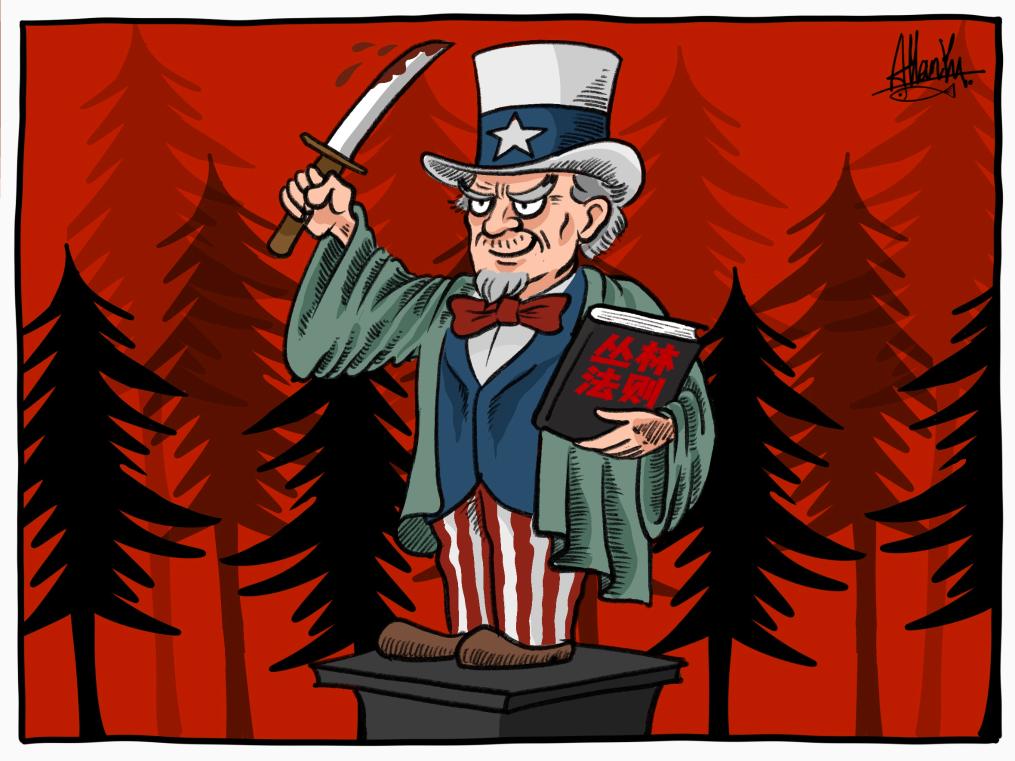
中国驻澳大利亚大使肖千在澳主流媒体发表署名文章就我反制美滥施关税阐明严正立场
Sou Hu Cai Jing· 2025-04-30 06:41
Core Viewpoint - The article emphasizes the dangers of unilateral trade practices by the United States, warning that such actions could lead the world back to a "law of the jungle" scenario, where all nations become victims of hegemonic behavior [1][3][4]. Group 1: U.S. Trade Practices - The U.S. is accused of imposing tariffs on all trade partners and coercing them into making significant concessions under the guise of "reciprocal tariffs," which undermines existing international rules [1][3]. - The article highlights that if the international community allows the U.S. to act unchecked, it will result in a return to a predatory international environment, affecting all countries, especially the weaker ones [3][4]. Group 2: China's Position - China advocates for resolving disputes through negotiation and opposes unilateralism and protectionism, asserting that it is committed to defending its rights and preventing a regression to a "jungle world" [4][5]. - The article underscores China's significant market potential, being the second-largest consumer market globally, and its commitment to high-quality development, which includes green, digital, and intelligent transformations [5]. Group 3: Multilateralism and International Order - Both China and Australia are portrayed as beneficiaries and supporters of a multilateral system and free trade, emphasizing the importance of collective action to maintain international stability [1][5]. - The article calls for a united effort from the international community to uphold the UN-centered international system and the international order based on law, contributing to regional and global prosperity [4][5].