
两化融合

Search documents
工信部:聚焦脑机接口、6G等领域,加强技术攻关、产品开发
Xin Hua She· 2026-01-12 05:11
Core Viewpoint - The Ministry of Industry and Information Technology emphasizes the need for a forward-looking layout and coordinated planning to accelerate the establishment of mechanisms for future industry investment growth and risk sharing, focusing on breakthroughs in fields such as quantum technology, humanoid robots, brain-computer interfaces, deep-sea polar exploration, and 6G technology [1] Group 1: Industrial Economic Stability - The industrial and information system aims to maintain stable growth in the industrial economy, achieving a year-on-year increase of 6% in industrial added value for large-scale industries in the first 11 months of 2025, with high-tech manufacturing and equipment manufacturing growing by 9.2% and 9.3% respectively [2] - The focus will be on four areas: "stability," "expansion," "innovation," and "growth" to ensure industrial economic resilience and vitality [2][3] Group 2: Modern Industrial System Development - The construction of a modern industrial system will prioritize advanced manufacturing, aiming for high-quality development through intelligent, green, and integrated manufacturing [4] - Traditional industries will undergo renewal through targeted improvement plans, while emerging industries will be supported to become new engines of growth [4][5] Group 3: Technology and Innovation Integration - The integration of technology and industry will be deepened, with a focus on enhancing the supply of high-quality technology and promoting the transformation of technological achievements [6][7] - The establishment of a national manufacturing innovation center and the implementation of major technology projects will be prioritized to boost industrial technological innovation capabilities [6][8] Group 4: Digital Transformation in Manufacturing - The push for deep integration of information technology and industrialization will continue, with significant advancements in digitalization, networking, and intelligence in manufacturing [9][10] - The focus will be on building a robust digital foundation and enhancing network connectivity to facilitate the transition to smart manufacturing [9][10]


工信部部长李乐成:推动未来制造、未来信息、未来材料等取得新突破
Xin Hua She· 2026-01-12 04:24
Core Viewpoint - The article emphasizes the importance of solidifying the foundation of the industrial economy and fostering new growth drivers to achieve a new phase of industrialization, as highlighted by the Ministry of Industry and Information Technology's strategic tasks for the 14th Five-Year Plan [1]. Group 1: Industrial Economic Stability - The industrial and information system aims to maintain stable growth in the industrial economy by focusing on four key areas: "stability," "expansion," "innovation," and "increase" [2]. - In the first 11 months of 2025, the industrial added value above designated size grew by 6% year-on-year, with high-tech manufacturing and equipment manufacturing increasing by 9.2% and 9.3% respectively [2]. - The focus will be on stabilizing key industries and regions, which account for 80% of the total industrial output [2]. Group 2: Expanding Effective Demand - Efforts will be made to enhance supply-demand matching, promote flexible manufacturing, and accelerate the application of new technologies such as artificial intelligence [3]. - The government plans to initiate major projects under the 14th Five-Year Plan and strengthen the coordination of industrial and trade policies [3]. Group 3: Promoting Value Creation - The strategy includes revitalizing traditional industries and fostering emerging industries to create new growth drivers [4]. - There will be a focus on major technological upgrades and enhancing standards, quality, and brand development [4]. Group 4: Enhancing Business Vitality - A system for nurturing high-quality enterprises will be established, with particular attention to improving cash flow for small and medium-sized enterprises [5]. - The government will monitor capacity in key industries and continue to address issues of overdue payments to businesses [5]. Group 5: Building a Modern Industrial System - The construction of a modern industrial system will be anchored by advanced manufacturing, with a focus on high-quality development [4]. - Traditional industries will undergo renewal, while emerging industries will be supported to become new pillars of economic growth [4]. Group 6: Deepening Integration of Technology and Industry - The integration of technology and industry will be accelerated, with significant advancements made during the 14th Five-Year Plan period [6]. - The government aims to enhance the supply of high-quality technology and strengthen the role of enterprises in innovation [6]. Group 7: Promoting Digital Transformation - The Ministry of Industry and Information Technology will focus on advancing the digital transformation of manufacturing, with 5G applications already integrated into 91 out of 97 major sectors of the economy [8]. - The plan includes building high-quality industry data sets and promoting digital transformation among enterprises [8]. Group 8: Enhancing Intelligent Manufacturing - The strategy will involve promoting artificial intelligence in manufacturing and developing intelligent manufacturing platforms [10]. - The government aims to create a multitude of application scenarios to drive high-quality development in the manufacturing sector [10].
权威访谈·开局“十五五”丨夯实基本盘培育新动能 奋力开创新型工业化新局面——访工业和信息化部党组书记、部长李乐成
Xin Hua Wang· 2026-01-12 03:31
Core Viewpoint - The "14th Five-Year Plan" emphasizes the construction of a modern industrial system and the strengthening of the real economy as a strategic priority, with a focus on promoting new industrialization and ensuring stable growth in the industrial economy by 2026 [1] Group 1: Measures for Industrial Economic Stability - The industrial and information systems will focus on four areas: "stability," "expansion," "innovation," and "growth" to ensure steady industrial economic growth [2] - In the first 11 months of 2025, the industrial added value above designated size grew by 6% year-on-year, with high-tech manufacturing and equipment manufacturing increasing by 9.2% and 9.3% respectively [2] - Key industries and regions account for 80% of the total industrial output, and targeted support will be provided to stabilize growth in these areas [2] Group 2: Enhancing Industrial Structure - The modern industrial system will be built around advanced manufacturing, focusing on high-quality development and the integration of intelligent, green, and collaborative manufacturing [4] - Traditional industries will undergo renewal through targeted improvement plans and the implementation of "Artificial Intelligence +" initiatives [4] - New industries will be developed as new engines for industrial upgrade, with the establishment of national demonstration bases for emerging industries [4] Group 3: Promoting Technological Innovation - The integration of technology and industry will be deepened, with a focus on enhancing the capacity for technological innovation in manufacturing [6] - A national manufacturing innovation center will be established to support high-quality technological supply and promote collaboration between enterprises and research institutions [6] - The government will implement policies to support small and medium-sized enterprises in enhancing their cash flow and innovation capabilities [6] Group 4: Digital Transformation in Manufacturing - The "14th Five-Year Plan" has made significant progress in promoting the digitalization, networking, and intelligence of manufacturing, with 5G applications integrated into 91 out of 97 major economic categories [8] - The focus will be on building a robust digital foundation and promoting the digital transformation of enterprises, especially in large-scale and small and medium-sized enterprises [8][9] - The development of industrial internet platforms and smart manufacturing solutions will be prioritized to enhance connectivity and application in key industries [9][10]
夯实基本盘培育新动能 奋力开创新型工业化新局面——访工业和信息化部党组书记、部长李乐成
智通财经网· 2026-01-12 03:28
Core Viewpoint - The "14th Five-Year Plan" emphasizes the construction of a modern industrial system and the consolidation of the real economy as a strategic priority, with a focus on promoting new industrialization and ensuring stable growth in the industrial economy by 2026 [1]. Group 1: Measures for Stable Industrial Growth - The industrial and information systems will focus on four areas: "stability," "expansion," "innovation," and "growth" to ensure steady industrial economic growth [2]. - "Stability" involves maintaining growth in key industries and regions, which account for 80% of total industrial output, by implementing growth support plans for major sectors like steel and petrochemicals [2]. - "Expansion" aims to enhance effective demand by promoting flexible manufacturing and accelerating the application of new technologies such as artificial intelligence [3]. - "Innovation" focuses on value creation and quality improvement through traditional industry renewal and the development of emerging industries [3]. - "Growth" seeks to enhance the vitality of business entities, particularly small and medium-sized enterprises, by improving cash flow and addressing overdue payments [3]. Group 2: Building a Modern Industrial System - The construction of a modern industrial system will prioritize advanced manufacturing, aiming for high-quality development through intelligent, green, and integrated manufacturing [4]. - Traditional industries will undergo renewal through targeted improvement plans and the implementation of "Artificial Intelligence+" initiatives [4]. - Emerging industries will be developed as new growth engines, with the establishment of national demonstration bases for emerging industries [4]. - Future industries will be strategically planned, focusing on breakthroughs in fields like quantum technology and 6G [4]. Group 3: Enhancing Technological Innovation - The integration of technology and industry will be deepened, with a focus on enhancing the capacity for technological innovation in manufacturing [6]. - The government will increase high-quality technological supply and support the establishment of innovation centers and platforms [6]. - Efforts will be made to strengthen the role of enterprises in technological innovation and improve policies supporting small and medium-sized enterprises [6]. - The transformation of technological achievements will be accelerated through the establishment of a national manufacturing pilot service network [7]. Group 4: Promoting Digital Transformation - The integration of information technology and industrialization will be advanced, with a focus on digital, networked, and intelligent transformation in manufacturing [8]. - The government will initiate actions to build high-quality industry data sets and promote digital transformation among enterprises [8]. - Network upgrades will be prioritized to enhance connectivity between digital and intelligent systems, with a focus on developing industrial internet platforms [9]. - The promotion of artificial intelligence in manufacturing will be emphasized to drive high-quality development [10].
工信部部长李乐成:深入实施“人工智能+制造”专项行动
Xin Hua Cai Jing· 2026-01-12 03:20
"重点"是要激活智能化引擎。智能化是当前两化融合最主要的推力。我们将深入实施"人工智能+制 造"专项行动,统筹布局通用大模型和行业大模型,培育一批重点行业智能体、智能原生企业;加快制 造业智能化升级,广泛挖掘人工智能应用场景,以万千"小场景"汇聚形成融合"大场面",为推动制造业 高质量发展注入强大动力。 资讯编辑:刘佳惠 021-26093916 资讯监督:乐卫扬 021-26093827 资讯投诉:陈跃进 021-26093100 免责声明:Mysteel发布的原创及转载内容,仅供客户参考,不作为决策建议。原创内容版权归Mysteel所有,转载需取得Mysteel书面授 权,且Mysteel保留对任何侵权行为和有悖原创内容原意的引用行为进行追究的权利。转载内容来源于网络,目的在于传递更多信息,方 便学习与交流,并不代表Mysteel赞同其观点及对其真实性、完整性负责。 "首先"是要筑牢数字化基础。一方面要牵住工业数据这个"牛鼻子",我们将启动工业数据筑基行动,建 设一批高质量行业数据集,壮大数据咨询、数据标注等经营主体。另一方面要加快制造业数字化转型, 推动规上企业"应转尽转",深化中小企业数字化转型赋能专 ...
工信部部长李乐成:深入实施“人工智能+制造”专项行动 培育一批重点行业智能体、智...
Xin Lang Cai Jing· 2026-01-12 03:20
工业和信息化部部长李乐成在接受采访时表示,工业和信息化部将坚持把两化融合作为推进新型工业化 的战略任务,加快人工智能等数智技术融合应用,拓展更多行业领域,推广更多典型应用,挖掘更多场 景价值。"首先"是要筑牢数字化基础。一方面要牵住工业数据这个"牛鼻子",我们将启动工业数据筑基 行动,建设一批高质量行业数据集,壮大数据咨询、数据标注等经营主体。另一方面要加快制造业数字 化转型,推动规上企业"应转尽转",深化中小企业数字化转型赋能专项行动。"关键"是要畅通网络化纽 带。网络化是连接数字化和智能化的桥梁,要一手抓"连接",加快网络技术升级,有序推进"双千兆"网 络向5G-A和万兆光网演进升级,着力破解工业标准协议兼容互通等瓶颈;一手抓"应用",培优做强工 业互联网平台,大力发展面向重点行业、关键场景的数智化软硬件产品和解决方案。"重点"是要激活智 能化引擎。智能化是当前两化融合最主要的推力。我们将深入实施"人工智能+制造"专项行动,统筹布 局通用大模型和行业大模型,培育一批重点行业智能体、智能原生企业;加快制造业智能化升级,广泛 挖掘人工智能应用场景,以万千"小场景"汇聚形成融合"大场面",为推动制造业高质量发展 ...
两化融合水平跃居西部第二
Xin Lang Cai Jing· 2026-01-11 22:25
Core Viewpoint - By the third quarter of 2025, Guizhou's industrial digital transformation is expected to advance significantly, with a projected integration development level of 63.5, marking a 3.4 increase from the end of 2024, ranking 14th nationally and 2nd in the western region [1] Group 1: Digital Transformation Progress - Guizhou has focused on the "8+4" key industries, cultivating over 50 typical application scenarios for industrial large models and establishing 5 advanced-level and 1 excellent-level smart factories [1] - The province has built 100 digital workshops and facilitated digital transformation for 1,200 enterprises above designated size [1] - The penetration rate of digital R&D design tools and the CNC rate of key processes have increased to 81% and 65.2%, respectively, with improvements of 1.8 and 2.4 percentage points from the end of 2024 [1] Group 2: Collaborative Deployment and Support - Guizhou has issued annual work guidelines and held meetings to coordinate implementation, jointly conducting data intellectual property pilot projects, serving over 1,000 enterprises, and registering 786 data intellectual property rights [1] - Five enterprises have been included in the 5G factory directory, and Guiyang has been selected as a national pilot city for "new technology transformation in manufacturing" [1] - Special funds have been allocated to support projects related to large models and smart factories, completing assessments for 1,000 enterprises on "smart transformation and digital transition," with 1,262 new enterprises evaluated for integration and 211 for intelligent manufacturing [1]
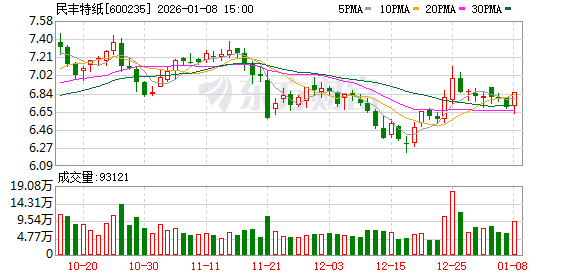
民丰特纸:公司高度重视两化融合工作
Zheng Quan Ri Bao· 2026-01-08 13:11
证券日报网讯 1月8日,民丰特纸在互动平台回答投资者提问时表示,公司一直来高度重视两化融合工 作,持续提升企业运营效率,降低企业运营成本,推动企业走好可持续、智能化、绿色化发展之路。 (文章来源:证券日报) ...

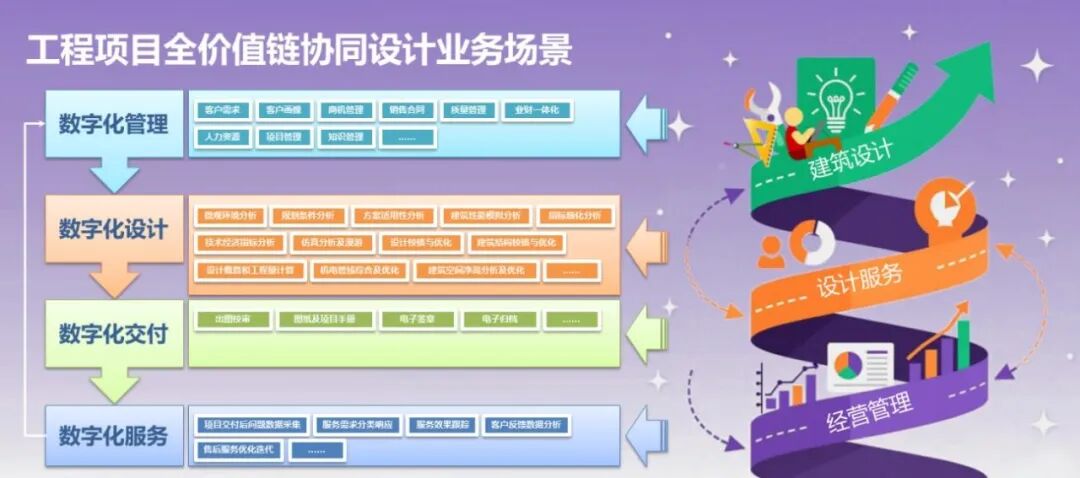
全国行业首家 | 华建集团及下属华东院、上海院喜获两化融合、数字化转型成熟度双体系AAAA评定证书
Xin Lang Cai Jing· 2026-01-04 11:29
Core Viewpoint - The company, along with its subsidiaries, has achieved a significant milestone by becoming the first in the industry to receive official certification from the Ministry of Industry and Information Technology in the field of digital transformation, marking a new stage in its digital and intelligent development [1][3]. Group 1 - The company successfully passed the upgraded integration management system and digital transformation maturity dual system AAAA-level assessment, with only 50 companies nationwide achieving this level, representing about 0.4% of all assessed companies [1][3]. - The company has constructed a new capability system for the digital age, deeply integrating information technology across various aspects such as "digital management," "digital design," "digital delivery," and "digital services," creating over twenty typical business scenarios [1][3]. - The optimization of business processes has led to continuous improvements in efficiency and quality, supported by systematic layouts in technology application and data governance, resulting in the formation of over a hundred business data models [1][3]. Group 2 - The company plans to further optimize its overall strategic layout, strengthen its digital integration capabilities, cultivate a talent pool with digital thinking, and foster a culture of digital innovation [5]. - The company is committed to exploring pathways for industry digital transformation and progressively advancing its digital transformation to a higher level, injecting new momentum into high-quality industry development [5].

江苏制造业“智改数转网联”成绩单
Xin Hua Ri Bao· 2025-12-30 21:45
Group 1 - The overall level of integration of information technology and industrialization in the province has reached 71.2, which is 5.7 higher than the national average, maintaining the first position in the country for 11 consecutive years [1] - The province has created a total of 14 national digital leading enterprises, 2 leading intelligent factories, and 67 excellent intelligent factories, with 15 enterprises recognized as global "lighthouse factories," the highest number in the country [1] - The penetration rate of digital R&D design tools among key enterprises is 94.2%, the CNC rate of key processes is 74.1%, and the digital management penetration rate is 90.4% [1] Group 2 - The province has organized over 60,000 enterprises to conduct online self-assessments of the integration of information technology and industrialization, and more than 50,000 enterprises have conducted online assessments of intelligent manufacturing maturity, both ranking first in the country [2] - A total of over 61,000 industrial enterprises have received free diagnostic services, achieving nearly full coverage of industrial enterprises above designated size [2] Group 3 - The province has focused on leading enterprises to set benchmarks, with a total of 67 national excellent intelligent factories built, ranking first in the country, along with 2 national leading intelligent factories and 1,808 provincial advanced intelligent factories [3] - For small and medium-sized enterprises, the province has cultivated 3,838 provincial intelligent manufacturing workshops and nearly 35,000 star-rated cloud enterprises, driving over 400,000 small and medium-sized enterprises to adopt cloud solutions [3] - The province has created 52 provincial-level "Internet + advanced manufacturing" characteristic industrial bases to promote overall transformation in industrial parks [3] Group 4 - The province has strengthened digital infrastructure, with a total of 318,000 5G base stations built, and all 13 prefecture-level cities have established gigabit cities [4] - The deployment of 10G PON ports has reached 1,958,000, and the computing power scale has reached 88.2 EFLOPS, leading domestically [4] - A multi-level and systematic industrial internet platform system has been established, with 5 national industrial internet dual-cross platforms and 338 provincial key industrial internet platforms built [4]