五篇大文章

Search documents
践行金融为民 以专业深度与服务温度护航高质量发展
Zhong Guo Zheng Quan Bao· 2025-12-23 20:18
Core Viewpoint - 2025 marks a milestone year for China's public fund industry, entering a new phase of high-quality development focused on investor returns [1] Group 1: Investment Research and Core Competitiveness - Investment research capability is the core competitiveness of fund companies, essential for wealth preservation and serving the real economy [1] - The action plan requires public institutions to strengthen a "platform-based, integrated, multi-strategy" investment research system, which Longcheng Fund is prioritizing [2] - Longcheng Fund has implemented an integrated investment research reform, ensuring deep coverage of hundreds of sub-industries through collaboration between fund managers and researchers [2] Group 2: Focus on Technology and Innovation - Longcheng Fund is actively seizing opportunities in new productive forces, focusing on technology innovation across various sectors such as "Technology + Medicine," "Technology + Military," and "Technology + Energy" [2] - The company has released a "Technology +" fund allocation guide to help investors capture the benefits of industrial upgrades [2] - Longcheng Fund is also developing a diverse index product system to meet different investor needs, including core broad-based, technology themes, and overseas markets [2] Group 3: Enhancing Investor Experience - The action plan emphasizes enhancing investor satisfaction as a core goal, guiding service upgrades in the industry [3] - Longcheng Fund is committed to building a robust industry culture and enhancing investor education through various initiatives, including online and offline educational programs [3] - The company has conducted over 7,000 offline educational activities, reaching more than 900,000 investors to improve financial literacy [3] Group 4: Commitment to National Strategies - Longcheng Fund aims to align with national strategies through the "Five Major Articles," focusing on high-quality development in the public fund sector [4] - The company is deepening its investment ecosystem in technology finance, particularly in hard technology sectors like artificial intelligence and renewable energy [4] - Longcheng Fund is extending its financial literacy initiatives to rural areas, promoting sustainable development in rural economies [5] Group 5: Green and Digital Finance - Longcheng Fund is responding to the national "dual carbon" strategy by enhancing research in green industries and guiding funds towards low-carbon sectors [5] - The company is focusing on digital transformation to improve operational efficiency and service precision, exploring paths for digital development in the industry [5] - In the field of pension finance, Longcheng Fund is actively participating in the third pillar of the pension system, aiming to create a diverse range of pension products [6]
中国票据市场2025年回顾与2026年展望
Zheng Quan Shi Bao Wang· 2025-12-22 00:49
Core Viewpoint - The Chinese bill market is expected to achieve solid progress in institutional improvement, infrastructure enhancement, and service to the real economy in 2025, marking the end of the "14th Five-Year Plan" and setting the stage for high-quality development in 2026 under the "15th Five-Year Plan" [1][2][17]. Group 1: Market Performance and Growth - In 2025, the bill market maintained a steady growth trajectory, with acceptance and discounting volumes both achieving double-digit increases. From January to November, the total acceptance amount reached 38.47 trillion yuan, a year-on-year increase of 13.24%, while the discounting amount was 30.62 trillion yuan, up 13.03% [4]. - The participation of small and micro enterprises in the bill market has significantly increased, reflecting a robust demand for financing and a more active market [3][4]. - The acceptance balance stood at 20.88 trillion yuan, growing by 8.34% year-on-year, while the discount balance reached 16.16 trillion yuan, up 12.10%, indicating enhanced support for the real economy [4]. Group 2: Market Structure and Dynamics - The bill market exhibited a clear structural differentiation, with commercial bills showing a notable increase in acceptance amount by 26.43%, while financial bills continued to shrink [4]. - The secondary market saw a decline in trading activity, with total trading volume dropping by 19.04% year-on-year, primarily due to a significant contraction in pledge-style repurchase transactions [5][6]. - Financial institutions are increasingly focusing on primary market operations, reducing reliance on secondary market transactions, which indicates a shift towards direct service for enterprise financing needs [6]. Group 3: Institutional and Regulatory Developments - The bill market's institutional framework made significant strides in 2025, with the issuance of guidelines to standardize supply chain financial services and enhance support for small and micro enterprises [7]. - The People's Bank of China and other regulatory bodies have initiated reforms to clarify the legal status of electronic and supply chain bills, aiming to improve the regulatory environment and stimulate market activity [25]. Group 4: Technological Advancements and Innovations - The integration of artificial intelligence into the bill market is accelerating, enhancing transaction efficiency, risk management, and service experience [13][14]. - The launch of the comprehensive service platform by the Shanghai Bill Exchange has improved transparency and accessibility for small and micro enterprises, facilitating better financing options [8][21]. Group 5: Future Outlook for 2026 - The bill market is anticipated to continue its growth trajectory, with acceptance and discounting volumes expected to increase by over 10% year-on-year, driven by ongoing support for small and micro enterprises [18]. - The market is likely to maintain a low interest rate environment, with seasonal fluctuations expected to persist, influenced by regulatory assessments and liquidity conditions [19]. - The bill market will increasingly align with national strategies, focusing on technology, green finance, and inclusive finance, thereby enhancing its role in supporting the real economy [20][23].
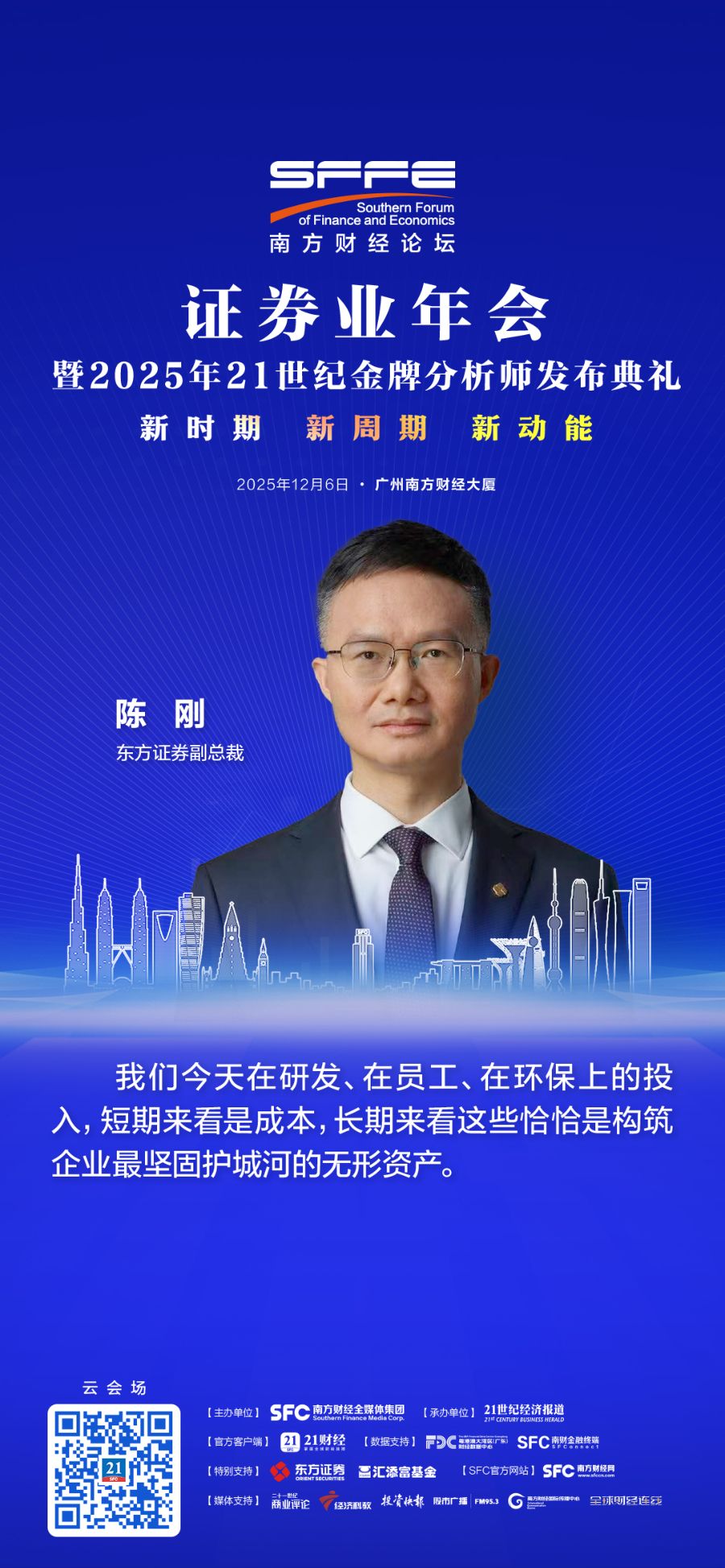
东方证券副总裁陈刚:从ESG到“五篇大文章” “破题”券商新时代角色定位
2 1 Shi Ji Jing Ji Bao Dao· 2025-12-16 23:12
ESG本质上是在帮助企业积累隐性的价值,他强调,"今天在研发、在员工、在环保上的投入,短期来 看是成本,长期来看恰恰是构筑企业最坚固护城河的无形资产。" 最后,陈刚谈到了资本的新使命:构建可持续发展模式,引导行业行稳致远。而实现这一使命的核心路 径,正是深耕"五篇大文章"。他认为,对于券商而言,这是一套清晰的"价值创造三层架构"——以ESG 理念为顶层设计的价值罗盘,以"五篇大文章"为承上启下的实践航路。 作为资本市场的重要参与主体,券商需通过三大角色转变,成为驱动这一蓝图落地的行动引擎——从价 格发现者转向价值发现者、从资本中介转向价值整合者、从市场参与者转向生态构建者,这一系列转变 共同勾勒出券商在新时代的角色定位。 演讲尾声,陈刚向证券业同仁发出呼吁,ESG理念指明了方向,"五篇大文章"规划了路径,这是行业必 须承担的责任,更是历史赋予的机遇,期待各方携手发力,共推行业高质量发展。 (作者:孙永乐 编辑:巫燕玲) 在高质量发展的新时代,证券业如何扎实做好"五篇大文章"?东方证券副总裁陈刚指出,破题的关键点 之一,在于深刻理解ESG理念与"五篇大文章"的内在统一。 陈刚在主题演讲中深入分析了ESG理念与" ...

从ESG到五篇大文章:东方证券陈刚“破题”券商新时代角色定位
2 1 Shi Ji Jing Ji Bao Dao· 2025-12-09 14:06
Group 1 - The core idea presented is the integration of ESG principles with the "Five Major Articles" as a unified approach to define a new financial paradigm and assign a new mission to capital [1][4] - ESG provides a new evaluation standard that expands corporate value from solely financial metrics to a comprehensive value encompassing environmental, social, and governance factors [4][6] - The "Five Major Articles" serve as an action guide for the financial industry, focusing on technology finance, green finance, inclusive finance, pension finance, and digital finance, which collectively promote high-quality development [4][7] Group 2 - The new financial paradigm shifts from short-term price speculation to long-term value investment, aligning with national strategies like the "14th Five-Year Plan" and the "Financial Power" strategy [7][9] - This paradigm introduces a pricing logic revolution, requiring the internalization of previously overlooked external costs and benefits into the pricing system through ESG rating models and innovative green financial tools [7][8] - The new paradigm emphasizes the integration of ESG factors into long-term investment strategies, enhancing risk management and ensuring stable, sustainable returns [7][9] Group 3 - The new mission of capital is to create a sustainable development model, guiding the industry towards stability and longevity [9][10] - The framework for this mission includes a three-layer value creation structure, with ESG principles as the guiding compass and the "Five Major Articles" as the practical pathway [9][10] - The transformation of brokerages is essential, shifting from price discoverers to value discoverers, from capital intermediaries to value integrators, and from market participants to ecosystem builders [10] Group 4 - The company, as a member of the industry, is actively exploring and implementing the "Five Major Articles" to contribute to high-quality development [11] - In technology finance, the company provides comprehensive financial services for tech enterprises, while in green finance, it has issued nearly 50 green bonds, raising around 200 billion yuan [11] - The company is also involved in inclusive finance, pension finance, and digital finance, establishing a systematic governance structure for sustainable development and receiving a AAA rating in the latest MSCI ESG assessment [11]

产融携手共绘五篇新章 北上协密集调研三家银行解码金融高质量发展
Zhong Guo Zheng Quan Bao· 2025-12-08 13:12
Core Viewpoint - The Beijing Listed Companies Association (北上协) is conducting a series of research activities focused on "high-quality financial development and the five major topics," engaging with major banks to explore how financial institutions can empower the real economy through various financial innovations [1][6]. Group 1: Beijing Bank - Beijing Bank prioritizes technology finance as its "first strategy" and emphasizes specialized and innovative enterprises as its "number one project" [2]. - The bank's board secretary highlighted that technological innovation is a core driver for reshaping the global economic landscape and that finance plays a crucial role in supporting technological innovation and industrial upgrades [2]. - The association's secretary-general expressed the importance of high-quality financial development as a support for national economic growth and encouraged listed companies to leverage financial market resources for innovation [2]. Group 2: Agricultural Bank - Agricultural Bank focuses on serving rural revitalization, with 40% of its loans and 44% of its deposits located in county areas [3]. - The bank is committed to urban business development while maintaining a collaborative operational model between urban and rural areas [3]. - The discussions during the research highlighted the bank's practices in technology finance and digital transformation, clarifying the direction for collaboration between enterprises and financial institutions [3]. Group 3: Postal Savings Bank - Postal Savings Bank aims to serve agriculture, rural areas, and small and medium-sized enterprises, enhancing service quality and creating new development momentum [4]. - As of Q3 2025, the bank reported positive growth in revenue and profit, with a net interest margin of 1.68% and a non-performing loan ratio of 0.94%, indicating strong performance in the industry [4]. - The bank's strategy focuses on aligning financial resources with key areas of economic development in the capital [4]. Group 4: Financial Development Strategies - The association emphasizes the need for financial companies to focus on strategic planning, risk prevention, technology empowerment, international cooperation, and talent development to ensure long-term growth [5]. - The "five major topics" are seen as essential for enhancing the quality of service to the real economy and mitigating systemic risks [6]. Group 5: Future Directions - The implementation of the "five major topics" is expected to transform banking service models, shifting from traditional collateral-based assessments to a focus on technology and future potential [6]. - Suggestions from company representatives include optimizing risk assessment models for technology finance and enhancing green finance standards [7]. - The association plans to continue facilitating high-quality exchanges and training sessions to foster collaboration among listed companies [7].



北京上市公司协会举办上市公司走进邮储银行活动
Zhong Zheng Wang· 2025-12-03 10:51
邮储银行北京分行副行长徐卫杰等出席会议,热烈欢迎北京地区上市公司代表们来邮储银行进行座谈交 流。徐卫杰表示,邮储银行作为国有大型商业银行,一直与经济社会发展同频共振、同向而行。截至 2025年三季度末,邮储银行实现营收、利润双双正增长,净息差1.68%、不良率0.94%,均保持行业优 秀水平,在稳健经营中不断为实体经济注入金融活水。邮储银行北京分行作为国有大行服务首都经济的 重要落脚点,始终将服务"五篇大文章"作为核心战略抓手,把金融资源精准投向首都经济发展的关键领 域,形成多点开花的发展局面。邮储银行北京分行科技金融事业部、个人金融部分别就邮储银行科技金 融及企业金融服务、财富管理及私人银行业务情况做出了详细的分享。 活动也邀请了邮储银行客户翠微集团到场,翠微集团结合自身区域发展战略及支持科技企业发展的定 位,围绕如何推动银、企、协多方协同、实现高质量发展等方面进行了分享。 与会上市公司代表踊跃发言,分享各自对金融高质量发展的理解和"五篇大文章"的建议,大家各抒己 见,现场气氛热烈。有企业代表提出,科技金融需进一步优化风险评估模型,提升对"专精特新"企业的 融资支持效率;绿色金融应强化信息披露标准,推动碳账 ...
【董事周·业务发展篇】行业前瞻趋势洞察:商业银行价值重构与未来发展趋势解析
Sou Hu Cai Jing· 2025-12-01 02:10
Core Viewpoint - The Chinese banking industry has transitioned from a phase of scale expansion to a critical period of transformation, focusing on value reconstruction due to narrowing net interest margins and increasing market competition [2][6]. Group 1: Driving Factors of Banking Transformation - The transformation of commercial banks from a scale-oriented to a value-oriented model is driven by three main factors: economic transition, policy guidance, and technological innovation [8]. - The shift in economic focus from high-speed growth to high-quality development necessitates banks to allocate resources towards key areas such as technology, green finance, inclusive finance, and elderly care [8]. - Policies are continuously guiding banks to return to their core functions and promote high-quality development through differentiated regulation and performance assessments [8]. Group 2: Key Areas of Focus - The "Five Major Articles" (Technology Finance, Inclusive Finance, Green Finance, Elderly Finance, Digital Finance) serve as the core framework for high-quality development in the financial sector, aligning with national strategies and addressing homogeneous competition [5][6]. - Digital finance acts as the foundational support for the other four areas, facilitating their development while also being driven by their business needs [6]. Group 3: Implementation Pathways for Value Reconstruction - The "Five Major Articles" provide clear pathways for banks to transform their business models, including encouraging loans combined with external investments in technology finance and supporting carbon credit financing in green finance [7]. - Policies and value reconstruction in banking resonate with each other, becoming significant drivers for transformation [7]. Group 4: Collaborative Development of Digital Financial Ecosystem - The evolution of the digital financial ecosystem is essential for both the implementation of the "Five Major Articles" and the transformation of the banking sector [9]. - Key characteristics of this ecosystem include coordinated policy efforts, deep technological application, and the construction of a digital ecosystem that empowers various industries [9][10]. Group 5: Positioning of Different Types of Banks - Large state-owned commercial banks are expected to lead strategic developments, focusing on national priorities such as technological self-reliance and rural revitalization [21]. - Joint-stock commercial banks should adopt differentiated strategies to avoid competition with state-owned banks, focusing on niche markets [21]. - Regional city commercial banks should leverage their local advantages to integrate into regional economic development, providing tailored financial solutions [21]. Group 6: Future Directions for Banking - The banking industry is moving towards a competition based on value rather than scale, with a focus on creating long-term value through service to the real economy [22]. - Banks that can accurately grasp policy directions, deeply integrate into industrial ecosystems, and continuously innovate service models will thrive in the value reconstruction process [22].
人行上海总部:“五篇大文章”相关贷款余额占比达37.5%
2 1 Shi Ji Jing Ji Bao Dao· 2025-10-30 08:49
Core Insights - The Shanghai financial sector has shown a stable growth trend in the first three quarters of 2023, with a year-on-year increase in social financing scale by 148.2 billion yuan and a historical low average interest rate of 2.72% for new corporate loans [1][4] Financial Performance - As of September 2023, the total loan balance in Shanghai reached 12.89 trillion yuan, reflecting a year-on-year growth of 7.1%, which is 0.6 percentage points higher than the national average [2] - The average interest rate for new corporate loans decreased by 43 basis points year-on-year, while the average interest rate for small and micro enterprise loans was 3%, down by 42 basis points [2] - The total deposit balance in Shanghai was 23.84 trillion yuan, with an 8.4% year-on-year increase, indicating improved market liquidity and economic activity [2] Financial "Five Articles" Initiative - The "Five Articles" initiative has made significant progress, with related loan balances increasing by 13.7% year-on-year, accounting for 37.5% of total loans [4] - The initiative has effectively addressed financing challenges, with a focus on technology, green finance, and elderly care sectors [3][6] Institutional Support - Major state-owned banks, such as Agricultural Bank of China, have played a crucial role, with their "Five Articles" loans accounting for 43% of their total loans, and significant growth in green and inclusive loans [6] - Securities firms like Shenwan Hongyuan have focused on key sectors, with a projected underwriting scale exceeding 930 billion yuan for 2024, enhancing their research and investment capabilities [6] Future Outlook - The People's Bank of Shanghai plans to continue implementing monetary policy tools and deepen financial reforms to align with Shanghai's high-quality development strategy [7]
忙信贷收官 储来年项目 银行开启“双线作战”
Shang Hai Zheng Quan Bao· 2025-10-16 18:48
Core Insights - As the fourth quarter begins, multiple banks are adopting a "dual-line operation" strategy, focusing on both completing annual credit targets and preparing for next year's projects [1][2] - Many banks have already completed their annual credit issuance goals, with a significant increase in lending to technology and green finance sectors [2] - Banks are actively reserving projects for next year, particularly targeting high-tech, green, and small and micro enterprises [3] Group 1: Credit Issuance and Strategy - After the National Day and Mid-Autumn Festival holidays, several banks are racing to finalize their credit issuance, with some having already met their annual targets [2] - A notable increase in credit issuance has been observed in the third quarter, particularly for technology and green finance enterprises, with some banks reporting significant growth in consumer loans during holiday periods [2] - Banks are focusing on foreign trade enterprises and enhancing digital products to support trade financing and risk management [2] Group 2: Project Preparation for Next Year - Banks are concentrating on project reserves for the upcoming year, with a focus on key sectors such as high-tech and specialized enterprises [3] - The project reserve strategy is aligned with the financial sector's "five major articles," emphasizing support for technology and small enterprises [3] - Some banks are implementing separate credit plans to ensure targeted support for green finance, technological innovation, and rural revitalization [3] Group 3: Competitive Landscape - The banking sector is experiencing intense competition characterized by "too many monks and too little porridge," leading to a perception of product homogeneity [4] - To combat this, banks are innovating customer acquisition methods and upgrading services to attract quality clients and optimize credit structures [5] - Digital tools are being utilized to enhance customer engagement and streamline credit processes, with some banks developing data models to better understand client needs [5]
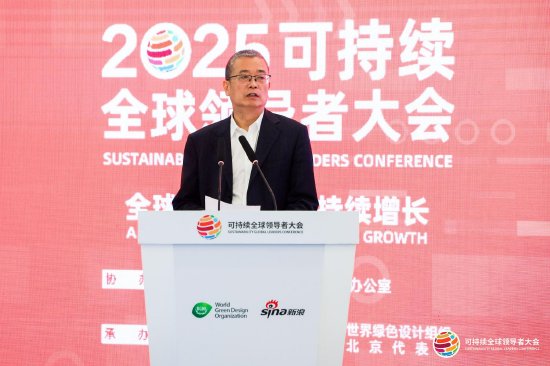
中信建投证券董事长、执委会主任刘成:“五篇大文章”是全球可持续发展的“中国方案”
Xin Lang Zheng Quan· 2025-10-16 08:16
Core Insights - The 2025 Sustainable Global Leaders Conference will be held from October 16 to 18 in Shanghai, focusing on "Collaborating to Address Challenges: Global Action, Innovation, and Sustainable Growth" [1] - The conference is co-hosted by the World Green Design Organization (WGDO) and Sina Group, with support from the Shanghai Huangpu District Government, aiming to explore new paths for sustainable development and inject "Chinese momentum" into global governance [1] Group 1 - The conference will feature approximately 500 prominent guests, including around 100 international attendees, such as political figures, representatives from international organizations, Nobel Prize winners, Turing Award winners, and leaders from Fortune Global 500 companies [1] - Liu Cheng, Chairman of CITIC Securities, emphasized that the "Five Major Articles" of finance are not only designed for China's financial development but also serve as a globally shareable systematic solution [2] Group 2 - Liu Cheng pointed out that traditional economic growth relies on a "high carbon, high consumption" model, while the "Five Major Articles" aim to break funding bottlenecks through technology finance, support "dual carbon" goals with green finance, and establish a new financial system that aligns with global sustainable development needs [2] - The new financial system proposed by Liu Cheng focuses on balancing development with environmental protection and efficiency with equity, providing a Chinese perspective on global sustainability [2]