
信托业转型

Search documents
32.43万亿元,行业已触底回暖?
Jin Rong Shi Bao· 2025-12-21 04:41
Core Viewpoint - The Chinese trust industry is showing signs of recovery with a significant increase in total trust assets and operational performance in the first half of 2025, indicating a potential turnaround after a challenging period [1][2]. Group 1: Trust Industry Performance - As of June 2025, the total trust asset scale reached 32.43 trillion yuan, a year-on-year increase of 20.11% [1] - The industry achieved operating income of 34.36 billion yuan, a 3.34% increase compared to the same period in 2024, and a total profit of 19.68 billion yuan, up 0.45% year-on-year [1] - The dual increase in operating income and profit suggests that the industry may have hit bottom and is beginning to recover, although challenges in transformation remain [1] Group 2: Asset Management Trusts - Asset management trusts accounted for approximately 24.43 trillion yuan, representing 75.33% of total trust assets, with a year-on-year growth of 22.46% [2] - The overall asset management industry in China reached 174.50 trillion yuan, with trust assets ranking third after insurance asset management and public funds [2] - Securities investment trusts have become the dominant product type, increasing from 34.34% of total asset management trusts at the end of 2022 to 51.09% by mid-2025 [2] Group 3: Non-standard vs. Standard Assets - The proportion of non-standard assets in the total scale of funds trusts decreased from 54.52% at the end of 2022 to 39.70% by mid-2025, indicating a shift towards standard assets [3] Group 4: Asset Service Trusts - Asset service trusts are experiencing steady growth and have become an important growth engine for the trust industry, with various applications in wealth management and social services [4] - By June 2025, the scale of wealth management, administrative management, risk disposal, and asset securitization service trusts reached 4.37 trillion yuan, 2.80 trillion yuan, 2.60 trillion yuan, and 1.43 trillion yuan, respectively [4] - Despite current limitations in the asset service trust business, there is potential for future development as regulatory barriers are gradually addressed [4] Group 5: Future Directions for Trust Companies - Industry experts suggest that trust companies should focus on their core business, improve governance, and develop clear strategic plans to establish sustainable business models and navigate the transformation towards innovation [5]
信托业转型进入核心能力系统性重塑新阶段
Zheng Quan Shi Bao· 2025-12-09 02:26
Core Viewpoint - The trust industry is at a critical juncture of policy empowerment and deep transformation, with a coherent and clear "policy combination" forming a transition blueprint from "classification regulation" to "deep cultivation and quality improvement" [1][3] Group 1: Value Restructuring - The value restructuring focuses on anchoring the essence of trusteeship, shifting from a past emphasis on "profit creation" to a comprehensive upgrade that practices the political and people-oriented nature of finance [1][3] Group 2: Business Restructuring - Business restructuring is closely tied to the new classification regulations, with the "three classifications" new regulations and the draft of the "Asset Management Trust Management Measures" providing a clear "blueprint" for business transformation [2][4] - In the asset management trust sector, the draft measures create a fair competitive environment for standard products, raising the requirements for trust companies' investment research capabilities amid a low-interest-rate environment [2][4] - The asset service trust sector aims to upgrade from "single service to scenario extension" [2][4] - The public welfare charity trust sector is showing a diversified development pattern supported by policies and practical exploration, forming a charity service system that covers diverse needs [2][4] Group 3: Organizational Restructuring - Organizational restructuring is necessary to adapt to transformation needs, focusing on strengthening four key capabilities: - Enhancing investment research capabilities by establishing a shared mechanism for public and private investment research, aiming for "full market coverage and cross-category linkage" [5] - Strengthening operational service capabilities through standard process optimization and service scenario extension to improve efficiency in account management, fund settlement, and information disclosure [5] - Enhancing risk management capabilities by embedding risk control into business decision-making, product design, and post-investment management [5] - Strengthening technological innovation capabilities by leveraging digital transformation to build intelligent service platforms and optimize system support [5]


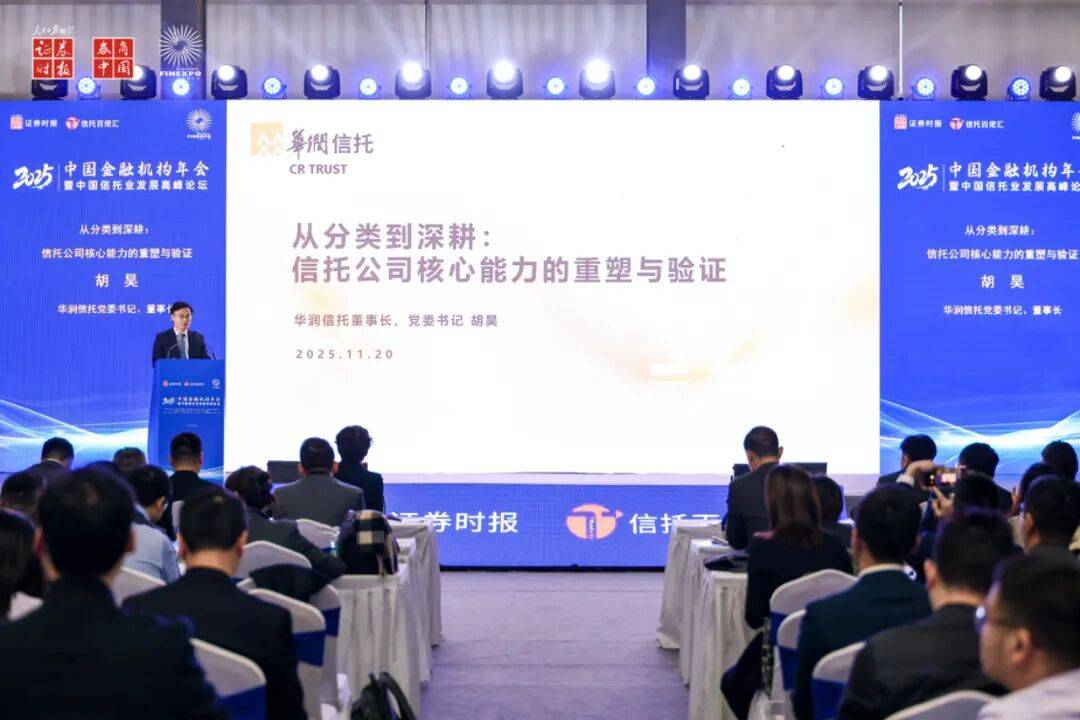
华润信托党委书记、董事长胡昊: 信托业转型进入核心能力系统性重塑新阶段
Zheng Quan Shi Bao Wang· 2025-12-08 23:28
Core Viewpoint - The trust industry is undergoing a significant transformation, entering a new phase of systematic restructuring of core capabilities, driven by a coherent policy framework that outlines a transition from classification to deep cultivation and quality enhancement [1] Group 1: Value Restructuring - The focus of value restructuring is to anchor on the essence of trusteeship, shifting from a previous emphasis on "profit creation" to a comprehensive upgrade that embodies the political and people-oriented nature of finance [1] Group 2: Business Restructuring - Business restructuring is essential for implementing value restructuring, guided by the new "three-category" regulations and the draft of the Asset Management Trust Management Measures, which provide a clear blueprint for deep cultivation in three major business areas [2] - In the asset management trust sector, the new regulations create a fair competitive environment, raising the bar for trust companies' investment research capabilities amid a low-interest-rate environment and increasing investor demand for stable returns, risk hedging, and long-term value [2] - The asset service trust sector aims to upgrade from single services to extended scenarios, while the public welfare and charity trust sector is developing a diverse service system supported by policies and practical exploration [2] Group 3: Organizational Restructuring - Organizational restructuring is necessary to meet transformation demands, focusing on enhancing four key capabilities: 1. Strengthening investment research capabilities to establish a shared mechanism for public and private investment research, aiming for comprehensive market coverage and cross-category synergy [2] 2. Enhancing operational service capabilities through optimized standard processes and extended service scenarios to improve efficiency in account management, fund settlement, and information disclosure [2] 3. Reinforcing risk management capabilities by embedding risk control into all aspects of business decision-making, product design, and post-investment management [2] 4. Boosting technological innovation capabilities by leveraging digital transformation to build intelligent service platforms and optimize system support [2]
华润信托董事长胡昊:信托业转型进入核心能力系统性重塑的新阶段
Sou Hu Cai Jing· 2025-12-04 14:40
Core Viewpoint - The speech emphasizes the transformation of the trust industry, moving from mere business adjustments to a systematic reshaping of core capabilities, driven by recent policies and the need to enhance quality over quantity in the context of building a financial powerhouse [2][3]. Group 1: Transformation of the Trust Industry - The current transformation of the trust industry is characterized by a shift from quantitative expansion to qualitative improvement, focusing on core capabilities and adhering to policies [2]. - The core tasks of transformation include returning to the essence of trust, reshaping core capabilities, and fulfilling the political and social responsibilities of finance [2]. Group 2: Four Dimensions of Reshaping - The four dimensions of reshaping are value, business, organization, and spirit, which collectively support the construction of core capabilities aligned with the role of trustees [3]. - Value reshaping involves deepening three role positions: being a long-term partner to the real economy, a faithful steward of people's wealth, and a foundational platform for social trust [3]. - Business reshaping focuses on three main areas: asset management trusts, asset service trusts, and public welfare trusts, with an emphasis on differentiated products and services [3][4]. Group 3: Organizational and Cultural Restructuring - Organizational restructuring aims to create an agile and efficient system that enhances four key capabilities: investment research, operational service, risk management, and technological innovation [4]. - Cultural restructuring integrates a trust culture that emphasizes honesty, prudence, and compliance, ensuring that every employee embodies the trust culture [4]. Group 4: Measuring Success and Future Collaboration - The effectiveness of the reshaping efforts will be measured against regulatory requirements and the ability to gain professional trust from clients, as well as resilience through market cycles [7]. - The ultimate goal is to build a collaborative ecosystem with banks, brokerages, and insurance companies, enhancing the overall financial service capability and trust's unique role in supporting national strategies and the real economy [7].
年内超45家机构高管变更 信托业掀人事迭代潮
Bei Jing Shang Bao· 2025-11-19 23:31
Group 1 - The trust industry is experiencing a wave of executive changes, with over 45 institutions undergoing core management transitions this year, including major players like CITIC Trust and Ping An Trust [1][3][4] - Recent approvals for executive positions have been issued by various financial regulatory bodies, indicating a trend of internal promotions and reallocations within trust companies [2][3] - The shift in management is largely driven by the upcoming implementation of the "three classifications" regulation in 2024, which will redefine trust business models and necessitate a transition away from traditional financing methods [4][5] Group 2 - The new regulatory framework requires trust company executives to possess enhanced professional skills and innovative capabilities to adapt to the evolving business landscape [5][6] - As competition intensifies, trust companies are focusing on improving internal governance and risk management, often leading to changes in management teams [5][6] - The trust industry has seen a significant shift in asset allocation, with funds directed towards the securities market rising to 46.17%, surpassing traditional financing sectors [5][6] Group 3 - Regulatory scrutiny has increased, prompting trust companies to prioritize compliance and operational standardization, which is influencing executive turnover [6][7] - The trend of frequent personnel changes is expected to continue in the short term, but stability is anticipated as companies refine their development strategies [7][8] - Trust companies are exploring new opportunities in areas such as green finance and ESG, while also addressing challenges posed by reduced financing demand in traditional sectors [7][8]

6张罚单合计1615万元 信托公司合规漏洞亟待修补
Zhong Guo Jing Ying Bao· 2025-11-14 19:38
Core Viewpoint - The regulatory penalties imposed on trust companies indicate a trend towards "normalization of strict regulation" in the industry, highlighting the need for improved compliance management as a foundation for the ongoing transformation of the trust sector [1][5][6]. Summary by Sections Regulatory Penalties - Jilin Trust was fined 300,000 yuan by the local financial regulatory bureau for charging trust fees under the guise of financial advisory fees without disclosing this to beneficiaries [2][3]. - In total, six trust companies have been penalized this year, with fines amounting to 16.15 million yuan, the largest being 6.6 million yuan against Zhongcheng Trust for multiple violations [2][3]. Compliance Issues - The penalties reflect issues such as business violations, personnel misconduct, and inadequate information disclosure, indicating weaknesses in internal control mechanisms and compliance processes within trust companies [4][5]. - Experts emphasize that the compliance gaps are rooted in the industry's historical focus on business over compliance during its transformation phase [4][5]. Trends in Regulatory Actions - The nature of violations has evolved from simple sales misconduct to more complex issues related to business risks, such as improper asset classification and non-compliant financing practices [5]. - The regulatory approach has shifted from institutional penalties to individual accountability, with fines imposed on responsible personnel, thereby enhancing accountability [5][6]. Importance of Compliance Management - Enhancing compliance management is crucial for the trust industry's transformation, as it helps mitigate risks, builds market confidence, and aligns with regulatory expectations [7][8]. - Effective compliance management can prevent adverse events that could disrupt the transition from non-standard financing to wealth management services [7][8]. Regulatory Measures and Recommendations - New regulatory measures focus on strengthening corporate governance, refining risk management rules, and improving transparency in information disclosure [8][9]. - Experts suggest that differentiated regulatory approaches based on company size and the introduction of compliance incentives could enhance overall compliance levels in the industry [8][9].
信托业需从“规模为王”转向“能力至上”
2 1 Shi Ji Jing Ji Bao Dao· 2025-11-13 02:43
Core Viewpoint - The release of the "Asset Management Trust Management Measures (Draft for Comments)" marks a significant regulatory upgrade for the trust industry, aiming to address structural issues and promote high-quality development in asset management [1][2]. Group 1: Transformation Goals of the Trust Industry - The trust industry aims to achieve three main transformation goals: clarify the legal positioning of asset management trusts, break the rigid repayment mechanism, and standardize investment operations to enhance professional asset management capabilities [2][3]. Group 2: Comprehensive Regulatory Framework - The Measures establish a comprehensive regulatory framework covering product positioning, establishment conditions, sales management, investment operations, risk control, and information disclosure [4]. - The Measures define asset management trusts as "private asset management products based on trust legal relationships," reinforcing the independence of trust property and severing the basis for rigid repayment [4][5]. Group 3: Investor Protection and Risk Management - A strict investor suitability management system is introduced, with specific requirements for investor qualifications and minimum investment amounts, enhancing preemptive investor protection [5][6]. - The Measures prohibit various business forms that deviate from the essence of asset management, including channel business and fund pool operations, aiming to eliminate past profit models that contributed to systemic risks [6][8]. Group 4: Industry Dynamics and Future Outlook - The Measures will accelerate the restructuring of trust companies' business models, leading to a potential short-term contraction in asset management scale but opening opportunities for standardized securities investment and family trusts [8][10]. - The industry is expected to shift from a "scale-oriented" approach to one focused on "capability," resulting in increased market concentration and the exit of underperforming firms [10][11]. - Trust companies will need to compete with other asset management institutions under unified regulatory rules, necessitating strategic positioning to leverage their strengths while addressing weaknesses [11].
资管规模突破30万亿元 信托业转型进入差异化发展新阶段
Zhong Guo Zheng Quan Bao· 2025-11-12 20:18
● 本报记者 吴杨 "十五五"规划建议提出,推动金融机构专注主业、错位发展。这为信托业转型发展提供了关键指引。截 至今年6月末,信托业资产管理规模32.43万亿元,较上年末增长9.7%。这一数据背后,是信托业告别传 统通道业务,在服务实体经济、响应监管导向、创新发展模式等领域的深度变革——从产业链金融的精 准滴灌到不动产信托的制度突破,从养老生态的构建到标品投资的布局,信托公司正以多元实践稳步前 行。 实体经济是信托业转型的核心锚点。今年以来,信托公司摒弃"资金放贷"传统模式,通过场景嵌入、工 具创新、生态共建等方式,将金融服务渗透到产业发展与民生保障的全链条,形成"实体赋能+民生托 底"的双重服务格局,而这一转型方向正与行业资产结构优化形成深度呼应。 形成差异化突围之势 中国信托业协会首席经济学家蔡概还近日透露,截至今年6月末,全行业资产管理规模32.43万亿元,较 上年末明显增长。这一增长并非简单回归,而是历经转型阵痛后的质效提升。2024年,信托业积极顺应 行业新变化和新要求,以业务"三分类"的改革深化促进转型发展。以财富管理信托业务为例,截至2024 年末,家族信托余额6435.79亿元。 超30万亿 ...
截至10月累计备案2582单,慈善信托规模逼近百亿元
Hua Xia Shi Bao· 2025-11-06 09:56
Core Viewpoint - China's charitable trust sector has transitioned from a policy exploration phase to a new stage of scaled development, with a total of 2,582 registered charitable trusts and a scale of 9.877 billion yuan as of mid-October 2025, nearing the 10 billion yuan mark [2] Policy Framework - The institutional framework for charitable trusts in China has evolved through a progressive structure of "legal foundation - policy clarification - detailed regulations," starting with the 2001 Trust Law and culminating in the 2023 classification of trust company businesses [3] - Continuous policy support is expected to guide the development direction and institutional boundaries for charitable trusts, with specific mandates for involvement in key areas such as rural revitalization and education [3] Industry Growth - The charitable trust sector is experiencing steady growth, with the number of registered trusts increasing by 306 and the scale rising by 1.314 billion yuan from the end of 2024 to September 2025, indicating a likely breach of the 10 billion yuan threshold by year-end [5] - Shanghai Trust has successfully raised 200 million yuan for over 150 charitable projects, benefiting more than 14,000 individuals across 24 provincial-level regions, focusing on education, healthcare, and rural revitalization [6] Operational Models - Shanghai Trust has established a dedicated charitable trust department to enhance business professionalism and sustainability, creating a collaborative network with various stakeholders to ensure transparency and traceability of projects [7] Challenges and Solutions - The charitable trust sector faces challenges related to public perception, professional capacity, and ecological collaboration, with misconceptions about its purpose and insufficient strategic alignment with national goals [8] - Recommendations for high-quality development include enhancing public education on charitable trusts, improving industry professional capabilities, and fostering multi-party collaboration to create a sustainable development framework [9][10]

定位私募、严管非标 资产管理信托管理办法公开征求意见
2 1 Shi Ji Jing Ji Bao Dao· 2025-11-05 23:07
Core Viewpoint - The recent release of the "Asset Management Trust Management Measures (Draft for Comments)" by the National Financial Supervision Administration aims to enhance regulation and risk prevention in the trust industry, marking a significant shift towards quality development and true asset management functions [1][2]. Regulatory Framework - The new measures consist of five chapters and eighty-five articles, clearly defining asset management trusts as private asset management products based on trust law relationships [1]. - The principles of "seller responsibility, buyer self-responsibility" are emphasized, prohibiting channel business, fund pool operations, and rigid repayment [1][2]. - The measures align with previous regulations, such as the "Asset Management New Regulations," to eliminate rigid repayment, multi-layered nesting, and introduce independent custody mechanisms [3]. Investor Standards and Sales Management - The measures significantly upgrade the standards for qualified investors, raising the investment threshold for individual investors and introducing requirements for institutional investors [2][3]. - Sales management is more stringent, with clear regulations on sales methods, documents, and institutions, and a prohibition on any form of capital preservation promises [3][4]. Investment Management Requirements - The measures outline strict management of trust assets, requiring clear legal relationships and adherence to specified investment ranges [4]. - Different asset categories must be managed distinctly, and investment cooperation institutions must meet specific qualifications [4]. Business Model Transformation - The new regulations signify a shift from a financing-driven model to an investment-driven model, requiring trust companies to focus on professional investment management capabilities [5][6]. - Revenue models will transition from fixed expected returns to net value fluctuations, compelling trust companies to enhance their investment research capabilities [5][6]. Industry Dynamics - The introduction of these measures is expected to lead to increased competition, with leading institutions leveraging research and resource advantages to capture market share [6]. - Smaller institutions may need to focus on niche areas or face consolidation or market exit, leading to higher industry concentration [6].