
光伏产能过剩

Search documents
亏损加剧,光伏企业晶科能源2025年预亏超59亿元
Xin Lang Cai Jing· 2026-01-23 10:44
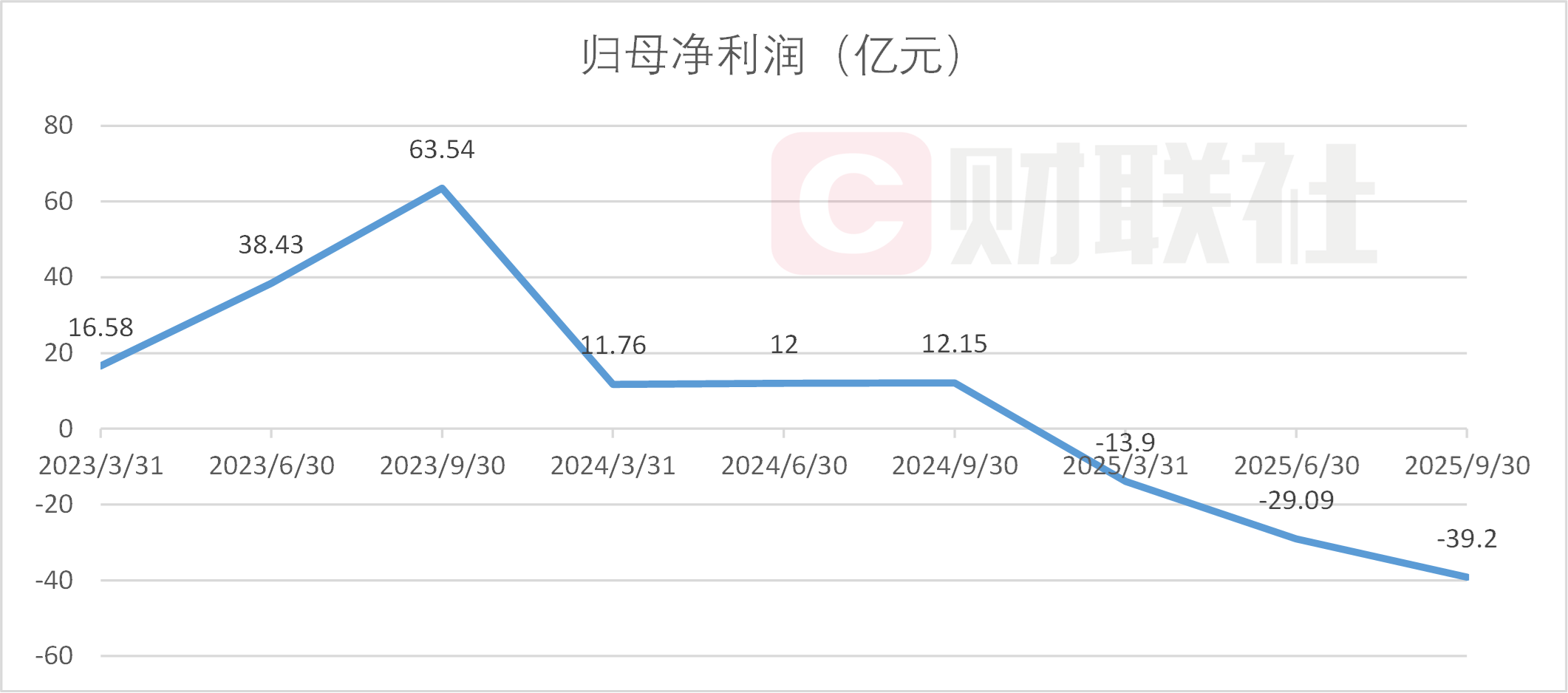
Core Viewpoint - JinkoSolar is expected to report a significant net loss for the year 2025, with projections indicating a loss between 59 billion to 69 billion yuan, marking a substantial decline from a profit of 0.99 billion yuan in the previous year [1][2]. Financial Performance - For the first three quarters of 2025, JinkoSolar reported a total revenue of 479.86 billion yuan, a decrease of 33.14% year-on-year [1]. - The net loss for the same period reached 39.2 billion yuan, representing a staggering decline of 422.67% compared to the previous year [1][2]. - The company's total assets as of September 30, 2025, amounted to 1,171.98 billion yuan, with total liabilities of 872.93 billion yuan, resulting in a debt-to-asset ratio of approximately 74.48% [1]. Market Conditions - The global photovoltaic industry is experiencing increased price volatility, compounded by trade protection policies in overseas markets, which have pressured profit margins across the solar component supply chain [3]. - JinkoSolar's high-power product shipments are relatively low, contributing to the overall decline in profitability [3]. - The competitive landscape in the photovoltaic sector remains intense, with many companies facing losses for nine consecutive quarters due to a temporary supply-demand imbalance [3]. Industry Outlook - The solar industry has been characterized by severe overcapacity since 2024, leading to continuous price declines and persistent losses among companies [4]. - A cautious outlook for 2026 suggests potential negative growth in new photovoltaic installations in China, following a surge in demand earlier in 2025 [7]. Credit Rating - Oriental Jincheng maintains JinkoSolar's credit rating at AA+ with a stable outlook, acknowledging the pressures from intense price competition and the company's significant exposure to foreign currency transactions [3]. Stock Performance - As of the latest trading session, JinkoSolar's stock reached a limit-up price of 6.9 yuan, with a trading volume of 37.68 billion yuan and a turnover rate of 5.75% [7].


光伏行业预亏警报大响,这些龙头连亏两年成定局
第一财经· 2026-01-15 13:23
Core Viewpoint - The photovoltaic industry is currently in a downward cycle, with major listed companies facing significant losses in their 2025 performance forecasts due to overcapacity, intense price competition, and a complex overseas trade environment [3][4]. Group 1: Industry Performance - Major photovoltaic companies such as Daqo New Energy, JinkoSolar, and Trina Solar have announced expected losses for 2025, indicating ongoing pressure in the industry [4][5]. - Daqo New Energy reported a net profit loss of 1.073 billion yuan for the first three quarters of the previous year, and the forecast indicates consecutive losses for 2024 and 2025 [5]. - JinkoSolar and Trina Solar are also expected to continue facing losses in 2025, with net profit losses of 3.92 billion yuan and 4.2 billion yuan respectively for the first three quarters of 2025 [6]. Group 2: Market Dynamics - The photovoltaic industry is experiencing a dual challenge of overcapacity and aggressive price wars, leading to compressed profit margins [11]. - The market is currently in a state of supply-demand imbalance, with the supply side undergoing significant reductions while demand growth remains uncertain [8][10]. - The recent rebound in polysilicon prices, which increased by over 50% from approximately 34,400 yuan/ton to 53,200 yuan/ton, has helped to narrow losses for Daqo New Energy [5]. Group 3: Future Outlook - Analysts predict that the photovoltaic industry will continue to face overcapacity issues and price wars in 2025, with a potential restructuring of supply and demand expected in 2026 [11]. - The implementation of export tax rebates for photovoltaic products may provide short-term support, but the actual demand impact remains limited [10]. - The rising costs of production due to high silver prices and polysilicon price increases are expected to continue pressuring the profitability of battery and module manufacturers [10][11].



光伏行业预亏警报大响,这些龙头连亏两年成定局
Di Yi Cai Jing· 2026-01-15 12:08
Core Viewpoint - The photovoltaic industry is currently experiencing a downturn, with major companies reporting significant losses due to overcapacity, intense price competition, and a complex overseas trade environment [1][2]. Group 1: Company Performance - Major photovoltaic companies such as Daqo New Energy, JinkoSolar, and Trina Solar have announced expected losses for 2025, indicating a prolonged period of financial strain [1][2]. - Daqo New Energy reported a net profit loss of 1.073 billion yuan for the first three quarters of the previous year, and it is expected to face consecutive losses in 2024 and 2025 [2]. - JinkoSolar and Trina Solar are projected to incur net losses of 3.92 billion yuan and 4.2 billion yuan respectively for the first three quarters of 2025, with no significant recovery expected in their annual performance [3]. Group 2: Market Dynamics - The photovoltaic industry is facing a dual challenge of overcapacity and price wars, leading to a significant decline in stock prices for leading companies [4]. - The market is currently in a state of supply-demand imbalance, with the supply side undergoing significant contraction while demand growth remains uncertain [4][6]. - The recent rebound in polysilicon prices, driven by production cuts, has helped narrow losses for some companies, but the overall demand remains weak [2][6]. Group 3: Future Outlook - Analysts predict that the overcapacity issue will persist into 2025, with ongoing price wars continuing to pressure profit margins [7]. - The implementation of export tax rebates may temporarily boost demand, but the long-term effects on the market remain uncertain [5][6]. - The industry is expected to undergo a transformation in 2026, with potential recovery in pricing and profitability as supply-demand dynamics are reshaped [7].
晶澳科技:预计2025年亏损45亿元-48亿元
Ge Long Hui A P P· 2026-01-12 14:52
格隆汇1月12日|晶澳科技公告,预计2025年度归属于上市公司股东的净利润亏损45亿元—48亿元,上 年同期亏损46.56亿元。扣除非经常性损益后的净利润亏损48亿元—51亿元,上年同期亏损42.69亿元。 基本每股收益亏损1.37元/股—1.46元/股,上年同期亏损1.42元/股。受近年来光伏主产业链各环节产能 集中释放导致阶段性供需失衡的影响,行业竞争持续加剧,各环节主要产品价格对比同期整体承压下 行,同时国际贸易保护政策加剧,导致公司组件销售均价和盈利能力同比下降。 ...

亿晶光电被“追账”1.4亿元 这几家光伏企业亦被责令退还投资款
Di Yi Cai Jing· 2025-12-30 13:33
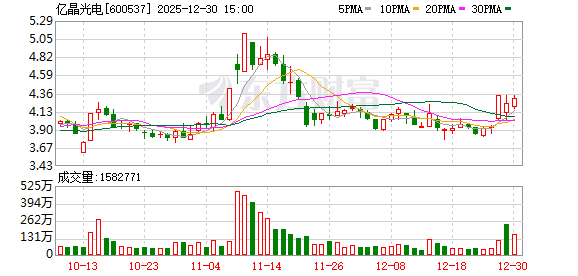
Core Viewpoint - The consequences of blind expansion in the photovoltaic industry are becoming evident, as companies face challenges in fulfilling investment agreements and are subject to financial penalties [2][5]. Company Summary - Yicheng Photovoltaic (600537.SH) announced that its Chuzhou photovoltaic project is facing a potential recovery of 140 million yuan due to non-fulfillment of investment agreements [2]. - The company has only completed 7.5GW of the planned 10GW capacity for its photovoltaic battery project, with further phases of the project not yet constructed [4]. - The company plans to gradually halt production at its Chuzhou base starting in October 2024 due to industry-wide downturns [4]. Industry Summary - The photovoltaic industry is experiencing a significant downturn, with component prices dropping sharply from 1.8-1.9 yuan/W at the beginning of 2023 to below 1 yuan/W by the end of the year, and further declining to below 0.6 yuan/W in 2024 [3][4]. - Many companies in the industry, including Yicheng Photovoltaic, are facing similar challenges with project compliance and financial liabilities due to the industry's cyclical nature [5]. - Instances of local governments demanding repayment of funds due to project delays are becoming more common, indicating a shift in accountability within the industry [5].

光伏股,“过山车”
Di Yi Cai Jing· 2025-11-14 04:10
Core Viewpoint - The photovoltaic sector experienced a rebound after rumors regarding a multi-crystalline silicon storage platform were debunked, leading to significant stock price increases for major companies in the industry [3][4]. Group 1: Market Reactions - Following the rumors on November 12, stocks of leading companies like Longi Green Energy and JA Solar approached their daily limit down, but recovered after clarifications from the China Photovoltaic Industry Association and JA Solar [3][4]. - On November 14, companies such as Canadian Solar and Hongyuan Green Energy saw stock increases of over 5%, continuing the upward trend from the previous day [3]. Group 2: Industry Challenges - The photovoltaic industry is currently facing a unique situation of overcapacity and slowing demand, compounded by price pressures across the supply chain [4]. - Analysts indicate that the global new production capacity from 2023 to 2024 is sufficient to meet the actual installation demand for 2025, with existing capacities potentially meeting demand until 2035 [4]. Group 3: Inventory Concerns - Global silicon material inventory has reportedly exceeded 500,000 tons, marking a historical high, with domestic inventory expected to surpass 400,000 tons by the end of the year [5]. Group 4: Export Opportunities - China dominates the photovoltaic product market overseas, with significant orders coming from regions like the Middle East, Southeast Asia, and India, despite trade barriers in the U.S. and India [6]. - The manufacturing cost of China's photovoltaic products is approximately 8 cents, significantly lower than the nearly 50 cents in the U.S. and 10-20 cents in other regions, providing a competitive edge in exports [6].




内卷外溢,中国光伏“卷”到中东
3 6 Ke· 2025-10-09 02:43
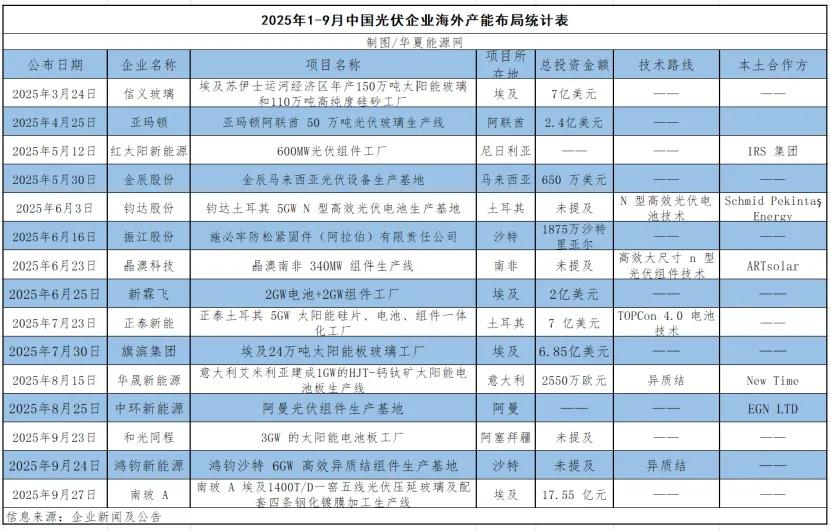
Core Points - Hongjun New Energy has signed a cooperation agreement with Saudi partners to establish a 6GW high-efficiency heterojunction component production base in Saudi Arabia, marking the company's first overseas factory since its establishment in 2023 [1] - The company is part of a trend where at least 15 Chinese photovoltaic companies have announced overseas factory plans since 2025, with total investments exceeding 20.4 billion yuan, primarily in the Middle East and surrounding regions [1][2] - The Middle East is becoming a favored destination for Chinese photovoltaic companies due to strong local demand for energy transition and favorable policy environments [11][12] Company Developments - Hongjun New Energy is a new player in the photovoltaic industry, focusing on the production and sales of heterojunction solar cells and components, with Gree Group as one of its shareholders [1] - Other companies, including He Guang Tong Cheng and Zhonghuan New Energy, are also planning to establish factories in the Middle East, indicating a broader trend of Chinese companies expanding their production capabilities internationally [6][7] Industry Trends - The trend of Chinese photovoltaic companies establishing overseas factories is largely driven by the need to escape domestic market saturation and seek new growth opportunities [10][14] - The Middle East's geographical advantage and the lack of trade barriers with Western markets make it an attractive location for Chinese companies to set up production facilities [11][12] - The total planned photovoltaic capacity in the Middle East and surrounding regions is approximately 276.6GW, indicating a potential oversupply and intense competition in the market [2][12] Technological Developments - The projects in the Middle East are primarily adopting n-type technology, with Hongjun New Energy's 6GW component base being the first heterojunction project in the region [8] - The photovoltaic glass industry is also seeing a shift, with several manufacturers planning to establish production lines in the Middle East to mitigate domestic overcapacity issues [9][10] Market Challenges - The rapid expansion of photovoltaic capacity in the Middle East may lead to market oversupply and increased competition, raising concerns about the sustainability of profit margins for companies operating in the region [10][12] - The industry must be cautious of repeating past mistakes seen in Southeast Asia, where trade barriers and investigations led to significant losses for Chinese companies [15]




转战海外盈收改善 中润光能再闯港交所
BambooWorks· 2025-09-16 10:32
Core Viewpoint - The recent listing application from Jiangsu Zhongrun Solar Energy Co., Ltd. indicates a significant turnaround in financial performance, with nearly all key financial metrics improving in the first half of the year, returning to profitability [1][3]. Financial Performance - The company reported a revenue increase of 27% year-on-year to 7.47 billion yuan (approximately 1.06 billion USD) in the first half of the year, compared to 5.9 billion yuan (approximately 0.84 billion USD) in the same period last year [7]. - The gross profit margin has returned to positive territory, and the company achieved a profit of 1.21 billion yuan (approximately 0.17 billion USD) in the first half, compared to a loss of 717 million yuan (approximately 0.1 billion USD) in the previous year [8]. Market Strategy - The company has shifted its focus from the highly competitive domestic market to international markets, which has been a key factor in its recovery [5][6]. - International sales surged over twofold to 4.76 billion yuan (approximately 0.67 billion USD), accounting for about two-thirds of total revenue, while sales in mainland China dropped by 40% to 2.7 billion yuan (approximately 0.38 billion USD) [7][8]. Product Transition - The company has rapidly transitioned to N-type solar cells, with revenue from N-type cells increasing nearly twofold to 5.33 billion yuan (approximately 0.76 billion USD), representing 71% of total revenue [7][8]. - In contrast, revenue from P-type cells declined by two-thirds to 985 million yuan (approximately 0.14 billion USD) [7]. Production Capacity - The company is expanding its production capacity in Laos, which is less affected by anti-dumping tariffs imposed by the U.S. and other countries, with a total capacity of 7.6 GW, accounting for one-third of its total capacity of 22.8 GW as of June [8]. - The Laos production facility contributed 35.7% of the company's solar cell output in the first half of the year, a significant increase from 2% in 2023 [8].

中天火箭20250915
2025-09-15 14:57
Summary of Zhongtian Rocket Conference Call Company Overview - Zhongtian Rocket is a leading company in the small solid rocket industry, established in 1989 as part of the Aerospace Science and Technology Group. The company has a strong technical foundation and has developed various products including rain enhancement rockets and small guided missiles [11][12]. Industry Insights Weather Modification Industry - Zhongtian Rocket holds over 50% market share in the rain enhancement and hail suppression rocket sector, benefiting from global warming and supportive policies. The demand for these rockets is expected to grow due to increasing extreme weather events and government initiatives aimed at advancing the weather modification industry by 2035 [2][6][15]. Military Products - The demand for small solid missiles has surged due to increased global military trade and regional conflicts. These missiles are suitable for low to medium intensity warfare and have performed well since their introduction in 2018. The Chinese defense budget has maintained over 7% growth for three consecutive years, further driving demand for consumables like rockets [2][7][17][18]. Photovoltaic Sector - The photovoltaic business faces challenges from industry overcapacity and price wars. However, Zhongtian Rocket is exploring new applications for carbon-carbon thermal field materials, such as high-performance carbon-ceramic brake discs for vehicles, which have gained recognition from downstream manufacturers [2][4][16]. Financial Performance - From 2020 to present, the company's revenue and net profit have shown a trend of initial growth followed by decline, primarily due to decreased procurement of carbon-carbon thermal field materials and rain enhancement rockets. However, in the first half of 2025, the proportion of rain enhancement rockets increased to 58%, leading to a rebound in gross margin to 23% [2][13][14]. Future Growth Potential - The company projects net profits of 76 million yuan, 156 million yuan, and 218 million yuan for 2025, 2026, and 2027, respectively. The target stock price is set at 70.30 yuan, indicating a potential upside of 45.96% based on the market capitalization as of September 9, 2025 [4][10]. Key Catalysts for Growth - Potential catalysts for Zhongtian Rocket's growth include the introduction of specific policies related to meteorological special bonds, approvals for military exports, and the implementation of military industrial plans outlined in the "15th Five-Year Plan" [8][9]. Investment Opportunities - The company is seen as having strong core competitiveness in military and rain enhancement sectors. Despite short-term pressures in the photovoltaic segment, technological innovations may lead to a turnaround. Additionally, potential asset restructuring could provide further positive impacts [9][10].

六部门联合召开光伏产业座谈会 聚焦规范行业竞争秩序
Zhong Guo Jing Ying Bao· 2025-08-20 07:22
Core Insights - The meeting held on August 19 by multiple government departments emphasized the importance of regulating competition in the photovoltaic (PV) industry for its high-quality development [1] - The PV industry is experiencing rapid growth, with production capacity expected to exceed 1200 GW by the end of 2024, but faces challenges such as chaotic competition and market fluctuations [1] - The current intense competition in the PV sector has led to significant price drops for key products, with prices for polysilicon, silicon wafers, and PV modules falling to 1/9, 1/5, and 1/3 of their peak values, respectively [2] Group 1 - The meeting called for enhanced industry regulation and management of PV project investments to ensure sustainable development [1] - There is a need to curb low-price competition and establish a pricing mechanism to combat illegal practices such as selling below cost and false marketing [1] - The China Photovoltaic Industry Association predicts that global PV installations will reach 570-630 GW this year, indicating a severe oversupply in the industry [1] Group 2 - The intense competition has resulted in insufficient profit margins and even losses for companies in the PV sector [2] - Recent government initiatives aim to address disordered competition, including a call for the exit of outdated production capacity and a focus on quality over quantity [2] - The industry is encouraged to innovate and improve product quality to transition from a "scale advantage" to a "quality advantage" [2]