
全屋智能生态

Search documents
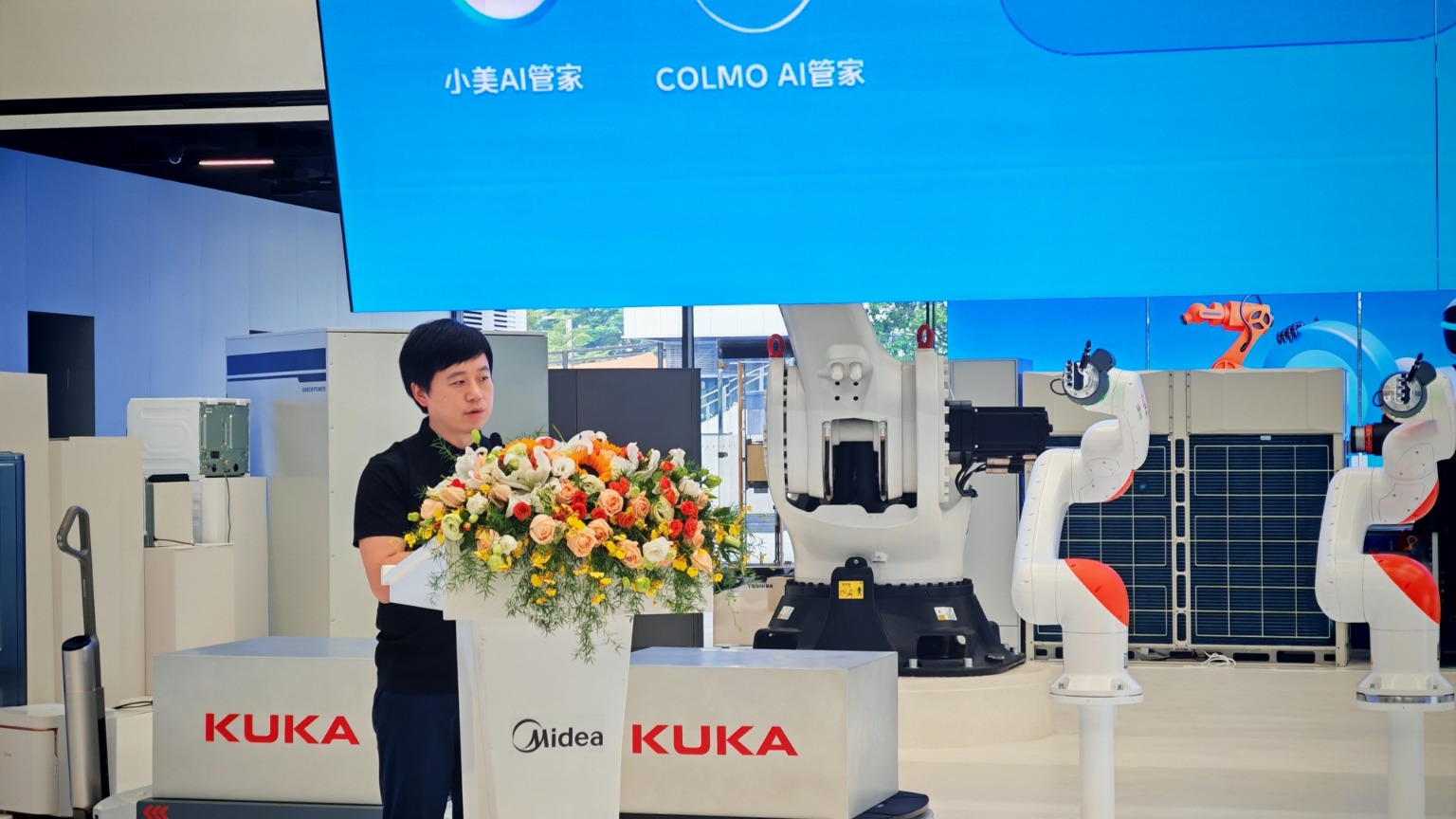
美的集团AI研究院院长徐翼:智能家居系统要提升交互质量 需从六个方向突破
Mei Ri Jing Ji Xin Wen· 2025-11-01 10:28
Group 1 - Midea Group held its 30th Technology Month conference, showcasing technological innovations and talent cultivation, with the theme "AInnovation" emphasizing AI [1] - The company plans to invest at least 50 billion yuan in R&D over the next three years, focusing on AI large models and embodied intelligence [1] - Midea's AI Research Institute highlighted the significant changes in home information intelligence brought by generative AI, particularly in interaction depth and breadth [1][2] Group 2 - The smart home market in China is rapidly evolving from single product intelligence to a full-home smart ecosystem, driven by policy, technology, and consumer upgrades [2] - Midea's AI Research Institute aims to build a "home brain" and will soon launch a new interactive system based on a novel interaction architecture [3] - The company emphasizes that AI should provide real value to users, enabling proactive services and a comfortable, customized interaction experience [3] Group 3 - Current issues in smart home systems include limited connectivity between appliances, insufficient collaborative sensing capabilities, and a lack of reasoning abilities [5] - To enhance interaction quality, Midea's AI Research Institute identified six key areas for improvement: connection, perception, reasoning, execution, memory, and optimization [5] - Midea is advancing the "robotization of home appliances" and has established a humanoid robot innovation center, with plans for further investment in humanoid robot products [5]


好太太(603848):2025Q3点评:Q3收入表现出色,业绩增长超预期
Changjiang Securities· 2025-10-29 13:42
Investment Rating - The investment rating for the company is "Buy" and is maintained [8] Core Insights - The company reported strong revenue performance in Q3 2025, with revenue, net profit attributable to shareholders, and net profit excluding non-recurring items reaching 3.82 billion, 0.57 billion, and 0.57 billion respectively, representing year-on-year growth of +7%, +22%, and +22% [2][6] - For the first three quarters of 2025, the company achieved revenue of 10.59 billion, a slight decrease of 1% year-on-year, while net profit attributable to shareholders and net profit excluding non-recurring items decreased by 25% and 27% respectively [2][6] - The company is expected to maintain its leading position in the smart drying industry, with a market share of approximately 40%, and anticipates a recovery in revenue growth and profitability in Q4 2025 [11] Revenue Performance - The company’s revenue in Q3 2025 showed a significant improvement compared to H1 2025, with online revenue growth outpacing offline revenue growth [11] - The average selling price in Q3 2025 was under pressure year-on-year but showed recovery compared to Q2 2025, with a higher proportion of high-end product sales in offline channels [11] - The company is actively adjusting its sales strategies across online and offline channels, leading to a notable recovery in performance [11] Profitability Analysis - The gross profit margin in Q3 2025 improved by 1.9 percentage points year-on-year and 5.9 percentage points quarter-on-quarter, reaching 51.2% [11] - The improvement in profitability is attributed to a better product mix and effective cost control measures, with a notable decrease in sales, management, and R&D expense ratios [11] - The company is expected to maintain similar expense ratios in Q4 2025 as seen in Q3 2025 [11] Future Growth Potential - The company is focused on expanding its product categories within the smart home sector, with plans to introduce new products such as smart curtains and smart lighting [11] - The long-term growth strategy includes building a comprehensive smart home ecosystem, which is expected to open up new growth avenues [11] - Profit forecasts for the company indicate net profits of 2.2 billion, 2.5 billion, and 2.9 billion for 2025, 2026, and 2027 respectively, with corresponding price-to-earnings ratios of 37, 33, and 29 [11]

“隐形”基站破局欧美橱柜标准,科沃斯联手博西家电撬动1500亿美元智能家居市场
21世纪经济报道· 2025-09-15 12:06
Core Viewpoint - The collaboration between Ecovacs and Bosch Home Appliances marks a significant step in the future of smart home technology, combining "Chinese manufacturing" with "German quality" to create innovative products for the global market [1][5]. Group 1: Product Launch and Features - In September, Ecovacs and Bosch jointly launched the world's first fully embedded sweeping and mopping robot at the IFA exhibition, addressing specific challenges in adapting to European and American home environments [4][6]. - The new product overcomes design challenges related to European kitchen standards, such as a 10 cm kickboard height, and features a base station that is integrated into cabinetry, representing a new paradigm in home appliance integration [4][7]. - The collaboration aims to redefine the entry barriers and competitive rules for high-end cleaning appliances in the European and American markets [5][6]. Group 2: Strategic Collaboration - The partnership leverages Ecovacs' advanced technology and Bosch's strong market presence, with Bosch holding a 20.3% market share in Western Europe and Ecovacs achieving a 52% year-on-year revenue growth in overseas markets [3][11]. - Both companies focus on mid-to-high-end products, ensuring a high degree of overlap in their target consumer base, which facilitates future product design and marketing strategies [11][14]. - The collaboration is seen as a shift from a one-way technology exchange to a mutual empowerment model, where both companies can enhance their market influence through shared expertise [5][15]. Group 3: Market Trends and Insights - The global smart home market is experiencing robust growth, with projections indicating an increase from $134.8 billion in 2023 to $154.3 billion in 2024, reflecting a growth rate of 14.47% [14]. - The trend towards integrated and ecosystem-based home appliances is becoming increasingly important, as consumers seek cohesive experiences rather than standalone products [14][15]. - The partnership is positioned to capitalize on the growing demand for smart home solutions, particularly in developed markets that are undergoing a technological upgrade [14][15].


好太太(603848):Q2收入降幅收窄,盈利阶段性承压
Changjiang Securities· 2025-09-05 02:13
Investment Rating - The investment rating for the company is "Buy" and is maintained [8]. Core Views - The company achieved revenue of 677 million yuan, net profit attributable to shareholders of 86 million yuan, and net profit excluding non-recurring items of 82 million yuan in the first half of 2025, representing year-on-year declines of 5%, 40%, and 43% respectively. In Q2 2025, the revenue was 418 million yuan, with net profit attributable to shareholders at 53 million yuan and net profit excluding non-recurring items at 50 million yuan, showing a year-on-year decline of 1%, 40%, and 42% respectively [2][6]. Summary by Sections Revenue Performance - The company's revenue faced pressure due to a backdrop of consumer downgrade, with a year-on-year decline of 5% in H1 2025. Q1 2025 saw a more significant decline of 11%, while Q2 2025's decline narrowed to 1%. The demand for home and smart home products benefited from policies encouraging upgrades [11]. - Revenue breakdown by product shows that smart home products and traditional drying rack products experienced year-on-year declines of 5% and 15% respectively. The estimated sales volume of smart home products slightly increased, but the average price decreased due to industry price competition [11]. - Revenue from online channels increased by 0.4%, while offline channels saw a decline of 12%. Online channels accounted for 68% of total revenue, with Tmall's revenue share estimated to have increased [11]. Profitability Analysis - Profitability is under pressure due to intense industry price competition, with Q2 2025 gross margin decreasing by 10.8 percentage points to 45.3%. Excluding accounting adjustments, the gross margin decline was smaller but still negative, primarily due to reduced product prices [11]. - The expense ratios for sales, management, R&D, and financial expenses in Q2 2025 changed year-on-year, with sales expense ratio decreasing due to reduced advertising and decoration costs, while management expense ratio increased due to higher employee compensation and intermediary fees [11]. Future Outlook - The company is expected to maintain its leading position in the smart drying market, with a market share of approximately 40%. The report anticipates a recovery in revenue growth and profitability as the consumer environment improves [11]. - The company is pursuing a multi-category development strategy, expanding into smart home products beyond smart drying racks, including smart locks, curtains, heating towel racks, lighting, gateways, switches, and sockets, which will open up long-term growth opportunities [11]. - Profit forecasts for 2025-2027 estimate net profits attributable to shareholders at 210 million, 250 million, and 290 million yuan, corresponding to P/E ratios of 47, 39, and 33 times [11].
周专题:追觅科技成立“智显事业部”,拓展显示生态
HUAXI Securities· 2025-08-17 11:05
Investment Rating - Industry rating: Recommended [5] Core Insights - Recently, the company has established the "Smart Display Division" to integrate resources in AI algorithms and precision design, marking its entry into the television, projector, display, and audio markets, with new products set to debut at the IFA in Berlin in September [1][9] - The expansion into the display sector is seen as essential for creating a complete smart home ecosystem, as display terminals are necessary for interaction within the existing smart home product line [1][9] - The company aims to capture market share in the television sector, leveraging national subsidy policies that stimulate demand in the market [1][9] Summary by Sections 1. Weekly Topic: Establishment of "Smart Display Division" - The company is entering the display market, integrating AI and design resources [1][9] - The move is strategic for enhancing its smart home ecosystem [1][9] - The company is positioned to benefit from the competitive landscape against Japanese and Korean brands [1][9] 2. Company Dynamics - Stone Technology reported a revenue of 7.903 billion, up 78.96% year-on-year, with a net profit of 678 million, down 39.55% [11] - Ecovacs reported a revenue of 8.676 billion, up 24.37% year-on-year, with a net profit of 979 million, up 60.84% [11] - Spring Power reported a revenue of 9.855 billion, up 30.90% year-on-year, with a net profit of 1.002 billion, up 41.35% [11] 3. Data Tracking 3.1 Raw Material Data - LME copper price as of August 15, 2025, was down 0.1% from the previous week [12] - LME aluminum price was down 0.3% [12] - DCE plastic price increased by 0.7% [12] - Steel price index increased by 0.1% [12] 3.2 Shipping Prices and Exchange Rates - CCFI composite index decreased by 0.62% as of August 15, 2025 [20] - The exchange rate of USD to RMB remained stable [20] 3.3 Real Estate Data - From January to July 2025, the sales area of commercial housing decreased by 4.0% year-on-year [24] - Housing completion area decreased by 16.5% year-on-year [24] - New housing starts decreased by 19.4% year-on-year [24]
2025年中国智能家居行业综述:万亿市场驱动,全屋智能下沉与AI生态重构
Tou Bao Yan Jiu Yuan· 2025-07-31 12:37
Investment Rating - The report indicates a positive investment outlook for the smart home industry, highlighting significant growth potential driven by technological advancements and consumer demand [7][25][26]. Core Insights - The smart home industry in China is rapidly evolving from single-device intelligence to a comprehensive smart home ecosystem, with an expected increase in AI penetration rates [25][26]. - The market is projected to reach a scale of 10,364 billion RMB by 2024, with a year-on-year growth of 13.6%, driven by policies, technology, and consumer upgrades [26]. - The integration of IoT and AI technologies is reshaping service models across various sectors, including smart hotels, real estate, and elderly care [42][44]. Market Size - The Chinese smart home market is experiencing rapid growth, transitioning from single product intelligence to a full-home smart ecosystem, with an estimated market size of 10,364 billion RMB in 2024 [25][26]. - The market is expected to grow at a CAGR of 18.2% from 2020 to 2024 and 6.8% from 2025 to 2029 [25]. Product Analysis - The smart home market shows significant urban-level differentiation, with first-tier cities leading in penetration rates at 83.02%, driven by high-income demographics and digital infrastructure [30]. - The demand for smart home products is increasing, with vacuum robots being the most sought-after item, reflecting a shift towards cleaning and energy management solutions [30][31]. Application Prospects - Smart home technologies are penetrating various fields, including smart hotels, real estate, elderly care, and office environments, enhancing service models through intelligent integration [42][44]. - The report highlights innovative applications such as pet health management and sleep environment control, indicating a broadening scope for smart home technologies [46]. Industry Development Trends - The smart home industry is transitioning from device connectivity to spatial intelligence, focusing on seamless interaction and privacy security [39][40]. - There is a growing emphasis on personalized and health-oriented experiences, with consumers seeking deeper engagement with smart home solutions [39][40]. Policy Support - Chinese policies are promoting the smart home industry through various support systems aimed at technological innovation, market expansion, and industry integration [48][49]. - Key policies include initiatives for green and intelligent consumption, standardization of interoperability, and support for AI technology integration [48][49].
海尔智慧家庭新成果:欧洲hOn APP用户破千万
Jin Tou Wang· 2025-07-30 04:25
Industry Overview - The global smart home market is experiencing rapid growth, driven by advancements in IoT technology and increasing consumer demand for quality of life [1] - According to Statista, the global smart home market size is projected to reach approximately $154.37 billion in 2024, with a compound annual growth rate (CAGR) of 9.55% from 2025 to 2028, potentially exceeding $231.57 billion by 2028 [1] Company Performance - Haier Smart Home has launched the hOn APP for European users, which has surpassed 10 million users, showing a year-on-year growth of over 40% [1][2] - The hOn APP has achieved a total of 900 million interactions annually, with a stable daily active user count of around 130,000 [1] - Haier's strategy focuses on a "whole-home smart ecosystem," integrating products from Haier, Candy, and Hoover to break down category barriers and achieve cross-device collaboration [1] Market Impact - The smart solutions provided by the hOn APP enhance user experience and drive market growth across Haier's various product lines in Europe [2] - In Spain, Haier's refrigerators hold the top market share, while in Italy, Haier's white goods rank second, with Candy leading the washing machine market [2] - In France, Haier's differentiated three-door Combi refrigerators are the best-selling in the €700 price segment [2] Competitive Position - The hOn APP's user milestone reflects Haier Smart Home's successful global implementation of its smart strategy and showcases the international competitiveness of Chinese brands in the smart home sector [2] - The transition from product export to smart ecosystem export indicates that Chinese brands are collaboratively building a seamless smart home experience with global users [2]

追觅科技拉开冰箱量产序幕 加速布局高端大家电市场
Zheng Quan Ri Bao Wang· 2025-07-23 11:12
Core Viewpoint - The launch of Z-Fresh series refrigerators by ZhiMi Technology marks the beginning of mass production and delivery, indicating a rapid development phase in the high-end home appliance market [1][2] Group 1: Company Strategy - ZhiMi Technology adopts a unique strategy in entering the refrigerator market, focusing on "research and development first, then application," contrasting with traditional manufacturers' approach of "mass production followed by iteration" [1] - The company emphasizes "technological compounding" as a key factor for its diversified development, leveraging four core technologies: high-speed digital motors, intelligent algorithms, fluid mechanics, and aerodynamics [1][2] Group 2: Market Position and Ecosystem - ZhiMi Technology has established a strong hardware manufacturing know-how and channel resources, with products available in over 100 countries and regions, and more than 6,000 physical stores globally [2] - The company has created a sustainable ecosystem expansion path, transitioning from cleaning appliances to major home appliances, and integrating various technologies and services to reconstruct living spaces [2]
“蓝海诱惑”与“红海激战”并存 扫地机器人行业竞争迈入深水区丨机器人新视界
证券时报· 2025-06-23 00:11
Core Viewpoint - The robotic vacuum cleaner industry is experiencing intense competition, characterized by both a "red ocean" of price wars and a "blue ocean" of growth potential due to low market penetration and attractive profit margins [1][3][4]. Group 1: Market Dynamics - The market for robotic vacuum cleaners has transitioned from a conceptual phase to a mature phase, with leading brands like Ecovacs, Roborock, and Xiaomi dominating 89.2% of the market share [3][4]. - The penetration rate in the domestic market is only about 6%, indicating significant room for growth, with projections for retail sales to reach 19.36 billion yuan in 2024, a 41.1% increase year-on-year [4][9]. - The recent price reductions during promotional events, such as the "618" sales, reflect the competitive landscape, where prices for high-end models have dropped from 5,000-6,000 yuan to around 3,000-4,000 yuan [3][4]. Group 2: Competitive Landscape - New entrants like DJI are entering the market with strong technological advantages, leveraging their expertise in drone technology for robotic vacuum applications [3][4]. - Traditional appliance giants like Midea are also investing in robotic vacuum technology despite initial losses, indicating a long-term strategic vision for this emerging industry [4][11]. - The industry is characterized by a dual focus on technological innovation and price competition, with companies like Roborock and Chase actively developing advanced features such as AI navigation and mechanical arms [8][9]. Group 3: Technological Advancements - The introduction of features like bionic mechanical arms and AI capabilities is reshaping consumer expectations, moving from basic cleaning functions to integrated smart home solutions [7][11]. - The competition has led to a "technology arms race," where companies are rapidly innovating to differentiate their products, although many innovations are incremental rather than groundbreaking [8][9]. - The shift from robotic vacuums as mere cleaning tools to integral components of smart home ecosystems is becoming evident, with companies aiming to position their products as multifunctional household assistants [11][12]. Group 4: Financial Performance - Roborock reported a revenue of 11.945 billion yuan in 2024, a 38.03% increase, but faced a decline in net profit by 3.64% to 1.977 billion yuan, highlighting the financial pressures of balancing innovation and competitive pricing [9][12]. - The gross margin for Roborock's vacuum cleaners remains above 50%, despite a slight decrease, indicating that profitability is still viable even in a competitive pricing environment [12]. Group 5: Global Expansion - Companies are increasingly looking to international markets for growth, with regions like Europe and North America presenting higher demand and profitability compared to the domestic market [13]. - Roborock has surpassed iRobot in sales volume and revenue in 2024, marking a significant achievement in the global market [13]. - Chase has expanded its overseas business rapidly, with a nearly 700% increase in revenue from international markets in 2024 [13].


好太太(603848):收入业绩阶段性承压 期待国补带动需求修复
Xin Lang Cai Jing· 2025-04-29 02:40
Revenue Performance - In 2024, the company achieved revenue of 1.557 billion yuan, a year-on-year decrease of 8%, with Q4 2024 revenue declining by 15% to 488 million yuan [1][3] - For Q1 2025, revenue was 259 million yuan, reflecting an 11% year-on-year decline [2][3] - The decline in revenue is attributed to weak consumer demand, although there was significant growth in smart product sales [3] Product Analysis - In 2024, revenue from smart home products and traditional drying racks decreased by 7% and 19% year-on-year, respectively [3] - Smart home product sales increased by 19%, while traditional drying rack sales fell by 21% [3] - The average selling price of smart products dropped to 866 yuan due to industry price wars, with expectations of price stabilization in Q1 2025 [3] Profitability Insights - Gross margin faced pressure due to changes in product mix, with Q4 2024 and Q1 2025 gross margins at 37.6% and 47.9%, respectively, reflecting year-on-year declines of 15.5 and 4.0 percentage points [4] - The increase in sales, management, and financial expense ratios indicates that expenses are rising faster than revenue growth, impacting profitability [4] - The net profit margin for Q1 2025 was 12.9%, showing a recovery trend compared to the previous quarter [4] Strategic Outlook - The company is well-positioned in the smart drying market, holding a market share of approximately 40%, and is expected to benefit from government subsidies starting in March 2025 [5] - The company plans to expand its product range beyond smart drying racks to include smart locks, curtains, and other smart home products, aiming for a comprehensive smart home ecosystem [5] - Profit forecasts for 2025-2027 project net profits of 280 million, 330 million, and 380 million yuan, with corresponding price-to-earnings ratios of 20, 17, and 15 [6]