
全球本土化

Search documents
探迹并购真爱美家:“AI智能体”能重塑产业么?| 出海参考
Tai Mei Ti A P P· 2025-11-17 12:29
Core Viewpoint - The acquisition of a 29.99% stake in Zhenai Meijia by Tanjie Technology is a strategic move aimed at enhancing operational capabilities through AI integration, reflecting a broader trend of traditional manufacturing companies seeking digital transformation in response to global trade challenges [1][2][7]. Company Overview - Zhenai Meijia, a home textile company based in Yiwu, Zhejiang, specializes in the design, production, and sales of household textiles, particularly blankets, with annual revenues ranging from 800 million to 1 billion yuan, 80% of which comes from overseas markets [1][3]. - The company has faced declining revenues and profits in 2023 and 2024, attributed to increased competition from Southeast Asia, rising operational costs, and a slowdown in global demand for textiles [3][4]. Industry Context - The global trade environment is shifting, with many export-oriented manufacturing companies experiencing growth anxiety due to rising costs and competition [3][4]. - China's foreign trade growth has significantly slowed, with a drop in textile and apparel exports by 8.1% in 2023, following a peak growth of 21.4% in 2021 [3][4]. Strategic Integration - The partnership between Zhenai Meijia and Tanjie Technology is characterized as a "deep integration" rather than a simple financial merger, aiming to leverage AI capabilities to transform traditional manufacturing processes [2][7]. - Tanjie Technology, a company focused on AI and big data applications, is positioned to enhance Zhenai Meijia's operational efficiency and market responsiveness through its AI-driven solutions [8][10]. AI and Digital Transformation - The integration of AI is seen as crucial for future competitiveness, with a shift from traditional resource and scale advantages to data-driven decision-making and automated operations [4][6]. - A significant majority of companies (89.84%) are reportedly applying AI in their operations, with a focus on data analysis and customer service [6][15]. - Tanjie Technology's AI solutions are designed to optimize sales processes and enhance customer engagement, which is essential for Zhenai Meijia's international expansion and operational efficiency [10][13]. Future Outlook - The collaboration is expected to set a precedent for the integration of AI in traditional industries, marking a transition from superficial AI applications to deep, transformative implementations [17]. - The success of this integration will depend on overcoming challenges related to data quality, organizational restructuring, and the effective collaboration between human and AI agents [15][17].


对话欧莱雅集团CEO叶鸿慕:从“在中国制造”到“为中国创造”
Guan Cha Zhe Wang· 2025-11-09 14:47
Core Insights - L'Oréal is shifting its strategy in China from "localization" to "global innovation engine," indicating a significant evolution in its approach to the Chinese market [1][3] - The company reported a return to growth in the Chinese market in Q3, driven by its high-end beauty segment, which accounts for 30% of its global market share [1][9] - L'Oréal's innovation is increasingly rooted in China, with local teams developing proprietary technologies like the PDRN technology for its products, marking China as a key source of global innovation [3][4] Group 1: Strategic Evolution - L'Oréal's strategy has evolved to reflect a deeper understanding of China's unique market characteristics, including diverse climates and cultural nuances, which are essential for product development [3][4] - The company has invested in local laboratories for 20 years, which is now yielding commercial returns, as evidenced by the introduction of the "New Age Beauty" concept based on 15 years of research in skin longevity science [4][6] - The partnership with Kering Group's beauty division is a strategic move to enhance L'Oréal's position in the high-end beauty market, leveraging Kering's luxury brand portfolio [2][9] Group 2: Market Dynamics - The collaboration with Kering includes brands like Creed, Balenciaga, Bottega Veneta, and Gucci, which allows L'Oréal to strengthen its control in the luxury beauty segment [9][10] - Despite overall pressure in the Chinese beauty market, L'Oréal's growth in the high-end segment demonstrates resilience and aligns with the trend of consumer upgrading [10][11] - The partnership is seen as a strategic positioning move in a competitive market, enabling L'Oréal to cover a broader price range from "affordable luxury" to "ultra-luxury" [10][11] Group 3: Long-term Commitment - L'Oréal's success in China is not just about market gains but is integral to its global strategy, emphasizing the importance of long-term commitment to local market dynamics [11] - The company's ability to adapt to changing consumer demands and maintain a long-term perspective is crucial for sustaining its growth trajectory in China [11]


新老客商盛赞:“上海营商环境宛如量身定制的齿轮”
Sou Hu Cai Jing· 2025-11-07 11:17
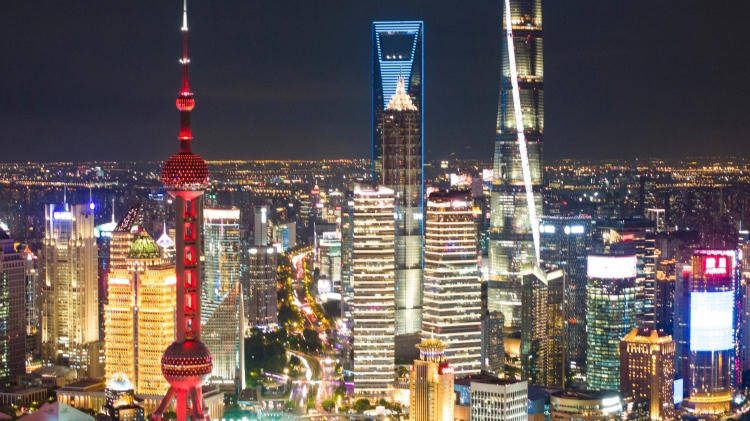
Group 1 - Shanghai has attracted 1,060 regional headquarters of multinational companies and 631 foreign R&D centers, with actual foreign investment exceeding $370 billion [2] - The city has implemented nearly 1,200 reform measures across 8 versions, achieving global best levels in 22 out of 59 evaluation points by the World Bank [2] - Business leaders express strong confidence in Shanghai's business environment, highlighting its rich cultural background and efficient government services [4][6] Group 2 - The CEO of UFI Group noted a 55% sales growth over the past four years, attributing this success to Shanghai's supportive business environment and infrastructure [4] - The CEO of Mediterranean Shipping Company praised Shanghai's shipping hub capabilities, stating that the city has been crucial for their investment and strategic growth [6][7] - MUJI's China chairman emphasized Shanghai as a key market for their overseas operations, with ongoing store expansions and local product innovations [7][8] Group 3 - Shiseido's China CEO highlighted Shanghai as a launchpad for new beauty innovations, with the latest medical beauty brand developed by a local team [7] - ABB has increased its local supplier ratio to over 80%, focusing on enhancing local value creation through technology and partnerships [16] - The establishment of a one-stop international service ecosystem in Hongqiao aims to support Chinese enterprises in their global expansion efforts [20]
第八届进博会启幕,时尚消费释放了哪些新信号?
Sou Hu Cai Jing· 2025-11-07 03:22
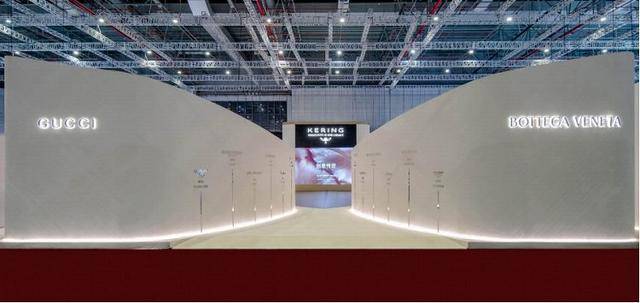
Core Insights - The China International Import Expo (CIIE) has become a significant platform for showcasing global brands and fostering cross-cultural exchanges, emphasizing China's strategic importance in the global market [1][20] - Major global fashion brands are intensifying their focus on the Chinese market, enhancing local engagement and brand value communication [1][2] Group 1: CIIE Overview - The eighth CIIE commenced on November 5, showcasing innovations in products, craftsmanship, culture, and technology from global brands [1] - The event serves as a bridge for practical cooperation across various industries, including fashion, beauty, sports, supply chains, and cross-border e-commerce [1] Group 2: Kering Group Participation - Kering Group presented multiple luxury brands, including Gucci, Saint Laurent, and Balenciaga, highlighting craftsmanship and innovation [2][6] - Gucci showcased a collection of vintage silk scarves and hosted interactive workshops, while Balenciaga launched a new fragrance series [4][6] Group 3: LVMH's Focus on Sustainability - LVMH emphasized sustainable development at the expo, showcasing seven iconic brands and their commitment to responsible aesthetics [7][9] - Louis Vuitton introduced innovative measures for sustainable design, while Dior presented products aligned with sustainability principles [9][10] Group 4: Richemont Group's Cultural Resonance - Richemont Group featured brands like Cartier and Van Cleef & Arpels, focusing on craftsmanship and cultural themes [11][13] - The group highlighted the significance of Chinese zodiac culture through product designs, including a watch series dedicated to the Year of the Horse [13] Group 5: Fast Fashion and Sustainability - Fast fashion brand Uniqlo presented a large exhibition space, showcasing new products and sustainable practices [14][16] - The brand introduced upcycling projects and collaborated with artists for exclusive collections, emphasizing its commitment to sustainability [16] Group 6: MUJI's Localized Strategy - MUJI celebrated its 20th anniversary in China, emphasizing its commitment to local development and environmental respect [17][19] - The brand has established a local product development team, enhancing its supply chain and achieving consistent sales growth in the Chinese market [19][20]
(第八届进博会)外资企业:上海为全球业务增长带来动力
Zhong Guo Xin Wen Wang· 2025-11-06 16:53
Core Insights - The 8th China International Import Expo (CIIE) is being held in Shanghai, showcasing the city's optimized business environment as a driving force for global business growth [1] - The expo serves as an excellent platform for brand promotion and business expansion for multinational companies [1] Group 1: Business Environment - Shanghai's business environment is described as vibrant, competitive, and fast, providing significant development opportunities due to its robust infrastructure, rich talent pool, and dynamic innovation centers [1] - Companies have reported that the supportive service spirit in Shanghai facilitates problem-solving and operational efficiency [1] Group 2: Company Strategies - Cotecna's Vice President emphasized the cumulative effect of brand image enhancement through consistent participation in the expo over seven years [1] - The expo has created a strong "business ecosystem," allowing companies to connect with new and existing clients, leading to industry-driven effects [1] - O-Film Group's success in China is attributed to innovation and a "global localization" strategy, with 5% of global revenue allocated to R&D [2] Group 3: Investment and Growth - O-Film Group has continuously increased its investment in China since establishing its first factory in Shanghai in 1996, now operating seven factories and planning to build a green technology factory in 2024 [2] - The company aims to deepen its market presence in China, reflecting confidence in the local market [2]
开云集团携手上海时装周启动“开云CRAFT创意驻留计划”
Bei Jing Shang Bao· 2025-11-05 13:31
Core Insights - Kering Group launched the "Kering CRAFT Creative Residency Program" at the 8th China International Import Expo, in collaboration with Shanghai Fashion Week, aimed at discovering new creative talents in China [1] - The program will feature an international jury of industry leaders and experts to select participants, providing a platform that integrates craftsmanship, design, and business insights [1] - The initiative includes an immersive international residency journey covering cities like Milan, Paris, and Shanghai, fostering deep dialogues on creativity and craftsmanship while exploring future business models [1] - The goal is to enhance Chinese designers' brand building and business operation capabilities, nurturing the international potential of Chinese brands and exploring synergies with Kering's brands [1]
鲍勇剑:当全球化退潮——中国企业的出海想象
Xin Lang Cai Jing· 2025-11-03 05:04
Core Insights - The article discusses the challenges and strategies for Chinese companies expanding internationally in the current geopolitical climate, emphasizing the need for a nuanced approach that considers historical context and modern realities [1][2][11]. Historical Context - The historical relationship between economic trade and military expansion is highlighted, with examples from ancient Greece, India, and the Islamic Caliphate demonstrating how trade has often been intertwined with political and cultural shifts [3]. - The article notes that the violent expansion models of the past are no longer viable for Chinese companies, which must seek alternative strategies for international engagement [3]. Comparison with Other Nations - Chinese companies' international expansion is compared to the post-World War II expansion of American companies and Japan's strategies post-1973 oil crisis, noting that the geopolitical environment has changed significantly, making direct imitation of these models problematic [5][6][9]. - The article emphasizes that while American companies benefited from a lack of competition and a favorable global environment, Chinese companies face political and ideological challenges that complicate their international strategies [6][11]. Current Challenges - Chinese companies are currently navigating a complex international landscape characterized by rising protectionism and geopolitical tensions, which can hinder their market access and operational strategies [11][12]. - The article cites specific policies from the Biden administration and the European Union that target Chinese companies, illustrating the non-economic factors that can impact their international operations [11][12]. Strategic Opportunities - The article proposes six potential models for Chinese companies to explore in their international expansion: 1. **Multi-Center Trade Clusters**: Establishing flexible trade networks across various regions to mitigate risks [14][15]. 2. **Sustainable Resource Development Communities**: Collaborating on international standards in emerging industries to bypass geopolitical barriers [16]. 3. **International Metropolitan Economic Cooperation Alliances**: Forming city-to-city partnerships to enhance trade and cooperation [17]. 4. **Cultural Economic Entities**: Leveraging cultural resonance to build cross-border user communities [18]. 5. **Sovereign Economic Distributed Global Supply Chains**: Creating diversified supply chains to reduce reliance on single countries [19]. 6. **Equitable Growth Partnerships**: Promoting sustainable development narratives in collaboration with developing nations [20]. Conclusion - The article concludes that Chinese companies must adopt a multi-modal approach to global cooperation, moving beyond a singular export-oriented strategy to create a strategic moat in the face of geopolitical challenges [21]. - It emphasizes the importance of understanding the cultural and civilizational dimensions of international business, suggesting that successful engagement requires more than just economic transactions [22][23].

从北美前三到全球布局:Heybike的四年出海远征路
Nan Fang Du Shi Bao· 2025-10-22 11:53
Core Insights - The global electric bicycle (E-bike) market has surpassed $80 billion in 2023, with an annual growth rate exceeding 20%, projected to reach $148.7 billion by 2032 [1] - Heybike, a brand under Shenzhen Xingtu Innovation, has transformed from an ODM manufacturer to a leading player in the North American E-bike market within four years, achieving profitability for three consecutive years and ranking among the top three in sales [1][3] Market Entry and Strategy - Heybike began its journey in 2018 as an ODM provider, identifying a significant gap in the mid-range E-bike market priced between $800 and $1200, while high-end brands dominated the market above $1500 [2] - In 2020, the company pivoted to focus on the North American market, which had an E-bike penetration rate of less than 1%, and developed products tailored to urban commuting and outdoor adventures [2][3] Product Development and Market Expansion - Heybike's product offerings include the Helio series for commuting with a range of 80 km and the Alpha series for all-terrain use with a range of 120 km, addressing specific user pain points [2] - The company has successfully expanded into the Canadian market and achieved significant sales milestones, including over 5,000 units sold in a single month on Amazon [3] European Market Strategy - In 2022, Heybike began preparations to enter the European market, emphasizing a meticulous approach to comply with local regulations and consumer standards, with plans for a formal launch in 2025 [4][12] - The product lineup for Europe includes specialized models for families and unique riding styles, reflecting a commitment to meet diverse consumer needs [5][14] Marketing and Sales Channels - Heybike employs a comprehensive marketing strategy that integrates online and offline channels, leveraging platforms like Amazon and social media to enhance brand visibility and customer engagement [6] - The brand has established a strong online presence with over 500,000 followers on social media and a significant number of monthly visitors to its independent website [6] Sustainability and Social Responsibility - The company promotes sustainable practices, such as obtaining carbon footprint certification for its products and planning recycling initiatives in North America [7] Technological Innovation - Heybike utilizes AI to enhance operational efficiency, from generating marketing materials to optimizing supply chain management and product development [8][9] - The integration of AI allows for real-time data analysis, improving inventory management and logistics, which is crucial for global operations [8][16] Long-term Vision and Market Positioning - The company maintains a long-term strategy focused on building a reputable brand in the E-bike sector, resisting short-term profit temptations and prioritizing user satisfaction [10][18] - Heybike's approach to pricing is based on perceived innovation value rather than cost-plus pricing, aiming to establish a strong brand identity in the competitive market [16] Competitive Advantage - The brand's success is attributed to its combination of manufacturing efficiency, rapid learning capabilities, and the creation of emotional value through localized operations [18][19]

深耕中国三十载 罗技探索“全球本土化”创新之道——专访罗技全球商务总裁刘坤
Xin Hua Cai Jing· 2025-08-29 08:28
Core Insights - Logitech is leveraging its extensive experience in China to create a dual empowerment story, focusing on local production, R&D, and market collaboration [1] Group 1: Market Position and Strategy - China is Logitech's largest market by sales and a key player in the global gaming market, with the performance in China being crucial for Logitech's global success [2] - Logitech has established the largest production base in China over 30 years, with its Suzhou factory growing over 50% in scale in the past five years, exporting products to over 140 countries [2] - The company has significantly increased its local R&D investment, aligning its teams with local consumer needs and supply chain dynamics [2][3] Group 2: Consumer Insights and Product Development - Chinese consumers, particularly young gamers, demand high-performance products with low latency, speed, and customization, driving Logitech's global product innovation [3] - Logitech emphasizes a neutral and compliant approach to business, focusing on technology and product development while minimizing political interference [3] Group 3: Collaborative Ecosystem - Logitech has developed a robust local innovation mechanism by engaging directly with users and collaborating with local tech companies like Tencent, JD.com, Baidu, DingTalk, and China Mobile [4] - The company utilizes consumer insights from big data in collaboration with JD.com and focuses on AI technology integration with Baidu, while also working with Tencent on gaming and video conferencing solutions [4] - Logitech actively interacts with end-users and youth through partnerships with esports teams and gaming influencers, aiming to enhance the esports ecosystem in China [4] Group 4: Market Trends and Product Optimization - The trend of consumption upgrading in China is prompting Logitech to optimize its product structure, with rapid growth in lower-tier cities and a shift towards high-end products in first- and second-tier cities [4][5] - Logitech's long-standing presence in China positions it to balance local investment with global strategy, viewing China as a source of inspiration and innovation [5]
短视频平台“新闻达人”洞察报告:“轻骑兵”挺进主战场
腾讯研究院· 2025-08-05 05:52
Report's Industry Investment Rating No relevant content provided. Core Viewpoints of the Report - In the era of digitalization and platformization, the news industry has shifted from "mass communication" to "individual expression", and short - video has become a new battlefield for news dissemination. "News influencers" have emerged as a new force, filling the gap between institutional media and ordinary users [8][9][22]. - The rise of "news influencers" is driven by multiple factors such as technological innovation, changes in user demand, institutional environment reconstruction, and individual career transformation. They are expected to bring about a structural change in the news communication ecosystem [23][29]. - "News influencers" can be regarded as a "light cavalry" in the short - video news field, with high mobility and flexibility. They can extend the influence of mainstream topics and explore new commercial paths [30][33]. - In the future, "news influencers" will face six major development trends, including redefining news "connection and trust", popularizing the "intelligent creation" model of human - machine collaboration, etc. [100] Summary According to the Table of Contents 1. Introduction - The change of communication media has deeply affected the form of news practice and the role of journalists. Short - video has become a new way for users to obtain news, and mainstream media and creators are accelerating their transformation [8]. - "News influencers" with media backgrounds have emerged, breaking the one - way communication relationship and building a new type of connection with users. Their success shows that the new information ecosystem needs more flexible and professional news content producers [9][10]. 2. Short - video Era's Media Reconstruction and the Breakthrough of "News Influencers" 2.1 Short - video - induced Changes in News Consumption - By November 2024, the scale of short - video users in China reached 1.04 billion, accounting for 93.8% of netizens. 87% of respondents prefer to obtain news through short - videos, significantly higher than other channels [15]. - Internationally, TikTok has become a rapidly growing news platform in the US, especially popular among young people. Users still trust official accounts, and "news influencers" have also become an important source of news [17][20]. 2.2 Background and Core Drivers of the Rise of "News Influencers" - The rise of "news influencers" is driven by technological innovation, changes in user demand, institutional environment reconstruction, and individual career transformation. Short - videos meet users' needs for efficient information acquisition in the digital age [23]. - Users prefer short - video news for its low cognitive burden and strong interaction. "News influencers" can meet users' needs for participation and interaction, and are favored by users for their advantages in expression style, timeliness, professionalism, and interaction [24][26][27]. - Media institutions' reform and support also contribute to the growth of "news influencers", and their rise may lead to a structural change in the news communication ecosystem [28][29]. 2.3 Strategic Positioning of "News Influencers": "Light Cavalry" Charging into the Main Battlefield - In the short - video ecosystem, "news influencers" bring significant changes to content production, expression, and communication strategies. They can use a popular way to present mainstream topics, with high mobility and flexibility [30][33]. - "News influencers" can provide immersive on - site reports and explore new commercial paths, which is of great significance for the development of the news industry [33]. 3. Portrait of "News Influencers" on Short - video Platforms 3.1 Group Structure - The fan scale of "news influencers" shows a pyramid - shaped distribution, with 61% having less than 1 million fans and 12% having more than 5 million fans. There is still room for growth in the number of top - tier influencers [37]. - "News influencers" are geographically concentrated, mainly in first - tier municipalities and coastal provinces, and first - tier and new first - tier cities. Their distribution also shows differences within provinces [40][41][45]. - The gender distribution of "news influencers" is relatively balanced, with men accounting for 56% and women accounting for 44% [46]. 3.2 Content Strategy - "News influencers" mainly focus on political and social news and humanities and social sciences, accounting for nearly 80% of their content. They also face challenges in fields such as finance and entertainment [49]. - The content duration of "news influencers" is generally 2 - 3 minutes, and the peak time for content release is from 17:00 to 19:00. Top - tier influencers usually update their content daily [53][55]. 3.3 User Portrait - The fans of "news influencers" are mainly people over 31 years old, accounting for 82%. The lack of young fans indicates a "generation gap" challenge [56][60]. - The influence of "news influencers" is universal and cross - regional, and 41% of them have cooperated with MCN institutions [62][63]. 3.4 Traffic Secrets - Successful "news influencers" use knowledge translation, storytelling, and scenario - based expression to make complex information easier to understand. They also respond to public service needs and use identity desacralization and personality contrast to attract users [67][68][69]. - "Professionalism" is the foundation for "news influencers" to succeed in the content ecosystem [71]. 4. Public Perception: "News Influencers" in the Eyes of Users 4.1 Information Preference - Users mainly obtain express news, basic facts, and opinions from "news influencers", showing a "trinity" information demand structure. Some users also like funny or entertaining content [76]. 4.2 Information Impact - "News influencers" have a significant impact on users' cognition and emotion. 79% of users believe that their content deepens the understanding of hot events, and 64.8% of users have emotional resonance. However, some users also think that the information is unclear or have changed their original positions [78][79]. 4.3 Position Identification - Nearly half of the respondents think that the views of "news influencers" are mostly consistent with their own positions, but more than 40% of the respondents think that there are differences or unclear positions. "News influencers" need to introduce multi - perspective expression to improve user recognition [84]. 4.4 Background Trust Mechanism - Most users trust "news influencers" with media backgrounds, but they also value content quality. Building a sustainable trust relationship is crucial for "news influencers" [87][91]. 4.5 Information Verification Behavior - More than 80% of users will verify the content released by "news influencers", indicating that users maintain a certain degree of rationality and prudence [92]. 5. Six Development Trends of "News Influencers" 5.1 Redefining News "Connection and Trust" - The news media industry is undergoing a profound structural change, and media institutions need to rebuild "user connection" and explore sustainable business models. "News influencers" can be used as a research sample [100][101][103]. 5.2 Popularization of the "Intelligent Creation" Model of Human - Machine Collaboration - AI will be deeply integrated into the whole process of content creation, helping "news influencers" find potential hotspots, collect information, and generate materials. The ability model of "news influencers" will also be reconstructed [104][105][106]. 5.3 Real - time Interaction of IP Agents to Expand the Information Service Chain - Digital agents can provide users with extended information, expand interaction dimensions, and develop the value of vertical - field "news influencers". They will promote the transformation of "news influencers" from "narrators" to "knowledge service providers" [107][108][109]. 5.4 Live - streaming as a Key Position for "News Influencers" to Promote Public Participation - Live - streaming has become an important field for "news influencers" to operate influence, shape user relationships, and promote topic interaction. It can promote public participation, build stable user relationships, and help news influencers transform into public topic guides and community governance participants [110][111][112]. 5.5 Evolution of Individual IPs to Institutionalization, and Adjustment of Content Production and Organization Paradigms - "News influencers" are transforming from individual creators to systematic producers and professional operators. Organization - based production can improve content production efficiency and quality. The cooperation between "news influencers" and MCN institutions is more diversified, and the organizational form of media will also change [113][114][115]. 5.6 "Glocalization" Narrative as an Emerging Growth Point No specific content provided in the text, so it is skipped in this summary.