
共生

Search documents
美术界的盛会,第十届国际美术双年展月底在京开幕
Xin Jing Bao· 2025-12-22 08:37
Core Viewpoint - The 10th China Beijing International Art Biennale, themed "Symbiosis," will showcase nearly 600 contemporary artworks from around 120 countries and regions, marking a significant cultural event in Beijing from December 29, 2025, to January 28, 2026 [1][2]. Group 1: Exhibition Overview - The exhibition will feature approximately 244 domestic artworks and 180 international artworks, along with around 133 pieces from special and country exhibitions, including 47 digital art pieces and 52 international ink art pieces [2][4]. - The total exhibition area will be 15,228 square meters, indicating an unprecedented scale for the event [2]. - The biennale aims to serve as a platform for dialogue among different civilizations and to showcase China's cultural image and responsibilities as a major country [2][4]. Group 2: Submission and Participation - Over 9,000 artworks were submitted globally, achieving a historical record for the biennale, with more than 7,300 submissions for the domestic theme exhibition and 1,585 from international participants across 124 countries [3][4]. - The increase in submissions, particularly in digital and video art, reflects a growing interest and innovation in contemporary art forms [3]. Group 3: Special Features and Themes - The biennale will introduce an international contemporary ink art exhibition, highlighting the contemporary evolution of traditional ink art and its global influence [4]. - The thematic exhibition will include five sub-themes: Fission, Growth, Flow, Refinement, and Harmony, focusing on global issues such as peace, ecological civilization, and technological ethics [4][5]. Group 4: Academic Engagement - The event will host the "First Beijing Biennale International Art Conference," featuring discussions on three major topics related to art and culture, with participation from around 50 international art theorists, curators, and museum directors [5]. - This conference aims to enhance the biennale's academic positioning and international perspective, promoting cultural exchange and dialogue [5][6].
中国酒业如何跨越“冰与火”?这场“武汉会议”,回答时代之问!
Sou Hu Cai Jing· 2025-10-20 16:32
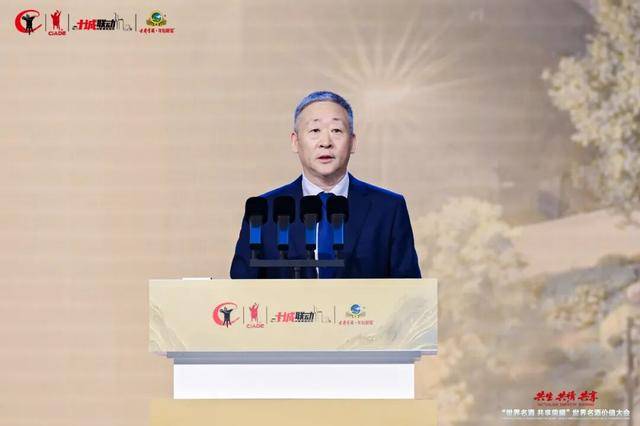
Core Insights - The Chinese liquor industry is at a historical crossroads, facing both challenges and opportunities due to rational consumption trends and the impact of artificial intelligence on industry logic [1] - The "World Famous Wine Value Conference" held in Wuhan addressed key industry questions regarding the redefinition of liquor value, the shift from scale expansion to value creation, and the globalization of Chinese liquor [1] Industry Trends - The global liquor industry is undergoing structural changes, with the high-end and luxury segments leading growth at a compound annual growth rate (CAGR) of 10.3%, particularly driven by the Asia-Pacific region [2] - The Chinese baijiu market is expanding steadily, with a CAGR of 2.3%, showcasing strong industry resilience and cultural roots [2] - Traditional business banquet markets are contracting, while personalized and emotionally connected consumption scenarios are rapidly emerging, emphasizing the need for liquor brands to adopt innovative strategies for differentiation [2] Consumer Behavior - The concept of rational consumption has gained consensus, with consumers prioritizing products that offer a balance of cost-effectiveness, quality, and emotional value [4] - The long-term development of world-famous liquors should focus on the values of "coexistence, empathy, and sharing," integrating industry with nature and society [4][5] Internationalization Challenges - China's baijiu currently holds only a 2.3% share in the international market, highlighting the need for the industry to overcome misconceptions and adopt successful strategies from international wine markets [7] - Recommendations for internationalization include aligning with international standards, innovating products and marketing strategies, and fostering collaboration among industry players [7] Innovation and Strategy - Leading companies are responding to industry changes through innovative practices, such as digital empowerment, cross-industry collaborations, and enhancing consumer experiences [10] - Anhui Gujing Group is leveraging digitalization to enhance traditional brewing processes and is actively promoting baijiu internationally [12] - Luzhou Laojiao is focusing on brand innovation through product diversification and cultural collaborations to connect with younger consumers [14] - Qingdao Beer is enhancing consumer engagement through innovative product offerings and efficient delivery systems [19] Future Directions - The conference outlined a clear roadmap for the future of Chinese liquor, emphasizing the importance of gratitude towards nature, commitment to quality, and deep emotional resonance with consumers [30] - The industry is encouraged to embrace the philosophy of "coexistence, empathy, and sharing" to navigate the challenges ahead and achieve sustainable growth [30]





与一棵树共享世界
3 6 Ke· 2025-09-27 03:27
Core Concept - The article discusses the "Future Forest Plan" initiated by the company, focusing on planting drought-resistant trees in the Alashan desert to combat ecological degradation and promote sustainable development [3][5][12]. Group 1: Project Overview - The "Future Forest Plan" aims to plant 1,000 acres of drought-resistant Haloxylon trees annually in the Alashan desert, with an expected survival rate of at least 40,000 trees each year [3][5]. - The initiative aligns with the company's sustainable development philosophy, emphasizing that small, consistent efforts can lead to significant ecological changes over time [3][5][12]. Group 2: Community Engagement - The company organizes annual activities for property owners to participate in tree watering and maintenance, fostering a connection between urban residents and the desert ecosystem [5][9]. - This experiential approach aims to raise awareness about ecological fragility and the importance of coexisting with nature, transforming participants' perspectives on environmental responsibility [5][12]. Group 3: Broader Impact - The initiative not only enhances local biodiversity but also serves as a model for global ecological governance, inspiring community involvement and environmental stewardship [5][9][12]. - The project is designed to create a network of connections among community members, promoting a shared commitment to ecological sustainability and enhancing the quality of life in urban settings [9][17]. Group 4: Corporate Philosophy - The company's underlying logic emphasizes that a beautiful world is built on good relationships and sustainable living, advocating for a holistic approach to community development [17][18]. - The "Future Forest Plan" reflects the company's commitment to integrating ecological values into its operational framework, ensuring that community development does not compromise environmental integrity [18][27].

陈春花:面对今天最大的机会变量,组织重塑的三个关键词
Jing Ji Guan Cha Bao· 2025-09-24 00:27
Group 1 - The core viewpoint emphasizes that organizations must view changes, such as artificial intelligence and digital transformation, as opportunities rather than challenges [1][2] - Digital intelligence technology is identified as the most significant variable affecting survival and business models today [2][4] - Organizations need to adapt to a new environment where technology is prioritized, and traditional linear concepts of time are redefined [4][5] Group 2 - The three fundamental activities of humans—material production, interpersonal communication, and self-awareness—are now all applicable in economic activities due to digital intelligence technology [5][6] - The shift in wealth production methods reflects changing values and work orientations among younger generations, indicating a need for organizations to understand these changes [7][8] Group 3 - The transition from digitalization to digital intelligence involves three essential characteristics: connection, symbiosis, and present-focused thinking [9][10][11] - Digital intelligence is characterized by collaboration, adaptability, and precision in decision-making through data [11][12][13] Group 4 - The impact of digital intelligence on organizations is summarized in three keywords: empowerment, symbiosis, and collaboration [14][15][16] - Organizations must shift from control to empowerment to retain talent and foster connections [14][16] - Emphasizing symbiosis over competition is crucial for survival in the current ecosystem [15][16][17] Group 5 - The need for collaboration rather than division is highlighted, suggesting that organizations should assess their roles as enablers or isolated entities [17][18] - The challenges posed by digital intelligence require organizations to seek certainty and opportunities externally while maximizing internal value [18]
陈春花:组织的数智化转型,机会从“寻求共生”中来
Jing Ji Guan Cha Bao· 2025-09-22 04:31
Group 1 - The core viewpoint emphasizes the importance of organizational resilience and adaptability in the face of uncertainty, blurred boundaries, and value reconstruction brought about by artificial intelligence [2][5]. - The technological environment is characterized by digital intelligence technologies becoming the new infrastructure that connects everything [2]. - The institutional environment now mandates social responsibility as a necessary option for organizations [3]. Group 2 - Performance focus has shifted from internal optimization to external organizational dynamics [4]. - The core dilemma for companies is that internal improvements do not guarantee survival, necessitating a new growth logic [5]. - Opportunities in the face of change can be found through seeking symbiosis, which is crucial for addressing challenges and dilemmas [5][6]. Group 3 - In the AI era, the concept of "symbiosis" is essential due to technological penetration across various domains, transforming strategies, processes, and experiences [7]. - Companies that have thrived during challenging times often possess advanced digital capabilities and have established collaborative networks [7]. - Four cognitive shifts are necessary for organizations: from "maximizing profit" to "meaning architecture," from "resource allocator" to "field creator," from "industry competitor" to "cross-domain connector," and from "business leader" to "meta-cognitive coach" [8][9][10][11]. Group 4 - Trust is identified as the foundational element for the coexistence of AI and humanity [12]. - The new organizational form is a "symbiotic organization," characterized by creating ecosystems where all participants have opportunities for growth [13]. Group 5 - The core of digital transformation is not just about digital upgrades but also about innovating comprehensive service and operational solutions for the entire customer lifecycle [14]. - Companies like Midea have adopted strategic upgrades to align with future-oriented development models, emphasizing technology and user engagement [14]. Group 6 - The evolution of organizational structures has progressed from pyramid organizations to learning organizations, and now to symbiotic organizations, which require co-creation, evolution, and resilience [16]. - To build a symbiotic organization, four realms of training are necessary: belief in symbiosis, customer-centricity, deep integration of technology, and "selfless" leadership [17].
以“共生”观念推动生物多样性治理|生物多样性治理系列解读②
Zhong Guo Huan Jing Bao· 2025-08-13 00:14
Group 1 - The relationship between humans and nature is a fundamental aspect of human society, and the development of civilization has always revolved around this theme [1] - Industrial civilization has led to human-centered, materialistic, and utilitarian views, resulting in the exploitation of natural resources and ecological imbalance [1] - The ecological crisis has prompted a reevaluation of the relationship between humans and nature, leading to the emergence of Xi Jinping's ecological civilization thought as a guiding principle for harmonious coexistence [1][2] Group 2 - Xi Jinping's ecological civilization thought represents a theoretical innovation regarding the relationship between humans and nature, integrating traditional ecological wisdom and modern sustainable development experiences [2] - Key concepts include "harmonious coexistence between humans and nature," "green mountains and clear waters are invaluable assets," and "a good ecological environment is the most inclusive form of public welfare" [2] - The thought emphasizes the importance of respecting, conforming to, and protecting nature, advocating for a development model that integrates ecological protection with economic growth [1][2] Group 3 - The modern concept of "coexistence" encompasses four dimensions: relationality, action, ethics, and sociality, emphasizing the interconnectedness of individuals and their environments [4] - The goal of "coexistence" is to minimize tension between humans and nature while maximizing human interests through a relational principle rather than an individualistic approach [4] - Achieving a harmonious relationship between humans and nature requires a shift from anthropocentrism to a vision of a beautiful Earth where humans coexist with other life forms [4] Group 4 - The core of "coexistence" lies in managing the relationship between humans and nature, guided by Xi Jinping's ecological civilization thought, promoting coordinated development in carbon reduction, pollution control, and ecological restoration [5][6] - The development of a modern economic system that is resource-saving and environmentally friendly is essential, alongside significant ecological projects aimed at biodiversity protection and integrated ecosystem management [6] - Systematic governance thinking is necessary to balance protection and development, ensuring sustainable progress towards a beautiful China [6]