军事扩张

Search documents
马杜罗:委内瑞拉愿与美国讨论禁毒协议
Zhong Guo Xin Wen Wang· 2026-01-02 02:41
Core Viewpoint - Venezuela's President Maduro expresses willingness to engage in serious discussions with the United States regarding a drug trafficking agreement, emphasizing the need for a serious dialogue [1]. Group 1: Venezuela's Position - Maduro indicates that the U.S. government is aware of Venezuela's readiness to discuss drug control agreements, having communicated this to several U.S. representatives [1]. - The Venezuelan government has repeatedly accused the U.S. of attempting to instigate regime change through military threats and expanding military presence in Latin America [1]. Group 2: U.S. Actions - President Trump has designated the current Venezuelan government as a "foreign terrorist organization" and ordered a comprehensive blockade on all sanctioned oil tankers entering or leaving Venezuela [1]. - Trump has publicly stated that the U.S. will begin land strikes against "drug traffickers" in the Caribbean region, mentioning Venezuela specifically [1].
突发!美军发动袭击
中国基金报· 2026-01-01 01:23
Core Viewpoint - The U.S. military has intensified operations against drug trafficking and related organizations in the Caribbean and Eastern Pacific, citing national security concerns and the need to combat transnational crime [1][2]. Group 1: Military Operations - On December 30, 2025, the U.S. Southern Command reported kinetic strikes on three "drug trafficking boats" in international waters, resulting in the deaths of at least three individuals identified as "drug terrorists" [1]. - On December 29, 2025, a similar operation targeted a single boat in the Eastern Pacific, leading to the deaths of two male "drug terrorists" [2]. - The U.S. has deployed multiple naval vessels in the Caribbean near Venezuela under the "Southern Sword" military operation, which aims to exert pressure on the Venezuelan government [1]. Group 2: Sanctions and Economic Measures - On December 31, 2025, the U.S. Treasury Department's Office of Foreign Assets Control (OFAC) announced sanctions against four companies involved in the Venezuelan oil trade, freezing related assets including four oil tankers [3]. - Since December 10, 2025, the U.S. has conducted at least three interception operations against vessels linked to Venezuelan oil, claiming to seize crude oil onboard [3].


突发!美军实施打击
中国能源报· 2025-12-30 11:05
Core Viewpoint - The article discusses a recent military action by the U.S. against a vessel allegedly linked to a designated terrorist organization involved in drug trafficking in the Eastern Pacific [3]. Group 1: Military Action - On February 29, the U.S. Southern Command reported that under the direction of the Secretary of Defense, U.S. forces conducted a strike on a vessel in international waters, which was confirmed to be involved in drug smuggling activities along known routes [3]. - The operation resulted in the death of two male individuals identified as "drug terrorists," with no U.S. personnel casualties reported [3]. - This action is part of a broader military initiative aimed at combating transnational drug trafficking and terrorism [3]. Group 2: Context and Implications - Recently, the U.S. has deployed multiple warships in the Caribbean near Venezuela under the pretext of drug enforcement, launching the "Southern Strike" military operation to exert pressure on Venezuela [3]. - The U.S. government has not provided evidence to substantiate claims that the targeted vessel was involved in drug-related activities [3]. - Reports from the U.S. Drug Enforcement Administration indicate that Venezuela is not a primary source of drugs entering the U.S., and Venezuela has accused the U.S. of using military threats to instigate regime change and expand military presence in Latin America [3].
突发!美国,发动袭击!
券商中国· 2025-12-29 02:05
Core Viewpoint - The article discusses the recent military actions taken by the United States against Venezuela, highlighting President Trump's announcement of a secret strike that reportedly reduced drug trafficking by 97% and the potential for further ground operations against drug trafficking in the region [2][3][4]. Group 1: U.S. Military Actions - On December 24, President Trump announced a secret strike by U.S. military forces on a factory in Venezuela, claiming it led to a 97% decrease in drug trafficking [2][3]. - The U.S. Navy's "Ford" aircraft carrier is reportedly controlling the Caribbean, with drug trafficking via sea routes reduced by 96% [4]. - The U.S. has been increasing its military presence in the Caribbean under the guise of anti-drug operations, with significant assets including aircraft and drones deployed near Venezuela [5]. Group 2: Venezuelan Government Response - Venezuelan President Maduro emphasized that the U.S. cannot impose colonialism and slavery on Venezuela, expressing willingness to engage in dialogue based on mutual respect [7][8]. - Maduro criticized the U.S. for fabricating a narrative to justify its actions aimed at seizing Venezuela's natural resources [8]. - Venezuelan officials, including Foreign Minister Ivan Gil, condemned U.S. military actions as threats to regional and global peace, warning against the implications of such aggression [8]. Group 3: Public Sentiment in Venezuela - Recent polls indicate strong opposition among Venezuelans to U.S. military intervention, with 90% against military strikes and 97% opposing the notion that Venezuela's resources belong to the U.S. [9]. - The public sentiment reflects a unified stance against foreign interference and a commitment to national sovereignty, with 92% opposing the threat of a maritime blockade by the U.S. [9].

特朗普称美军对委内瑞拉一目标实施秘密打击
Yang Shi Xin Wen· 2025-12-28 23:58
近期,特朗普已多次威胁,将把针对所谓委内瑞拉贩毒集团的打击行动从海上扩大到陆地,美军将"很 快"展开地面行动。委内瑞拉政府多次指责美国意图通过军事威胁推动委政权更迭,同时在拉美进行军 事扩张。 (文章来源:央视新闻) 总台记者当地时间12月28日获悉,美国总统特朗普日前表示,美军24日晚对委内瑞拉一个工厂进行秘密 打击,并称此举使得毒品交易量下降了97%。 目前,委内瑞拉方面对此暂无回应。 ...
每100日元税收超10日元流向军事领域
Xin Lang Cai Jing· 2025-12-27 15:38
Core Viewpoint - Japan's defense budget for the fiscal year 2026 is set to exceed 9 trillion yen, marking a historical high and continuing a trend of 14 consecutive years of military spending increases [1] Group 1: Defense Budget Overview - The initial defense budget for fiscal year 2026 accounts for 7.4% of Japan's total general account expenditures and 10.8% of tax revenue, indicating that over 10 yen of every 100 yen in tax revenue will be allocated to military spending [1] - In fiscal year 2025, Japan's defense spending reached 11 trillion yen, which is approximately three times the per capita defense spending of China for 2025, positioning Japan as the fifth-largest military spender globally [1] - Japan's military expenditure has doubled in just 3 to 4 years, a growth rate not seen since World War II [1] Group 2: Funding and Economic Implications - Japan's defense budget heavily relies on national debt, which exceeds 260% of GDP, raising concerns about the sustainability of such military investments [1] - The government is seeking to boost the domestic economy through arms exports, aiming to finance military spending via the defense industry [1] Group 3: Military Strategy and Regional Implications - The focus of Japan's defense spending will shift towards offensive capabilities, including long-range missiles, attack drones, and space warfare equipment, with plans to procure U.S. Tomahawk cruise missiles and upgrade anti-ship missiles [1] - Japan is actively fortifying military bases in the southwestern islands, indicating ambitions for military intervention in the Taiwan Strait through its alliance with the U.S. [1] - The international community is increasingly wary of Japan's militarization and potential resurgence of militarism, necessitating a multi-faceted response from China to enhance its own defense capabilities and regional stability [1]
日本防卫预算再创新高,9万亿日元是什么概念?专家解读:每100日元的税收中有超10日元流向军事领域
Xin Lang Cai Jing· 2025-12-27 14:32
Group 1 - Japan's defense budget for the fiscal year 2026 exceeds 9 trillion yen, marking a historical high and continuing a trend of 14 consecutive years of military spending growth [1] - The initial defense budget for 2026 accounts for 7.4% of Japan's total general account expenditure and 10.8% of tax revenue, indicating a significant allocation of resources towards military spending [1] - Japan's military expenditure has doubled in just 3 to 4 years, a growth rate not seen since World War II, positioning Japan as the fifth-largest military spender globally based on the 2025 fiscal year budget [1] Group 2 - The record defense budget signals Japan's departure from its post-war self-defense principle, accelerating its militarization and ambitions to become a military power [2] - Japan's defense spending will focus on offensive capabilities, including long-range missiles and attack drones, with plans to procure U.S. Tomahawk cruise missiles and upgrade its anti-ship missiles [2] - Japan is actively fortifying its southwestern islands and testing short-range missiles, revealing its military ambitions in the Taiwan Strait and seeking to boost its defense industry through arms exports [4] Group 3 - In response to Japan's militarization, China needs to enhance its defense capabilities, focusing on long-range strikes and joint operational capabilities in the Taiwan and East China Sea regions [5] - There is a call for the international community to remain vigilant against Japan's aggressive military growth and its potential to disrupt regional stability through military-industrial expansion [5]
日本2026财年预算获批,军费突破9万亿,与“拥核”言论形成呼应
Sou Hu Cai Jing· 2025-12-26 10:16
Core Viewpoint - Japan's Cabinet has approved a record budget of 122.31 trillion yen (approximately 785 billion USD) for the fiscal year 2026, marking a significant increase from the previous year's 115.2 trillion yen, reflecting a shift towards expansionary fiscal policies under Prime Minister Fumio Kishida's government, particularly in defense spending and nuclear discussions [1][3]. Budget Structure - The budget allocates 39.1 trillion yen for social security due to aging issues and 31.3 trillion yen for debt servicing, while the initial defense budget exceeds 9 trillion yen, marking 14 consecutive years of growth [3][5]. - The government plans to issue 29.6 trillion yen in bonds to cover fiscal deficits and has proposed a budget of 18.1 billion yen to expand its arms export mechanism, indicating a clear strategy of prioritizing military expansion under the guise of economic development [3][5]. Military Expansion - The defense budget of 9 trillion yen focuses on offensive capabilities, including long-range strikes, drones, and cyber warfare, and aims to enhance Japan's "government security capability strengthening support" mechanism, which is crucial for arms exports [5][7]. - Kishida's administration has shifted Japan's military strategy from "defensive" to "preemptive," breaking post-war security frameworks and indicating a move towards offensive military capabilities [3][5]. Nuclear Discussions - Recent discussions around nuclear armament have gained traction, with officials advocating for Japan to possess nuclear weapons, contradicting the country's historical stance against nuclear armament [7][10]. - The government is reportedly considering revising the "Three Non-Nuclear Principles," which could pave the way for Japan to abandon its long-standing commitment to non-nuclear policies [7][10]. Fiscal Concerns - Japan's government debt has reached 240% of GDP, the highest among major economies, with 31.3 trillion yen in debt servicing consuming a significant portion of fiscal revenue, limiting funds available for social welfare [8][10]. - The reliance on extensive borrowing to maintain expansionary fiscal policies has led to a sell-off of long-term bonds, pushing 10-year bond yields to a 27-year high, raising concerns about potential fiscal collapse [8][10]. Regional Reactions - Japan's military expansion is provoking responses from neighboring countries, with China and Russia expressing concerns over regional stability and Japan's actions being viewed as a challenge to post-war international order [10]. - Domestic opposition, including voices from nuclear bomb survivor groups and political parties, is rising against the government's nuclear rhetoric, urging adherence to the "Three Non-Nuclear Principles" [10].
委内瑞拉:仍有油轮进出港
中国能源报· 2025-12-26 06:57
美国封锁下,委内瑞拉主要石油产区仍有油轮进出港。 当地目击者日前向新华社透露,当地时间1 2月23日在该国西部马拉开波湖这一核心产油 区,仍可见油轮正在等待出海或穿过拉斐尔·乌达内塔将军大桥进入巴霍格兰德港口。 马拉开波湖区域是委内瑞拉原油向世界各地出口的关键通道。尽管面临美国近期扣押油轮 事件等影响,委内瑞拉的石油工业并未完全停摆。委内瑞拉副总统兼石油部长罗德里格斯 2 0日发帖称,委石油公司2 0 25年底已达成日产120万桶石油目标。 罗德里格斯2 1日还在社交媒体发帖证实,美国石油公司雪佛龙的油轮装载着原油合法驶离 委内瑞拉前往美国。据外媒报道,雪佛龙公司11月每日向美国出口原油约1 5万桶。 美国总统特朗普16日在社交媒体发文称,美方已将委内瑞拉政府列为"外国恐怖组织", 他当天下令对所有进出委内瑞拉的受制裁油轮实施封锁。17日,罗德里格斯通过社交媒体 发布政府公报说,委内瑞拉国家石油公司原油及其衍生品的出口业务目前正常进行,与该 公司业务相关的油轮继续在"充分保障、技术支持和运营担保的情况下航行"。 近期,美国以"缉毒"为由,在委内瑞拉附近加勒比海域部署多艘军舰,对委施压。特朗普 11月底威胁可能 ...

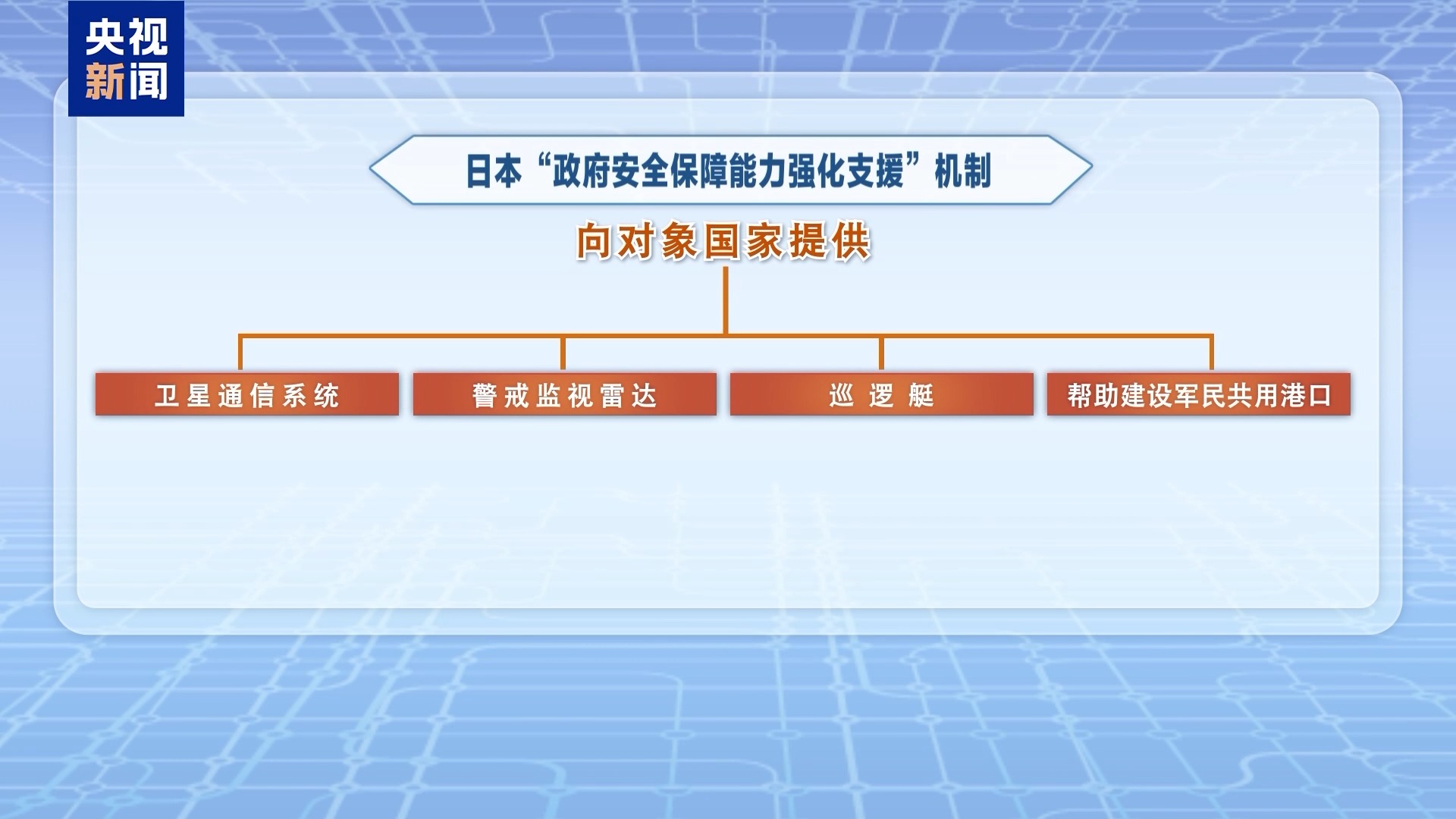
视频丨日本计划加速向他国供武 专家:欲隐蔽推动军事扩张
Yang Shi Xin Wen Ke Hu Duan· 2025-12-25 02:48
Core Viewpoint - Japan is significantly expanding its "Government Security Capability Enhancement Support" mechanism, with a budget increase to 18.1 billion yen (approximately 815 million RMB) for the fiscal year 2025, up from 8.1 billion yen in the previous year [2]. Group 1: Budget and Mechanism Expansion - The budget for the "Government Security Capability Enhancement Support" mechanism will reach 18.1 billion yen in fiscal year 2025, a substantial increase from 8.1 billion yen in fiscal year 2024 [2]. - The mechanism was established in April 2023 to support developing countries by providing non-lethal military equipment such as satellite communication systems, surveillance radars, and patrol boats [4]. - By the end of 2023, Japan has already provided significant support, including five coastal surveillance radars to the Philippines and four patrol boats to Bangladesh, totaling approximately 2 billion yen [6]. Group 2: Policy and Strategic Implications - Japan's government is pushing to relax restrictions on arms exports, which were previously limited to non-lethal equipment, indicating a shift towards broader military capabilities [11]. - The expansion of the support mechanism is seen as a strategic move to create a security cooperation network led by Japan, while also preparing the groundwork for potential future arms exports [13]. - This strategy allows Japan to enhance its military presence without directly violating its pacifist constitution, thereby increasing its intervention capabilities in potential conflicts [17].