
农业强国

Search documents
纵览大国“三农”的万千气象
Jing Ji Ri Bao· 2026-01-14 22:10
Core Viewpoint - The "Three Rural Issues" (agriculture, rural areas, and farmers) have become a prominent highlight in economic and social development, with significant achievements in agricultural production, farmer income growth, and rural stability, providing strong support for high-quality development [1][2][3] Summary by Sections Agricultural Production and Farmer Income - Agricultural production and farmer income are the most important indicators of "Three Rural Issues" development, with stable production and continuous income growth observed [5][6] - In 2025, grain production reached a new high, with per capita grain availability exceeding 500 kilograms, and a variety of agricultural products such as cotton, oil, sugar, and vegetables being sufficiently supplied [6][7] Policy and Technological Support - The increase in grain production is attributed to effective policies, technological advancements, and improved seed varieties, with over 90% of grain production growth coming from yield improvements [7] - The implementation of a compensation mechanism for grain production areas and the steady increase in minimum purchase prices for wheat and rice have motivated farmers to grow more [7] Poverty Alleviation and Rural Development - The two bottom-line tasks post-poverty alleviation are ensuring stable and safe supply of grain and important agricultural products, and consolidating the achievements of poverty alleviation to prevent large-scale return to poverty [5][8] - By the third quarter of 2025, the actual disposable income of rural residents in poverty-stricken counties grew by 6.5%, outpacing the national rural growth rate by 0.5 percentage points [8] Agricultural Innovation and New Trends - The emergence of new agricultural professions and the integration of technology into agriculture are reshaping the rural workforce, with new roles such as rural AI trainers and collective economic managers being recognized [14][15] - The trend of returning entrepreneurs to rural areas is significant, with over 15.1 million returnees expected by the end of 2025, indicating a positive shift in rural revitalization [15] Agricultural Processing and Tourism - The development of agricultural processing and rural tourism is crucial for enhancing rural economies, with a focus on cold chain logistics and deep processing of agricultural products like lychee [17][18] - Rural tourism has evolved from simple farm stays to cultural and experiential offerings, emphasizing the need for unique selling points to attract visitors [19]
科技驱动农业保险提质增效,创新正当其时
Jing Ji Ri Bao· 2026-01-12 02:48
Core Insights - The article highlights the completion of China's first crop (rice) seed insurance payout, amounting to approximately 750,000 yuan, to farmers affected by adverse weather, showcasing the advancement of agricultural insurance services in China [1] - Agricultural insurance is crucial for safeguarding farmers' income, ensuring food security, and supporting rural revitalization efforts [1] Group 1: Agricultural Insurance Development - China has made significant progress in agricultural risk management over the past 20 years, with agricultural insurance premium income ranking first globally [1] - The need for innovation in agricultural insurance remains, particularly in response to increasingly complex climate and market risks [1] Group 2: Tailored Insurance Products - There is a push to expand insurance coverage to include local specialty industries, with tailored products being essential for addressing the unique risks faced by different agricultural regions [2] - For instance, Zhejiang Province plans to introduce 12 local specialty insurance products by 2025, covering various agricultural activities [2] Group 3: Multi-layered Insurance and Infrastructure - The article emphasizes the importance of developing multi-layered agricultural insurance that includes more agricultural infrastructure, such as high-standard farmland and smart greenhouses [3] - Traditional insurance models are inadequate for covering the new risks associated with modern agricultural production, necessitating innovation in product offerings [3] Group 4: Technological Integration in Insurance - The integration of technology in agricultural insurance processes, such as claims assessment and loss adjustment, is crucial for improving efficiency and accuracy [3] - Utilizing drones, big data, and AI for loss assessment can enhance the claims process, addressing common complaints about slow and complicated procedures [3]
农业农村保持稳中向好势头
Zhong Guo Jing Ji Wang· 2025-12-31 07:35
Core Insights - The meeting highlighted the steady progress and positive momentum in China's agricultural and rural development, with a focus on enhancing agricultural production capacity and ensuring food security by 2025 [1][2] - The government aims to strengthen the agricultural foundation and promote rural revitalization, emphasizing the importance of stabilizing agricultural production and improving the quality of agricultural products [2] Group 1: Agricultural Production and Food Security - By 2025, China's agricultural comprehensive production capacity is expected to further improve, with grain output reaching a historical high and a diverse supply of "vegetable basket" products [1] - The government is committed to maintaining food security and preventing large-scale poverty, ensuring that the achievements in poverty alleviation are consolidated and expanded [1][2] Group 2: Agricultural Innovation and Green Development - There is a strong emphasis on agricultural technology innovation and the integration of industry, with a focus on achieving self-reliance in agricultural technology [2] - The government plans to accelerate the green transformation of agriculture and expand the supply of high-quality green agricultural products [2] Group 3: Rural Development and Reform - The meeting stressed the importance of improving rural living conditions and advancing the construction of beautiful and livable villages, with a focus on addressing issues such as waste management and sanitation [2] - Key tasks include extending land contracts for another 30 years, enhancing modern agricultural management systems, and fostering rural talent to invigorate rural development [2]
锚定农业强国目标 提升服务“三农”效能
Qi Huo Ri Bao Wang· 2025-12-31 02:52
Core Viewpoint - The Central Rural Work Conference held in Beijing from December 29 to 30 focuses on the modernization of agriculture and rural areas, emphasizing tasks such as stabilizing agricultural product prices, ensuring stable income for farmers, enhancing the quality and efficiency of the "vegetable basket" industry, and improving agricultural disaster prevention and mitigation [1][2]. Group 1: Agricultural Modernization and Futures Market - The conference outlines key tasks that align with the core functions of the futures market, such as price discovery, risk management, and resource allocation, indicating a clear direction for the futures industry to support agriculture [1]. - The futures industry is encouraged to leverage its advantages to address challenges in agricultural production and operations, such as price volatility and financing difficulties, thereby becoming a crucial financial service for the agricultural economy [1][2]. Group 2: Risk Management and Financial Services - The emphasis on maintaining reasonable prices for important agricultural products and ensuring stable income for farmers positions the futures industry as a key tool for stabilizing agricultural expectations and safeguarding farmer earnings [2]. - The "insurance + futures" model is highlighted as a method to transfer price volatility risks to the derivatives market, providing dual protection for farmers in terms of price and income [2]. - The futures industry is urged to enhance financial education for farmers, improve service accessibility and transparency, and develop a price index system for agricultural products to make futures tools understandable and usable for farmers [2][3]. Group 3: Future Pathways for the Futures Industry - The futures industry can deepen its services through two main pathways: forming fair and transparent agricultural product price signals and promoting the "insurance + futures" model to cover more specialty agricultural products [3]. - Collaboration with financial institutions and leading enterprises to create a "futures + orders + credit" ecosystem is essential for activating rural assets and addressing financing challenges [3]. - The industry aims to integrate futures services into the entire rural revitalization chain, injecting financial momentum into the high-quality development of agriculture in China [3].
农业现代化水平不断提高
Ren Min Ri Bao Hai Wai Ban· 2025-12-31 02:01
Core Insights - The agricultural sector in China is experiencing significant growth, with the value of agriculture and related industries reaching 20.6173 trillion yuan in 2024, accounting for 15.29% of GDP [2] - The seed industry revitalization initiative has led to a stable grain production of over 1.3 trillion jin for several years, with a record high of 1.4298 trillion jin achieved this year [3] - The modernization of agricultural production and seed safety assurance levels are improving, with seed quality compliance rates remaining above 98% [4] Group 1: Agricultural Development and Modernization - Hebei Province is advancing agricultural structural adjustments by developing specialty facility agriculture and high-quality vegetable cultivation to increase farmers' income and support rural revitalization [2] - The agricultural modernization level is continuously improving, with major grain crops achieving full mechanization in planting and harvesting [2] - The national seed supply guarantee rate has reached 80%, an increase of 10 percentage points since 2020 [4] Group 2: Seed Industry and Technological Innovation - The proportion of domestically bred crop varieties has exceeded 95%, with domestic seed sources for livestock, aquatic products, and vegetables holding market shares of over 80%, 85%, and 91% respectively [3] - The establishment of national livestock and poultry genetic resource banks has positioned China as the world leader in the preservation of agricultural genetic resources [3] - The investment in research and development by crop seed companies has doubled since 2020, indicating a robust innovation ecosystem [3] Group 3: Agricultural Social Services - The coverage and quality of agricultural social services are expanding, with a target to enhance service capabilities across the entire production chain by 2025 [5] - There are currently 1.111 million operational entities providing social services, serving nearly 93 million smallholder farmers [6] - The shift towards comprehensive service models is promoting the integration of advanced varieties, technologies, and equipment to support smallholder and modern agricultural development [6] Group 4: Policy and Strategic Initiatives - The Central Rural Work Conference emphasized the need to accelerate the construction of an agricultural powerhouse, focusing on improving grain quality and diversifying food supply capabilities [7] - The Ministry of Agriculture and Rural Affairs is implementing a new round of initiatives to enhance grain production capacity and ensure food security [8] - The promotion of smart agriculture and the application of new technologies such as big data and AI in agriculture are key components of the modernization strategy [8]

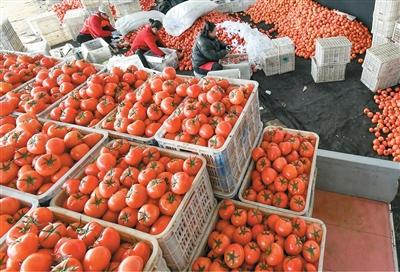
微视频|沃野升腾新希望
Xin Hua She· 2025-12-31 00:35
Core Viewpoint - The Central Rural Work Conference held on December 29-30 in Beijing analyzed the current situation and challenges facing the "three rural issues" and outlined the work plan for 2026, emphasizing the importance of agricultural modernization for China's overall modernization [2] Group 1 - The conference highlighted the necessity to accelerate the construction of a strong agricultural nation, indicating its critical role in the broader context of Chinese modernization [2]

推动乡村全面振兴取得新进展
Jing Ji Ri Bao· 2025-12-30 22:39
Group 1 - The recent Central Rural Work Conference emphasized the importance of "Three Rural Issues" and provided guidance for next year's work, highlighting significant achievements in agricultural production and rural development [1] - Agricultural production has increased, with grain output reaching 1.4 trillion jin for two consecutive years, and a variety of food supplies have become more abundant, contributing to improved living standards for rural residents [1] - Despite these achievements, challenges remain, including external uncertainties and internal weaknesses in agricultural foundations, necessitating a focus on stabilizing the agricultural sector [1] Group 2 - The year 2026 marks the beginning of the 14th Five-Year Plan, making the advancement of "Three Rural Issues" crucial for China's modernization, with a focus on rural revitalization and urban-rural integration [2] - Enhancing agricultural production capacity and quality is a major task, as China's agricultural development faces challenges such as limited resources and historical deficits, requiring a shift towards high-quality agricultural development [2] - A mechanism to prevent poverty and ensure stability post-poverty alleviation has been established, with a focus on maintaining support policies and enhancing internal development dynamics through targeted assistance [3] Group 3 - The construction of livable and workable rural areas is prioritized, aiming to improve infrastructure, public services, and living conditions while promoting the integration of agriculture with other industries [3] - The modernization of agriculture and rural areas is essential for the overall progress of China's modernization, with efforts directed towards making agriculture a modern industry and improving the quality of life for farmers [3]
中央农村工作会议定调明年“三农”工作
Bei Jing Shang Bao· 2025-12-30 16:04
Core Viewpoint - The Central Rural Work Conference emphasizes the importance of agricultural modernization in China's overall modernization strategy and the need to accelerate the construction of a strong agricultural nation [2][3]. Group 1: Agricultural Production and Infrastructure - The conference calls for stabilizing grain and oil production and implementing a new round of actions to enhance grain production capacity by a billion jin [2]. - It highlights the need to strengthen water conservancy infrastructure and improve meteorological monitoring and early warning systems to enhance agricultural disaster prevention and reduction capabilities [2]. - There is a focus on improving the quality and efficiency of the "vegetable basket" industry and enhancing the capacity for diversified food supply [2]. Group 2: Land and Resource Management - The meeting stresses the importance of protecting arable land and improving its quality, adhering to the red line of arable land, and promoting high-standard farmland construction [2]. - It advocates for the effective transformation and application of key agricultural technologies and encourages the development of new agricultural productivity tailored to local conditions [2]. Group 3: Poverty Alleviation and Rural Development - The establishment of a regular mechanism to prevent poverty and a robust support policy system for underdeveloped areas is emphasized to consolidate and expand the achievements of poverty alleviation [2]. - The conference aims to promote stable income growth for farmers and improve the income guarantee mechanism for grain-producing farmers [2]. - It encourages the development of county-level industries to enhance farmers' participation in industrial development and improve the linkage mechanisms between farmers and industries [2]. Group 4: Rural Governance and Reform - Strengthening the Party's leadership over "three rural" issues and enhancing the capabilities of party and government officials in rural work is highlighted [3]. - The meeting calls for the implementation of the "Fengqiao Experience" to resolve various conflicts and maintain rural stability [2][3]. - It proposes deepening rural reforms, including extending land contracts for another thirty years and innovating financing mechanisms for rural revitalization [2].
新华社权威速览丨“十五五”开局之年 “三农”工作这样干!
Xin Hua She· 2025-12-30 14:42
Core Viewpoint - The "Three Rural Issues" (agriculture, rural areas, and farmers) are prioritized in the context of the 14th Five-Year Plan, with a focus on modernizing agriculture and promoting rural revitalization by 2026 [2][3]. Group 1: Agricultural Modernization - The importance of agricultural modernization is emphasized as a key component of China's overall modernization strategy [4]. - There is a commitment to stabilize grain and oil production, implementing a new round of actions to enhance grain production capacity [4]. - The integration of advanced agricultural technologies and efficient application of scientific achievements is crucial for developing new agricultural productivity [4]. Group 2: Policy and Support Mechanisms - Policies aimed at benefiting farmers and enhancing agricultural productivity are to be improved, ensuring reasonable pricing for key agricultural products [2][4]. - A mechanism to prevent poverty and support underdeveloped regions will be established, ensuring the sustainability of poverty alleviation efforts [4][5]. - The experience from the "Ten Thousand Projects" will be utilized to promote the construction of livable and workable rural areas, enhancing rural governance and cultural development [5]. Group 3: Food Security and Quality - There is a focus on improving the quality and efficiency of the "vegetable basket" industry to enhance food supply capabilities [4]. - Strengthening water conservancy infrastructure and enhancing disaster prevention and mitigation capabilities in agriculture are highlighted as essential measures [4]. - The protection and quality improvement of arable land are prioritized, with strict adherence to land use regulations [4].

新华社权威速览丨“十五五”开局之年,“三农”工作这样干!
Xin Hua She· 2025-12-30 13:07
Core Viewpoint - The article emphasizes the importance of advancing agricultural and rural modernization as a key component of China's overall modernization strategy, particularly in the context of the "15th Five-Year Plan" starting in 2026 [3][8]. Group 1: Agricultural Production and Food Security - The government aims to stabilize grain and oil production and implement a new round of actions to enhance grain production capacity by 100 billion jin [8]. - There is a focus on improving the quality and efficiency of the "vegetable basket" industry to enhance diversified food supply capabilities [9]. Group 2: Rural Development and Poverty Alleviation - The strategy includes consolidating and expanding the achievements of poverty alleviation, with a focus on preventing large-scale return to poverty [5][9]. - The government plans to establish a regular mechanism to prevent poverty and improve support policies for underdeveloped areas [9][10]. Group 3: Rural Infrastructure and Living Conditions - There is an emphasis on improving rural living conditions by addressing issues such as waste management and sanitation [10]. - The article highlights the need for enhancing rural governance and promoting civilized rural customs [10][11]. Group 4: Policy Implementation and Leadership - The meeting stresses the importance of strengthening the Party's leadership over agricultural and rural work and enhancing the capabilities of local officials in this area [11]. - It calls for a correct view of performance evaluation to stimulate entrepreneurial spirit and ensure effective implementation of rural revitalization tasks [11].
