
基差贸易

Search documents
基差贸易:企业风险管理的进阶实践
Qi Huo Ri Bao Wang· 2026-01-26 02:02
Core Insights - The article emphasizes the increasing importance of efficient risk management and market opportunity capture for industrial enterprises, highlighting basis trading as a key method that combines futures and spot markets for enhanced risk management [1] Group 1: Basis Trading and Risk Management - Basis trading provides a more refined and flexible risk management tool by decomposing commodity pricing into futures prices and basis, leading to innovative upgrades in hedging models [1] - Traditional hedging focuses on locking in costs or profits and hedging price risks, but basis risk remains a core risk that cannot be eliminated through simple hedging [1][3] Group 2: Understanding Basis Formation and Fluctuation - The formation and fluctuation of basis are explained through the holding cost theory, which states that under ideal market conditions, futures prices should equal spot prices plus net holding costs [2] - Basis fluctuations are driven by holding costs, quality and regional differences, and market expectations, with strong basis indicating tight spot supply and bullish sentiment [2] Group 3: Active Basis Risk Management - The advanced model of basis trading shifts from passive hedging to active management of basis risk, where a company's ability to manage basis directly influences its competitive edge and can create new profit sources [3] - By breaking down pricing into futures and basis components, companies can leverage their understanding of holding cost structures to capture more certain trading opportunities [3] Group 4: Practical Application in Black Commodity Futures - An example from the black commodity futures market illustrates how a construction company uses basis contracts to lock in future procurement prices, effectively managing basis risk while maintaining flexibility in pricing decisions [4] - The strategy allows companies to mitigate dual price risks and stabilize operating profits, regardless of future market movements in basis [4][5] Group 5: Transition to Proactive Management - Basis trading enables companies to shift from being passive risk bearers to proactive managers of basis fluctuations, enhancing operational certainty and potentially turning basis volatility into profit sources [5] - To effectively engage in basis trading, companies need to upgrade their internal risk management systems and focus on developing a professional basis analysis framework [5]
华西期货总经理魏哲平: 以定制化期货方案为抓手 为中小微企业筑起风险“防护墙”
Zhong Guo Zheng Quan Bao· 2026-01-23 22:25
Core Viewpoint - The ongoing geopolitical conflicts and commodity price fluctuations since 2025 have put significant operational pressure on small and medium-sized enterprises (SMEs), making the futures market a crucial platform for risk management and stabilizing market expectations [1][2]. Group 1: Current Challenges for Enterprises - The complex international situation, including the ongoing Russia-Ukraine conflict and regional tensions, has led to significant volatility in commodity prices, impacting the operational stability of SMEs [2]. - Enterprises are facing dual pressures from raw material price fluctuations and logistics uncertainties, which are exacerbated for SMEs due to limited financial resources and expertise [2]. Group 2: Role of the Futures Market - The futures market serves as a "risk firewall" for enterprises, allowing producers and traders to lock in sales prices through short-selling futures contracts, thus stabilizing expectations and restoring confidence in investment and production [3]. - The dual attributes of the futures market—commodity trading and financial investment—are essential for helping enterprises manage price volatility and operational risks [3]. Group 3: Customized Services for SMEs - The futures industry is innovating through customized services like "insurance + futures" and basis trading to address the specific risk management needs of SMEs [4][5]. - In 2024, the "insurance + futures" model provided 2.8 billion yuan in price risk protection for agricultural products across multiple provinces, demonstrating its effectiveness in mitigating price volatility [4]. - The basis trading model allows enterprises to lock in prices for livestock while managing cash flow, thus alleviating financial pressure and enabling a focus on operational improvements [5][6]. Group 4: Enhancing Futures Market Integration - Despite the successes, challenges remain in terms of awareness, tool adaptation, and policy implementation, which need to be addressed to fully integrate futures services into the real economy [7][8]. - The industry faces a shortage of skilled professionals who understand both the industry and financial aspects, which hinders SMEs' ability to effectively utilize futures for risk management [7]. - There is a need for more comprehensive policies and support mechanisms to facilitate the adoption of futures tools by enterprises, including the introduction of more commodity futures contracts [8].
新湖瑞丰服务包头热卷产业链:基差贸易为“科技兴蒙”提供金融创新样板
Qi Huo Ri Bao· 2026-01-13 01:08
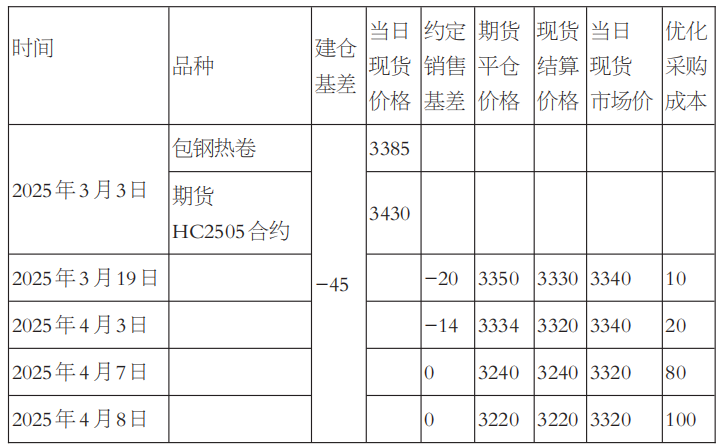
Core Viewpoint - The Baotou hot-rolled steel industry is facing challenges due to price fluctuations and weak demand, leading to decreased purchasing willingness among traders and increased operational pressure on steel mill agents [1] Group 1: Industry Challenges - Baotou's hot-rolled steel sector is experiencing a downturn, with trade merchants showing reduced purchasing intent and unstable sales channels [1] - Steel mill agents are facing inventory accumulation and heightened operational pressures due to weakened brand differentiation and supply-demand imbalances [1] - The long-term implications of these challenges may adversely affect regional economic development and employment [1] Group 2: Introduction of Basis Trading - Xinhu Ruifeng has introduced a basis trading model that connects the production end with the futures market, enhancing inventory monetization efficiency for upstream enterprises and ensuring stable procurement for downstream companies [1][2] - This model serves as a financial innovation example for the "Technology Empowering Inner Mongolia" initiative and aims to establish Baotou as a hub for bulk commodity trading in the western region [1] Group 3: Benefits for Agents and Processing Enterprises - Basis trading allows agents to lock in profits early, addressing seasonal demand fluctuations and alleviating financial pressures from high winter inventory levels [3] - For example, a Baogang agent utilized basis trading to sell winter-stored hot-rolled steel at a profit of 25 yuan/ton, accelerating cash flow and supporting subsequent procurement [3] - Processing enterprises have optimized procurement costs through flexible pricing in basis trading, achieving significant savings compared to market prices [5] Group 4: Risk Management and Market Dynamics - Prior to the introduction of basis trading, traders faced significant risks due to reliance on fixed pricing, leading to inventory accumulation and increased financial costs [6] - The new model allows traders to manage risks proactively, improving market liquidity and reducing the "wait-and-see" mentality among market participants [6] - The introduction of basis trading has attracted more traders and risk management companies, creating a positive cycle that enhances market stability [6] Group 5: Project Summary - Xinhu Ruifeng's basis trading model has effectively addressed operational challenges in the Baotou hot-rolled steel industry, providing risk hedging and cost optimization for the supply chain [7] - The model enhances market pricing transparency and reduces information asymmetry, improving overall market dynamics [7] - This initiative aligns with regional economic goals and supports stable operations, reduced inventory, and job security, showcasing the value of the futures market in serving the real economy [7]

期货行业深入学习贯彻党的二十届四中全会精神,在新征程上展现新担当新作为
证监会发布· 2026-01-09 11:12
Group 1 - The article emphasizes the importance of the 20th Central Committee's Fourth Plenary Session in guiding the futures industry towards high-quality development and political responsibility [2][4][5] - The futures industry is committed to integrating the spirit of the Plenary Session into its operations, enhancing political awareness, and ensuring the implementation of the Party's decisions [3][5] - The association is actively promoting various initiatives to strengthen the political leadership within the industry, including the establishment of a long-term mechanism for party-building and business development integration [4][5] Group 2 - The article highlights the principle of "people first," emphasizing the need for the futures industry to focus on improving the quality of life for the people as a key goal during the 14th Five-Year Plan period [6][7] - The industry is encouraged to incorporate social responsibility into its development strategy, particularly through initiatives like the "insurance + futures" model to support rural revitalization [7][8] - The association plans to further guide the industry in practicing the political and people-oriented nature of financial work, particularly in rural development and community support [7][8] Group 3 - The article stresses the importance of serving the real economy as a fundamental purpose of the futures industry, aligning with national strategies for economic development [8][9] - The association is focused on providing tailored risk management solutions for enterprises, with significant trade volumes reported, including a total of 485.149 billion yuan in trade for small and medium-sized enterprises [8][9] - The industry is expected to actively participate in green finance and support the development of green derivatives markets as part of its commitment to high-quality economic growth [9] Group 4 - The article discusses the cultivation of a distinctive financial culture within the futures industry, guided by Xi Jinping's thoughts and traditional Chinese culture [10][11] - The association is implementing measures to promote a culture of compliance, integrity, professionalism, and responsibility, which are essential for the industry's long-term development [10][11] - The futures industry is encouraged to integrate cultural development into its strategic planning and operational management, ensuring alignment with its core values and governance [11]
从“交易通道”到“风险管理伙伴” 期货公司服务实体经济能力增强
Qi Huo Ri Bao· 2026-01-09 01:40
Core Insights - The futures industry is transitioning from a low-level price competition model to a value-driven service model, focusing on supporting the real economy and enhancing operational efficiency [1][4] - The core competitiveness of futures companies lies in their ability to provide tailored risk management solutions and deepen their service to the last mile of the industry [4][7] Service Iteration and Upgrades - The evolution of services in the futures market has progressed from a 1.0 version focused on knowledge output and channel services to a 2.0 version that includes asset management and risk management services, diversifying revenue streams [2] - Future services are expected to evolve into a 3.0 version, emphasizing risk management partnerships and comprehensive services driven by research and intelligent quantification [2][8] Shift from Price Wars to Professional Competence - The industry is moving away from price wars towards differentiation based on research capabilities, risk control systems, and product innovation, leading to a division between comprehensive giants and specialized firms [3] - As futures companies become risk management partners, they enhance the stability and financing capabilities of real enterprises, reflecting the true value of the futures market [3][4] Building a Service Ecosystem - To effectively serve the last mile of the industry, futures companies need to create a service ecosystem that integrates financial tools into real business scenarios [7] - Innovative solutions like "basis + option" trading and "futures + warehousing logistics" are being developed to address price volatility and ensure stable supply for enterprises [7] Tailored Solutions for Enterprises - Futures companies are providing customized risk management solutions throughout the entire lifecycle of enterprises, from initial risk diagnosis to the establishment of hedging systems and cross-border business expansion [8] - The high-quality development of the futures industry is inevitable, with companies that focus on deepening their understanding of the industry and providing precise services expected to stand out in future competition [8]
华联期货总经理刘冬春:紧扣区域产业特质,推动衍生品服务与企业经营深度融合
Qi Huo Ri Bao Wang· 2026-01-08 03:09
Core Viewpoint - The article emphasizes the transformation of the Guangdong futures market through internationalization, platformization, productization, and differentiation, aiming to integrate futures with the real economy and provide risk management solutions for enterprises [1]. Group 1: Regional Characteristics and Service Models - Guangdong's geographical and cultural characteristics include its proximity to Hong Kong and Macau, fostering an open and pragmatic business culture, which has led to a modern manufacturing system centered around the Pearl River Delta [2]. - The company has developed a dual-track model of "professional tools + in-depth services" to cater to the unique needs of Guangdong enterprises, focusing on risk management and asset allocation [2]. Group 2: Challenges and Future Trends - The company faces challenges such as limited understanding of futures tools among some enterprises and the need for upgraded risk management strategies that extend beyond simple price hedging [3]. - Future trends in risk management for Guangdong enterprises include diversified risk scenarios, refined tool usage, and customized solutions tailored to specific business contexts [3]. Group 3: Strategic Initiatives - The company plans to enhance industry services by integrating professional resources to empower frontline operations and address the challenges of using futures and derivatives [4]. - It aims to innovate service models to meet the evolving demand for comprehensive risk management across the entire supply chain [4]. - The company will promote technological empowerment by advancing digital transformation and utilizing big data and AI to create an intelligent risk management platform [4].
华联期货总经理刘冬春:聚焦主业守正创新,服务实体彰显担当
Qi Huo Ri Bao Wang· 2026-01-08 03:09
Core Insights - The Chinese futures market is undergoing a systematic transition from scale expansion to quality enhancement, driven by the issuance of the "Opinions on Promoting High-Quality Development of the Futures Market" in April 2024, which provides institutional support and development guidance for the industry's transformation [1] - The focus of competition in the futures industry is shifting from channel services to comprehensive service capabilities, with three major trends emerging: the extension of service content from standardized products to customized solutions, the expansion of service areas from on-exchange markets to off-exchange ecosystems, and the development of service frameworks from domestic entities to cross-border service systems [1] - The futures market is evolving beyond traditional risk management to become a stabilizer for industrial chain stability, a driver for the modernization of the industrial system, and a strategic bridge connecting domestic and international dual circulation [1] Industry Development Strategy - The release of the "Opinions" has clarified the direction for futures market development, with Hualian Futures establishing a strategic layout of "one body and three engines," focusing on brokerage services as the foundation and using trading consulting, asset management, and risk management as engines to build a comprehensive financial service system [2] - The company aims to enhance brokerage service efficiency, deepen the product system of trading consulting, strengthen the wealth management brand of asset management, and refine the profitability of risk management, supported by a strategic framework of party leadership, cultural development, talent-driven initiatives, technological empowerment, and risk control [2] Organizational and Talent Development - Hualian Futures emphasizes the importance of talent as the primary resource for high-quality development, implementing a "talent-driven" strategy that focuses on building a diverse talent pool through reforms in selection and evaluation mechanisms [4] - The company prioritizes both external recruitment of high-quality professionals and internal systematic training, enhancing the compensation incentive system and career development pathways to foster a strong sense of belonging and value creation among employees [4] Service to the Real Economy - The company is committed to serving the real economy by focusing on the diverse and personalized needs of enterprises, utilizing professional research capabilities to provide market analysis and decision-making support [5] - Hualian Futures collaborates with its risk management subsidiary to offer integrated services across the industrial chain, employing various tools such as hedging, delivery services, and insurance + futures to help enterprises effectively manage price fluctuations and optimize operational efficiency [5] - A comprehensive risk management system has been established, featuring a "three-line defense" mechanism for risk identification, assessment, monitoring, and resolution, ensuring compliance and stability in business operations [5] Digital Transformation and Social Responsibility - The company has incorporated digital transformation into its strategic agenda, planning to advance the "Digital Hualian" initiative during the 14th Five-Year Plan period, focusing on building digital platforms for intelligent research, risk control, and customer service [6] - By leveraging technologies such as big data and artificial intelligence, Hualian Futures aims to enhance customer service experiences and operational efficiency while ensuring compliance [6] - The company actively engages in social responsibility initiatives, promoting projects related to industrial chain cultivation and rural revitalization, while enhancing brand communication to showcase its innovations in industrial services and financial technology [6]
锚定农业强国目标 提升服务“三农”效能
Qi Huo Ri Bao Wang· 2025-12-31 02:52
Core Viewpoint - The Central Rural Work Conference held in Beijing from December 29 to 30 focuses on the modernization of agriculture and rural areas, emphasizing tasks such as stabilizing agricultural product prices, ensuring stable income for farmers, enhancing the quality and efficiency of the "vegetable basket" industry, and improving agricultural disaster prevention and mitigation [1][2]. Group 1: Agricultural Modernization and Futures Market - The conference outlines key tasks that align with the core functions of the futures market, such as price discovery, risk management, and resource allocation, indicating a clear direction for the futures industry to support agriculture [1]. - The futures industry is encouraged to leverage its advantages to address challenges in agricultural production and operations, such as price volatility and financing difficulties, thereby becoming a crucial financial service for the agricultural economy [1][2]. Group 2: Risk Management and Financial Services - The emphasis on maintaining reasonable prices for important agricultural products and ensuring stable income for farmers positions the futures industry as a key tool for stabilizing agricultural expectations and safeguarding farmer earnings [2]. - The "insurance + futures" model is highlighted as a method to transfer price volatility risks to the derivatives market, providing dual protection for farmers in terms of price and income [2]. - The futures industry is urged to enhance financial education for farmers, improve service accessibility and transparency, and develop a price index system for agricultural products to make futures tools understandable and usable for farmers [2][3]. Group 3: Future Pathways for the Futures Industry - The futures industry can deepen its services through two main pathways: forming fair and transparent agricultural product price signals and promoting the "insurance + futures" model to cover more specialty agricultural products [3]. - Collaboration with financial institutions and leading enterprises to create a "futures + orders + credit" ecosystem is essential for activating rural assets and addressing financing challenges [3]. - The industry aims to integrate futures services into the entire rural revitalization chain, injecting financial momentum into the high-quality development of agriculture in China [3].
银河德睿总经理魏峰:期货风险管理业务发展呈现三大特征
Zheng Quan Ri Bao Wang· 2025-12-30 07:41
Core Insights - The futures risk management business is becoming a significant growth engine for futures companies, with new characteristics emerging in 2025 [1] Group 1: Characteristics of Futures Risk Management Business - The business is focusing on serving the real economy by utilizing unique advantages such as basis trading and warehouse receipt services, helping upstream and downstream enterprises reduce price volatility risks, lower inventory, and minimize capital occupation [1] - There is a notable contribution to green finance development, with the introduction of new products like industrial silicon, polysilicon, and lithium carbonate, and the launch of the first domestic OTC options linked to the EU ETS carbon emission rights, aiding domestic shipping companies in addressing international carbon emission constraints [1] - Increased investment in system construction is observed, aligning with the trend of digital finance, with significant enhancements in information technology, business processes, and management structures, leading to improved business efficiency, risk control capabilities, and settlement quality while significantly reducing operational costs [1]
为金融强国建设贡献期货力量
Qi Huo Ri Bao Wang· 2025-12-29 01:03
Core Viewpoint - The 20th Central Committee's Fourth Plenary Session emphasizes the importance of accelerating the construction of a financial power and outlines the strategic blueprint for the 14th Five-Year Plan, guiding the futures industry to align with national economic and social development goals [1][2]. Group 1: Party Leadership - The principle of "upholding the Party's overall leadership" is identified as the foremost guideline for economic and social development during the 14th Five-Year Plan, highlighting the political advantages of China's financial development [2]. - The Futures Industry Association (FIA) is committed to integrating Party leadership with business development, implementing various measures to strengthen Party building within the industry [2][3]. Group 2: People-Centric Approach - The session stresses "putting people first," with a focus on improving the quality of life for the populace as a primary goal for the 14th Five-Year Plan [4]. - The futures industry is encouraged to incorporate social responsibility into its development strategy, particularly through the "insurance + futures" model to support rural revitalization [4][5]. Group 3: Economic Development Focus - The session emphasizes the need to focus on the real economy, advocating for intelligent, green, and integrated development [6]. - The FIA is guiding futures firms to innovate in service tools and models to better support the real economy, with significant financial services provided to small and medium-sized enterprises [6]. Group 4: Financial Innovation - The 14th Five-Year Plan calls for the development of various financial sectors, including technology finance, green finance, and inclusive finance [7]. - The FIA aims to deepen the understanding of the futures industry's role in supporting national strategies and enhancing financial services for the real economy [7]. Group 5: Cultural Development - The session highlights the importance of cultivating a distinctive financial culture, with the FIA promoting principles of compliance, integrity, professionalism, and responsibility within the industry [8][9]. - The FIA is implementing measures to integrate cultural development into business strategies and governance, ensuring alignment with the core values of the financial sector [9].