十四五规划

Search documents
锚定“十五五”开局 2026年四川阿坝州发改工作这样干
Zhong Guo Fa Zhan Wang· 2026-02-09 08:25
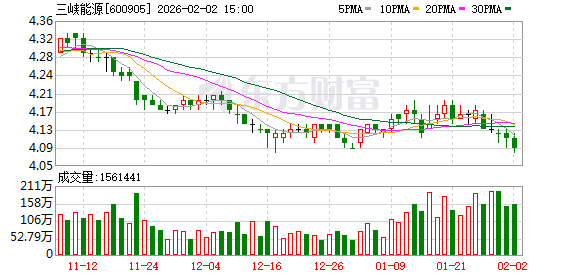
Core Insights - The meeting in Sichuan's Aba Prefecture focused on summarizing the achievements of the development and reform work in 2025 and outlining key tasks for 2026, guided by Xi Jinping's thoughts and various economic work meetings [1][3]. Economic Performance - The region's GDP maintained stable growth, with growth rates aligning with the provincial average, and several key indicators ranked among the top in the province [3]. - Industrial development has rebounded, with significant support from the service sector, while agriculture and construction have remained stable [3]. Investment and Projects - Fixed asset investment growth has consistently led the province, with key railway lines completed, ending the region's history of lacking railways [3]. - There has been notable success in securing funding for projects [3]. Green Development - Major advancements in clean energy capacity have been achieved, and the synergy between cultural tourism and economic development has strengthened [3]. - New applications in low-altitude economy and the initiation of digital infrastructure construction have been realized [3]. Reform and Innovation - The efficiency of government services has improved, and the scale of business entities has expanded [3]. - High-level recognition has been received for targeted support work, and a new pattern of county-level economic development is accelerating [3]. Social Welfare - A series of livelihood improvement projects have been implemented, enhancing the public service system [3]. - Innovative employment promotion models have effectively increased local residents' income, and a more robust system for ensuring the supply and price stability of essential goods has been established [3]. Planning and Future Goals - The successful completion of the 14th Five-Year Plan saw the region's economic total surpassing 60 billion yuan, with a significant number of key projects reserved for the upcoming 15th Five-Year Plan [3]. - The meeting emphasized the importance of high-quality planning and implementation of the 15th Five-Year Plan, ensuring alignment with national and provincial strategies while highlighting local characteristics [4]. Key Tasks for 2026 - The focus will be on expanding effective demand, promoting investment through project facilitation, and enhancing the management of projects throughout their lifecycle [4]. - There will be an emphasis on developing characteristic industries, particularly in clean energy and digital economy sectors, while fostering innovation [4][5]. Social and Environmental Initiatives - Efforts will be made to improve education and healthcare distribution, promote high-quality employment, and support urbanization and rural integration [5]. - The region aims to accelerate green and low-carbon development while controlling high-energy-consuming projects and exploring market-based transactions for ecological products [5][6]. Safety and Security - Ensuring the safety of key sectors such as energy, railways, and food supply will be prioritized, along with enhancing reserve management and price stability capabilities [6].

从“十四五”17个重大专项,看质谱仪的三大趋势
Xin Lang Cai Jing· 2026-02-06 11:26
Core Insights - The article highlights the evolution of domestic mass spectrometry technology in China, transitioning from addressing shortcomings to building modular capabilities, ultimately moving towards "catching up" and "leading" in the field [1][6][12] Policy and Planning - During the "14th Five-Year Plan" period, 26 mass spectrometry-related projects were laid out, with 16 officially approved and one pending approval for 2025, reflecting a strong policy drive to enhance core technologies [1][8] - 20 provinces have included "scientific instruments" in their "15th Five-Year Plan" proposals, focusing on key technology breakthroughs and industry cluster development [1][8] Project Development Stages - In the early phase (2021-2022), projects focused on improving machine performance, particularly in high resolution and sensitivity, addressing critical indicators that have historically constrained domestic mass spectrometry [3][10] - By mid-phase (2023), the focus shifted towards application-driven projects, emphasizing high-end scientific instruments and the autonomy of core components, aiming to reduce reliance on imports in the life sciences sector [4][11] - In the later phase (2024-2025), projects became more targeted, aligning closely with current research and detection needs, such as nucleic acid mass spectrometry for public health and high molecular weight protein analysis for structural proteomics [5][12] Technological Advancements - Key components like interface cones, ion traps, and dissociation modules became focal points for development, indicating a shift from complete machine usability to enhancing modular capabilities [4][11] - The increasing participation of enterprises in leading projects reflects a collaborative approach between research institutions and industry, enhancing the overall innovation ecosystem [4][11] Future Outlook - The ongoing improvements in the autonomy of core components and increased enterprise involvement suggest that domestic mass spectrometry is transitioning from "following" to "keeping pace" and potentially "leading" in certain niches [6][12] - The establishment of a major project for a high-performance chromatography-mass spectrometry system, currently pending approval, indicates a forward-looking strategy for nurturing young scientific talent and ensuring future technological reserves [5][12]

从“十四五”17个重大专项,看质谱仪的三大趋势
仪器信息网· 2026-02-06 09:02
Core Viewpoint - The article highlights the evolution of domestic mass spectrometry technology in China during the "14th Five-Year Plan" period, transitioning from addressing shortcomings to building modular capabilities, ultimately aiming to achieve "catching up" and "leading" in the field [1][2]. Group 1: Policy and Project Overview - A total of 26 mass spectrometry-related projects have been laid out under the "14th Five-Year Plan," with 16 officially approved and one pending approval for 2025 [2]. - The projects encompass the entire chain from the development of high-end mass spectrometers to breakthroughs in core components and methodological innovations, reflecting China's commitment to self-reliance and capability enhancement in mass spectrometry technology [2][5]. Group 2: Project Development Stages - In the initial phase (2021-2022), projects focused on improving overall machine performance, targeting key indicators such as high resolution and sensitivity, which have historically constrained domestic mass spectrometry development [4][5]. - The projects began to extend into cutting-edge life sciences, indicating early traction from application demands on instrument development [4][6]. Group 3: Mid-Term and Application Focus - By mid-term (2023), the application orientation of mass spectrometry projects significantly increased, with keywords like "single-cell" and "high-throughput analysis" indicating a shift towards higher spatial resolution and complex system quantification capabilities [6][7]. - The focus on engineering capabilities for high-end general scientific instruments and the autonomy of core components aims to reduce reliance on imports in the life sciences sector [6][9]. Group 4: Late-Term Trends and Future Directions - In the later phase (2024-2025), projects are increasingly aligned with current research and testing needs, such as nucleic acid mass spectrometry for public health and high molecular weight protein analysis for structural proteomics [8]. - The significant increase in projects led by enterprises reflects a transition from research validation to practical application, indicating a clear evolution in the mass spectrometry landscape [8][9]. - The planned high-performance chromatography-mass spectrometry analysis instrument for 2025 highlights a forward-looking approach to nurturing young scientific talent and ensuring future technological reserves [8].
江门:2026年GDP预期增长目标为5%左右
Nan Fang Du Shi Bao· 2026-02-05 08:47
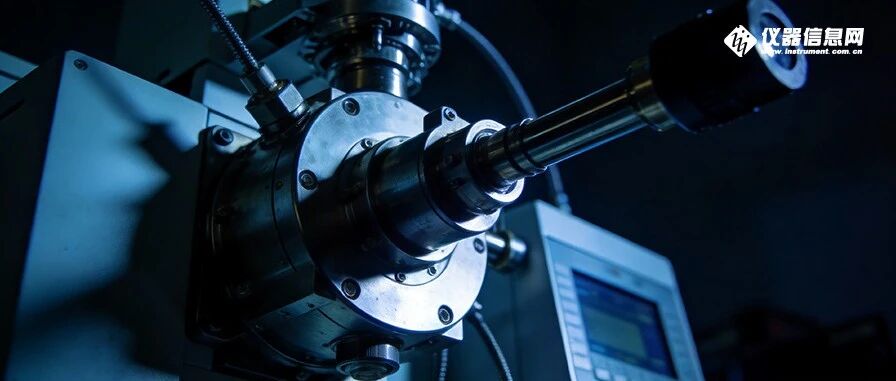
Core Viewpoint - The government work report of Jiangmen City outlines economic growth targets and achievements, emphasizing a focus on industrial development and infrastructure improvements to enhance regional competitiveness and integration into the Greater Bay Area [1][6]. Economic Growth Targets - Jiangmen aims for a GDP of 4,294 billion yuan by 2025, with a growth rate of 2.8%, and a target of approximately 5% growth in 2026 [1][6]. - The report sets a goal for an average annual GDP growth of 6% during the "15th Five-Year Plan" period [6]. Historical Economic Performance - Over the "14th Five-Year Plan," Jiangmen's GDP grew at an average rate of 4.7%, ranking 4th in the province [3][5]. - The industrial added value for large-scale enterprises increased by 6.7% annually, placing Jiangmen 3rd in the province [5]. Sectoral Performance - The construction industry achieved a total output value of 570 billion yuan, growing by 2.3%, which is 11.4 percentage points higher than the provincial average [3]. - The agricultural, forestry, animal husbandry, and fishery sectors reported a total output value of 691 billion yuan, with a growth rate of 5.8%, ranking 6th in the province [3]. Trade and Investment - Jiangmen's total import and export volume approached 200 billion yuan, with a growth of 3.2%, ranking 37th nationally [3]. - The city plans to attract over 200 billion yuan in project investments, including 32 manufacturing projects with investments exceeding 10 billion yuan, which represent growth rates of 23.1% and 19.2%, respectively [3]. Tourism Growth - The number of tourists and tourism revenue in Jiangmen experienced double-digit growth, with the Qiaoxiang Ancient Town receiving over 3.6 million visitors and doubling its revenue [3][5]. Infrastructure Development - Jiangmen is accelerating the construction of key transportation projects, including the Shenjiang Railway and Zhuji High-speed Railway, to enhance connectivity within the Greater Bay Area [8].
2025年第四季度上海写字楼市场报告
莱坊· 2026-02-05 07:30
Investment Rating - The report indicates a continued downward trend in rental prices for Grade-A office buildings in Shanghai, with a recommendation to monitor the market closely for potential recovery opportunities in the future [5][12][16]. Core Insights - The Shanghai Grade-A office market is currently under dual pressure from supply and demand, leading to a rental decline of 3.2% quarter-on-quarter, reaching RMB 6.05 per square meter per day [5][16]. - New supply in Q4 2025 included two projects totaling 216,585 square meters, contributing to a slight increase in vacancy rates to 23.8% [5][12]. - The net absorption for the quarter rose to 82,570 square meters, primarily driven by demand from financial institutions and TMT (Technology, Media, and Telecommunications) companies, while shared office brands continued to expand [5][12][14]. - The upcoming "14th Five-Year Plan" aims to boost domestic demand and promote technological innovation, which may provide moderate recovery opportunities for the office market [5][12]. - Approximately 1.4 million square meters of new office space is planned for release in Shanghai next year [6]. Summary by Sections Supply and Demand - In Q4 2025, the market saw a year-on-year increase of 55% in new supply, with a total annual supply of 1 million square meters, of which 46% was located in emerging markets [12]. - Nearly 80% of rental transactions in Q4 were from renewals and relocations, with an increasing trend in cross-regional moves driven by cost control considerations [12][14]. Rental Trends - The average rental price for Grade-A office buildings continued to decline, with a quarter-on-quarter decrease of 3.2% to RMB 6.05 per square meter per day [16]. - The rental prices in emerging business districts fell by 2.3% to RMB 5.14 per square meter per day, while CBD expansion areas experienced a 3.4% drop to RMB 4.62 per square meter per day [18]. Investment Market - In Q4 2025, the Shanghai office investment market recorded 14 major transactions totaling over RMB 6 billion, with a total of approximately 39 transactions for the year exceeding RMB 30 billion [20][21]. - Owner-occupiers are actively targeting office properties during this low-value period to achieve regional operational goals [21].
“十四五”时期陕西经济总量稳步攀升 综合实力迈上新台阶
Shan Xi Ri Bao· 2026-02-04 00:27
Economic Growth and Development - The total economic output of Shaanxi is steadily increasing, with a projected GDP of 36,551.1 billion yuan by 2025, maintaining an average annual growth rate of 5.2% from 2021 to 2025 [1] - By 2025, per capita GDP is expected to reach 92,663 yuan, with significant milestones of surpassing 70,000, 80,000, and 90,000 yuan in previous years [1] - The total grain production is projected to reach 13.47 million tons by 2025, with a grain yield of 294.9 kg/mu, an increase of 11.7 kg compared to the end of the 13th Five-Year Plan [1] Innovation and R&D Investment - Research and experimental development funding is expected to grow at an average annual rate of 10% from 2021 to 2024, reaching a total of 92.62 billion yuan in 2024, a 46.5% increase from the end of the 13th Five-Year Plan [2] - The R&D investment intensity is projected to reach 2.61%, an increase of 0.21 percentage points from the end of the 13th Five-Year Plan, ranking first in the western region [2] - By 2025, the comprehensive technology innovation level index is expected to reach 75.51, a 7.12-point increase from the end of the 13th Five-Year Plan, with the innovation output level index at 87.59, ranking fourth nationally [2] Industrial Structure and Consumption - The added value of large-scale energy industries is projected to grow at an average annual rate of 7.1% from 2021 to 2025, while the added value of large-scale equipment manufacturing is expected to grow at 10.3% [2] - The retail sales of social consumer goods are expected to exceed 1.1 trillion yuan, with an average annual growth rate of 4.1% from 2021 to 2025, and online retail sales through public networks growing at 12.3% [3] - The total import and export value is projected to exceed 500 billion yuan, marking a historical high, with the export structure continuously optimizing and the number of China-Europe freight trains (Xi'an) exceeding 30,000 [3]
以更大作为更实举措推动实现“十五五”良好开局
Xin Hua Ri Bao· 2026-02-03 21:55
本报讯(记者方思伟)2月3日下午,省政协党组书记、主席张义珍来到她所在的省十四届人大五次会议盐 城代表团,与代表们一起审议政府工作报告。 张义珍表示,盐城在全省大局中地位重要、责任重大,全市上下团结拼搏、真抓实干,经济社会发展取 得了可喜成绩。希望盐城全面深刻准确领会和把握四中全会战略部署,深入学习贯彻习近平总书记对江 苏工作重要讲话精神,树立和践行正确政绩观,确保"十五五"开好局起好步,为扛起经济大省挑大梁责 任不断作出盐城贡献。 盐城代表团气氛热烈,代表们积极踊跃发言。张义珍表示,完全赞同省长刘小涛所作的政府工作报告 和"十五五"规划纲要草案。报告坚持以习近平新时代中国特色社会主义思想为指导,以深入学习贯彻习 近平总书记对江苏工作重要讲话精神为主线,以谱写"强富美高"新江苏现代化建设新篇章为目标,全面 贯彻落实党中央重大决策部署和省委工作要求,是一个旗帜鲜明、守正创新、求真务实、真抓实干的好 报告。报告回顾"十四五"时期和2025年工作,展现了坚定拥护"两个确立"、坚决做到"两个维护"的生动 实践,成果丰硕、厚重提气。提出"十五五"时期工作总体要求和目标任务,展现了全面深刻准确把握四 中全会精神和总书记重 ...
2026年经营部署如何“划重点”?六大行全扫描
Xin Lang Cai Jing· 2026-02-03 00:48
智通财经记者 | 安震 2026年1月末,六大行相继召开党建和经营工作会议,总结2025年全年工作,并对2026年重点工作进行 部署。 对比2025年工作重点,银行的重点工作有差异也有延续——今年是"十五五"的开局之年,各大金融机构 将工作重心从"十四五"收官转移到"十五五"的开局破局,各金融机构工作重心依然为服务实体经济、防 范金融风险,结合自身发展扬长补短。 从"圆满收官"到"开局破局" 2025年,金融机构将完成十四五规划作为重点任务之一,重点在稳收尾,防风险。如工行"打好巡视整 改、防化风险、转型变革三场攻坚战",农行"牢牢把握'防风险、促高质量发展'工作主线",均以"十四 五"圆满收官为目标。 而2026年,多家银行转向"十五五"的谋篇布局。工行"制定实施好全行'十五五'规划打造一流银行、领军 银行",交行"科学编制交行'十五五'规划"。 交行提出"聚焦上海'五个中心'建设,做强上海主场,辐射带动全行创新发展"。 建行在会议中明确,扬长补短,加强协同联动,推动商投行一体化、公私一体化、本外币一体化、集团 一体化,提升金融服务适配性。 细化风险防范,"数字化"驱动效率革命 面对复杂的经济金融环境,多家 ...



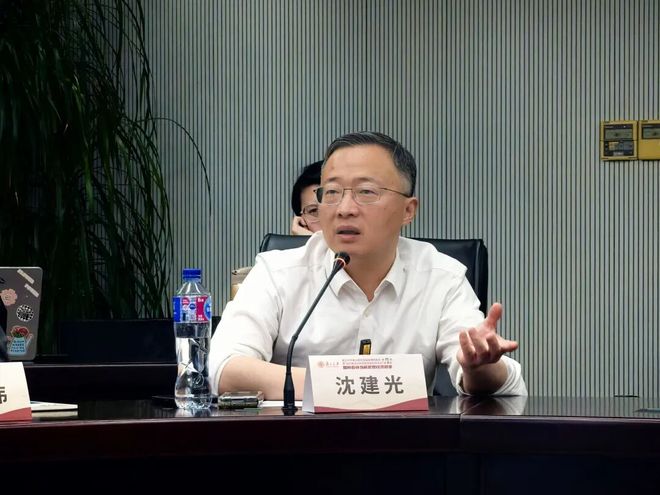
京东首席经济学家:与“十四五”相比,“十五五”规划有六大关键调整
Guan Cha Zhe Wang· 2026-02-02 12:32
近日,复旦大学南土国际金融政策圆桌会第11期暨"如何看待当前宏观金融形势系列"收官之作在复旦经 济学院举行。会上京东集团副总裁、首席经济学家沈建光围绕2026年宏观经济展望与政策重点发表了观 点。羽扇观金工作室进行独家报道。 沈建光指出,2026年作为"十五五"规划开局之年,政策导向已在规划及中央经济工作会议中明确体现。 与"十四五"相比,"十五五"规划有六大关键调整,包括重提"以经济建设为中心",更加强调消费、内循 环与科技产业协同发展,平衡发展与安全,推进城乡融合、统一大市场建设及财税体制改革等。他提 到,中国经济增速虽从过去的高位逐步回落至5%左右,但在越南、印度等新兴市场高增长的对比 下,"十五五"规划重申经济建设为中心,凸显保持合理增长速度的重要性。 在政策层面,沈建光重点解读了货币与财政政策的新动向。他表示,货币政策出现重大转变,首次 将"促进经济稳定发展、物价合理回升"纳入重要考量,打破了以往仅关注通胀上限的传统框架;财政政 策则强调保持必要的赤字、债务规模和支出总量,预计今年财政赤字率仍将维持在4%左右。扩大内需 方面,政策更侧重存量优化,通过"以旧换新"、释放服务业潜力、去除不合理限制等方式 ...
三峡能源:“十四五”期间装机规模、发电量及盈利能力稳步提升
Zheng Quan Ri Bao· 2026-02-02 11:40
证券日报网讯 2月2日,三峡能源在互动平台回答投资者提问时表示,公司坚定"陆上大基地、海上风电 引领者"战略,"十四五"期间装机规模、发电量及盈利能力稳步提升,并将持续多措并举推动市场价值 与内在价值相匹配,提升投资价值和股东回报能力。 (文章来源:证券日报) ...