
双贴息政策

Search documents
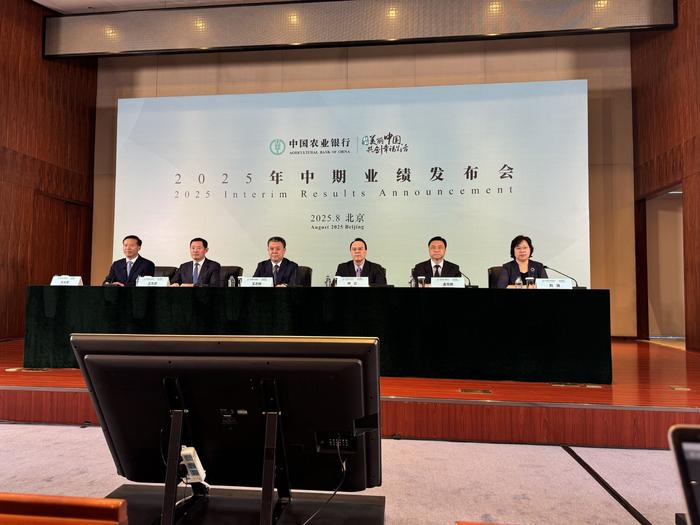
营收、净利“双正增长”!这家万亿级银行透露下半年方向……
Zheng Quan Ri Bao Zhi Sheng· 2025-08-30 03:41
Core Viewpoint - Agricultural Bank of China reported steady growth in net profit and operating income for the first half of 2025, maintaining a positive outlook for the second half of the year amid a resilient macroeconomic environment [1][3]. Financial Performance - For the first half of 2025, Agricultural Bank achieved a net profit growth rate improvement and a further enhancement in main business income, indicating robust financial performance [3]. - As of June 30, 2025, the bank's A-shares and H-shares increased by 12.05% and 30.41% respectively compared to the end of the previous year, with a total market capitalization of 2.46 trillion yuan [1]. Dividend Distribution - The board of directors proposed a cash dividend of 1.195 yuan per 10 shares (including tax), totaling 41.823 billion yuan (including tax) for the first half of 2025 [1]. Business Strategy - The bank aims to balance scale and pricing, cost and revenue, as well as risk and profitability to ensure sustainable development [5]. - Agricultural Bank is actively promoting personal credit lending, with a personal loan balance of 93,074.26 billion yuan as of June 30, 2025, reflecting a 5.6% increase from the previous year [5]. Consumer Loan Initiatives - The bank has extended the maximum term for personal consumption loans from 5 years to 7 years and introduced various renewal tools to assist customers facing temporary difficulties [6]. - A dedicated task force has been established to implement the "dual interest subsidy" policy effectively, ensuring that national policies are accurately and efficiently transmitted to businesses [6]. Asset Quality Management - Agricultural Bank has maintained stable asset quality with a declining non-performing loan ratio, focusing on risk management in key areas such as real estate and local government debt [8]. - The bank is committed to supporting the real estate sector while managing risks through precise financial services and project management [7]. Urban Credit Business Transformation - Following the central urban work conference, Agricultural Bank is adjusting its credit strategy to support urban development, including financing for urban renewal and affordable housing projects [9].


个人、商家都能享!“双贴息”政策实操指南来了
2 1 Shi Ji Jing Ji Bao Dao· 2025-08-21 11:04
Core Viewpoint - The "Double Subsidy" policy is gaining attention, providing financial benefits for individuals and businesses looking to make purchases or investments in areas such as home renovation, appliances, restaurant startups, and elder care services [1] Group 1 - The policy aims to reduce costs for consumers and businesses by offering subsidies for loans related to specific expenditures [1] - There is a growing interest in understanding the financial savings and eligibility criteria associated with the "Double Subsidy" policy [1] - The implementation process and practical guidance for accessing these benefits are being communicated through various media channels [1]
社会服务系列专题报告十:社保新规下的行业变革:人力资源生产要素的反内卷
Shenwan Hongyuan Securities· 2025-08-17 14:51
Investment Rating - The industry investment rating is "Overweight" indicating that the industry is expected to outperform the overall market performance [3]. Core Insights - The new social security regulations, effective from September 1, 2025, will significantly enhance the social security coverage for 240 million flexible workers and 88.45 million employees in small and micro enterprises, thereby boosting consumer confidence and promoting high-quality development in the service industry [3][4]. - The combination of the new social security regulations and the "dual interest subsidy" policies aims to alleviate the financial pressure on enterprises while enhancing the long-term consumption capacity of residents [3][4]. - The new regulations are expected to increase compliance costs for small and micro enterprises, leading to a potential market consolidation where larger, compliant firms gain market share [3][4]. Summary by Sections 1. Current Social Security Status in China - The social security system primarily covers urban non-private unit employees with a near 100% participation rate, while flexible employment and private sector workers have significantly lower coverage [8][9]. - The disparity in coverage reflects systemic differences between formal and informal employment, necessitating policy adjustments to enhance inclusivity [9]. 2. Interpretation of New Social Security Regulations and Loan Subsidy Policies 2.1 Background and Core Content - The new regulations aim to standardize social security contributions and enhance the responsibilities of employers, addressing the challenges posed by the increasing number of flexible workers and the aging population [15][19]. - The regulations prohibit agreements that exempt employers from paying social security, allowing workers to terminate contracts and seek compensation [19][20]. 2.2 Loan Subsidy Policies - The loan subsidy policies, effective from March 16 to December 31, 2025, provide financial support to key service sectors, including catering and tourism, to mitigate the short-term financial impact of the new social security regulations [22][24]. - These policies are designed to stimulate consumption and support the transition of the service industry from price competition to quality competition [22][24]. 3. International Comparison of Social Security Regulations - China's social security contribution rate is moderate compared to global standards, with room for improvement in balancing coverage among different income groups [27][28]. - The new regulations are aligned with international trends towards standardized social security systems, which may lead to short-term challenges for small enterprises but ultimately promote fair competition and industry upgrades [32][33].


撬动更多金融活水流向消费领域
Qi Huo Ri Bao Wang· 2025-08-14 01:12
Core Points - The "Double Subsidy" policy is the first central-level initiative aimed at providing interest subsidies for personal consumption loans and service industry loans, focusing on precision, increased support for consumption, broader coverage, and more efficient processes [1] - The policy aims to leverage financial resources to stimulate real consumption, with a 1% subsidy potentially mobilizing 100 times that amount in loan funds for consumer spending [1] Group 1: Policy Details - The personal consumption loan subsidy will be available for various types of consumer spending, including small daily expenses and larger purchases like cars and home renovations, with a maximum subsidy of 500 yuan per individual loan [2] - The service industry loan subsidy is applicable to entities that have signed loan contracts with banks and received funds, with a maximum loan amount of 1 million yuan and a subsidy cap of 10,000 yuan per entity [2] - The funds must be used for legitimate business activities aimed at improving consumer infrastructure and service capabilities, not for investment or speculative activities [2] Group 2: Implementation and Oversight - The Ministry of Commerce will lead the implementation of the policy, focusing on effective communication, policy enforcement, and tracking the policy's impact [3] - The People's Bank of China will enhance credit support for the service sector, promote financing connections, and optimize consumer financial products to meet real consumer needs [3] - Financial regulatory authorities will ensure that lending institutions adhere to market principles and manage credit responsibly, while also monitoring the use of subsidy funds [4]
“双贴息”政策 如何惠企利民?
Sou Hu Cai Jing· 2025-08-13 23:09
Group 1 - The dual subsidy policy for personal consumption loans and service industry operating loans aims to stimulate consumer demand and support residents' consumption through fiscal and financial measures [1][2] - The personal consumption loan subsidy differs from existing installment payment discounts as it is a national-level initiative designed to broaden the scope of eligible consumers, including those with lower income levels [2][3] - The inclusion of consumer credit companies alongside traditional banks in the loan processing institutions is expected to enhance the reach and effectiveness of the subsidy policy [3] Group 2 - The policy targets service industry operating entities, particularly small and micro enterprises, which are crucial for employment and local services [7][8] - By providing direct loan subsidies, the policy aims to lower borrowing costs for these businesses, thereby improving service quality and upgrading consumption scenarios [8] - The broad applicability of the policy is anticipated to effectively boost consumption and stimulate market vitality, contributing positively to the overall economy [8]

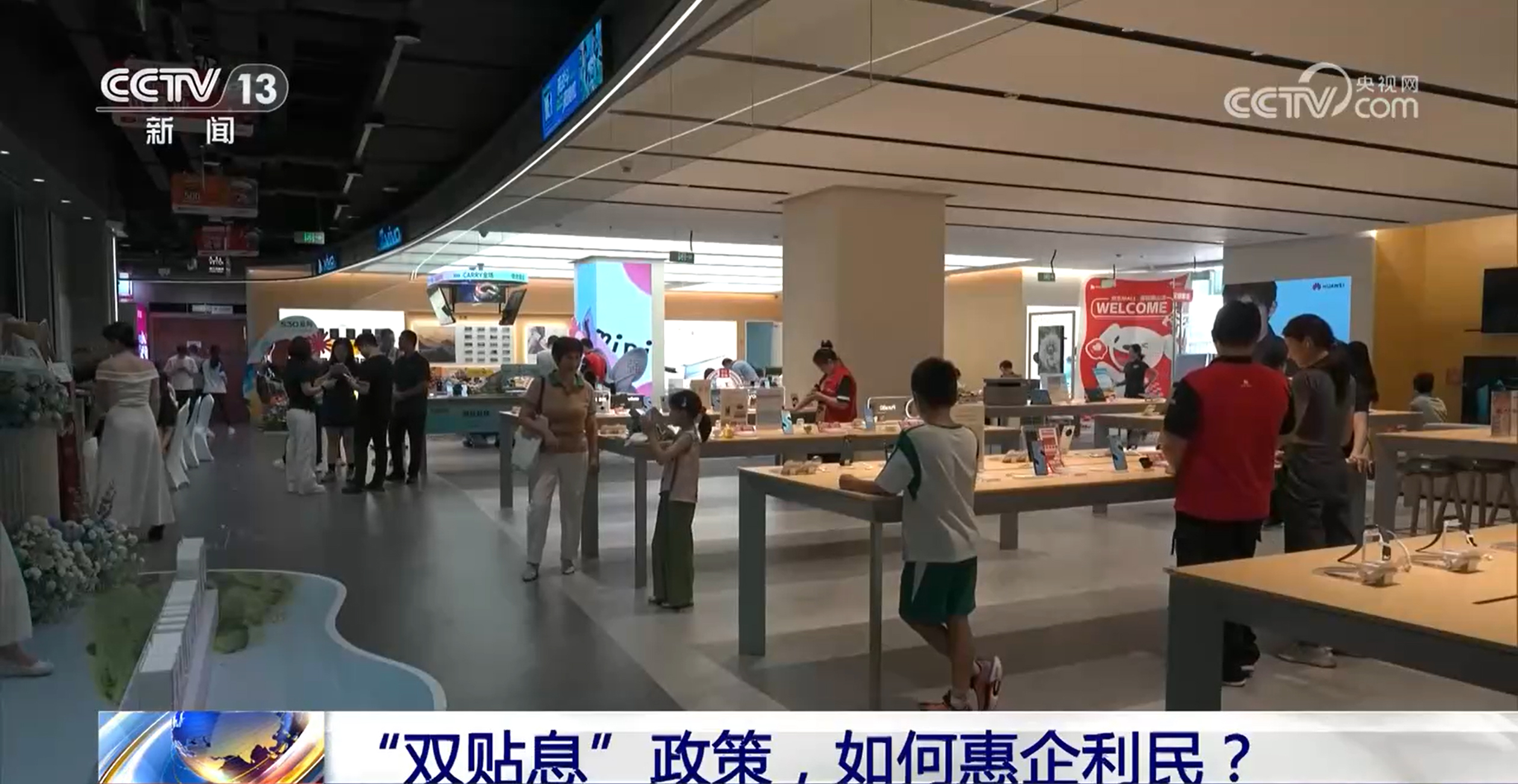
新闻1+1丨“双贴息”政策 如何惠企利民?
Yang Shi Wang· 2025-08-13 22:25
Group 1: Policy Overview - The dual subsidy policy for personal consumption loans and service industry operating loans was officially released on August 12, aiming to stimulate consumer demand and support residents' consumption [1] - The subsidy covers a broader range of services, including elder care and childcare, compared to existing merchant-led installment payment promotions [4][5] Group 2: Impact on Financial Institutions - The new policy includes requirements for 23 loan processing institutions, expanding beyond traditional banks to include consumer credit companies, enhancing support for consumer credit issuance [6] - Loan issuing institutions are required to utilize digital finance and big data for precise customer profiling and to track the use of funds to ensure they support personal consumption [8] Group 3: Economic Implications - The policy aligns with the trend of increasing service consumption, providing targeted loan subsidies to service industry operators, particularly small and micro enterprises [9][10] - By lowering loan costs for service industry operators, the policy aims to enhance service quality and stimulate economic circulation, thereby boosting overall consumer spending [12]
撬动更多金融活水流向消费领域 四部门详解“双贴息”政策
Qi Huo Ri Bao Wang· 2025-08-13 18:10
Core Viewpoint - The introduction of the "dual interest subsidy" policy marks the first central-level initiative aimed at supporting personal consumption loans and service industry loans, with a focus on enhancing consumer spending and improving financial accessibility [1][2]. Group 1: Policy Characteristics - The "dual interest subsidy" policy features precise subsidy methods, increased support for consumption, a broader coverage range, and more efficient subsidy processes [1]. - A 1% interest subsidy could potentially mobilize 100 yuan in loan funds for every 1 yuan of subsidy, significantly boosting consumer spending and service supply [1]. Group 2: Coverage and Application - The personal consumption loan subsidy policy targets both salaried workers and flexible employment individuals, while the service industry loan subsidy encompasses various types of service providers, including individuals and organizations [1][2]. - From September, individuals can receive up to 500 yuan in loan subsidies for various consumption purposes, with multiple applications allowed [2]. Group 3: Implementation and Oversight - The Ministry of Commerce will collaborate with the Ministry of Finance to ensure effective policy implementation, focusing on policy promotion, auditing, and tracking the policy's impact [3]. - Financial institutions are expected to play a crucial role in implementing the "dual interest subsidy" policy, ensuring compliance with regulations and optimizing financial services [4].
“双贴息”政策精准直补促消费
Zheng Quan Shi Bao· 2025-08-13 17:59
Core Viewpoint - The newly introduced "dual interest subsidy" policy in the consumer loan sector aims to leverage fiscal funds to enhance both supply and demand in the consumption field, thereby releasing new consumption momentum [1][2]. Group 1: Policy Overview - The "dual interest subsidy" policy extends the benefits of fiscal direct subsidies to personal consumer loans and loans for service industry operations, effectively reducing interest costs for borrowers [1]. - The policy builds on the success of previous consumer product trade-in subsidies, which have stimulated consumer enthusiasm through immediate discounts [1]. Group 2: Fiscal and Financial Collaboration - This policy represents a collaboration between fiscal and financial sectors, expanding the subsidy recipients from enterprises to individuals, aligning with the government's goal of directing more resources towards individuals [2]. - The approach maintains market-oriented and legal principles, ensuring that financial institutions remain responsible for loan decisions while the fiscal burden of interest subsidies is borne by the government [2]. Group 3: Implementation and Oversight - Effective policy implementation requires thorough research and design prior to rollout, as well as ongoing supervision to prevent misuse of fiscal funds [2]. - Financial institutions and relevant departments are encouraged to enhance the auditing of subsidy funds and track the usage of loan funds to ensure that benefits reach those in genuine need [2].
“双贴息”撬动供需正循环
Bei Jing Shang Bao· 2025-08-13 16:24
Group 1 - The "Double Subsidy" policy, which includes personal consumption loan interest subsidies and service industry operating entity loan interest subsidies, has been officially launched, aiming to stimulate consumer spending and support service industry entities [1][2] - The policy has a broad coverage, benefiting both individual consumers and various service industry operators, including small businesses like restaurants and hair salons, as well as households purchasing appliances or traveling [1][2] - The policy represents a significant breakthrough in supporting consumption by coordinating fiscal and financial policies, effectively channeling public funds to stimulate real consumption [1][3] Group 2 - The subsidy process is designed to be efficient and convenient, allowing borrowers to authorize institutions to identify loan account transaction information for subsidy calculations, thus simplifying the process [2] - The policy aims to create a virtuous cycle by simultaneously addressing supply and demand in consumption, reducing interest costs for consumers, and enhancing their willingness to spend [2][3] - The introduction of the subsidy policy is particularly beneficial for small and medium-sized enterprises and individual businesses, which have historically faced challenges in financing, providing them with low-cost financial resources to expand operations and improve service quality [2][3] Group 3 - As service industry entities stabilize their profits, they will be more confident and financially capable of investing in equipment upgrades and expanding operations, which in turn supports income growth for residents and enhances their consumption capacity [3] - The "Double Subsidy" policy exemplifies innovative collaboration between fiscal and financial sectors, leveraging fiscal funds to stimulate market potential and enhance market vitality [3] - The implementation of this policy is expected to further boost consumer activity during upcoming traditional peak consumption periods, benefiting both consumers and service industry operators [3]
“双贴息”促消费 钱要好用也要专用
Nan Fang Du Shi Bao· 2025-08-13 15:58
Core Viewpoint - The Chinese government has introduced a dual subsidy policy for personal consumption loans and service industry loans, aiming to stimulate consumer spending and support service sector businesses through simplified application processes and reduced thresholds for eligibility [1][2]. Group 1: Personal Consumption Loan Subsidy - The personal consumption loan subsidy is the first of its kind from the central government, directly benefiting the public by covering various essential consumption areas, including daily expenses under 50,000 yuan and larger purchases like cars and home renovations [1]. - The subsidy rate is set at 1%, which is approximately one-third of the current commercial bank personal consumption loan interest rates [1]. Group 2: Service Industry Loan Subsidy - The dual subsidy policy also includes support for service industry businesses, addressing the insufficient high-quality service supply in the sector, thereby promoting high-quality consumption [2]. - The policy aims to enhance the consumption environment in eight key areas, including dining, accommodation, health, and childcare, ultimately improving residents' sense of satisfaction and access to consumption [2]. Group 3: Implementation and Impact - Financial institutions play a crucial role in the effective implementation of the dual subsidy policy, requiring them to prepare adequately to ensure convenience and broad benefits [3]. - The 1% subsidy could potentially leverage 100 yuan in loans for consumer spending or service supply, creating a stimulating cycle in the consumption market, demonstrating the synergistic effect of fiscal and financial policies [3].