
国产操作系统

Search documents
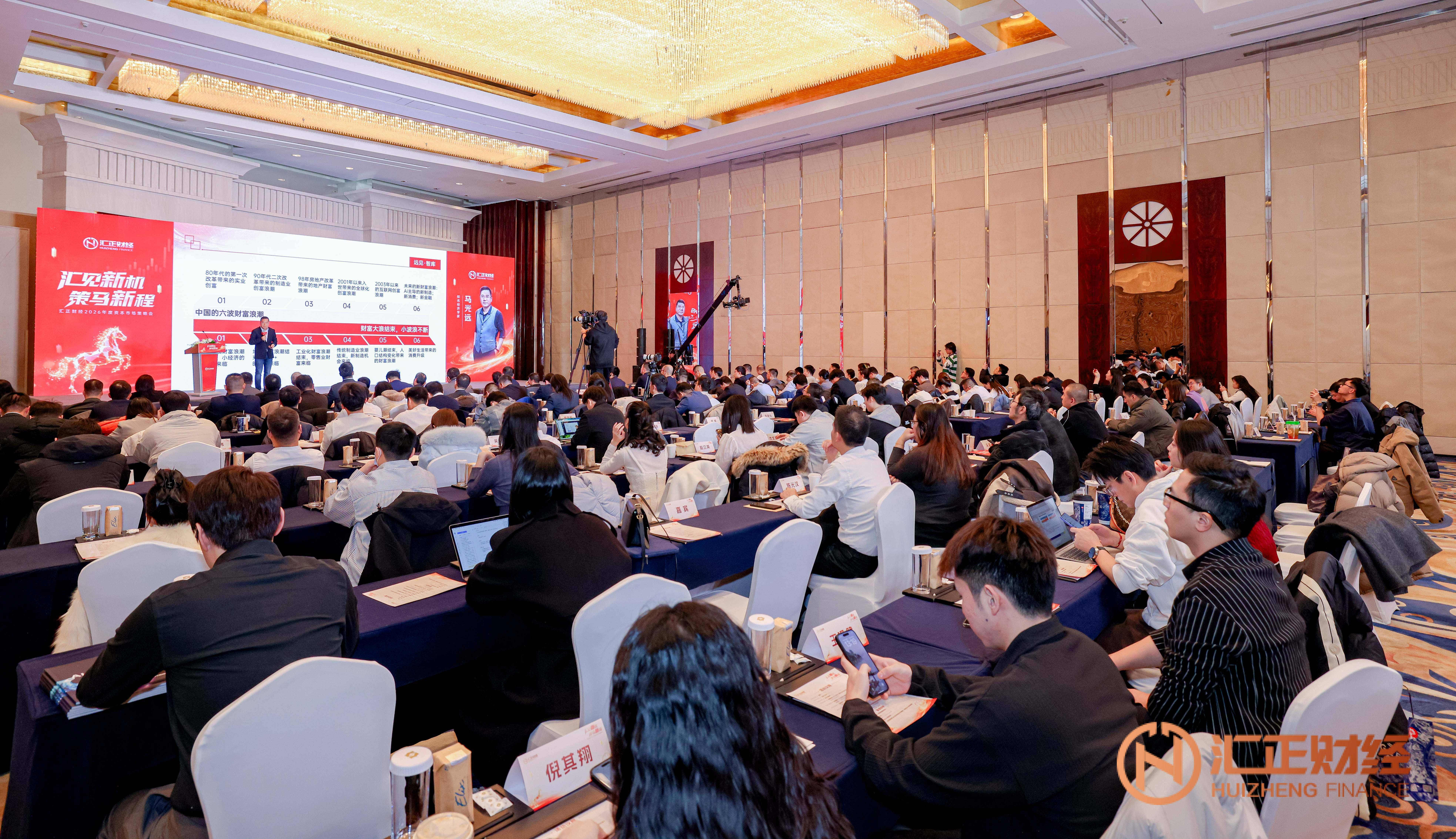
“汇见新机,策马新程” 汇正财经2026年度资本市场策略会圆满落幕, 共话“十五五”投资新机遇
Sou Hu Cai Jing· 2025-12-15 11:58
Core Insights - The 2026 Capital Market Strategy Conference hosted by Huizheng Finance focused on analyzing policy trends, dissecting sector values, and exploring new investment opportunities in the context of global economic changes impacting China [1][18] - The conference attracted over 1.07 million viewers online, indicating strong interest in the discussions surrounding new productive forces and capital market reforms [1] Group 1: Economic Trends and Policy Insights - Renowned economist Ma Guangyuan emphasized the resilience of the Chinese economy amid global economic slowdown and trade protectionism, advocating for a focus on emerging industries and new infrastructure supported by policy [6][7] - The overall economic strategy is characterized by "seeking progress while maintaining stability," with coordinated fiscal and monetary policies aimed at countering external uncertainties [6] Group 2: Energy Storage Sector - Chief strategist Yang Shoujun outlined three major trends in the energy storage sector for 2026: long-duration, intelligent, and market-oriented developments, driven by dual goals of carbon neutrality and AI capabilities [8] - The energy storage industry is shifting from policy-driven to demand-driven, with clear domestic installation targets and growing overseas orders, indicating a robust growth trajectory over the next five years [8] Group 3: Market Dynamics and Investment Strategies - Dongwu Futures' Chief Investment Officer Wu Zhaoyin projected a clear bull market path for A-shares in 2025, with funds expected to continue migrating towards high-value assets in 2026 [9] - The investment strategy should focus on solid fundamentals and reasonable valuations, particularly in cyclical sectors benefiting from policy support [9] Group 4: Robotics and AI - Chief researcher Gu Chenhao highlighted that 2026 will be a pivotal year for the commercialization of embodied intelligence, with significant applications across various sectors including industrial manufacturing and healthcare [10] - The emergence of Tesla's humanoid robot prototype and domestic technological breakthroughs are expected to catalyze growth in the robotics supply chain [10] Group 5: Long-term Investment Logic - The roundtable discussion emphasized the importance of aligning investments with long-term value, driven by both policy and technological advancements in sectors like AI and hard technology [14] - Investment logic is shifting from purely commercial returns to a balance of strategic value and market returns, with a focus on core components and AI-integrated applications [14] Group 6: Semiconductor and High-tech Manufacturing - Senior investment advisor He Feng noted the dual nature of opportunities and challenges in semiconductor self-sufficiency, with significant advancements in lithography equipment but still existing gaps [15] - The focus on third-generation semiconductors and their synergy with 5G and electric vehicle technologies presents a clear path for overcoming existing limitations [15] Group 7: Market Structure and Investment Recommendations - The current market is characterized by a "two-eight" distribution, where index performance diverges from individual stock performance, leading to potential pitfalls for investors [16] - Investment strategies should prioritize value and cyclical stocks while maintaining a balanced portfolio to mitigate risks associated with market volatility [16] Group 8: Focus on New Productive Forces - The emphasis on new productive forces in technology and high-end manufacturing is critical, with energy storage and AI data centers identified as key growth areas [17] - The investment landscape for 2026 is expected to center around technology-related sectors, with a focus on companies demonstrating clear performance or technological breakthroughs [17]

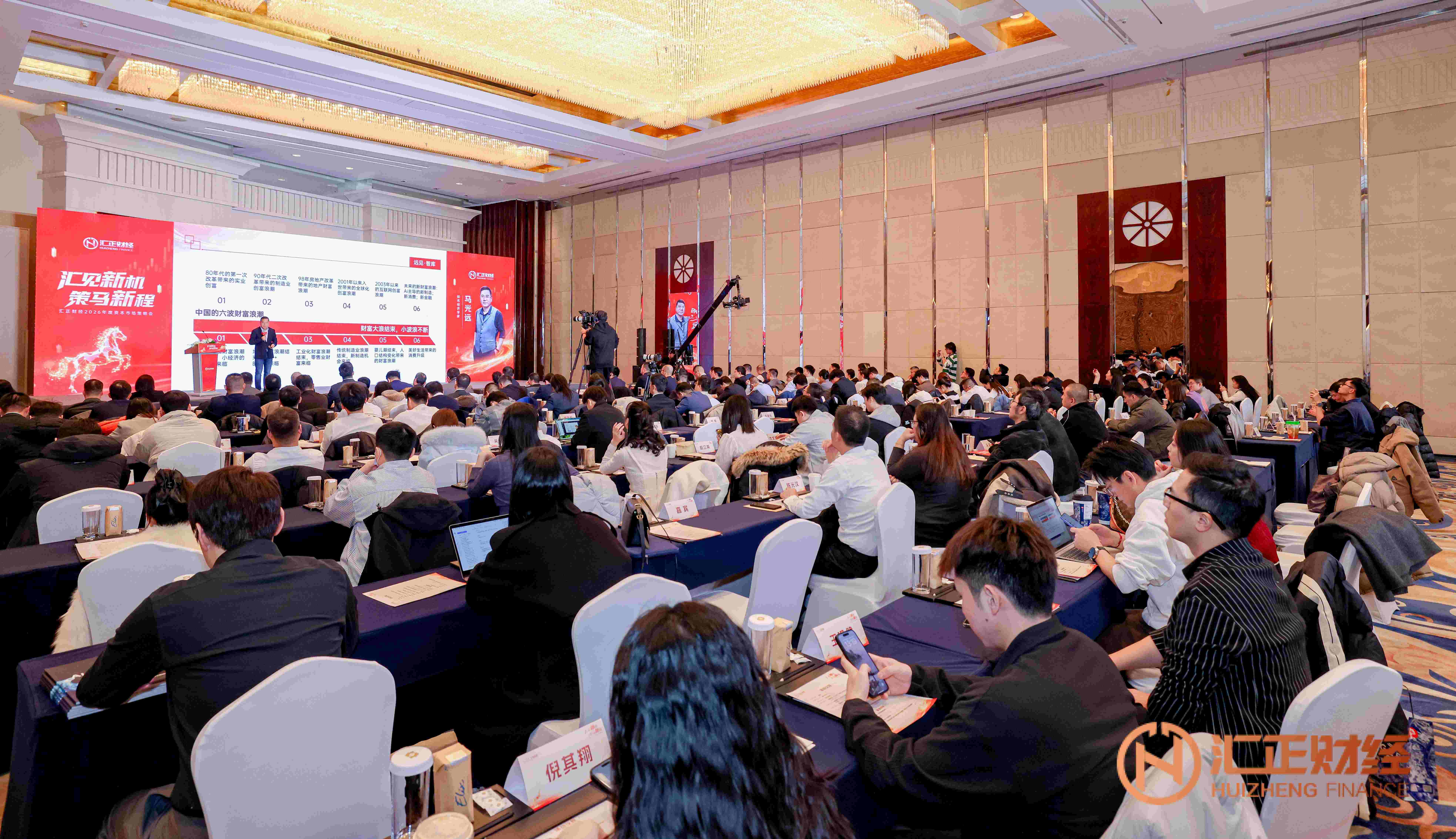
“汇见新机,策马新程” 汇正财经2026年度资本市场策略会圆满落幕,共话“十五五”投资新机遇
Di Yi Cai Jing· 2025-12-15 08:50
Core Insights - The 2026 Capital Market Strategy Conference hosted by Huizheng Finance focused on analyzing policy trends, dissecting track values, and exploring new investment opportunities in the context of global economic changes and China's unique advantages [1] Group 1: Economic Outlook - Renowned economist Ma Guangyuan emphasized the resilience of China's economy amid global economic slowdown and trade protectionism, advocating for a focus on emerging industries and new infrastructure supported by policy [5] - The overall economic strategy is characterized by "seeking progress while maintaining stability," with coordinated fiscal and monetary policies to counter external uncertainties [5] Group 2: Energy Storage Trends - Chief strategist Yang Shoujun identified three major trends in the energy storage sector for 2026: long-duration, intelligent, and market-oriented developments, driven by dual carbon goals and AI capabilities [6] - The energy storage industry is shifting from policy-driven to demand-driven, with clear domestic installation targets and improving profitability mechanisms [6] Group 3: Market Dynamics - Chief investment officer Wu Zhaoyin projected a clear bull market path for A-shares in 2025, with funds continuing to migrate towards high-value assets in 2026 [7] - The investment strategy should focus on solid fundamentals and reasonable valuations, particularly in cyclical sectors benefiting from policy support [7] Group 4: AI and Robotics - Chief researcher Gu Chenhao highlighted 2026 as a pivotal year for the commercialization of embodied intelligence, with significant applications across various sectors including industrial manufacturing and healthcare [8] - The emergence of Tesla's humanoid robot prototype and domestic technological breakthroughs are expected to drive growth in the robotics industry [8] Group 5: Investment Strategies - The investment logic is shifting towards long-cycle value, with a focus on sectors like quantum computing, nuclear fusion, and commercial aerospace, which require patience for commercialization [12] - Investment strategies should balance between strategic value and market returns, with a focus on core components and AI integration [12] Group 6: Semiconductor and High-Tech Manufacturing - The semiconductor industry faces both challenges and opportunities, with significant advancements in lithography equipment and a clear path for third-generation semiconductors [13] - The robotics and energy storage sectors are identified as key drivers of new productive forces, with rapid expansion and increasing demand [13] Group 7: Market Structure and Strategy - The market is experiencing structural differentiation, with a recommendation to focus on fundamental analysis and avoid blind speculation [14] - The appreciation of the RMB is expected to benefit import-dependent industries, with a focus on sectors like aviation and machinery [14] Group 8: Future Directions - The conference served as a comprehensive review of the achievements during the "14th Five-Year Plan" and a strategic positioning for the "15th Five-Year Plan," outlining investment opportunities aligned with policy directions [15] - Huizheng Finance aims to support small and medium investors by providing insights into market opportunities and enhancing investment decision-making efficiency [16]
开源鸿蒙“下沉”产业一线 走进泵房和电站
2 1 Shi Ji Jing Ji Bao Dao· 2025-12-11 02:15
Core Viewpoint - The article discusses the expansion of Huawei's HarmonyOS into various industrial applications, highlighting its potential in sectors such as water supply and electricity management, showcasing its capabilities in real-time, stability, and security [1][9]. Group 1: HarmonyOS Development - HarmonyOS is primarily known as a mobile operating system, but it is also being adapted for complex industrial scenarios, including energy, water management, and manufacturing [1]. - The OpenHarmony project, built on open-source HarmonyOS, is being developed in collaboration with partners to create industry-specific operating systems [1][2]. Group 2: Industrial Applications - Projects like the smart pump room in Longgang, Shenzhen, demonstrate the practical application of HarmonyOS in critical infrastructure, achieving unmanned operation and real-time monitoring of water pressure and quality [3][4]. - The introduction of the "Hualong Gonghong" operating system has led to a significant reduction in operational costs and energy consumption, with overall energy use decreasing by approximately 10% and PLC controller costs dropping by about 5% [5]. Group 3: Electricity Management - The "Dianhong" system developed by Southern Power Grid represents a systematic application of HarmonyOS in the electricity sector, addressing challenges such as data silos and complex management needs [6][8]. - The system has streamlined operations, allowing for centralized control of multiple devices with a single terminal, significantly reducing installation and debugging times [8]. Group 4: Ecosystem and Community - HarmonyOS has become one of the fastest-growing smart terminal operating systems globally, with over 9,700 contributors and more than 130 million lines of code contributed [9]. - The system aims to serve as a foundational technology platform for digital transformation across various industries, including finance, transportation, and education [9].
中国软件涨1.58%,成交额4.29亿元,近5日主力净流入-1.25亿
Xin Lang Cai Jing· 2025-12-05 07:11
Core Viewpoint - The company, China Software, has shown a positive performance in the stock market with a 1.58% increase in share price and a total market capitalization of 42.02 billion yuan, indicating strong investor interest and confidence in its business model [1] Group 1: Business Performance - In the 2023 annual report, the company focused on the tax industry, providing information system services and ensuring the smooth operation of key business systems such as core tax management and electronic tax bureaus [2] - The company has successfully expanded its service-oriented business for tax enterprises, aligning with the digital transformation of the tax industry [2] - For the period from January to September 2025, the company achieved operating revenue of 3.198 billion yuan, representing a year-on-year growth of 9.50%, while the net profit attributable to shareholders was -104 million yuan, showing a significant year-on-year increase of 69.18% [8] Group 2: Market Position and Contributions - The company is a significant contributor to the openEuler community through its subsidiary, Kylin Software, which has made notable achievements in community contributions and technology promotion [2] - It possesses a comprehensive business chain that includes operating systems, middleware, security products, and application systems, covering critical sectors such as finance, energy, and transportation [2][3] - As a state-owned enterprise, the company is under the control of the State-owned Assets Supervision and Administration Commission, which enhances its credibility and stability in the market [3] Group 3: Shareholder and Market Dynamics - As of September 30, 2025, the number of shareholders increased to 160,200, with an average of 5,265 circulating shares per person, indicating growing interest among investors [8] - The company has distributed a total of 415 million yuan in dividends since its A-share listing, reflecting a commitment to returning value to shareholders [9] - The main capital inflow for the stock today was 12.049 million yuan, with a net outflow of 792 million yuan in the industry, suggesting mixed investor sentiment [4][5]

纳思达:奔图已与统信UOS、麒麟OS等10余款国产操作系统及20余款国产办公软件完成深度适配
Zheng Quan Ri Bao· 2025-12-02 11:09
Group 1 - The core viewpoint of the article highlights the strategic partnership between Bentu and Huawei's HarmonyOS, marking a significant milestone in the adaptation of domestic operating systems [2] - Bentu is the first third-party printer company to conduct adaptation development for the HarmonyOS and has received Huawei's adaptation certification [2] - The company has achieved deep adaptation with over 10 domestic operating systems, including Tongxin UOS and Kirin OS, as well as more than 20 domestic office software applications, positioning itself as a leader in the industry for technical adaptation to domestic operating systems [2]

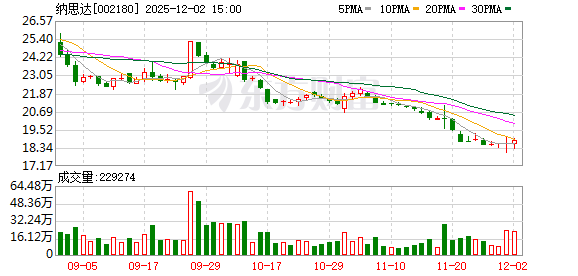
纳思达:目前,奔图已经与统信UOS、麒麟OS等10余款国产操作系统完成深度适配
Mei Ri Jing Ji Xin Wen· 2025-12-02 04:13
Core Viewpoint - The company Nasta (002180.SZ) has established a strategic partnership with Huawei's HarmonyOS, marking a significant step in the adaptation of domestic operating systems in the printing industry [1] Group 1: Partnership and Collaboration - Nasta's subsidiary, Bentu, successfully held a signing ceremony for the strategic cooperation with Huawei's HarmonyOS in June this year in Dongguan [1] - Bentu is the first third-party printer company to conduct adaptation development for the HarmonyOS and has received Huawei's adaptation certification [1] Group 2: Industry Position and Technological Adaptation - The comprehensive adaptation of Bentu to the HarmonyOS demonstrates the progress of domestic operating systems achieving full autonomy from the kernel to the application layer [1] - Currently, Bentu has completed deep adaptation with over 10 domestic operating systems, including Tongxin UOS and Kirin OS, as well as more than 20 domestic office software applications, positioning itself as a leader in the industry for technological adaptation [1]
我国开源桌面操作系统取得重大进展,这些上市公司相关领域布局
Xin Lang Ke Ji· 2025-11-26 08:08
近日,我国首个开源桌面操作系统"开放麒麟1.0"发布,标志着我国拥有了操作系统组件自主选型、操 作系统独立构建的能力。上市公司方面,多家公司在操作系统领域有所布局。 我国首个开源桌面操作系统"开放麒麟1.0"发布 2023年7月,在中关村国家自主创新示范区展示交易中心举行的2023操作系统产业大会上,我国首个开 源桌面操作系统openKylin1.0(以下简称:开放麒麟1.0)正式亮相。 据介绍,openKylin(开放麒麟)是通过开放操作系统源代码的方式、由众多开发者共同参与研发的国 产开源操作系统,将打造具有自主创新技术的开源桌面操作系统。 2022年5月27日,桌面操作系统根社区开放麒麟开发者平台首次上线。 2022年6月24日,以"创开源之势 享无境未来"为主题的中国首个桌面操作系统根社区开放麒麟举行线上 发布会,开放麒麟开源社区正式发布。 2022年7月22日,openKylin官方发布,桌面操作系统根社区开放麒麟首个体验版openKylin 0.7发布。 经过不断地修复升级,2023年1月12日,开放麒麟正式推出了0.95版本,该版本默认搭载全新一代UKUI 4.0桌面环境,深度优化平板模式,升级 ...
鸿蒙这一路,到底咋走的?
半佛仙人· 2025-11-25 04:04
Core Viewpoint - The article emphasizes the significance of the Hongmeng ecosystem, highlighting the collaborative efforts of developers and partners in building a robust Chinese operating system, which is now gaining momentum and user adoption [3][21]. Group 1: Event Overview - The Hongmeng Starry Night Gala, co-hosted by the Central Radio and Television Station and the Guangdong Provincial Government, aims to celebrate Chinese technology and the contributions of users, developers, and ecosystem partners [3][5]. - The gala is not merely a celebration but a tribute to the spirit of developers and the collective journey of the Hongmeng ecosystem [3][5]. Group 2: Challenges in System Development - Developing an operating system is extremely challenging, especially in a market dominated by established players, making it hard for users and developers to transition to a new system [7][9]. - The article illustrates the complexities faced by applications like "Yuezhengyi," which has 2.6 million users and processes over 10 million messages daily, emphasizing the risks involved in adapting to the Hongmeng system [7][9]. Group 3: Growth and Collaboration - The growth of the Hongmeng ecosystem is marked by significant milestones, with the number of terminals reaching over 23 million and the open-source code exceeding 130 million lines, showcasing the community's contributions [14][22]. - The collaboration among developers has been crucial, with the number of Hongmeng terminals growing from 0 to 10 million in ten months, and then to 20 million in just two months, indicating a rapid adoption rate [13][14]. Group 4: Future Prospects - The article suggests that the most challenging phase of building the Hongmeng ecosystem has passed, and the future looks promising with increasing user engagement and application development [21][22]. - The ecosystem is positioned as a unique opportunity for developers to contribute to a homegrown system, with the potential to reshape industry standards and practices [22].

中软国际20251119
2025-11-20 02:16
Summary of Conference Call for Zhongsoft International Company Overview - Zhongsoft International is a key player in the development and deployment of the Harmony operating system, focusing on both B-end and C-end markets. The company has established partnerships with various hardware manufacturers and is actively involved in smart city projects and AI applications. Key Points Industry and Company Involvement - Zhongsoft International has a significant stake in Deep Kaihong, which recently completed a Series B financing round with a post-investment valuation of 5.4 billion yuan, planning to list on the Sci-Tech Innovation Board in 2026 [2][3] - The company is heavily investing in smart city projects, with planned investments in Xi'an of over 10 billion to 20 billion yuan annually for the next three years, and approximately 10.5 billion yuan in Longgang District, Shenzhen [2][3] Harmony Operating System Developments - Zhongsoft International holds over 60% of the contract share for Huawei's Harmony OS, with device connections reaching 1.19 billion units. Revenue from native application migration is expected to reach 400 to 500 million yuan by the end of the year, excluding Huawei's outsourcing projects [2][3][8] - The company plans to collaborate with hardware manufacturers like Loongson and Yisiwei to create an integrated model of chips, operating systems, and ecosystems, aiming for a scale of interconnected devices in the hundreds of billions [2][4] AI and Business Growth - The AI and Harmony business revenue is projected to double year-on-year by 2025, reaching approximately 2 billion yuan, primarily through computing power leasing, domestic patent sales, and the AI Agent platform [2][6] - Zhongsoft International is developing an atomic service platform in collaboration with cultural tourism departments, which has already generated revenue in 2025 [5] Market Strategy and Competition - The Harmony virtual machine is currently free for C-end users, with plans to commercialize it for B-end clients alongside PC hardware launches in 2026 [7] - The company has a competitive edge in the open-source Harmony field due to its founding team from Huawei, leading code contributions, and extensive application capabilities across various sectors [9] Future Projections and Industry Trends - The company anticipates significant growth in the Harmony ecosystem by 2026, driven by government support and a focus on B-end device replacements in sectors like military and public security [12] - Zhongsoft International aims to become a core application supplier, leveraging new business opportunities through its atomic traffic platform [10] Additional Insights - The company is actively involved in AR and AI integration, enhancing operational efficiency and reducing costs through AI assistants in various industries [14][16] - Zhongsoft International is positioned to benefit from national policies promoting the development of domestic operating systems, with Harmony OS being specifically highlighted [11] This summary encapsulates the critical insights and developments discussed during the conference call, highlighting Zhongsoft International's strategic initiatives and market positioning within the Harmony operating system landscape.
鸿蒙:生态技术双突破,自主底座能力再巩固:计算机行业重大事项点评
Huachuang Securities· 2025-11-18 14:12
Investment Rating - The report maintains a "Recommendation" rating for the computer industry, expecting the industry index to rise more than 5% compared to the benchmark index in the next 3-6 months [16]. Core Insights - The report highlights Huawei's HarmonyOS ecosystem showcasing significant breakthroughs in technology and expanding its application across various sectors, including industrial, security, medical, and financial fields [2]. - The HarmonyOS6 release marks a full-stack technological upgrade, enhancing interaction paradigms and performance, with key improvements in collaborative capabilities and user experience [2]. - The ecosystem has seen substantial growth, with over 1 billion devices and more than 8 million developers, indicating a shift from quantity accumulation to qualitative leaps [2]. - The dual drive from government and consumer sectors is accelerating digital transformation, with HarmonyOS becoming a core support for this transition [2]. - Investment suggestions include focusing on developers, terminal manufacturers, commercial entities, and tools related to the HarmonyOS ecosystem [2]. Industry Overview - The computer industry consists of 338 listed companies with a total market capitalization of approximately 586.92 billion yuan and a circulating market value of about 531.63 billion yuan [2]. - The absolute performance of the industry over the past month, six months, and twelve months has been 3.0%, 25.6%, and 22.3% respectively, indicating strong growth [3]. - The report emphasizes the importance of the recent high-tech achievements exhibition as a pivotal moment for the HarmonyOS system transitioning from technology validation to large-scale commercial use [2].