国家粮食安全

Search documents
国新办发布会将解读中央一号文件亮点 几个关键词抢先看
Yang Shi Xin Wen· 2026-02-04 01:45
Core Viewpoint - The 2026 Central No. 1 Document emphasizes the modernization of agriculture and rural areas, aiming for comprehensive rural revitalization Group 1: Food Security - The document highlights the importance of "rice bags" and "vegetable baskets," with China's grain production remaining stable at over 1.4 trillion jin for two consecutive years. The focus is on maintaining national food security and enhancing the quality and efficiency of the "vegetable basket" industry to enrich the diet of the populace [1] Group 2: Precision Assistance - A new term "normalization of precise assistance" is introduced, marking the first systematic deployment of this significant initiative in the Central No. 1 Document. By the end of 2025, the goal is to effectively connect the consolidation of poverty alleviation achievements with rural revitalization, ensuring that responsibilities are firmly established to prevent a return to poverty [2] Group 3: Farmers' Income - The document places a strong emphasis on actively promoting stable income growth for farmers. While farmers' income has seen steady growth, the foundation for continued income stability remains fragile. The focus is on exploring various avenues for income enhancement, including processing, circulation, specialty industries, agricultural product consumption, and employment [3] Group 4: Local Adaptation - The document stresses the importance of "local adaptation" in promoting the construction of livable and workable beautiful villages. This approach aims to leverage local advantages and is a key area of interest for stakeholders [4]
聚焦三大核心 守护大国粮仓
He Nan Ri Bao· 2026-01-31 23:37
1月29日记者获悉,全省粮食和物资储备工作会议日前在郑州召开,明确2026年将以仓储、收购、产业 三大核心领域为重点精准发力,通过补短板、强弱项的务实举措,持续巩固产粮大省优势,进一步筑牢 国家粮食安全"压舱石"。 作为全国粮食生产"主力军",河南保障成效显著。"十四五"期间,全省全社会累计收购粮食超过4500亿 斤,较"十三五"末增加400多亿斤,为稳定全国粮食市场提供坚实支撑。 仓储设施提档升级 夯实收储硬件基础 推动产粮大省向产业强省跨越 解决"储得好""卖得出"问题后,产业高质量发展成为实现从产粮大省向产业强省转变的关键。 为破解产业"小散弱"、附加值低等难题,余广庆透露,河南今年将重点推进现代粮食产业园区建设,整 合资源推动粮油产业集聚。质量标准上,以"豫麦"地方标准为起点,完善特色作物全产业链标准,构 建"豫字号"标准集群,健全质量追溯体系。品牌建设上,做强"美豫粮油"公共品牌,开展全国行及展销 活动,培育区域特色和细分领域自主品牌,加强商标权保护。同时,搭建"政银担企"资金平台,深化产 学研协同,围绕数智赋能、新型储粮技术等开展攻关,落实"科技兴粮""人才兴粮"战略。 从仓储"硬件升级"到收购" ...
全国首单新建灌区新增耕地指标交易落地
Xin Hua Wang· 2026-01-30 11:12
新华社北京1月30日电(记者魏弘毅)记者从水利部获悉,全国首单新建灌区新增耕地指标交易30 日在江苏落地。 下一步,水利部将系统总结推广本次交易经验做法,指导各地大力创新灌区投融资机制,有力支撑 现代化灌区建设。 【纠错】 【责任编辑:张樵苏】 水利部相关负责人介绍,当日,江苏省徐州市睢宁县在江苏省土地交易平台成功交易100亩新建灌 区新增耕地指标,用于淮河入海水道二期工程(淮安段)建设,交易单价每亩20万元,交易金额2000万 元。地方政府将从所得收益中安排1200万元用于灌区后续建设与长效管护,相关经验做法对推进现代化 灌区建设,保障国家粮食安全具有重要示范意义。 据介绍,水利部近年来聚焦粮食安全水利保障,全力推进大中型灌区现代化建设与改造。2024年以 来,指导江苏省徐州市先后启动双沟灌区、桃园灌区两处新建中型灌区建设,同步采取土地整治等措 施,形成一定数量灌排条件较好的新增耕地。 ...
黑龙江:构建黑土地生态环境全链条监管机制保障粮食安全
Xin Lang Cai Jing· 2026-01-29 13:37
"5年来,我们开展耕地周边重点企业(矿区)排查整治572家(次),从源头阻断耕地污染风险;严格落实农 用地分类管理制度,建立省、市、县三级联动监管机制,农用地安全利用率连续五年保持100%,让龙 江粮食吃得更放心。"马立新表示,"十五五"时期,黑龙江省生态环境厅将聚焦耕地周边重点企业(矿区) 开展排查整治,严格规范生产经营行为,通过溯源整治识别并消除污染隐患,从源头上防范新增污染, 切实守护黑土地生态安全。健全全链条监管长效机制,采用"遥感+无人机+现场核查"立体化监管手 段,有序提升农用地安全利用监管的精准度,从源头守护好粮食安全。同时依托黑龙江省土壤污染防治 联席会议机制,进一步凝聚多部门工作合力,推动黑土地保护从单纯的污染防治向生态系统全面保护转 变。推动农业面源污染防治与黑土养护深度融合,切实守护好这片"耕地中的大熊猫",筑牢国家粮食安 全的龙江生态屏障。(完) 中新网哈尔滨1月29日电 (记者 姜辉)"'十五五'时期,我们将立足黑龙江黑土资源禀赋,努力构建'污染 溯源—断源整治—动态调整—风险监管'全链条监管机制,推动黑土地生态环境保护工作走深走实,为 国家粮食安全筑牢龙江生态屏障。"黑龙江省生态环 ...

四年攻关培育兼顾产量与口感的良种 旱碱麦的逆袭
Jing Ji Ri Bao· 2026-01-14 06:06
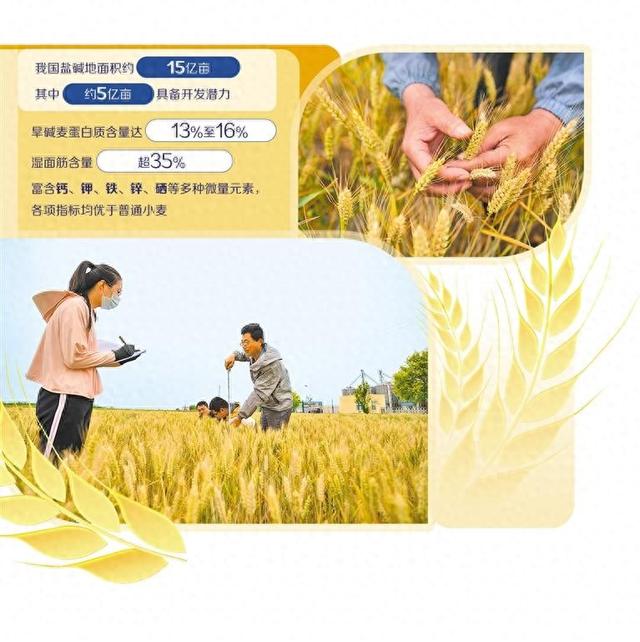
Core Viewpoint - The development and promotion of drought-resistant saline-alkali wheat (drought-alkali wheat) is crucial for utilizing saline-alkali land in China, enhancing food security, and meeting the growing demand for high-quality food products [1][5]. Group 1: Agricultural Significance - Drought-alkali wheat can grow in saline-alkali environments, which cover approximately 1.5 billion acres in China, with about 500 million acres having development potential [1]. - The promotion of drought-alkali wheat is expected to revitalize saline-alkali land resources and expand arable land, playing a strategic role in ensuring national food security [1]. Group 2: Research and Development - Since 2022, scientists from the National Wheat Industry Technology System have been conducting systematic research on saline-alkali land improvement and drought-alkali wheat breeding, successfully developing several high-quality varieties suitable for saline-alkali conditions [1][4]. - Ongoing research aims to analyze the mechanisms behind the aroma compounds in drought-alkali wheat, providing insights for breeding and processing to enhance flavor and quality [4]. Group 3: Market Potential and Consumer Demand - Drought-alkali wheat products have received positive consumer feedback for their unique flavor and nutritional benefits, with protein content ranging from 13% to 16% and wet gluten content exceeding 35% [3]. - The market for drought-alkali wheat products is expanding, with companies reporting annual growth rates of 10% to 20% in product sales since 2012 [3]. - Companies are planning to expand their market reach and increase production capacity to meet rising demand, indicating a supply shortage [4]. Group 4: Future Outlook - The integration of research, education, and industry is expected to lead to breakthroughs in breeding, planting, and processing technologies for drought-alkali wheat, enhancing both yield and quality [5]. - The continued development of high-end and diversified products will cater to consumer preferences for quality food, while also maximizing the potential of saline-alkali land for agricultural production [5].
旱碱麦的逆袭
Jing Ji Ri Bao· 2026-01-14 02:16
Core Viewpoint - The development and promotion of drought-resistant and salt-tolerant wheat (drought-saline wheat) is crucial for utilizing saline-alkali land in China, which has significant implications for food security and agricultural sustainability [1][5]. Group 1: Agricultural Significance - China has approximately 1.5 billion acres of saline-alkali land, with about 500 million acres having development potential, making the promotion of drought-saline wheat vital for revitalizing these resources [1]. - The national wheat industry technology system has initiated systematic research since 2022, focusing on improving saline-alkali land and breeding drought-saline wheat, resulting in several high-quality varieties suitable for saline-alkali conditions [1][4]. Group 2: Product Quality and Consumer Acceptance - Drought-saline wheat has unique flavor characteristics, with consumers praising its rich taste and texture, which is attributed to the plant's ability to adapt to saline-alkali stress [2][3]. - The protein content of drought-saline wheat ranges from 13% to 16%, with wet gluten content exceeding 35%, and it is rich in essential trace elements, making it nutritionally superior to regular wheat [3]. Group 3: Market Potential and Industry Growth - The market response to drought-saline wheat products has been positive, with companies reporting annual sales growth of 10% to 20% since entering the market in 2012 [3]. - Companies are expanding their production capacity and product offerings, aiming to meet increasing consumer demand and enhance the value chain through deeper processing and product diversification [4].
旱碱麦的逆袭——四年攻关培育兼顾产量与口感的良种
Xin Lang Cai Jing· 2026-01-13 23:59
Core Viewpoint - The development and promotion of drought-resistant wheat (旱碱麦) in saline-alkali land is crucial for enhancing food security in China, as it can effectively utilize approximately 500 million acres of potentially cultivable saline-alkali land [3][8]. Group 1: Agricultural Significance - Drought-resistant wheat is a special variety that thrives in saline-alkali conditions, requiring no irrigation and exhibiting low pest incidence, making it a natural green crop [3]. - China has about 1.5 billion acres of saline-alkali land, with 500 million acres having development potential, highlighting the strategic importance of promoting drought-resistant wheat cultivation [3]. - The National Wheat Industry Technology System has been conducting research since 2022 to improve saline-alkali land and develop superior drought-resistant wheat varieties, enhancing yield and flavor [3][8]. Group 2: Market Demand and Consumer Preferences - Drought-resistant wheat products have received positive consumer feedback for their unique flavor and nutritional benefits, aligning with the shift in public dietary preferences towards healthier and higher-quality food [5][6]. - The protein content of drought-resistant wheat ranges from 13% to 16%, with wet gluten content exceeding 35%, making it nutritionally superior to regular wheat [6]. Group 3: Industry Growth and Future Prospects - Companies involved in drought-resistant wheat processing have seen annual sales growth of 10% to 20%, indicating increasing market acceptance and demand [6]. - The ongoing research into the flavor compounds of drought-resistant wheat is expected to enhance product quality and consumer experience, supporting the entire supply chain from cultivation to processing [7]. - Future advancements in breeding, planting, and processing technologies are anticipated to further improve yield and product quality, contributing to food security and sustainable agricultural development [8].
四年攻关培育兼顾产量与口感的良种——旱碱麦的逆袭
Jing Ji Ri Bao· 2026-01-13 22:08
Core Viewpoint - Drought-resistant and saline-alkali wheat (drought-alkali wheat) is a unique wheat variety that thrives in saline-alkali soils, offering significant potential for enhancing food security in China by utilizing approximately 500 million acres of developable saline-alkali land [1][5]. Group 1: Agricultural Significance - The area of saline-alkali land in China is about 1.5 billion acres, with around 500 million acres having development potential, making the promotion of drought-alkali wheat cultivation strategically important for food security [1]. - Continuous research since 2022 by the National Wheat Industry Technology System has led to the successful breeding of multiple high-quality drought-alkali wheat varieties suitable for saline-alkali land, enhancing both yield and flavor [1][4]. Group 2: Consumer Acceptance and Market Growth - Drought-alkali wheat is gaining popularity as consumer dietary preferences shift from merely filling hunger to seeking quality and health, with products made from this wheat receiving positive feedback for their unique flavor [2][3]. - The protein content of drought-alkali wheat ranges from 13% to 16%, with wet gluten content exceeding 35%, and it is rich in essential trace elements, making it a competitive product in the market [3]. Group 3: Research and Development - Ongoing research is focused on understanding the mechanisms behind the accumulation of aromatic compounds in drought-alkali wheat, which will aid in breeding varieties with enhanced flavor profiles [4]. - The integration of research, production, and application is expected to lead to breakthroughs in breeding, cultivation, and processing technologies, enhancing both yield and quality [5]. Group 4: Industry Outlook - Companies are optimistic about the future of drought-alkali wheat, with plans to expand into southern markets and increase production capacity through enhanced cooperation and sourcing of quality raw materials [4]. - The development of high-end and convenient products from drought-alkali wheat is anticipated to enrich the product matrix and improve the overall value of the industry [5].
新华视点丨东北粮仓守护中国饭碗
Xin Hua Wang· 2026-01-12 07:04
Group 1 - In 2025, Heilongjiang Province achieved a grain production milestone with a total output of 164.006 billion jin, marking the 22nd consecutive year of increased production and maintaining its position as the top grain-producing province in China [1] - The province's grain output increased by 3.97 billion jin, accounting for 23.6% of the national grain increase, which is an improvement of 4.4 percentage points from 2024 [3] - The province emphasizes the dual enhancement of yield and quality, positioning itself as a cornerstone for national food security [1] Group 2 - In Jilin Province, the use of modern agricultural technology, such as intelligent monitoring systems, has transformed traditional farming practices into automated and mechanized operations, significantly aiding in precise fertilizer application and machinery operation [5] - Jilin's strategy includes a focus on seed quality, with a goal for high-quality new varieties to contribute over 45% to grain yield increases [7] - The province has established several breeding innovation platforms to accelerate the development of high-yield and high-quality crop varieties [11] Group 3 - Liaoning Province reported a grain production of 51.556 billion jin in 2025, with a year-on-year growth of 3.1%, the highest increase among major grain-producing provinces [10] - The city of Tieling in Liaoning plays a crucial role, contributing approximately 16% of the province's total grain output [10] - The implementation of high-standard smart farmland and scientific farming practices is key to increasing grain production in Tieling [13] Group 4 - Inner Mongolia's Xing'an League has focused on reducing losses and increasing efficiency as a key measure for food security, promoting various scientific grain storage methods [16] - The region has implemented strategies to improve grain storage quality, including the construction of concentrated storage points and the use of multi-layer storage systems [16]
2025年投入各类政策性资金286亿元 农发行助力长沙高质量发展
Xin Lang Cai Jing· 2026-01-05 00:10
Core Viewpoint - The Agricultural Development Bank of China, Changsha Branch, has significantly contributed to the economic and social development of Changsha by investing a total of 286 billion yuan in various policy-based funds in 2025, with a cumulative investment of 1,292 billion yuan during the 14th Five-Year Plan period [1] Group 1: Financial Contributions - The bank has focused on ensuring national food security as its primary responsibility, providing 6.4 billion yuan in grain and oil loans, supporting the acquisition of approximately 2.1 million tons of grain and oil by leading enterprises [2] - The bank has issued over 8.5 billion yuan in credit to support the construction of high-standard farmland, covering more than 100,000 acres [2] - A total of 2.4 billion yuan has been allocated to leading agricultural technology enterprises for seed and agricultural machinery loans, promoting key technological advancements [2] Group 2: Project Implementation - The bank has established a three-tiered working group to address project bottlenecks and enhance policy effectiveness, resulting in a total of 9.4 billion yuan in loans for urban village renovation projects [3] - By the end of 2025, the bank has invested 14.2 billion yuan in 21 urban village renovation projects, ranking among the top in the national system [3] - The bank has efficiently responded to new policy tools, completing the approval process for 2.2 billion yuan in funding for key infrastructure projects within 14 working days [3] Group 3: Service Optimization - The bank aims to deepen financial services integration with local development, focusing on enhancing awareness and coverage of policy-based financial services through a comprehensive cooperation framework with the Changsha municipal government [4] - The bank has organized multiple policy briefing sessions and training programs to effectively communicate agricultural financial policies and products [6] - The bank has established a solid foundation for future cooperation by engaging with major state-owned enterprises and accumulating a pipeline of key projects with an intention to loan exceeding 180 billion yuan [6] Group 4: Future Focus - Moving forward, the bank will continue to prioritize rural revitalization and food security while increasing support for urban-rural integration infrastructure, agricultural modernization, and major livelihood projects [6]