
国际科技合作

Search documents
参加中国-中东欧国家产学研合作对接会 镇江创新元素闪耀智能制造专场
Zhen Jiang Ri Bao· 2025-09-24 23:32
Core Insights - The 2025 China-Central and Eastern Europe (CEE) Countries Industry-Academia-Research Cooperation Conference focused on smart manufacturing and was successfully held in Nanjing, showcasing the innovative elements of Zhenjiang [1][2] - Zhenjiang technology companies actively participated, sharing international cooperation cases and specific collaboration needs, which generated significant interest among attendees [1] Group 1: Event Overview - The event was organized by the Zhenjiang Municipal Science and Technology Bureau, attracting over 60 guests, including experts from Bosnia, Hungary, Serbia, and North Macedonia, as well as representatives from local universities and enterprises [1] - Four local technology companies from Zhenjiang presented their successful international cooperation experiences and highlighted collaboration needs that reflect the characteristics of Zhenjiang's industry [1] Group 2: Key Collaborations - Zhenjiang Liu Heng Ji Food Co., Ltd. partnered with Jiangsu University and the University of Banja Luka in Bosnia to enhance traditional brewing techniques and integrate them into the CEE agricultural technology system [2] - Jiangsu University has established cooperative relationships with universities in 12 CEE countries and signed memorandums with 16 CEE institutions, focusing on building smart agriculture laboratories [2] - During the event, 10 technology transfer centers were awarded "cooperation partner" status, indicating a growing network of collaboration between Chinese and CEE institutions [2]
权威访谈丨坚持科技开放合作造福人类——访科技部国际科技合作中心主任赵静
Xin Hua She· 2025-09-22 00:49
Core Viewpoint - The article emphasizes the importance of international scientific cooperation and innovation, highlighting China's achievements and contributions in this area during the "14th Five-Year Plan" period [2][4]. Group 1: Achievements in International Scientific Cooperation - Over the past five years, China has established a globally competitive open innovation ecosystem, enhancing its influence as a key player in global innovation [2]. - China has expanded its international scientific cooperation by proposing initiatives such as the "International Scientific Cooperation Initiative" and the "Open Science International Cooperation Initiative," establishing partnerships with over 160 countries and regions, and signing 119 intergovernmental cooperation agreements [2]. - The "Belt and Road" initiative has accelerated the establishment of international scientific collaboration, with mechanisms like the "Belt and Road" Science and Technology Exchange Conference becoming operational [2]. Group 2: Participation in Major International Scientific Programs - China is actively involved in over 60 international large-scale scientific programs, including the SKA (Square Kilometer Array) and ITER (International Thermonuclear Experimental Reactor), showcasing its commitment to global scientific governance [3]. - The SKA project aims to build the world's largest radio telescope, with China playing a significant role in its governance and core facility development [3]. - The ITER project is the largest nuclear fusion facility globally, with China contributing high-quality core components and participating in its construction [3]. Group 3: Leadership in International Scientific Initiatives - China has initiated major international scientific programs such as the Deep Time Digital Earth (DDE) and Ocean Negative Emission (ONCE), marking its first leadership role in organizing such initiatives [4]. - The DDE program aims to revolutionize Earth science research by collaborating with over 20 global institutions to create public scientific products [4]. - The ONCE program, based on a Chinese scientist's original theory, proposes new pathways for marine carbon management, receiving positive international recognition [5]. Group 4: Future Outlook and Global Cooperation - The article highlights the evolving landscape of global scientific cooperation, emphasizing its critical role in addressing global challenges such as climate change, health, and food security [5]. - The focus will be on expanding cooperation across various fields, including energy science, earth science, and environmental science, to produce innovative outcomes that contribute to global efforts [5].
共同构建开放包容国际创新网络 2025浦江创新论坛开幕 刘国中斯诺普科夫陈吉宁出席并致辞
Jie Fang Ri Bao· 2025-09-21 02:33
Core Points - The 2025 Pujiang Innovation Forum opened on September 20 in Shanghai, emphasizing the importance of technological innovation as a primary driver of development [1][2] - China's commitment to building a strong technological nation includes enhancing basic research and technological breakthroughs to support high-quality economic and social development [1] - The forum highlighted China's willingness to collaborate with other countries to build a global technological community and address major global challenges [1] Group 1 - Liu Guozhong, a member of the Political Bureau of the CPC Central Committee and Vice Premier, delivered a keynote speech at the opening ceremony, underscoring the significance of innovation in China's development strategy [1] - Liu proposed four suggestions for international cooperation in technology: creating an open and inclusive international innovation network, addressing global challenges collaboratively, sharing technological achievements, and improving global technology governance [1] - The forum featured Belarus's First Deputy Prime Minister, who also addressed the opening ceremony, indicating international participation and collaboration [2] Group 2 - Shanghai's municipal leadership emphasized the city's role in becoming a globally influential technological innovation center, aligning with national strategies [2] - The city aims to strengthen its technological innovation capabilities by exploring frontiers, promoting high-risk research, and fostering new industries and business models [2] - The event included a visit to the China-Belarus technology innovation cooperation exhibition, showcasing collaborative achievements [2][3]
2025浦江创新论坛在上海开幕 诺奖、图灵奖等得主参与
Yang Shi Xin Wen Ke Hu Duan· 2025-09-20 13:52
Core Viewpoint - The 2025 Pujiang Innovation Forum, themed "Shared Innovation to Shape the Future: Building an Open and Cooperative Global Technology Community," opened in Shanghai, highlighting international collaboration in technology and innovation [1] Group 1: Forum Overview - The forum is co-hosted by the Ministry of Science and Technology of the People's Republic of China and the Shanghai Municipal Government, with Belarus as the guest country and Liaoning Province as the guest province [1] - This year's forum has the largest scale and number of participants in its history, with over 550 guests from more than 300 institutions across 45 countries and regions [1] Group 2: Key Activities and Initiatives - The forum features over 30 specialized forums and closed-door meetings focusing on cutting-edge fields such as AI for Science, quantum intelligence, and controllable nuclear fusion, with participation from top global scientific award winners [2] - The InnoMatch technology transfer conference will globally release 10,000 technology demands, with over 20 billion yuan in corporate investment, and showcase 2,000 talent demand positions along with over 80 first-time products and experience scenarios [2] - The WeStart entrepreneurship investment conference will stimulate innovation and entrepreneurship through diverse formats, with 1,487 teams registered, including 71 international projects, and 100 quality projects selected for roadshows [2] Group 3: Forum's Mission and History - Since its inception in 2008, the Pujiang Innovation Forum has been held 18 times, aiming to inspire innovative thinking, disseminate innovative concepts, and motivate innovative spirit [3] - The forum serves as an important platform for international scientific cooperation, national technological innovation practices, and a gathering space for global scientists and entrepreneurs [3]
第五期“留学报国 智汇金陵”院士分享会成功举办 为南京科技产业创新注入新动能
Yang Zi Wan Bao Wang· 2025-09-15 12:30
Core Insights - The event "Study Abroad for the Country: Wisdom from Jinling" was successfully held in Nanjing, emphasizing the importance of overseas talent in driving technological cooperation and urban innovation [1] - The event featured a keynote speech by Academician Chang Jin, highlighting breakthroughs in the development of the "Wukong" dark matter detection satellite and the significance of international collaboration in high-level scientific self-reliance [1][2] Group 1 - The event was attended by over 180 participants, including academicians, overseas returnees, and international experts, showcasing Nanjing's commitment to gathering global innovation resources [1] - Wu Yongqiang, a member of the municipal standing committee, encouraged overseas talents to integrate personal development with national strategies and to attract more high-level overseas talent to Nanjing [1] - The "2025 Nanjing Overseas Students Association Science and Technology Innovation Achievement Exhibition" was launched, featuring 30 representatives showcasing innovations in various fields such as space exploration and artificial intelligence [2] Group 2 - A roundtable discussion focused on international collaboration in basic science and technological innovation, emphasizing the need for open cooperation and local grounding in innovation efforts [2] - Academician Gu Ning encouraged overseas talents to maintain an international perspective while being committed to national interests, positioning them as leaders in technological innovation and international cooperation [2]
上合组织“新枢纽”为何落子青岛?
Qi Lu Wan Bao Wang· 2025-09-05 11:54
Core Points - The establishment of the China-Shanghai Cooperation Organization (SCO) Technology Innovation Cooperation Center in Qingdao marks a significant step in enhancing international technological collaboration among SCO member states [1][4] - The center aims to promote regional collaborative innovation and create a mutually beneficial international innovation cooperation ecosystem [4][5] - Qingdao's existing technological infrastructure, including national laboratories and a large number of high-tech enterprises, supports its role as a hub for innovation and cooperation [2][3] Group 1 - The center will initiate 10 key international cooperation projects in various fields such as biomedicine, high-end equipment, and modern efficient agriculture [1] - Qingdao has established a strong innovation matrix with over 30 universities and more than 9,700 technology-based SMEs, which enhances its capability to serve as a bridge for SCO cooperation [2][3] - The center is expected to facilitate international technology transfer, joint technology research and development, and the establishment of high-standard international think tanks [4] Group 2 - The center's establishment is a response to the growing need for international collaboration in technology amidst increasing global competition [5] - SCO member states possess diverse resources and strengths in areas like energy, materials, agriculture, and digital economy, which can be leveraged through the center [5] - Qingdao is positioned not only as a trade gateway but also as a pivotal hub for technological innovation, connecting China's resources with the developmental needs of SCO countries [6][7]
北京“十五五”规划建言热:细分机器人赛道,支持国资成耐心资本
Xin Jing Bao· 2025-08-12 07:53
Group 1: Public Suggestions for the 14th Five-Year Plan - The public suggestion collection for the 14th Five-Year Plan in Beijing has received a significant number of practical and forward-looking opinions, with over 91% focusing on areas such as livelihood security, urban governance, technological innovation, ecological environment protection, and coordinated urban-rural development [1] - Among the contributors, over 77% are employees, technical professionals, and managers from enterprises, indicating a strong willingness from the public to participate in the suggestion process [1] Group 2: Development of Humanoid Robots - Humanoid robots are emerging as a new competitive field in global technology, with the potential to become disruptive products following computers, smartphones, and new energy vehicles [2] - There is a recognized bottleneck in Beijing's humanoid robot industry, characterized by strong research and development but insufficient industrialization [2] - Recommendations include establishing a "Medical Robot Innovation Development Special Fund" to create a rapid channel for clinical needs, technical breakthroughs, and product validation, aiming to lead in the formulation of 2-3 international standards during the 14th Five-Year Plan [2] Group 3: Optimization of State-Owned Enterprise Investment Models - The decline in investment enthusiasm from foreign and private institutions creates an opportunity for state-owned enterprises (SOEs) to fill the gap in funding for innovative and emerging enterprises [3] - Challenges for SOEs include the high uncertainty in the development prospects of new-type enterprises compared to traditional sectors, leading to potential losses or investment failures [3] - Suggestions include relaxing assessment requirements for SOEs involved in technology innovation and venture capital to encourage long-term investment in innovative companies [3][4] Group 4: Global Technology Cooperation Hub - The Daxing International Hydrogen Energy Demonstration Zone has established an international cooperation network by connecting with hydrogen energy resources from 13 countries and signing strategic cooperation agreements [5] - Beijing has made significant progress in international technology cooperation, gradually forming a comprehensive policy system for such collaborations [5] Group 5: Enhancing International Technology Cooperation - There is a need for improvement in strategic depth, emerging field layout, and cooperation mechanism construction in Beijing's international technology cooperation efforts [6] - Challenges include differing data standards, privacy ethics, and intellectual property regulations across countries, which hinder effective international collaboration [6] - Recommendations for enhancing cooperation include optimizing networks, activating innovation ecosystems, and improving talent mobility to build a global technology cooperation hub [6][7]

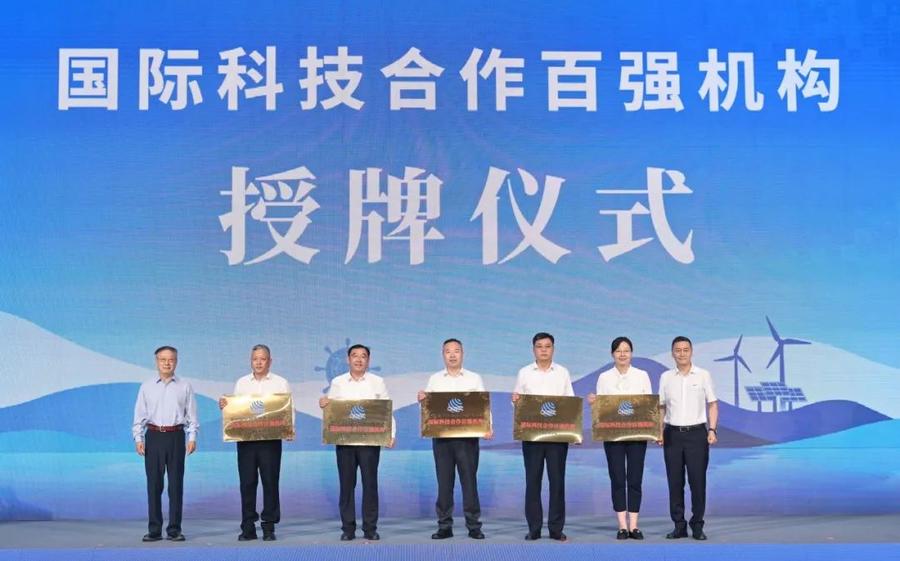
滨医附院荣获中国国际科学技术合作协会国际科技合作百强机构称号
Qi Lu Wan Bao Wang· 2025-08-04 10:58
Group 1 - The core viewpoint of the news is the recognition of Binzhou Medical College Affiliated Hospital as one of the "Top 100 International Science and Technology Cooperation Institutions" by the China International Science and Technology Cooperation Association, highlighting its significant contributions to international scientific collaboration [2] - The hospital has established close ties with institutions in countries such as the United States, Australia, Singapore, and the United Kingdom, focusing on personnel exchanges and academic collaborations [2] - Over the years, the hospital has successfully recruited a lifetime professor from a global Top 200 university and has engaged in academic exchanges with renowned institutions like Harvard Medical School and the University Medical Center Groningen [2] Group 2 - The recognition serves as both an acknowledgment of the hospital's long-term commitment to international scientific cooperation and a result of its diligent efforts in this field [3] - The hospital plans to leverage this recognition to enhance its international talent exchange and cooperation, establishing regular collaborative mechanisms with high-level overseas universities and research institutions [3] - The focus will be on enriching the forms of overseas talent exchange and cooperation, which is expected to empower the hospital's high-quality development [3]

2025年全国国际科技合作工作会议在京召开
news flash· 2025-07-30 03:51
Core Viewpoint - The meeting emphasizes the importance of international scientific and technological cooperation, aiming to enhance China's technological independence and modernization efforts through strategic diplomatic initiatives [1] Group 1: Key Tasks and Initiatives - The meeting calls for the implementation of tasks outlined in the national science and technology work conference, focusing on government and civil international scientific and technological exchanges [1] - It highlights the high-quality execution of the "Belt and Road" scientific innovation action plan as a priority [1] - The meeting stresses the need to deepen the construction of an international research environment and expand cultural and technological exchanges [1]
王辛未:全球南方如何突破“科技小圈子”?
Huan Qiu Wang Zi Xun· 2025-07-06 23:08
Group 1 - The article highlights the U.S. plan to restrict AI chip exports to Malaysia and Thailand, reflecting the increasing polarization in the international tech landscape and the impact on global South countries [1][2] - It discusses the threefold challenges facing international tech development: protectionist political maneuvers, institutional deficiencies in global governance, and reduced cooperation due to factional divides [1][2] - The article emphasizes the need for global South countries to collaboratively build an inclusive and shared tech development ecosystem to overcome these challenges [1][3] Group 2 - The existing tech governance system's functional deficiencies exacerbate the vacuum in international rules, with the U.S. frequently withdrawing from multilateral cooperation, undermining global governance [2] - The article notes that the polarization of tech competition has marginalized the innovation needs of global South countries, leading to increased uncertainty in international cooperation [2][3] - It suggests that global South countries should enhance digital infrastructure cooperation and create a favorable atmosphere for tech collaboration through quality innovation projects [3][4] Group 3 - The article advocates for the establishment of a stable and sustainable international innovation cooperation framework, focusing on mutual recognition of technology standards in key areas like renewable energy [3] - It calls for strengthening collaboration to mitigate tech security risks and enhancing communication under the framework of relevant UN agreements [3] - The essence of international tech cooperation is framed as the co-creation and sharing of development opportunities, emphasizing the need to replace factional confrontation with common development [4]