
外汇市场干预

Search documents
大和证券:日元若跌破159关口可能触发干预
Jin Rong Jie· 2026-01-26 02:31
大和 证券分析师木内英二表示,若美元兑日元USD/JPY升破159关口,日本政府可能干预外汇市场以阻 止日元快速走弱。他补充称,下一个警戒线在164水平。投资者此前认为美国会反对汇率干预,因为任 何买入日元、卖出美元的操作都会在日本方面出售美债筹集资金时推高美国国债收益率。然而,美联储 上周末进行的利率检查被市场参与者解读为美国容忍此类行动的信号。 ...
日元兑美元走高 日本首相的警告加剧干预风险
Xin Lang Cai Jing· 2026-01-26 00:55
高市早苗周日表示,"作为首相,我不应该对应该由市场决定的事情发表评论,但我们将采取一切必要 措施来应对投机性和高度异常的市场波动。"高市没有具体说明她的评论是否与日本国债收益率或日元 有关 MACD金叉信号形成,这些股涨势不错! MACD金叉信号形成,这些股涨势不错! 日元兑美元周一走强,此前日元近期下跌,交易员本周伊始便高度警惕日本可能干预市场。 日元一度上涨近1%,至1美元兑154.22日元;此前日本首相高市早苗周日对市场发出警告,且上周五有 迹象显示,美国可能与日本联手捍卫日元汇率。日本股市下跌,日经225指数下跌1.9%,基准10年期国 债走高。 日本财务省财务官三村淳周一早上表示,日本政府将与华盛顿同行密切协调,根据需要针对外汇市场的 波动做出适当反应。他拒绝评论有关官员在市场上控制汇率的传闻。 高市早苗周日表示,"作为首相,我不应该对应该由市场决定的事情发表评论,但我们将采取一切必要 措施来应对投机性和高度异常的市场波动。"高市没有具体说明她的评论是否与日本国债收益率或日元 有关 责任编辑:王永生 日元一度上涨近1%,至1美元兑154.22日元;此前日本首相高市早苗周日对市场发出警告,且上周五有 ...
日元走强 市场预期日本当局或干预汇市
Xin Lang Cai Jing· 2026-01-26 00:16
日元在早盘交易中对G10货币和亚洲货币走强,市场预期日本当局可能干预外汇市场。 多家媒体报道称,日本首相高市早苗上周末表示,政府将针对投机性和过度波动采取必要措施。 伦敦证券交易所集团数据显示,美元兑日元下跌0.4%至155.15,澳元兑日元微跌0.1%至107.20。 责任编辑:王许宁 责任编辑:王许宁 媒体援引知情人士消息称,纽约联储上周五在美国财政部指示下已接触潜在交易对手方进行所谓的"汇 率问询"。 伦敦证券交易所集团数据显示,美元兑日元下跌0.4%至155.15,澳元兑日元微跌0.1%至107.20。 媒体援引知情人士消息称,纽约联储上周五在美国财政部指示下已接触潜在交易对手方进行所谓的"汇 率问询"。 日元在早盘交易中对G10货币和亚洲货币走强,市场预期日本当局可能干预外汇市场。 多家媒体报道称,日本首相高市早苗上周末表示,政府将针对投机性和过度波动采取必要措施。 ...
日本财务大臣:正以高度的紧迫感留意外汇市场
Xin Hua Cai Jing· 2026-01-23 10:34
新华财经北京1月23日电日本财务大臣片山皋月周五表示,日本金融当局正以高度紧迫感密切关注货币 走势。而对于一个多小时前出现的日元波动情况,他们并未向市场透露相关信息。 片山皋月向记者表示:"我们始终保持着高度的紧迫感。"她拒绝回答有关当局是否已干预市场的问题。 在日本央行行长植田和男举行新闻发布会后,日元汇率剧烈波动,而此前,日本央行做出了一项备受期 待的决定,维持基准利率不变。2024年日元兑美元汇率跌破160关口时,日本当局曾四次出手干预外汇 市场,累计斥资近1000亿美元购入日元。此举为市场参与者设定了大致基准线,他们认为财务省未来可 能在此水平再次出手干预。不过官员表示干预时并无具体汇率目标,而是为应对汇率的急剧波动、无序 走势或投机行为而采取行动。 (文章来源:新华财经) ...
日本大选前对冲基金猛增日元空头,单周增幅创近十年之最
Hua Er Jie Jian Wen· 2026-01-19 12:01
Group 1 - Hedge funds have significantly increased their short positions on the Japanese yen ahead of the upcoming elections, marking the largest increase in ten years, reflecting investor bets on the election outcome and its impact on fiscal policy [1][4] - According to the Commodity Futures Trading Commission, leveraged funds increased their net short positions on the yen by 35,624 contracts in the week ending January 13, the largest weekly increase since May 2015 [1] - The yen recently fell to its weakest level since July 2024, primarily influenced by the prospects of the Japanese temporary elections [1] Group 2 - Traders are betting on Prime Minister Fumio Kishida's potential victory in the elections, as his administration advocates for more aggressive fiscal stimulus measures, which may lead to a further widening of Japan's fiscal deficit [4] - Expectations of looser fiscal policies have diminished the yen's attractiveness, prompting hedge funds to increase their short positions [4] - The depreciation of the yen has raised market concerns about potential intervention by Japanese authorities, especially as the yen approaches the critical level of 160 yen per dollar, where previous interventions occurred [4]

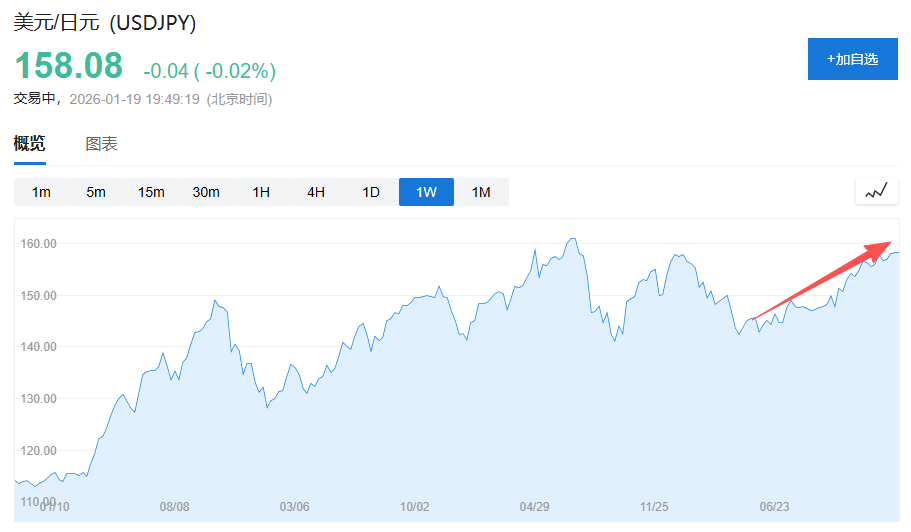
日元遭疯狂做空!分析师警告:若跌破162,可能迅速跌向170
Hua Er Jie Jian Wen· 2026-01-15 06:23
Core Viewpoint - The Japanese yen has fallen to an 18-month low, with hedge funds betting that the authorities will tolerate a decline towards 165, while analysts warn that if the key technical level of 162 is breached, the exchange rate could rapidly surge to 170, testing the effectiveness of government intervention [1][4]. Group 1: Market Sentiment and Positioning - The options market shows that the volume of call options betting on the dollar's rise is more than twice that of put options, indicating a strong market expectation for the yen to continue weakening [1][5]. - Hedge funds are ignoring intervention warnings and are betting on the yen falling to the 165 level, with a stable demand for higher dollar-yen structures observed [5]. - The imbalance in options trading, with call options being favored, highlights a bullish sentiment towards the dollar-yen exchange rate despite the current levels being similar to those seen during the last intervention in July 2024 [5]. Group 2: Technical Analysis and Risks - Analysts indicate that if the dollar-yen rate breaks through the 162 level, it could quickly rise to 170 due to concentrated options-related orders around that level [6]. - The weakening of the yen's safe-haven appeal is noted, as it continues to decline even amid heightened risk aversion triggered by geopolitical events [7]. - The current market environment differs significantly from 2024, with a neutral net position in yen futures indicating a lack of large short positions available for covering, which could limit potential rebounds [8][9]. Group 3: Political and Economic Factors - Political uncertainty surrounding Prime Minister Suga's early election plans is adding downward pressure on the yen, with expectations that a majority win for the ruling party would lead to continued expansionary policies [10]. - Deutsche Bank outlines three scenarios regarding potential election outcomes, suggesting that a failure to secure a majority could lead to market sell-offs and a strengthening of the yen, while a stable majority could weaken it further due to fiscal expansion expectations [10].
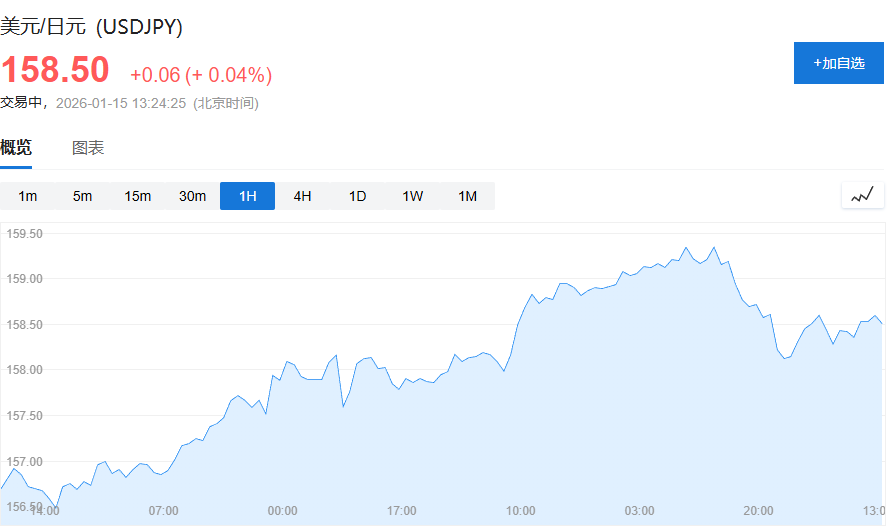
机构:市场或继续试探日本对日元贬值的容忍底线
Jin Rong Jie· 2026-01-14 03:00
Core Viewpoint - The market is likely to continue testing the Japanese policymakers' tolerance for yen depreciation, with speculation pressure remaining high due to a lack of clear guidance on intervention timing, scale, or triggers [1] Group 1 - Philip Wee, a senior foreign exchange strategist at DBS Group Research, indicates that verbal warnings from policymakers serve as the first line of defense against yen depreciation [1] - The potential for early elections in Japan may weaken the coordination between the Ministry of Finance and the Bank of Japan in taking decisive action in the foreign exchange market, complicating the situation further [1]
Japanese Yen's Falls Could Draw More Concerns From Policymakers
Barrons· 2026-01-13 13:04
The Japanese yen's sharp falls could draw further concerns from policymakers in Japan and abroad, MUFG Bank's Lee Hardman said in a note.Japan's finance minister Satsuki Katayama said she and Treasury Secretary Scott Bessent shared concerns about the yen's weakness in a meeting Monday."The discussions will further heighten speculation over Japan intervening in the FX market to support the yen if it continues to weaken," Hardman said. ...
日本央行加息节奏谨慎 美元/日元处上涨趋势
Jin Tou Wang· 2026-01-04 03:21
Core Viewpoint - The USD/JPY exchange rate has been on an upward trend for four consecutive days, closing up 0.15% at 156.8700, primarily due to the cautious pace of monetary policy tightening by the Bank of Japan, leading to a weaker yen against the dollar [1] Group 1: Monetary Policy and Economic Indicators - The Bank of Japan raised the key interest rate from 0.50% to 0.75% in December, marking the second rate hike of the year aimed at curbing inflation [1] - The cautious approach to rate hikes and the lack of a clear timeline for future increases have disappointed the market, contributing to the yen's depreciation [1] Group 2: Market Reactions and Technical Analysis - The USD/JPY exchange rate initiated a new upward trend above the 156.20 level, breaking through the key resistance at 156.50, and successfully entered an upward range [1] - A temporary pullback occurred below 156.70, testing the 23.6% Fibonacci retracement level of the upward wave from 155.74 to 156.99, but it quickly stabilized and formed a bullish flag pattern [2] - Key support levels are identified at 156.35 and the 50% Fibonacci retracement level, with a significant risk of bearish selling if the rate falls below the 100-period simple moving average [2] - Short-term resistance is noted around 156.70, with a primary resistance level at 157.00; if the price holds above 157.00, it may further target 157.50 and potentially 158.00 [2]
日元突发大跌 日本干预警告美联储政策转向成关键推手
Jin Tou Wang· 2025-12-24 12:50
当前美国就业市场疲软态势显现,叠加多份前期消费者价格指数(CPI)报告显示关税对通胀的影响有 限,进一步强化了市场对美联储转向鸽派政策的预期,这也成为压制美元走势的重要因素。 展望后续,美元走势的关键触发点将是即将发布的第三季度GDP预估数据。投资者将密切解读该数据, 以挖掘美国当前经济运行状况的最新线索。 与此同时,日元的强势表现叠加日本财政部长片山五月的强硬表态,对美元兑日元汇率形成显著压制。 片山五月明确警告,日本将采取干预措施以遏制日元单边过度波动,她此前也曾表态:"日本在应对日 元过度波动方面拥有自由行动权",并补充称政府将"针对过度波动采取适当应对措施"。 回溯至前一交易日欧洲时段,美元兑日元已出现明显下跌。受美元表现疲软、且市场预期美联储未来某 一年降息幅度将超过其此前货币政策声明中暗示的水平等因素影响,该货币对遭遇沉重抛售压力。 周三(12月24日),美元兑日元汇率显著下挫。尽管美国第三季度国内生产总值(GDP)报告表现优于预 期,但美元依旧承压走弱;与此同时,日元则受益于市场对日本当局可能出手干预外汇市场的担忧情 绪,走势逆势走强。 追踪美元兑六种主要货币表现的美元指数(DXY)再度回落至1 ...