
外汇风险管理

Search documents
股市必读:海锅股份(301063)1月15日主力资金净流出443.96万元
Sou Hu Cai Jing· 2026-01-15 19:09
Core Viewpoint - Zhangjiagang Haigang New Energy Equipment Co., Ltd. is actively engaging in strategic transactions to enhance its operational capabilities and mitigate financial risks, including the acquisition of land for project development and the initiation of foreign exchange derivative trading to manage currency risk. Group 1: Trading Information - As of January 15, 2026, the stock price of Haigang was 25.42 yuan, with a slight increase of 0.47% and a turnover rate of 2.45% [1] - The trading volume was 24,700 shares, with a total transaction value of 62.4514 million yuan [1] - On the same day, there was a net outflow of 443.96 thousand yuan from institutional investors and 467.62 thousand yuan from retail investors, while retail investors saw a net inflow of 911.58 thousand yuan [1] Group 2: Company Announcements - The fourth board meeting of Zhangjiagang Haigang approved the purchase of land use rights by its subsidiary, Suzhou Magtech, for 25,000 square meters at a price of 25.831899 million yuan, based on a third-party evaluation [3][4] - The land acquisition is intended for the construction of high-end components for flywheel energy storage projects, aligning with the company's strategic development needs [3][4] - The company plans to use up to 300 million yuan of its own funds for foreign exchange derivative trading to hedge against currency fluctuations, with a focus on forward foreign exchange contracts, swaps, and options [2][4] Group 3: Risk Management and Compliance - The company has established a management system for foreign exchange derivative trading to regulate operations and prevent speculative activities, ensuring that transactions are aimed at risk mitigation [4] - The board has authorized management to make decisions within the approved limits for the foreign exchange trading activities, which are valid for 12 months from the date of board approval [2][4] - The company emphasizes that the foreign exchange derivative transactions will not involve speculative trading and has implemented risk control measures [2][4] Group 4: Shareholder Activity - A major shareholder, Yulong Chuangtou, reduced its stake by 274,700 shares, representing 0.2632% of the total share capital, bringing its ownership down from 6.2600% to 5.9968% [5] - This reduction was part of a disclosed plan and did not result in a change of control or affect the company's governance structure [5]

达意隆:公司海外订单目前以美元作为主要结算货币
Zheng Quan Ri Bao Wang· 2026-01-15 14:12
Core Viewpoint - The company is currently using USD as the primary currency for overseas orders, with RMB and other currencies as supplementary options for regional business transactions [1] Group 1 - The company closely monitors exchange rate fluctuations and will implement foreign exchange hedging as needed to enhance foreign exchange risk management [1]

达 意 隆(002209) - 2026年1月15日投资者关系活动记录表
2026-01-15 11:24
Group 1: Company Overview and Market Position - The company provides comprehensive liquid product packaging solutions for industries such as beverages, grains, condiments, and daily chemicals, serving well-known domestic and international clients [2] - The beverage market in Southeast Asia and South Asia is experiencing rapid expansion, with significant growth potential due to urbanization and rising incomes, leading to diversified consumption trends [2] Group 2: Market Development and Strategy - In 2026, domestic capital expenditure growth is expected to slow, but structural opportunities remain; the company plans to actively explore domestic market expansion and capitalize on niche market opportunities [3] - Internationally, regions like Southeast Asia, South Asia, Africa, and the Middle East are in a phase of increasing per capita beverage consumption, prompting the company to expand marketing channels and improve order quality [3] Group 3: Production Capacity and Equipment - The company currently has sufficient orders, and with the completion of factory expansion projects, it aims to enhance assembly efficiency to meet delivery demands [3] - The company’s sterile filling production lines have already been exported, with future demand for such equipment expected to rise as emerging economies develop [3] Group 4: Financial Management and Risk Mitigation - Overseas orders are primarily settled in USD, with RMB and other currencies used for regional transactions; the company monitors exchange rate fluctuations and may engage in foreign exchange hedging to manage risks [3] - The company is open to implementing stock incentive plans in accordance with regulatory requirements [4] Group 5: Equipment Lifecycle and Market Trends - Beverage packaging equipment has a renewal cycle driven by consumption structure upgrades and product innovation, influenced by factors such as equipment lifespan, downstream capacity expansion, and industry policies [4]
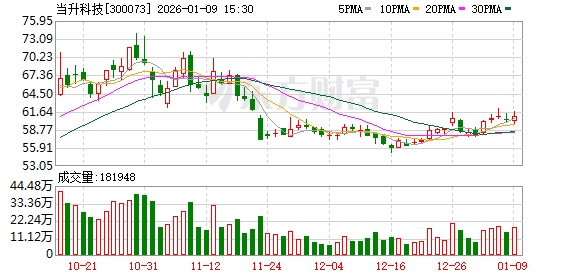
当升科技:公司已建立完善的外汇风险管理体系
Zheng Quan Ri Bao· 2026-01-09 14:11
Core Viewpoint - The company has established a comprehensive foreign exchange risk management system to monitor risk exposure and mitigate adverse impacts from currency fluctuations on its operations [2] Group 1: Foreign Exchange Risk Management - The company conducts daily monitoring of its foreign exchange risk exposure [2] - It closely observes macroeconomic conditions and changes in international monetary policies [2] - The company dynamically adjusts the use of forward foreign exchange instruments based on professional market analysis reports and its actual situation [2]


日科化学:公司将持续优化产品与市场结构,提升产品附加值并开拓更多元市场
Zheng Quan Ri Bao Wang· 2026-01-09 11:13
Core Viewpoint - The company is actively monitoring the fluctuations in the RMB to USD exchange rate and is enhancing its foreign exchange risk management strategies [1] Group 1: Company Strategy - The company is focused on optimizing its product and market structure to increase product value and explore more diverse markets [1] - The company aims to continuously enhance its product pricing power [1] Group 2: Share Buyback - The results of the company's share buyback implementation have been announced through designated information disclosure media [1] Group 3: Decision-Making Process - All business decisions made by the company are based on industry trends and its actual circumstances [1] - Significant matters will be disclosed in a timely manner through legal information disclosure channels [1]

新宝股份:人民币短期内快速升值对公司出口业务会产生一定的影响
Zheng Quan Ri Bao Wang· 2026-01-08 11:45
Core Viewpoint - The company, Xinbao Co., Ltd. (002705), has indicated that approximately 75% of its business comes from exports, primarily settled in US dollars, and the recent rapid appreciation of the RMB may impact its export operations [1] Group 1: Business Operations - The company exports account for about 75% of its total business [1] - The export transactions are mainly conducted in US dollars [1] Group 2: Currency Risk Management - The company acknowledges that the short-term rapid appreciation of the RMB will have a certain impact on its export business [1] - To mitigate foreign exchange risk, the company will enhance its foreign exchange risk management through measures such as using foreign exchange derivatives for hedging and strategically timing currency settlements [1] Group 3: Long-term Strategy - In the long run, the company aims to improve its core competitiveness to enhance its market pricing power [1] - The company is committed to maintaining stable and sustainable operations [1]

日科化学:公司将持续优化产品与市场结构
Zheng Quan Ri Bao Wang· 2026-01-07 13:43
Core Viewpoint - The company is actively monitoring the impact of fluctuations in the RMB to USD exchange rate and is enhancing its foreign exchange risk management strategies [1] Group 1 - The company is focused on optimizing its product and market structure to increase product value [1] - The company aims to explore more diverse markets to continuously enhance its product pricing power [1]
科兴生物制药股份有限公司关于2026年度开展外汇衍生品交易业务的公告
Shang Hai Zheng Quan Bao· 2026-01-05 00:30
Group 1 - The company plans to conduct foreign exchange derivative trading in 2026 to mitigate risks associated with foreign exchange rate and interest rate fluctuations, with a total trading limit not exceeding 75 million RMB or equivalent foreign currency [4][10]. - The trading will primarily utilize the company's own funds and will not involve raised funds [5][6]. - The company will employ simple and transparent foreign exchange derivative instruments, such as forward contracts and options, with a maximum duration of 12 months [6][8]. Group 2 - The company has approved the use of up to 150 million RMB of temporarily idle raised funds for cash management, focusing on safe and liquid investment products with a maturity of no more than 12 months [21][24]. - The investment aims to enhance the efficiency of raised fund usage while ensuring that it does not affect the ongoing projects funded by these raised funds [23][38]. - The company will strictly control risks associated with these investments and will not use the funds for speculative purposes [35][50]. Group 3 - The company plans to provide a maximum guarantee of 320 million RMB for its subsidiaries' bank loans in 2026, which will enhance financing efficiency [53][60]. - The guarantee is based on the current business situation and is expected to be within a controllable risk range [54][61]. - The company has no overdue guarantees or litigation-related guarantees, ensuring a stable financial position [62]. Group 4 - The company anticipates daily related transactions with specific affiliated companies, with a total expected amount not exceeding 18.5 million RMB for 2026 [67][70]. - These transactions are necessary for the company's normal business operations and are conducted at market prices to ensure fairness [75][76]. - The company has established contracts with related parties to ensure compliance and protect shareholder interests [73][74]. Group 5 - The company intends to apply for a financing limit of up to 300 million RMB from banks and financial institutions in 2026, using its own assets as collateral [78][79]. - This financing is aimed at meeting the operational funding needs of the company and its subsidiaries without adversely affecting business operations [80].

每周股票复盘:山东威达(002026)威达拟用不超13亿闲资理财
Sou Hu Cai Jing· 2026-01-02 18:26
Core Viewpoint - Shandong Weida (002026) has reported a slight increase in stock price and has outlined its plans for 2026, including various financial transactions and associated risks management strategies [1][2]. Company Announcements - The 6th temporary meeting of the 10th Board of Directors was held on December 30, 2025, where several key resolutions were passed, including expected daily related transactions for 2026 with Shandong Weida Rem Machinery Co., Ltd. and Shandong Weida Group Co., Ltd. totaling no more than 13.69 million yuan [1][3]. - The company plans to conduct foreign exchange forward settlement and swap transactions with amounts not exceeding 150 million USD and 10 million USD, respectively, to mitigate foreign exchange risk [2][3]. - The company intends to use up to 1.3 billion yuan of idle funds for entrusted wealth management, with a focus on low-risk, stable financial products for the period from January 1, 2026, to December 31, 2026 [2][3]. Related Transactions - For the fiscal year 2026, the company anticipates related transactions with Shandong Weida Rem Machinery Co., Ltd. involving sales and services not exceeding 30 million yuan and purchases not exceeding 60 million yuan, along with rental of factory space not exceeding 700,000 yuan [2][3]. - The pricing for these related transactions will adhere to market principles and has been approved by the Board of Directors, with related directors abstaining from voting [2][3].

深圳市兆驰股份有限公司第六届董事会第二十四次会议决议的公告
Shang Hai Zheng Quan Bao· 2025-12-30 23:14
Group 1 - The company held its 24th meeting of the 6th Board of Directors on December 29, 2025, where all 7 attending directors approved the proposal for foreign exchange derivative trading [2][3] - The Board approved a total limit of up to $50 million for foreign exchange derivative trading, valid for 12 months from the date of approval, with the ability to roll over within this limit [3][8] - The purpose of the trading is to effectively hedge against foreign exchange market risks and enhance financial stability, not for speculative purposes [8][10] Group 2 - The trading will involve currencies used in the company's overseas operations, primarily USD, and may include various products such as forward foreign exchange contracts, swaps, and options [9][10] - The maximum expected margin and premium for the trading activities will not exceed $4 million [10] - The company will use its own funds for the trading, and the decision does not involve raising funds [11] Group 3 - The Board authorized the chairman and designated individuals to implement the trading plan and sign relevant agreements [12] - The trading will be based on the company's normal foreign exchange income and expenses, ensuring liquidity [14] - The company has established risk management measures to mitigate potential risks associated with the trading activities [16][17] Group 4 - The company announced the resignation of non-independent director and deputy general manager Yan Dong, who will continue to work within the company [21] - Yan Dong was elected as a representative director by the employee representative assembly, ensuring compliance with regulations regarding board composition [22] Group 5 - The company held its second extraordinary general meeting on December 30, 2025, with a total of 589 shareholders present, representing 33.54% of the voting rights [30][34] - The meeting approved several resolutions, including amendments to the company's articles of association and governance rules, with significant support from shareholders [35][39] - Legal opinions confirmed the legality and validity of the meeting and its resolutions [44]
