
多式联运体系

Search documents
全国铁路建设稳步推进 前10月完成固定资产投资6715亿元
Xin Hua Wang· 2025-11-14 14:20
Core Insights - The article highlights the steady progress of railway construction in China, with a fixed asset investment of 671.5 billion yuan in the first ten months of the year, reflecting a year-on-year increase of 5.7% [1] Investment and Economic Impact - The railway construction has effectively stimulated overall social investment, providing strong support for high-quality economic and social development [1] - The investment in railway construction not only drives the development of upstream and downstream industries such as intelligent equipment manufacturing and building materials but also enhances regional transportation conditions, facilitating population mobility and optimizing industrial layout [3] Key Projects and Technological Advancements - Significant milestones have been achieved in various railway projects across the country, including the completion of critical construction nodes and the adoption of advanced construction techniques [2][3] - In Sichuan, the construction team completed the box girder erection task for the Chengyu Middle Line high-speed railway, achieving a bridge-to-tunnel ratio of 78% and successfully managing complex construction challenges [1] - The construction of the Huahu International Airport railway connection line in Hubei is underway, which is crucial for establishing a multi-modal transport system and enhancing the regional economy [2] Strategic Focus and Future Plans - The China National Railway Group is focusing on serving national strategies and regional economic development, aiming to build a world-class modern railway network [3] - The railway department plans to continue advancing key projects while strengthening safety and quality control to ensure the successful completion of the annual railway construction investment tasks [3]
重庆“千里轻舟”货运班轮常态化运行
Zhong Guo Xin Wen Wang· 2025-10-27 09:34
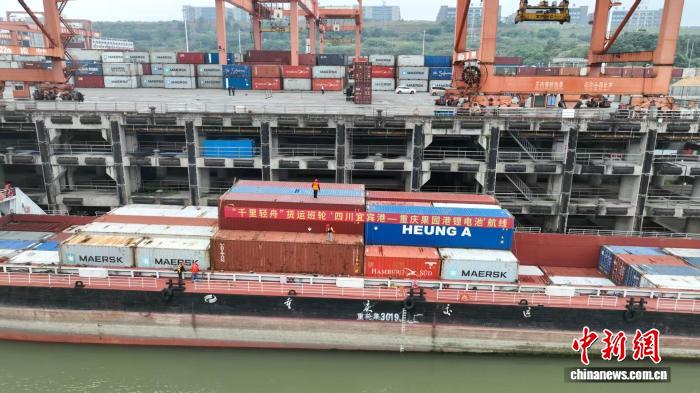
Core Insights - The launch of the "Sichuan Yibin Port - Chongqing Guoyuan Port Lithium Battery" shipping route marks a new phase for the "Qianli Qingzhou" freight service, which has now opened a total of 10 trial routes, indicating a shift to regular operations [1][3] - The "Qianli Qingzhou" service aims to enhance the role of shipping in supporting domestic and international dual circulation and reducing overall logistics costs in society [1][3] Summary by Categories Operational Highlights - As of now, "Qianli Qingzhou" has completed over 200 one-way voyages, transporting a total of 1 million tons of goods, which has saved over 5 million RMB in logistics costs, representing a cost reduction of 25% [3] - The majority of goods transported include bulk materials such as construction materials, ores, and chemical raw materials, which account for over 90% of the total cargo [3] Future Plans - The Chongqing Transportation Committee plans to strengthen regional collaboration, optimize layout, and enhance synergy to develop a multi-modal logistics system that connects the upper reaches of the Yangtze River [3] - The goal is to create a benchmark brand for high-quality development in inland shipping, focusing on convenience in multi-modal transport, regularized shipping modes, and intelligent logistics services [3]

畅通粮运“微循环”
Jing Ji Ri Bao· 2025-10-17 21:55
Core Insights - The Guangzhou Nansha Grain General Terminal is a key hub for grain distribution in South China, with an annual handling capacity exceeding 20 million tons and modern facilities that enhance operational efficiency [1] - The company, COFCO Technology, is focusing on developing a multi-modal transportation system to reduce grain loss and improve logistics efficiency across the supply chain [2][3] - Technological innovations, such as the domestic high-capacity pipeline conveyor, are being implemented to streamline grain transportation and enhance overall supply chain efficiency [3][4] Group 1 - The Nansha Port features 19 modern berths with a grain unloading capacity of 8,000 tons per hour, equating to 133 tons per minute [1] - COFCO Technology is developing high-efficiency multi-modal transport equipment to address challenges in the grain logistics chain, aiming to minimize losses and improve cost efficiency [2] - The company emphasizes the importance of a seamless logistics system to enhance grain supply chain management and support rural revitalization efforts [2] Group 2 - Innovations in logistics equipment, such as automated systems, have led to a 20% increase in overall port efficiency, requiring fewer personnel for operations [3] - COFCO Technology is committed to a technology-driven approach, focusing on research and development to facilitate the transition of traditional industries towards high-end, green, and intelligent solutions [4] - The company aims to create a complete technological loop from basic research to equipment support, ensuring continuous improvement in grain logistics [4]
精准反制 中国增强全球航运话语权
Sou Hu Cai Jing· 2025-10-17 02:18
Core Points - The article discusses the recent trade tensions between the U.S. and China, particularly focusing on the maritime, logistics, and shipbuilding sectors, following the U.S. implementation of port fees based on a Section 301 investigation [2][3][4] - China's response includes imposing special port fees on U.S.-related vessels, which is seen as a necessary countermeasure to maintain fair competition in international shipping and shipbuilding markets [2][6][7] Group 1: U.S. Actions and Motivations - The U.S. has initiated a trade investigation against China's maritime and shipbuilding sectors, citing "non-market behavior" and "unfair competition" as reasons for the actions [3][4] - The U.S. has been using Section 301 of the Trade Act since 2018 to impose tariffs and restrictions, which has now extended to the shipping and shipbuilding industries [3][4] - The U.S. aims to restore its shipbuilding capacity and regain control over key maritime industries, rather than reducing global trade costs [5][6] Group 2: China's Response and Strategy - China's countermeasures are described as a necessary defensive action to protect its industries and maintain a fair competitive environment in global shipping [6][7] - The measures specifically target vessels with at least 25% U.S. ownership, demonstrating a precise and restrained approach to avoid broader impacts on third-party nations [7] - China emphasizes the importance of upgrading its industries and enhancing self-sufficiency to mitigate the effects of external sanctions and geopolitical risks [7][8] Group 3: Impact on Global Shipping Industry - The U.S. port fee policies could significantly increase operational costs for affected shipping fleets, potentially leading to a reallocation of shipping capacity and reduced market efficiency [5][6] - The shipping industry is experiencing a decline in orders, influenced by macroeconomic factors and geopolitical tensions, which could further complicate investment decisions [5][6] - The ongoing tensions highlight a struggle for dominance over international trade rules, with potential long-term implications for global shipping dynamics [6][8]
“钢铁粮道”贯通南北,科技守护中国饭碗
Ke Ji Ri Bao· 2025-10-16 08:15
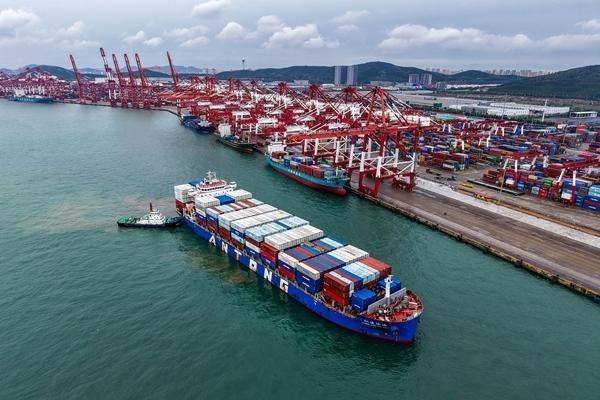
Core Insights - The article highlights the advancements in grain logistics in Guangzhou, particularly at the Nansha Port, where automation and technology have significantly improved operational efficiency and safety in grain handling [1][4]. Group 1: Technological Advancements - The implementation of a fully automated control system at the Nansha Grain Terminal has increased overall port efficiency by 20%, allowing operations to be managed by just two staff members remotely [1]. - The new logistics equipment, including a high-capacity circular chain conveyor, has enhanced grain outflow efficiency to 300 tons per hour, showcasing the shift towards high-capacity operations [4]. - The terminal's unloading capacity reaches 8,000 tons per hour, with an annual throughput capability of nearly 16 million tons, sufficient to meet the grain supply needs of a large city [3]. Group 2: Logistics and Transportation - The grain transportation system in China, particularly the North-South grain transport route, is complex, involving multiple modes of transport including rail, sea, and road, which poses challenges in efficiency and cost [2]. - The establishment of a multi-modal transport system is essential for improving the efficiency of grain logistics, likened to conducting a symphony where different transport modes work in harmony [3]. Group 3: Infrastructure and Storage Innovations - Upgrades in infrastructure and the introduction of intelligent storage technologies, such as the "six-sided active temperature control" system, have transformed grain storage into a more efficient and precise process [4][5]. - The transition from traditional storage methods to smart ports and automated systems represents a significant evolution in the grain logistics sector, enhancing the overall grain supply chain [5].
南北粮运大动脉焕然一新
Ke Ji Ri Bao· 2025-10-15 23:45
Core Insights - The article highlights the transformation of traditional grain logistics in China through technological advancements, particularly in the context of the North-South grain transportation challenge [1][2][3] Group 1: Technological Advancements in Grain Logistics - The Guangzhou Nansha Port has implemented a fully automated control system that enhances overall port efficiency by 20% and enables real-time coordination with rail and road transport [1] - The introduction of high-capacity logistics equipment, such as the 2000 tons/hour grain discharge capability at the shallow round warehouse, marks a significant milestone in the modernization of grain logistics [3] - The development of a domestic high-capacity chain conveyor system aims to improve the efficiency of grain transportation, allowing for a significant increase in grain discharge efficiency to 300 tons per hour [4] Group 2: Multi-Modal Transportation System - The North-South grain transportation route spans 3,500 kilometers, requiring multiple transfers that can lead to grain loss and inefficiencies [2] - A well-coordinated multi-modal transportation system is essential for optimizing costs, efficiency, and environmental impact in grain logistics [3] - The integration of various transportation modes, including rail, sea, and road, is likened to conducting a symphony, emphasizing the need for seamless collaboration among different transport methods [3] Group 3: Infrastructure and Storage Innovations - Innovations in storage technology, such as the "six-sided active temperature control" and intelligent three-dimensional storage systems, contribute to more precise and efficient grain storage [4] - The shift from passive allocation to proactive configuration and fine management in grain circulation is supported by infrastructure upgrades and information technology [4] - The annual transfer capacity at the unloading terminal can reach nearly 16 million tons, sufficient to meet the grain supply needs of a large city [3]
巴南区科级干部培训班赴国际物流枢纽园考察调研
Sou Hu Cai Jing· 2025-09-25 14:44
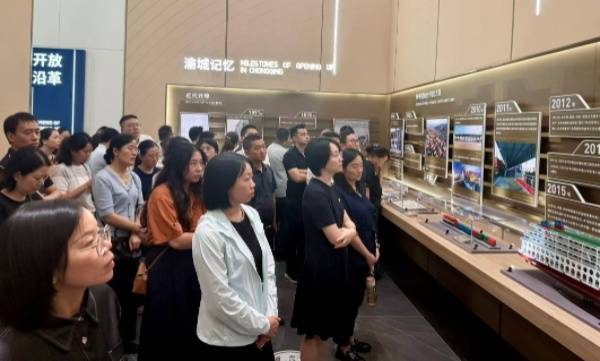
Core Insights - The training program for mid-level leaders in Banan District aims to enhance understanding and practical knowledge through field study at the Chongqing International Logistics Hub [2][4] - The program emphasizes the importance of the logistics hub's multi-modal transport system and its role in connecting international logistics channels, contributing to Chongqing's development as an open highland [2][4] Group 1 - The training session included visits to the Chongqing Inland International Logistics Hub Exhibition Center and the Chongqing Railway Port, providing a comprehensive overview of the hub's development [2] - The logistics hub's strategic value is highlighted through its reliance on two key railway stations, which form the backbone of its multi-modal transport system [2] - Participants expressed their intention to apply the insights gained from the field study to their work, aiming to translate learning outcomes into actionable measures for community service and development [4] Group 2 - The "four-way channel" advantage of the Chongqing International Logistics Hub left a significant impression on the participants, showcasing its potential in facilitating trade and logistics [4] - The on-site teaching approach was noted to enhance the relevance and effectiveness of theoretical learning, making it more applicable to real-world scenarios [4] - The training activity is seen as a means to broaden perspectives and deepen theoretical learning outcomes among the participants [4]
广元:小城市的“大物流”梦想
Ren Min Wang· 2025-09-19 02:34
Core Insights - The article emphasizes that logistics is not just about the movement of goods but also about the flow of opportunities, highlighting the transformation of Guangyuan into a key logistics hub through strategic positioning and infrastructure investment [1][2] - Guangyuan's "logistics+" model benefits various sectors including agriculture, manufacturing, and e-commerce, demonstrating that medium-sized cities can also become critical nodes in the logistics network [1] - The article underscores the importance of regional collaboration over individual efforts, advocating for the breaking down of administrative barriers to maximize benefits [1] Infrastructure Development - Guangyuan's development of the Sichuan-Shaanxi-Gansu logistics hub is characterized by significant upgrades in infrastructure and an improved business environment, which has been positively received by local enterprises [1] - The government’s "nanny-style service" and "policy toolkit" have bolstered investor confidence, facilitating faster project approvals and construction efforts [1] Economic Transformation - The transformation of logistics channels into development pathways signals a strong commitment from inland cities in the western region to embrace an open economy [2] - Guangyuan's case has been recognized as a provincial-level typical example, serving as a model for other regions to leverage logistics for high-quality development [2]
长久物流(603569):整车运价下降业绩有所承压,治超专项行动或改善主业竞争格局
Bank of China Securities· 2025-09-03 06:45
Investment Rating - The report maintains a "Buy" rating for the company [1][5] Core Views - The company reported a revenue of RMB 2.326 billion for the first half of 2025, representing a year-on-year growth of 27.54%. However, the net profit attributable to shareholders decreased by 80.66% to RMB 10.1688 million due to lower vehicle transport prices and other factors [3][8] - The report suggests that the recent special governance actions may lead to an industry cleanup, potentially improving the competitive landscape and restoring profitability for the company [3][8] Summary by Sections Financial Performance - The company’s revenue for 2025 is projected to be RMB 4.590 billion, with a growth rate of 9.9%. The net profit is expected to decline to RMB 310 million in 2025, a decrease of 60.6% compared to the previous year [7][9] - The EBITDA for 2025 is estimated at RMB 481 million, with a significant increase in operating cash flow, which rose by 150.68% to RMB 220 million in the first half of 2025 [8][9] Market Position and Strategy - The company is actively developing a multimodal transport system to optimize cost control and improve operational efficiency. It has a fleet of over 2,400 vehicles and several ships to support its logistics operations [8] - The special governance actions initiated by the Ministry of Transport and other authorities aim to address issues in the vehicle transport sector, which may lead to the elimination of non-compliant operators and enhance the overall market structure [8]

南宁“两港一区”今年重点推进53个项目
Ren Min Wang· 2025-05-28 09:27
Core Viewpoint - The "Two Ports and One Area" initiative in Nanning is set to advance 53 projects with a total investment of 75.897 billion yuan, aiming to enhance cross-border industrial integration and economic development by 2025 [1][2]. Group 1: Project Investment and Development - A total of 21 projects are planned to commence or complete construction within the year, with an annual investment target of 5.896 billion yuan [1]. - From January to April, key projects under the "Two Ports and One Area" have completed investments of 2.188 billion yuan, with two projects, including the comprehensive development project of the national railway area, having started construction [2]. - The industrial output value of large-scale industries reached 11.266 billion yuan from January to April, marking a year-on-year growth of 7.6%, leading all districts and development zones in Nanning [2]. Group 2: Comprehensive Bonded Zone Development - The second phase of the Nanning Comprehensive Bonded Zone is nearing operational readiness, focusing on electronic information, high-end equipment manufacturing, and biomedicine, among other sectors [3]. - The second phase will leverage the advantages of the Nanning International Railway Port to establish a multi-modal transport system, enhancing the region's logistics capabilities [3]. Group 3: Cross-Border Trade and Logistics - The volume of goods shipped via the China-Vietnam freight train has surged by 314% year-on-year, reflecting the growing efficiency of cross-border logistics [4]. - The establishment of a joint command and dispatch center at Nanning Wuxu International Airport aims to improve customs clearance speed, significantly reducing delivery times for perishable goods [4]. - From January to April 2025, the number of transshipment goods monitored at the airport reached 31,153 items, a year-on-year increase of 37.47%, with a weight of 595 tons, up 57.16% [4].