工业上楼

Search documents
被楼市反噬,房价破万!这个省会,没有退路了!
Sou Hu Cai Jing· 2025-12-05 01:16
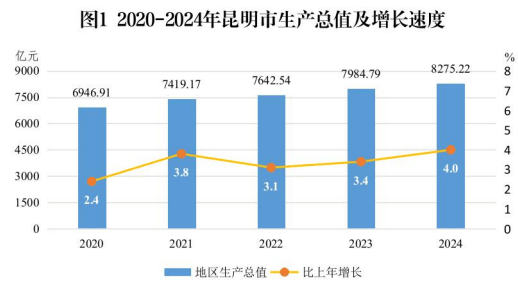
Core Viewpoint - The economic development of Kunming has been stagnating for five years, failing to meet its ambitious targets set for 2025, including a GDP of over 1 trillion yuan and a permanent population of around 10 million [1][4][50]. Economic Performance - In 2024, Kunming's GDP was 827.52 billion yuan, falling short of the 1 trillion yuan target by over 170 billion yuan [1]. - The actual GDP growth rate for the first three quarters of 2025 was 4.4%, ranking Kunming among the bottom seven of 36 major cities in terms of growth [5][8]. - The economic primacy of Kunming was recorded at 26.2%, which is 3.8 percentage points below the target of 30% [1]. Population Trends - The permanent population of Kunming in 2024 was approximately 8.69 million, which is still 170,000 short of the 10 million target [1]. - The net population inflow in 2024 was only 4,600, significantly lower than previous years [11]. Real Estate Market Impact - Kunming's real estate sector has seen a drastic decline, with land sales dropping from 915.7 billion yuan in 2019 to just 46.28 billion yuan in 2023, marking an 86.5% decrease [19]. - The sales volume of commercial housing plummeted by 66.6% from its peak in 2019, with sales amounting to 639.42 million square meters in 2024 [21]. - The average price of commercial housing fell to 8,818 yuan per square meter in 2024, a 28.06% decrease from its peak [24]. Industrial Development - Kunming's industrial output value increased from 131.92 billion yuan in 2019 to 183.76 billion yuan in 2024, but this is still significantly lower than industrial powerhouses like Shenzhen [28]. - The city has only one industry with revenues exceeding 100 billion yuan, which is the non-ferrous metal smelting and rolling industry [33]. Investment Trends - Fixed asset investment in Kunming has been heavily skewed towards real estate, with over 60% of investments directed to this sector in 2021, leading to a neglect of industrial development [17][18]. - The city aims to increase industrial investment to account for over 20% of total investment by 2025, but recent data shows a decline in industrial investment [55][57]. Geographic Limitations - Kunming's geographical features, characterized by high altitudes and limited flat land, pose challenges for industrial development, as most of the population and economic activity is concentrated in a small area [58][60].

地产经纬丨“摩天工厂”照进现实,“工业上楼”如何更上一层楼?
Zhong Guo Jin Rong Xin Xi Wang· 2025-10-31 13:07
Core Insights - The "Industrial Upward" initiative showcased at the 2025 Shanghai International Urban and Architecture Expo is transforming industrial space value and driving industrial upgrades and urban development in Shanghai and nationwide [1][5] Group 1: Project Highlights - A variety of "Industrial Upward" demonstration projects were presented, categorized into low-rise, mid-rise, and super high-rise structures, serving as benchmarks for industrial space innovation [3][4] - The Shanghai Ounoxin new factory project features a total construction area of approximately 65,000 square meters, integrating production, office, and storage functions [3] - The Shanghai Puluosi Taopu Smart Cold Chain Industrial Park, a major project, covers about 74,000 square meters and focuses on high-quality food preservation and advanced pharmaceutical cold chain sectors [3] Group 2: Breakthroughs in Industrial Space - "Industrial Upward" addresses space constraints in mega cities, promoting industrial transformation and upgrading through innovative vertical industrial layouts [5][6] - The initiative enhances land utilization and industrial capacity, significantly increasing output value and tax revenue per unit area, thus resolving the conflict between land scarcity and industrial demand [5] - Shanghai's early exploration and achievements in this field have established it as a model for industrial upgrading, with the city emphasizing the importance of maximizing space efficiency [6] Group 3: Technological Innovations - The construction products developed under the "Industrial Upward" initiative utilize a standardized approach for floor plans, diverse facades, modular electromechanical systems, and intelligent construction methods [6] - Compared to traditional cast-in-place industrial buildings, these new products can reduce construction time by 30%, labor costs by 40%, and construction waste by 80%, without increasing overall costs [6]

集约高效用地的“苏南实践”
Xin Hua Ri Bao· 2025-10-28 07:16
Core Insights - Suzhou is transforming low-efficiency land into productive industrial spaces, addressing the urgent need for new industry projects while enhancing economic development and ecological protection [1][7] Group 1: Industrial Development Strategies - The "Industrial Upward" initiative is breaking traditional industrial land use patterns by constructing high-rise factories, significantly increasing land utilization and providing more space for industrial enterprises [2][3] - Suzhou's industrial parks have over 60 "Industrial Upward" projects with a total investment of nearly 39 billion, covering over 5,000 acres and achieving an average floor area ratio increase from below 1.0 to over 2.4 [3][4] Group 2: Revitalization of Idle Land - The transformation of previously idle land, such as the Five Pines Innovation Park, has led to a dramatic increase in land efficiency, with tax revenue per acre rising from under 30,000 to over 600,000, marking a 20-fold improvement [4][5] - The Salt Iron Intelligent Manufacturing Industrial Park serves as a model for addressing fragmented land ownership, resulting in a unified redevelopment that increased tax revenue to over 40 million annually, achieving more than a tenfold increase in per-acre returns [6] Group 3: Ecological and Economic Benefits - The renovation of the Collaborative Innovation Industrial Park has led to a significant increase in land utilization, with a floor area ratio rising from 1.0 to 2.18, and a reduction in energy consumption by approximately 45% [7][8] - New industrial parks are being developed with a focus on sustainability, featuring integrated photovoltaic designs to minimize energy consumption and carbon emissions, thus contributing to the region's green development goals [7][8]

为何招商黄了
投资界· 2025-10-16 03:23
Core Viewpoint - The article emphasizes the challenges faced in attracting investments in industrial parks, highlighting that both public and private sectors struggle with effective招商 (investment attraction) strategies due to leadership issues and a lack of understanding of market demands [5][6][10]. Group 1: Leadership Issues - Many leaders in industrial parks lack the necessary expertise and make decisions based on personal preferences rather than market realities, leading to ineffective招商 strategies [9][11]. - The phenomenon of "half-baked" leadership results in poorly planned projects that do not align with local economic conditions, causing high vacancy rates in newly built industrial parks [8][9]. - Leaders often pursue trendy industries without assessing their region's capabilities, resulting in significant financial losses and unfulfilled expectations [9][10]. Group 2: Understanding Market Needs - Effective招商 requires a deep understanding of the specific needs of different types of enterprises, which varies significantly across their development stages [12][13]. - Initial-stage companies prioritize low costs and flexibility, while growing companies seek scalability and stability, necessitating tailored solutions from industrial parks [13][14]. - A one-size-fits-all approach to industrial park offerings fails to meet the diverse needs of businesses, leading to resource misallocation and increased competition [16][17]. Group 3: Strategic招商 Approaches - The current competitive landscape demands that leaders enhance their professional skills and industry insights to improve招商 efficiency [15][16]. - Identifying specific sub-sectors within broader industries, such as biomedicine, is crucial for effective招商, as different segments have unique requirements [16][17]. - A shift from merely attracting new businesses to nurturing existing ones is essential for sustainable growth, emphasizing the importance of creating a supportive ecosystem for enterprises [17].

两部门,最新发布!
Zheng Quan Shi Bao Wang· 2025-09-23 13:04
Core Insights - The Ministry of Industry and Information Technology and the National Development and Reform Commission jointly released the "Guidelines for High-Quality Development of Industrial Parks," focusing on five key directions: specialization, intensification, digitalization, greening, and standardization [1][2] - The guidelines aim to shift industrial parks from rapid quantitative growth to effective qualitative improvement, addressing existing development bottlenecks and aligning with the requirements of new-type industrialization [1][3] Group 1: Industrial Development Focus - The guidelines emphasize that industrial parks should concentrate on no more than three leading industries to avoid low-level repetitive construction and promote industrial chain clustering [2] - The approach encourages traditional industries to upgrade and transform, ensuring that industrial development is aligned with local resource and environmental conditions [2] Group 2: Space Governance and Utilization - Initiatives such as "industrial buildings" and "land intensive utilization" are proposed to expand development space, with examples from cities like Shanghai and Shenzhen demonstrating significant increases in land value through high-rise industrial buildings [2] - The guidelines aim to address land resource constraints by promoting innovative space utilization strategies [2] Group 3: Innovation and Green Development - The guidelines call for the establishment of high-level innovation platforms and talent cultivation mechanisms to facilitate resource sharing and innovation [2] - A focus on green development includes accelerating the deployment of renewable energy infrastructure, such as rooftop solar and decentralized wind power, to support the transition to "zero carbon" industrial parks [2] Group 4: Cooperation and Implementation - Enhancing open cooperation, facilitating industrial transfer, and strengthening international collaboration are identified as future development directions for industrial parks [3] - The Ministry of Industry and Information Technology and the National Development and Reform Commission will promote typical case studies, establish standards, and support local authorities in policy research and operational monitoring to ensure the successful implementation of the guidelines [3]
广州南沙考察组赴惠州高盛西湖智谷考察
Sou Hu Cai Jing· 2025-09-16 12:50
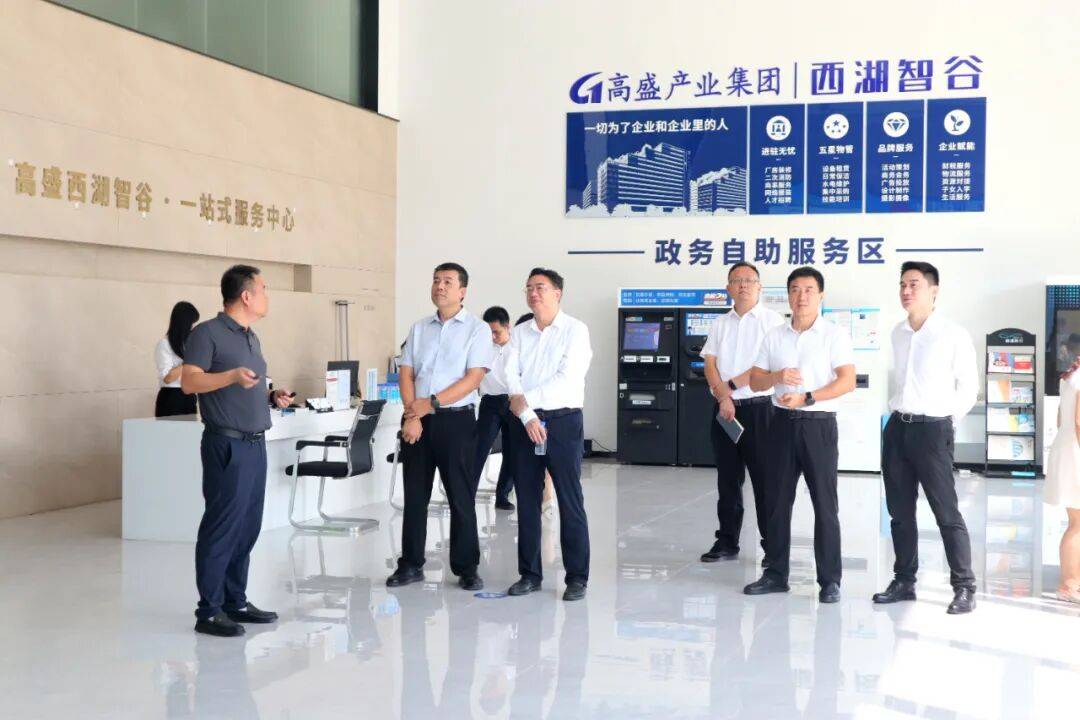
Core Insights - The visit by the inspection team from Nansha Development Zone aimed to strengthen industrial cooperation and promote regional economic development [9] Group 1: Overview of Gaoshen Xihu Zhigu - Gaoshen Xihu Zhigu has successfully attracted 137 registered enterprises, with 65% from Shenzhen, 25% from Dongguan, and 10% from Huizhou, indicating a diverse enterprise source [5] - The park includes 14 large-scale enterprises, 23 national high-tech enterprises, 11 specialized and innovative enterprises, and 1 "little giant" enterprise, covering various sectors such as productive services, electronic information, new energy, biomedicine, and intelligent manufacturing [5] - The park's A Zone has been recognized as Huizhou Software Park, housing 23 software information enterprises, contributing to the local digital economy [5] Group 2: Industrial Development and Services - Gaoshen Xihu Zhigu employs an "8+N" full lifecycle operation service system, providing one-stop solutions for enterprises, including policy guidance, industrial finance, talent recruitment, technology matching, and shared facilities [7] - The park organized a supply-demand matching conference for enterprises, resulting in the release of 2 billion orders to support manufacturing companies [7] - The Huizhou Huicheng High-tech Zone has seen its industrial enterprises increase to 346 and high-tech enterprises to 228, with total industrial output value rising from 25.52 billion yuan in 2021 to 54.34 billion yuan in 2024, marking a growth rate of 112.93% [8] Group 3: Infrastructure and Future Plans - The Huizhou Huicheng High-tech Zone is recognized as a provincial-level high-tech zone and is part of Guangdong's comprehensive big data experimental zone and AI industrial park [8] - The total planned area of the park is 67.7 square kilometers, focusing on new-generation electronic information, intelligent equipment manufacturing, new energy materials, and biomedicine [8] - Recent infrastructure developments include the East River Bay Cultural and Sports Center, a nine-year consistent school, and improved transportation links, enhancing the area's industrial support [9]
“寸土”生“寸金”!苏州“工业上楼”集聚创新动能
Sou Hu Cai Jing· 2025-09-05 15:47
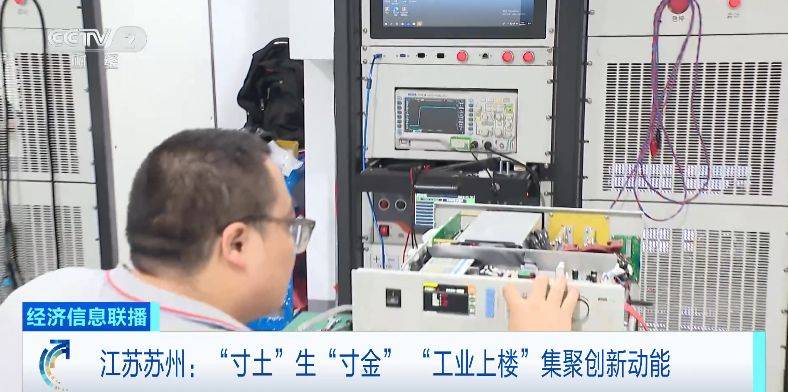
Core Viewpoint - The "Industrial Upward" model effectively addresses urban land scarcity and insufficient industrial development space by consolidating various industrial activities within high-rise buildings, leading to significant breakthroughs in land efficiency, enterprise clustering, and improved economic benefits [1][3]. Group 1: Industrial Upward Model - The "Industrial Upward" initiative in Suzhou's Kexi Industrial Park has successfully attracted over 50 enterprises, achieving an overall occupancy rate exceeding 90% [1]. - The model promotes a collaborative ecosystem where companies are not only spatial neighbors but also industrial partners, facilitating technology sharing and order collaboration [1]. Group 2: Economic Impact - Kexi Industrial Park has seen a 200% increase in land utilization efficiency due to the "Industrial Upward" approach [3]. - The average tax revenue per mu (approximately 0.067 hectares) in the park has surpassed 1 million yuan, significantly exceeding the output efficiency of traditional industrial zones [3]. - Ji Shi Li Electronics, a key tenant, reported sales exceeding 50 million yuan within a 2,000 square meter facility [1].
深圳持续完善土地资源集约利用长效机制 在“有限空间”激发“无限潜能”
Shen Zhen Shang Bao· 2025-08-20 16:57
Core Insights - The establishment of the Tencent headquarters park, known as "Penguin Island," marks a significant milestone in Shenzhen's urban development, showcasing a model for mixed-use land reform that integrates industry and city living [1] - Shenzhen's innovative practices in land resource utilization are being recognized as a replicable model for high-density urban governance across China [1] Group 1: Urban Development and Land Utilization - The Tencent headquarters park has been completed to 30% and will enter trial operation in October, serving as a pilot for mixed-use land reform [1] - Shenzhen has implemented a series of measures to achieve high-quality economic development while optimizing land resource utilization, showcasing ten typical cases of efficient land use [1] - The Baolong Specialized and New Industrial Park integrates industry, commerce, and living spaces, providing a flexible and high-quality industrial space [2] Group 2: Innovative Concepts in Urban Planning - The Honghu Water Quality Purification Plant utilizes a fully underground double-layer structure, achieving a land savings of 81% while maintaining processing efficiency [5] - The Gangksha North Hub integrates multiple transportation lines and commercial spaces into a vertical layout, enhancing connectivity and cultural activities in the area [4] - The Shenye Shangcheng project employs a "vertical city" model to create a multi-functional living space that connects urban green areas and commercial facilities [3] Group 3: Environmental and Community Integration - The Ganquan Road near-zero carbon demonstration community transformed a parking lot into a multifunctional park, utilizing renewable energy technologies [4] - The Yuehai Cultural and Sports Center redefines public building types through high-density spatial organization, providing various community services [5] - The Honghu Water Quality Purification Plant's design integrates ecological park features, enhancing community engagement with environmental sustainability [5]
广东省药监局:药企“上楼”有先例,将继续探索做好为企服务
Nan Fang Du Shi Bao· 2025-08-13 16:10
Core Viewpoint - Shenzhen's pharmaceutical companies are facing challenges with the "upstairs" industrial development model due to regulatory approval standards for production facilities, prompting discussions on how to better support these enterprises [1][5]. Regulatory Standards - The Guangdong Provincial Drug Administration clarified that having an independent factory is not a prerequisite for obtaining a drug production license, except for specific high-risk drugs that require dedicated facilities [2][4]. - Approval is based on the compliance of production management, pollution control, ventilation, and transportation conditions with national standards, rather than the independence of the facility [2][4]. Cost Considerations - Pharmaceutical companies weigh the costs of rent and "upstairs" renovations when deciding on their production locations, considering factors like potential interference with neighbors [3]. - The cost of "renovation" in non-independent facilities can be significantly higher due to the need for additional measures to ensure safety and compliance with regulations [3]. Support for "Upstairs" Enterprises - The regulatory body aims to treat "upstairs" enterprises fairly and will not lower standards for their production facilities compared to independent ones, ensuring compliance with national requirements [4][5]. - The administration is exploring ways to better serve companies that choose the "upstairs" model, focusing on professional guidance and support for innovative products [5].
药企“上楼”有先例 将探索做好服务
Nan Fang Du Shi Bao· 2025-08-12 23:10
Core Viewpoint - The article discusses the challenges faced by Shenzhen's biopharmaceutical companies in obtaining production licenses when transitioning to multi-story industrial buildings, highlighting the regulatory standards and considerations involved in the approval process [5][6][9]. Approval Standards - The Guangdong Provincial Drug Administration clarified that having an independent factory is not a universal requirement for obtaining a drug production license, except for specific high-risk drugs that necessitate dedicated facilities [6]. - The approval process focuses on whether the production environment meets national standards, including management, pollution control, ventilation, and transportation conditions, rather than the independence of the factory [6][8]. Cost Considerations - Pharmaceutical companies weigh the costs of rent against the expenses associated with adapting to multi-story buildings, considering factors such as potential interference with neighbors and the associated renovation costs [7]. - The article notes that while independent buildings may have higher rent, the renovation costs for non-independent facilities can be significantly higher due to the need for enhanced safety measures [7]. Regulatory Approach - The Provincial Drug Administration aims to treat companies fairly, ensuring that those in multi-story buildings are held to the same standards as those in independent facilities, provided they meet the necessary regulatory requirements [8][9]. - The administration is open to exploring ways to better support companies that choose to transition to multi-story buildings while maintaining strict adherence to national standards [9].