市场出清

Search documents
科顺股份(300737):毛利率同比改善 现金流持续优化
Xin Lang Cai Jing· 2025-11-01 10:47
Core Viewpoint - The company reported a decline in revenue and net profit for the first three quarters of 2025, with revenue at 4.7 billion yuan, down 8.4% year-on-year, and net profit at 20 million yuan, down 84.1% year-on-year [1] Group 1: Financial Performance - Revenue for the third quarter was 1.48 billion yuan, a decrease of 10.9% compared to the same period last year, with a net profit of -30 million yuan, down from 30 million yuan in the previous year [1] - The decline in revenue is attributed to a reduction in domestic engineering construction projects and slower project progress, leading to decreased demand in the waterproof market [2] - The net profit decline exceeded the revenue decline due to increased credit impairment provisions and reduced other income and non-operating income [2] Group 2: Margin and Cost Management - The gross profit margin improved to 24.3% in the first three quarters, up from 23.0% in the same period last year, driven by an optimized revenue structure and growth in high-margin overseas and retail businesses [2] - The company has reduced financial expenses from 70 million yuan in the previous year to 40 million yuan, and sales expenses also saw a slight decline [2] Group 3: Cash Flow and Receivables - Operating cash flow showed significant improvement, with a net cash flow from operating activities of -820 million yuan, better than -1.5 billion yuan in the previous year, due to enhanced collection of receivables and optimized supplier payment methods [2] - Accounts receivable at the end of the period stood at 4.07 billion yuan, down from 4.73 billion yuan in the previous year [2] Group 4: Investment Outlook - The company has adjusted its profit forecasts for 2025-2027, expecting net profits of 50 million yuan, 230 million yuan, and 370 million yuan respectively, down from previous estimates [3] - Despite the downward revision, macro-level support policies for real estate and infrastructure are expected to boost industry confidence, and the waterproof industry is closely linked to new real estate projects [3] - As a leading player in the waterproof sector, the company maintains advantages in brand, channel, and customer resources, and is expected to stabilize its scale during the industry downturn [3]
一大批奶茶店,正陷入倒闭风波
Hu Xiu· 2025-09-19 07:29
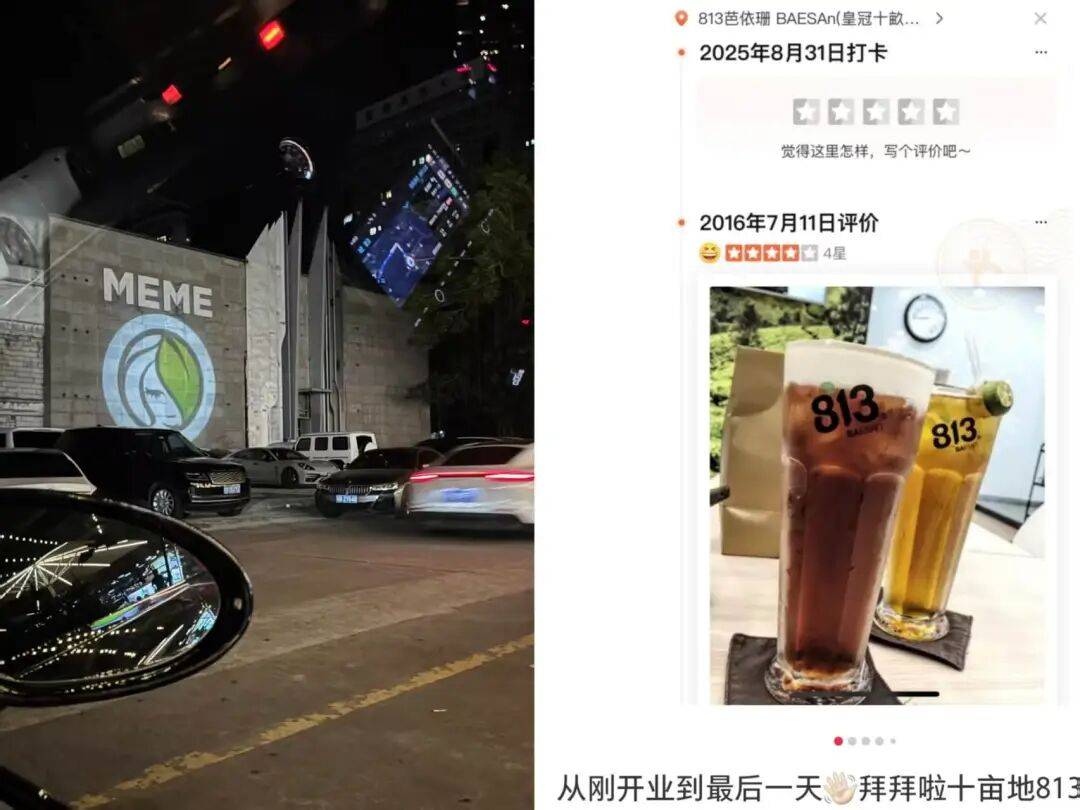
Core Viewpoint - The recent wave of closures among both established and emerging bubble tea brands indicates a significant market reshaping, transitioning from quantity-driven expansion to a focus on quality and operational efficiency [1][18][31]. Group 1: Brand Closures - Numerous bubble tea brands, including the newly popular PinkShake and the long-standing 813 Baishan, have recently closed stores, with PinkShake shutting down all locations just over a year after opening [2][3][4]. - Seven Bus, once a leading brand in Xiamen, has seen its store count plummet from over 400 to fewer than 20, highlighting the rapid decline of even previously successful brands [9]. - OONE CCUP also announced the closure of its Ningbo store just a year after opening, reflecting a broader trend of closures across the industry [10]. Group 2: Market Trends - The bubble tea industry is experiencing a significant contraction, with 15.7 million stores disappearing in the past year, marking the highest closure rate in the sector [17]. - As of mid-2025, the total number of bubble tea stores across 26 major brands has only increased by 858, indicating a stagnation in growth [16]. - The market is shifting from a growth phase to a consolidation phase, with many mid-tier brands facing closure while top brands continue to expand [11][15]. Group 3: Financial Performance - Nayuki Tea reported a revenue of 2.178 billion yuan in the first half of 2025, a 14.4% decrease year-on-year, primarily due to the closure of underperforming stores [13]. - The company closed 160 stores in the first half of 2025, including 132 direct-operated and 28 franchise locations, as part of its restructuring efforts [14]. Group 4: Competitive Landscape - The competitive landscape is increasingly defined by quality and operational efficiency rather than mere expansion, with brands needing to focus on supply chain management and product differentiation to survive [31][32]. - The market is witnessing a shift towards "survival of the fittest," where only brands that can adapt to changing consumer preferences and maintain quality will thrive [18][21].

房地产反洗钱新政落地在即,倒逼银行强化资金链审查
第一财经· 2025-08-29 15:28
Core Viewpoint - The article discusses the comprehensive upgrade of anti-money laundering (AML) regulations in the real estate industry, with the introduction of the "Management Measures for Anti-Money Laundering Work of Real Estate Practitioners" by the Ministry of Housing and Urban-Rural Development and the People's Bank of China, marking the formal inclusion of real estate developers and intermediaries into the national AML regulatory framework [3][5]. Summary by Sections Short-term Compliance Costs Increase, Long-term Market Clearing Acceleration - Real estate practitioners are required to strictly implement customer identity verification and report suspicious transactions, which may lead to increased compliance costs for companies in the short term [4][6]. - The new regulations are expected to extend transaction cycles and potentially result in the loss of sensitive customers for some firms [5][6]. Long-term Market Regulation and Risk Control - The new rules are anticipated to accelerate market clearing by enforcing stricter customer identity verification, effectively blocking illegal money laundering activities through real estate transactions [6][10]. - A more comprehensive customer identity database will be established, aiding in transaction monitoring and risk assessment [6]. Financial Institutions Under Pressure - The upgrade in AML regulations will also impact financial institutions closely associated with the real estate sector, increasing their risk control pressures [7][8]. - Banks will need to enhance monitoring of real estate transactions and customer funding sources, particularly for development loans and mortgage loans [7][8]. Challenges in Implementation - The implementation of the new regulations faces challenges, including information barriers among multiple parties involved in real estate transactions, which may weaken regulatory effectiveness [10]. - There is a risk of investors shifting to alternative channels such as commercial real estate to evade regulations, and new evasion tactics are emerging [10]. Anticipated Local Government Responses - Following the implementation of the new measures, local governments are expected to introduce supporting details, with major cities like Beijing and Shanghai likely to lead in developing more operationally feasible implementation plans [11].

薛涛:环保行业不是“内卷”,而是出清和优胜劣汰
经济观察报· 2025-08-09 11:11
Core Viewpoint - The current situation in the environmental protection industry should be defined as market clearing or survival of the fittest, rather than "involution" [1][5]. Group 1: Market Dynamics - The environmental protection industry is not experiencing traditional overproduction issues, as it primarily operates in a customized field where most products are tailored to specific projects [3][4]. - The decline in market demand is attributed to the peak of environmental governance intensity having passed, particularly affecting municipal infrastructure and industrial pollution control sectors [3][6]. - The industry is entering a natural clearing phase due to reduced demand and financial pressures on local governments, leading to a situation where supply exceeds demand [6][10]. Group 2: Policy Implications - The recent "anti-involution" measures proposed by the government are expected to extend to other industries, prompting environmental companies to prepare accordingly [2][4]. - The environmental protection sector is not included in the ten key industries mentioned by the Ministry of Industry and Information Technology, but the implications of these policies will still affect it [2][4]. Group 3: Industry Structure - The environmental protection industry lacks a high concentration of leading firms, and regional market segmentation persists, preventing the formation of a monopolistic market structure [4][9]. - The industry is characterized by a reliance on external funding, as it is a public service sector that cannot achieve self-financing [6][10]. Group 4: Future Trends - Despite challenges, new companies continue to enter the environmental sector, including major state-owned enterprises that leverage their advantages to secure contracts [10][11]. - The presence of large state-owned construction companies in the environmental sector may disrupt existing operational norms, as they focus on the construction aspect of projects while outsourcing technical services [11].

薛涛:环保行业不是“内卷”,而是出清和优胜劣汰
Jing Ji Guan Cha Wang· 2025-08-09 10:24
Core Viewpoint - The central government is promoting measures to combat "involution" in various industries, including the environmental sector, which is expected to undergo a market clearing process rather than traditional overcapacity issues [2][3][4] Industry Overview - The environmental industry is characterized by customized solutions, which means it does not face the same overproduction issues as other manufacturing sectors [3][4] - The current challenges in the environmental sector stem from a decline in market demand, particularly in municipal infrastructure, rather than excessive production capacity [4][7] Market Dynamics - The environmental sector's "involution" is more accurately described as market clearing, driven by changes in environmental governance intensity and a decrease in market scale [4][5] - The industry is experiencing a natural selection process due to reduced demand and financial pressures on local governments, leading to a decline in environmental investments [8][9] Competitive Landscape - The environmental industry lacks a high concentration of leading firms, with regional market fragmentation still prevalent, preventing the formation of monopolistic structures [6][12] - New entrants, including large state-owned enterprises, are entering the environmental sector, leveraging their construction expertise and financial capabilities [13][14] Future Outlook - The potential for a Chinese equivalent of global leaders like Veolia is limited, as domestic firms face challenges in achieving the same level of operational and technical integration across various environmental services [10][11] - The future of the environmental industry will likely favor companies with core competitive advantages rather than those relying solely on scale expansion [14]

市场出清是经济的必经之役
第一财经· 2025-07-29 00:42
Core Viewpoint - The article highlights signs of economic stabilization in China, particularly in the industrial sector, with a notable improvement in manufacturing profits despite a year-on-year decline in overall industrial profits [1][2]. Group 1: Economic Indicators - In the first half of the year, profits of large industrial enterprises decreased by 1.8% year-on-year, while June saw a 4.3% decline, which is a 4.8 percentage point narrowing from May [1]. - Manufacturing profits shifted from a 4.1% decline in May to a 1.4% increase in June, indicating a significant marginal improvement [1]. - The revenue of large industrial enterprises grew by 2.5% year-on-year, but operating costs increased by 2.8%, leading to a decrease in profit margins [2]. Group 2: Financial and Fiscal Support - There is a need for enhanced financial support for real enterprises, with a focus on medium to long-term funding to prevent intermittent cash flow shocks [2][3]. - Fiscal measures should include increasing the frequency of tax refunds to alleviate the cash flow pressures faced by enterprises, particularly in light of rising accounts receivable and inventory levels [3]. - A structural tax reform is necessary to shift from indirect to direct taxes, which could help mitigate liquidity constraints on businesses [3]. Group 3: Market Dynamics and Competition - The core issue facing enterprises is insufficient effective demand, necessitating a direct change in the demand elasticity of various products and services [4]. - Promoting market competition and allowing inefficient capacities to exit the market is essential for enhancing the risk-bearing capacity of industries and stimulating potential market demand [4]. - The government should prepare for the elimination of outdated capacities by providing a supportive legal and institutional environment for bankruptcy and restructuring processes [5].

一财社论:市场出清是经济的必经之役
Di Yi Cai Jing· 2025-07-28 12:21
Group 1 - The core viewpoint emphasizes the importance of a competitive exit mechanism in the market, which can rejuvenate enterprises and allow market entities to realize their value [1][5] - In June, the profits of industrial enterprises showed signs of stabilization, with a total profit decline of 1.8% year-on-year for the first half of the year, and a 4.3% decline in June, which is an improvement compared to May [2] - The manufacturing sector showed notable improvement, with profits shifting from a 4.1% decline in May to a 1.4% increase in June, indicating a significant marginal improvement [2] Group 2 - The data indicates that while the revenue of industrial enterprises grew by 2.5% year-on-year, operating costs increased by 2.8%, leading to a decrease in operating profit margin by 0.22 percentage points [2] - The increase in accounts receivable by 7.8% and finished goods inventory by 3.1% suggests that enterprises are facing challenges of increased production without corresponding revenue growth, intensifying cash flow pressures [3] - The government is urged to provide medium to long-term financial support to real enterprises to avoid intermittent shocks, alongside enhancing fiscal support [3] Group 3 - To improve the uncertain economic environment for enterprises, it is essential to promote market clearing on the supply side, allowing inefficient capacities to exit the market [4] - The government should prepare for the elimination of backward production capacities by providing a supportive legal and institutional environment for bankruptcy and restructuring [4] - A competitive market environment is necessary to enhance risk-bearing capacity and stimulate potential market demand, which requires recognizing and encouraging normal market competition [4]
野村陆挺详解房地产:出清是关键!以保交房为主的市场出清方式是最合理的
聪明投资者· 2025-03-06 16:52
Core Viewpoint - The real estate market in China has experienced a significant downturn since its peak in 2021, with official statistics indicating a decline of approximately 15%, while some commercial estimates suggest a drop of 25-30% [1][22][23]. This decline not only represents a loss of wealth but also a decrease in liquidity. Group 1: Market Dynamics - The adjustment in the real estate sector is influenced by various factors, including the geopolitical context of the US-China rivalry, which has led to a shift in resource allocation from real estate to high-tech industries [3][6][7]. - The introduction of the "three red lines" and "two red lines" policies aimed to regulate real estate financing, contributing to the industry's downturn [5][6]. - The pre-sale system in China has created a unique market dynamic where a significant portion of financing comes from homebuyers, leading to a complex debt structure for developers [18][19][20]. Group 2: Economic Impact - The real estate sector's decline has resulted in a substantial reduction in household wealth, with real estate accounting for 50-60% of family assets, and an estimated wealth of 300 trillion yuan at the peak in 2021 [22][23]. - The downturn has severely impacted upstream and downstream industries, particularly construction and related services, leading to significant job losses [25][26][27]. - Local government finances have also been adversely affected, with land sale revenues dropping by approximately 80% in some areas, significantly impacting overall fiscal health [28][30][31]. Group 3: Policy Recommendations - There is a growing consensus on the importance of stabilizing the real estate market, with a focus on ensuring housing delivery and removing unnecessary restrictions [34][35][36]. - Restoring consumer confidence is critical, as many buyers are hesitant to purchase homes due to concerns about timely delivery and quality [37][39][40]. - The concept of "保交房" (ensuring housing delivery) is seen as essential for market clearing, as it addresses the underlying debt issues faced by developers [41][45][57]. Group 4: Future Outlook - The recovery of the real estate market by 2025 hinges on effective policy measures and restoring confidence among consumers and developers [33][38][40]. - The current market situation is characterized by a mismatch between supply and demand, with many homes sold but not yet completed, complicating the recovery process [48][49]. - A strategic approach to managing distressed developers, including potential government intervention, is necessary to stabilize the market and restore trust [64][71][72].