烧仙草

Search documents
9天超长假期点燃“茶饮春节档”,双引擎驱动市场开门红
Guang Zhou Ri Bao· 2026-02-27 13:03
Core Viewpoint - The 2026 Spring Festival, known for its "longest" 9-day holiday, significantly boosted the ready-to-drink tea industry, driven by the "holiday economy" and "return home economy" [1] Group 1: Sales Performance - Tea beverage sales surged in tourist areas, with cities like Chongqing, Chengdu, Shanghai, Beijing, and Hangzhou leading the national sales [3] - Some lesser-known destinations experienced explosive growth, with sales in certain scenic spots increasing by up to 4500% [3] - A specific store in Guangxi's Jingxi city saw daily sales rise from over 1,000 cups to more than 3,200 cups during the holiday, attracting many Vietnamese tourists [3] Group 2: Market Trends - The "return home economy" is emerging as a new driver for Spring Festival consumption, with urban consumption habits being brought back to hometowns [5] - In Guangdong, a store's sales on the first day of the new year increased by 565.30% compared to regular days, with overall sales in the region up nearly 15% year-on-year [5] - The peak sales day on the sixth day of the new year reached over 2 million yuan, indicating a strong demand for tea beverages during the holiday [5] Group 3: Consumer Behavior - The trend of "00s" becoming the main consumers during the Spring Festival has led to tea beverages being included in family reunion meals, with group orders of five or more cups increasing to 1.5 times the usual [6] - Classic tea flavors remain popular, while refreshing fruit tea products performed well due to warmer weather in Guangdong during the holiday [6] - New product launches, such as the "Qilan Pink Guava," have also contributed to the differentiation strategy of brands like Heytea, becoming popular among consumers [6]
新茶饮一年消失15.7万家,品类选错了?
3 6 Ke· 2026-01-09 12:39
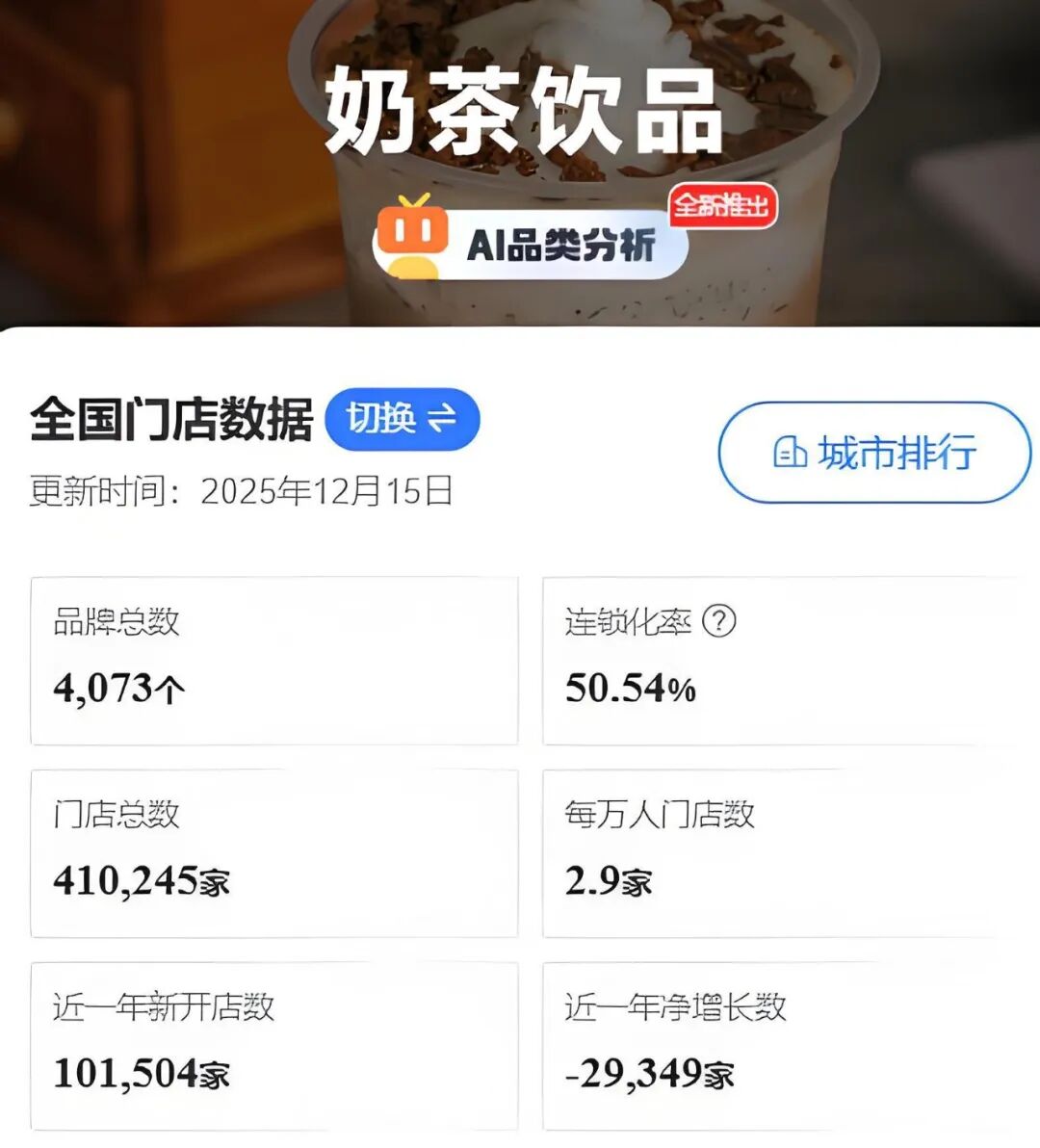
Core Insights - The new tea beverage sector in China has seen significant growth, with major brands like Mixue Ice City, Gu Ming, and others successfully going public, leading to the emergence of the "New Tea Beverage Six Dragons" [1][10] - The total number of tea beverage stores in China has surpassed 400,000, but the industry is experiencing a rapid "survival of the fittest" phase, with 157,000 stores closing in the past year [1][3] Industry Overview - The new tea beverage industry is characterized by a high chain rate of 50.54%, with a total of 410,245 stores and a net decrease of 29,349 stores in the past year [3] - The development of the tea beverage sector has evolved from low-cost, low-quality products in the 1980s to a focus on high-quality tea and innovative flavors in recent years [4][7] Brand Development - Major brands have adopted different strategies, with some focusing on single-hit products while others diversify their offerings [9][10] - The "single-hit" strategy has allowed brands like Shuyi Burned Fairy Grass to optimize their product development and operational efficiency, but it also poses risks if consumer preferences shift [11][13] Product Innovation - The introduction of unique products like cheese milk cap tea has revolutionized the market, leading to a focus on high-quality tea bases and innovative flavor combinations [5][7] - Brands are increasingly exploring the use of fresh fruits and unique ingredients to differentiate their products, although this also complicates supply chain management [8][17] Market Challenges - The rapid expansion of the new tea beverage market has led to intense competition and a high rate of store closures, indicating a need for brands to innovate continuously [1][13] - Supply chain complexities are increasing as brands strive to maintain quality and manage costs, with some companies investing in their own ingredient sourcing [17][18]

超1.7万家实体店,倒在2025上半年
Sou Hu Cai Jing· 2025-10-11 03:27
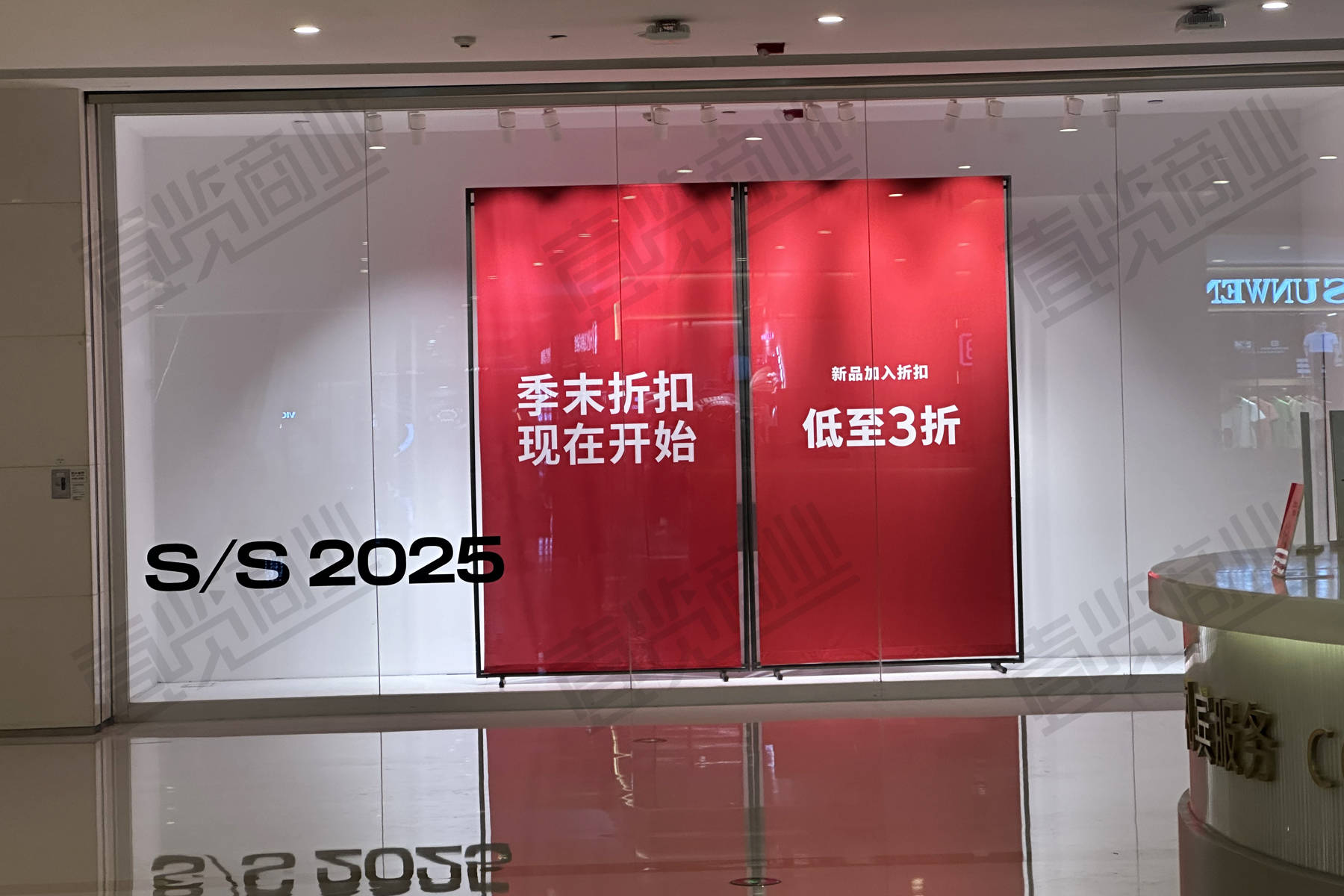
Retail Industry Overview - The total retail sales of consumer goods in China reached 24.55 trillion yuan in the first half of the year, with a year-on-year growth of 5.0%, slightly up from 3.7% in the same period last year [2] - Online retail sales amounted to 7.43 trillion yuan, growing by 8.5%, while offline retail sales were 17.12 trillion yuan, with a growth of 3.75%, indicating a shift in consumer shopping habits towards online platforms [2][5] Store Closures - In the first half of 2025, at least 1.71 million stores closed across various sectors, including major brands like Walmart, Starbucks, and Haidilao [2] - The supermarket sector saw at least 720 store closures, including national and regional brands such as Yonghui Supermarket and Hema [3][4] - The restaurant industry faced nearly 10,000 closures, while the apparel sector saw around 4,500 stores shut down [2][6] Supermarket Sector Challenges - Traditional supermarkets are experiencing accelerated closures due to increased competition from e-commerce and the rise of instant retail, which has grown from 36.6 billion yuan in 2017 to 650 billion yuan in 2023 [6] - Many supermarkets are closing underperforming stores and focusing on online business to adapt to changing consumer preferences [6][7] Department Store and Shopping Center Decline - The department store sector reported a year-on-year growth of only 1.2%, with at least 23 department stores and shopping centers closing in the first half of 2025 [8][9] - The decline is attributed to outdated business models and a lack of unique product offerings, leading to decreased foot traffic [11][12] Tea and Coffee Shop Closures - The tea and coffee sectors saw significant closures, with at least 6,673 tea and coffee shops shutting down in the first half of 2025 [13] - Brands like Heytea and Nayuki faced substantial store reductions, reflecting a market consolidation where only strong brands survive [15][20] Apparel Industry Adjustments - The apparel sector experienced a 3.1% year-on-year growth, with at least 4,563 clothing stores closing, including major brands like Semir and GU [21][24] - The closures are driven by high inventory levels, brand aging, and a shift towards larger store formats, which require higher operational efficiency [24][25][27] Cinema Industry Struggles - The cinema industry is facing a crisis, with a high vacancy rate of 30-40% and at least 38 cinemas closing in the first half of 2025 [28][30] - Factors contributing to this decline include high fixed costs, reliance on blockbuster films, and competition from streaming services [30][31][32] Other Industries - Various other sectors, including pet care, home improvement, and education, also experienced closures, indicating a broader trend of market contraction [34]



一大批奶茶店,正陷入倒闭风波
Hu Xiu· 2025-09-19 07:29
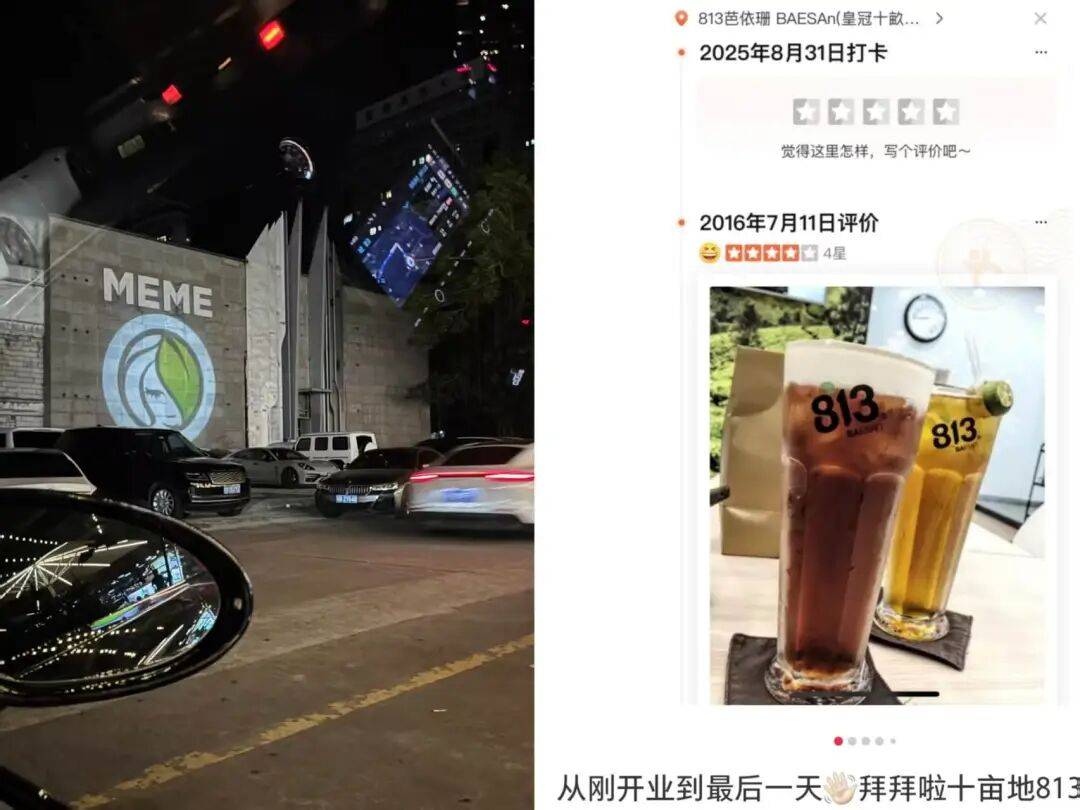
Core Viewpoint - The recent wave of closures among both established and emerging bubble tea brands indicates a significant market reshaping, transitioning from quantity-driven expansion to a focus on quality and operational efficiency [1][18][31]. Group 1: Brand Closures - Numerous bubble tea brands, including the newly popular PinkShake and the long-standing 813 Baishan, have recently closed stores, with PinkShake shutting down all locations just over a year after opening [2][3][4]. - Seven Bus, once a leading brand in Xiamen, has seen its store count plummet from over 400 to fewer than 20, highlighting the rapid decline of even previously successful brands [9]. - OONE CCUP also announced the closure of its Ningbo store just a year after opening, reflecting a broader trend of closures across the industry [10]. Group 2: Market Trends - The bubble tea industry is experiencing a significant contraction, with 15.7 million stores disappearing in the past year, marking the highest closure rate in the sector [17]. - As of mid-2025, the total number of bubble tea stores across 26 major brands has only increased by 858, indicating a stagnation in growth [16]. - The market is shifting from a growth phase to a consolidation phase, with many mid-tier brands facing closure while top brands continue to expand [11][15]. Group 3: Financial Performance - Nayuki Tea reported a revenue of 2.178 billion yuan in the first half of 2025, a 14.4% decrease year-on-year, primarily due to the closure of underperforming stores [13]. - The company closed 160 stores in the first half of 2025, including 132 direct-operated and 28 franchise locations, as part of its restructuring efforts [14]. Group 4: Competitive Landscape - The competitive landscape is increasingly defined by quality and operational efficiency rather than mere expansion, with brands needing to focus on supply chain management and product differentiation to survive [31][32]. - The market is witnessing a shift towards "survival of the fittest," where only brands that can adapt to changing consumer preferences and maintain quality will thrive [18][21].
《中国独角兽排行榜2025》出炉 书亦烧仙草实力上榜
Cai Fu Zai Xian· 2025-06-06 05:07
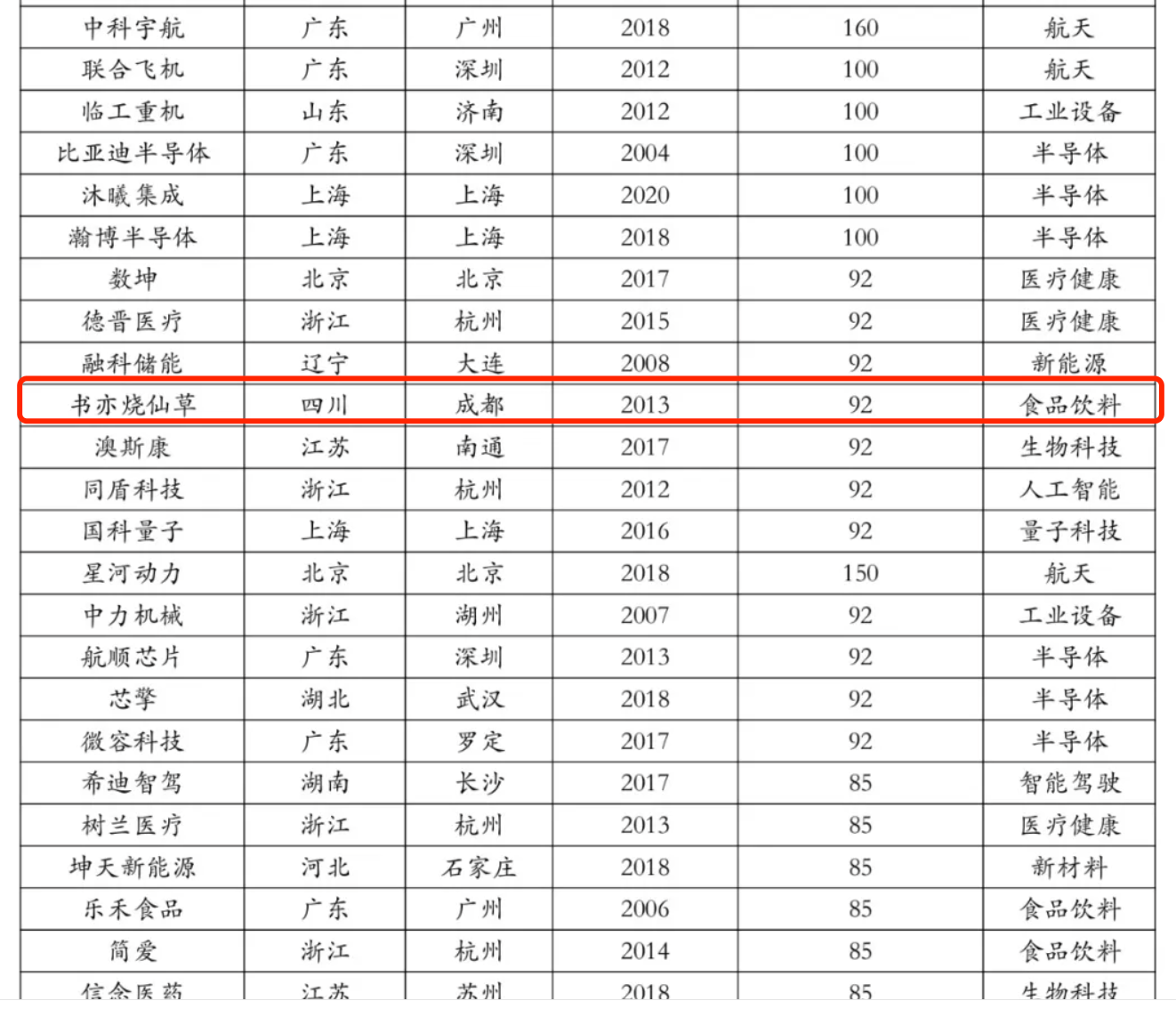
Core Insights - The "China Unicorn List 2025" has been released, showing that the total valuation of Chinese unicorn companies reaches 8.46 trillion yuan, with six companies from Chengdu listed, including Shuyi Burnt Grass [1] Company Overview - Shuyi Burnt Grass, a representative of the new tea beverage industry, is recognized for its innovative business model and product offerings, reflecting the market's optimism towards the new tea beverage sector [1][5] - The company has expanded from its first store in 2007 to over 5,200 stores in 18 years, focusing on a big product category and optimizing its product structure [2] Market Potential - The Chinese ready-to-drink tea market is expected to exceed 368.9 billion yuan by 2025, driven by consumption upgrades and digital empowerment [1] - Shuyi Burnt Grass has established over 30 cooperative planting bases and a nationwide logistics system, ensuring a standardized and traceable supply chain management [3] Product Innovation - The company has launched various health-oriented products, including the "White Moonlight Fruit Tea" series and "Golden Orange Lemonade," which have received positive feedback on social media [3] - Recent product launches, such as the "Orange Mountain Tea Flower" and "Yangmei" series, have achieved significant sales, with the former selling 1 million cups in 40 hours [3] Recognition and Future Outlook - Being listed as a unicorn is a recognition of Shuyi Burnt Grass's 18 years of industry dedication and its future growth potential [5] - The company's success is attributed to the synergy of product strength, supply chain management, and brand development, positioning it for continued innovation in the beverage market [5]
传统甜品遭新茶饮夹击,30岁满记甜品再出发
3 6 Ke· 2025-04-29 02:11
Core Insights - The article discusses the 30th anniversary of the Hong Kong dessert brand, 满记甜品 (Mango Dessert), highlighting its recovery from a challenging period and its plans for future growth [1][3]. Financial Performance - In 2024, the traditional store business achieved a total net income of 478 million yuan, a year-on-year increase of 5%, with a corresponding GMV of 635 million yuan, up 14% [1]. - The number of offline stores grew from 193 at the end of 2023 to 243 by the end of 2024, representing a 27% increase [1]. - The new retail business generated a GMV of 240 million yuan and a net income of 99 million yuan, marking a significant year-on-year growth of 395% [3]. Strategic Goals - The CMO of 满记甜品, Duncan, stated that the company aims to focus on consumer satisfaction over the next 3 to 5 years, with plans to expand to 500 direct stores and achieve 1 billion yuan in net revenue from both direct and retail businesses [3]. - The company also plans to have over 2,000 franchise stores, targeting 1 billion yuan in franchise revenue while continuing to penetrate lower-tier markets [3]. Historical Context - 满记甜品 was founded in 1995 and quickly gained popularity in mainland China, reaching a peak of over 500 stores and 1 billion yuan in overall performance by 2018 [4][6]. - The brand's initial success was attributed to its unique hand-crafted fruit desserts, which differentiated it from competitors [4][6]. Market Challenges - The dessert market has become increasingly competitive, with brands like 许留山 and 鲜芋仙 also facing declines due to the rise of tea and coffee brands [11][12]. - The shift in consumer preferences towards convenience and takeaway options has posed challenges for traditional dessert brands, which historically focused on dine-in experiences [12][13]. Recent Developments - Following a period of negative publicity and store closures, 满记甜品 secured new strategic investments to enhance its new retail business and franchise operations [18][20]. - The company has initiated a comprehensive transformation, including management changes, product innovation, and a focus on takeaway and delivery services [20][21][22]. Future Outlook - The dessert market in China is projected to grow from 1,120 billion yuan in 2019 to 1,715 billion yuan in 2024, with tea-infused desserts capturing a significant market share [28][31]. - 满记甜品 is adapting its product offerings to include portable options and expanding into new retail channels, aiming to regain market share and appeal to younger consumers [32].