微塑料

Search documents
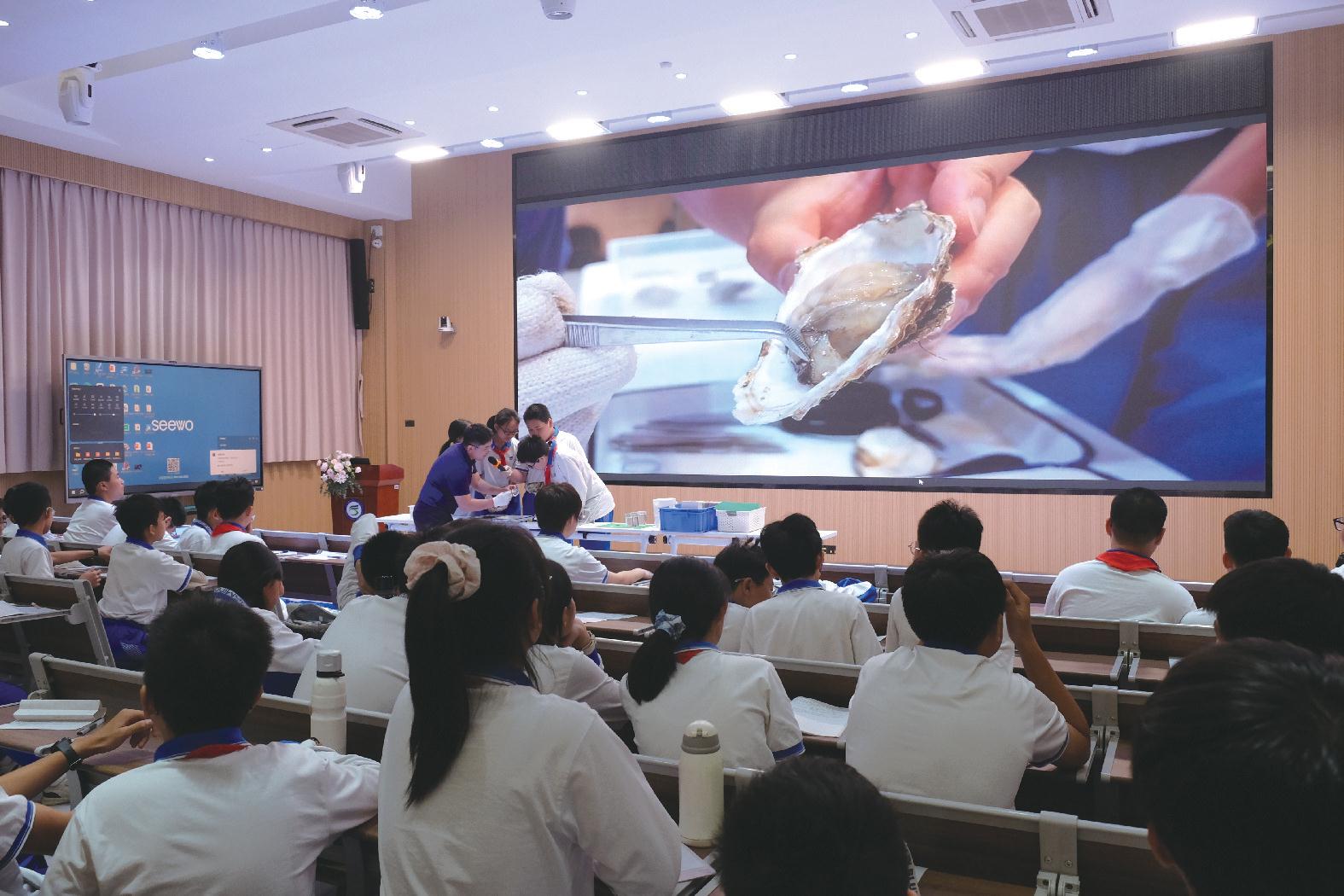
探秘微塑料 科普进校园
Zhong Guo Zi Ran Zi Yuan Bao· 2025-11-28 06:14
Group 1 - The event was organized by the South China Sea Islands Center of the Ministry of Natural Resources, focusing on the impact of microplastics on oysters [3] - The interactive science class aimed to educate students about the journey of microplastics from the ocean to the dinner table, highlighting the unique feeding habits of oysters [3] - Students participated in hands-on activities, including dissecting oysters to observe their anatomical structures and search for traces of microplastics, which sparked their interest in scientific exploration [3]

首批人体样本研究揭示:微塑料会改变肠道微生物群
Ke Ji Ri Bao· 2025-10-10 11:36
Core Insights - A recent study presented at UEG Week 2025 indicates that microplastics alter the human gut microbiome, with changes resembling patterns associated with depression and colorectal cancer [1][2] - This research is among the first to directly examine how different types of microplastics interact with the human gut microbiome [1] Summary by Sections Study Methodology - The study utilized fecal samples from five healthy volunteers for in vitro gut microbiome cultivation, exposing these cultures to five common types of microplastics: polystyrene, polypropylene, low-density polyethylene, polymethyl methacrylate, and polyethylene terephthalate [1] - Concentrations of microplastics reflected estimated human exposure levels, with higher doses used to investigate potential dose-dependent effects [1] Findings on Bacterial Composition - While total bacterial cell counts and viable bacterial cell counts remained largely unchanged, the acidity of the microplastic-treated cultures significantly increased compared to the control group, indicating altered microbial metabolic activity [1] - Specific changes in bacterial composition were observed, with certain bacterial populations increasing or decreasing depending on the type of microplastic, particularly within the phylum Firmicutes, which is crucial for digestion and overall gut health [1] Chemical Changes and Disease Implications - Changes in the chemical substances produced by bacteria accompanied the shifts in bacterial composition, with some correlating with the observed increase in acidity [2] - Certain types of microplastics altered levels of pentanoic acid and 5-aminopentanoic acid, while others affected lysine or lactic acid, highlighting the complexity of microplastic-microbiome interactions [2] - Notably, some of the microbially induced changes reflect patterns previously associated with diseases such as depression and colorectal cancer, underscoring the potential health risks linked to microplastic exposure [2]
真正的零卡食物诞生了,饱腹感强又减肥,你听说过,但没人敢吃……
3 6 Ke· 2025-09-28 00:38
Core Viewpoint - Scientists claim to have discovered a truly zero-calorie food that differs from current market offerings labeled as zero sugar or zero calorie, which are often misleading [1][3]. Group 1: Food Characteristics - The food in question is polytetrafluoroethylene (PTFE), commonly known as Teflon, which is used as a non-stick coating for cookware [3][5]. - PTFE is characterized as a highly stable material that is resistant to corrosion, temperature extremes, and does not easily adhere to other substances, making it one of the most inert materials known [5][7]. Group 2: Scientific Research and Experiments - Historical experiments from the 1960s demonstrated that PTFE could be safely ingested without being absorbed or metabolized by the body, as shown in studies where rats were fed a high concentration of PTFE for 90 days without adverse effects [7][12]. - The researchers propose mixing food with PTFE particles in a 3:1 ratio to create a sensation of fullness without calorie intake, suggesting that this could theoretically aid in weight loss [12]. Group 3: Safety and Health Concerns - While PTFE itself is considered non-toxic, concerns arise from the potential presence of harmful substances like perfluorooctanoic acid (PFOA) used in its production, which has been linked to various health issues [16][18]. - The stability of PTFE is compromised at high temperatures, which can lead to the release of harmful substances, emphasizing the need for proper cooking practices to avoid overheating non-stick cookware [15][18].


请回答「Knock Knock 世界」NO. 2508010
声动活泼· 2025-08-10 03:32
Core Viewpoint - The article discusses the increasing frequency of extreme weather events and the impact of global warming, highlighting the need for awareness and understanding of these changes [5]. Group 1: Global Warming and Extreme Weather - The article mentions that this summer has been particularly remarkable, with extreme weather-related topics being frequently submitted for discussion [5]. - A special feature on global warming is planned, divided into three parts, with the first part focusing on the reasons behind the increased frequency of extreme weather [5]. Group 2: Youth Engagement and Curiosity - The article encourages young readers to engage with various topics, such as the significance of modern zoos, the planning of hiking routes, and the concept of flagship stores [6][7]. - It highlights the curiosity of youth regarding societal issues, such as declining birth rates and the implications of AI on future job markets [9][10][8]. Group 3: Podcast Promotion - The article promotes the podcast "Knock Knock World," which is a collaboration between "Sound Alive" and "One Tenth," aimed at unlocking global perspectives for youth [11]. - The podcast is scheduled to update every Monday, Wednesday, and Friday at 6:00 AM, with the first season running from March 25, 2025, to March 24, 2026, priced at 365 yuan [11][14].

黄荷凤院士团队揭示不粘锅涂层微塑料影响男性生育能力的机制,并开发出治疗方法
生物世界· 2025-08-01 08:00
Core Viewpoint - The widespread presence of microplastics, particularly Polytetrafluoroethylene (PTFE), poses significant risks to male reproductive health, as evidenced by a decline in sperm quality linked to PTFE exposure [2][3][5][7]. Group 1: Microplastics and Human Health - Microplastics, defined as plastic particles smaller than 5mm, are pervasive environmental pollutants that humans inevitably ingest through food, air, and skin contact, with an estimated weekly intake of 0.1-5 grams [2]. - Studies have detected microplastics in various human tissues, including feces, lungs, blood, placenta, and breast milk, indicating widespread contamination [2]. Group 2: Research Findings on PTFE - A study published in eBioMedicine found that microplastics, particularly PTFE, are commonly present in male semen and urine samples across different regions in China, correlating with significant declines in sperm quality [2][3]. - The detection rate of PTFE microplastics in the male urogenital system is as high as 46.62%, with accumulation effects observed as age increases, further linking it to decreased sperm quality [5]. Group 3: Mechanisms of Impact - PTFE exposure has been shown to delay the development of spermatogonia and spermatocytes, disrupt chromosome pairing, and promote apoptosis in spermatocytes, leading to impaired sperm function [5][7]. - The specific targeting of the SKAP2 protein by PTFE exposure results in damaged sperm cytoskeleton, abnormal sperm morphology, and reduced sperm motility [5][7]. Group 4: Therapeutic Approaches - The research team developed a targeted therapeutic approach using milk extracellular vesicles rich in SKAP2 (mEV-SKAP2), which can restore sperm cytoskeleton and morphology, thereby improving sperm motility and male fertility [3][5][7]. - This study highlights the potential of SKAP2-based extracellular vesicle therapy as a promising strategy for addressing sperm quality decline due to PTFE exposure, with significant implications for clinical treatment of male infertility [7].

ACS Nano:浙江大学研究发现,人类卵泡液和精浆中存在纳米塑料,影响受精能力和精子质量
生物世界· 2025-07-29 08:01
Core Viewpoint - The article discusses the increasing global plastic consumption and its environmental impact, particularly focusing on microplastics and nanoplastics, which pose potential biological risks to human health [2][3][6]. Group 1: Plastic Consumption and Environmental Impact - In 2022, global plastic production was approximately 390 million tons, with only about 9% being recycled, leading to significant accumulation of microplastics and nanoplastics (MNP) [3]. - An individual may be exposed to between 74,000 and 121,000 MNP particles annually, with these particles detected in various human tissues, including kidneys, liver, lungs, and spleen [3]. Group 2: Research Findings on Reproductive Health - A study published by researchers from Zhejiang University found polyethylene (PE) and polyvinyl chloride (PVC) nanoplastics in human follicular fluid and seminal plasma, which are associated with decreased fertilization success rates and reduced sperm quality [4][5]. - The study utilized liquid phase extraction combined with pyrolysis gas chromatography-mass spectrometry (Py-GC/MS) to analyze samples from 51 couples undergoing in vitro fertilization (IVF) [7]. - Average concentrations of PE and PVC in follicular fluid were 1.21 µg/g and 1.85 µg/g, respectively, while in seminal plasma, they were 3.02 µg/g and 2.67 µg/g [8]. - Higher concentrations of PE and PVC in follicular fluid were linked to significantly lower fertilization success rates, while PVC concentration in seminal plasma was associated with reduced sperm motility [10].

塑料制品盛热食有安全风险吗
Ke Ji Ri Bao· 2025-07-24 01:02
Core Viewpoint - Recent viral videos on short video platforms raise concerns about the safety of plastic food containers used for hot meals, suggesting they may release harmful substances like phthalates and fluorides, leading to public skepticism about takeaway food safety [1][2] Group 1: Regulatory Framework and Material Safety - China has strict regulations governing the use of plastic food containers through the Food Safety Law and related national standards, which cover sensory properties, overall cleanliness, and migration limits of harmful substances [1] - The primary materials for plastic food containers are polypropylene and polyethylene, which possess suitable mechanical properties and do not require the addition of phthalates for flexibility [1][2] Group 2: Microplastics and Their Impact - Microplastics have existed since the advent of plastic, but advancements in technology have made them detectable; they primarily result from the aging and prolonged use of plastic products [2] - Single-use plastic containers, like takeaway boxes, have a short usage time and high replacement frequency, minimizing consumer exposure to microplastics [2] Group 3: Consumer Recommendations - Consumers are advised to choose reputable takeaway vendors and ensure that the plastic containers used are produced by certified companies, which undergo regular inspections for harmful substances [3] - It is recommended that consumers consume takeaway food promptly to preserve its quality and reduce potential risks from packaging [3] - Repeated use of single-use plastic containers is discouraged, as it can accelerate plastic aging and increase food safety risks [3] Group 4: Usage Instructions - Consumers should follow the usage instructions on plastic food containers, particularly regarding microwave heating, as most containers are not designed for this purpose unless explicitly marked [4]
36氪精选:你的大脑里,藏着一个塑料勺?
日经中文网· 2025-06-20 07:27
Core Viewpoint - The article discusses a shocking discovery that microplastics and nanoplastics have been found in human brain tissue, raising concerns about their potential impact on health, particularly in relation to neurodegenerative diseases [5][7][9]. Group 1: Research Findings - A study published in Nature Medicine revealed that all tested human brain samples contained microplastics and nanoplastics, with the highest concentration reaching 7 grams, equivalent to the weight of a plastic spoon [5][6]. - The concentration of microplastics in the brains of individuals with Alzheimer's disease and vascular dementia was found to be 3 to 5 times higher than in healthy individuals, suggesting a possible link between plastic exposure and cognitive decline [7]. - Between 2016 and 2024, the concentration of microplastics in brain tissue increased by 50%, paralleling the trend of plastic production doubling every 10 to 15 years [9]. Group 2: Sources of Microplastics - Microplastics enter the human body primarily through food and drink, as they have infiltrated the marine food chain, affecting seafood and salt consumption [10][11]. - Airborne microplastics, including synthetic fibers and particles from tire wear, also contribute to human exposure, with urban residents potentially inhaling up to 74,000 microplastic particles annually [13]. Group 3: Implications and Recommendations - The pervasive presence of microplastics in daily life necessitates a reduction in unnecessary plastic exposure, such as minimizing the use of single-use takeaway containers and opting for glass or stainless steel products [14]. - The article emphasizes that the concern has shifted from plastic pollution in oceans to its infiltration into human bodies, highlighting the urgent need for awareness and action [15].
你的大脑里,藏着一个塑料勺?
36氪· 2025-06-15 02:02
Core Viewpoint - A recent study published in Nature Medicine reveals the presence of microplastics and nanoplastics in human brain tissue, raising concerns about their potential impact on neurological health [2][4]. Group 1: Research Findings - All tested human brain samples contained microplastics, with the highest concentration reaching 7 grams, equivalent to the weight of a plastic spoon [3]. - Individuals with Alzheimer's disease and vascular dementia exhibited 3 to 5 times higher concentrations of microplastics in their brains compared to healthy individuals [4][6]. - Over the past eight years, the concentration of microplastics in the brain has increased by 50%, paralleling the trend of plastic production doubling every 10 to 15 years [7]. Group 2: Sources of Microplastics - Microplastics enter the human body primarily through food and drink, with seafood, salt, and bottled water being significant sources [9][12]. - Airborne microplastics, including synthetic fibers and particles from tire wear, contribute to inhalation exposure, with urban residents potentially inhaling up to 74,000 microplastic particles annually [13][14]. Group 3: Implications and Recommendations - The pervasive presence of microplastics necessitates a reduction in unnecessary plastic exposure, such as minimizing takeout food and opting for glass or stainless steel containers [17]. - The shift in focus from ocean plastic pollution to human health underscores the urgent need for awareness and action regarding plastic consumption [18].
你的大脑里,藏着一个塑料勺?
36氪· 2025-06-14 13:57
Core Viewpoint - A recent study published in Nature Medicine reveals the presence of microplastics and nanoplastics in human brain tissue, raising concerns about their potential impact on neurological health [2][4]. Group 1: Research Findings - All tested human brain samples contained microplastics, with the highest concentration reaching 7 grams, equivalent to the weight of a plastic spoon [3]. - Individuals with Alzheimer's disease and vascular dementia exhibited 3 to 5 times higher concentrations of microplastics in their brains compared to healthy individuals [4][6]. - Over the past eight years, the concentration of microplastics in the brain has increased by 50%, paralleling the trend of plastic production doubling every 10 to 15 years [7]. Group 2: Sources of Microplastics - Microplastics enter the human body primarily through food and drink, with seafood, salt, and bottled water being significant sources [9][12]. - Airborne microplastics, including synthetic fibers and tire wear particles, also contribute to human exposure, with urban residents potentially inhaling up to 74,000 microplastic particles annually [13][14]. Group 3: Implications and Recommendations - The pervasive presence of microplastics suggests that complete avoidance is impossible, but reducing unnecessary plastic exposure is advisable, such as minimizing takeout and opting for glass or stainless steel containers [17]. - The shift in concern from ocean plastic pollution to human health implications underscores the urgency of addressing plastic contamination [18].