
成长股投资

Search documents
北证基金首尾业绩拉大 个股挖掘或沿三大“成长”展开
Zheng Quan Shi Bao· 2025-12-10 19:02
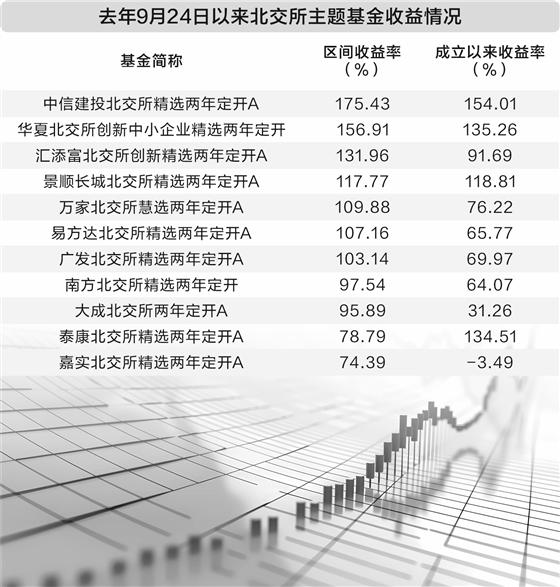
Core Insights - The North Exchange (北交所) has seen significant growth in the number of funds, with over 35 North Exchange 50 Index funds established since its inception, marking its third anniversary on December 15 [1][3] - The performance of North Exchange funds has varied widely, with some funds achieving returns exceeding 100% since the "9.24" market event, while others lag significantly behind [2][4][5] Fund Performance - The top-performing North Exchange funds since inception include: - CITIC Construction Investment North Exchange Selected Two-Year Open A: 175.43% - Huaxia North Exchange Innovative Small and Medium Enterprises Selected Two-Year Open: 156.91% - Other funds have shown varying performance, with some achieving returns as low as 74.39% [1][5] - The North Exchange 50 Index has increased by over 130% since September 24, with three funds achieving returns above 100% [4] Market Expansion - The North Exchange 50 Index funds have expanded significantly, with 12 new funds launched in 2025 alone, driven by increased market interest and liquidity [3][7] - The total market capitalization of the North Exchange has surpassed 900 billion, while the combined scale of North Exchange 50 Index and theme funds remains below 200 billion, indicating potential for further growth [7] Investment Opportunities - Fund managers highlight three key growth areas for future investment: 1. Innovative growth sectors driven by industry trends and policy support 2. Steady growth focusing on management efficiency and performance metrics 3. Recovery growth targeting industries or companies poised for a turnaround [8] - The North Exchange is expected to continue attracting quality companies, with a significant portion of IPO candidates in the A-share market planning to list on the North Exchange [7][8] Institutional Involvement - The entry of institutional investors has enhanced the visibility of quality North Exchange stocks, with over 70 stocks being heavily held by public funds [5][6] - The increasing participation of institutional investors has made stock selection more challenging, as the market has become more thoroughly explored [9]

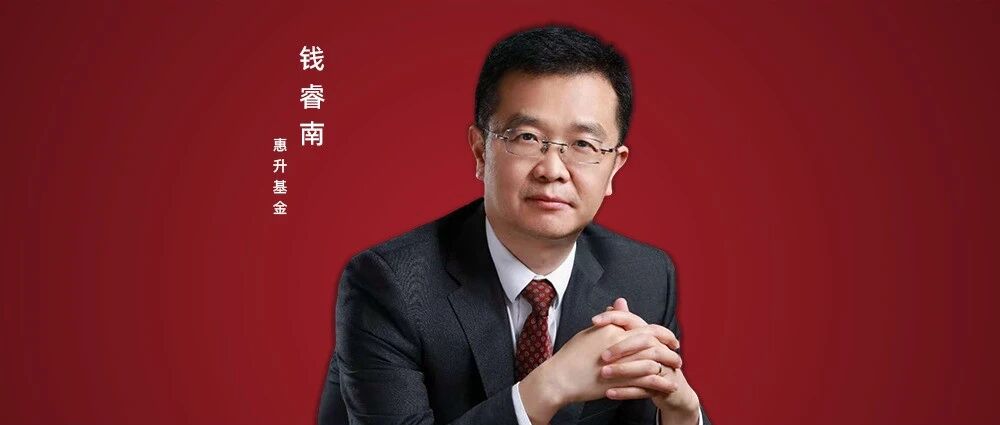
惠升基金钱睿南:均衡投资下的长跑者
点拾投资· 2025-12-01 02:04
Core Viewpoint - The article emphasizes the importance of maintaining a balanced investment strategy and the significance of managing drawdowns alongside seeking returns, as articulated by Qian Ruinan, a seasoned fund manager at Huisheng Fund [2][6][12]. Investment Philosophy - Qian Ruinan has developed a systematic investment framework that aligns with his personality, focusing on a balanced approach that combines top-down and bottom-up strategies [8][11]. - The investment strategy prioritizes managing drawdowns, as reducing drawdowns significantly enhances investors' experience [9][12]. Industry and Stock Selection - Qian prefers to maintain a balanced exposure across approximately 10 industries, leveraging sector allocation to achieve excess returns [3][13]. - The focus is on growth sectors, particularly those with high ROE, favorable valuation, and positive market sentiment, such as electronics, electrical equipment, and consumer healthcare [3][14]. - Qian avoids investing in the most expensive stocks and the cheapest stocks, favoring those with reasonable growth prospects and valuations [3][16]. Market Adaptation - The investment approach is adaptable to market cycles, with an emphasis on maintaining a balanced portfolio to avoid extreme exposure to any single sector [20]. - Qian's strategy includes monitoring market conditions, such as valuation levels, policy changes, and fundamental shifts, to make informed investment decisions [11][20]. Future Market Outlook - The outlook for the A-share market remains positive, with expectations of increased liquidity and a broader range of investment opportunities emerging from various sectors, including new energy and technology [22][24]. - Industries such as chemical and energy are highlighted as areas of potential growth due to structural changes and increasing domestic demand [23][24].
百亿私募大佬梁宏再致歉 希瓦资产旗下基金遭20%回撤
Zhong Guo Jing Ji Wang· 2025-11-25 07:45
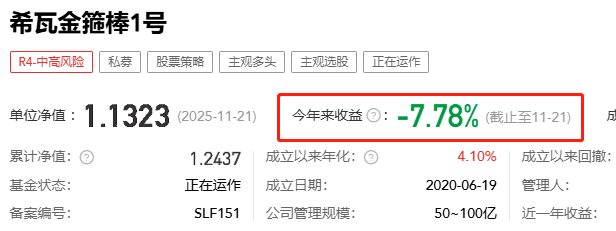
Core Viewpoint - The article discusses the recent apology from Liang Hong, chairman of Shiwa Investment, due to significant fund value declines, attributing the underperformance to three main reasons: heavy investments in innovative pharmaceuticals, hardware companies, and stablecoin stocks, which were adversely affected by market conditions [1][2]. Group 1: Fund Performance - Shiwa Investment's funds are estimated to have declined by approximately 7% recently, with a cumulative drawdown of about 20% from their peak [1]. - Specific funds, such as Shiwa Jinkubang No. 1 and Shiwa Xiaokang No. 1, reported losses of 7.78% and 23.27% respectively, since their establishment in 2020 [2]. - Shiwa Xiaokang No. 1 experienced a drawdown of -19.35% from September 19 to November 21, while the CSI 300 index only saw a -4.81% drawdown during the same period [2]. Group 2: Investment Strategy and Management - Liang Hong acknowledged that the aggressive investment style led to significant losses, particularly due to not cashing out at high points and overexposure to certain sectors [1][9]. - Liang has a background in trading with over 15 years of experience across multiple markets, focusing on growth and value investments [1]. - The article highlights that Liang has previously apologized for poor performance, indicating a pattern of reflection and acknowledgment of mistakes in investment strategies [9][12].
净值回撤20%!百亿私募大佬致歉
Zhong Guo Ji Jin Bao· 2025-11-24 13:02
Core Insights - The founder and CIO of Shiwa Asset, Liang Hong, publicly apologized for a significant decline in fund performance, with an estimated net value drop of around 20% from peak levels [1] - The decline was attributed primarily to issues with individual stocks and the beta exposure to the technology and internet sectors [1] Group 1: Performance Decline - Shiwa Asset reported an estimated net value drop of approximately 7% in its weekly report, with a cumulative decline of about 20% from the highest point [1] - The performance of the funds significantly lagged behind major indices during this period [1] Group 2: Reasons for Decline - The three main reasons for the performance decline were identified as: 1. A drop in heavily weighted innovative pharmaceutical stocks, where high valuations were not realized through timely selling [1] 2. A leading hardware company's stock fell over 37%, with the issue being an excessive position during a period of reasonable high valuation [1] 3. Heavy investment in stablecoin stocks in the U.S. while neglecting the risks associated with the cryptocurrency market turning bearish [1] Group 3: Reflection and Future Strategy - Liang Hong reflected on the decline, acknowledging that greed played a deeper role in the performance issues, emphasizing a lack of attention to risk and cost-effectiveness during high market valuations [1] - He expressed awareness of the disappointment among investors and the potential for significant redemptions, indicating preparedness for such outcomes [1] - Moving forward, the company plans to adapt its strategy by incorporating more absolute return considerations while maintaining a focus on value investing, aiming for improved performance in the coming year [1]
绩优长跑者谈长期主义|15倍基打造者,摩根资管杜猛的十四年修炼,让投资回归时间与价值共振
Sou Hu Cai Jing· 2025-11-24 09:28
Core Viewpoint - The article emphasizes the importance of long-term investment strategies, particularly in growth stocks, as a means to navigate market volatility and achieve sustainable returns over time [1][2][5]. Investment Philosophy - The investment philosophy centers on the belief that true long-term returns come from companies that create value and possess core competitiveness, rather than from fleeting market trends [2][10]. - The approach involves low turnover rates and deep research, focusing on long-term tracking of companies rather than short-term performance metrics [2][11]. Performance Metrics - The Morgan Emerging Power Fund, managed by Du Meng since 2011, has achieved a total return of 796.77% and an annualized return of 16.52% as of November 12 [6]. - The Morgan China Advantage Fund, managed since 2019, has an annualized return of 19.13% and a cumulative total return of 1513.25%, marking it as one of the few funds to achieve a "15x base" since inception [6]. Long-Term Investment Strategy - Du Meng's strategy is characterized by a focus on long-term growth, emphasizing that the value realization of growth stocks is a gradual process requiring time [5][10]. - The investment framework includes a systematic approach to managing positions based on industry trends and company fundamentals, avoiding concentration risks [7][14]. Market Trends and Future Outlook - Du Meng remains optimistic about sectors such as renewable energy, AI, and pharmaceuticals, identifying them as structural opportunities for growth [9][15]. - The investment strategy is designed to withstand market fluctuations by focusing on the essence of industries and maintaining a long-term perspective [8][15]. Risk Management - Effective risk management is achieved through thorough research, ensuring investments are in fundamentally sound companies, and maintaining a disciplined approach to valuation [14][15]. - The strategy includes a dynamic allocation of positions based on the certainty and potential of individual stocks, enhancing the resilience of the overall portfolio [7][14].

广发基金陈韫中:做成长股的“探路者” 均衡之中见锐度
Zhong Guo Zheng Quan Bao· 2025-11-16 23:09
Core Insights - The article highlights the investment strategy of Chen Yunzong, a fund manager at GF Fund, focusing on identifying growth stocks and their growth stages through a dual-track approach of "traditional growth" and "emerging growth" [1][2]. Investment Strategy - Chen emphasizes a systematic approach to understanding industry attributes, industry cycle stages, and long-term trends before selecting quality growth stocks [1][2]. - The investment framework is centered around capturing excess returns from diverse growth directions, including technology and manufacturing sectors [2][3]. Performance Metrics - As of October 31, the GF Growth Initiation A fund managed by Chen achieved a one-year return of 88.81%, ranking in the top 3 out of 1,876 similar funds [1]. Fund Launch - A new fund, GF Innovation Growth, is set to launch on November 17, which will dynamically adjust the allocation between traditional and emerging growth to capture excess returns while maintaining industry balance [1][6]. Growth Categories - Growth stocks are categorized into "traditional growth" (e.g., new energy, semiconductors, military industry) and "emerging growth" (e.g., robotics, embodied intelligence, satellite internet) [2][5]. - Traditional growth strategies focus on cyclical growth, while emerging growth serves as an offensive tool for capturing future trends [2][3]. Dynamic Allocation - The allocation between traditional and emerging growth is adjusted based on market liquidity and risk appetite, enhancing both offensive and defensive capabilities of the portfolio [3][4]. Industry Rotation - Chen's investment approach involves a systematic method of industry rotation based on industry cycles, focusing on "industry position" and "valuation margins" rather than merely chasing market trends [4][5]. Future Focus Areas - Key sectors of interest include computing power, storage, edge innovation, brand globalization, robotics, satellite internet, and solid-state batteries [6][7]. - The computing power sector is particularly emphasized, with expectations of significant capital expenditure increases from domestic cloud service providers in the upcoming quarters [6][7]. Specific Sector Insights - The military industry is highlighted as a high-value sector, while the robotics sector is seen as a major application terminal for AI [7]. - Solid-state batteries and low-altitude economy are also critical areas of focus, with expectations of early breakthroughs in these technologies [7].

广发基金陈韫中:做成长股的“探路者”,均衡之中见锐度
Zhong Guo Zheng Quan Bao· 2025-11-16 23:03
Core Insights - The article highlights the investment strategy of Chen Yunzong, a fund manager at GF Fund, focusing on growth stocks through a dual-track approach of "traditional growth" and "emerging growth" [1][2]. Investment Strategy - Chen emphasizes the importance of understanding industry cycles and long-term trends before selecting quality growth stocks, aiming to optimize buying and selling timing based on industry cycles [1][2]. - The investment framework includes a focus on diverse growth sectors such as technology and manufacturing, moving beyond just TMT (Technology, Media, and Telecommunications) to include areas like military and energy [2]. Growth Categories - Growth stocks are categorized into "traditional growth" (e.g., new energy, semiconductors, military) and "emerging growth," with differentiated strategies for each [2][3]. - Traditional growth is approached with a "cyclical growth" mindset, focusing on sectors undergoing industrial changes, while emerging growth serves as an "offensive lever" targeting future trends like robotics and quantum computing [2][5]. Dynamic Portfolio Management - The portfolio management strategy involves dynamically adjusting the allocation between traditional and emerging growth based on market liquidity and risk appetite [3]. - When market conditions are favorable, the allocation to emerging growth increases; conversely, it shifts towards traditional growth during risk-averse periods [3]. Industry Rotation Approach - Chen's investment approach to industry rotation is systematic, focusing on the balance between "industry position" and "valuation margins," rather than merely chasing market trends [4]. - A significant portion of research efforts is dedicated to tracking emerging growth sectors, leveraging insights from industry leaders and global comparisons [4][5]. Forward-Looking Investment Areas - The new fund, GF Innovation Growth, will adopt a balanced growth-oriented strategy, targeting sectors like computing power, storage, and robotics [6]. - Chen identifies opportunities in domestic computing power, which is expected to see increased capital expenditure from cloud service providers, and anticipates a positive cycle in the storage sector [6][7]. Specific Sector Focus - The military sector is highlighted as a key area for investment, with a favorable risk-reward profile [7]. - The robotics sector is viewed as a significant application of AI, with the domestic industry yet to be fully valued [7]. - Solid-state batteries and low-altitude economy are also critical areas of focus, with expectations for early breakthroughs in solid-state battery applications [7].
广发基金陈韫中: 做成长股的“探路者” 均衡之中见锐度
Zhong Guo Zheng Quan Bao· 2025-11-16 20:09
Core Insights - The article highlights the investment strategy of Chen Yunzong, a fund manager at GF Fund, focusing on the dual-track approach of "traditional growth" and "emerging growth" in identifying investment opportunities in growth stocks [1][2]. Investment Strategy - Chen Yunzong emphasizes a systematic approach to understanding industry attributes, identifying industry cycle stages, and selecting quality growth stocks [1][2]. - The investment framework includes a focus on both traditional growth sectors (like new energy, semiconductors, and military industry) and emerging growth sectors (such as robotics, embodied intelligence, and quantum computing) [2][5]. - The strategy involves dynamic adjustment of the allocation between traditional and emerging growth based on market liquidity and risk appetite [3][4]. Performance Metrics - As of October 31, the GF Growth Initiation A fund managed by Chen Yunzong achieved a one-year return of 88.81%, ranking in the top 3 out of 1,876 similar funds [1]. Sector Focus - Key sectors of interest include computing power, storage, edge innovation, brand globalization, robotics, satellite internet, and solid-state batteries [6][7]. - The computing power sector is particularly highlighted, with a focus on both overseas and domestic opportunities, as domestic cloud service providers are expected to significantly increase capital expenditures [6]. Emerging Trends - The article discusses the importance of understanding the lifecycle of growth assets, which typically transition from thematic phases to technological implementation and then to scale expansion [5]. - Solid-state batteries are identified as a critical component for the development of robotics and drones, with expectations for early breakthroughs in this area [7].
中国太保前三季总投资收益率5.2% 管理层:抓住了成长股机会
Di Yi Cai Jing· 2025-10-31 04:38
Core Viewpoint - China Pacific Insurance (CPIC) reported a significant increase in net profit for the first three quarters of the year, driven by favorable capital market conditions and growth in insurance services [1][2]. Financial Performance - CPIC's net profit attributable to shareholders grew by 19.3% year-on-year in the first three quarters, with a remarkable 35.2% increase in the third quarter [1]. - The annualized net investment return rate for CPIC was 2.6%, a decrease of 0.3 percentage points year-on-year, while the annualized total investment return rate improved to 5.2%, an increase of 0.5 percentage points [2]. - The comprehensive cost ratio for CPIC's property insurance segment was 97.6%, down by 1.0 percentage point year-on-year [3]. Business Segments - CPIC's life insurance segment achieved a premium income of 263.863 billion yuan, reflecting a year-on-year growth of 14.2%, with new business value increasing by 7.7% [3]. - The bank insurance channel saw a substantial growth of 63.3% in premiums, significantly outperforming the agency channel, which grew by only 2.9% [3]. - The contribution of state-owned banks to CPIC's bank insurance premiums increased from 22% last year to 36% this year, indicating a strategic shift towards collaboration with state-owned banks [3].

中国太保前三季总投资收益率5.2%,管理层:抓住了成长股机会
Di Yi Cai Jing· 2025-10-30 14:08
Core Insights - The company reported a 19.3% year-on-year increase in net profit attributable to shareholders for the first three quarters, with a significant 35.2% growth in the third quarter [1] - The strong performance is attributed to the rise in capital markets and improved insurance service results [1] - The annualized net investment return rate for the first three quarters was 2.6%, a decrease of 0.3 percentage points year-on-year, while the total investment return rate increased by 0.5 percentage points to 5.2% [1] Investment Strategy - The company emphasizes the importance of growth stocks for insurance funds, aligning with China's future high-quality growth driven by technological innovation [2] - The company has been actively exploring opportunities in various sectors such as technology innovation, energy transition, healthcare, automotive resources, and new consumption [2] - The life insurance segment achieved a premium income of 263.863 billion yuan, a 14.2% increase year-on-year, with new business value rising by 7.7% [2] Distribution Channels - The bancassurance channel saw a remarkable growth of 63.3% in premiums, significantly outpacing the agency channel, which grew by only 2.9% [2] - The company noted a shift in the bancassurance premium composition, with the share from state-owned banks increasing from 22% to approximately 36% [3] - The core development strategy for the bancassurance channel in the coming year will focus on increasing the number of cooperative outlets with state-owned banks, targeting a growth rate of 35% to 40% [3]